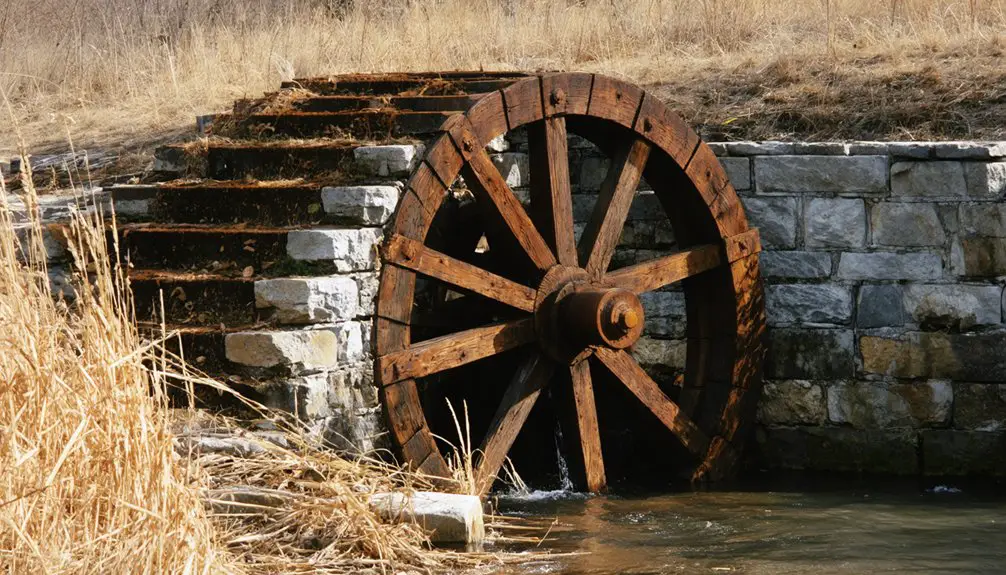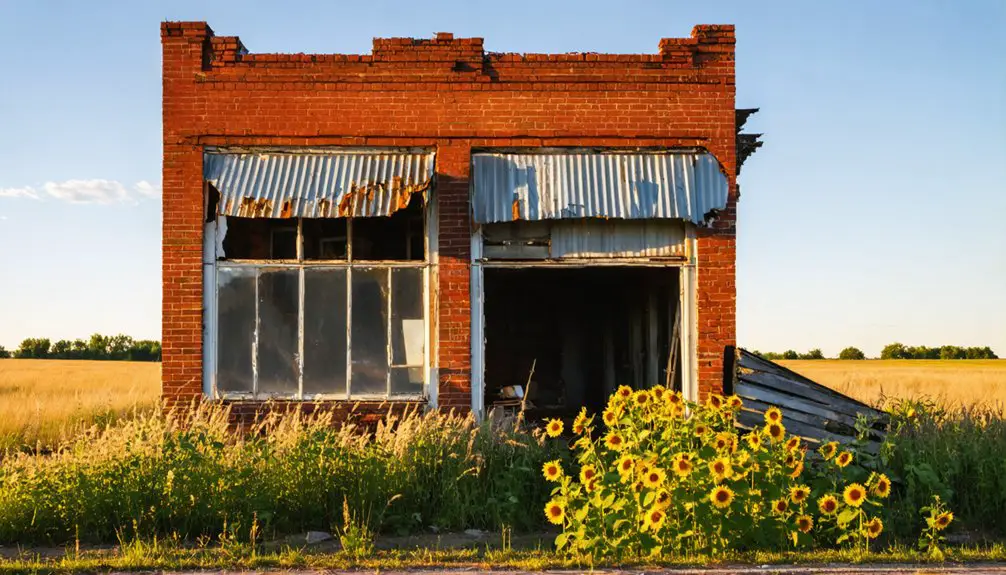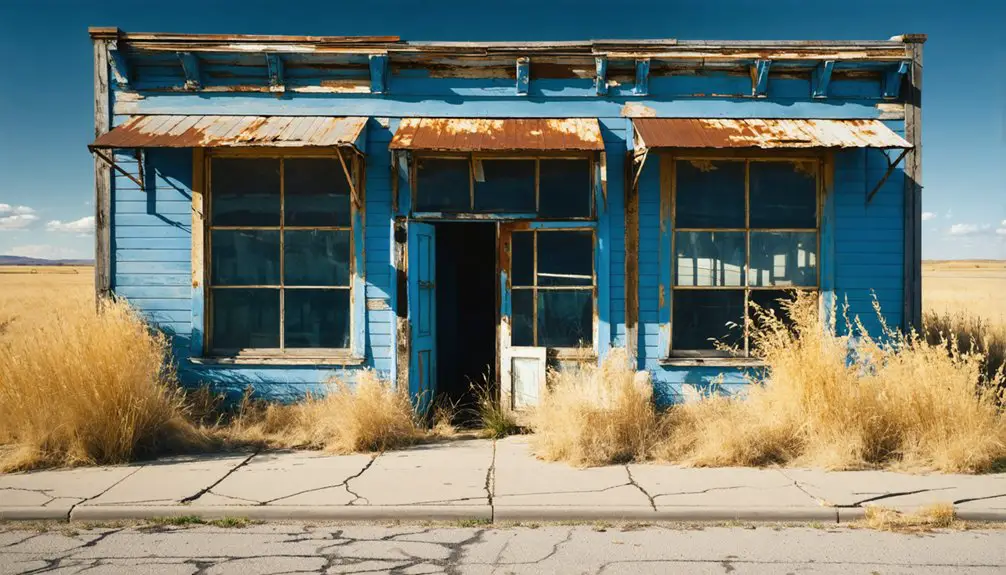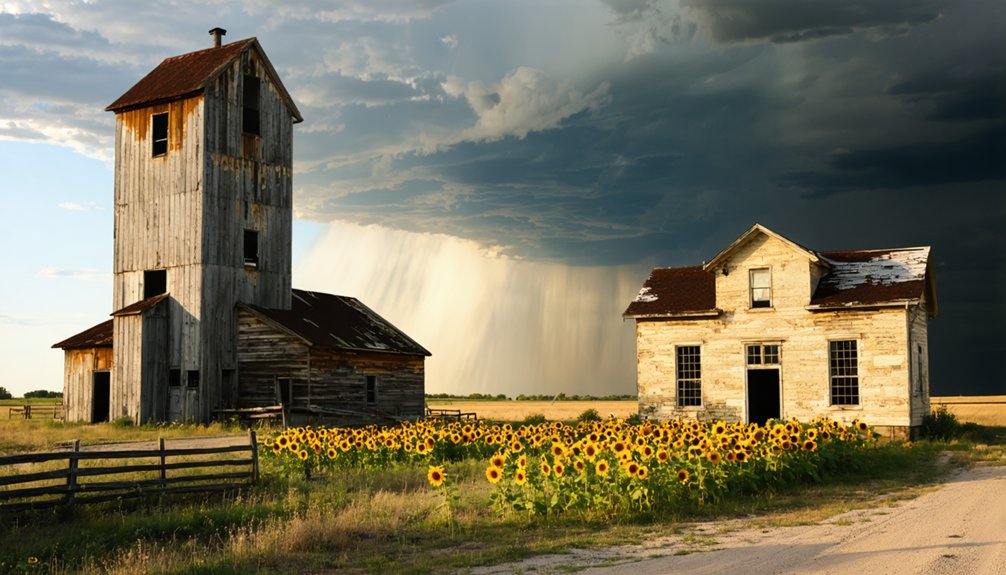
You’ll find Kansas’s most intriguing ghost towns scattered across the state’s historical frontier landscape. Trading Post, established in 1825 by Cyprian Chouteau, offers glimpses into early Native American trade relations, while Cedar Point showcases Victorian-era architecture and a preserved 1893 Pratt Truss Bridge. Don’t miss Ellinwood’s underground tunnel network, complete with untouched 1940s artifacts and former speakeasies. These abandoned settlements hold countless more secrets beneath their weathered facades.
Key Takeaways
- Trading Post boasts rich history as an 1825 trading center established by Cyprian Chouteau, peaking with 146 residents in 1910.
- Elk Falls features the historic 1893 Pratt Truss Bridge and original 1870s schoolhouse, offering well-preserved frontier architecture.
- Ellinwood’s extensive underground tunnel network contains untouched 1940s artifacts and offers tours of historic saloons and brothels.
- Quindaro preserves ruins of Western University, the first historically Black college west of the Mississippi River.
- Leota, in Norton County, exemplifies frontier settlement decline after competing unsuccessfully for county seat status in the 1800s.
Historical Trading Posts and Early Settlements
While Kansas boasts numerous ghost towns today, many originated as crucial trading posts established in the early 1800s. You’ll discover a rich trading post heritage in places like Cyprian Chouteau‘s 1825 establishment near the Marais des Cygnes River, where pack horses transported goods through dense woods before proper roads existed.
The early settlement influences of the Chouteau family extended to multiple locations, including Frederick Chouteau’s 1842 post on Mill Creek and earlier ventures near the Kansas River. A ferry service helped travelers cross the Kansas River while trading with local tribes. Trading Post reached its peak with 146 residents in 1910, marking a vibrant period in its history.
You’ll find evidence of frontier commerce at Fort Kanses, where French traders conducted business with the Kanza tribe. These posts weren’t just trading centers – they evolved into essential community hubs, featuring post offices, flour mills, and eventually railroad connections that shaped Kansas’s development until the early 1900s.
Architectural Remnants and Preserved Structures
You’ll find Kansas’s most fascinating ghost towns marked by their remarkably preserved architectural treasures, from Pawnee’s territorial capitol to Neuchatel’s restored 19th-century community buildings.
The state’s abandoned settlements showcase structural marvels like the 1893 Elk Falls Pratt Truss Bridge and Lecompton’s Constitutional Hall, which stands as Kansas’s oldest wooden building. Early development of these towns included frontier businesses like general stores, post offices, and blacksmith shops.
These historic structures, along with preserved underground networks in places like Potwin Place, offer tangible connections to Kansas’s territorial and early statehood periods. Many of these sites originated from thriving communities that declined due to lost transportation routes and changing economic conditions.
Historic Buildings Still Standing
Kansas ghost towns showcase remarkable architectural heritage through their surviving structures. Elk Falls history features an 1893 Pratt Truss Bridge and 19th-century buildings slowly being reclaimed by nature, while Neuchatel preservation efforts maintain its cemetery, church, and town hall in pristine condition. Le Hunt’s haunting old smokestack reminds visitors of its brief industrial past.
You’ll discover these significant historic landmarks across the state:
- Constitutional Hall in Lecompton – Kansas’ oldest wooden building (1856)
- Western University ruins in Quindaro – first HBCU west of Mississippi
- Original 1870s schoolhouse and mill in Elk Falls
- Well-preserved Potwin Place district, listed on National Register
Each site tells a unique story through its architecture, from Quindaro’s protected metropolitan remnants to Lecompton’s museums housed in historic buildings. With approximately 308 ghost towns scattered across Kansas, these architectural treasures provide invaluable insights into the state’s past.
These structures stand as symbols to Kansas’ pioneering spirit and cultural heritage.
Underground Tunnel Networks Preserved
Beneath the streets of several historic Kansas towns, elaborate tunnel networks reveal a fascinating chapter of early 20th-century life. You’ll find these underground mysteries in places like Ellinwood, Caldwell, and Fort Scott, where stone-walled passages once served as refuges from extreme weather and later became bootlegging routes during Prohibition.
In Ellinwood’s preserved tunnels, you’ll discover untouched artifacts from the 1940s abandonment – vintage barber chairs, antique mirrors, and original coal delivery systems remain exactly where they were left. Tours showcase historic sites like Jung’s Barber Shop, which maintains its authentic period appearance. Early German immigrants established the town in 1870 along the Santa Fe Trail.
The tunnel exploration takes you through connected basements that once housed saloons, bathhouses, and entertainment venues. These male-dominated spaces, accessible through the historic Wolf Hotel, tell stories of cowboys, travelers, and underground commerce that flourished between 1887 and 1920.
Ghost Towns of Norton County
During the late 1800s, Norton County witnessed the rise and fall of several frontier settlements that now exist only in historical records.
You’ll find Clayton’s history marked by its peak of 191 residents and bustling commerce, while Leota’s competition for county seat ended in defeat against Norton.
Oronoque settlers, primarily Dunkard colonists from Iowa, established a vibrant community before religious division struck in 1890. The town maintained a post office until 1934 before fading into obscurity.
Notable patterns of these ghost towns include:
Ghost towns of the frontier share telltale patterns that reveal their paths from boom to bust, marking their shared destinies.
- Strategic placement near natural resources (Clayton’s clay deposits)
- Reliance on postal service infrastructure
- Competition for county governance roles
- Agricultural trade dependencies
Rayville’s sustainability challenges and Densmore’s decline mirror common struggles of frontier towns, though Densmore initially showed promise as Norton’s rival. The devastating train wreck of 1910 marked a turning point in Clayton’s history, claiming the lives of 18 passengers when floodwaters washed out the tracks.
Today, only scattered remnants like Densmore’s cemetery remain to tell their stories.
Underground Networks and Hidden Passages
You’ll find one of Kansas’s most fascinating underground networks in Ellinwood, where an extensive tunnel system operated from 1887 to 1920.
The passageways, which remain largely untouched since their 1940s abandonment, served multiple purposes including refuge during World War I and suspected bootlegging operations during Prohibition.
These tunnels, with their preserved period artifacts, also provided residents protection from Kansas’s extreme summer temperatures and harsh prairie winds.
Secret Tunnels of Ellinwood
The bustling streets of Ellinwood, Kansas conceal an intricate network of tunnels that German settlers constructed in the late 1800s along the Santa Fe Trail.
These underground passages tell hidden history through their tunnel stories, originally spanning two blocks on both sides of Main Street.
You’ll discover a world that once served multiple purposes, from practical shelter against Kansas’s extreme weather to more adventurous endeavors during Prohibition.
The tunnels connected:
- Dick Building’s secret speakeasies
- Jung’s underground barber shop
- Tom Drake’s concealed harness shop
- Wolf Hotel’s clandestine gathering spaces
While most Kansas tunnel systems were lost to development, Ellinwood’s network survived thanks to Adrianna Dierhof’s preservation efforts.
Today, you can explore these authentic passages through tours at the Ellinwood Emporium and Wolf Hotel, experiencing firsthand the underground legacy of frontier entrepreneurship.
Hidden Underground Transportation Routes
While many Kansas ghost towns hide fascinating stories above ground, an intricate network of hidden passages beneath several historic cities reveals an equally compelling underground history.
You’ll discover these hidden passageways once connected businesses, saloons, and hotels throughout cities like Wichita, Newton, and McPherson. Though urban legends surround their purposes, these tunnels primarily served as protection from Kansas’s extreme weather between 1887 and 1920.
In Great Bend, elite business owners used underground routes to travel between buildings, while Ellinwood’s Wolf Hotel network catered to male clientele with barber shops and speakeasies.
The most notorious system belonged to the Dalton Gang in Meade, where a secret tunnel between house and barn enabled outlaws to move undetected.
Though most systems were filled in by 1982, some remain accessible through historic tours.
Notable Victorian-Era Buildings
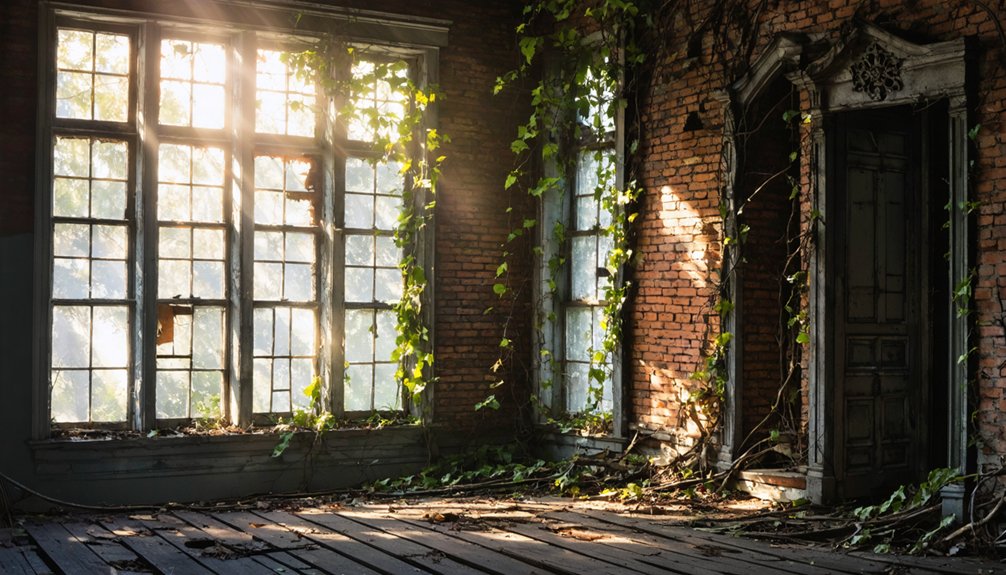
Kansas’s Victorian architectural heritage comes alive through several remarkable ghost town structures that have withstood time’s passage.
You’ll find the red-brick McInteer Villa in Atchison, an 1889 masterpiece of Victorian architecture steeped in ghostly legends surrounding former owner Nellie McInteer’s death.
The state’s most impressive Victorian-era structures include:
- Constitutional Hall in Lecompton – Kansas’s oldest wooden building from 1856
- The preserved buildings of Potwin Place, annexed to Topeka in 1899
- Elk Falls’ collection of 1870s structures, including its iconic Pratt Truss Bridge
- Quindaro’s ruins, featuring remnants of Western University, the first HBCU west of the Mississippi
These architectural treasures offer you a glimpse into Kansas’s Victorian past, each telling its own story of ambition, decline, and preservation.
Haunted Tours and Supernatural Tales
You’ll find the spine-tingling Hilton Savoy Hotel at the heart of Kansas City’s ghost tour scene, where professional guides lead nightly walks through the city’s most haunted corridors.
Fort Leavenworth’s historic military grounds offer structured two-hour tours featuring eight stops in the haunted housing district, while Atchison’s famous Sallie House stands as Kansas’ premier paranormal destination.
The U.S. Ghost Adventures company crafts specialized tours like the Wraiths & Whiskey experience, combining Kansas City’s supernatural heritage with its notorious gangster history at locations like Union Station, where the 1933 Kansas City Massacre left lasting spiritual impressions.
Popular Ghost Tour Sites
Seeking spine-tingling encounters with the paranormal? Kansas’s most active supernatural sites offer documented ghostly encounters year-round.
At Fort Leavenworth, you’ll discover America’s oldest active military installation west of the Mississippi, where supernatural phenomena persist throughout its historic buildings and cemeteries.
For the most intensive paranormal experiences, visit these documented hotspots:
- Stull Cemetery – One of seven alleged gateways to Hell, featuring mysterious stone steps that appear on Halloween.
- Sallie House in Atchison – Known as America’s most haunted residence.
- Ellinwood’s underground tunnels – Historic network beneath streets with active paranormal activity.
- Hutchinson Library – Ranked among Kansas’s eight most haunted locations.
These locations offer unrestricted access to investigate the unexplained, with each site maintaining its own eerie history and documented supernatural occurrences.
Seasonal Halloween Activities
The Halloween season transforms Kansas’s historic sites into thrilling autumn destinations featuring haunted tours, paranormal investigations, and family-friendly activities.
You’ll find diverse experiences ranging from World’s of Fun Halloween Haunt, the Midwest’s largest event with 400-plus monsters, to Field of Screams Kansas in Maize, drawing visitors from across multiple states.
For family adventures, you can explore kid-friendly ghost tours at Alexander Majors House, complete with junior guides and Halloween crafts, or enjoy trick-or-treating at Boo at the Zoo.
If you’re seeking paranormal activities, join professional investigators at the 1859 Jail in Independence, where you’ll use EMF detectors to track supernatural phenomena.
The historic Vaile Mansion and Wornall House offer spine-tingling tours featuring Victorian death rituals and documented ghostly encounters.
Local Paranormal Legends
Kansas’s most infamous paranormal site, Stull Cemetery, anchors a collection of haunted locations that have fascinated ghost hunters and historians for generations.
Local ghost stories claim it houses one of seven gateways to hell, with a dark history of witchcraft and black masses that prompted Pope John Paul II to declare it unholy ground.
You’ll discover these essential haunted locations across Kansas:
- Alma Cemetery’s misty apparitions and dark entities near the tree line
- Lorenz Schlicter Memorial Cemetery’s child spirits, known for leaving mysterious handprints
- Atchison’s Sallie House and Jackson Park, where Molly’s ghostly figure still roams
- Fort Leavenworth National Cemetery, America’s most haunted military burial ground
These haunted folklore destinations offer firsthand encounters with unexplained phenomena, from ghostly soldiers to mysterious orbs and supernatural manifestations.
Military Heritage and Frontier Life
While settlers pushed westward along the Oregon and Santa Fe Trails in the 1850s, a network of military outposts emerged across Kansas to maintain order during a turbulent era.
You’ll find Fort Riley‘s legacy in protecting trail travelers and policing Bleeding Kansas conflicts, while Fort Larned stands as the most complete preserved military fort from the Indian Wars period.
These frontier outposts witnessed dramatic events that shaped Kansas history.
Fort Riley housed Confederate prisoners and later stationed Lieutenant Custer, while Fort Wallace earned its reputation as the “Fightin’est Fort” defending against attacks.
The military’s presence extended beyond combat – when Sunflower Village housed ammunition plant workers during WWII, and Pawnee briefly served as territorial capital before its destruction.
Each site tells a story of survival and conflict in America’s expanding frontier.
Population Changes Through the Decades
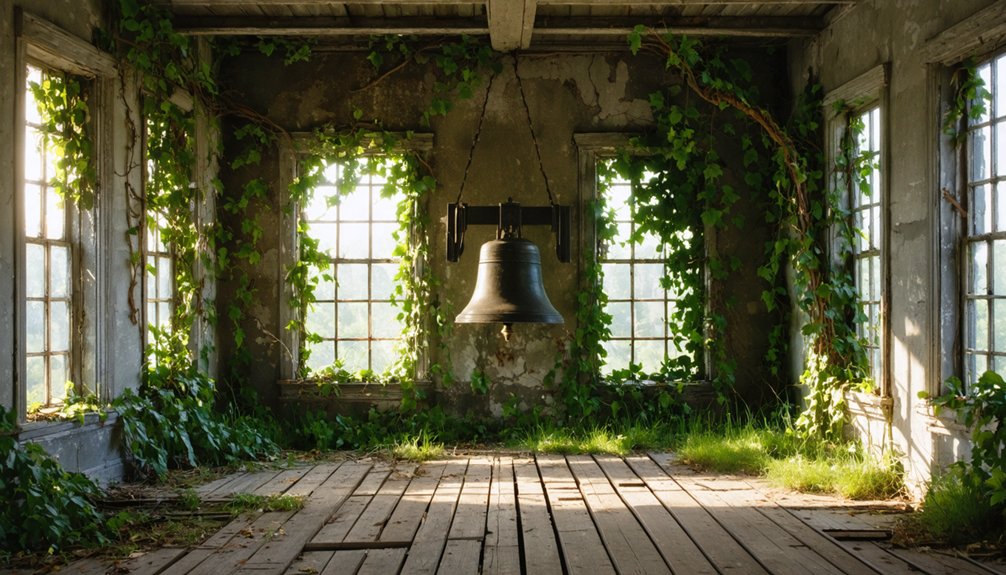
Throughout Kansas’s rural landscape, dramatic population shifts have transformed once-thriving communities into near ghost towns since the 1930s.
You’ll find stark census trends revealing how these towns have faced relentless population decline, with some barely hanging on to their remaining residents.
Consider these dramatic changes:
- Coldwater’s population has dropped by half, now clinging to 1,296 residents.
- Cedar Point plummeted from its 1920 peak of 190 to just 28 people by 2010.
- Dunlap crashed from over 400 residents to merely 30 by 2010.
- Englewood now houses only 58 people, half of its 1930s population.
These towns’ stories reflect a broader pattern across Kansas, where aging populations and industry losses have steadily emptied once-bustling communities, leaving behind vacant structures and dwindling populations.
Post Office Legacy and Historical Records
Post offices served as essential cornerstones of early Kansas settlements, with their establishment and closure dates precisely marking the rise and decline of ghost towns across the state.
You’ll find fascinating patterns in post office records, from Castleton’s 85-year run to Sun City’s intriguing dual periods of operation. The historical significance of these postal timelines reveals the ebb and flow of frontier life.
Through the National Archives’ meticulous documentation, you can trace Kansas’s development using Microfilm M1126, which contains detailed site locations spanning over a century.
Whether it’s Quindaro’s two separate operational periods or Neosho Falls’ continuous service since 1857, these records paint a vivid picture of settlement patterns. Each closure date tells the story of a community’s transformation into what you’d now consider a ghost town.
Ghost Town Tourism and Exploration Routes
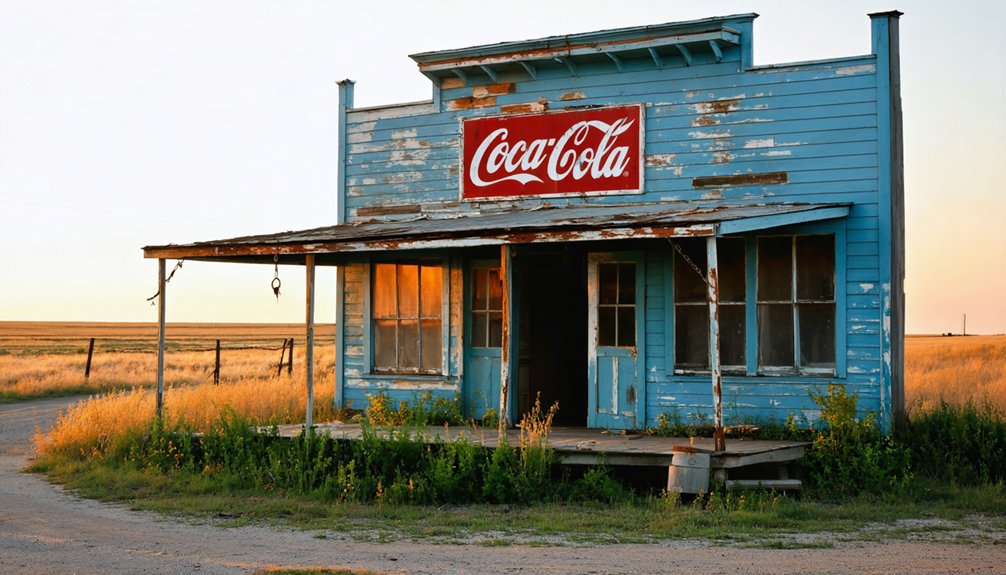
Today’s Kansas ghost towns offer diverse tourism experiences, from living history museums to paranormal investigations and underground explorations.
You’ll find carefully preserved pieces of frontier life across the state, with historic preservation efforts making these sites accessible for ghost town exploration.
For an immersive journey through Kansas’ past, you can explore:
- Shoal Creek Living History Museum’s authentic 1800s buildings and resident bison herd
- Ellinwood’s underground tunnel network revealing hidden brothels and saloons
- Atchison’s famous haunted properties, including the Sallie House and McInteer Villa
- Santa Fe Trail sites like Diamond Springs and Trading Post
Take self-guided driving tours connecting multiple historic locations, or join guided experiences through underground passages and paranormal hotspots.
These routes typically require 90 minutes to complete, letting you discover Kansas’ frontier heritage at your own pace.
Frequently Asked Questions
What Safety Precautions Should Visitors Take When Exploring Kansas Ghost Towns?
You’ll need sturdy boots, protective gear, and written permits. Watch for structural hazards, toxic materials, and wildlife encounters. Bring flashlights, emergency contacts, and explore with others for safety.
Are There Any Seasonal Events or Festivals Celebrating Ghost Town Heritage?
You’ll find notable ghost town festivals like Cato’s October celebration in Crawford County, Little Balkans Days in late August, and Arcadia’s Old Settlers Days, all honoring Kansas’s abandoned settlement heritage.
Can Visitors Legally Collect Artifacts Found in Kansas Ghost Towns?
Like a hawk guarding its nest, artifact regulations protect these sites. You can’t legally collect without landowner permission and must report human remains, ensuring historical preservation for future generations.
Which Ghost Towns Are Most Accessible During Winter Weather Conditions?
You’ll find the best winter accessibility at Shoal Creek Living History Museum, Lecompton’s driving routes, and Trading Post. Their maintained roads, protected structures, and proximity to services guarantee year-round ghost town routes.
Do Any Kansas Ghost Towns Still Have Active Religious Congregations?
Both Cedar Point and Centropolis maintain active ghost town churches, preserving spiritual history through functioning Methodist and Baptist congregations. You’ll find regular services despite their semi-abandoned surroundings.
References
- https://legendsofkansas.com/kansas-ghost-town-list/
- https://en.wikipedia.org/wiki/List_of_ghost_towns_in_Kansas
- https://www.travelks.com/blog/stories/post/13-most-haunted-places-in-kansas-you-must-visit-this-fall/
- https://www.youtube.com/watch?v=VPZtNoncnig
- https://globaldebauchery.com/weird-towns-in-kansas/
- https://legendsofkansas.com/trading-post-kansas/
- https://legendsofkansas.com/chouteau-kansas/
- https://www.youtube.com/watch?v=5AmcGumPdNQ
- https://www.visitoldmeadecounty.com/newpage815e5c49
- https://ksgenweb.org/archives/1912/t/trading_post.html