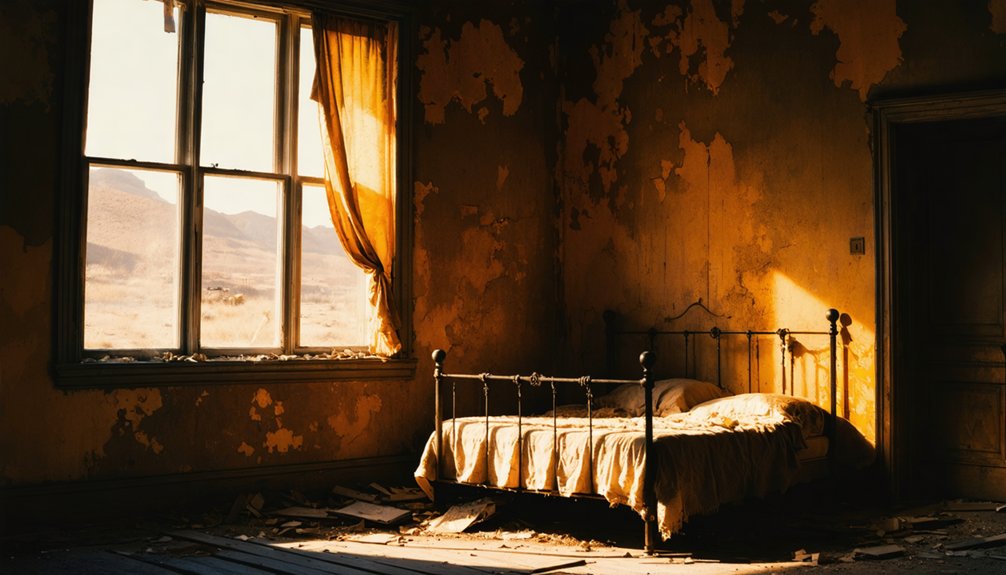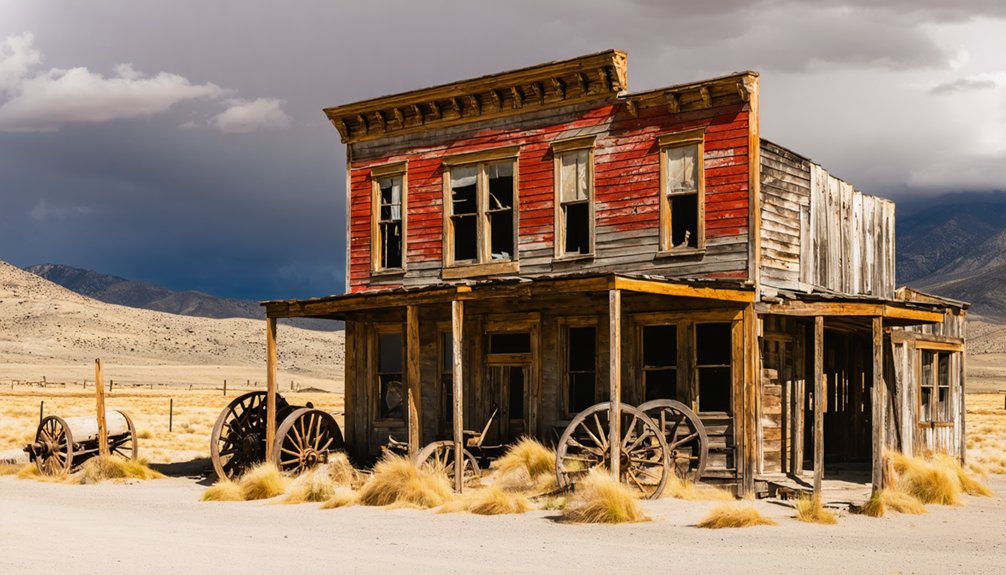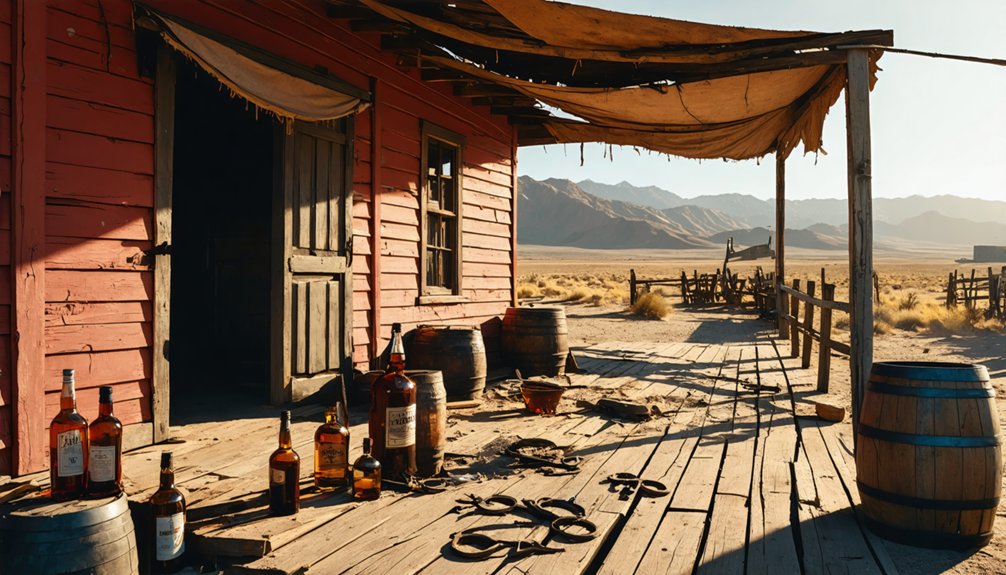
You’ll find several remarkable ghost towns within driving distance of Las Vegas, each offering unique glimpses into Nevada’s mining past. Nelson showcases the historic Techatticup Mine, while Rhyolite features iconic ruins like the Bottle House. Goodsprings remains partially inhabited with its famous Pioneer Saloon, Calico preserves its 1880s silver mining heritage, and St. Thomas emerges from Lake Mead during drought periods. These desert time capsules hold countless stories of boom, bust, and survival.
Key Takeaways
- Nelson Ghost Town offers guided tours of the Techatticup Mine and displays restored buildings just 45 minutes from Las Vegas.
- Goodsprings remains an active ghost town featuring the historic Pioneer Saloon and guided walking tours of mining-era buildings.
- Rhyolite’s well-preserved ruins, including the famous Bottle House and bank building, showcase Nevada’s gold rush history.
- Calico Ghost Town features over 500 former mines and preserved buildings, making it a popular tourist destination.
- St. Thomas’ underwater ruins emerge during drought periods, offering visitors a unique glimpse into early Mormon pioneer settlement.
Exploring the Historic Mining Town of Nelson
Nestled in Eldorado Canyon near the Colorado River, the ghost town of Nelson stands as a tribute to Nevada’s rich mining heritage.
Located just 35 minutes away from the Las Vegas Strip, this free attraction offers visitors a unique experience.
You’ll discover the legendary Techatticup Mine, which operated from 1861 to the 1940s and produced millions in gold, silver, and other precious metals. Originally called Eldorado by Spanish explorers in 1775, the area became southern Nevada’s most successful gold region, yielding $10 million in gold between the 1860s and 1900.
Today, you can explore this preserved slice of the Wild West, where outlaws and Civil War deserters once sought refuge 200 miles from the nearest sheriff. The site was purchased and restored by Tony and Bobbie Werly in 1994, transforming it into a captivating tourist destination.
Far from law and order, Nelson became a haven for desperados seeking escape in Nevada’s untamed wilderness.
The Techatticup Mine offers guided tours through its historic tunnels, while the surrounding 51-acre property showcases vintage vehicles, movie props, and restored buildings that transport you back to Nevada’s golden age.
Step Back in Time at Rhyolite Ghost Town
Standing as a proof of Nevada’s boom-and-bust mining era, Rhyolite emerged from a two-tent camp to become one of the state’s most spectacular gold rush towns.
After Shorty Harris and E.L. Cross discovered gold in 1904, the town exploded to 5,000 residents within six months.
You’ll find remarkable Rhyolite ruins near Death Valley National Park, including the iconic John S. Cook Bank building and the unique Bottle House, constructed from 50,000 bottles.
The town became a destination for entertainment and culture with its opera house and churches, marking the first Catholic and Presbyterian establishments in the Death Valley area.
At its peak, the town boasted three railroads, electricity, and a thriving infrastructure with hotels and hospitals.
The bustling community featured fifty saloons and numerous gambling establishments that catered to the mining population.
Today, managed by the Bureau of Land Management, Rhyolite’s preserved remnants offer a compelling glimpse into Nevada’s rich mining heritage.
The Living Ghost Town of Goodsprings
Located just 40 minutes from the Las Vegas Strip, Goodsprings represents a rare breed of ghost town that still maintains an active community while preserving its rich mining heritage.
This historic settlement, named after rancher Joseph Good, transformed from a cattle-watering spot into a thriving mining hub after the discovery of silver in 1861 and gold in 1893.
During World War I, Goodsprings history reached its peak with 800 residents, a hospital, luxury hotel, and nine saloons.
The Yellow Pine Mining District generated over $30 million from various metals, becoming one of Southern Nevada’s most profitable regions.
Today, you’ll find about 200 residents keeping the town’s spirit alive. A dedicated walking tour guides visitors through key historic sites and landmarks.
Don’t miss the historic Pioneer Saloon with Clark Gable’s cigarette burns still visible, or the preserved Goodsprings Schoolhouse, listed on the National Register of Historic Places. Thrill-seekers can explore over 340 miles of trails on off-road adventures through historic mine sites.
Calico: A Well-Preserved Mining Settlement
While Goodsprings maintains a living community today, another remarkable ghost town lies across state lines in California’s Mojave Desert.
You’ll discover Calico, a silver mining boomtown established in 1881 after prospectors claimed the Silver King Mine. During its heyday, over 500 mines operated here, producing more than $20 million in silver ore through 30 miles of underground tunnels.
The town thrived with 22 saloons, a post office, and various businesses until silver prices crashed in the mid-1890s. The mines also produced an impressive $45 million in borax before operations ceased in 1907. The site was designated as State Historical Landmark 782 in 2005.
Walter Knott’s historic restoration in the 1950s preserved five original structures, including Lane’s General Store and Lil’s Saloon.
Now a San Bernardino County Regional Park and California’s Official Silver Rush Ghost Town, Calico stands as a reflection of the American West’s mining legacy.
St. Thomas: the Town That Rose From the Waters
Deep in what’s now Lake Mead lies the fascinating story of St. Thomas. Founded in 1865 by Mormon pioneers led by Thomas Sassen Smith, this once-thriving community faced dramatic changes throughout its history.
You’ll find its story marked by resilience, from surviving an 1870 tax dispute that led to its first abandonment to its eventual rebirth as a diverse settlement with schools, hotels, and businesses. The town quickly established itself with six hundred acres of crops planted within its first year. Today, visitors can explore the site by hiking through sharp tamarisk and salt-encrusted terrain.
The town’s fate was sealed when Hoover Dam‘s construction in 1935 created Lake Mead. The last resident, Hugh Lord, rowed away from his burning house in 1938 as waters claimed the settlement.
Today, drought periods reveal St. Thomas’s submerged ruins, and you can explore the concrete foundations that emerge from receding waters. The National Park Service protects these historic remains, offering a glimpse into Nevada’s vanished past.
Frequently Asked Questions
Are Ghost Towns Safe to Visit at Night?
You shouldn’t visit ghost towns at night due to safety concerns. Take visiting precautions like exploring during daylight hours, bringing a companion, and notifying others of your location beforehand.
Can You Take Artifacts or Souvenirs From Ghost Towns?
You can’t legally take artifacts or souvenirs from ghost towns. It’s strictly prohibited with fines up to $10,000, as these sites require preservation for future generations to study and enjoy.
What’s the Best Season to Visit Las Vegas Ghost Towns?
While summer’s scorching heat can be unbearable, you’ll find the best months are November through February, when mild weather conditions let you freely explore ghost towns without fighting crowds or extreme temperatures.
Do Any Ghost Towns Offer Guided Paranormal Investigation Tours?
You’ll find guided paranormal tours at Goodsprings, Nelson Ghost Town, and Eldorado Canyon. They’ll provide ghost hunting equipment and expert guides to explore haunted mines, saloons, and abandoned buildings.
Are the Ghost Towns Wheelchair Accessible?
Most ghost towns aren’t fully wheelchair accessible due to rugged terrain, though Rhyolite offers accessible tours from Las Vegas. You’ll find Nelson and Eldorado challenging with rocky paths and desert surfaces.
References
- https://pinatravels.org/ghost-towns-near-las-vegas/
- https://travelnevada.com/ghost-town/ghost-towns-near-las-vegas/
- https://www.maxtour.co/historical-ghost-towns-to-explore-around-las-vegas/
- https://nvtami.com/2023/12/05/las-vegas/
- https://www.youtube.com/watch?v=mGkyVWaef30
- https://www.tripadvisor.com/ShowTopic-g45963-i10-k14740997-Ghost_towns_off_the_beaten_track-Las_Vegas_Nevada.html
- https://www.exploratography.com/blog-nv/eldorado-canyon-nelson-ghost-town-nevada
- https://www.youtube.com/watch?v=CUuSeqMtX0E
- https://brocarde.com/nelson-nevada-visiting-an-abandoned-ghost-town-and-finishing-ghosts/
- https://www.youtube.com/watch?v=MlH4SKnmgao