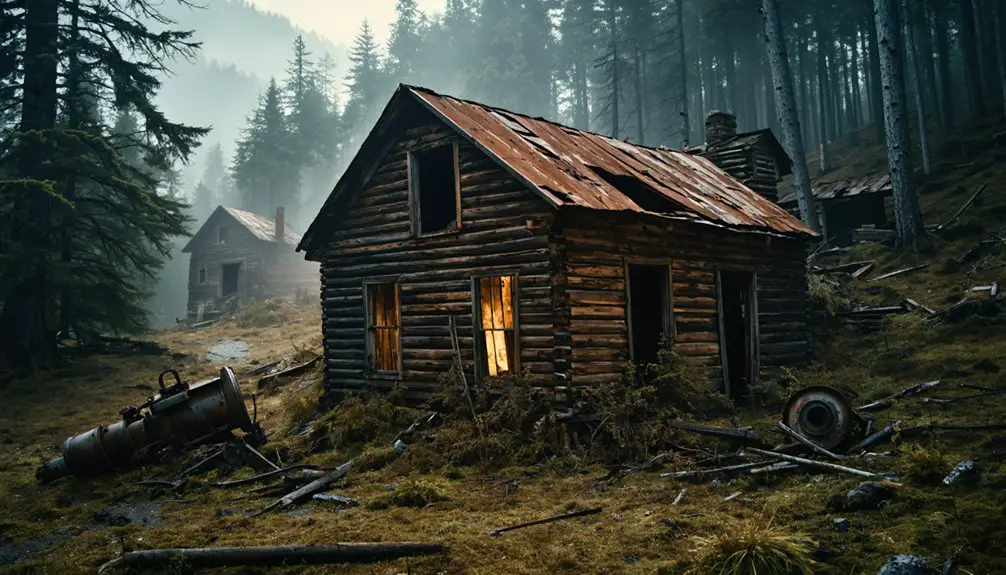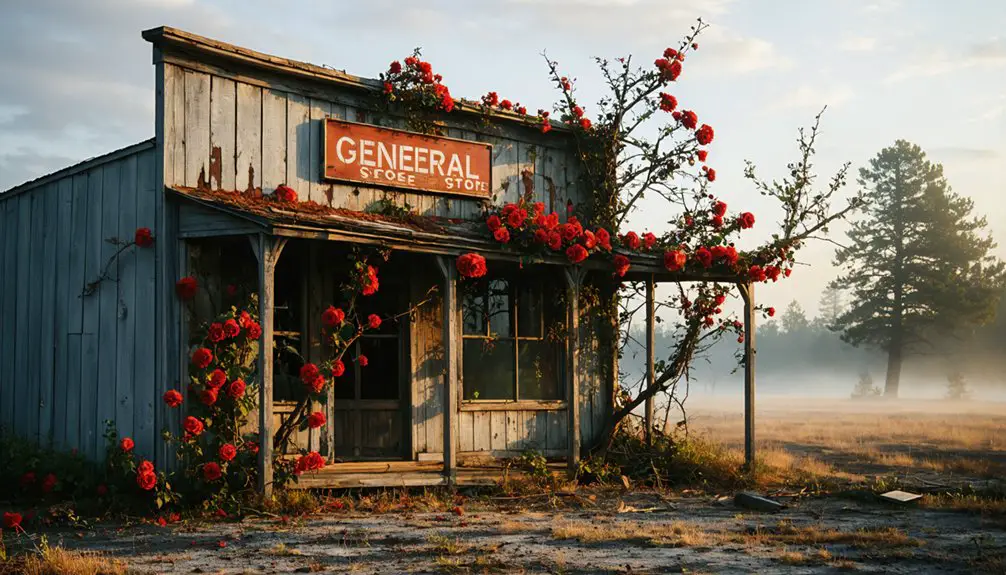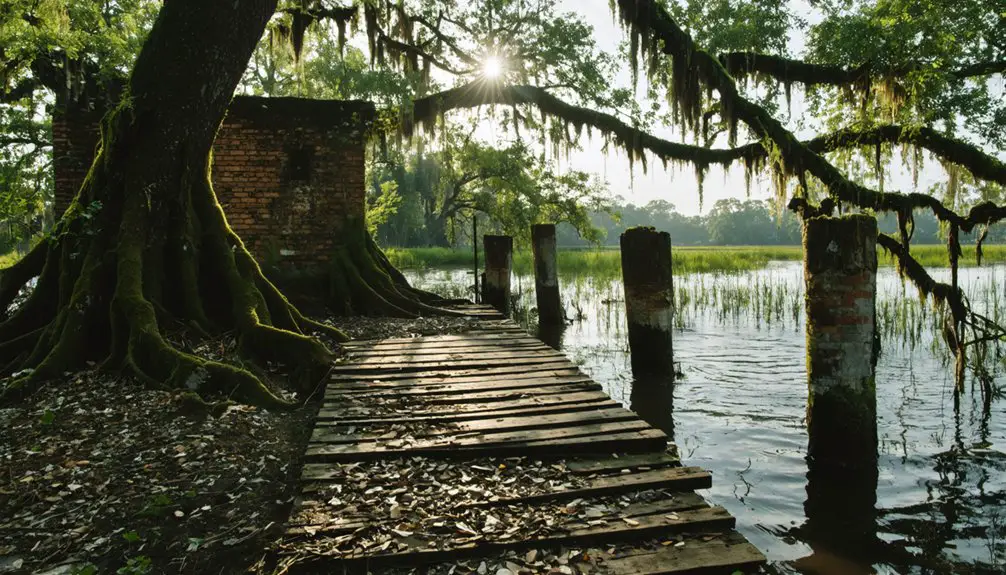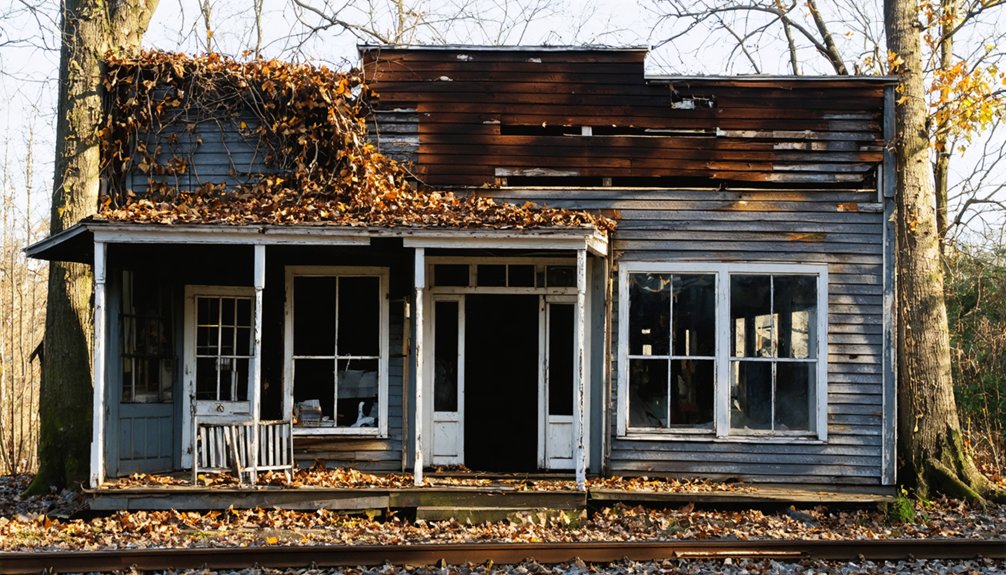
Maryland’s most intriguing ghost towns showcase the state’s rich industrial and colonial heritage. You’ll discover Daniels Mill Town, a former textile hub destroyed by Tropical Storm Agnes in 1972, and Port Tobacco Village, which declined from 300 residents to just 13 after an 1892 courthouse fire. Don’t miss Conowingo’s submerged structures beneath 105 billion gallons of reservoir water, or Frenchtown’s abandoned steamboat port. These forgotten settlements hold fascinating tales of natural disasters, economic shifts, and cultural transformation.
Key Takeaways
- Daniels Mill Town offers well-preserved textile mill ruins and historical structures from 1810, devastated by Tropical Storm Agnes in 1972.
- Port Tobacco Village features remnants of a colonial port city and courthouse, with the intriguing Blue Dog legend adding mystical appeal.
- St. Mary’s City preserves Maryland’s first colonial capital, established in 1634, with archaeological sites and historic reconstructions.
- Harmony Grove contains historic mill foundations and industrial remains dating to 1731, showcasing Maryland’s early manufacturing heritage.
- Conowingo’s underwater ruins provide a unique ghost town experience, with submerged structures visible during low water periods.
The Rise and Fall of Historic Daniels Mill Town
Although the settlement began modestly in 1810 when the Thomas Ely family established a textile mill, Daniels would eventually become one of Maryland’s most significant mill towns.
Originally known as Elysville, the community thrived after the Baltimore and Ohio rail line‘s arrival in 1831. When the Gary family purchased the property in 1853, they renamed it Alberton and expanded it into a vibrant industrial hub complete with stores, churches, and recreational facilities. The local St. Stannis Los Kasa Catholic Church served as a spiritual center until it was destroyed by fire in 1926.
The C.R. Daniels Company’s 1940 acquisition sustained operations longer than most regional mills, but by 1968, they unexpectedly ordered all residents to vacate. Today, the area represents one of many place name disambiguation sites throughout Maryland’s historical records.
The final blow came in 1972 when Tropical Storm Agnes devastated the valley, transforming this once-bustling mill town into the haunting ghost town you’ll find today at Daniels Mill.
Port Tobacco Village: Maryland’s Vanishing Settlement
While Daniels Mill exemplifies Maryland’s industrial decline, Port Tobacco Village represents an even earlier chapter in the state’s ghost town legacy.
You’ll discover a settlement that emerged from Native American roots when English colonists established Chandlers Town in 1634, later becoming one of Maryland’s most prosperous port cities. Its historical significance spans centuries, from thriving tobacco trade to serving as Charles County’s governmental seat. The historic courthouse was reconstructed to preserve the memory of this once-thriving community.
Today, you can explore what remains of this once-bustling maritime hub where ghostly encounters are said to echo its dramatic decline. The haunting Blue Dog legend adds to the village’s mysterious atmosphere, with tales of a spectral canine guarding buried treasure along Rose Hill Road.
Environmental devastation from tobacco farming, coupled with the river’s fatal silting, sealed Port Tobacco’s fate. When the courthouse burned in 1892 and the county seat moved to La Plata, the village’s population plummeted from 300 to just 13 residents, preserving its authentic ghost town status.
Submerged Legacy of Conowingo
You’ll find the haunting remnants of old Conowingo beneath the vast waters of the Susquehanna River, where the town’s original structures were submerged during the dam’s construction in 1928.
The ambitious hydroelectric project forced the entire community to relocate approximately one mile northeast, leaving behind their historic settlement that now rests under a 9,000-acre reservoir.
While the dam brought essential electrical power to the region’s cities and transformed the area’s economy, it permanently altered the landscape and buried significant pieces of early American history beneath its waters. The area was historically known as Smyths Falls before it disappeared under the floodwaters. The massive construction project required 5,000 workers to complete this transformative infrastructure.
Underwater Town Remnants
Beneath the tranquil waters of Conowingo Reservoir lies a submerged monument to Maryland’s past – a once-thriving riverside community that flourished along the Susquehanna River until 1928.
Today’s underwater archaeology reveals the foundations of what was once a complete village infrastructure: a church, school, general store, garage, and inn where generations of families built their lives.
You’ll find this submerged history 105 billion gallons deep, stretching across 9,000 acres of what was once habitable land. The community’s physical traces rest beneath a reservoir that spans one mile wide and fourteen miles long, created when the dam’s final eight floodgates closed on January 18, 1928. The dam continues to serve as a vital source of hydroelectric power for the region.
While the village’s structures were demolished before flooding, the site remains a powerful reflection of sacrifice in the name of progress. The 350 local residents watched helplessly as their beloved hometown disappeared beneath the rising waters.
Dam’s Economic Impact
Although the creation of Conowingo Dam submerged a historic village in 1928, its economic impact has proven transformative for Maryland’s economy, generating $273 million in annual benefits through diverse revenue streams.
When you visit today, you’ll witness dam operations that extend far beyond power generation. The facility supports the region’s $3.2 billion tourism industry while bolstering a thriving $600 million seafood sector. The site welcomes 365,350 recreational visits annually, making it one of Maryland’s premier outdoor destinations.
A recent agreement includes $87.6 million dedicated to pollution reduction and resiliency initiatives to protect these vital industries.
As Maryland’s largest renewable energy source, the dam guarantees reliable power generation while fostering economic benefits throughout the watershed. The 2025 relicensing agreement commits $340 million toward environmental investments, including $78 million for debris removal and $28 million for fish passage restoration.
These improvements will strengthen the Chesapeake Bay’s economic significance for the next half-century, preserving both heritage and prosperity.
Frenchtown’s Lost Maritime Heritage
If you’re seeking evidence of Maryland’s vanished maritime settlements, you’ll find few traces more poignant than Frenchtown, which flourished as an essential steamboat hub connecting Philadelphia and Baltimore in the early 1800s.
After British forces destroyed the village during the War of 1812, it briefly rebounded with the introduction of steamboat service, including the pioneering vessel Chesapeake.
The settlement’s ultimate demise came with the 1837 completion of direct rail lines through nearby Elkton and the opening of the Chesapeake and Delaware Canal, which rendered Frenchtown’s transport role obsolete.
Steamboat Era Trade Hub
You can trace the bustling steamboat legacy through the crowds of notable passengers like Daniel Webster and Andrew Jackson who passed through this port.
At its peak, over 500 steamships plied these waters, with Frenchtown’s wharf serving as an essential transfer point between water and land transportation until newer rail routes rendered it obsolete by 1837.
Canal Impact and Decline
The 1829 opening of the Chesapeake and Delaware Canal marked the beginning of Frenchtown’s decline from its steamboat glory days. This new waterway provided a direct route between Philadelphia and Baltimore, eliminating the need for the once-vital Frenchtown portage.
You’ll find that canal commerce quickly diverted traffic from the traditional route, as merchants sought more efficient paths for their goods.
The maritime decline accelerated when the railroad arrived in 1837, bypassing Frenchtown’s steamboat transfers entirely. By 1858, you’d no longer see the bustling convergence of stagecoaches, wagons, and steamers that once characterized this thriving port.
Today, only the wreck site 18CE319, discovered in 1999, and the National Register-listed railroad right-of-way remain as silent testimonies to Frenchtown’s lost maritime heritage.
Harmony Grove’s Industrial Past
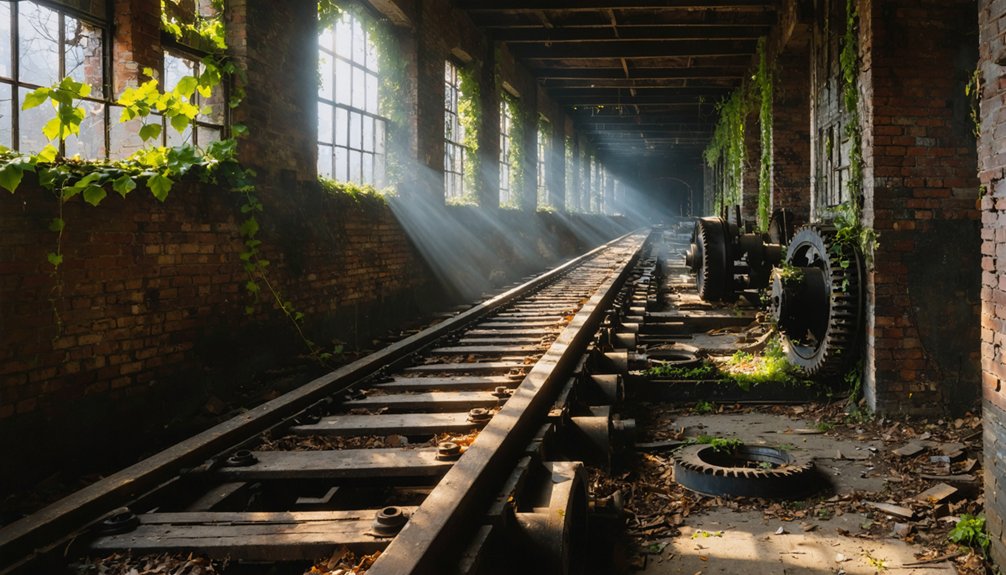
Located along what’s now US Route 15, Harmony Grove emerged as a significant mill village in Frederick County’s rich industrial landscape.
You’ll find its history deeply intertwined with Maryland’s unparalleled industrial growth, where grist and flour mills once dominated the local economy. The mill village’s strategic position near Frederick placed it at the heart of early American industry, connecting it to regional quarrying and brick-making operations.
The area’s industrial heritage extends beyond milling, encompassing ironworks dating to 1731 and limestone quarrying operations that supplied material for America’s expanding road networks.
While US 15’s construction in the 1970s split the village and led to structural losses, you can still trace Harmony Grove’s industrial legacy through surviving mill foundations and historic documentation, offering glimpses into Maryland’s bustling industrial past.
St. Mary’s City: From Capital to Historic Site
While Harmony Grove represents Maryland’s industrial heritage, St. Mary’s City stands as a symbol of the state’s colonial heritage and pioneering spirit of religious freedom.
You’ll find the historic significance of Maryland’s first European settlement deeply rooted in its 1634 founding by Cecil Calvert, who established it as a haven for both Catholics and Protestants fleeing persecution.
For 61 years, this bustling tobacco port served as Maryland’s colonial capital, thriving on maritime trade and agricultural prosperity.
You can trace the settlement’s progressive values to the 1649 Maryland Toleration Act, which guaranteed religious freedom for Trinitarian Christians.
However, by 1695, the capital’s relocation to Annapolis marked St. Mary’s City’s decline. The once-vibrant settlement gradually transformed into farmland, preserving beneath its soil the remnants of America’s earliest experiment in religious tolerance.
Hidden Stories Behind Maryland’s Abandoned Communities
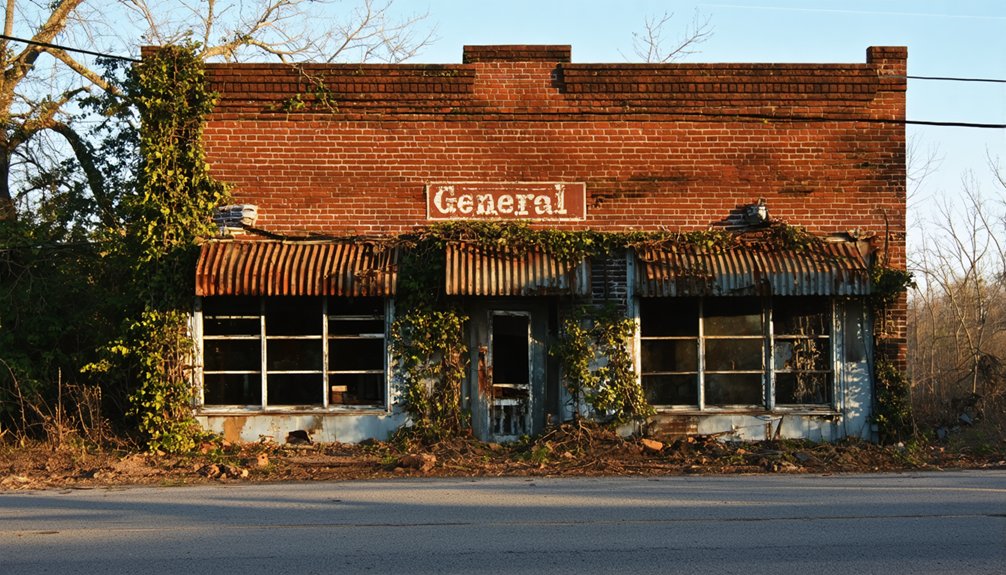
As you explore Maryland’s ghost towns, you’ll encounter tales of communities shaped by water’s destructive power, from Daniels’ devastation by Tropical Storm Agnes to the silting that doomed Port Tobacco Village’s harbor.
The state’s industrial heritage lives on through abandoned mill towns like Harmony Grove and textile settlements like Daniels, where economic shifts and resource depletion led to their ultimate demise.
Colonial-era settlements such as Monocacy and Port Tobacco Village reveal Maryland’s complex past, though many of their physical traces have vanished beneath centuries of development and natural reclamation.
Lost to Rising Waters
Throughout Maryland’s history, rising waters have claimed numerous communities, leaving behind submerged remnants and haunting memories of once-thriving towns.
You’ll find a tragic flood history in Warren, where Baltimore’s water needs led to the deliberate submersion of an entire mill town beneath Loch Raven Reservoir’s 23 billion gallons. The original Conowingo town met a similar fate, forcing residents to relocate as the reservoir consumed their community.
Daniels exemplifies nature’s relentless power, where multiple floods, particularly the devastating 1972 Tropical Storm Agnes, accelerated the town’s abandonment.
The Patapsco Valley’s submerged communities tell a centuries-long story of destruction, from the deadly 1868 flood that claimed dozens of lives to recent disasters in 2016 and 2018, forever changing Maryland’s landscape.
Industry’s Forgotten Legacy
Maryland’s industrial decline left an indelible mark on its landscape, with abandoned mines, defunct railroads, and silent factories serving as monuments to economic transformation.
You’ll discover a rich mining heritage across Garrett County, where over 9,500 acres of abandoned mine lands tell stories of boom-town prosperity and subsequent collapse.
Industrial nostalgia permeates sites like the Klotz Throwing Company in Lonaconing, frozen in time as a reflection of American manufacturing’s golden age.
From the A. Hoen & Co. Lithography Plant to the Eastern Pumping Station’s Romanesque architecture, these remnants of Maryland’s industrial might now stand quiet.
Railroad towns like Relay, once bustling with activity, have dwindled to sparse populations, while coal-dependent communities throughout the Appalachian region bear witness to an era when industry shaped Maryland’s destiny.
Time-Worn Colonial Footprints
Beyond the rusted machinery of industrial decline lies an older layer of Maryland’s forgotten places – the colonial settlements that once marked the frontier of European civilization in North America.
You’ll discover archaeological significance in these time-capsules of early American life, where colonial architecture tells stories of triumph and abandonment.
- St. Mary’s City, Maryland’s first capital, preserves 17th-century structural remnants and hidden Jesuit missions
- Port Tobacco’s colonial courthouse ruins echo tales of tobacco trade and maritime commerce
- Monocacy’s lost frontier settlement remains elusive despite historical documentation
- Oldtown’s strategic location hosted Native American settlements and colonial refugees
These ghost towns paint a complex portrait of Maryland’s colonial past, from Catholic governance to Underground Railroad operations, revealing how freedom and commerce shaped early American settlements.
Preserving Maryland’s Ghost Town History
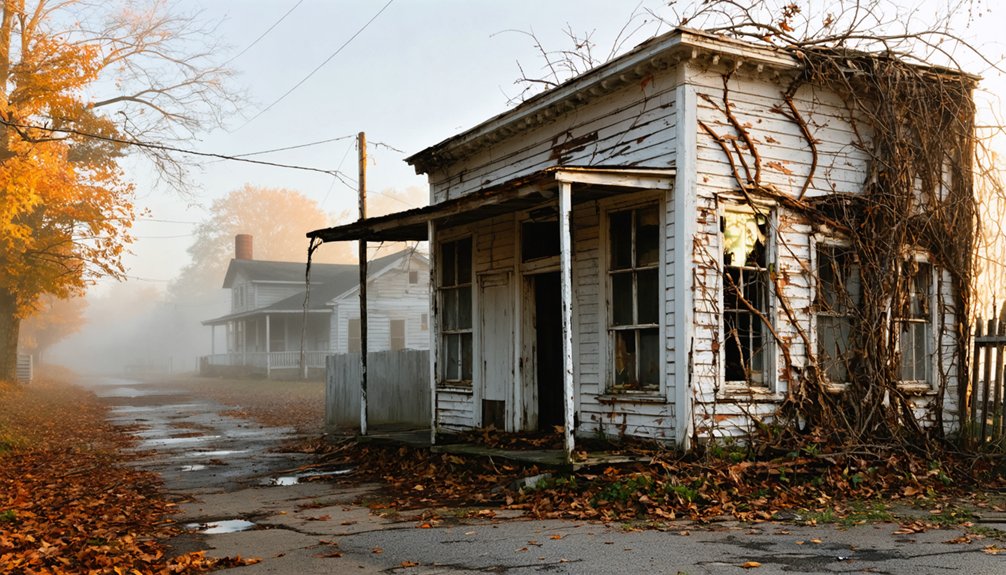
While abandoned settlements often face decay and neglect, Maryland has implemented extensive preservation initiatives that safeguard its ghost town heritage.
You’ll find that the Maryland Historical Trust and Heritage Areas Program have created a robust framework for ghost town preservation, with over $74 million in grants supporting these historically significant sites.
When you explore Maryland’s ghost towns, you’re benefiting from carefully planned preservation efforts that span all 23 counties.
The state’s commitment extends beyond basic structural maintenance – you’ll discover educational signage, protected burial grounds, and interpretive programs that bring these abandoned places to life.
Through the Historic Revitalization Tax Credit program and community-driven preservation guidelines, you’re witnessing a thoughtful balance between protecting the past and ensuring these time-capsule communities remain accessible for future generations.
Exploring Maryland’s Forgotten Settlements
From the rugged hills of Garrett County to the tidal waters of the Chesapeake Bay, you’ll discover an extensive network of abandoned settlements that chronicle Maryland’s industrial and cultural evolution.
Urban exploration enthusiasts regularly venture into these forgotten places, where haunted legends intertwine with historical fact.
Adventurous souls seek truth among shadows, exploring Maryland’s abandoned spaces where ghost stories meet documented history.
- Holland Island’s last house succumbed to the Chesapeake in 2010, marking the end of a once-thriving fishing community.
- The ghost fleet of Mallows Bay has transformed into a unique ecosystem, with ship remnants visible at low tide.
- Forest Haven Asylum’s decaying corridors stand as a stark reminder of institutional healthcare’s dark past.
- Port Tobacco Village, once Maryland’s second-largest town, now exists as the state’s smallest incorporated settlement.
These sites offer profound insights into Maryland’s past, where nature steadily reclaims human endeavors.
Natural Disasters and Town Abandonments in Maryland History
Throughout Maryland’s history, natural disasters and infrastructure projects have repeatedly transformed thriving communities into ghost towns, leaving behind poignant reminders of human vulnerability to environmental forces.
You’ll find Holland Island’s tragic battle with rising waters particularly compelling, as its last house surrendered to the Chesapeake Bay in 2010, highlighting the region’s limited disaster resilience.
In Daniels, Tropical Storm Agnes delivered the final blow to an already evacuated mill town, while planned flooding for reservoirs claimed both Warren and Conowingo.
These settlements’ environmental impact stories share a common thread – whether through sudden natural catastrophes or deliberate infrastructure development, Maryland’s landscape bears witness to communities that couldn’t withstand the relentless forces of nature and progress.
Frequently Asked Questions
Are Any of Maryland’s Ghost Towns Legally Accessible to the Public?
You’ll find legal public access at St. Mary’s City, National Park Seminary, and Four Locks, while Forest Haven Asylum has strict access restrictions requiring guided tours to avoid trespassing violations.
What Paranormal Activities Have Been Reported in These Abandoned Maryland Towns?
Like whispers echoing through time, you’ll encounter ghost sightings of Civil War soldiers, hear phantom footsteps in abandoned buildings, and witness haunted histories through spectral figures and unexplained phenomena in Maryland’s forsaken settlements.
Can Metal Detecting Be Done at Maryland’s Ghost Town Sites?
You’ll need landowner permission and must follow metal detecting regulations when exploring Maryland ghost towns. Most sites require permits on public land, while private property treasure hunting ethics demand written consent.
Which Ghost Towns Have Surviving Artifacts That Visitors Can Still See?
Like windows into the past, you’ll find surviving structures at Daniels (church ruins, gravestones), Four Locks (Stone house, log cabin), and historical remnants at Fort Foote (Rodman guns) and Clopper Mill.
Do Any Descendants of Original Residents Still Visit These Locations?
You’ll find documented descendant stories primarily in Daniels, where former residents’ families occasionally gather for informal reunions near the old church site, though records don’t show consistent visits to other locations.
References
- https://vitabrevis.americanancestors.org/2020/12/ghost-towns
- https://en.wikipedia.org/wiki/List_of_ghost_towns_in_Maryland
- https://kids.kiddle.co/List_of_ghost_towns_in_Maryland
- https://www.atlasobscura.com/things-to-do/maryland/abandoned
- https://www.youtube.com/watch?v=sbFq0i5w0-c
- https://rsftripreporter.net/ghost-towns-of-the-upper-potomac/
- https://www.youtube.com/watch?v=o86nQlcD8x4
- http://freepages.history.rootsweb.com/~gtusa/usa/md.htm
- https://en.wikipedia.org/wiki/Daniels
- https://www.youtube.com/watch?v=FoTBXomVN4k