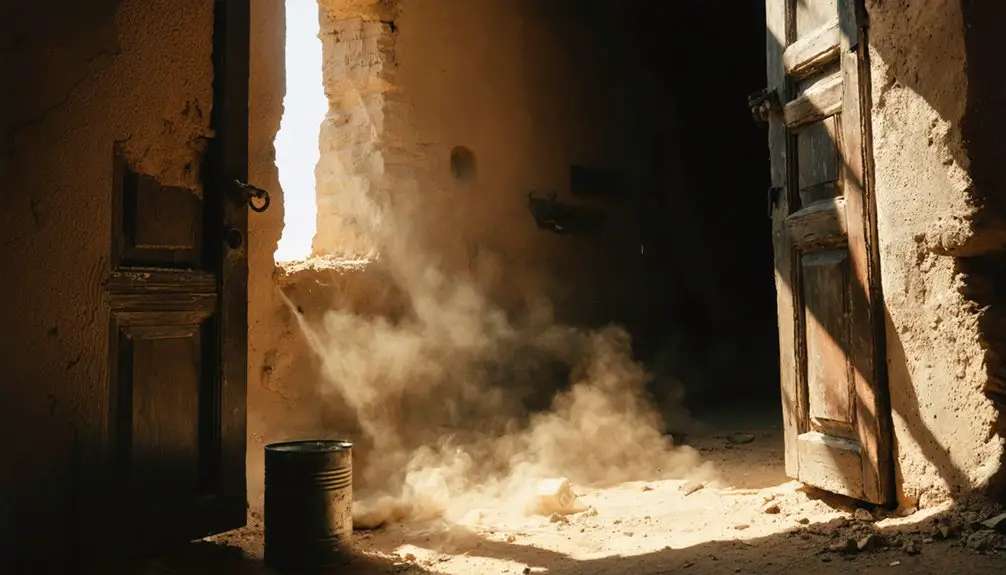
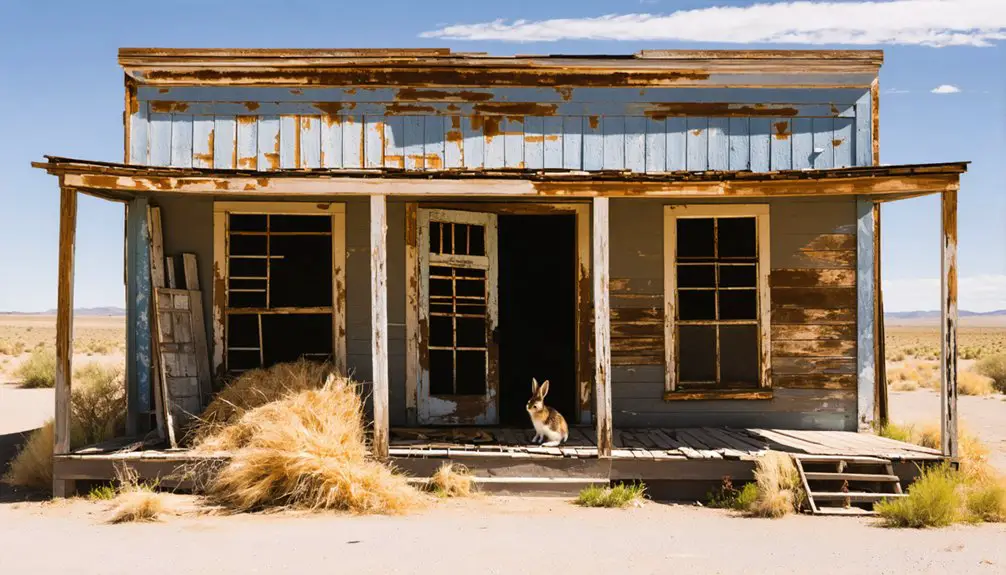
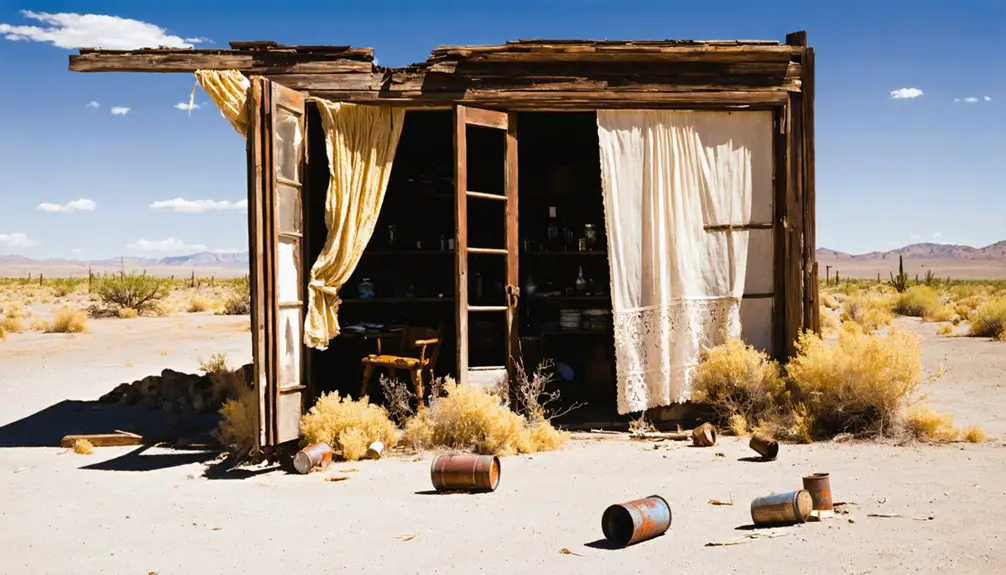
You’ll find some of the Southwest’s most evocative ghost towns scattered across New Mexico’s rugged terrain. White Oaks, once home to 4,000 residents after its 1882 gold strike, preserves its historic schoolhouse, while Mogollon’s dramatic false-front buildings cling to mountainsides in the Gila wilderness. Chloride’s standing adobe structures and Lake Valley’s legendary Bridal Chamber mine site tell compelling stories of boom-and-bust cycles. These desert time capsules hold countless tales of miners, settlers, and the transformative American West.
Key Takeaways
- White Oaks stands as a premier ghost town featuring preserved architecture from its 1882 gold rush era and 4,000-person population peak.
- Mogollon offers well-preserved false-front buildings and seasonal art galleries, making it an accessible and culturally rich destination.
- Chloride maintains standing adobe structures and a historic museum, showcasing the region’s mining heritage through authentic buildings.
- Lake Valley’s Bridal Chamber mine site illustrates New Mexico’s silver mining history, yielding millions in pure silver during its peak.
- Kingston features the historic Percha Bank building, reflecting the town’s prosperity during the late 1800s silver mining boom.
New Mexico’s Most Haunting Abandoned Towns
While the American West brims with abandoned settlements, New Mexico’s ghost towns stand apart for their haunting mix of preserved architecture and crumbling ruins.
From adobe ruins to weathered storefronts, New Mexico’s ghost towns capture the Southwest’s forgotten past in haunting, architectural silence.
You’ll discover ghostly legends in places like White Oaks, once rivaling Santa Fe in size after its 1882 gold strike, and Loma Parda, the notorious “Sodom on the Mora” that flourished near Fort Union. At its peak, White Oaks had four thousand residents.
The abandoned beauty of Mogollon awaits at 7,000 feet, where preserved false-front buildings and seasonal art galleries line the main street.
In Golden, you can explore the restored San Francisco de Asis Catholic Church and ancient turquoise mines, while Chloride offers an authentic Old West experience with its standing adobe structures and historic museum.
Each town tells a unique story of boom, bust, and the enduring spirit of the frontier. Visitors should always remember to leave artifacts undisturbed to maintain these historical treasures for future generations.
Why Ghost Towns Tell the Story of the American West
Because ghost towns capture the raw essence of Western expansion, they serve as time capsules of America’s most transformative era.
You’ll find their ghost town narratives woven through tales of boom-and-bust mining heritage, where places like Mogollon transformed from gold strikes into havens for outlaws like Butch Cassidy. Similar stories played out in Utah’s Silver Reef mines, where precious metal discoveries in sandstone drove rapid population growth before eventual abandonment. Towns like Calico showcase how silver price collapses could instantly empty thriving communities.
These abandoned settlements reveal the complex relationships between Native Americans and settlers, particularly evident in towns like Chloride, where Apache raids shaped community life.
They’re reflections of how railroads determined a town’s fate, as seen in Duran’s rise and fall with the El Paso & Northeastern line.
Through preserved structures and documented stories, you’re witnessing more than empty buildings – you’re experiencing the raw frontier spirit that defined American progress through cycles of discovery, conflict, and ultimate abandonment.
Essential Tips for Ghost Town Explorers
You’ll need more than a casual attitude when heading into New Mexico’s ghost towns, as these remote sites require careful preparation and proper safety equipment.
Your exploration kit should include essential gear like a quality headlamp, N95 respirator, first aid supplies, and reliable navigation tools including offline maps and a compass.
Be mindful that cell service may be unreliable in these remote locations, making offline navigation tools crucial.
When exploring abandoned structures, always establish and mark clear exit paths, stay near load-bearing walls, and keep safety equipment readily accessible. Remember to travel with at least one exploration partner for enhanced safety and mutual support.
Safety First When Exploring
Before venturing into New Mexico’s historic ghost towns, understanding essential safety protocols can mean the difference between an enriching exploration and a dangerous misadventure.
You’ll need to navigate both trespassing laws and physical hazards – securing property owner permission is non-negotiable, as all sites remain legally owned despite their abandoned appearance.
Equip yourself properly before exploring: wear an FFP3 or P100 respirator to protect against asbestos and black mold, and don sturdy boots, long sleeves, and heavy pants. Be extremely cautious of undetonated explosives that may still be present at these sites.
You’ll want offline maps downloaded to your phone, plus a physical compass as backup. Always carry emergency supplies for at least three days since help can be hours away in remote locations.
When inside structures, stay close to load-bearing walls and avoid water-damaged floors. Remember, even seemingly stable buildings can harbor hidden structural weaknesses.
Pack Essential Survival Gear
Having established safety protocols for ghost town exploration, let’s focus on assembling the right survival gear for your journey.
Since emergency response times in rural areas often exceed 13 minutes, reliable self-rescue equipment is essential.
You’ll need two separate water filtration systems and backup purification tablets to safely drink from natural sources.
Pack multiple light sources, including headlamps and backup batteries stored in waterproof containers, along with analog navigation tools like maps and compasses.
Your essential packing list should include protective clothing: sturdy boots, heavy-duty gloves, and long-sleeve garments to guard against hazards.
Don’t forget dust masks and joint pads for crawling through tight spaces.
Round out your gear with a reliable multi-tool, emergency repair supplies, and a thorough first aid kit.
Remember to pack high-energy food and emergency shelter items – you’re exploring remote locations where self-reliance is vital.
Consider bringing a Pathfinder Stainless Steel Bottle cooking kit for preparing hot meals during extended explorations.
The Silver Rush Legacy: Mining Ghost Towns
While New Mexico’s mineral wealth sparked numerous rushes during the late 1800s, Lake Valley’s Bridal Chamber mine stands as perhaps the most spectacular silver mining discovery in the territory’s history.
You’ll find this remarkable ghost town’s legacy in the phenomenal ore chamber that yielded $2.7 million in pure silver – so pure it shipped directly to the mint without smelting. The deposit’s riches drew thousands until Apache raids and fraudulent stock schemes complicated operations.
When you explore the area today, you’re walking through a tribute to both triumph and tragedy. The devastating crash of silver prices in 1893 sealed Lake Valley’s fate, along with neighboring boomtowns like Chloride, where 480 claims once supported a thriving community of 3,000 people.
Historical Figures Who Shaped These Desert Towns
The colorful figures who roamed New Mexico’s mining towns left an indelible mark on the territory’s character. In Shakespeare, you’ll find the haunting traces of outlaw legends like Butch Cassidy, Johnny Ringo, and Billy the Kid, who contributed to the town’s reputation for harboring notorious gunslingers.
The Kid’s infamous egg dispute at the Stratford Hotel remains part of local lore.
Mining pioneers like Thomas Birch transformed the landscape when he struck gold in Bear Creek, launching Pinos Altos’ meteoric rise with 700 prospectors flooding the area.
Meanwhile, Harry Pye’s silver discovery while freighting for the Army birthed Chloride, despite ongoing Apache raids.
These figures navigated a wild frontier where claim jumpers, gunmen, and gamblers shaped the destiny of settlements that would later become ghost towns.
Architectural Remnants and Preserved Buildings
You’ll find some of New Mexico’s most compelling historic architecture preserved among these ghost towns, from White Oak’s iconic School House to Chloride’s striking false-front buildings along Main Street.
Kingston’s remarkable Percha Bank and Golden’s San Francisco de Asis Catholic Church stand as monuments to the region’s silver mining prosperity of the late 1800s.
The adobe craftsmanship of master builder Abenicio Salazar in Kingston and the traditional structures in Loma Parda showcase the territory’s distinctive architectural heritage that has withstood more than a century of desert conditions.
Historic Buildings Still Standing
Standing as silent witnesses to New Mexico’s frontier past, remarkable architectural treasures can still be found throughout the state’s most prominent ghost towns.
The historic architecture spans from well-preserved religious structures to authentic commercial buildings, showcasing successful preservation efforts across diverse landscapes.
- San Francisco de Asis Catholic Church maintains its stunning 1830s adobe architecture and still holds regular masses.
- White Oaks’ No Scum Allowed Saloon opens its doors with original signage intact.
- Henderson’s store in Golden has operated continuously since 1918.
- Chloride’s Main Street retains authentic false-front buildings housing modern businesses.
- Mogollon’s mountain structures demonstrate remarkable resilience at 7,000 feet elevation.
You’ll find these architectural gems scattered throughout high mountain passes, along scenic byways, and nestled in remote valleys – each telling its own story of frontier determination.
Mining-Era Structures Preserved
Mining-era relics dot New Mexico’s ghost town landscapes, preserving tangible connections to the state’s prosperous mineral extraction history.
You’ll find abandoned architecture throughout these frontier settlements, from Chloride’s false-front buildings and preserved Pioneer Store Museum to Lake Valley’s carefully restored schoolhouse and chapel.
In Hillsboro, you can explore the Edmund Tittman House and courthouse ruins, while Mogollon offers remarkably intact structures scattered through the Gila National Forest, including the historic Little Fannie Mine site.
Golden’s San Francisco de Asis Catholic Church stands as a monument to early mining-era adobe construction, with Henderson’s store maintaining its historical significance in its original 1918 building.
These preserved structures provide authentic glimpses into New Mexico’s mining heritage, from operational store fronts to deteriorating stone foundations.
Planning Your Ghost Town Road Trip
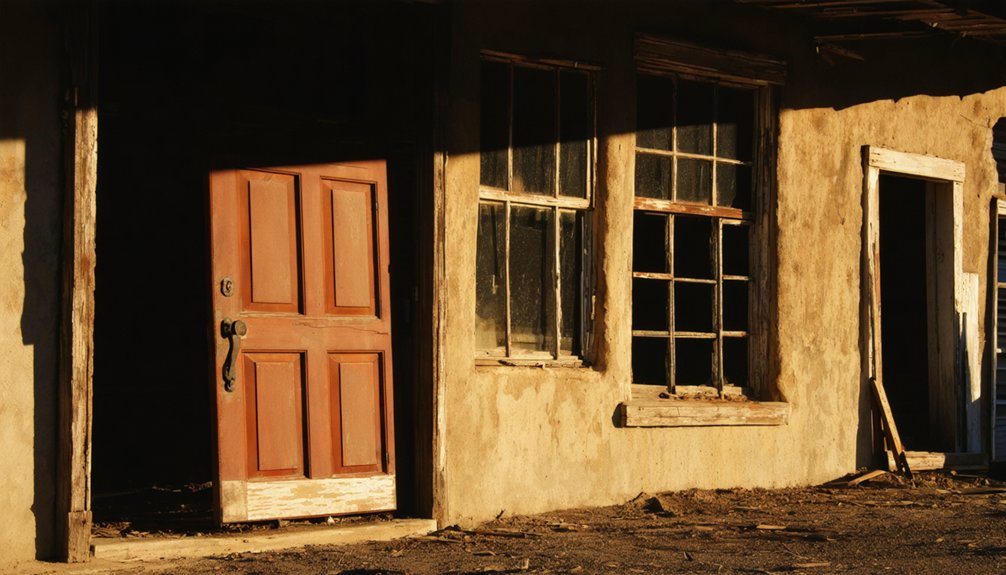
Planning a New Mexico ghost town adventure requires careful consideration of routes, accessibility, and seasonal conditions.
Your ghost town exploration can maximize efficiency by focusing on major scenic roadways like the Turquoise Trail between Albuquerque and Santa Fe, or Route 66’s corridor near Cuervo.
- Pack offline maps and emergency supplies – many locations lack cell coverage
- Choose your vehicle wisely – high-clearance 4x4s are essential for remote sites
- Check weather conditions, especially for elevated towns like Mogollon at 7,000 feet
- Research private property restrictions and obtain necessary permits beforehand
- Plan your route around clustered sites – combine Madrid, Cerrillos, and other Turquoise Trail towns
Consider starting with easily accessible locations off main highways before venturing to remote mountain destinations that require specialized preparation and navigation skills.
Photography Guide: Capturing Desert History
Ready to photograph New Mexico’s ghost towns? You’ll need specific photographic techniques to capture these desert time capsules effectively.
Start with wide-angle shots of main streets and building clusters to establish the town’s layout, then move in closer to document individual structures like saloons, jails, and churches.
Begin by capturing the whole town’s scope through wide-angle shots before zeroing in on the distinctive buildings that shaped frontier life.
Master composition strategies by using your tripod for steady interior shots where light is scarce. Frame architectural details like weathered window frames, door handles, and vintage signage to tell the story of craftsmanship and decay.
Don’t overlook artifacts – abandoned vehicles, tools, and personal items offer compelling glimpses into past lives.
Before heading out, verify site accessibility and any photography restrictions. Check weather forecasts, road conditions, and cell coverage to ascertain you’re prepared for remote desert shooting conditions.
Hidden Treasures and Notable Landmarks
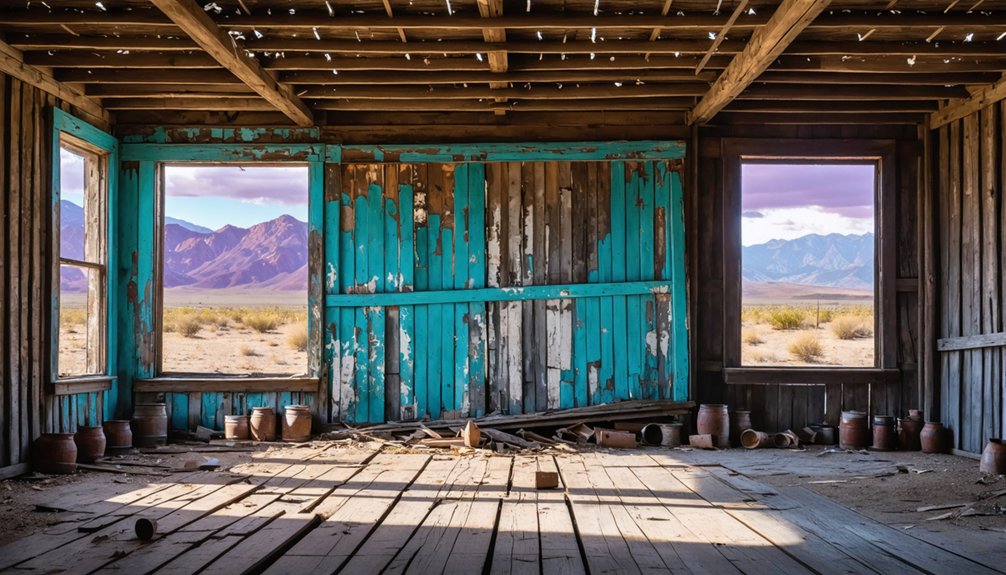
You’ll find remarkably preserved structures across New Mexico’s ghost towns, from Hillsboro’s Edmund Tittman House to Lake Valley’s restored schoolhouse and chapel.
In Cerrillos, the Turquoise Mining Museum houses an impressive collection of mining artifacts that tell the story of the region’s mineral wealth and cultural heritage.
Shakespeare’s original buildings and Mogollon’s main street architecture offer authentic glimpses into the territory’s mining heyday, complete with period-specific equipment and structural details that have withstood the test of time.
Historic Buildings Still Standing
While many ghost towns have crumbled into obscurity, New Mexico’s abandoned settlements feature remarkably preserved structures that offer glimpses into the state’s vibrant frontier past.
From White Oaks’ mining-era architecture to Chloride’s intact commercial district, these historic buildings stand as symbols of the region’s rich heritage.
- San Francisco de Asis Catholic Church in Golden continues to hold mass in its original 1830s adobe structure
- Cerrillos’ historic buildings now house the Turquoise Mining Museum along dusty frontier streets
- White Oaks preserves frontier architecture from its 1880s gold rush heyday
- Chloride’s Main Street showcases authentic false-front buildings and adobe structures
- Loma Parda’s adobe church remains standing as a sentinel over the Mora River
These abandoned architecture gems exemplify New Mexico’s commitment to historic preservation, allowing you to step directly into the Old West era.
Mining Equipment and Artifacts
Beyond the historic buildings that dot New Mexico’s ghost towns, tangible remnants of the mining era tell an equally compelling story.
You’ll find archaeological artifacts scattered across these sites, from mining equipment at Dawson’s Stag Cañon mines to Chloride’s metal remnants and hand tools. The Pioneer Store in Chloride, now restored as a museum, stands frozen in time since 1923, still housing cast-iron pans and pickaxes from its heyday.
At Dawson, while most heavy machinery was relocated after abandonment, the mine entrances remain as silent witnesses to tragic explosions that claimed hundreds of lives.
In Chloride, you can spot old mining helmets, discarded firearms, and personal effects that paint a vivid picture of the sudden exodus following the silver market’s collapse.
Safety and Preservation Guidelines
Although ghost towns offer fascinating glimpses into New Mexico’s mining heritage, exploring these historic sites requires careful attention to safety protocols and preservation guidelines.
You’ll need to balance your adventurous spirit with proper precautions and respect for these historical treasures.
- Always check weather conditions and notify someone of your travel plans before heading out
- Bring essential gear including offline maps, first aid kits, and plenty of water
- Watch for structural hazards like loose boards, open mine shafts, and unstable foundations
- Respect private property boundaries and obtain necessary permissions before exploring
- Follow “take only photos, leave only footprints” to preserve artifacts for future visitors
Remember that many ghost towns still house year-round residents, so maintain respectful silence and obtain permission before photographing occupied structures.
The combination of safety protocols and preservation ethics guarantees these historical sites remain intact for generations to come.
Frequently Asked Questions
Are There Any Active Paranormal Investigations Conducted in These Ghost Towns?
You’ll find ongoing paranormal tours and ghost hunting at Dawson Cemetery, Las Cruces’ courthouse, and Silver Creek Inn, where Southwest Expeditions and local investigators actively conduct equipment-based supernatural research.
Can Visitors Collect Artifacts or Rocks Found in Ghost Towns?
Like footprints in history’s sand, you’ll need to leave artifacts untouched. For responsible collecting, you can’t remove objects – they’re protected by law and essential for artifact preservation.
What Is the Best Season to Visit New Mexico Ghost Towns?
You’ll find the best time is fall (September-October) or spring (April-May), when mild temperatures in the 50s-70s°F support seasonal activities like extended site exploration with fewer crowds.
Do Any Ghost Towns Offer Overnight Camping or Accommodation Options?
You’ll find camping options at Shakespeare through Harvest Hosts RV program, Hachita’s Community Center offers overnight stays, White Oaks welcomes overlanding near Lincoln Forest, and Animas provides RV spots at Smuggler’s Roost.
Are Metal Detectors Allowed When Exploring New Mexico Ghost Towns?
You’re generally not allowed to metal detect in New Mexico ghost towns due to strict regulations protecting their historical significance. You’ll need special permits, and many sites completely prohibit detecting activities.
References
- https://newmexicotravelguy.com/new-mexico-ghost-towns/
- https://geronimoranch.com/blog/ghost-towns-in-nm/
- https://santafe.com/new-mexico-road-trip-ghost-towns/
- https://www.atlasobscura.com/things-to-do/new-mexico/ghost-towns
- https://www.tripadvisor.com/Attractions-g28952-Activities-c47-t14-New_Mexico.html
- https://www.newmexicomagazine.org/blog/post/abandoned-ghost-towns-new-mexico/
- https://en.wikipedia.org/wiki/List_of_ghost_towns_in_New_Mexico
- https://compaslife.com/blogs/journal/abandoned-enchantment-ghost-towns-of-new-mexico-1
- https://www.newmexicoghosttowns.net/counties
- https://www.newmexico.org/places-to-visit/ghost-towns/