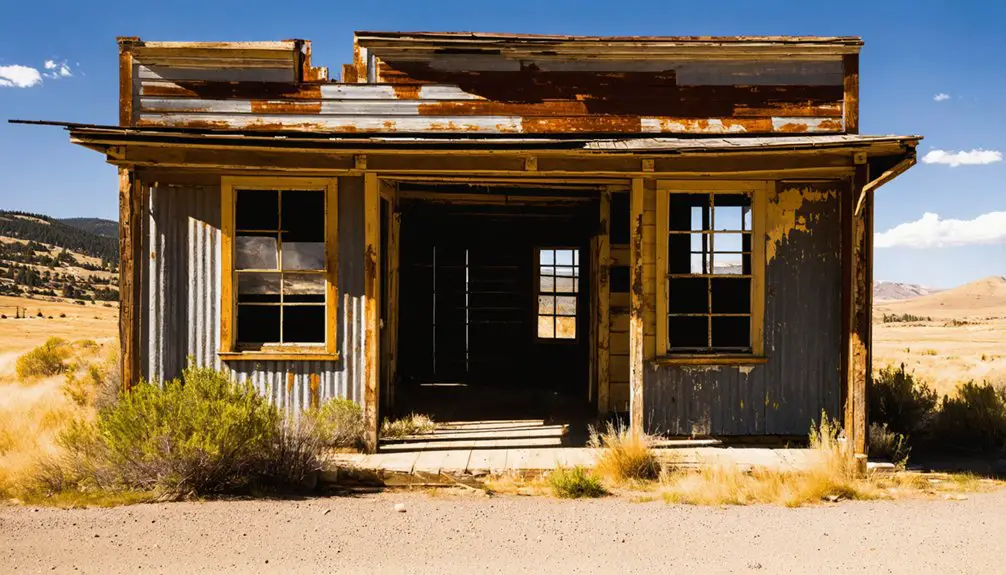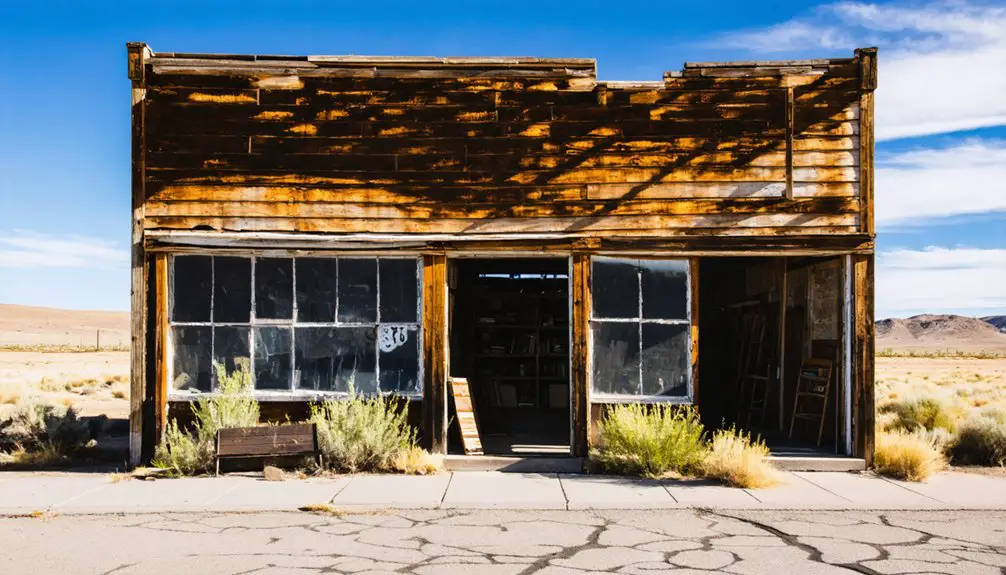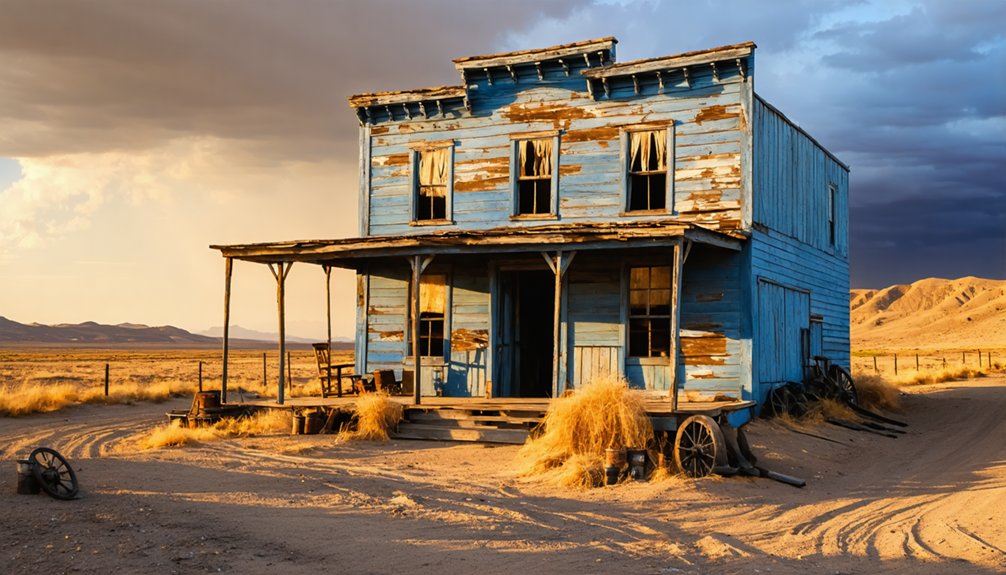
Oregon boasts over 250 ghost towns, the highest number in America, offering you a remarkable window into the 19th-century frontier spirit. You’ll find well-preserved sites like Golden, with its iconic church, and Shaniko, featuring rustic buildings and vintage vehicles. The mining town of Sumpter showcases an operational dredge, while Buncom highlights Chinese mining influence. Each abandoned settlement tells a unique story of gold rushes, timber booms, and pioneering dreams waiting to be discovered.
Key Takeaways
- Golden is a well-preserved ghost town featuring historic structures including an iconic church and post office from Oregon’s mining era.
- Shaniko offers excellent photography opportunities with its rustic buildings, vintage vehicles, and annual heritage celebration called Shaniko Days.
- Sumpter maintains an operational gold dredge and historic Main Street, providing visitors with authentic Gold Rush-era experiences.
- Buncom showcases Chinese mining influence and hosts a yearly preservation festival celebrating its multicultural mining heritage.
- Canyon City retains numerous original Gold Rush structures, making it one of Oregon’s most historically authentic ghost towns.
Oregon’s Ghost Town Legacy: A Historical Overview
Why did Oregon become home to over 250 ghost towns scattered across its rugged landscape? The story begins with the 19th-century frontier spirit, when gold discoveries and timber resources sparked a massive wave of settlement across the state.
You’ll find ghost town origins deeply rooted in the mining history of regions like Southern Oregon, where fortune seekers established bustling communities around precious metal deposits.
These settlements faced inherent challenges from the start. High altitudes, remote mountain locations, and difficult terrain made long-term sustainability a constant struggle. Oregon currently boasts the highest count of ghost towns in America.
Today, many of these abandoned sites have been transformed into state heritage sites that preserve their historical significance.
When the federal government shut down gold mines in 1942, many communities couldn’t survive. New infrastructure, including railroads and highways, often bypassed established towns, while devastating fires and economic downturns in industries like wool and sheep farming sealed their fate.
Top Ghost Towns Worth Exploring
While each abandoned settlement tells its own compelling story, five ghost towns stand out as must-visit destinations for history enthusiasts exploring Oregon’s mining heritage.
Oregon’s ghost towns beckon history lovers, each abandoned settlement offering a unique window into the state’s fascinating mining past.
You’ll discover Golden’s well-preserved structures, including its distinctive church and post office, offering authentic glimpses into 1890s life. The site’s lack of saloons made it unique among mining settlements of that era.
Buncom showcases Chinese mining influence and hosts an annual festival celebrating its preservation.
Shaniko’s rustic buildings and vintage vehicles create perfect photo opportunities in northern Oregon.
For serious ghost town exploration, don’t miss Sumpter’s operational dredge and historic Main Street, evidence of its gold mining legacy.
Canyon City, though still populated, maintains its Gold Rush charm as Grant County’s seat, with numerous original structures dotting its streets.
Each site provides unique insights into Oregon’s rich mining history.
The historic Sterling Creek Cemetery remains as the sole remnant of Sterlingville, a once-thriving town of 1,200 residents.
Travel Tips and Best Times to Visit
Planning your ghost town expedition in Oregon requires careful consideration of both timing and logistics. Your travel preparation should account for remote locations with limited services, especially in eastern and southern regions. Communities like Burns Junction mark important highway junctions but offer few remaining services.
Pack extra water, snacks, and paper maps since cell service can be unreliable in areas like Greenhorn and Golden. Oregon’s status as having more ghost towns than any other state means you’ll need thorough preparation for extensive travel.
- Visit during spring or fall to avoid extreme temperatures and challenging road conditions – summer brings intense heat while winter makes high-elevation sites inaccessible.
- Attend Buncom Day Festival in May to experience community preservation efforts firsthand while exploring the historic chromite mining area.
- Plan your route carefully through the state’s ghost town corridor, from Ontario’s arid valleys to Shaniko’s fire-prone grasslands, ensuring you’re equipped for each region’s unique challenges.
Photography Spots and Preservation Status
Oregon’s ghost towns offer photographers an unparalleled canvas of weathered buildings, vintage artifacts, and atmospheric scenes that tell the story of the American frontier.
In Shaniko, you’ll find historic hotels, wooden sidewalks, and vintage cars perfectly positioned for both documentary and artistic shots. The town’s remarkably preserved structures provide excellent subjects for HDR photographic techniques. During the summer months, businesses are more likely to be open for interior photography access. Oregon’s status as ghost town capital of the U.S. means photographers have over 80 registered locations to capture.
Hardman’s golden-hued buildings and agricultural remnants create distinctive opportunities against the high desert backdrop.
While preservation challenges exist, many structures remain protected through heritage site designations and active resident stewardship. You’ll need to respect private property boundaries, but the small, walkable layouts of these towns allow for thorough coverage.
For best results, plan your visit during overcast conditions when harsh sunlight won’t compromise your shots.
Local Events and Annual Gatherings
If you’re enthusiastic to experience Oregon’s ghost towns at their liveliest, you’ll find festivals and events throughout the year bringing these historic sites back to life.
During Shaniko Days, the 3-minute parade circles through town multiple times, creating a charming display of small-town celebration. The Spirit of Halloweentown Festival in St. Helens transforms the town into a Halloween wonderland each October, with haunted tours and decorations displayed throughout the month, while Shaniko Days celebrates the Old West heritage of Oregon’s famous “Wool Capital of the World.”
For paranormal enthusiasts, the Oregon Ghost Conference in Seaside offers a chance to connect with fellow history buffs and explore the supernatural stories behind these abandoned communities.
Seasonal Ghost Town Festivals
Looking to experience Oregon’s ghost towns at their liveliest? Two remarkable ghost town festivals transform these historic sites into vibrant community celebrations.
These events offer a unique opportunity to explore historic ghost towns in Oregon while engaging with local culture and history. As you wander through the streets, you’ll find art, music, and storytelling that bring the past to life. Each festival showcases the rich heritage of these towns, making for an unforgettable experience.
While you’re exploring ghost towns near Crater Lake, don’t miss the chance to visit the nearby natural wonders that enhance your adventure. The breathtaking scenery of Crater Lake National Park offers a stunning backdrop to the rich history of the area. As you delve deeper into these abandoned towns, you’ll uncover stories of resilience and perseverance that shaped their legacies.
In St. Helens, the Spirit of Halloweentown Festival brings October weekends alive with costumed revelry, while Shaniko Days resurrects the old “Wool Capital of the World” each August.
- Wander through St. Helens’ Old Town District, where the magic of “Halloweentown” comes alive with carved pumpkins, haunted tours, and vintage movie props.
- Step back in time at Shaniko Days, where vintage cars roll past preserved historic buildings and bluegrass music fills the sagebrush plains.
- Immerse yourself in living history as local merchants, storytellers, and craftspeople keep these ghost towns’ spirits alive through authentic cultural experiences.
Historic Reenactment Gatherings
Step back in time as passionate reenactors breathe life into Oregon’s ghost towns through meticulously crafted historical gatherings.
You’ll discover immersive reenactment experiences at Shaniko Days, where the former “Wool Capital of the World” transforms into a vibrant festival complete with vintage cars and Old West charm along wooden sidewalks.
Don’t miss the Living History Day at Oregon Military Museum, where historical accuracy takes center stage through interactive demonstrations.
For adults seeking an authentic glimpse into the past, Pendleton Underground Tours‘ annual fundraiser features 75 live actors recreating the town’s colorful entertainment history.
Film buffs can explore Dead Ox Flat, where remnants of a 1972 Gunsmoke episode filming, including wooden grave markers, still stand.
Complete your journey at White River Falls State Park to explore early 20th-century hydroelectric ruins.
Hidden Gems and Lesser-Known Sites
Oregon’s most intriguing ghost towns often lie far from the beaten path, rewarding adventurous explorers with authentic remnants of the American West.
Hidden treasures like Friend and Greenhorn beckon those willing to venture into remote landscapes, where forgotten stories whisper through abandoned doorways and crumbling foundations.
Remote Oregon ghost towns stand as silent sentinels, their weathered structures holding secrets of pioneers who dared to dream big.
At elevations reaching over 6,000 feet, these settlements tell tales of determination, struggle, and ultimate surrender to nature’s harsh realities.
- Discover Granite’s precarious buildings where wildflowers reclaim the foundations of a once-bustling 5,000-person mining community.
- Navigate the challenging routes to Friend, where isolation and severe winters proved too formidable for early settlers.
- Explore Greenhorn’s windswept remains at Oregon’s highest ghost town elevation, accessible only during summer months.
Safety Guidelines and Access Information

Before you head out to Oregon’s ghost towns, you’ll need to monitor seasonal road conditions through TripCheck.com and Travel Oregon alerts, as many sites become inaccessible during winter months or after heavy rainfall.
While some locations offer guided tours that provide structured access and historical context, others require careful advance planning and satellite communications for emergencies.
You must keep emergency contact numbers handy, including the Lane County Sheriff (541-682-4150) and Public Works (541-682-6900), and notify others of your intended route and return time.
Seasonal Road Conditions
While exploring Oregon’s ghost towns offers a fascinating journey through history, accessing these remote sites requires careful attention to seasonal road conditions and thorough preparation.
Road maintenance varies dramatically with elevation and weather impacts can leave routes impassable, especially in the Elkhorn Mountains where snow lingers into late spring.
- Summer brings peak access with clear roads and reliable services, making it ideal for reaching remote locations like Shaniko via Highway 97.
- Fall rewards adventurers with stunning foliage along the Powder River, though weather changes quickly require extra preparation.
- Winter transforms these historic sites into truly abandoned spaces, with most services closed and challenging road conditions demanding pioneer-level planning.
For the freest exploration, check TripCheck.com and carry essential supplies, as cell service remains limited in these mountain passages.
Guided Tour Requirements
To guarantee a safe and enriching experience exploring these historic settlements, guided tours follow strict protocols that balance preservation with accessibility.
You’ll need to book your tour at least 24 hours in advance by calling 541-276-0730, and bring a valid ID for verification. Tour requirements include wearing comfortable walking shoes and weather-appropriate clothing.
The one-mile walking routes last 60-90 minutes, depending on the tour type. If you’re interested in ghost tours, you must be 12 or older, while underground tours welcome children as young as six.
You’ll want to respect the site’s historical integrity by following your guide, keeping your phone silent, and refraining from audio or video recordings. While flash photography is permitted, remember that access to private buildings isn’t included in any tours.
Emergency Contact Protocols
Ensuring visitor safety across Oregon’s ghost towns requires a multi-layered emergency response system. When exploring these historic sites, you’ll need to follow specific emergency procedures and keep essential contact numbers handy. For immediate assistance, dial 9-1-1, but be aware that remote locations may have limited cell service.
- Sign up for OR-Alert and PublicAlerts.org notifications before your visit – they’ll keep you informed about weather conditions, fires, or other hazards near ghost town sites.
- Store the OERS number (800-452-0311) in your phone for reporting significant incidents requiring state resources.
- Contact your local county emergency management office prior to your trip for site-specific safety protocols and current access conditions.
Remember to check in with the nearest ranger station or local authorities before venturing into these remote historical locations.
Frequently Asked Questions
Are There Any Reported Paranormal Activities in Oregon’s Ghost Towns?
You’ll find extensive paranormal investigations revealing ghost stories at Rock Point Cemetery, Rhododendron Village, Fort Stevens, and Wolf Creek Inn, where apparitions, mysterious lights, and supernatural encounters regularly occur.
Can Visitors Take Home Artifacts Found in Ghost Towns?
No, you can’t remove artifacts from ghost towns – it’s illegal and punishable by fines and imprisonment. These items hold historical significance and must remain protected for artifact preservation and cultural research.
Do Any Ghost Towns Still Have Permanent Residents?
Yes, you’ll find permanent residents in several ghost towns. Shaniko has 30 people, Hardman keeps 20 residents, and Sumpter maintains 200 locals who preserve historic buildings and share fascinating resident stories.
Which Ghost Towns Allow Overnight Camping or Accommodation?
You’ll find camping options at Champoeg’s developed campground, while Cornucopia offers lodge stays and cabins. Mabel and Granite allow dispersed camping nearby – just bring your own accommodation in surrounding public lands.
Are Metal Detectors Permitted in Oregon’s Ghost Town Sites?
You can’t use metal detectors in Oregon’s ghost towns due to strict preservation regulations. These sites are protected by federal and state laws safeguarding historical artifacts and cultural resources.
References
- https://www.visitoregon.com/oregon-ghost-towns/
- https://en.wikipedia.org/wiki/List_of_ghost_towns_in_Oregon
- https://thatoregonlife.com/2016/04/road-trip-ghost-towns-eastern-oregon/
- http://www.photographoregon.com/ghost-towns.html
- https://www.nationaldaycalendar.com/lists/12-oregon-ghost-towns
- https://traveloregon.com/things-to-do/culture-history/ghost-towns/
- https://www.overlandbound.com/forums/threads/ghost-towns-in-oregon.20177/
- https://eastoregonian.com/2019/04/11/ghosts-of-eastern-oregon/
- https://indigocreekoutfitters.com/news/2022/05/05/exploring-southern-oregons-ghost-towns/
- https://www.pdxmonthly.com/travel-and-outdoors/2025/10/oregon-ghost-towns-history