You’ll discover Tennessee’s most fascinating ghost towns across diverse landscapes, from Elkmont’s preserved mountain cabins to Loyston’s submerged ruins beneath Norris Lake. Don’t miss Cades Cove’s historic structures along an 11-mile loop road, or Port Royal’s significant Trail of Tears site. The abandoned Fun Mountain near Gatlinburg offers glimpses of 1990s entertainment history. Each location holds unique stories of Tennessee’s vanished communities waiting to be explored.
Key Takeaways
- Elkmont Ghost Town showcases 19 restored structures within Great Smoky Mountains National Park, offering a glimpse into early 20th-century Appalachian life.
- Port Royal State Historic Park preserves Tennessee’s earliest trading settlement, featuring Trail of Tears history and original town remnants.
- Loyston, now submerged beneath Norris Lake, emerges during droughts to reveal foundations of a once-thriving community from 1894.
- Fun Mountain near Gatlinburg stands as an eerie abandoned amusement park with visible ruins, including a rusting chairlift.
- Cades Cove preserves numerous historic structures and cemeteries while offering an 11-mile scenic loop for exploring pioneer history.
A Haunting History at Elkmont
While many ghost towns in Tennessee arose from mining operations, Elkmont’s haunting tale began as a thriving logging community in the 19th century.
You’ll discover a story that spans from Robert Trentham’s 1830s cabin to the Little River Lumber Company‘s massive operation, which transformed this quiet valley into the county’s second-largest town. The company built Little River Railroad to transport logs efficiently through the mountains.
As you explore the ghostly remnants today, you’ll find the echoes of two prestigious vacation clubs that once hosted Knoxville’s elite. Visitors today often report eerie sensations and presences while walking through the abandoned buildings.
The Wonderland Hotel and Appalachian Club brought glamour to these mountains until the establishment of the Great Smoky Mountains National Park changed everything.
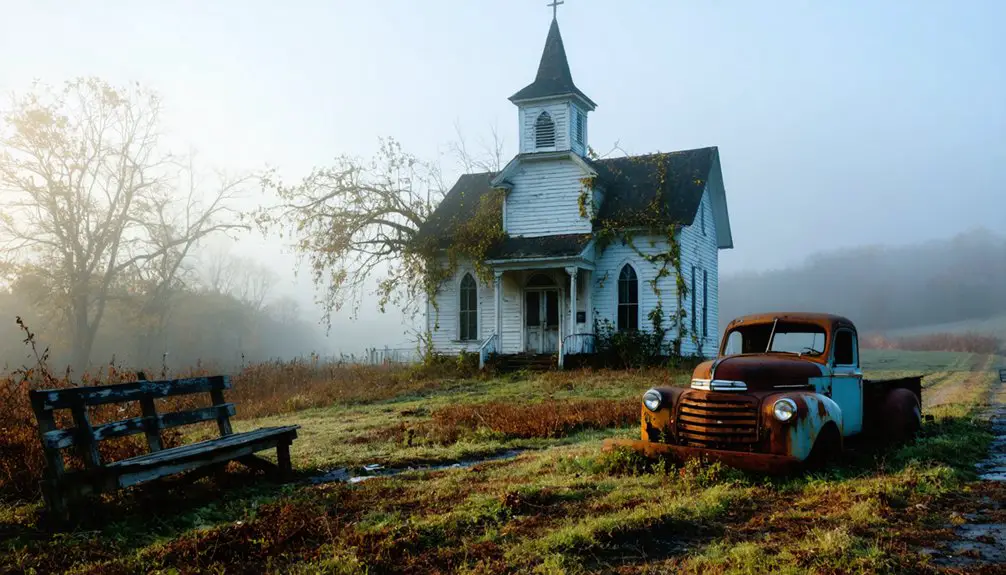
Now, among the Elkmont cabins, crumbling chimneys, and weathered walls, you can trace the path from bustling resort to abandoned wilderness, where 19 restored structures stand as silent witnesses to a vanished era.
The Scenic Beauty of Cades Cove
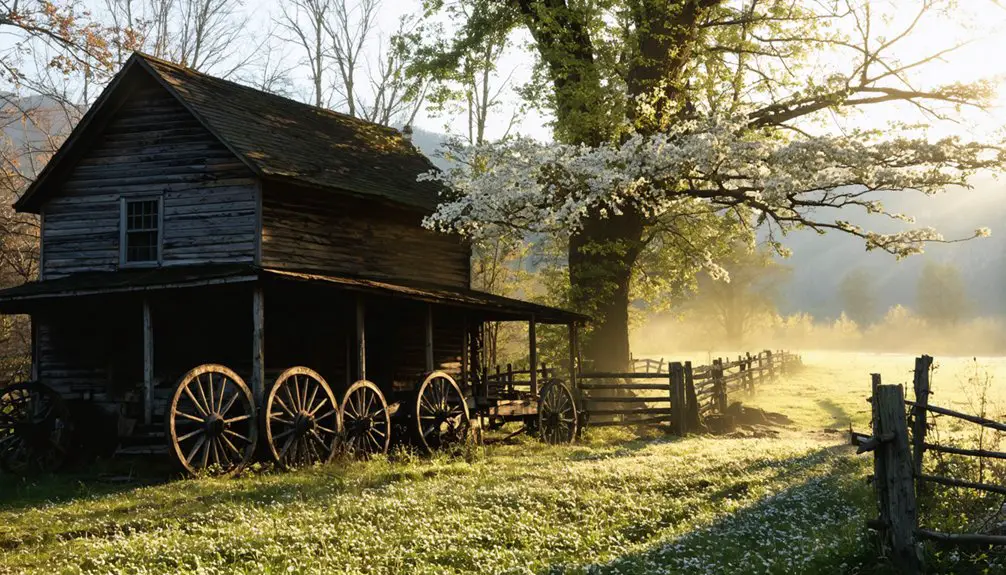
Tucked away in the heart of Great Smoky Mountains National Park, Cades Cove stands as Tennessee’s most treasured valley sanctuary.
This 11-mile loop road offers you unparalleled wildlife viewing opportunities against a backdrop of majestic mountains and rolling meadows. Take advantage of the vehicle-free Wednesdays during summer months for a peaceful experience. As you navigate the 20-mph scenic drive, you’ll discover why millions visit this pristine wilderness each year. You can explore over fourteen historical cemeteries that tell the stories of early settlers who once called this valley home.
To maximize your Cades Cove adventure:
- Arrive at sunrise for prime wildlife spotting – you’re likely to encounter white-tailed deer, black bears, and wild turkeys in their natural habitat.
- Plan 2-4 hours to explore the numerous pull-offs, where you can photograph the stunning valley vistas and mountain panoramas.
- Hit the trails to experience hidden gems like the 20-foot Abrams Falls or take the accessible John Oliver Cabin path for a taste of pioneer history.
Fun Mountain’s Abandoned Attractions
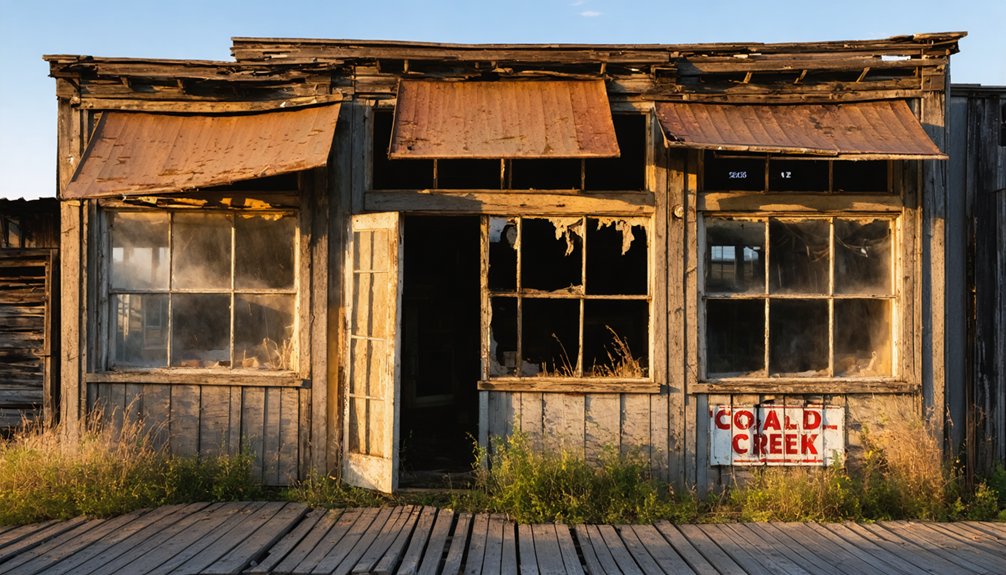
Standing as a haunting reminder of Gatlinburg’s entertainment past, Fun Mountain‘s abandoned remains occupy a central hillside where the historic Mountain View Hotel once stood.
Poor management and high maintenance costs ultimately led to the park’s downfall in 2000.
You’ll find this forgotten amusement park just west of downtown, within walking distance of Ole Red and Anakeesta. During its brief run from 1993 to 2000, Fun Mountain offered carnival rides, games, and entertainment venues that drew tourists seeking thrills.
Much like the abandoned cottages of Elkmont Ghost Town, these deserted structures tell a story of changing times in the Smokies.
Today, you can spot the rusting chairlift from Margaritaville Resort’s balcony, its silent cables stretching into the treeline.
While the abandoned rides were sold off after closure, the property’s skeletal structures persist as an eerie time capsule. If you’re exploring Gatlinburg’s hidden history, this unmarked site serves as a stark indication of the fleeting nature of tourist attractions in the Smokies.
Beneath the Waters: The Lost Town of Loyston
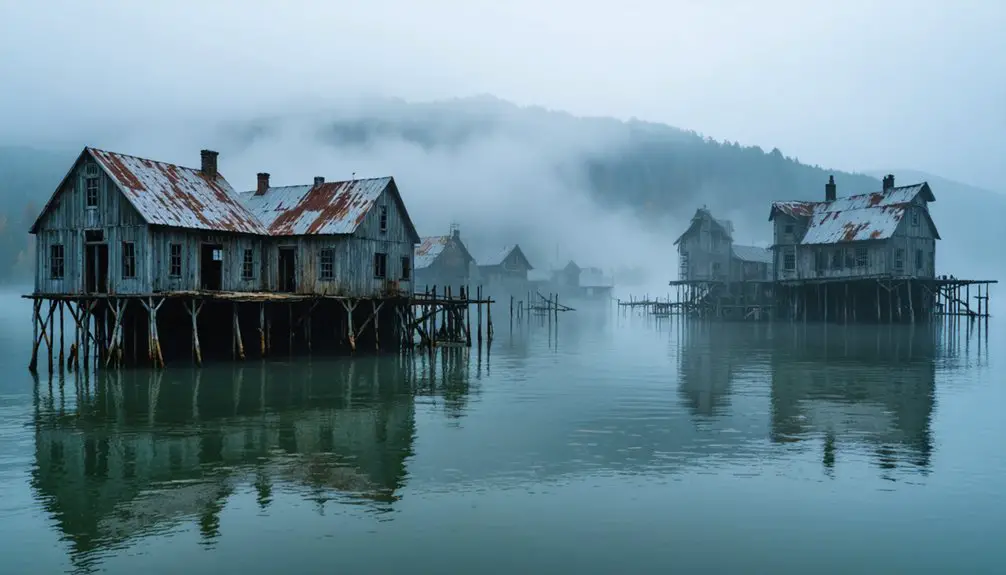
Beneath the tranquil waters of Norris Lake lies the once-thriving community of Loyston, Tennessee, a town sacrificed to progress in 1936 when the Tennessee Valley Authority completed its first major dam project.
You won’t find Loyston on modern maps, but its submerged memories tell a powerful story of displacement and change. Originally settled in the early 1800s around John Loy’s foundry, this historic trading center once bustled with 70 residents until TVA’s plans changed everything. The town’s thriving community included a post office and businesses. Named in honor of its founder, the town received its official designation as Loyston in 1894.
If you’re keen to explore Loyston history, here’s what you can discover:
- Ghost House Loop and Dark Hollow trails near Big Ridge State Park
- During droughts, glimpses of foundations, road signs, and bridges emerge
- Historical photographs by Lewis Hine showing life before the flood
Port Royal: From Bustling Port to Historic Park
Along the banks of the Red River, Port Royal emerged as one of Tennessee’s earliest settlements in 1784, when the area was still known as Tennessee County under North Carolina’s jurisdiction.
The town’s historical significance grew as it became a crucial commercial hub, flourishing through tobacco trade and silk manufacturing between Springfield and Clarksville.
You’ll find Port Royal’s most poignant chapter in its role during the Trail of Tears, where over 10,000 Cherokee made their final Tennessee encampment in 1838.
Despite its prosperity, the town’s fate was sealed when transportation changes caused its decline as railroads bypassed it in the mid-1800s.
The town’s history has been marked by several devastating floods, with record-breaking waters in 2010 reaching nearly 50 feet.
Today, you can explore the 30-acre Port Royal State Historic Park, where the remnants of this once-bustling port town survive alongside a preserved section of the Trail of Tears Historic Trail.
Frequently Asked Questions
Are Any of Tennessee’s Ghost Towns Safe to Visit at Night?
You’d need a million lives to safely explore Tennessee’s ghost towns at night. Ghost town regulations prohibit nighttime access, and dangerous wildlife, poor visibility, and lack of infrastructure make evening visits extremely unsafe.
What Permits Are Required to Explore These Abandoned Tennessee Towns?
You’ll need an archaeological permit if you’re exploring state-owned ghost towns. Follow exploration guidelines and safety regulations carefully. Check private property restrictions, as many abandoned sites require landowner permission.
Can Visitors Take Artifacts Found in These Ghost Towns Home?
Finders aren’t keepers here. You can’t take artifacts home – it’s illegal and carries hefty fines. These items hold historical significance and are protected by federal law for artifact preservation and future generations.
Which Ghost Towns Offer Guided Tours During Peak Tourist Season?
You’ll find guided explorations and historical reenactments at Appalachian GhostWalks in Johnson City and Chattanooga Ghost Tours during summer and fall months. Both offer authentic experiences with expert local guides.
Are Metal Detectors Allowed When Exploring Tennessee’s Ghost Towns?
Don’t let your GPS lead you astray – metal detecting regulations strictly limit your treasure hunting in Tennessee ghost towns. You’ll need permits for state land and owner’s permission for private sites.
References
- https://www.wanderingsmokymountains.com/smoky-mountain-ghost-towns-in-tennessee/
- https://kids.kiddle.co/List_of_ghost_towns_in_Tennessee
- https://www.tnvacation.com/trip-inspiration/articles/ghost-towns-tennessee
- http://www.onlyinyourstate.com/experiences/tennessee/tn-ghost-towns
- https://www.tnmagazine.org/19-ghost-towns-in-tennessee-that-are-not-underwater/
- https://www.loveproperty.com/gallerylist/91679/tour-the-abandoned-tennessee-ghost-town-where-millionaires-vacationed
- https://gatlinburghaunts.com/elkmont-tennessees-ghost-town/
- https://smokymountainnationalpark.com/blog/fun-facts-about-elkmont-ghost-town/
- https://www.visitmysmokies.com/blog/smoky-mountains/about-elkmont-ghost-town/
- https://hikinginthesmokymountains.com/blog/elkmont-ghost-town-restoration/