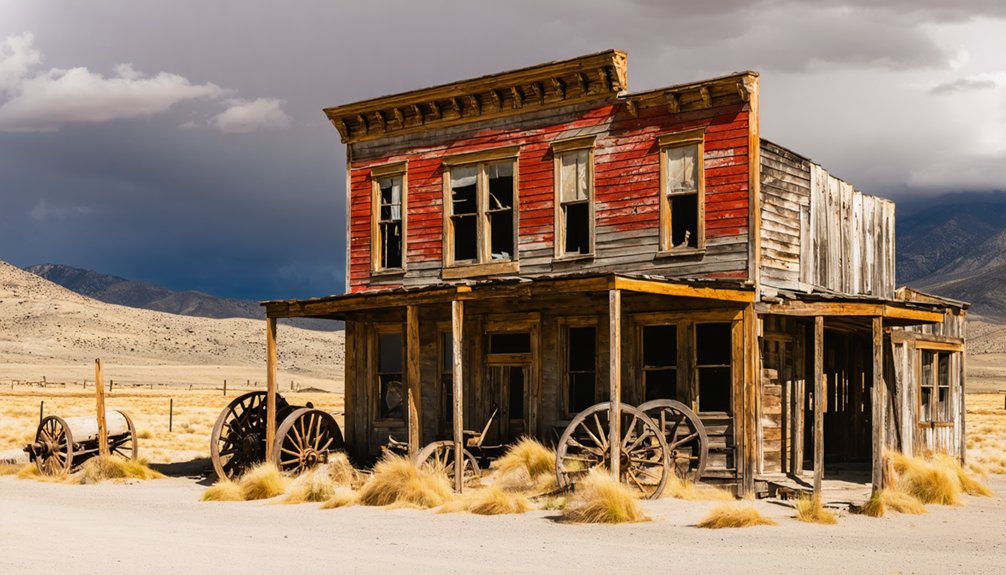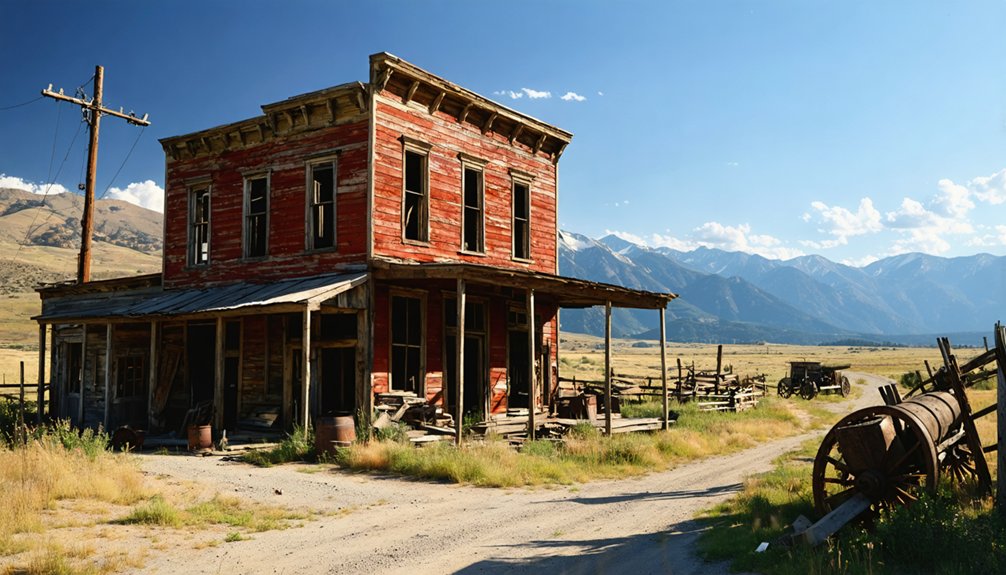
You’ll find America’s most fascinating ghost towns scattered across the western states, with California and Texas offering the highest concentration of these time capsules. Historic sites like Bodie, California showcase over 110 original structures frozen in “arrested decay,” while Virginia City’s wooden sidewalks and saloons transport you to the silver rush era. From Fort Jefferson’s massive brick fortress to Tombstone’s legendary streets, each abandoned settlement tells a unique story of frontier life, mining booms, and untamed wilderness – and these are just the beginning of your historic adventure.
Key Takeaways
- Bodie, California offers over 110 original structures from the 1940s in a state of “arrested decay” with authentic gold rush artifacts.
- Virginia City preserves authentic wooden sidewalks and historic saloons from the silver rush era, making it ideal for Wild West enthusiasts.
- Tombstone, Arizona provides well-preserved historic streets and attractions connected to famous Old West figures like the Earp brothers.
- Spring and fall are optimal visiting seasons for most ghost towns, offering pleasant temperatures and fewer crowds than peak summer.
- Calico’s silver mines and mining architecture provide excellent guided tours and educational exhibits about America’s mining heritage.
Why Ghost Towns Are Perfect for Your Next Adventure
While modern tourist destinations often feel manufactured and crowded, America’s ghost towns offer an authentic window into the nation’s fascinating past. You’ll discover over 3,800 abandoned settlements across the country, each telling unique stories of boom-and-bust cycles, frontier dreams, and industrial evolution. Texas and California contain the highest concentration of ghost towns in the United States.
These preserved sites let you step directly into history, whether you’re exploring Bodie’s “arrested decay” buildings with original furnishings intact or wandering Rhyolite’s haunting ruins near Death Valley. The town of Bodie reached its peak when nearly 10,000 residents called it home during the gold rush era.
Beyond potential ghostly encounters, you’ll find adventure through mine tours, hiking trails, and immersive historical exhibits. From St. Elmo’s well-preserved mountain setting to Goldfield’s reconstructed Wild West experience, historical preservation efforts have created perfect destinations for those seeking freedom from typical tourist traps while connecting with America’s untamed spirit.
Hidden Gems of the American West
You’ll discover authentic remnants of America’s pioneering spirit in the remote mountain settlements like St. Elmo, Colorado, where original structures still stand against stunning alpine backdrops.
In the heart of California, Calico ghost town offers visitors a chance to explore 500 silver mines that once made this desert outpost boom with prosperity.
The West’s rich mining legacy comes alive in preserved boomtowns like Bodie, California, where more than 200 buildings showcase life during the 1880s gold rush era, with tins and spices still visible on old store shelves.
For an unforgettable desert experience, venture to Utah’s Grafton ghost town, where the restored Orson B. Adams Home tells the story of hardy Mormon settlers who braved harsh conditions along the Virgin River.
Remote Mountain Town Escapes
Deep within America’s rugged mountain ranges lie some of the West’s most enchanting ghost towns, where weathered buildings and forgotten mines tell stories of frontier ambition and mineral wealth.
You’ll discover pristine ghost town architecture in Bodie, California, where over 100 structures stand frozen in time, and in St. Elmo’s well-preserved wooden buildings that line its main street. Today, visitors can feed the friendly chipmunks that gather outside St. Elmo’s General Store.
The mining town culture comes alive in places like Animas Forks, perched at Colorado’s highest elevation, where miners once braved brutal winters and deadly avalanches. Residents created underground tunnel networks to survive the harsh winter conditions when snowfall could reach over 25 feet.
Whether you’re exploring Garnet’s family-friendly remnants in Montana or South Pass City’s restored saloons in Wyoming, these remote mountain escapes offer windows into a bygone era.
Each site reveals the raw determination of those who carved communities from wilderness in pursuit of precious metals.
Rich Mining History Sites
These hidden gems of the American West tell remarkable tales of fortune-seeking pioneers and industrial innovation.
You’ll discover pristine ghost town architecture in Bodie, California, where over 100 original structures stand frozen in time since the last mine closed in 1942. The town of Spokane stands as a testament to the era, with its fragile 1927 structure still visible to visitors today. The discovery of the Comstock Lode in 1859 sparked America’s first major silver rush, forever changing the western frontier.
Experience mining heritage firsthand at Castle Dome, Arizona, where lead mines once supplied bullets for two World Wars.
In Rhyolite, Nevada, you can explore the famous bottle house and photograph the haunting desert-weathered bank building.
Steins, New Mexico offers a glimpse into railroad history, while Crested Butte’s coal mining legacy spans three generations of hard-working families.
Each site preserves unique chapters of America’s mineral rush era, from gold-fevered boomtowns to industrious mining communities that helped shape the nation.
Desert Ghost Town Adventures
Hidden beneath vast desert skies, America’s most atmospheric ghost towns beckon adventurous travelers to explore their weathered remains.
You’ll discover remarkable abandoned architecture in places like Rhyolite, Nevada, where skeletal walls rise dramatically against the Mojave backdrop – perfect for ghost town photography enthusiasts. Visitors can marvel at the town’s grand stone buildings that once housed a thriving stock exchange and bustling businesses. Many sites require 4WD vehicles to access the most pristine and untouched locations.
The remote desert setting of Ruby, Arizona offers haunting adobe structures, while Grafton, Utah’s proximity to Zion provides accessibility with authentic pioneer charm.
For the ultimate desert ghost town experience:
- Visit Rhyolite at sunrise when the golden light illuminates the stone bank building and famous bottle house.
- Explore Ruby’s well-preserved wooden structures during spring months when temperatures are mild.
- Photograph Frisco’s historic kilns against the stark Basin and Range landscape during sunset.
Planning Your Ghost Town Road Trip
While ghost towns scatter across America’s vast landscape like forgotten time capsules, planning an efficient route to explore these remnants of history requires careful consideration.
These abandoned outposts of America’s past beckon adventurous souls, each weathered building whispering stories of dreams and destinies long forgotten.
You’ll find well-mapped ghost town itineraries from Montana’s 280-mile journey between Glacier and Yellowstone to California’s historic route from Shasta to Calico.
Before hitting the road, pack your road trip essentials: extra water, emergency supplies, and basic car repair tools. You’ll need them, especially in Nevada’s remote stretches where cell service is nonexistent.
Share your travel plans with trusted contacts and book accommodations in advance, particularly at popular spots like Fairmont Hot Springs Resort or West Yellowstone.
Check weather conditions with local Bureau of Land Management offices, and don’t forget to secure cave tour reservations if they’re part of your adventure.
Best Times to Visit These Historic Sites
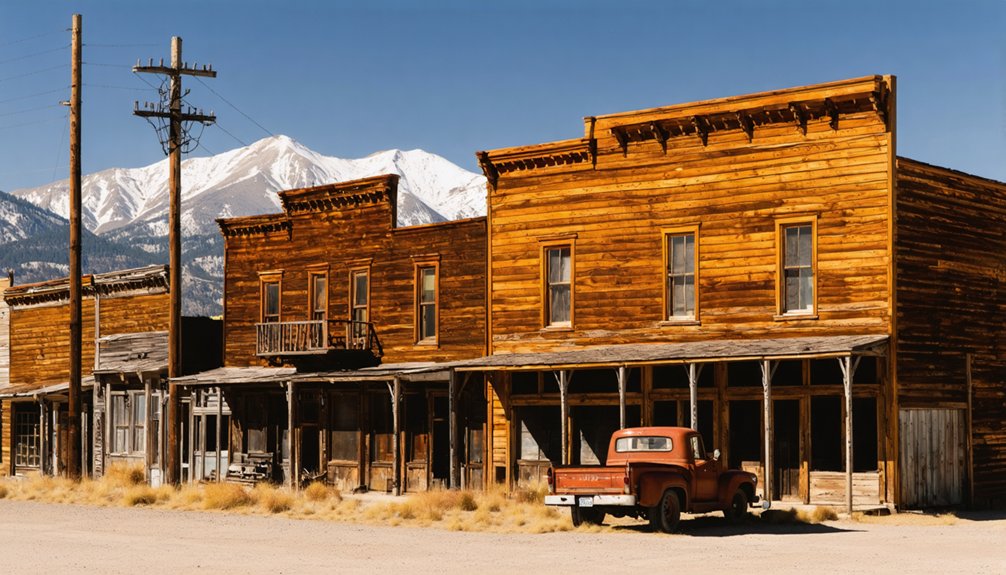
When planning your ghost town adventure, you’ll want to time your visits between March and November to guarantee ideal access and comfortable exploration conditions.
You’ll find spring and fall offer the most pleasant temperatures across diverse regions, from California’s Mojave Desert to Colorado’s high-altitude mining towns.
For specific destinations, consider Calico’s winter charm, Bodie’s limited summer season, and the High Sierra’s atmospheric autumn months when ghost walks and cemetery tours enhance the historical experience.
Peak Season Travel Tips
Since peak tourist seasons can profoundly impact your ghost town experience, knowing the best times to visit these historic sites is essential.
Summer draws the largest crowds, especially during ghost town festivals like Bannack Days in Montana, where you’ll encounter historical reenactments and seasonal events. However, you’ll find more intimate experiences during shoulder seasons when temperatures remain comfortable for exploration.
To maximize your visit during peak seasons:
- Arrive before 10 AM to beat both crowds and afternoon heat, particularly at desert locations like Bodie and Calico.
- Schedule your explorations for weekdays instead of weekends when tourist traffic greatly decreases.
- Book ranger-led tours in advance, as summer programs like Bodie’s ghost tours often fill up quickly.
Consider spring and fall visits for ideal weather conditions and fewer visitors, allowing for unhurried exploration of these historic treasures.
Weather and Accessibility Considerations
The diverse climates across America’s ghost towns create distinct visiting windows throughout the year. You’ll find ideal ghost town accessibility during summer months when roads are clear and facilities are fully staffed.
California’s Bodie offers year-round access via well-maintained highways, while Montana’s Bannack requires careful planning for winter visits when mountain passes demand four-wheel drive vehicles.
For southern locations like Tennessee’s Elkmont, you’re treated to moderate temperatures and easy access throughout the year.
However, if you’re venturing to Alaska’s Kennecott, plan your visit during summer months to avoid extreme cold and darkness.
The seasonal weather in Colorado’s high-elevation towns like St. Elmo makes summer and early fall your best options, when temperatures remain comfortable and snowfall hasn’t yet restricted access.
What to Pack for Your Ghost Town Expedition
Preparing for a ghost town expedition requires careful consideration of your gear and clothing choices to guarantee both comfort and safety while exploring these fascinating historical sites.
Smart gear choices and proper planning are essential foundations for a safe and rewarding ghost town exploration experience.
As you venture into these remnants of the past, you’ll need exploration gear that can handle varying weather conditions and rugged terrain while allowing you to document ghost town legends.
- Layer your clothing strategically with moisture-wicking base layers, insulating mid-layers, and a waterproof outer shell for protection against unpredictable weather.
- Pack sturdy waterproof hiking boots with merino wool socks to navigate crumbling structures and uneven ground safely.
- Don’t forget your accessories: a waterproof backpack for camera gear, hiking poles for stability, and polarized sunglasses for protection against harsh sun reflection off old metal and glass.
Photography Tips for Capturing Abandoned Places
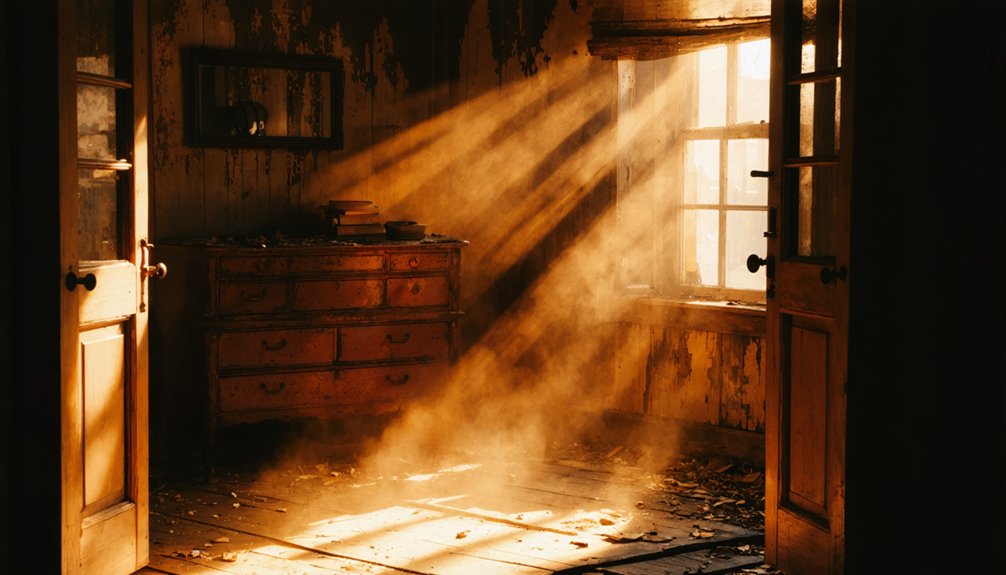
Photographing ghost towns demands more than just pointing and clicking – it requires careful attention to composition, lighting, and technique to truly capture their haunting beauty.
When practicing urban exploration photography, position your camera low to the ground or shoot from high vantage points to create intriguing perspectives that emphasize the vastness of abandoned spaces.
For compelling visual storytelling, visit during early morning or late afternoon when natural light streams through broken windows and collapsed roofs.
Set your camera to manual mode, using longer exposures (around 30 seconds at f/8) in dim conditions. Don’t forget to bracket your shots to capture the full range of light and shadow.
Focus on details that tell stories – weathered doors, rusted machinery, and forgotten personal items that hint at lives once lived.
Safety Guidelines for Ghost Town Exploration
When exploring ghost towns, you’ll need essential safety gear including a sturdy pair of boots, flashlight, first aid kit, and protective masks to guard against harmful particles in abandoned structures.
You should always stick to marked paths and established trails to avoid disturbing historical sites and prevent injury from unstable ground or hidden mine shafts.
Before heading out, check weather conditions and terrain challenges, as ghost towns are often in remote areas where storms can create dangerous flash floods and extreme temperatures can pose serious risks.
Essential Safety Equipment Needed
Before venturing into any ghost town exploration, you’ll need to assemble essential safety equipment that could mean the difference between an enriching adventure and a dangerous predicament.
Your safety gear should prioritize protection against common hazards while maintaining mobility for a full day of exploration.
- Wear sturdy boots, long sleeves, and cut-resistant gloves to protect against sharp debris and hazardous materials.
- Pack a reliable N95 or P100 respirator and backup masks for protection against asbestos and toxic particles.
- Bring multiple light sources, including a primary flashlight and backup headlamp with extra batteries.
Your adventure preparedness should also include a thorough first aid kit, multi-tool, and emergency supplies like an air horn and doorstop.
Stay On Marked Paths
Staying on marked paths represents your first line of defense when exploring ghost towns. You’ll find these marked trails serve as vital safety measures, guiding you away from unstable structures and hidden hazards that could spell disaster.
When approaching abandoned buildings, walk the exterior perimeter first to identify safe routes and potential escape paths.
You’ll want to cross streams only at established fords where trails intersect, and resist the urge to create new paths or expand existing ones.
Keep your adventures within designated areas, as many ghost towns like Kelly, New Mexico, and Picher, Oklahoma, have dangerous open mineshafts and unstable ground from their mining history.
Remember to test uncertain ground with a walking stick before committing your full weight.
Weather And Terrain Precautions
Since weather conditions can rapidly transform ghost town terrain into treacherous territory, you’ll need to plan your visit strategically. Understanding local weather patterns and terrain navigation is essential for your safety.
Scout the area’s exterior first to identify potential hazards, and avoid exploring during or after heavy rainfall when structures become increasingly unstable.
- Monitor weather forecasts closely and postpone your visit if rain, snow, or storms are expected – wet conditions make wooden floors and stairs particularly dangerous.
- Pack appropriate gear for sudden weather changes, including waterproof boots and weather-resistant clothing.
- Stay alert to changing terrain conditions, especially near mine entrances or areas prone to flooding or washouts.
Always maintain solid footing on dry ground, and don’t venture onto unstable surfaces or water-damaged structures that could collapse under your weight.
Top Ghost Towns for History Buffs
For history enthusiasts seeking authentic remnants of America’s past, these legendary ghost towns offer remarkable windows into different eras of the nation’s development.
You’ll find exceptional ghost town architecture in Bodie, California, where over 110 original structures stand frozen in time since the 1940s.
Virginia City’s preserved wooden sidewalks and historic saloons showcase the wealth of America’s first major silver rush.
Fort Jefferson’s massive brick fortress tells tales of coastal defense and Civil War imprisonment, while Tombstone lets you walk the famous streets where the Earp brothers made history.
For a unique perspective on early state politics, explore Cahawba’s archaeological park, where Alabama’s first capital now lies in haunting ruins along the river, revealing stories of political change and environmental challenges.
Must-See Buildings and Artifacts
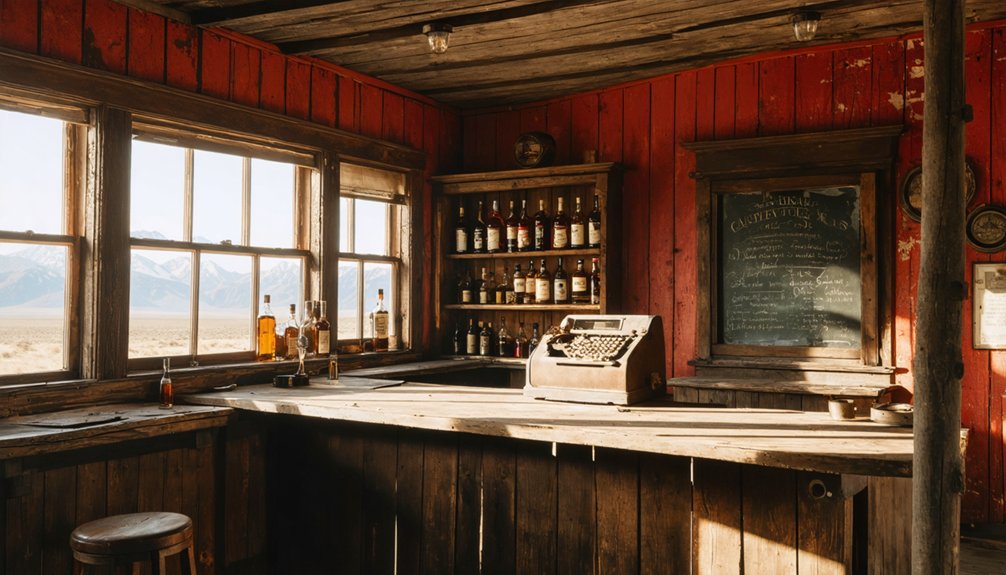
When exploring America’s most fascinating ghost towns, you’ll discover an impressive array of preserved structures and artifacts that tell compelling stories of the nation’s past.
The architecture styles range from Bodie’s authentic gold rush buildings to Fort Jefferson’s massive brick fortifications, each revealing unique historical significance.
American ghost towns showcase diverse architectural heritage, from rustic mining cabins to imposing military structures, each telling its own historical tale.
You can witness these remarkable remnants of American history:
- Bodie’s 110 original structures, including intact saloons and mills, showcase the raw essence of California’s mining era.
- Kennecott’s weathered wooden buildings nestled in Alaska’s mountains, complete with copper mining equipment.
- Bannack’s Hotel Meade and courthouse stand as representations to Montana’s lawless frontier days.
From Calico’s 500 silver mines to Fort Jefferson’s Civil War prison cells, these preserved sites offer unfiltered glimpses into America’s rugged past.
Where to Stay Near These Historic Sites
While most ghost towns no longer offer original lodging, you’ll find an impressive mix of nearby accommodations that blend historic charm with modern comfort.
In St. Elmo, book the Ghost Town Guest House‘s cozy rooms featuring claw-foot tubs and gas log stoves, complete with local history videos and daily treats.
Terlingua offers unique stays like luxury yurts with dome skylights at Terlingua Escondido or The Perch’s off-grid experience with mountain views. You’ll find local dining just steps away.
For Bodie and Rhyolite explorers, plan to stay in surrounding towns, as these authentic sites preserve their untouched state.
Jerome visitors can base themselves in nearby Sedona, while history enthusiasts might prefer Goldfield’s restored Old West hotels for a more period-authentic experience.
Frequently Asked Questions
Are There Any Guided Night Tours Available in These Ghost Towns?
You’ll find guided night tours at all four ghost towns, where experienced guides lead haunted experiences – from Mason’s walks in Goldfield to flashlight explorations in Vulture City and evening hunts in Goodsprings.
What Wildlife Might Visitors Encounter While Exploring These Abandoned Towns?
You’ll spot diverse wildlife encounters from mountain goats in Animas Forks to desert tortoises in Rhyolite, while nature preservation efforts let you witness black bears, elk, and golden eagles across these remote sanctuaries.
Do Any of These Ghost Towns Still Have Active Mining Claims?
Like a smartphone in 1890, active mining’s mostly vanished from these towns. You’ll find historical significance in Leadville’s Black Cloud facility, but most claims are frozen in time, preserved for exploration.
Can Visitors Take Home Artifacts They Find in Ghost Towns?
You can’t legally remove artifacts from ghost towns. They’re protected by federal and state laws, preserving historical significance. Take photos instead – removing items destroys artifact preservation and risks hefty fines or jail time.
Are There Any Restrictions on Metal Detecting in These Historic Sites?
You’ll face strict metal detecting regulations and historic preservation laws. You can’t detect in National Parks, monuments, or battlefields, but you’re allowed on some BLM lands with proper permissions.
References
- https://www.christywanders.com/2024/08/top-ghost-towns-for-history-buffs.html
- https://www.geotab.com/ghost-towns/
- https://www.realgirlreview.com/dark-tourism-in-america/
- https://www.visittheusa.com/experience/5-us-ghost-towns-you-must-see
- https://www.cheapism.com/abandoned-tourist-attractions/
- https://www.tripadvisor.com/Attractions-g191-Activities-c47-t14-United_States.html
- https://timesofindia.indiatimes.com/life-style/travel/famous-abandoned-towns-in-the-u-s-tourists-can-actually-visit/photostory/125742383.cms
- https://www.youtube.com/watch?v=WJnSGGfPv60
- https://www.youtube.com/watch?v=kOMZo9RMikE
- https://www.mentalfloss.com/geography/american-ghost-towns-can-still-walk-through