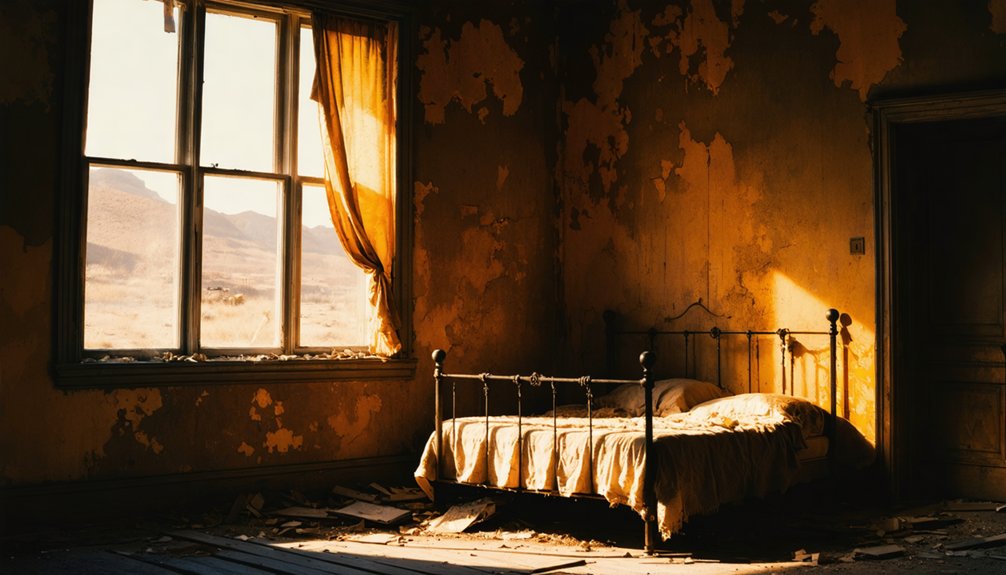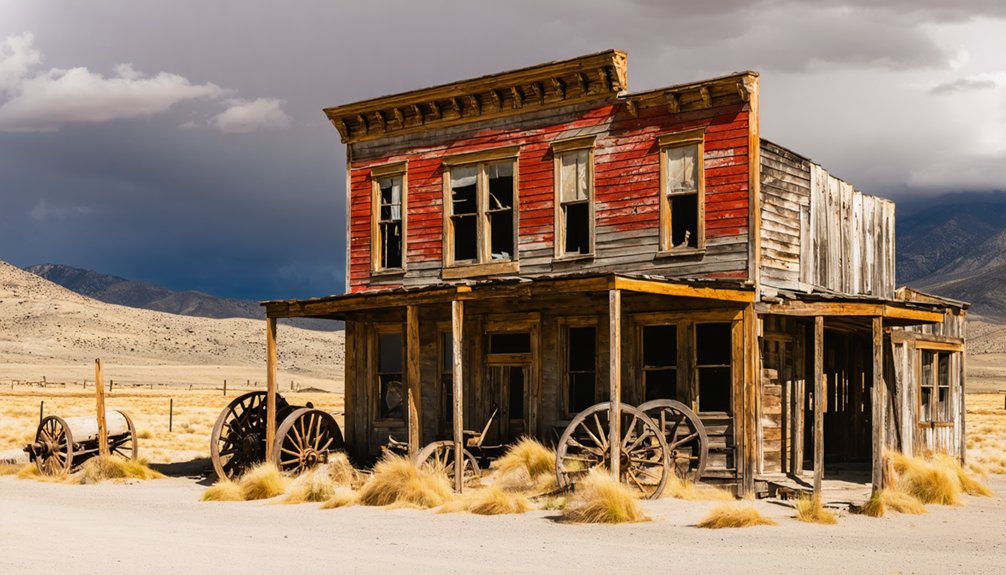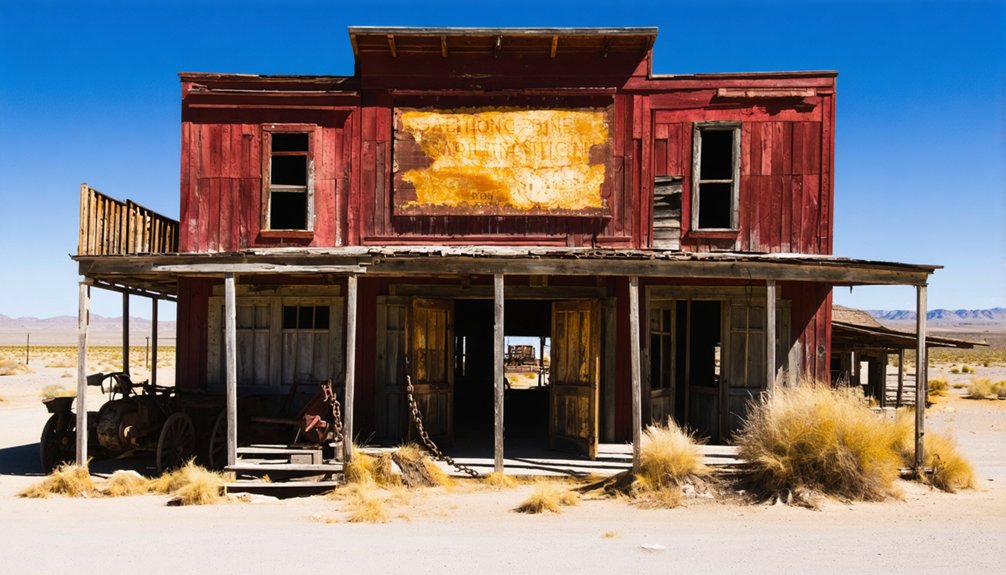
You’ll find America’s most fascinating ghost towns scattered across the Western states, where mining booms of the 1800s created instant cities that later fell to abandonment. Notable sites include Bodie, California, with 110 preserved structures in “arrested decay,” and Tombstone, Arizona, famous for the O.K. Corral gunfight. These time capsules, from Nevada’s Comstock Lode to Montana’s Bannack, offer authentic glimpses into frontier life that await your exploration.
Key Takeaways
- Bodie, California stands as one of the best-preserved ghost towns, featuring 110 original structures maintained in “arrested decay” state.
- Tombstone, Arizona offers authentic Old West history with its famous O.K. Corral, attracting visitors to its well-maintained historic district.
- Bannack, Montana, the territory’s first capital, showcases pristine historic buildings and rich gold rush heritage from 1862.
- Saint Elmo, Colorado retains its wooden storefronts and historic architecture, with over 2,000 former residents during its mining peak.
- Berlin-Ichthyosaur State Park combines mining history with prehistoric discoveries, offering unique educational and historical experiences.
Wild West Mining Heritage Lives On
While many symbols of the American West have faded into history, the legacy of its mining towns continues to captivate visitors through remarkably preserved ghost towns scattered across the region.
You’ll discover mining legacies in places like Tombstone, Arizona, where silver strikes drew prospectors, lawmen, and outlaws alike, culminating in the legendary O.K. Corral gunfight.
Evidence of forgotten prosperity emerges in towns like Bodie, California, which exploded from 20 miners to 10,000 residents in just two decades. Towns were built around Victorian-era houses that still line their historic main streets today.
Throughout the West, these abandoned settlements tell stories of dramatic transformation – from California’s gold rush that attracted 250,000 fortune seekers, to Nevada’s Comstock Lode that created instant cities.
Each site offers a tangible connection to an era when precious metals shaped the American frontier. Many of these historic locations now serve as National Historic Sites preserving their cultural significance for future generations.
Exploring America’s Abandoned Frontier Towns
When you venture into the American West’s ghost towns today, you’ll find remarkably preserved remnants of the mining boom era, with places like Bodie, California maintaining 110 original structures in “arrested decay.”
The decline of these towns was hastened by the end of long cattle drives and the widespread adoption of barbed wire fencing that transformed ranching practices. Many towns succumbed to complete abandonment during the Dust Bowl era of the 1930s.
You can walk the wooden sidewalks of Bannack, Montana, where gold discoveries in 1862 sparked a rush that would establish the territory’s first capital.
These abandoned settlements, from Kennecott’s copper empire in Alaska to the silver-rich hills of Tombstone, Arizona, offer tangible connections to an era when prospectors and pioneers carved out communities in pursuit of mineral wealth.
Mining History Lives On
As prospectors struck precious metals throughout the American West during the 19th century, frontier boomtowns erupted across the landscape, transforming desolate territories into bustling hubs of commerce and industry.
These mining legacies live on in remarkably preserved ghost towns, where you’ll discover Victorian architecture, weathered headframes, and authentic artifacts that tell frontier stories of ambition and perseverance.
You can explore the striking red mill buildings of Kennecott, Alaska, or walk among Ruby, Arizona’s complete layout of adobe structures.
Towns like St. Elmo, Colorado showcase intact main streets lined with log cabins and storefronts, while Silver Reef, Utah’s Wells Fargo buildings and graveyards reveal tales of mining disputes.
These sites stand as evidence to the boom-and-bust cycles that defined America’s mining era. The Berlin-Ichthyosaur State Park offers unique glimpses into both mining history and prehistoric marine reptiles from 225 million years ago.
Some settlements like Butte, Montana grew into major industrial centers, reaching populations of 100,000 during the copper mining boom.
Desert Dreams and Decay
The economic forces that birthed America’s frontier towns often vanished as swiftly as they appeared. In harsh desert landscapes, you’ll find settlements that succumbed to both natural and economic pressures.
Places like Steins, New Mexico highlight how fragile these communities were – when the railroad stopped delivering water in 1944, the town’s lifeline was severed. The desert solitude that now blankets these forgotten landscapes tells a story of dependency and isolation.
The once-bustling Nancy Hanks mine in Garnett generated immense wealth before its inevitable decline. You can trace similar patterns across the American West, where single-resource towns faced extinction once their economic foundations crumbled.
Whether it was Freeman Junction’s post office closure or Harrisburg, Utah’s devastating drought, these communities remind you how quickly desert dreams could fade. The combination of harsh environmental conditions and infrastructure loss proved insurmountable for many frontier settlements. Like Bodie, California, where devastating fires contributed to the town’s ultimate abandonment, these settlements often met dramatic ends.
Time-Frozen Streets and Desert Dreams
As you wander through these storied ghost towns of the American West, you’ll encounter the stark beauty of places like Bodie’s perfectly preserved rooms and Rhyolite’s crumbling stone walls, each telling tales of mining fortunes won and lost.
From St. Elmo’s intact commercial row to Lake Valley’s restored schoolhouse, these sites offer rare glimpses into frontier life where personal belongings remain exactly as their owners left them decades ago. In Virginia City, visitors can experience the legacy of Alder Gulch’s riches, which produced one of the most significant gold discoveries in Rocky Mountain history.
The architectural remnants, from innovative glass bottle houses to weathered wooden storefronts, stand as silent witnesses to the boom-and-bust cycle that defined the Western mining era. Among these historic sites, Bodie’s sixty bustling saloons once served a rowdy population of 10,000 during its 1880s heyday.
Echoes of Mining Glory
During America’s mining heyday, Western boomtowns transformed barren landscapes into bustling metropolises, leaving behind architectural treasures that now stand frozen in time.
You’ll find mining nostalgia etched into places like Goldfield, Nevada, which soared to become the state’s largest city after 1902, only to burn and fade by the 1920s. The abandoned prosperity of these settlements tells remarkable stories – from South Pass City’s surge to 2,000 residents following the Carissa Mine strike, to Butte, Montana’s peak of 100,000 citizens during World War I.
Victorian-era remnants still dot these landscapes, with Ruby, Arizona’s preserved adobe structures and St. Elmo, Colorado’s striking row of 1880s buildings offering glimpses into an era when precious metals fueled dreams of instant wealth.
Desert Ruins Tell Stories
Walking through America’s desert ghost towns today feels like stepping into a perfectly preserved time capsule. In places like Bodie, California, you’ll discover over 110 structures maintained in “arrested decay,” where abandoned architecture tells stories of boom-and-bust cycles that shaped the American West. Personal belongings still rest inside homes as if their owners might return, creating an authentic snapshot of 19th-century life.
The harsh desert environment that challenged early settlers now helps preserve these historical narratives. In Saint Elmo, Colorado, 40 original buildings from 1880 stand proof to mining dreams, while Calico’s 500 silver mines remain visible in the Mojave Desert.
The arid climate has frozen these settlements in time, allowing you to experience firsthand how resource depletion and economic upheaval transformed thriving communities into silent monuments.
Preserved Western Heritage Sites
Though abandoned long ago, America’s best-preserved ghost towns stand as time capsules of Western heritage, where original structures tell vivid stories of frontier ambition and defeat.
The historical significance of sites like Bodie, California and Bannack, Montana reveals itself through meticulously maintained buildings, from grand hotels to humble log cabins.
You’ll discover cultural nostalgia around every corner, whether exploring Rhyolite’s famous bottle house near Death Valley or St. Elmo’s wooden storefronts beneath Colorado’s towering peaks.
Montana’s Garnet offers an intimate glimpse of 1890s mining life, while Bodie’s “arrested decay” preserves authentic details down to bottles still on saloon shelves.
These remote outposts invite you to walk time-frozen streets where prospectors once sought fortunes, leaving behind compelling monuments to Western dreams and determination.
Where Gold Fever Left Its Mark
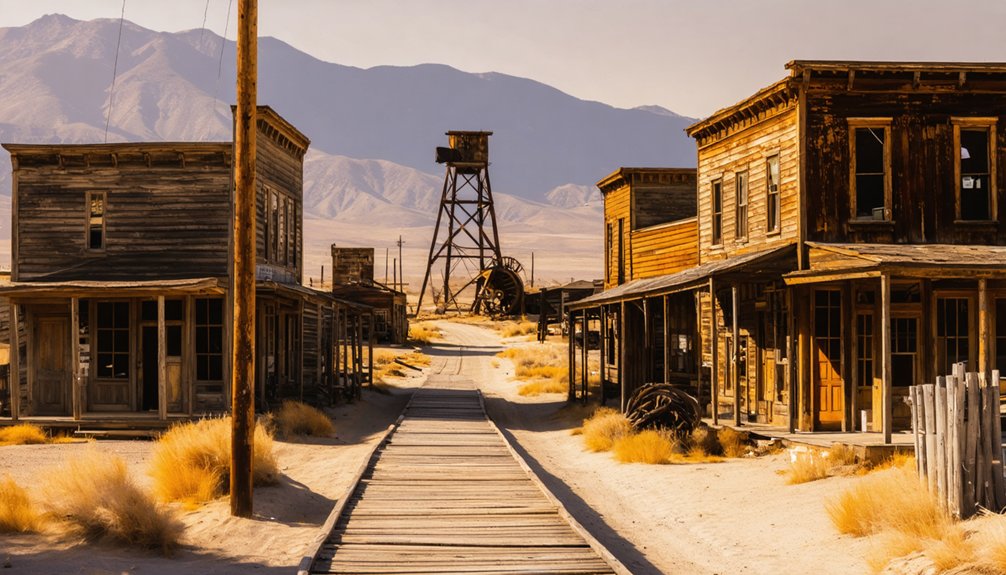
As the promise of gold and silver lured fortune seekers westward in the 1800s, a remarkable network of mining towns emerged across the American frontier, each with its own dramatic story of boom and bust.
You’ll find evidence of gold discovery‘s transformative impact in places like Bannack, Montana, where 10,000 residents built a territorial capital from scratch, and Bodie, California, where 65 saloons and countless brothels once served a thriving population of miners and gunslingers.
The mining impact rippled across the West, from Nevada’s Goldfield, which briefly reigned as the state’s largest city, to Colorado’s Saint Elmo, where more than 2,000 people carved out lives at high elevation.
Mining boomtowns sprang up suddenly across the American West, transforming remote wilderness into bustling hubs of commerce and culture.
These settlements exploded with growth, only to fade as precious metals dwindled.
Preserved Relics of the Mining Era
The American West’s most evocative ghost towns stand frozen in time, offering visitors tangible connections to the region’s mining heritage.
You’ll find remarkable historical preservation at Bodie, California, where buildings remain in “arrested decay,” creating an authentic window into 19th-century mining life.
At Calico, carefully preserved mining artifacts and equipment showcase the once-bustling silver operations that yielded $20 million in ore.
Berlin and Rhyolite, Nevada, present stark reminders of boom-and-bust cycles, with their skeletal stone structures standing defiantly against desert backdrops.
Ruby, Arizona’s remote location has helped protect its complete town layout, including adobe structures and mining remnants.
These sites serve as open-air museums where you can walk through the actual streets, buildings, and mines that shaped the American frontier.
Ghost Towns That Still Tell Tales
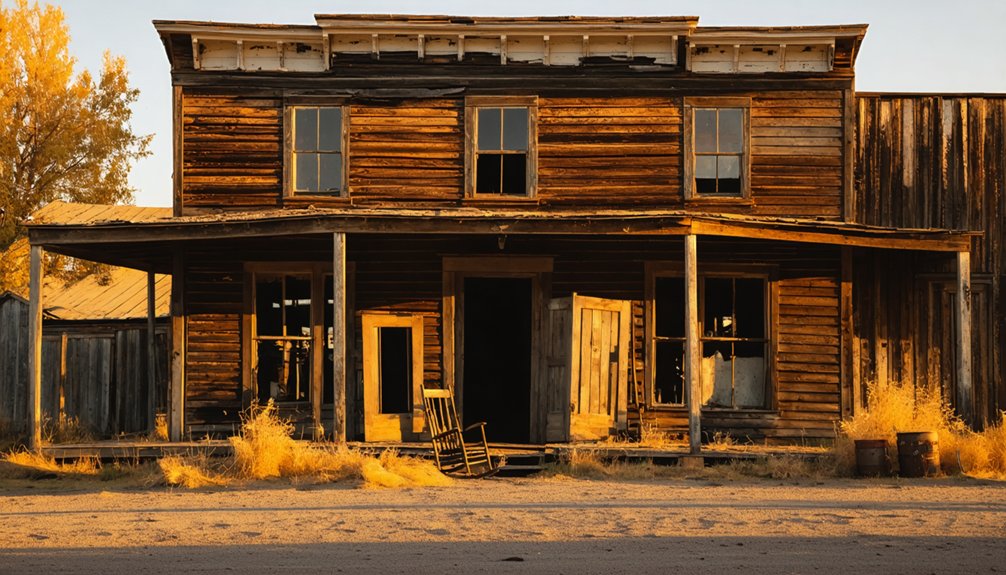
Within these weathered structures and silent streets, haunting tales of the American West still echo through time.
You’ll encounter spectral sightings like Annabelle Stark’s ghost wandering Saint Elmo’s Home Comfort Hotel, while Bodie’s “arrested decay” creates an otherworldly atmosphere frozen in time.
Ruby’s remote adobe buildings and Garnet’s forest-reclaimed cabins offer intimate glimpses into sudden departures that left life suspended.
These towns harbor stories of dramatic endings: Frisco’s overnight exodus after a fortuitous mine collapse, Gilmore’s devastating 1929 explosion, and Saint Elmo’s gradual decline until the mail stopped in 1952.
Today, ghostly encounters await in Bannack’s Hotel Meade, where original wallpaper still clings to curved staircases, and in Belmont’s Cemetery Hill, where 1869 graves whisper tales of silver boom days.
Rustic Remnants of Boom and Bust
Throughout America’s rugged western landscapes, scattered mining boomtowns tell stories of fleeting prosperity and sudden abandonment.
You’ll find remarkable abandoned architecture in places like Bodie State Historic Park, where 110 structures stand frozen in time since the last mine’s closure in 1942. In Colorado’s St. Elmo, historic preservation efforts maintain the town’s striking facade, which once housed 2,000 residents during its 1880s peak.
The Black Hills reveal hidden treasures like Mystic’s preserved building frames and Galena’s roadside relics, including its intact schoolhouse.
Tucked within the Black Hills’ rugged terrain, abandoned towns like Mystic and Galena stand as testaments to mining’s forgotten era.
Perhaps most intriguing is Lake Pactola’s submerged history, where a former mining settlement lies 150 feet underwater, with just one cabin remaining above the surface to mark its existence.
These ghost towns serve as silent witnesses to the West’s dramatic boom-and-bust cycles.
Frequently Asked Questions
Are Any of These Ghost Towns Actually Haunted by Spirits?
You won’t find documented paranormal activity or verified ghost stories in these towns – despite their dramatic histories, historical records show no confirmed hauntings or spirit sightings at any location.
What’s the Best Time of Year to Visit These Locations?
Like nature’s seasonal dance, you’ll want to plan your ghost town visits for summer in mountain locations and spring/fall in desert sites to avoid extreme weather and guarantee accessible roads.
Can Visitors Take Home Artifacts Found in Ghost Towns?
You can’t legally remove artifacts from ghost towns. Federal and state laws enforce strict artifact preservation, with hefty fines and possible imprisonment for taking items over 100 years old from these sites.
Are There Guided Tours Available at All These Locations?
Like panning for gold, you’ll find guided tours scattered unevenly – they’re available at developed sites like Calico and Bodie State Park, but most Western ghost towns only offer self-guided exploration opportunities.
How Safe Are the Old Buildings for Exploring Inside?
You shouldn’t enter old ghost town buildings, as they’re extremely unstable. Weather damage and age have compromised structural integrity, creating serious safety risks. Stick to exterior exploration or guided tours only.
References
- https://www.hertz.com/p/american-road-trip-planner/west-coast/ghost-towns-of-the-west
- https://www.youtube.com/watch?v=yeTVfoQxqJc
- https://www.geotab.com/ghost-towns/
- https://www.usawelcome.net/news/explore-ghost-towns-west-usa.htm
- https://wildwestcity.com/old-west-ghost-towns/
- https://www.wanderthewest.com/threads/ghost-town-tour.15966/
- https://allthatsinteresting.com/wild-west-mining-towns
- https://hobblecreek.us/blog/entry/mining-towns-of-the-old-west
- https://savingplaces.org/stories/explore-wild-west-mining-history-in-nevada-ghost-towns
- https://westernmininghistory.com/map/