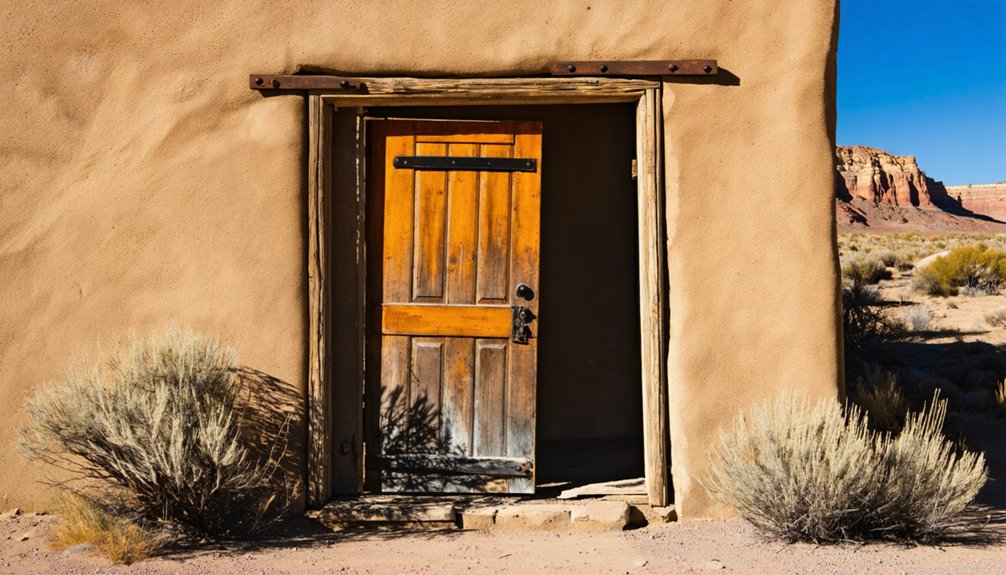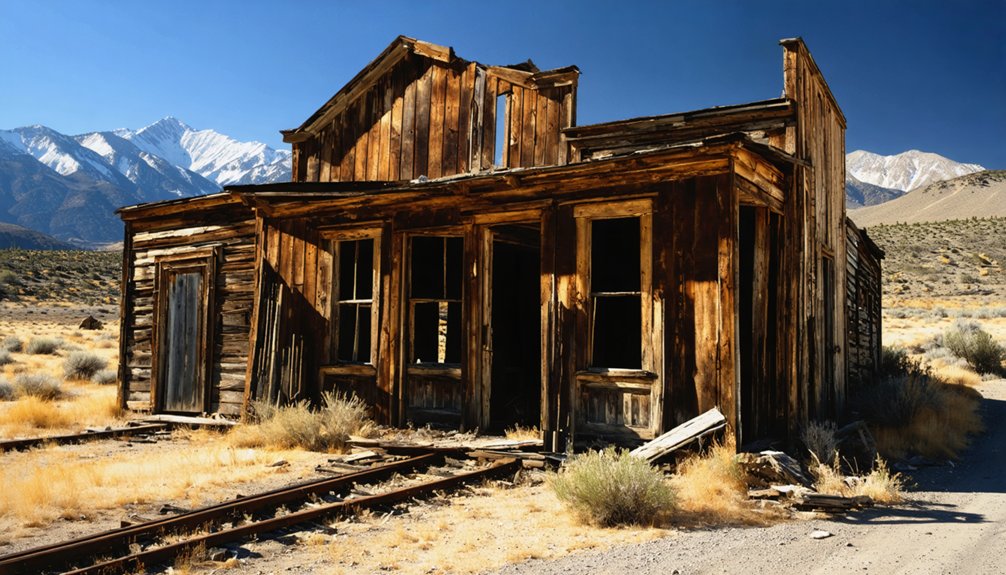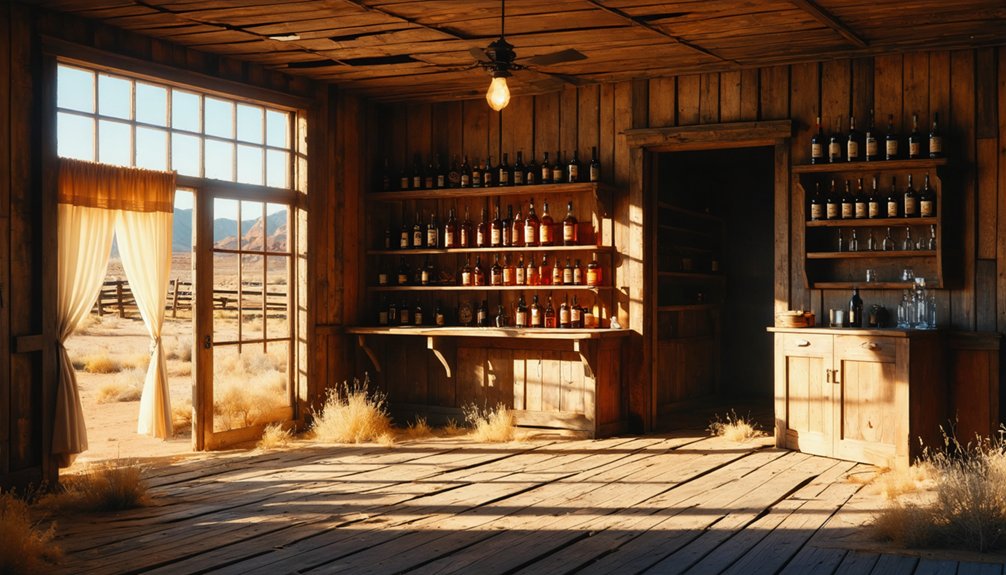
You’ll find Utah’s most remarkable ghost towns scattered across its rugged desert terrain, each telling a unique story of the American West. From Grafton’s perfectly preserved Mormon settlement with its iconic adobe schoolhouse to Frisco’s wild mining ruins and 23 saloons, these abandoned communities capture different chapters of Utah’s frontier history. Silver Reef’s red cliffs and Wells Fargo building showcase the boom-and-bust cycle of mining prosperity, while Iosepa’s Hawaiian pioneer cemetery reveals unexpected cultural connections that shaped the territory.
Key Takeaways
- Grafton stands as Utah’s best-preserved ghost town, featuring five intact buildings including an adobe schoolhouse and church.
- Silver Reef offers impressive red cliff views and remnants of Utah’s richest silver boom town near Leeds.
- Frisco showcases unique beehive-shaped kilns and a wild west history with twenty-three former saloons.
- Iosepa preserves the legacy of Hawaiian Mormon settlers through its cemetery and cultural landmarks.
- Silver City exemplifies mining prosperity with extensive ruins and structures that highlight Utah’s mineral extraction history.
Exploring Utah’s Most Well-Preserved Ghost Towns
While Utah’s mining and pioneer history left behind numerous abandoned settlements, several ghost towns stand out for their remarkably preserved structures and historical significance.
Grafton history shines as the state’s best-preserved ghost town, featuring five intact buildings including an adobe schoolhouse and church. You’ll recognize its scenic backdrop from “Butch Cassidy and the Sundance Kid” while exploring the self-guided walking tour and pioneer cemetery.
For Sego exploration, venture 6 miles from I-70 to discover the impressive company store ruins and vintage automobiles amid the desert landscape. The nearby petroglyphs in Sego Canyon add another layer of historical intrigue. Today, visitors marvel at the well-preserved ruins that tell the story of this once-thriving coal mining community. The mine remained active until production permanently ceased in 1947 due to devastating fires.
Since 1997, preservation efforts like the Grafton Heritage Partnership Project have guaranteed these windows into Utah’s past remain accessible to modern adventurers.
Hidden Historical Treasures of the Beehive State
Beyond the well-preserved structures lies a deeper layer of Utah’s ghost town legacy, where unique communities and specialized settlements tell extraordinary stories of resilience and cultural diversity.
You’ll discover pioneer settlements like Grafton, where Mormon farmers battled relentless floods while cultivating cotton under Brigham Young’s direction.
In Skull Valley’s harsh terrain, you’ll find Iosepa, where Hawaiian converts created a thriving community that persisted for nearly 50 years, despite facing challenges including a rare leprosy outbreak.
The agricultural heritage of these sites reveals fascinating cultural intersections, from Stateline’s masquerade balls celebrating Thanksgiving in lieu of religious services to the significant Chinese populations that shaped railroad towns like Terrace, though often excluded from official records.
Over three hundred residents called Stateline home by 1903, transforming it from a lawless mining camp into a bustling frontier town complete with hotels, stores, and saloons.
The once-prosperous town of Frisco stood out with its unique beehive-shaped kilns, which remain as silent witnesses to its mining heyday.
Abandoned Mining Towns That Tell Utah’s Story
Throughout Utah’s rugged terrain, abandoned mining towns stand as compelling symbols to the state’s mineral-rich heritage.
These frontier settlements reveal stories of fortune, lawlessness, and ultimate abandonment, with Silver City history showcasing the rise and fall of mining prosperity, from bustling streets to silent ruins. After a devastating fire in 1879 and silver prices crashing by 1884, Silver Reef collapsed completely. Near Leeds, Wells Fargo building still stands as one of the few remaining structures from the era.
Today, you’ll discover weathered structures and forgotten dreams across Utah’s ghost town landscape.
- Frisco’s notorious lawlessness and $60 million ore production epitomizes the wild west era before its dramatic collapse in 1885.
- Silver City’s restored buildings offer a rare glimpse into 1870s mining life, unlike most ghost towns with mere foundations.
- Silver Reef’s mile-long Main Street once hosted 2,000 residents before plummeting silver prices drove them away.
- Sego’s coal mining legacy ended in flames with devastating fires in 1949-1950.
- Thistle stands unique, destroyed not by depleted resources but by nature’s fury in 1983.
Utah’s Wild West Ghost Town Adventures
As you venture into Utah’s untamed ghost towns today, you’ll discover a domain where lawmen once ruled with iron fists and outlaws met swift justice in the streets.
In places like Frisco, one of the Wild West’s most notorious frontier settlements, Marshal Pearson embodied the raw brutality of frontier justice, reportedly gunning down six outlaws in a single night rather than bothering with arrests.
Mining heritage shaped these lawless territories, transforming camps like Silver City and Silver Reef into bustling hubs of commerce and vice. With twenty-three different saloons, Frisco’s reputation for crime and gambling became legendary.
[శోధонguide_sys
The streets were lined with saloons, creating an atmosphere that one writer described as “Dodge City, Tombstone, Sodom and Gomorrah, all rolled into one.”
While most of these towns now lie in ruins, their dramatic stories of survival, justice, and ultimate abandonment continue to captivate adventure seekers. Even lesser-known sites like Perea attract millions of yearly visitors who pass by the Mormon pioneer settlement without recognizing its historical significance.
Discover These Fascinating Desert Ghost Towns
Deep in Utah’s arid wilderness, five remarkable ghost towns stand as silent witnesses to the state’s pioneering spirit.
Exploring ghost towns in West Utah offers a unique glimpse into the past, where faded structures and crumbling facades tell stories of lives once lived. Each town holds its own set of mysteries, inviting adventurous spirits to wander through the remnants of forgotten lives. As you venture further into the desert, the haunting beauty of these abandoned places captivates the imagination, revealing the harsh realities faced by early settlers.
Among these locations, you can explore the ghost town of Eureka, where dilapidated buildings stand as remnants of a once-thriving mining community. The air is thick with stories of miners who sought fortune in the riches of the Earth, and each step reveals remnants of their labor. As the sun sets, the eerie silence is broken only by the whispers of the past, inviting you to uncover the secrets hidden within the shadows of this bygone era.
From Grafton’s history as a Mormon settlement to Silver Reef’s unique sandstone silver deposits, each site tells a compelling story of determination and survival. The need for thorough planning is essential as many locations have spotty cell service. The town of Frisco once housed twenty-three saloons during its peak mining days.
You’ll discover tales of diverse cultures, like Iosepa’s Polynesian settlers who carved out a life in Skull Valley.
- Grafton’s well-preserved structures and orchards transport you to 1859 frontier life
- Silver Reef’s dramatic red cliffs glow at sunset, illuminating remnants of Utah’s richest boom town
- Iosepa’s Hawaiian cemetery markers reveal a unique cultural crossroads
- Spring Canyon’s mountain mines whisper stories of coal-dusted dreams
- Old Irontown’s desert ruins showcase the harsh realities of mineral extraction
These desert time capsules await your exploration, each offering a raw glimpse into Utah’s untamed past.
Frequently Asked Questions
Are There Guided Tours Available for These Ghost Towns?
Like stepping into a time machine, you’ll find guided tours across Utah’s ghost towns, from Grafton’s Hummer excursions to Salt Lake City’s walking tours, each offering thorough explorations into ghost town history.
What Is the Best Time of Year to Visit Utah’s Ghost Towns?
You’ll find spring (March-May) and fall (September-November) are the best seasons for exploring ghost towns, with comfortable temperatures and ideal photography lighting. You’ll avoid summer’s extreme heat and winter’s challenging weather conditions.
Can Visitors Legally Collect Artifacts From These Ghost Town Sites?
You’ll need to leave precious historical items untouched – artifact preservation laws strictly prohibit collecting from ghost towns. It’s illegal on state and federal lands, with serious consequences for removing anything.
Are Any of These Ghost Towns Reportedly Haunted?
You’ll find haunted histories at Sego, Helper, and Spring Canyon, with spectral sightings including ghostly miners, railroad workers’ spirits, and the famous White Lady who wanders searching for her lost child.
Do You Need Special Permits to Photograph These Ghost Towns?
You’ll need permits for commercial photography on public lands. Check jurisdiction – BLM, state, or private property – as requirements vary. Small group personal photos typically don’t require permits unless using props or setups.
References
- https://www.utahsadventurefamily.com/5-ghost-towns-in-utah-for-families/
- https://www.atlasobscura.com/things-to-do/utah/ghost-towns
- https://www.visitutah.com/things-to-do/history-culture/ghost-towns
- https://www.ksl.com/article/51308628/restored-utah-ghost-towns-that-should-be-on-your-summer-travel-bucket-list
- https://www.youtube.com/watch?v=FLdClYRU0bY
- https://www.tripadvisor.com/Attractions-g28965-Activities-c47-t14-Utah.html
- https://www.axios.com/local/salt-lake-city/2024/09/03/utah-best-ghost-towns-mine-abandoned
- https://www.utahlifemag.com/blog/post/4-ghost-towns
- https://www.youtube.com/watch?v=dCg_xiclHxA
- https://www.deseret.com/utah/2024/06/03/how-to-visit-utah-ghost-towns/