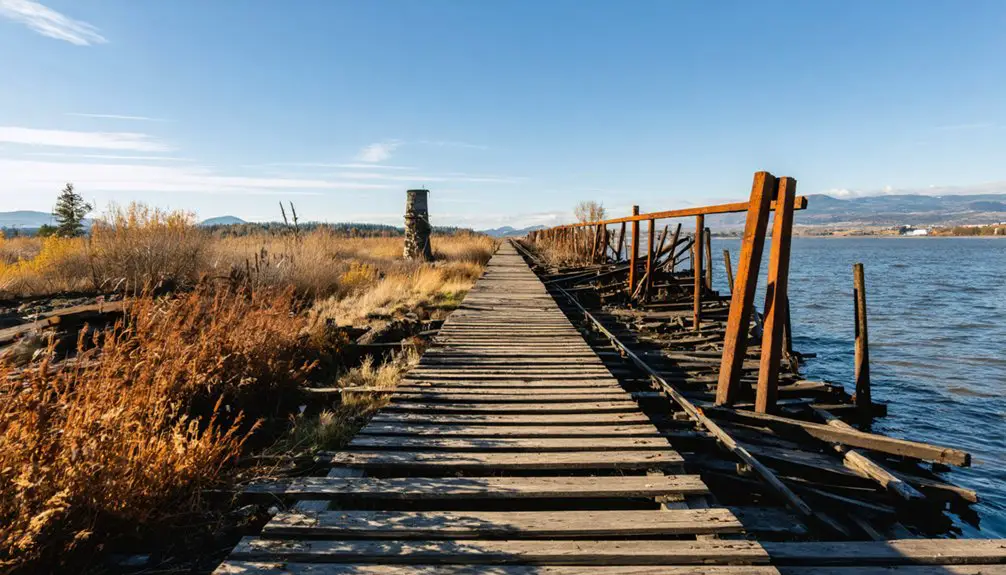
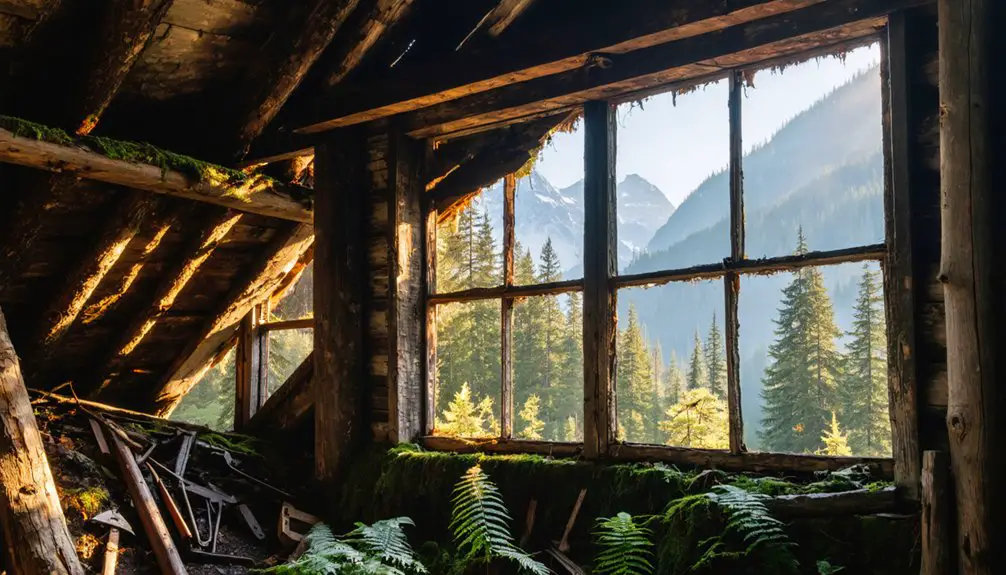
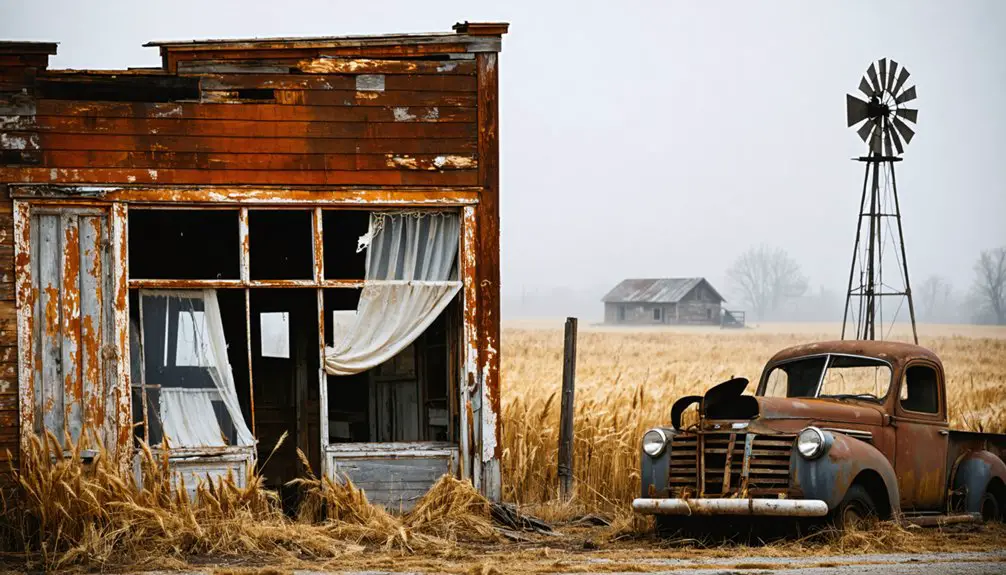
You’ll find Washington’s most fascinating ghost towns scattered across diverse landscapes, from the Columbia River Gorge to the Cascade Mountains. Don’t miss Ruby’s stone foundations from its 1888 heyday, Liberty’s preserved 1890s gold rush buildings, or Franklin’s haunting coal mining remnants. These abandoned settlements showcase the state’s rich mining, railroad, and lumber heritage through their weathered structures and compelling stories. Each site holds deeper secrets waiting to be uncovered.
Key Takeaways
- Liberty stands as Washington’s oldest mining settlement, featuring preserved 1890s buildings and maintains a small population of around 12 residents.
- Monte Cristo offers spectacular mountain scenery at 2,900 feet, with remnants of eight major mines that once produced various precious metals.
- Ruby Townsite, once known as the “Babylon of the West,” displays stone foundations and structural footprints from its 1888 peak.
- Nighthawk features the well-preserved historic Nighthawk Hotel, schoolhouse, and nearby Kaaba Texas Mine ruins attracting history enthusiasts.
- Old Molson Town showcases authentic pioneer life with preserved cabins, an assay office, and saloon, accessible year-round weather permitting.
What Makes Washington’s Ghost Towns Special
While many Western states boast ghost towns from the Gold Rush era, Washington’s abandoned settlements tell a uniquely diverse story of the Pacific Northwest’s development.
You’ll discover not just mining camps, but also railroad outposts, lumber towns, and even former psychiatric facilities – each preserving a different chapter of frontier life.
Historical preservation efforts have kept places like Liberty remarkably intact, with its 1890s buildings and mining equipment still standing as living museums. The Triangle of Fire forts stand as prime examples of military history frozen in time.
Through dedicated preservation, Liberty’s historic structures and mining artifacts remain frozen in time, a testament to Washington’s frontier spirit.
These ghost town legends span from the Columbia River Gorge to the Cascade Mountains, showcasing how different industries shaped the region. Govan’s eerie past includes several brutal murders that remain unsolved to this day.
Whether it’s the crystalline gold deposits that drew prospectors to Swauk Mining District or the tragic coal mining history of Franklin, you’re walking through authentic pieces of Washington’s past that continue to captivate explorers today.
The Mining Legacy of Ruby Townsite
When you visit Ruby’s remains today, you’ll find stone foundations that mark where a bustling commercial district once housed 700 residents and 70 buildings in 1888.
You can trace the footprints of six general stores, multiple saloons, and several hotels that earned this silver boomtown its reputation as the “Babylon of the West.”
The site’s brief but intense period of prosperity ended with the Panic of 1893, which crashed silver prices and transformed Ruby from a county seat to a ghost town in less than a decade.
Today, scraggly pine trees and heavy shrubbery cover most of the remaining traces of this once-thriving mining center.
The area stands as a heritage site managed by Washington State Parks, preserving the legacy of one of the region’s most significant mining communities.
Ruby’s Commercial Peak
As silver discoveries ignited the spring of 1886, Ruby quickly transformed from an untamed wilderness into a bustling mining settlement.
You’d have found yourself among 1,000 fortune seekers traversing a quarter-mile stretch of graded street lined with log houses, six general stores, and rowdy saloons. Ruby’s economy flourished as miners extracted silver from an eighteen-foot-wide ledge yielding $14 in gold and silver per unit.
The town’s wild reputation as the “Babylon of the West” drew prospectors from across the Northwest, reaching its zenith in 1888 with seventy buildings standing. The community was notorious for its quick trigger-fingers and dangerous whisky-fueled disputes.
Yet mining challenges and fate would soon intervene – the devastating Panic of 1893 sent silver prices plummeting.
Foundations Tell Stories
Today’s visitors to Ruby can still trace the town’s mining legacy through its remaining foundations and structural footprints. Along the quarter-mile main street, you’ll find silent witnesses to the town’s heyday – remnants of six general stores, multiple saloons, and hotels that once served over 1,000 residents.
These foundations tell forgotten tales of Ruby Hill’s rich silver deposits, where miners extracted millions in precious metals from eighteen-foot-wide quartz ledges.
As you explore, you’ll discover the ghostly outline of a boomtown that earned its reputation as the “Babylon of the West.” The weathered ruins chronicle Ruby’s dramatic rise and fall – from its 1886 discovery to its sudden collapse after the 1893 silver crash, when plummeting prices transformed this wild frontier outpost into another Washington ghost town. The town’s story, documented in the Pacific Northwest Quarterly, provides researchers with valuable insights into the region’s rich mining history.
Exploring Historic Nighthawk and Enloe Dam
Deep in Okanogan County’s rugged terrain lies Nighthawk, one of Washington’s most compelling ghost towns from the mining era.
You’ll find its roots dating to the 1860s when thousands of prospectors first established a tent settlement near a ferry crossing east of Miner’s Bend.
When you visit today, you’ll discover remnants of its 1903 heyday, including the restored Nighthawk Hotel, a historic mining office, and an old schoolhouse from 1915.
The town’s name has deep historical roots, as the term “nighthawk” was first recorded in 1611 in the King James Bible.
The town’s proximity to Enloe Dam offers a unique glimpse into the region’s industrial past.
As you explore Prospect Avenue, you’ll see structures that tell tales of boom-town life – from concentration mills to the preserved house of ill repute with its adjacent livery stable.
Though Highway 2’s construction hastened Nighthawk’s decline by the 1950s, its well-preserved ruins continue drawing history enthusiasts. The Kaaba Texas Mine stands as one of the best-preserved mining sites in all of Okanogan County.
Old Molson Town: A Window to Pioneer Life
Another remarkable mining settlement awaits visitors in northeastern Washington’s Okanogan County.
When you explore Old Molson Town, you’ll step into authentic pioneer experiences preserved since its 1900 founding by George B. Meacham and John W. Molson. The arrival of the railroad in 1901 sparked rapid growth in the community. This historic gold mining hub flourished until property disputes forced residents to establish New Molson nearby.
Today, you can freely wander the Old Molson Ghost Town Museum‘s historical landmarks, established in 1960.
You’ll discover:
- Original pioneer cabins filled with period artifacts and black-and-white photographs
- The town’s preserved assay office, bank building, and saloon
- A converted schoolhouse museum showcasing the region’s mining heritage
Visit year-round during daylight hours at no cost, though winter access depends on snow conditions at this 3,708-foot elevation site.
Liberty: Washington’s Gold Rush Heritage
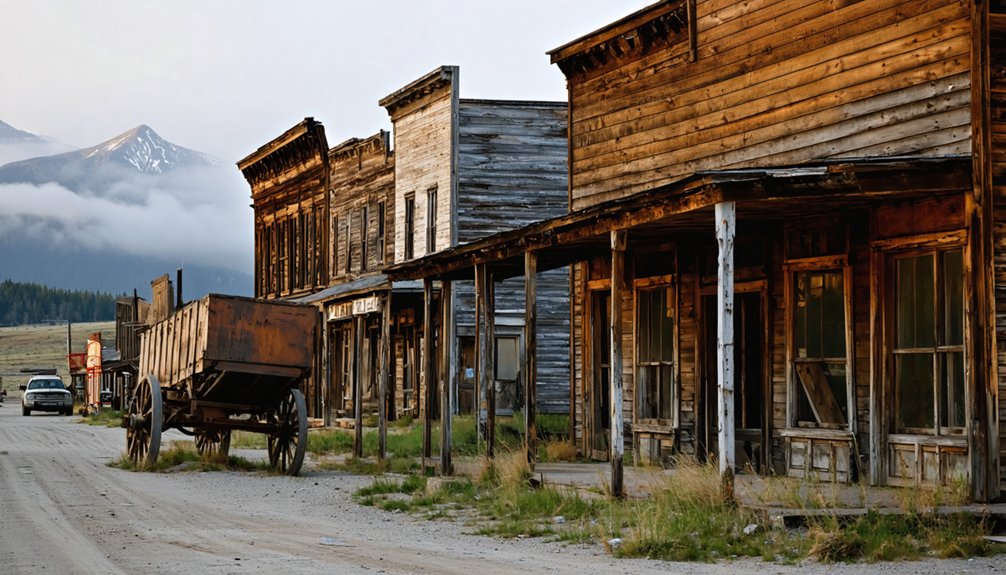
Liberty stands as Washington state’s oldest mining settlement, emerging after prospectors struck gold in Swauk Creek in 1873.
You’ll discover a rare ghost town that never quite died, maintaining a small but steady population through generations of family miners. Liberty‘s Gold gained fame for its unique crystalline wire formations, with nuggets so pure they went straight to the mint.
The area showcases diverse mining techniques, from early placer operations to hydraulic mining and dredging. You can still see the reconstructed Virden arrastra, featuring an innovative horizontal water wheel design for crushing ore.
Unlike typical boom-and-bust mining camps, Liberty fostered a stable community where disruptive behavior wasn’t tolerated.
Today, with about 12 residents, the Liberty Historic District preserves authentic structures from the 1880s mining era.
Monte Cristo’s Mountain Mining History
While Washington’s gold strikes brought fortune-seekers west, the silver-rich Northern Cascades beckoned prospectors to even greater treasures.
You’ll find Monte Cristo’s ghost town legends nestled high in the mountains at 2,900 feet, where mining equipment still rusts among the ruins. After Joseph Pearsall’s 1889 discovery, the town exploded into a bustling hub of mineral wealth.
At its peak, Monte Cristo delivered:
- Eight major mines producing gold, silver, copper, lead, and zinc
- A 40-mile railroad connection to Everett’s smelter
- Over 1,000 residents working claims worth millions
Nature ultimately conquered man’s ambitions here – floods in 1897 and avalanches by 1920 ended the mining dream.
Yet Monte Cristo stands as a tribute to the raw determination of frontier prospectors.
Franklin’s Coal Mining Past
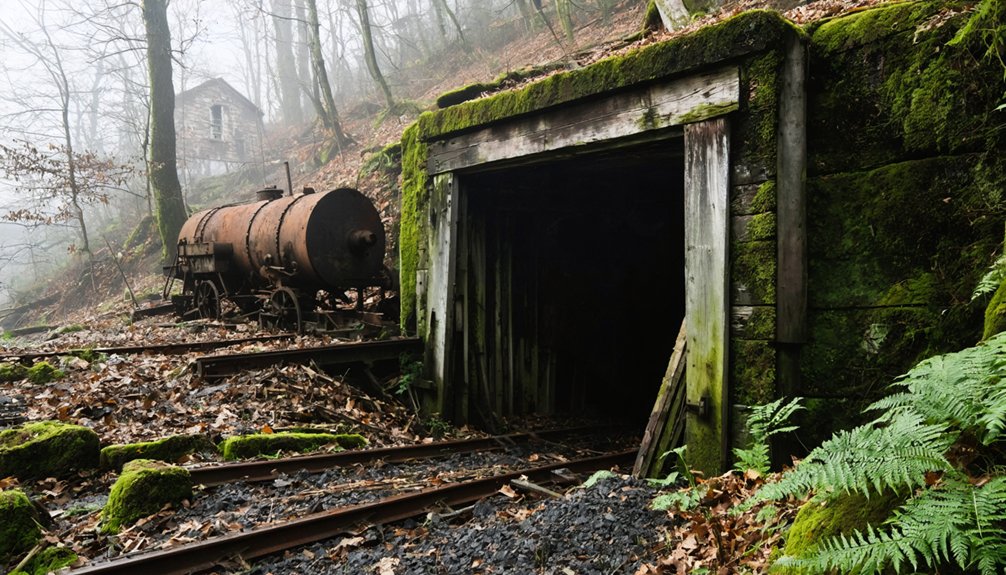
Unlike its mining town predecessors, Franklin’s ghost stories stem from a devastating 1894 disaster that claimed 37 miners’ lives through suffocation.
You’ll find their final resting place in the town’s cemetery, a somber reminder of Washington’s second-worst coal mining catastrophe.
This once-bustling company town, established in 1884, shipped coal as far as San Francisco via the Columbia & Puget Sound Railroad.
At its peak in the early 1900s, Franklin produced 200,000 tons of coal annually.
Mining artifacts still visible today include a massive 1,300-foot shaft, coal car, and hoist equipment scattered among crumbling foundations.
Though the town emptied by the 1920s, mining persisted across the Green River until 1971, when Palmer Coking Coal extracted the final tons from Franklin’s legendary No. 10 and No. 12 seams.
Best Times to Visit Washington Ghost Towns
You’ll find peak summer months from July through August challenging for ghost town exploration due to larger crowds and higher accommodation costs at nearby destinations.
Winter offers excellent visibility of historical structures at lower-elevation sites like Melmont, though some remote locations may become inaccessible due to snow.
Spring presents ideal conditions for photography with filtered sunlight and minimal foliage coverage, allowing you to capture clear views of remaining artifacts and architecture.
Peak Summer Touring Months
Summer stands as the undisputed prime season for exploring Washington’s historic ghost towns, with July and August offering the most reliable weather conditions.
These months deliver excellent conditions for your ghost town legends and summer adventures across sites like Monte Cristo, Bodie, and Franklin.
Here’s why peak summer is your best bet for ghost town exploration:
- The 4-mile trek to Monte Cristo features dry, well-graded trails perfect for family hiking adventures.
- Clear skies and warm temperatures create ideal conditions for photographing historic ruins and mining equipment at Franklin and Liberty.
- Minimal precipitation during July-August guarantees safe passage along Mountain Loop Highway, while protecting fragile structures and artifacts at sites like Melmont and Bodie.
Winter Access Challenges
While peak summer months showcase Washington’s ghost towns in their full glory, winter conditions present significant obstacles for adventurous explorers.
You’ll face numerous winter roadblocks, particularly at higher elevations like Molson, where snow blankets access roads at 3,708 feet. Since there’s no snow removal on forest roads, you’re left to navigate these challenging conditions at your own risk.
Snowfall challenges extend well into spring, with snow patches lingering into May at many sites.
You’ll need to contend with saturated soils that create treacherous mud conditions and increase landslide risks.
Western Washington ghost towns are especially problematic, as persistent rain transforms trails into slippery hazards.
These ghost towns in Washington state often lack the infrastructure to support visitors, making exploration even more challenging. Many abandoned buildings and forgotten streets tell stories of the past, but they can be hard to access during the wet season. With appropriate preparation, adventurers can uncover the hidden history of these once-thriving communities.
Before heading out, you’ll want to check road closures and trail conditions, as many sites restrict access during the harsh winter months.
Spring Photography Opportunities
Spring reveals exceptional photography opportunities across Washington’s ghost towns, with the Palouse region offering some of the most dramatic seasonal changes.
You’ll find vibrant green fields contrasting against weathered buildings, while mid-May wildflower photography creates stunning foregrounds for your historic shots.
For capturing the best spring landscapes, consider these prime shooting windows:
- Early morning sessions at 9am provide clean angles and ideal backlighting
- Golden hour sessions starting one hour before sunset showcase dramatic storm clouds
- Late afternoon visits between 5:30-7pm offer warm, flattering light on historic structures
Layer your clothing for comfort while exploring, as spring storms can roll through quickly.
Position yourself on the east side of buildings for evening shots, or west side for morning backlighting to maximize natural light’s impact on historic architecture.
Essential Tips for Ghost Town Explorers
Before venturing into Washington’s historic ghost towns, you’ll need to prepare thoroughly for the unique challenges these abandoned sites present. Always equip yourself with essential safety gear including a headlamp, N95 respirator, first aid supplies, and navigation tools.
Proper preparation is crucial before exploring Washington’s ghost towns. Pack essential safety gear to navigate these challenging abandoned sites safely.
You’ll want an air horn and doorstop for unexpected encounters, while marking chalk helps track your path through complex structures.
When exploring buildings, stay close to load-bearing walls and columns while avoiding center floors that may have weakened over time. Test questionable surfaces before stepping on them, and remember to examine exteriors first for potential hazards and escape routes.
You’re responsible for your own safety, so avoid sealed structures, mine shafts, and areas marked with warning signs. Always explore with companions and obtain proper permissions before visiting these historic sites.
Preserving Washington’s Mining Heritage
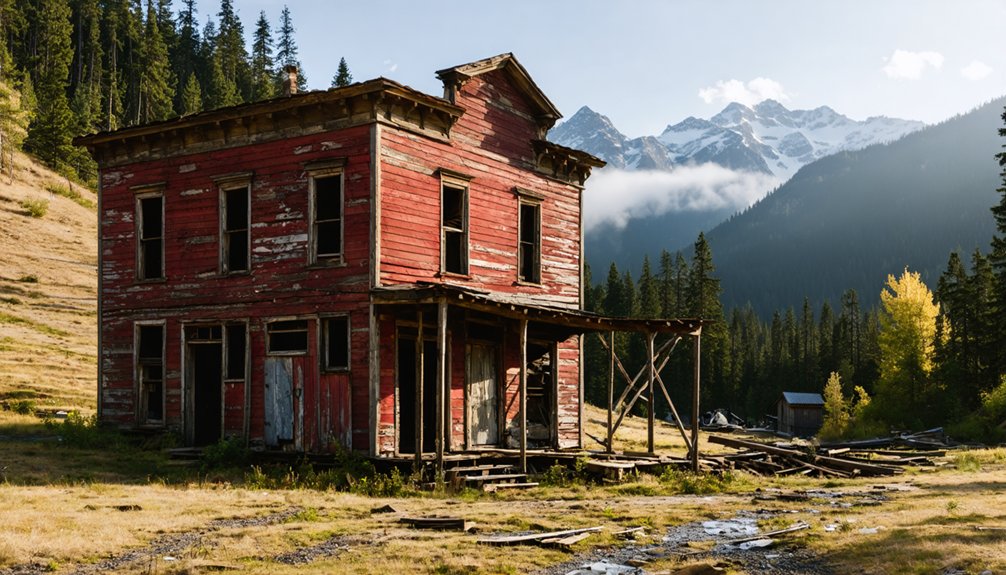
Washington’s mining heritage, though modest compared to other western states, holds significant historical value worth preserving.
Through mining conservation efforts, you’ll discover nearly 5,000 documented sites across the state, with particularly rich concentrations in Okanogan, Stevens, and Chelan counties.
Historical documentation reveals three key priorities for preserving these invaluable sites:
- Active claim maintenance – with only 4.91% of claims currently operating, protecting these working remnants is essential.
- Environmental assessment – especially for copper, lead, and zinc mining locations that shaped local communities.
- Heritage site stabilization – focusing on gold rush era structures in the Upper Skagit Watershed and central Washington’s mining towns.
Your support of these preservation initiatives helps guarantee future generations can experience Washington’s authentic mining heritage firsthand.
Frequently Asked Questions
Are There Any Reported Paranormal Activities in These Ghost Towns?
You won’t find documented spectral sightings in these locations’ haunted histories, though their isolation and decay create an eerie atmosphere that’s sparked local legends and ghostly speculation.
Can Visitors Take Artifacts or Souvenirs From Ghost Town Sites?
Just as you wouldn’t steal artifacts from a museum, you can’t legally remove items from ghost towns. Their historical significance requires artifact preservation, and taking souvenirs can result in hefty fines and jail time.
Are Camping or Overnight Stays Allowed in Any Ghost Towns?
You can’t camp directly in ghost towns, but you’ll find overnight accommodations at nearby designated campgrounds. Check local camping regulations since most ghost town sites are day-use areas only.
Which Ghost Towns Are Accessible During Winter Months?
Like diamonds in winter’s crown, you’ll find Sherman, Liberty, and Melmont accessible year-round. You’re free to explore local attractions even in snowy months, though Monte Cristo requires fair weather.
Do Any Ghost Towns Require Permits or Entrance Fees?
You’ll need property owner permission for Monte Cristo, while Northern State doesn’t require permits. Shoreline ghost towns require development permits for major projects, but most don’t charge entrance fees for basic visits.
References
- https://okanogancountry.com/ghost-towns
- https://stateofwatourism.com/ghost-towns-of-washington-state/
- https://www.wta.org/go-outside/seasonal-hikes/fall-destinations/hidden-history-ghost-town-hikes
- https://www.cascadeloop.com/ghost-towns-and-haunted-places-in-the-washington-cascades
- https://www.ghosttownsofwashington.com
- https://www.wainnsiders.com/visit-washingtons-spooky-abandoned-ghost-towns/
- https://www.youtube.com/watch?v=FVveO9uJBvc
- https://www.crazydsadventures.com/post/govan-washington
- https://www.opb.org/article/2023/10/29/washington-only-living-ghost-town-history-lingering-residents/
- https://www.justfrances.com/ghosts-of-wellington-washington/