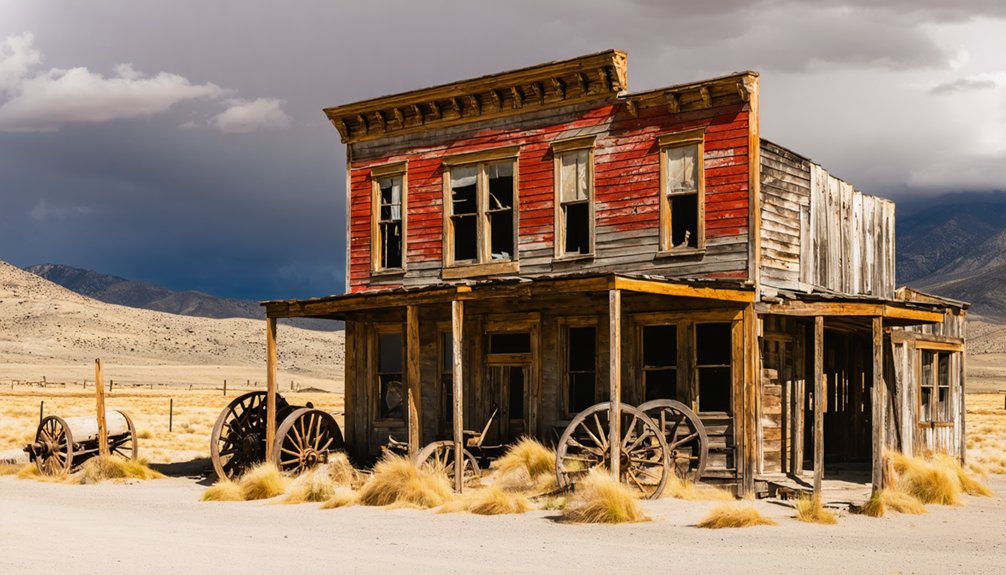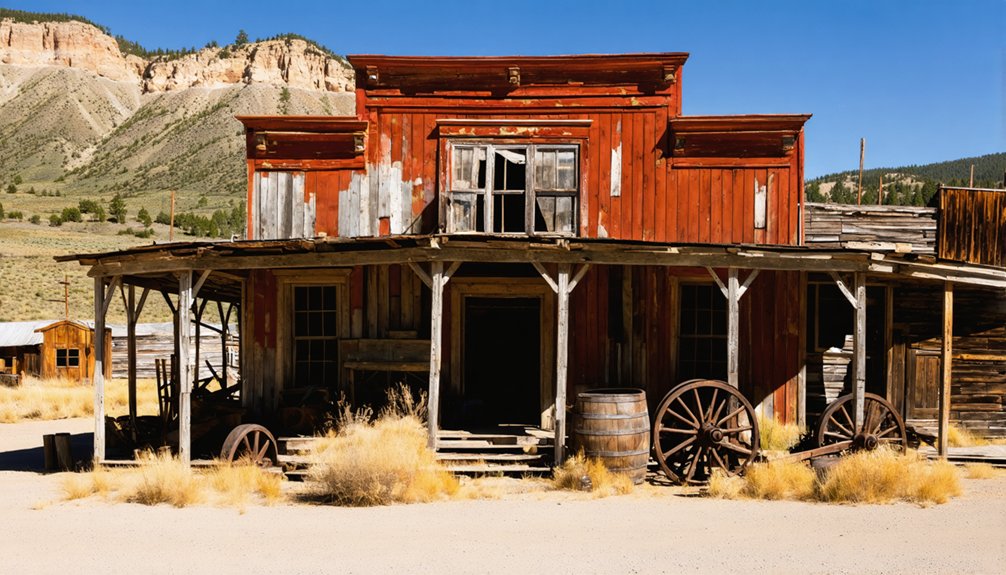
You’ll find several fascinating ghost towns within a few hours of Denver that showcase Colorado’s rich mining heritage. Nevadaville, just minutes from Central City, offers year-round accessibility and well-preserved structures. St. Elmo features authentic 1890s wooden storefronts and an operating general store, while Vicksburg charms visitors with its historic cabins shaded by century-old poplar trees. These mountain time capsules tell compelling stories of boom-to-bust cycles that shaped the American West.
Key Takeaways
- Nevadaville offers year-round accessibility and is located just minutes from Central City, making it one of the closest ghost towns to Denver.
- St. Elmo features over 40 authentic structures including a working general store and well-preserved 1890s wooden storefronts.
- Central City’s Gregory Gulch, known as the “richest square mile on Earth,” showcases historic mining structures from Colorado’s gold rush era.
- Vicksburg maintains original buildings shaded by century-old poplar trees planted by miners, with some cabins still occupied today.
- Most ghost towns are accessible within 1.5 to 4 hours from Denver, with lower elevation sites suitable for standard vehicles.
Discovering Colorado’s Historic Mining Legacy
When Colorado’s Pike’s Peak Gold Rush erupted in 1859, it forever transformed the Rocky Mountain frontier into a mining powerhouse.
You’ll discover a rich mining heritage spanning from Gregory Gulch’s “richest square mile on Earth” to Leadville’s massive silver deposits that generated over $82 million during the boom years. The famous gold coins first appeared in Denver in 1860 when Clark, Gruber & Company began minting operations.
The economic impact of these mineral discoveries shaped Colorado’s destiny, leading to its territorial status in 1861 and establishing Golden City as its first capital. John H. Gregory made history when he discovered the first lode vein at Gregory Diggings in Central City.
You can trace the evolution from early gold strikes through the silver boom of the 1880s to Cripple Creek’s historic gold discovery in 1890.
Today, more than 18,000 abandoned mines dot the landscape, while countless ghost towns preserve the authentic spirit of Colorado’s mining era, protected under state and national historic registries.
A Journey Through Time: Top Ghost Towns Worth Visiting
Time-weathered buildings and dusty streets await your exploration at Colorado’s most fascinating ghost towns, each preserving a unique chapter of the state’s mining heritage.
You’ll discover Nevadaville’s year-round accessibility just minutes from Central City, while St. Elmo’s well-preserved wooden storefronts transport you to the 1890s at 10,000 feet. Thanks to the dedicated Aspen Historical Society, guided tours are available to enrich your ghost town experience.
For authentic ghost town adventures, head to Vicksburg, where original poplar trees still line the streets and some cabins remain occupied since their construction. The town’s rapid development led to forty buildings constructed within just one year of its establishment.
Animas Forks showcases the historical significance of high-altitude mining with its iconic Duncan House, while Teller City offers a more secluded experience amid pristine forests and streams.
High in the Rockies, mining heritage lives on through Animas Forks’ stately Duncan House and Teller City’s tranquil forest setting.
Each destination tells a distinct story of boom, bust, and the enduring spirit of Colorado’s mining era.
Getting There: Essential Travel Tips and Accessibility
While exploring Colorado’s ghost towns offers remarkable historical experiences, reaching these remote sites requires careful planning and the right vehicle. Most locations sit 1.5 to 4 hours from Denver, with final approaches varying from well-maintained county roads to rugged mountain trails.
You’ll need to check road conditions before departing, as seasonal closures can affect high-elevation routes, particularly during winter months. For sites above 9,000 feet, plan on using a high-clearance 4WD vehicle to navigate steep switchbacks and rough terrain. A scenic example is the Bachelor Loop, which provides a 17-mile drive showcasing mining remnants.
Lower-elevation ghost towns near historic districts remain accessible by standard cars. Many of these sites were once thriving mining and mill towns before being abandoned. Remember to verify land ownership and access restrictions, as these sites spread across public and private lands.
While some locations offer roadside parking, others require short hikes to reach the preserved structures.
When to Visit: Seasonal Considerations and Weather
Successful ghost town exploration in Colorado depends heavily on seasonal timing and weather conditions.
You’ll find summer offers ideal ghost town accessibility, when warming temperatures make high-elevation sites more inviting and safer to explore. Many locations that were historically abandoned due to brutal winters remain challenging to reach during cold months.
History shows how harsh winters forced seasonal migrations, with residents of towns like Animas Forks retreating to lower elevations just to survive. St. Elmo’s fire in the historic mining town completely destroyed many buildings, making winter visits particularly treacherous. Like many mining settlements, Lulu City’s population dwindled from 1,500 to nearly zero when winter conditions made mining operations impossible.
The brutal mountain winters drove settlers to abandon their homes, fleeing downslope as survival trumped the promise of mining riches.
At elevations above 11,000 feet, places like Independence and Carson became virtually uninhabitable during winter months. While some sites like Ashcroft remain accessible year-round via plowed roads, most ghost towns are best visited during summer.
Before any off-season exploration, you’ll want to check current weather conditions, as these historic patterns of seasonal weather continue to impact access today.
Must-See Structures and Historic Landmarks
You’ll find remarkably preserved wooden storefronts and pioneer-era structures throughout these historic mining settlements, from St. Elmo’s 1880s general store to Animas Forks’ grand Duncan House.
The towns showcase authentic mining-town architecture through their original log cabins, schoolhouses, and commercial buildings that once served bustling communities of thousands during Colorado’s late 19th-century mineral boom. Vicksburg’s tree-lined streets provide a rare glimpse into the careful town planning of early mining settlements. Mount Vernon served as a major hub, with gold shipments passing through during the height of the Gold Rush.
Walking these sites today, you can explore restored blacksmith shops, former boarding houses, and historic Main Street facades that provide tangible connections to the region’s rich mining heritage.
Historic Mining Buildings
The architectural legacy of Colorado’s mining era stands preserved in several ghost towns near Denver, offering visitors tangible connections to the state’s prospecting past.
You’ll find historic preservation at its finest in St. Elmo, where the 1880s general store still proudly displays its original wooden façade. The Mary Murphy Mine complex showcases authentic mining architecture, with ore-processing structures and timber headframes that tell the story of industrial innovation.
In Caribou, you can explore the remnants of a once-bustling silver mining town, including foundations of the brewery and saloon that served thousands of miners.
The site’s charred ruins from an 1879 fire serve as stark reminders of the precarious nature of these frontier settlements.
Pioneer Homes and Schools
Preserved pioneer schoolhouses and homesteads stand as silent witnesses to frontier education and family life near Denver’s ghost towns.
These remarkable structures reveal how early settlers balanced survival with learning in Colorado’s challenging terrain.
- St. Elmo’s 1880s schoolhouse remains a cornerstone landmark, offering glimpses into pioneer education during the mining boom.
- Winfield’s preserved school building and Ball Cabin showcase homestead architecture through their rustic yet practical design.
- Vicksburg’s original cabins, dating to 1879, feature authentic construction techniques and period-specific living spaces.
- Animas Forks’ Duncan House demonstrates how families adapted home spaces for informal classroom use at high elevations.
- Montezuma’s surviving log cabins highlight distinct architectural patterns from agricultural settlements, contrasting with mining-camp structures.
Preserved Mountain Storefronts
Among Colorado’s most haunting relics, mountain storefronts stand frozen in time, offering visitors a genuine glimpse into frontier commerce and daily life.
You’ll find St. Elmo’s remarkably intact business district at 9,600 feet, where over 40 authentic structures, including the still-operating general store, transport you straight back to the 1880s. The wooden facades along Main Street remain untouched, preserving the raw spirit of the Old West.
Just down the road, Vicksburg’s dozen buildings line a street shaded by century-old balsam poplars, planted by resourceful miners who engineered irrigation ditches that still water these living landmarks today.
These preserved storefronts serve as silent sentinels, telling tales of silver strikes, frontier determination, and the boom-to-bust cycle that shaped Colorado’s mountain communities.
Photography and Preservation Guidelines

When photographing Denver’s historic ghost towns, visitors must balance their desire to capture stunning images with the critical need to preserve these fragile remnants of Colorado’s mining era.
Your photography techniques should minimize impact while maximizing authenticity in documenting these cultural treasures.
- Use wide-angle lenses during golden hour at sites like Vicksburg and St. Elmo to capture expansive Western streetscapes.
- Set up tripods for stable shots of building interiors, especially in low-light conditions at Animas Forks.
- Follow designated trails and parking areas to protect historic structures and prevent erosion.
- Keep your distance from deteriorating buildings while photographing architectural details like bay windows.
- Practice “leave no trace” preservation by avoiding contact with artifacts and respecting ongoing restoration work.
Safety Measures and Local Regulations
Exploring Denver’s historic ghost towns requires careful attention to legal and safety considerations that protect both visitors and these irreplaceable cultural sites.
Before visiting, you’ll need to secure legal permissions from property owners and verify site access rules through county records. Always bring essential safety equipment, including sturdy boots, protective eyewear, and a first-aid kit.
Stay clear of unstable structures, mine shafts, and contaminated areas marked with warning signs. Many sites contain hidden hazards like rotten floorboards, toxic materials, and sudden drop-offs.
Remember that removing artifacts or damaging structures isn’t just dangerous – it’s illegal under state preservation laws. If you spot hazardous conditions, report them to local authorities.
For your protection, stick to marked trails and never explore restricted areas, especially those under Superfund designation.
Frequently Asked Questions
Are There Any Reported Paranormal Activities in These Ghost Towns?
You won’t find documented ghost sightings or haunted places in these historic towns. While they’re rich in mining history and abandoned structures, none have confirmed paranormal activities in their recorded past.
Can Visitors Take Home Artifacts Found in Ghost Towns?
You can’t legally remove artifacts from ghost towns – it’s strictly prohibited with fines up to $20,000. These sites require artifact preservation for future generations and have serious legal implications.
Are There Guided Tours Available at Any of These Locations?
You’ll find guided excursions at Vicksburg with its self-guided audio tour, but other locations don’t offer formal historical tours. You’re free to explore independently while respecting preservation guidelines.
Do Any of These Ghost Towns Still Have Living Residents?
Like flickering lights in abandoned windows, yes – several ghost towns near Denver have current residents. Montezuma, St. Elmo, and Vicksburg maintain small year-round or seasonal populations preserving their historical significance.
What Wildlife Encounters Are Common When Visiting These Ghost Towns?
You’ll spot deer, elk, and black bears across these sites. Wildlife photography opportunities abound with bighorn sheep in Vicksburg, mountain goats in St. Elmo, and various small mammals inhabiting abandoned structures.
References
- https://www.uncovercolorado.com/ghost-towns-near-denver-co/
- https://www.colorado.com/articles/colorado-ghost-towns
- https://www.visitouray.com/ghost-towns
- https://www.americansky.co.uk/colorado-holidays/exploring-colorados-ghost-towns
- https://www.amli.com/blog/abandoned-mines-and-ghost-towns-near-denver
- https://www.uncovercolorado.com/ghost-towns/
- https://www.adventurable.com/views/ghost-towns-ruins
- https://www.uncovercolorado.com/colorado-mining-history-timeline/
- https://en.wikipedia.org/wiki/Timeline_of_mining_in_Colorado
- https://www.denvergazette.com/2022/06/19/starting-in-1858-heres-a-look-at-the-timeline-of-colorados-mining-past-20bc26e4-e4d3-5eae-8520-8fa197554111/