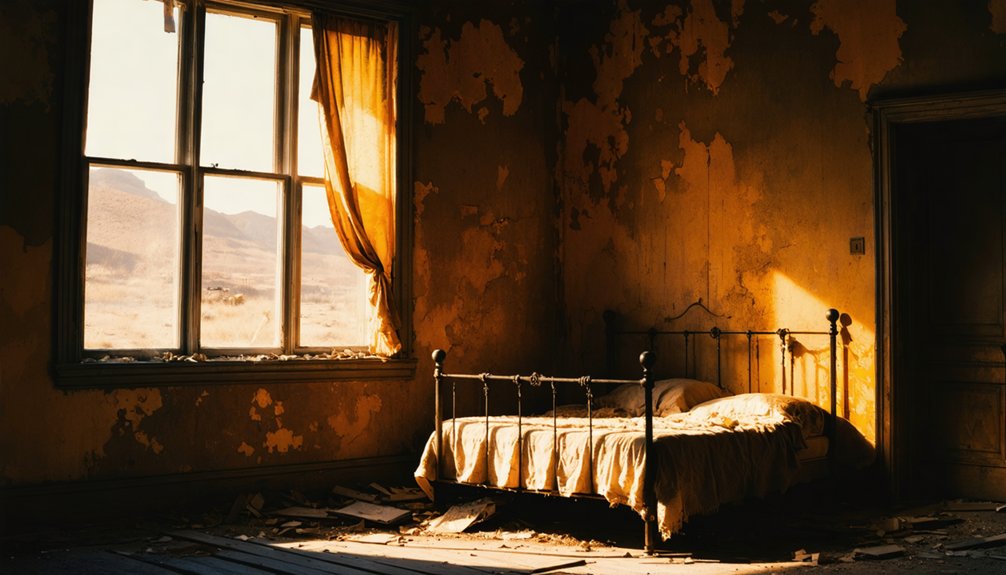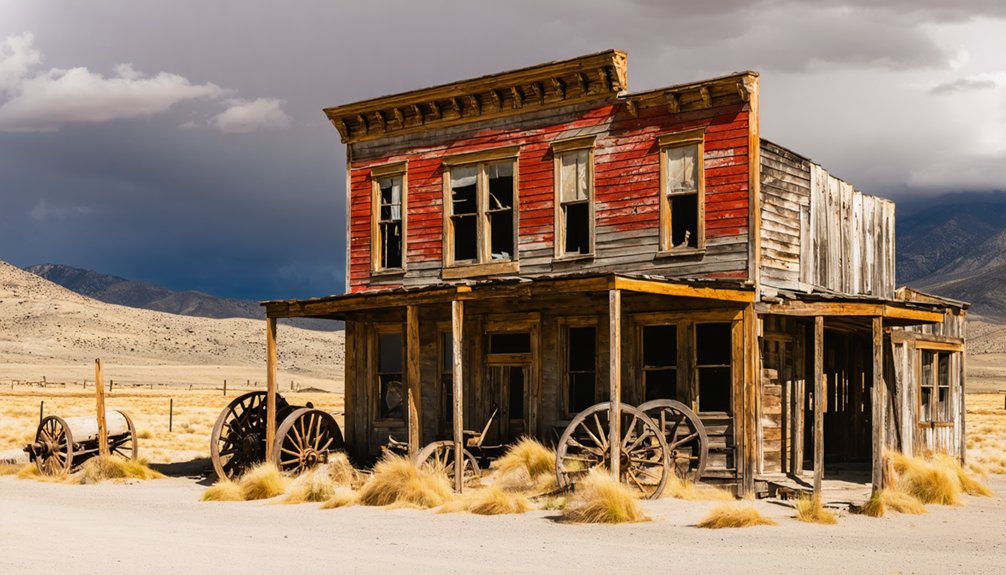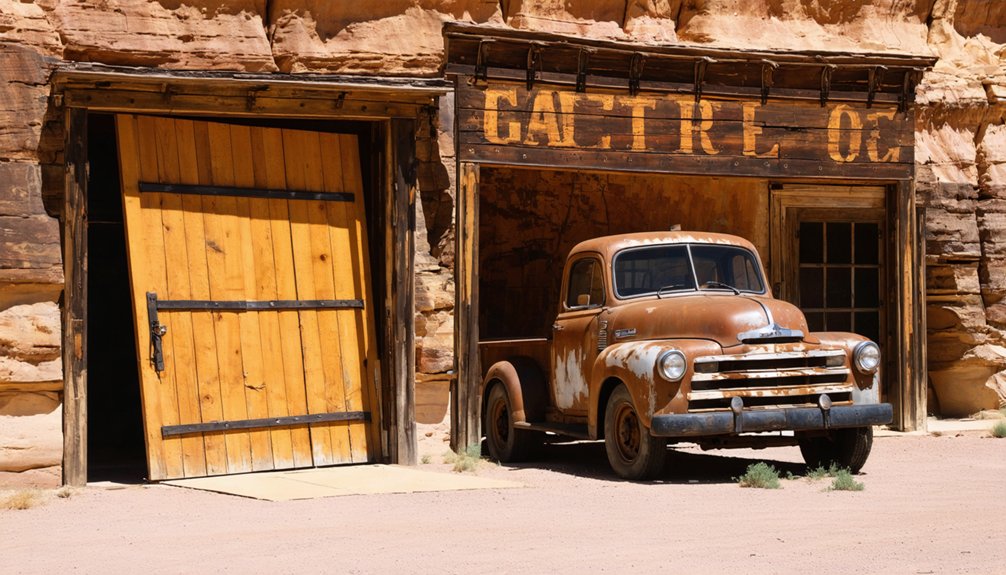
Within an hour’s drive from Las Vegas, you’ll find three fascinating ghost towns that’ll transport you back to Nevada’s mining era. Goodsprings beckons with its historic Pioneer Saloon and haunted schoolhouse, while Nelson showcases the restored Techatticup Mine and vintage artifacts. Potosi, Nevada’s oldest lode mine, rounds out these time capsules of the Silver State. Each site holds unique stories of fortune seekers, and there’s so much more to discover beyond the dusty trails.
Key Takeaways
- Goodsprings features the historic Pioneer Saloon from 1913 and offers guided walking tours of original mining structures.
- Nelson ghost town showcases the famous Techatticup Mine and an open-air museum with vintage mining equipment.
- Potosi, Nevada’s oldest lode mining site, preserves pioneer mining history from 1868 and lies within easy reach of Las Vegas.
- Spring and fall offer the best visiting conditions, with comfortable temperatures and optimal photography lighting during golden hours.
- Essential exploration gear includes sturdy shoes, water, a headlamp, and GPS, while weekday visits help avoid tourist crowds.
Why Ghost Towns Are Worth Exploring
When you explore ghost towns near Las Vegas, you’re stepping into living museums that tell fascinating stories of the American West.
These abandoned settlements pack tremendous historical significance, preserving authentic buildings, mines, and artifacts that bring the past vividly to life. You’ll discover original saloons, schoolhouses, and mining operations that showcase period construction methods and daily life from bygone eras. Many historic mining towns generated over 50 million ounces of precious metals during their peak operations. Visitors must practice responsible exploration to protect these fragile historical treasures.
Beyond their cultural value, ghost towns create meaningful economic impact for surrounding communities.
Your visits support local businesses through tourism dollars, create preservation-related jobs, and help fund essential conservation efforts. You’re not just exploring history – you’re contributing to the sustainable preservation of these irreplaceable windows into our shared past while supporting rural economies that depend on heritage tourism.
Planning Your Ghost Town Adventure
Setting out on a ghost town adventure near Las Vegas requires thoughtful preparation to make the most of your historical expedition.
You’ll need your own vehicle or rental car, as public transport doesn’t reach these remote desert locations. While guided tours offer hassle-free ghost town logistics, self-driving gives you the freedom to explore at your own pace.
Plan to visit during daylight hours and bring essentials like water and sturdy shoes for traversing ruins. You’ll encounter entry fees at sites like Nelson ($1 for walking, $10 for photography), so come prepared.
For the most immersive experience, consider overnight stays near distant locations like Belmont. Travel preparations should include checking weather conditions and making reservations where required.
Remember to respect posted signs and stick to marked paths as you explore these fascinating remnants of the Old West. The more remote sites like Delamar Ghost Town require 4WD and high-clearance vehicles for safe access. Sunset visits to Rhyolite provide ideal photography opportunities of the historic remnants.
Top Ghost Towns Within an Hour’s Drive
You’ll find fascinating history within an hour’s drive of Las Vegas at the well-preserved ghost town of Goodsprings, where you can explore original mining structures on a walking tour. The town’s iconic Pioneer Saloon still serves drinks as Nevada’s oldest operating bar.
Nelson’s photogenic collection of mining equipment and vintage vehicles offers an open-air museum experience for just a dollar entry fee. The historic Techatticup Mine, established in 1861, is available for public tours after being restored by a local family in 1994.
While many travelers rush past Potosi on their way to other destinations, this pioneer mining settlement holds some of the earliest claims in Southern Nevada, dating back to 1868.
Historic Goodsprings Walking Tour
Located just 45 minutes south of Las Vegas, the historic mining town of Goodsprings offers visitors a fascinating walking tour through its well-preserved downtown core.
You’ll discover iconic historic landmarks like the 1913 Pioneer Saloon, where ghost stories and tales of Clark Gable’s vigil still echo through its pressed-tin walls. The easy walking route takes you past century-old buildings that paint a vivid picture of the town’s mining boom days. The area first prospered when gold was discovered at the Keystone Mine in 1893. Expert guides lead immersive tours that blend real-world history with popular culture references.
- Pioneer Saloon – featuring an original cherry-wood bar, Civil War-era stove, and reported paranormal activity
- Goodsprings Schoolhouse – a National Register site dating to 1913
- Yellow Pine Mill ruins – visible remnants of the town’s industrial heritage
Remember to bring water and sun protection as you explore this authentic piece of Nevada’s mining history.
Nelson’s Mining Heritage Sites
Deep in the heart of Eldorado Canyon, Nelson’s ghost town stands as a tribute to Nevada’s wildest mining era, where lawlessness and gold fever collided just 45 minutes from modern Las Vegas.
You’ll discover the infamous Techatticup Mine, where mining techniques evolved from simple prospecting to industrial-scale operations that yielded millions in precious metals.
Ghost town legends run deep here, from the murderous tale of Charles Nelson to countless violent disputes that earned military intervention. The 200-mile distance to law enforcement made the area notoriously dangerous.
Today, you can explore the restored mine tunnels, where graffiti-lined passages tell stories of the desperate search for gold. A scenic paved drive leads visitors directly to this historic site.
The site’s haunting collection of rusting vehicles, vintage buildings, and even Elvis memorabilia creates an eerily beautiful backdrop.
Don’t miss the old cemetery, relocated after Lake Mojave’s creation, where restless spirits of the lawless era supposedly linger.
Potosi’s Pioneer Past
While Nelson’s lawless legacy draws ghost town enthusiasts south, another haunting piece of Nevada history lies just 30 miles southwest of the Strip.
Potosi Mine, discovered by Mormons in 1856, stands as Nevada’s first abandoned lode mine, perched at 5,705 feet in the Spring Mountains.
You’ll discover remnants of multiple mining operations that tell a fascinating story of boom and bust:
- Mormon pioneers extracted 9,000 pounds of lead before federal tensions forced their retreat
- The 1870s brought new life as Crystal City, complete with stone buildings
- Early 1900s saw peak production with Empire Zinc Company adding modern infrastructure
Today, you can explore this historic site where zinc-rich ore once yielded $4.5 million in minerals, making it Nevada’s largest zinc producer from 1913-1917.
Historic Mining Sites Beyond the Strip
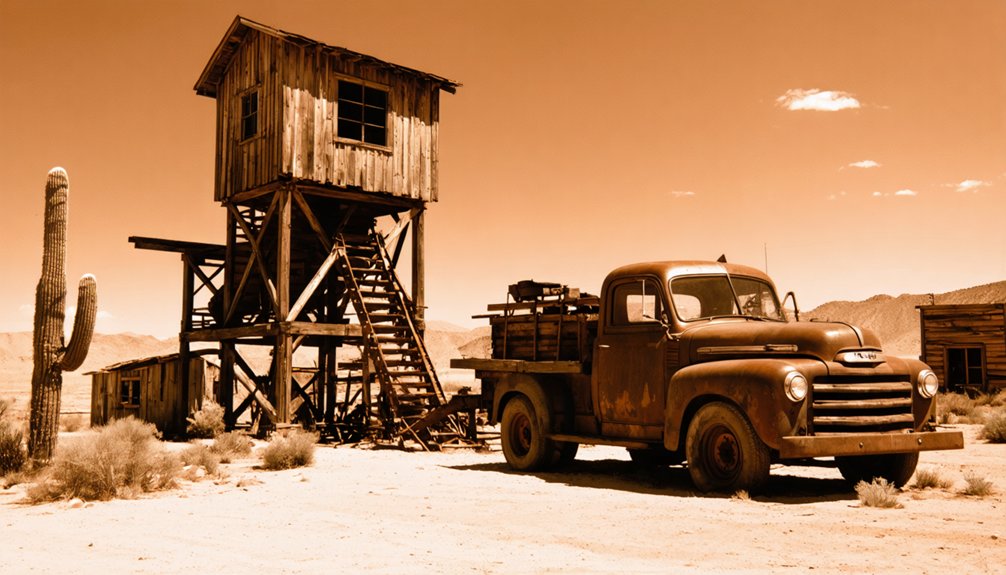
Beyond the neon glow of Las Vegas, Nevada’s rugged landscape harbors fascinating remnants of America’s mining heritage.
You’ll discover ghost town legends at Berlin-Ichthyosaur State Park, where preserved wooden buildings and mine shafts tell tales of silver fortunes won and lost.
Just 40 miles from Vegas, Eldorado Canyon’s Techatticup Mine beckons with its notorious past of lawlessness and gold fever.
Deep in Eldorado Canyon, the infamous Techatticup Mine stands as a haunting testament to Nevada’s wild gold rush era.
For a deeper exploration into mining artifacts, head to Tonopah Historic Mining Park, where the famous silver rush of 1900 transformed Nevada’s destiny.
Even the historic Potosi Mine, Nevada’s oldest lode operation, still reveals its secrets through scattered workings and mineral specimens.
Each site offers a raw, unvarnished glimpse into the adventurous spirit that shaped the Silver State’s rugged identity.
Photography Tips for Ghost Town Visits
You’ll want to pack a sturdy tripod, wide-angle lens, and LED lights to capture these abandoned treasures in their haunting glory.
The magic hours of dawn and dusk offer dramatic shadows and golden light that dance across weathered buildings and rusty artifacts.
While clear sunny days work well for capturing sunbeams through broken roofs, nighttime presents unique opportunities for long exposures that paint stars across the desert sky and illuminate forgotten structures in moonlight.
Essential Camera Equipment Needed
When capturing the haunting beauty of abandoned ghost towns near Las Vegas, having the right camera equipment can make the difference between mediocre snapshots and stunning photographs that tell compelling stories.
You’ll want to pack gear that’s ready for challenging low-light conditions and harsh desert environments.
Essential equipment for your ghost town photography adventure:
- A full-frame mirrorless or DSLR camera with manual controls and excellent high ISO performance
- Fast wide-angle lenses (14-35mm range) with f/2.8 or wider apertures for capturing expansive deteriorating structures
- A sturdy tripod, remote shutter release, and protective gear for dusty conditions
Remember to protect your gear from sand and dust, and always carry backup lighting for traversing dark interiors while adjusting your camera settings and shooting techniques.
Best Times For Shooting
Timing can make or break your ghost town photography adventure near Las Vegas.
You’ll capture the most evocative shots during golden hour, when warm light brings weathered wood and rusted metal to life, creating dramatic shadows that emphasize architectural details. For a moodier atmosphere, shoot during blue hour when you can blend ambient light with artificial sources to craft cinematic scenes.
Winter offers prime shooting conditions with extended golden hours and clearer desert air.
If you’re stuck shooting midday, embrace high-contrast compositions or seek shaded alcoves. After rain showers, you’ll find saturated colors and reflective puddles that add depth to your compositions.
For stunning night shots, take advantage of the dark desert skies to capture star trails above abandoned structures, using long exposures and selective light painting to reveal hidden textures.
Best Times to Visit Nevada Ghost Towns
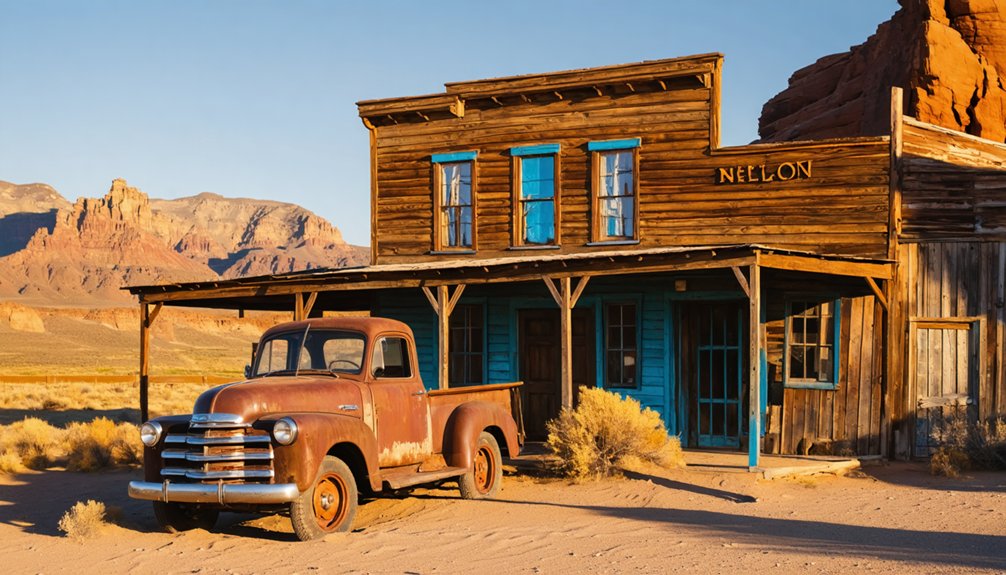
Planning your ghost town adventure during spring or fall rewards you with Nevada’s most hospitable desert conditions. You’ll enjoy comfortable daytime temperatures while avoiding summer’s extreme heat and winter’s harsh cold.
These shoulder seasons also offer the best photography light and wildflower displays, enhancing your exploration experience.
- March through May brings mild weather and blooming desert landscapes, perfect for capturing stunning photos during golden hour.
- September to November offers pleasant temperatures and fall colors, with special Halloween events at popular sites like Virginia City.
- Weekday visits help you dodge the crowds, especially at well-known locations within a few hours of Las Vegas.
Remember to check road conditions before heading to remote sites, as seasonal rains can make dirt roads challenging.
Early starts maximize daylight hours and give you plenty of time to explore these fascinating remnants of the Old West.
Safety Tips for Ghost Town Exploration
Safe ghost town exploration requires proper preparation and respect for these historically rich but hazardous sites.
When exploring Nevada’s abandoned settlements, you’ll need essential gear like a headlamp, first aid kit, and reliable GPS. Always wear an N95 or P100 respirator to protect against asbestos, mold, and mining dust that lurks in these historic structures.
Take safety precautions by avoiding unstable floors, decaying stairs, and collapsed roofs. Step near walls when climbing, and never venture into sealed mine shafts – they’re especially dangerous with poor air quality and unstable supports.
Remember to explore with companions, carry a survival manual, and respect “no trespassing” signs. Document your adventures with photos only, leaving these treasured ruins untouched for future explorers to discover.
Hidden Gems and Lesser-Known Locations
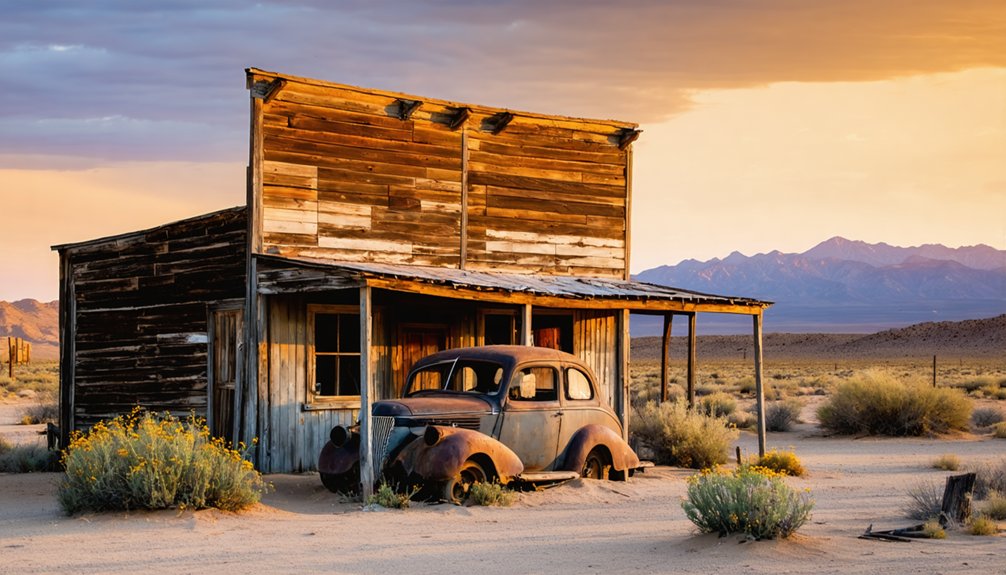
While Las Vegas’s neon lights dazzle millions, some of the region’s most intriguing attractions lie hidden in its surrounding desert expanses.
Local legends whisper of hidden treasures scattered across forgotten settlements, where history’s echoes still resonate through weathered walls and sun-bleached timbers.
- Nelson’s Techatticup Mine offers a photographer’s paradise of rustic structures and vintage mining equipment, just 45 minutes from the Strip.
- Whitney Pocket’s remote sandstone formations guard ancient petroglyphs and abandoned prospector camps, perfect for adventurous souls seeking solitude.
- St. Thomas emerges mysteriously from Lake Mead’s receding waters, revealing its submerged streets and foundations like a desert Atlantis.
You’ll find these lesser-known sites offer a raw, authentic glimpse into the West’s untamed spirit, far from the manufactured glitz of modern Vegas.
Guided Tours vs. Self-Guided Adventures
Choosing between guided ghost town tours and self-guided adventures presents two distinct paths to discovering Nevada’s abandoned treasures.
Guided tours offer expert interpretation, enhanced safety protocols, and streamlined logistics – you’ll benefit from trained guides’ first-aid skills, liability insurance, and well-planned itineraries. They’ll also grant access to restricted sites and share compelling historical narratives you might miss on your own.
Professional guides unlock hidden ghost town treasures while ensuring your safety and enriching the experience with expert historical insights.
Self-guided adventures put you in control of your schedule and pace, though you’ll need to handle your own route planning, vehicle requirements, and safety measures.
While potentially more cost-effective, you’ll want to factor in hidden expenses like 4×4 rentals and fuel. Consider your comfort level with backcountry navigation, mechanical know-how, and emergency preparedness when deciding between these two exploration styles.
Frequently Asked Questions
Are There Any Ghost Towns That Still Have Active Mining Operations?
You’ll find active mining operations at several ghost towns, including Nelson’s Techatticup Mine, Goldfield’s exploration sites, and Potosi’s small-scale mineral work – though access may require permission.
Can Visitors Take Home Artifacts Found at Ghost Town Sites?
You’ll face up to $3,500 in fines if you remove artifacts – they’re strictly protected by legal restrictions. Taking even a rusty nail damages artifact preservation efforts and is a federal crime.
Do Any Ghost Towns Offer Overnight Camping or Accommodation Options?
You’ll find camping options at Calico Ghost Town with full RV hookups and tent sites, while Delamar lets you freely camp on surrounding BLM land. Most others support nearby overnight accommodation availability.
Which Ghost Towns Are Most Suitable for Families With Young Children?
Like a treasure map to family adventure, Calico’s your best bet with kid-friendly attractions like train rides and gold panning. You’ll also enjoy Nelson’s open-air displays and Goodsprings’ easy walking tours.
Are There Seasonal Events or Festivals Celebrated in These Ghost Towns?
You’ll find vibrant seasonal celebrations throughout the year, from Goodsprings’ historic Founders Day to Calico’s Wild West reenactments, plus spooky Halloween festivities and summer artisan markets at Nelson’s ghost town.
References
- https://pinatravels.org/ghost-towns-near-las-vegas/
- https://travelnevada.com/ghost-town/ghost-towns-near-las-vegas/
- https://www.maxtour.co/historical-ghost-towns-to-explore-around-las-vegas/
- https://nvtami.com/2023/12/05/las-vegas/
- https://www.youtube.com/watch?v=mGkyVWaef30
- https://www.tripadvisor.com/ShowTopic-g45963-i10-k14740997-Ghost_towns_off_the_beaten_track-Las_Vegas_Nevada.html
- https://savingplaces.org/stories/ghost-of-a-chance-animas-forks-colorado
- https://travelnoire.com/reviving-ghost-towns-sustainable-tourism-in-abandoned-places
- https://ghosttownclub.org/preservation/
- https://www.atlasobscura.com/articles/column-preservation-of-abandoned-places