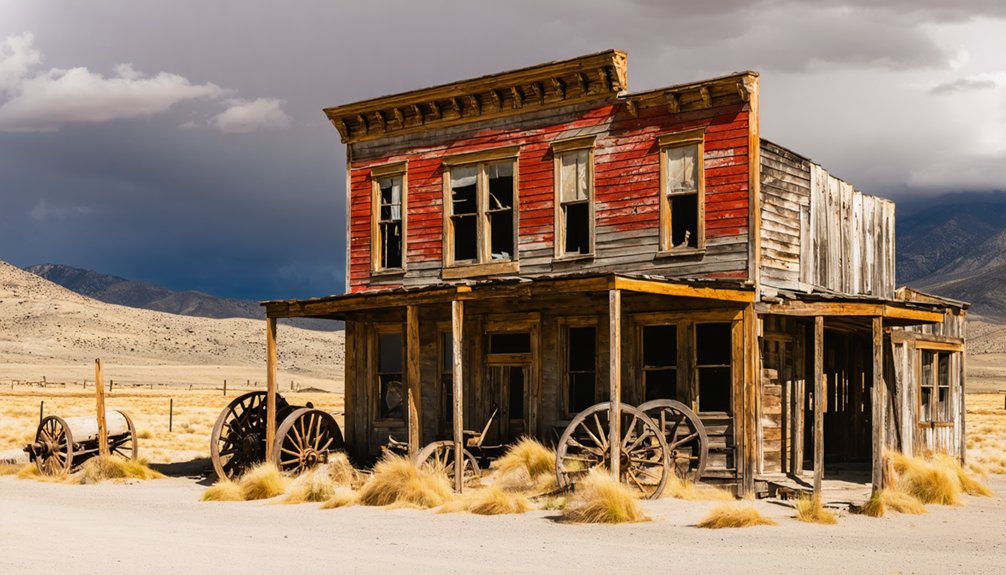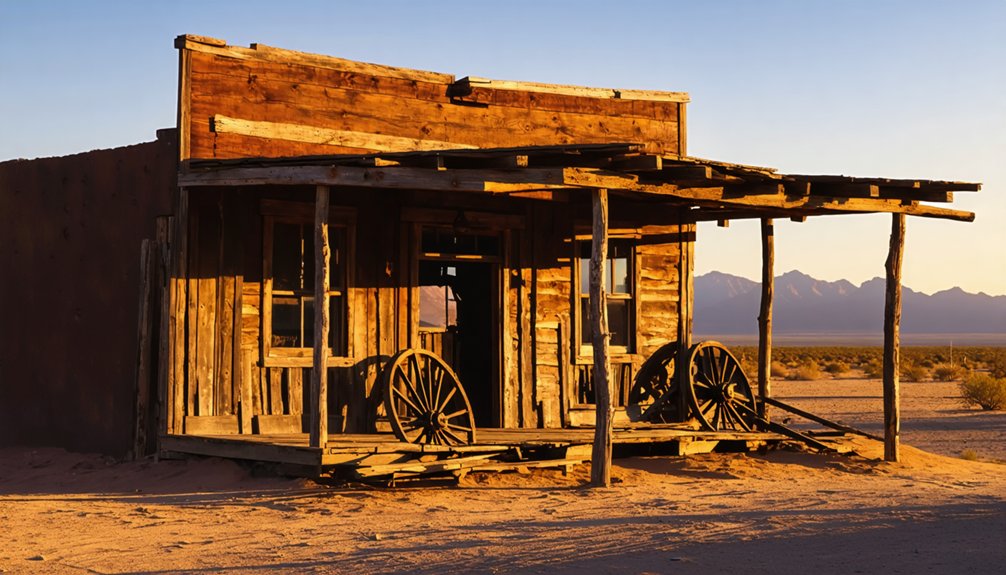
You’ll find the Southwest’s most fascinating ghost towns scattered across Arizona, New Mexico, and Nevada, where the harsh desert climate has preserved historic mining settlements frozen in time. Must-visit sites include Ruby, Arizona’s most intact ghost town, and New Mexico’s 80+ abandoned settlements rich with Wild West history. These remnants of the silver and gold rush era offer exceptional photography opportunities and cultural insights, from Native American petroglyphs to preserved frontier saloons. The deeper you venture into these desert time capsules, the more secrets they reveal.
Key Takeaways
- Ruby, Arizona stands as the Southwest’s most intact ghost town, featuring a well-preserved schoolhouse and the historic Montana Mine complex.
- Nelson, Nevada offers stunning photo opportunities of weathered structures and provides safe, accessible exploration for visitors year-round.
- The Magdalena Mining District in New Mexico showcases rich silver mining history with numerous preserved buildings and mining equipment.
- Vulture City, Arizona highlights the region’s gold rush era, having produced over 340,000 ounces of gold during its peak.
- Gleeson, Arizona features remarkable remnants of frontier life, including preserved buildings and artifacts from the early 1900s mining boom.
What Makes Southwest Ghost Towns Unique
While abandoned settlements dot landscapes across America, the ghost towns of the Southwest tell a uniquely dramatic tale of boom-and-bust cycles shaped by silver strikes, outlaw justice, and railroad ambitions.
These fascinating sites remain haunting reminders of the pioneering spirit that drove westward expansion. You’ll find these remnants of the past perfectly preserved by the desert’s harsh climate, where isolation and unforgiving conditions have frozen time. The cultural significance of these sites runs deep, from ancient Native American petroglyphs to Wild West saloons where infamous outlaws once roamed. New Mexico alone contains over 80 ghost towns scattered throughout its diverse terrain.
What makes these ghost towns truly special is their raw authenticity – weathered ruins under endless skies, mysterious rock art, and countless reports of ghostly encounters.
Whether you’re exploring preserved mining camps or remote stone dwellings, you’ll discover a fascinating blend of prehistoric settlements and Wild West heritage that’s uniquely Southwestern.
The Rich Mining History Behind These Abandoned Towns
When you explore Southwest ghost towns, you’ll witness the dramatic legacy of mining booms that transformed remote desert outposts into thriving cities between 1849 and the early 1900s.
Today, these fascinating destinations have become popular historical sites that draw visitors from around the world.
You’ll find evidence of fortune-seekers who extracted gold, silver, and copper using period technologies from simple pick-and-shovel operations to advanced stamp mills and smelters.
These sites tell a compelling story of rapid growth and equally swift decline, as mines played out, financial panics struck, or precious metal prices collapsed, leaving behind the abandoned buildings and equipment you can still examine today.
The Diana Mine in Berlin offers guided weekend tours from May through September, allowing visitors to explore the underground workings of a once-productive mining operation.
Boom and Bust Cycles
Throughout the American Southwest’s rich mining history, dramatic boom and bust cycles transformed countless settlements into the ghost towns you’ll find today.
You’ll discover how economic fluctuations shaped these communities, from the Depression-era gold revival in Oregon to the uranium boom across the Colorado Plateau. Local gold production tripled in Jackson County between 1930 and 1940, as desperate families sought relief from economic hardship. When you explore these abandoned towns, you’ll see evidence of mining legacies that once drew thousands seeking fortune.
The pattern repeats across decades – government policies, market forces, and global events triggered rapid growth followed by devastating crashes. Towns like Jeffrey City saw their communities collapse when the uranium industry declined following the Three Mile Island accident.
From the 1942 wartime mining shutdown to the 1979 uranium bust after Three Mile Island, and the 1982 “Black Sunday” oil shale collapse, these cycles created waves of migration and abandonment.
Today’s ghost towns stand as powerful reminders of the Southwest’s volatile extractive past.
Precious Metal Rush Era
As precious metals were discovered across the Southwest in the mid-1800s, these findings ignited a series of transformative rushes that would establish the foundation for today’s ghost towns.
You’ll find the legacy of gold mining scattered throughout Colorado’s Gilpin County, where prospectors used everything from basic panning to advanced steam crushers in their quest for riches. The first profitable discovery came when John H. Gregory found gold-bearing quartz in what would become Central City. The landscape changed dramatically when silver discoveries in Leadville sparked Colorado’s Silver Boom of 1879, leading to fierce labor disputes and eventual decline.
In Arizona, the Bradshaw Mountains yielded both gold and silver, with Rich Hill producing an astounding 110,000 ounces of gold. Spanish explorers had already established small mining operations in the region centuries earlier.
New Mexico joined the frenzy with significant discoveries in Lincoln County and the Magdalena district, where silver lodes attracted waves of hopeful miners seeking their fortune.
Frontier Mining Equipment Used
The ingenious tools and equipment that powered the Southwest’s mining boom tell a fascinating story of frontier innovation.
You’ll find remnants of placer mining operations where prospectors once used pans, rocker boxes, and sluices to separate precious gold from river sediments. Mercury helped them capture even the finest particles of gold dust in these early operations.
As surface deposits ran dry, mining companies turned to hard rock techniques, driving deep tunnels and shafts into mountainsides. Mining life involved long hours and dangers as workers toiled in treacherous conditions underground. The harsh environment claimed countless lives through cave-ins, toxic gases, and industrial accidents.
At sites like the Mowry Mine, you can still spot the ruins of blast furnaces where silver-lead ore was processed. The arrival of railroads and sophisticated smelting equipment transformed these frontier outposts into industrial powerhouses.
Essential Tips for Ghost Town Exploration
While ghost towns offer fascinating glimpses into the American Southwest’s past, exploring these historic sites requires careful preparation and awareness of potential hazards.
When pursuing ghost town legends, you’ll need essential gear: flashlights, respirators, first aid kits, and sturdy boots. Don’t venture alone – bring trusted companions and inform others of your plans.
Before entering structures, assess their stability and check for hazards like asbestos, black mold, or unstable floors. Remember that exploration ethics matter – obtain necessary permissions, respect “no trespass” signs, and leave artifacts untouched.
Many abandoned mines pose serious risks, with over 17,000 in Utah alone. Stay near structural supports when inside buildings, test floor stability, and maintain clear exit paths. Always heed local warnings and carry offline maps and emergency equipment.
Must-Visit Historic Sites in Arizona Territory
You’ll find Arizona Territory’s richest mining heritage preserved in sites like Ruby, with its 25 standing structures, and Vulture City, where the assay office and blacksmith shop still tell tales of 1860s gold fever.
Charleston’s adobe ruins and Fort Bowie’s military remains offer glimpses into the region’s lawless frontier period, when outlaws and Apache conflicts shaped daily life.
The preserved buildings, from Ruby’s schoolhouse to Gleeson’s town remnants, stand as proof to the boom-and-bust cycles that defined these settlements between the 1860s and 1940s.
Desert Mining Heritage Sites
Scattered across Arizona Territory’s sun-scorched landscape, historic mining towns stand as weathered monuments to America’s pioneering spirit and mineral wealth pursuits.
These ghostly remnants tell tales of fortunes made and lost, where mining legacies shaped the American Southwest.
You’ll discover remarkable stories of determination through these preserved sites:
- Vulture City, Arizona’s most profitable gold mine, which birthed both Wickenburg and Phoenix while producing over 340,000 ounces of gold
- Ruby, once the largest mining camp in southwest Arizona, with 25 preserved buildings including a jail and schoolhouse
- The restored jail at Gleeson, where copper replaced turquoise as the prized mineral, marking the shift from indigenous mining to industrial operations
Today, these silent sentinels invite you to step back into an era of unbridled opportunity and rugged individualism.
Preserved Frontier Law Buildings
Standing as proofs to frontier justice and territorial governance, Arizona’s preserved law buildings offer glimpses into the region’s formative legal history.
You’ll find the state’s earliest courthouse at Sharlot Hall Museum, where territorial governor John Noble Goodwin’s office played multiple roles in establishing frontier law.
At Fort Whipple, you can explore where the first Arizona Territorial Legislature adopted the Howell Code in 1864, setting foundational laws for the region.
Don’t miss the historic preservation achievements in Florence’s district, where over 140 adobe and brick buildings showcase early law enforcement.
The original courthouse basement now houses the Pinal County Historical Museum’s territorial artifacts.
In Prescott’s Historic District, the Yavapai County Courthouse Plaza‘s bronze plaques commemorate pivotal 1800s legal milestones from Arizona’s territorial period.
Hidden Gems Near the Mexican Border
Along the rugged borderlands of southern Arizona, a collection of fascinating ghost towns offers glimpses into the region’s mining heritage and cultural fusion.
These hidden treasures, scattered throughout Santa Cruz County, tell stories of local legends and frontier dreams. From Lochiel’s iconic red schoolhouse to Ruby’s well-preserved mining camp, each site captures a unique chapter of southwestern history.
- Visit Harshaw’s old cemetery and discover remnants of the region’s rich mineral past along the historic Harshaw Road.
- Explore Duquesne’s weathered wooden structures, including the remarkable Westinghouse home that stands as a symbol of mining prosperity.
- Witness Ruby’s Montana Mine complex, the most intact ghost town in southern Arizona’s borderlands.
Remember to respect private property boundaries and Border Patrol regulations while exploring these remarkable settlements that bridge two nations’ histories.
Preserving the Old West’s Cultural Heritage
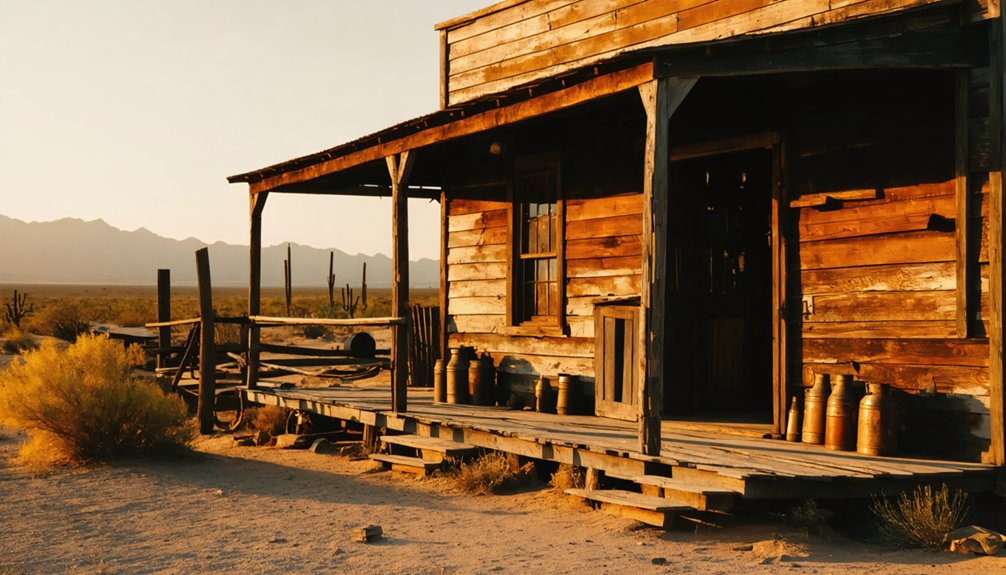
When you explore the Southwest’s ghost towns today, you’ll witness ambitious restoration projects that have transformed abandoned mining camps into protected historic sites. Federal preservation grants support everything from stabilizing centuries-old adobe walls to recreating period-accurate storefronts.
These carefully preserved structures serve as open-air museums where you can experience authentic 19th-century architecture firsthand, from Victorian-era hotels to frontier-style saloons that once served prospectors and cowboys.
Your visit supports ongoing educational programs that help local communities maintain these irreplaceable landmarks while sharing the region’s rich cultural heritage with future generations.
Historic Restoration Projects Underway
Throughout the Southwest, ambitious restoration projects are breathing new life into forgotten ghost towns, preserving essential pieces of Old West heritage for future generations.
You’ll find historic preservation projects transforming these once-abandoned settlements into vibrant cultural destinations, while adaptive reuse initiatives honor their authentic character.
Notable success stories include:
- Terlingua’s evolution from a defunct mercury mining town into a quirky tourist destination, complete with rustic lodging and its famous chili cook-off
- Lobo’s artistic renaissance, where preservationists have reimagined forgotten buildings into creative spaces
- Coolidge’s innovative interpretive plan, which spotlights previously untold stories of underrepresented communities who shaped the town’s mining heritage
These restoration efforts showcase how determined communities can overcome complex challenges like unclear property rights and infrastructure limitations to keep Western history alive.
Living History Through Architecture
These architectural treasures stand as silent witnesses to the American frontier’s golden age, with some of the Southwest’s most remarkable ghost towns featuring pristine original structures that transport visitors back to the late 1800s.
You’ll find St. Elmo’s 43 original buildings, including its still-operating general store, standing as proof of the town’s cultural preservation efforts.
In Fairbank and Ruby, Arizona, you’ll discover the architectural significance of intact mining-era structures that showcase the region’s industrial heritage.
From Mogollon’s bustling commercial district to Chloride’s 27 preserved buildings, each town tells a unique story through its surviving architecture.
These authentic remnants of the Old West invite you to step into a world where saloons, hotels, and mining operations once thrived.
Educational Tourism Benefits All
Curiosity drives visitors to explore ghost towns beyond mere sightseeing, creating meaningful educational experiences that benefit both tourists and local communities. The educational impact of these historic sites extends far beyond textbook learning, with over half of visitors engaging specifically for educational purposes and cultural understanding.
When you explore ghost towns, you’ll discover:
- Authentic preservation efforts that protect irreplaceable architectural heritage
- Interactive learning opportunities that bring the Old West’s history to life
- Direct economic support for local communities preserving these historic treasures
Your visit contributes to a $29.6 billion heritage tourism industry while deepening your connection to the American West’s legacy.
Through guided experiences and thoughtfully preserved sites, you’ll gain insights into the triumphs and challenges that shaped frontier communities, making history tangible and relevant for future generations.
Planning Your Ghost Town Adventure
Ready to explore the haunting remnants of the American Southwest’s mining era? Before you venture into these historic sites, you’ll need to navigate ghost town regulations and secure exploration permits where required.
Start by researching your chosen destination’s access protocols and ownership status, as many sites require official permission despite their abandoned appearance.
Pack essential gear including sturdy boots, protective clothing, and recovery equipment for your vehicle. You’ll want a detailed route plan shared with someone you trust, and it’s safer to travel with companions.
Consider the risks carefully – there are over 17,000 abandoned mines in Utah alone, and many pose serious hazards from unstable structures to toxic materials.
Photography Opportunities in Abandoned Settlements
You’ll find abandoned structures throughout the Southwest offering exceptional photography opportunities up to October 2023.
From Nelson’s weathered buildings in Nevada to Alta’s high-altitude remnants in Colorado, each location presents unique nostalgic landscapes waiting to be captured through your lens.
- Explore Nelson’s vintage vehicles and antique artifacts for atmospheric portraits and wedding shoots against authentic Wild West backdrops.
- Capture Ruby’s mine tailings during golden hour, with unrestricted access to most structures and perfect sunrise vistas over the Mexican border.
- Frame your shots in Colorado’s ghost towns, where Alta and Ironton blend historic mining remnants with dramatic mountain scenery and fall foliage.
For the adventurous photographer, these remote locations offer solitary exploration and endless creative possibilities, whether you’re shooting independently or joining specialized workshops across Arizona, Nevada, Utah, or New Mexico.
Safety and Accessibility Guidelines
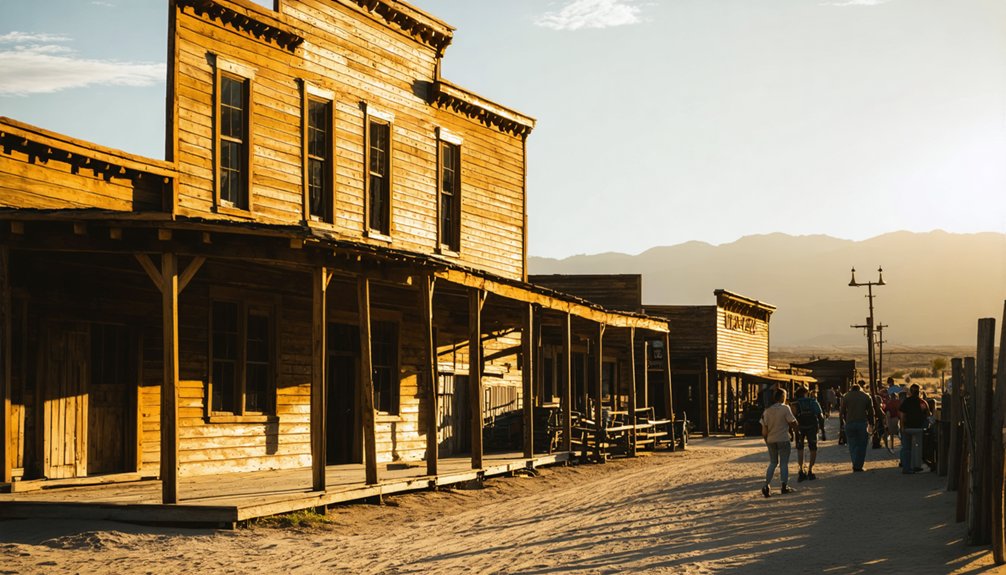
Exploring ghost towns demands five essential safety protocols that can mean the difference between an enriching adventure and a dangerous mishap.
You’ll need proper safety equipment including sturdy boots, hard hats, and respirators when encountering hazardous materials like asbestos or lead. Always share your plans with emergency contacts and explore in groups, as structural hazards and wildlife pose real risks.
Before venturing out, research land ownership status and obtain necessary permissions. Bring navigation tools, as cell service is unreliable in remote locations.
Scout building exteriors first, identify escape routes, and stay near load-bearing walls when inside. Pack essential supplies like water, first aid kits, and recovery gear, especially in desert locations.
Remember that many sites are protected historic landmarks, so respect posted guidelines and leave structures untouched.
Best Times to Experience These Historic Places
While Southwest ghost towns beckon year-round, timing your visit strategically enhances both safety and experience.
Fall emerges as the prime season, offering crisp air and golden landscapes perfect for seasonal photography. Spring follows as another excellent choice, with wildflowers adding vibrant touches to weathered structures.
- Visit during early morning or late afternoon “golden hours” for the most enchanting photo opportunities
- Plan around ghost town festivals, which typically occur in spring and fall months
- Consider shoulder seasons (March-May or September-November) to avoid extreme temperatures
Summer visits demand early starts to beat the heat, while winter exploration requires careful preparation for cold and potentially challenging road conditions.
Each season offers unique perspectives on these historic ruins, but autumn’s mild temperatures and stunning colors create an unmatched backdrop for your ghost town adventure.
Frequently Asked Questions
Are There Any Reported Paranormal Activities in These Ghost Towns?
You’ll find the Southwest’s ghost towns have a haunted history, but specific spectral sightings aren’t well documented in official records. Local legends suggest unexplained phenomena, though concrete evidence remains scarce.
Can Visitors Take Small Artifacts Home as Souvenirs?
Over 200,000 artifacts vanish yearly from historic sites. You can’t legally remove any items – it’s a federal crime. Artifact preservation maintains historical significance for future generations to explore and enjoy.
Do Any of These Ghost Towns Still Have Permanent Residents?
You’ll find current residents in several of these historic communities – Thurmond has three people, Centralia maintains fewer than five, and Bannack houses twelve, preserving their towns’ historical significance firsthand.
Are Metal Detectors Allowed When Exploring These Locations?
Principally prohibited! You’ll need proper permits and permissions since metal detecting regulations strictly control these sites. Most ghost towns forbid detectors entirely, so focus on exploring responsibly through photography and observation instead.
Which Ghost Towns Offer Guided Night Tours or Evening Experiences?
You’ll find guided night tours at Vulture City with flashlight explorations, Old Bisbee’s 10 PM walks, and Jerome’s evening ghost hunts – perfect for nighttime photography and historical reenactments amid haunted locations.
References
- https://www.visittucson.org/blog/post/8-ghost-towns-of-southern-arizona/
- https://www.visitarizona.com/like-a-local/4-arizona-ghost-towns-you-may-have-never-heard-of
- https://www.youtube.com/watch?v=l_ogVgvyw7Y
- https://www.newmexico.org/places-to-visit/ghost-towns/
- https://travelzone.bestwestern.com/southwest-ghost-towns-road-trip/
- https://www.united.com/en/us/hemispheres/places-to-go/5-western-ghost-towns.html
- https://newmexicotravelguy.com/new-mexico-ghost-towns/
- https://www.youtube.com/watch?v=pgxZnFNQMTU
- https://www.haciendarv.com/the-ghost-towns-of-southern-new-mexico/
- https://www.islands.com/1740327/get-away-from-all-strange-arizona-ghost-town-famed-unusual-name-nothing/