You’ll find fascinating ghost towns scattered across Washington state, from Monte Cristo’s mining ruins to Franklin’s abandoned coal settlement. Take a counter-clockwise route from Seattle between July and September to explore these historic sites. Don’t miss Melmont’s moss-covered remnants near Mount Rainier or the eerie Northern State Hospital grounds. Each destination reveals compelling stories of boom-and-bust cycles, unsolved mysteries, and architectural treasures that paint a vivid picture of Washington’s pioneering past.
Key Takeaways
- Monte Cristo offers rich mining history and dramatic ruins, including a five-story concentrator building, accessible via a scenic 5-mile hike.
- Franklin’s abandoned coal mining town, founded in 1887, provides easy access and well-preserved historical structures from its prosperous mining era.
- Melmont features moss-covered ruins and a historic dynamite shed along a moderate 3.8-mile trail near Mount Rainier.
- Sherman’s Prairie showcases an iconic white church and windswept ruins dating to the 1880s amid picturesque wheat fields.
- Nighthawk’s historic hotel and train depot remains illustrate the region’s mining boom, with six concentration mills processing precious minerals.
Discovering Washington’s Hidden History
While Washington state’s bustling cities and scenic landscapes draw millions of visitors each year, its abandoned towns tell an equally compelling story of boom-and-bust cycles that shaped the Pacific Northwest.
You’ll find these hidden gems scattered across the state, from the mysterious Govan Ghost Town with its unsolved murders to Liberty, the state’s oldest mining settlement where a handful of residents still keep watch. The town of Molson showcases a rich history with its old pioneer buildings still standing today.
Local legends surround places like Monte Cristo, where Rockefeller’s dreams of riches crumbled into rusty remnants, and Northern State, once a self-sufficient asylum town. In the 1870s, the tiny settlement of Little Goose Dam submerged Almota, transforming a once-thriving community into an underwater ghost town.
From mining empires to asylum walls, Washington’s ghost towns echo with whispers of shattered dreams and forgotten fortunes.
In Okanogan Country, you can explore Ruby City’s remains, where dreams of becoming the “Babylon of the West” lasted just 11 months, and wander through Nighthawk’s preserved buildings that whisper tales of mining’s golden age.
Essential Road Trip Planning Tips
Before setting out to explore Washington’s fascinating ghost towns, you’ll need to carefully plan your route and logistics to maximize your experience.
One of the best seasons to visit ghost towns is during the fall when the vibrant foliage creates a stunning backdrop for your adventures. Additionally, spring offers a unique opportunity to see these historic sites bloom with wildflowers, enhancing their eerie beauty. Make sure to check local events, as some towns hold reenactments and festivals that add to the charm of your visit.
As you embark on your journey exploring abandoned towns in Washington, consider bringing a camera to capture the haunting beauty of decaying structures and nature reclaiming its space. Each town has its own unique story, often reflected in the remnants of old buildings, rusted machinery, and forgotten artifacts. Be prepared for unexpected discoveries that will make your adventure even more memorable.
Your road trip planning essentials should start with securing the right passes – you’ll want the America the Beautiful Pass for national parks and both the Northwest Forest Pass and Discover Pass for accessing state lands where many ghost towns are located.
Plan your route as a counter-clockwise loop from Seattle, allowing 7-10 days to fully explore. The July to September window offers ideal weather conditions for ghost town exploration.
While a standard 2WD vehicle will handle the journey fine, don’t forget to pack essential gear like a reliable raincoat and detailed maps.
Consider booking accommodations well ahead since campgrounds and lodging fill up months in advance during peak season.
The scenic drives through Stevens Pass and North Cascades Highway will take you through remote areas where these forgotten settlements await, so carry plenty of water and plan your fuel stops strategically.
Northern State: The Lost Mental Health Colony
Perched at the foot of the Cascades near Sedro-Woolley, Northern State Hospital emerged in 1912 as Washington’s third mental health institution, transforming 800 acres of wilderness into a self-sustaining therapeutic community.
At its peak in the 1950s, over 2,000 patients called this Spanish colonial-style campus home, working the dairy farms and participating in revolutionary occupational therapy programs. The farm operations were remarkably productive, generating over 1.1 million pounds of potatoes annually.
Designed by the legendary Olmsted Brothers firm, the sprawling campus showcased the same vision that created New York’s Central Park.
You’ll discover a haunting reminder of early mental health care, where ghost stories now echo through abandoned halls.
If you’re planning to explore, remember:
- The main grounds are off-limits to the public
- You can visit the cemetery at the western edge
- The site is visible from State Route 20, just 4 miles northeast of Sedro-Woolley
Monte Cristo’s Mining Legacy
You’ll discover rusting mining equipment and weathered structures from Monte Cristo’s 1890s gold rush glory days, where over 1,000 residents once sought their fortunes in this remote Cascade Mountain valley.
The historic ghost town, accessed via a scenic mountain trail that follows the old railroad grade, stands as a symbol of the boom-and-bust cycle of Pacific Northwest mining operations. A devastating flood in 1897 marked the beginning of the town’s decline as infrastructure was severely damaged. After 2000, accessing the site requires a 5-mile hike since bridge washouts eliminated vehicle access.
Among the preserved remnants you can explore are the five-story concentrator building foundation, mine entrances, and the skeletal remains of what was once Frederick Trump’s bustling frontier hotel.
Abandoned Equipment Still Stands
While Monte Cristo’s mining heyday ended over a century ago, the ghost town’s industrial heart still reveals itself through weathered remnants scattered across the forest floor. The mine was known for its advanced locked coil cable design.
You’ll discover historical relics frozen in time, from the five-story concentrator mill’s massive foundation to freely rotating railroad turntables. A century-old canopy of trees now shelters this spontaneous museum of abandoned machinery. The area produced 310,000 tons of ore during its peak mining operations from 1889 to 1907.
- Follow the former Dumas Street to find rusted rock drills, crucibles, and mining tools left exactly where workers last used them.
- Explore the rare Bleichert tramway system remnants, including preserved ore car parts that once transported valuable minerals.
- Marvel at the engineering feat of milled railroad trestle posts and protruding tracks that emerge from eroded roadbeds.
Historic Mining Town Access
Deep in the Northern Cascades, Monte Cristo’s mining legacy began in 1889 when prospector Joseph Pearl struck silver in this remote mountain valley.
Within five years, this discovery transformed the wilderness into a bustling settlement of over 1,000 residents, becoming the first active mining camp on the Cascade’s western slopes.
Today’s ghost town access follows part of the historic Everett and Monte Cristo Railroad route, built in 1893 to transport precious ore along the South Fork Sauk River.
You’ll trace the path where mining heritage once flourished with 13 mines, 40 claims, and a massive five-story concentrator building.
The rugged terrain that challenged early prospectors still presents an adventurous journey, leading you past remnants of the eight primary mines that drove Monte Cristo’s brief but intense mining boom.
Gold Rush Ghost Buildings
As Monte Cristo’s population swelled to over 1,000 residents during the 1890s, the town’s architecture reflected its rapid transformation from wilderness to wealthy mining hub.
You’ll find the remaining ghost buildings nestled in two distinct tiers, showcasing the town’s social hierarchy during the gold rush era.
The most notable structures you can explore include:
- Dumas Street’s business district, where you’ll discover remnants of the school, church, and post office that served the upper class
- Lower town ruins, featuring former saloons and worker housing that catered to hardworking miners
- Industrial remains like the stone walls of the five-story concentrator and railway turntable that once processed $350-per-ton ore
Though most structures succumbed to floods and avalanches, these architectural ghosts tell a compelling story of boom-town ambition.
Franklin’s Coal Mining Past
Founded in 1887, Franklin emerged as one of Washington’s most significant coal mining towns following the discovery of the McKay coal seam in 1880.
You’ll find its haunting remnants along the Green River, where the Oregon Improvement Company once shipped nearly 200,000 tons of coal annually through the Columbia & Puget Sound Railroad.
The town’s darkest day came on August 24, 1894, when a devastating mining disaster claimed 37 lives after fire swept through the sixth north level.
Though officially attributed to spontaneous combustion, investigators suspected foul play.
Despite the official story of natural causes, dark whispers of sabotage surrounded the deadly Franklin mine disaster.
While Franklin thrived into the early 1900s with schools, saloons, and company houses, declining coal demand led to its abandonment by 1919.
The Palmer Coking Coal Company briefly revived operations until 1971, when Franklin’s last mine finally closed, leaving behind only ghostly memories of its coal-mining glory days.
Sherman’s Prairie Ghost Story
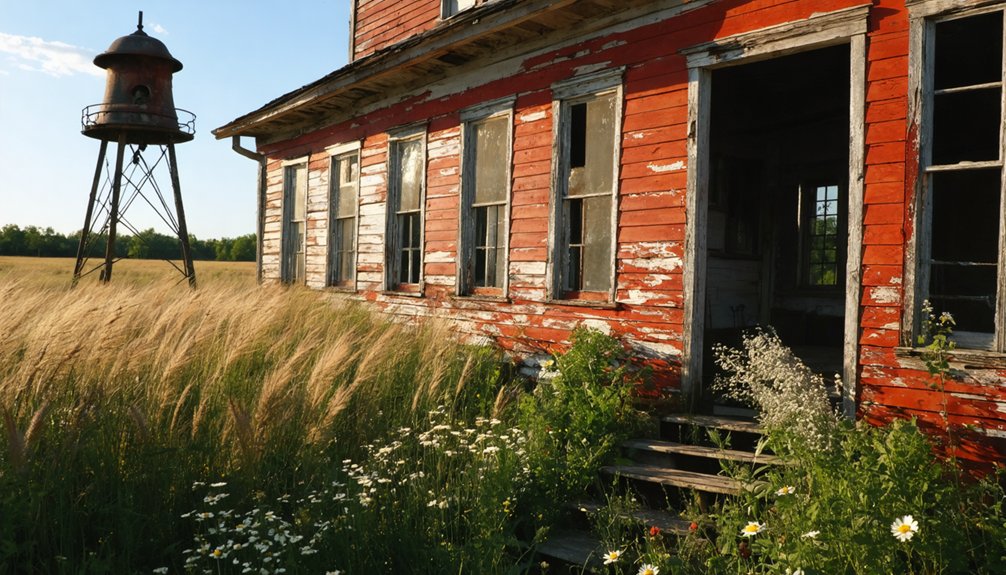
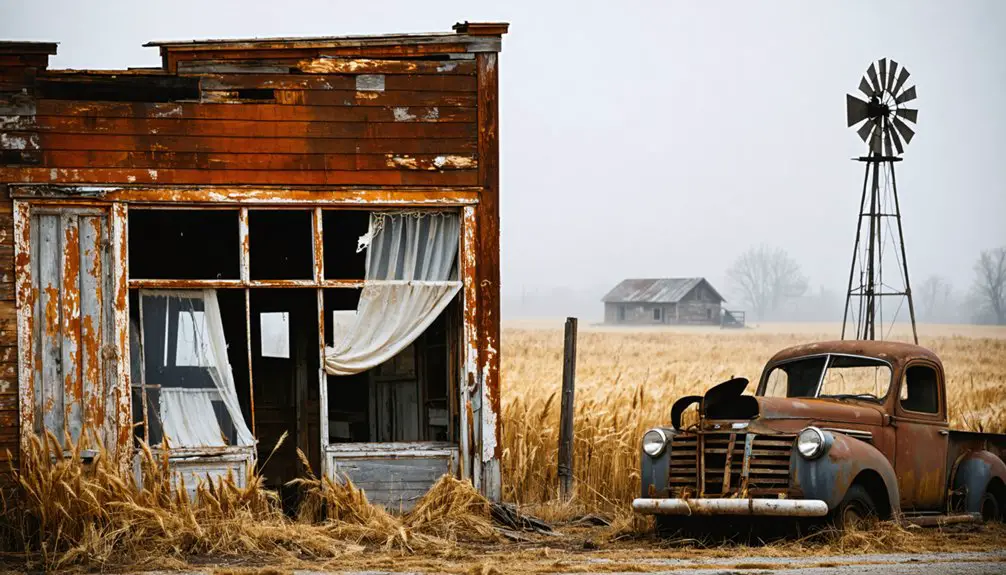
You’ll find Sherman’s Prairie’s haunting emptiness in the vast wheat fields north of Wilbur, where a lonely white church still stands sentinel over windswept ruins and untold tales.
As you explore the abandoned structures and cemetery dating to the 1880s, each weathered headstone and decaying building whispers stories of the devastating 1889 blizzard that changed settlers’ lives forever.
The eerie quiet that blankets this ghost town, interrupted only by prairie winds, makes it easy to imagine the hardships faced by homesteaders who carved out lives here before ultimately abandoning their dreams to the elements.
Eerie Plains and Silence
Deep in Lincoln County’s sprawling farmland, Sherman’s Prairie stands as a haunting symbol of frontier hardship and perseverance.
You’ll find this ghost town‘s eerie landscapes just north of Wilbur, where a dirt road leads you through natural gullies to a settlement frozen in time. The haunting echoes of an 1889 blizzard still resonate here, when six feet of snow trapped settlers and decimated livestock.
- Visit the white country church perched on higher ground, its steeple reaching skyward like a silent sentinel.
- Explore the weathered cemetery and schoolhouse, evidence of the community’s brief but resilient existence.
- Stand where a Civil War veteran once homesteaded before succumbing to pneumonia in 1890, his story emblematic of the prairie’s harsh demands.
Empty Buildings Tell Tales
As night falls over Sherman’s Prairie, the skeletal remains of pioneer dreams cast long shadows across the windswept landscape.
You’ll find architectural remnants that whisper survival stories of the 1880s homesteaders who carved out lives in this unforgiving terrain. The white country church, its steeple piercing the darkening sky, stands as a silent sentinel to their determination.
Venture through the scattered buildings, and you’ll discover how settlers endured the devastating blizzard of 1889, surviving on potatoes and salt until trains could deliver supplies.
The preserved schoolhouse and century-old cemetery grounds offer glimpses into their daily struggles. While Highway 2’s construction eventually led to Sherman’s abandonment, these haunting structures remain as evidence of the pioneering spirit that once thrived here.
Cemetery’s Untold Stories
Behind the white church lies Sherman Cemetery, where each weathered headstone holds a chapter of Lincoln County’s pioneering saga.
You’ll discover untold legacies of simple farmers and forgotten heroes who shaped this rolling farmland since 1893. Among these stories, a Civil War veteran’s tale stands out – he survived Kansas plains before homesteading near Hartline, only to endure the brutal 1889 blizzard on potatoes and salt, ultimately succumbing to pneumonia the following spring.
To fully experience Sherman Cemetery’s historical depth:
- Visit during Decoration Day events to connect with local heritage
- Search for the Kerber family plot, dating back to 1864
- Look for C.T. Blackfan’s influence – the cemetery’s first president and notable state figure
Melmont: A Mount Rainier Mystery
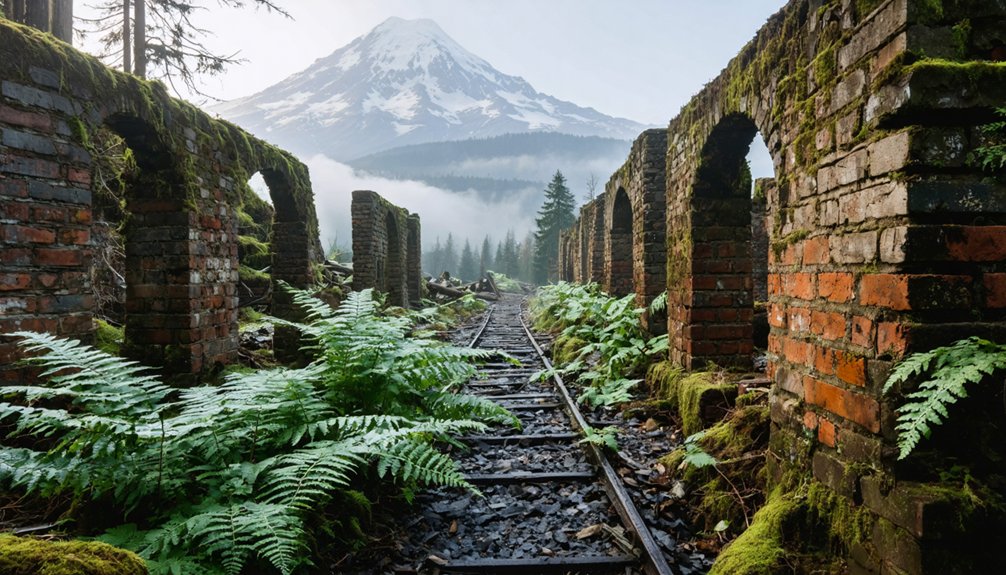
Nestled along the Carbon River near Mount Rainier, the ghost town of Melmont stands as a tribute to Washington’s coal mining heritage.
You’ll discover Melmont’s mysteries through a 3.8-mile round-trip hike, where ghostly remnants tell tales of its brief but intriguing existence from 1900 to the 1920s. As you explore, you’ll find moss-covered car wreckage, stone walls of an old dynamite shed, and the foundation of the town’s original schoolhouse.
The town harbors untold stories, including an unsolved 1905 bombing of a mine owner’s home.
Today, terraced landscapes and bridge abutments mark where this once-bustling coal community thrived before plummeting coal prices led to its abandonment.
You’ll want to visit during the cooler months when the muddy trails are most manageable.
Nighthawk’s Golden Age
While Melmont’s coal mining legacy faded into the forests of Mount Rainier, the ghost town of Nighthawk tells a different tale of Washington’s mining past.
In the 1860s, you’d have found a bustling tent town of 3,000 miners seeking fortune in this remote corner of Washington Territory. Nighthawk’s transformation from seasonal camp to thriving mining community began with its official platting in 1903, ushering in an era of unprecedented growth.
Experience Nighthawk’s golden age through these remnants:
- The historic Nighthawk Hotel, built in 1903 to house weary miners and travelers
- The 1906 Train Depot-store, once a crucial transportation hub on the Vancouver, Victoria & Eastern Railroad
- Six concentration mills that processed precious minerals from surrounding mines
Photography and Safety Guidelines
Capturing ghost towns requires careful preparation and respect for both safety and preservation. You’ll want to secure proper permits and research site access before venturing out with your camera gear.
For the best photography techniques, pack wide-angle lenses to capture sweeping town layouts and prime lenses for detailed artifact shots. Don’t forget your tripod for those ethereal long exposures during golden hour.
When it comes to safety precautions, stay clear of unstable structures and watch for hazards like rusty nails or broken glass. Never enter buildings without official clearance, and keep your distance from deteriorating structures.
Remember to leave every site exactly as you found it – no touching or removing artifacts. Your photos will preserve these historical treasures while ensuring future generations can experience Washington’s remarkable ghost towns.
Frequently Asked Questions
Are Any of These Ghost Towns Inhabited by Caretakers or Current Residents?
While you might expect caretaker stories and resident experiences, Liberty is the only ghost town still inhabited, with a handful of residents maintaining the historic mining community’s authenticity.
What Wildlife Encounters Are Common When Visiting These Abandoned Towns?
You’ll spot diverse wildlife sightings across these ruins – from river otters near Carbon River to raptors soaring above Monte Cristo. Expect deer, small mammals, and plenty of bird activity around abandoned structures.
Is Metal Detecting or Artifact Collection Allowed at These Locations?
You’ll need permits for metal detecting, as most ghost towns are protected by strict artifact preservation policies. Only detect on private property with owner permission to avoid federal ARPA violations.
Do Any of These Sites Offer Guided Tours or Seasonal Events?
You’ll find guided experiences in Tacoma’s Downtown Ghost Tour and Port Angeles Underground Tours, plus seasonal festivities at Northern State, where 5 miles of trails connect you to haunting historical structures year-round.
Which Ghost Towns Are Accessible During Winter Months With Snow?
You’ll find Melmont and Northern State accessible year-round, even with snow. Liberty’s winter accessibility depends on mountain conditions, while Monte Cristo’s trails are typically snow-covered from late fall through spring.
References
- https://stateofwatourism.com/ghost-towns-of-washington-state/
- https://www.youtube.com/watch?v=FVveO9uJBvc
- https://okanogancountry.com/ghost-towns
- https://www.wta.org/go-outside/seasonal-hikes/fall-destinations/hidden-history-ghost-town-hikes
- https://www.cascadeloop.com/ghost-towns-and-haunted-places-in-the-washington-cascades
- https://www.ghosttownsofwashington.com
- https://www.abandonedwashingtonstate.com/ghost-towns.html
- https://en.wikipedia.org/wiki/List_of_ghost_towns_in_Washington
- https://www.opb.org/article/2023/10/29/washington-only-living-ghost-town-history-lingering-residents/
- https://www.earthtrekkers.com/washington-itinerary-national-parks-road-trip/