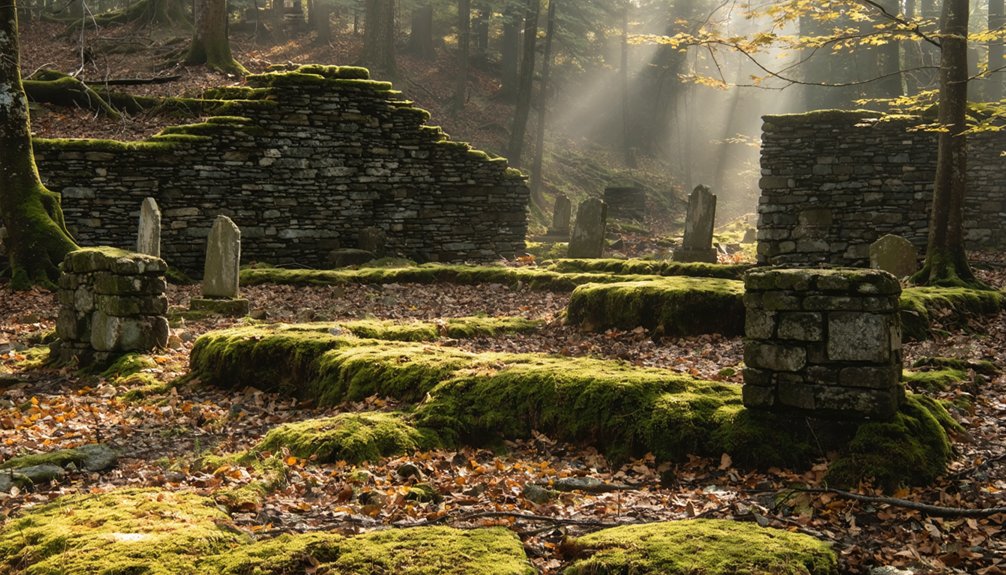
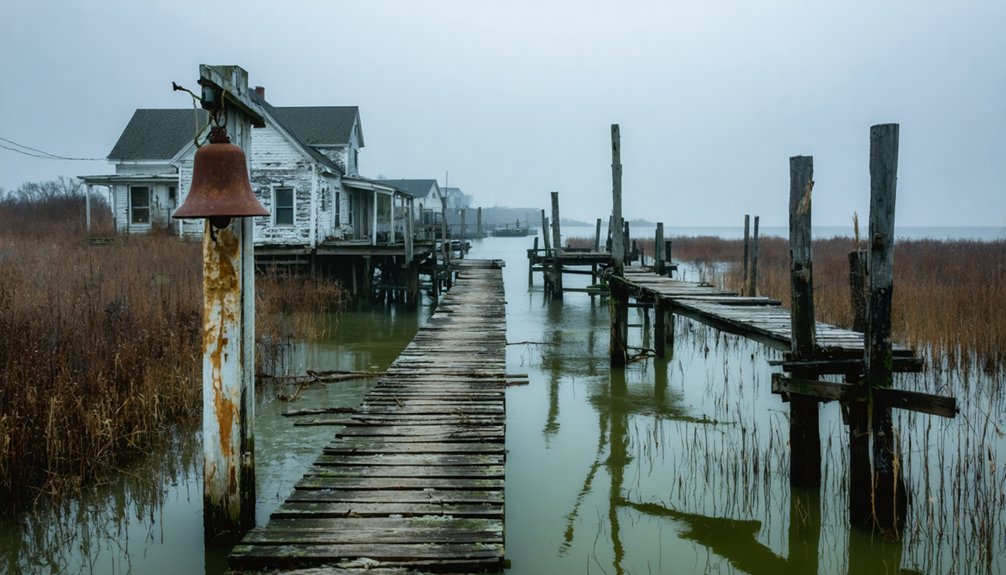
You’ll find Connecticut’s ghost towns most intriguing during autumn, from late September through early November, when fall foliage creates a dramatic backdrop for historic ruins. The moderate temperatures (35-60°F) and stable ground conditions make exploration safer and more accessible, particularly in locations like Johnsonville and Gay City. Early morning visits offer mystical fog effects and enhanced photography opportunities, while evening hours amplify the haunting atmosphere. Understanding seasonal patterns and restrictions will enhance your ghost town expedition experience.
Key Takeaways
- Fall (September-November) is optimal, offering vibrant foliage, moderate temperatures between 35-60°F, and peak visibility during mid-October.
- Early morning visits during autumn provide mystical fog effects and enhanced photographic opportunities, particularly at locations like Johnsonville.
- Spring offers wildflower blooms around ghost town foundations, though visitors should prepare for muddy conditions and potential flooding.
- Summer allows extended daylight hours for exploration, but dense vegetation can obscure historical structures and architectural details.
- Winter visits are challenging due to extreme cold temperatures reaching -30°F and hazardous conditions around deteriorating structures.
Why Connecticut’s Ghost Towns Are Worth Exploring
While many states boast ghost towns from the Gold Rush era, Connecticut’s abandoned settlements offer a unique window into early American industrial and colonial life.
You’ll discover the remnants of once-thriving mill towns like Johnsonville, where the Neptune and Triton mills produced yarn and twine until 1972, and Welsh settlements like Bara-Hack, whose name means “breaking of bread.” These sites showcase early American entrepreneurship through preserved architecture, from Gilead Chapel to restored general stores. Emory Johnson’s original 1846 homestead still stands at Johnsonville, offering visitors a glimpse of 19th-century New England life. Gay City’s mill faced repeated challenges, as it burned down three times before the town’s ultimate abandonment.
The ghost town significance extends beyond historical value, as these locations have become focal points for paranormal investigations.
The renowned Ed and Lorraine Warren conducted studies in both Johnsonville and Dudleytown, while visitors to Bara-Hack report mysterious sounds of bygone daily life, making these sites compelling destinations for both history enthusiasts and supernatural explorers.
Peak Seasons for Ghost Town Photography
Connecticut’s ghost towns offer distinct photographic opportunities throughout the year, but autumn emerges as the premier season for capturing their haunting beauty.
Autumn’s rich palette transforms Connecticut’s abandoned towns into mystical tableaus, perfect for photographers seeking to capture their ethereal essence.
You’ll discover superior seasonal lighting conditions across abandoned settlements like Johnsonville and Dudleytown, where fall foliage creates dramatic backdrops against weathered structures. Paranormal investigators have documented extensive spirit activity in these areas. The scenic landscapes of Bantam Lake provide an ethereal backdrop for ghost town photography in Morris.
- Early morning photography techniques work best at restricted sites like Dudleytown, allowing you to capture mystical fog and shadows before daily patrols begin.
- Summer’s extended daylight hours provide ample time for detailed architectural shots, particularly in well-preserved Johnsonville.
- Spring vegetation offers natural framing opportunities, with wildflowers adding delicate elements to stone foundations at Gay City.
- Overcast winter days deliver ideal conditions for monochromatic photography at Bara Hack, where stark contrasts emphasize the site’s isolation.
Weather Patterns and Accessibility Guide
Since seasonal weather patterns greatly impact ghost town accessibility in Connecticut, understanding regional climate variations proves essential for planning successful visits.
You’ll find weather variability most challenging during winter months, when temperatures can plunge to -30°F and snowfall accumulation varies dramatically by region. Higher elevations in the northwest and northeast face greater accessibility challenges due to heavy snow coverage.
Fall offers your best window for exploration, with moderate temperatures between 35-60°F and stable ground conditions. The second week of October typically provides peak visibility conditions in northern corners, based on historical data. October particularly stands out, as declining foliage improves visibility of foundations and structures. Many visitors seek out iron ore mining remnants that once drove the local economy.
While summer brings dense vegetation that obscures sites, and spring often presents muddy conditions from increased rainfall, autumn’s changing weather creates ideal circumstances for discovering these forgotten places.
You’ll want to monitor precipitation forecasts, as Connecticut’s shifting weather patterns can quickly alter ground conditions.
Safety Tips for Different Seasonal Visits
Although exploring Connecticut’s ghost towns offers year-round intrigue, each season presents distinct safety challenges you’ll need to navigate.
Spring precautions include watching for muddy terrain and flooding around historic foundations, while winter hazards demand extra vigilance as snow conceals structural deterioration and ice forms on century-old surfaces. The abandoned village of Bara-Hack provides dramatic seasonal changes that affect accessibility and safety conditions.
- Pack emergency supplies and notify contacts of your location, as cell service can be unreliable in remote ghost town sites
- Wear appropriate protective gear including sturdy boots, heavy gloves, and weather-specific clothing
- Stay alert for wildlife activity, particularly during spring breeding season and fall hunting periods
- Respect posted warnings and avoid entering unstable structures, especially during winter’s freeze-thaw cycles when collapse risks increase
Consider avoiding exploration during severe weather, as Connecticut’s strong response during the Covid-19 pandemic showed the importance of prioritizing safety in uncertain conditions.
Hidden Historical Sites Through the Seasons
Throughout the changing seasons, hidden historical sites across Connecticut’s landscape reveal different facets of their mysterious past. While access to many of these remote locations varies throughout the year, you’ll discover that each season offers unique perspectives into their hidden histories.
Bara-Hack village remains particularly atmospheric during autumn months, drawing curious visitors and history enthusiasts. Dudleytown, for instance, requires careful planning since certain entry points close from late September through mid-November. You’ll find that these seasonal mysteries add layers to Connecticut’s ghost towns, though specific access information remains limited for many sites. In Essex, the Griswold Inn stands as one of America’s oldest operating inns, offering year-round opportunities to experience its legendary hauntings.
When exploring these historical locations, it’s essential to respect any posted seasonal restrictions and research current conditions before visiting. The lack of documented seasonal patterns means you’ll need to be flexible and adaptable in your exploration plans, focusing on accessible sites during your intended travel dates.
What to Pack Based on Time of Year
Before starting your Connecticut ghost town expedition, careful consideration of seasonal packing requirements will enhance both safety and comfort during your exploration.
While specific packing essentials vary throughout the year, we recommend consulting local weather conditions and terrain reports to properly prepare for your adventure, as Connecticut’s ghost towns experience distinct seasonal changes.
- Research current ground conditions at your chosen site, as seasonal flooding and mud can impact accessibility and required gear.
- Pack appropriate layers that can adapt to temperature fluctuations common in abandoned locations.
- Bring navigation tools and emergency supplies suitable for the season’s unique challenges.
- Consider specialized equipment for documenting your explorations while protecting gear from seasonal elements like rain, snow, or humidity.
Additional site-specific packing recommendations should be researched based on the season and location you plan to visit.
Most Atmospheric Times for Each Location
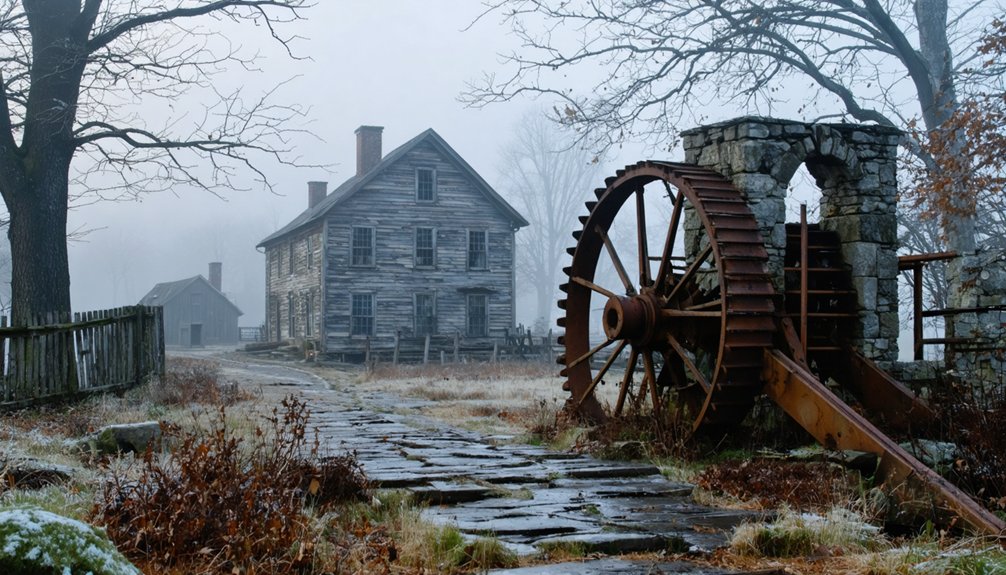
When planning visits to Connecticut’s ghost towns, timing plays an essential role in experiencing each location’s unique atmospheric qualities.
While ghost town legends abound throughout the state, autumn emerges as a particularly evocative season for exploration, especially during evening hours when the crisp air and falling leaves enhance the haunting ambiance.
You’ll find that most locations are accessible year-round, though Dudleytown has restricted access from late September through mid-November.
For ideal seasonal experiences, consider visiting any of Connecticut’s abandoned settlements – from Bara-Hack to Pleasure Beach – during fall when paranormal activity reportedly intensifies.
However, you should verify current access conditions before your journey, as seasonal restrictions may vary by location.
Each ghost town offers its own mysterious atmosphere, best appreciated when properly researched and respectfully explored.
Frequently Asked Questions
Are Overnight Camping or Paranormal Investigations Allowed at These Ghost Town Sites?
You’ll need camping permits for overnight stays at ghost town sites, with most investigation guidelines allowing paranormal research. Follow state park regulations, including quiet hours and designated camping areas.
Which Ghost Towns Have Wheelchair-Accessible Paths During Any Season?
Out of these 4 historic trail systems, you’ll find 100% wheelchair accessibility only at Wallace Barnes Nature Trail and Fairfield County Trails, where you can visit year-round on paved or crushed-stone surfaces.
Do Any Locations Require Special Permits or Advanced Reservations?
You’ll need advanced reservations for Johnsonville Village’s guided tours, while other locations either don’t require permits or completely restrict access. Gay City State Park allows spontaneous visits with standard parking fees.
Are Metal Detectors or Artifact Collecting Permitted at These Sites?
You’ll need to avoid metal detecting at ghost town sites due to preservation policies. While Connecticut’s general regulations are lenient, historical locations are strictly protected from artifact collection and disturbance.
Which Ghost Towns Connect to Active Hiking Trail Networks Year-Round?
You’ll find year-round hiking accessibility at Gay City State Park and Indian Council Caves, while Saugatuck’s ghost town trails remain open despite seasonal conditions affecting water levels and visibility.
References
- https://en.wikipedia.org/wiki/List_of_ghost_towns_in_Connecticut
- https://kids.kiddle.co/List_of_ghost_towns_in_Connecticut
- https://www.atlasobscura.com/things-to-do/connecticut/ghost-towns
- https://www.cthauntedhouses.com/real-haunts/places.aspx
- https://earlybirdonthetrail.com/haunted-hikes-in-connecticut/
- https://www.geotab.com/ghost-towns/
- https://www.youtube.com/watch?v=V3k1shmJqeU
- https://ctvisit.com/articles/ghost-hunting-in-connecticut
- https://www.ctinsider.com/projects/2025/lost-ct-towns/
- https://patch.com/connecticut/brookfield/abandoned-not-forgotten-4-connecticut-ghost-towns