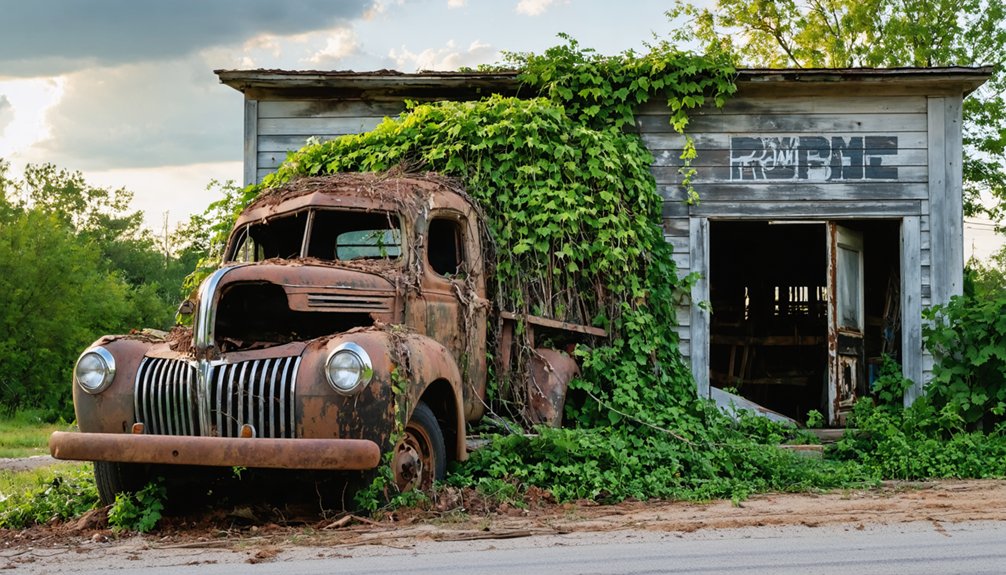
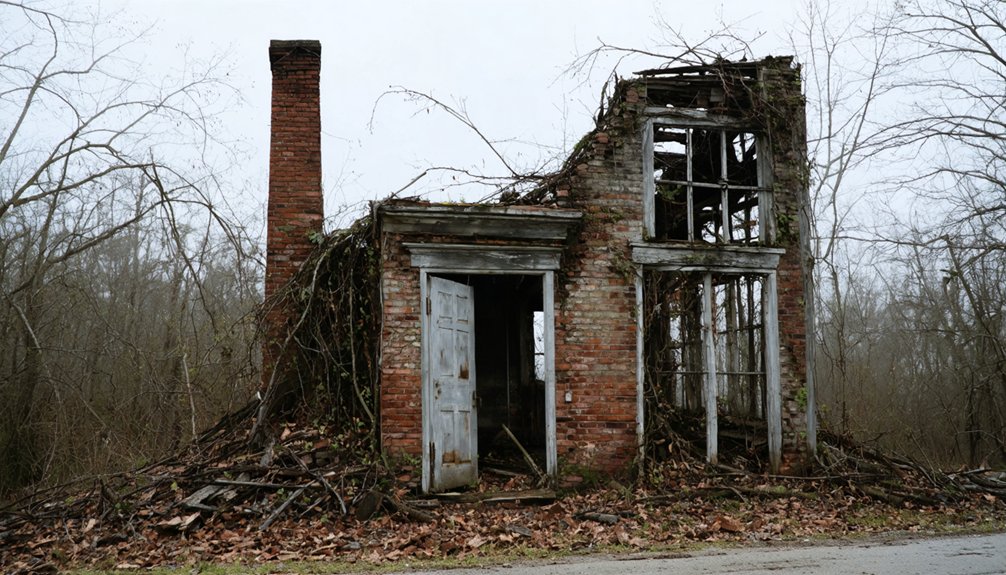
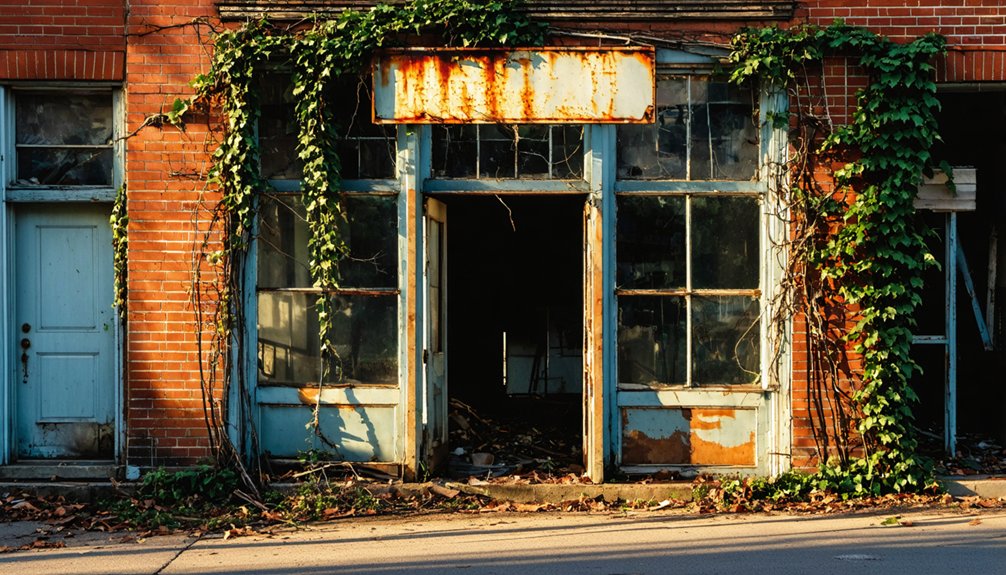
You’ll find the best time to explore Alabama’s ghost towns is during autumn, specifically September through November. The mild temperatures and clear skies provide ideal conditions for outdoor exploration and photography, particularly during golden hour. Fall’s reduced foliage reveals historic structures more clearly, while comfortable daytime temperatures hover around 70-75°F. Weekday visits offer fewer crowds at popular sites like Old Cahawba. These autumn months hold even more treasures for those ready to venture deeper into Alabama’s forgotten places.
Key Takeaways
- Fall (September-November) offers ideal conditions with mild temperatures, clear visibility of structures, and beautiful autumn foliage for photography.
- Weekday visits provide fewer tourists and better exploration experiences, with visitor centers operating Thursday through Monday.
- Summer months should be avoided due to extreme temperatures reaching 102°F, which can impede outdoor exploration.
- Spring brings flood risks near rivers, while winter can have severe cold snaps affecting accessibility.
- October is particularly recommended for scenic views and heritage tourism events, including guided nighttime adventures and ghost storytelling.
Seasonal Weather Patterns and Comfort Levels
While Alabama’s ghost towns offer year-round exploration opportunities, the state’s extreme weather patterns considerably impact visitor comfort and accessibility. Visitors to Cahaba Federal Prison sites often report the best visibility of historical structures during clear fall days.
You’ll find summer temperatures soaring 3 degrees above normal, with thermometers hitting 102°F in July and 101°F in August. These seasonal temperatures make outdoor exploration challenging during peak summer months. Historically, the years 1896-1897 saw many wells and springs dry up during hot, dry summers.
Winter presents its own challenges, with historical records showing severe cold snaps. The most extreme was 1899’s freeze, dropping temperatures to -1°F in Mobile and -17°F at Valley Head.
Alabama’s brutal winter of 1899 shattered temperature records, plunging Mobile to -1°F and Valley Head to an astonishing -17°F.
Spring brings flood risks from heavy March rains and equinoctial gales, while fall offers the most balanced comfort levels for exploring. During autumn, you’ll experience milder conditions perfect for hiking, photography, and examining historical structures without the extremes of summer heat or winter cold.
Peak Tourist Periods and Crowd Management
Although ghost towns like Old Cahawba draw visitors throughout the year, you’ll find the site’s daily operation from 9:00 AM to 5:00 PM provides ample exploration opportunities with minimal crowding.
For the best visitor experience, plan your trip during weekdays when fewer tourists explore the archaeological park’s historic ruins and nature trails.
You’ll encounter effective crowd control through the park’s well-designed layout and free bike rental system.
The confluence of the Alabama and Cahaba rivers creates stunning photo opportunities year-round.
The Visitor Center, open Thursday through Monday from 10:00 AM to 5:00 PM, helps distribute guests across the former city grid.
Avoid major holidays when the site closes, including Christmas, New Year’s Day, and Thanksgiving.
Like many ghost towns that emerged during westward expansion, Old Cahawba offers a glimpse into America’s pioneering past.
Road Access and Transportation Safety
Getting to Alabama’s ghost towns safely requires careful vehicle preparation and route planning.
Planning your route and prepping your vehicle are essential steps for safely exploring Alabama’s abandoned settlements.
You’ll need a high-clearance or four-wheel drive vehicle to navigate unpaved roads, particularly during winter months when mud and flooding pose significant risks. Spring offers ideal road conditions, while fall provides stable weather for exploration.
Before heading out, verify you’ve got a full tank of gas, as fuel stations are scarce near ghost town sites. The full 280-mile route connecting Mobile to Montgomery lets you visit all six major ghost towns. Accessing Manasco’s remnants requires driving along Highway 124 to reach the area.
Pack emergency repair kits and spare tires, and download offline maps since cellular coverage is unreliable in Walker County.
Key routes like AL 173 and Pleasant Hill Road serve as primary access points, but secondary roads lack proper signage.
Remember that weather conditions can change rapidly, affecting road safety and vehicle performance, especially during summer thunderstorms and winter fog.
Photography and Documentation Conditions
Evening hours in Alabama’s ghost towns offer your best shooting conditions, with Seale’s abandoned storefronts particularly striking during golden hour.
Old Cahawba’s ruins are beautifully illuminated by soft light filtering through Spanish moss. You’ll need to plan carefully around summer temperatures, as camera equipment like the Fujifilm GFX100S can overheat during peak daytime hours in places like Uniontown. The visitor center provides detailed site maps to help photographers locate the most photogenic ruins.
The season’s dense vegetation creates both challenges and opportunities for your shots, with thick foliage obscuring some historic structures while providing dramatic natural framing for others. The late May visit to Seale demonstrated how the hot, humid climate can affect both equipment performance and shooting comfort.
Seasonal Light and Shadows
When capturing Alabama’s ghost towns through a camera lens, understanding the seasonal patterns of light and shadow becomes essential for ideal documentation. Professional photographers like Keith Dotson utilize Fujifilm GFX cameras to document these historic sites with incredible detail. The abandoned Chevron gas station provides striking compositions against the changing sky throughout different seasons.
You’ll find summer’s peak sunlight offers minimal shadows and even exposure across ruins, while winter’s low-angle light creates dramatic textures on abandoned buildings.
Spring and fall equinoxes provide balanced conditions, with moderate shadow patterns that reveal structural details without harsh contrasts.
- Summer solstice brings intense overhead light, perfect for photographing overgrown ruins at sites like Blakeley and moss-draped Cahawba.
- Winter’s elongated shadows accentuate textures on derelict streets in Abbeville and Seale, especially during extended golden hours.
- Spring and fall deliver prime light intensity for documenting archaeological parks, with dappled shadows from changing foliage adding depth to your shots.
Camera Equipment Considerations
Proper camera equipment selection proves essential for documenting Alabama’s ghost towns across diverse lighting conditions and structural environments.
You’ll need a mirrorless or DSLR camera with manual controls, ensuring equipment compatibility for both bright exteriors and dim interiors. Your lens selection should include wide-angle options for capturing expansive structural decay and prime lenses for detailed artifact documentation.
Don’t forget to pack a sturdy tripod to maintain stability on uneven terrain, especially during extended exposures. You’ll also want remote triggers for shots exceeding 30 seconds.
Keep cleaning supplies handy – ghost towns are dusty environments that can compromise your gear. For interior shots, bring powerful flashlights and off-camera flash units with wireless triggers.
Pack everything in a durable camera backpack designed for rugged conditions, and include portable backup solutions for your files.
Historical Site Operating Hours and Services
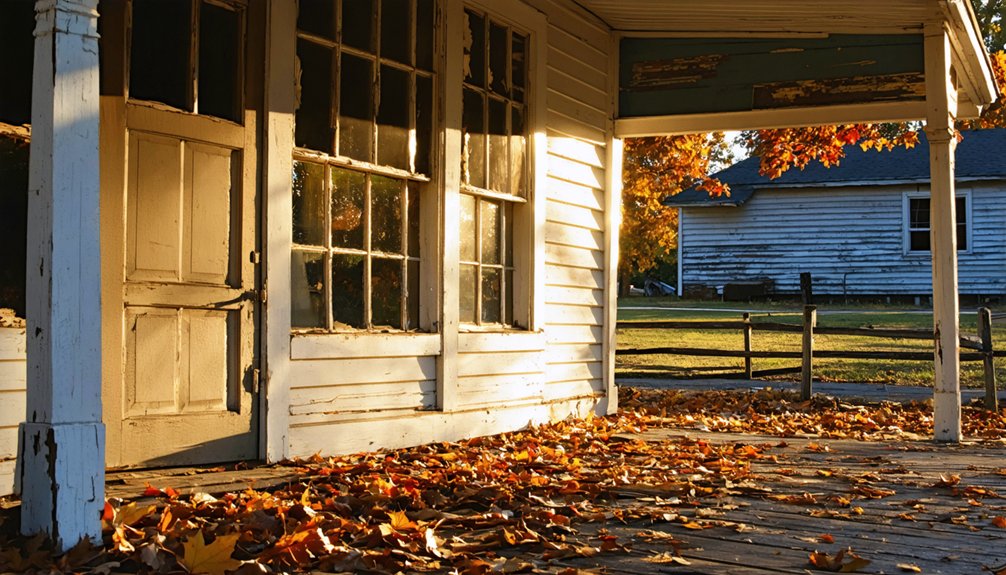
Visitors exploring Alabama’s ghost towns can access most historical sites during standard operating hours from 9:00 AM to 5:00 PM daily throughout the year.
Alabama’s historic ghost towns welcome daily visitors from 9 AM to 5 PM, offering year-round access to fascinating remnants of the past.
The visitor center hours run Thursday through Monday from 10:00 AM to 4:30 PM, though winter weather may affect accessibility.
You’ll find admission pricing reasonable at $2 for adults and $1 for children, with free entry for military families between Armed Forces Day and Labor Day.
- Explore extensive hiking trails and archaeological grounds at your own pace
- Join specialized BYOB guided bicycle tours along four miles of level roads
- Reserve historic spaces like St. Luke’s Church for family gatherings
You can coordinate your visit through the Alabama Historical Commission, with both phone and email options available for tour bookings and event planning.
Natural Hazards and Wildlife Considerations
Despite their haunting allure, Alabama’s ghost towns present significant natural hazards that you’ll need to prepare for.
Spring flooding poses the greatest risk, particularly at Cahawba where the Alabama and Cahaba Rivers can turn the site into a lake for weeks. You’ll want to avoid these areas during heavy rains when unstable riverbanks and uneven terrain become treacherous.
Wildlife encounters are common among the ruins, where Spanish moss-draped oaks and wildflowers create natural habitats.
While exploring crumbling structures and overgrown paths, watch your step on dilapidated wood structures and deteriorating headstones. The sites near dams, like Easonville and Prairie Bluff, require extra caution due to proximity to deep waters and burn-scarred areas from clearance operations.
Heritage Tourism Events and Programs
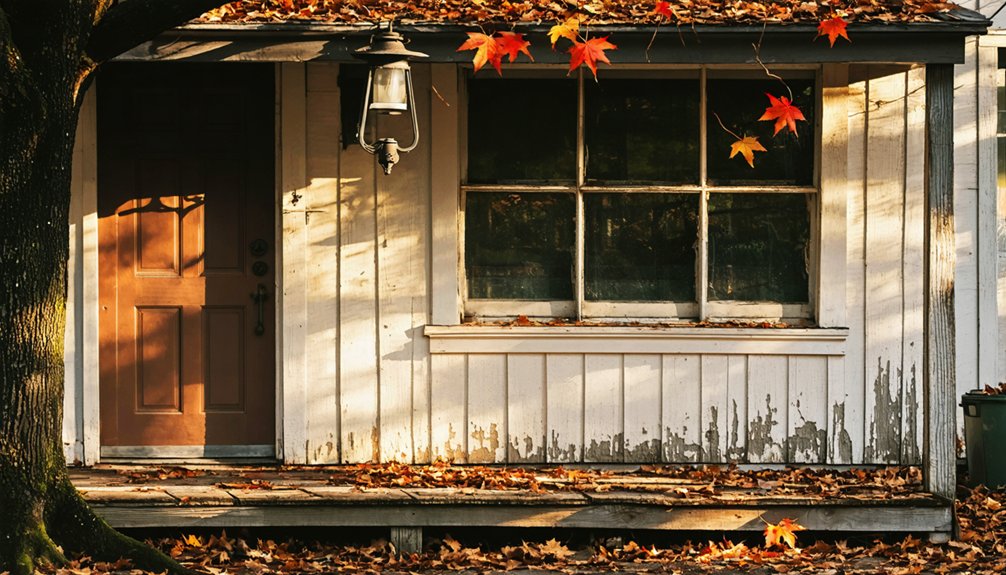
Several heritage tourism programs offer unique ways to experience Alabama’s ghost towns through guided nighttime adventures.
You’ll find ghost storytelling events across historic districts, from Old Cahawba’s shuttle tours to Blakeley State Park’s interactive investigations. Heritage festivals like the Maple Hill Cemetery Stroll combine history with supernatural exploration, featuring period costumes and live performances.
- Stand beside crackling bonfires while sharing spirit encounters at Webb Paranormal Group demonstrations
- Walk through moonlit streets as guides recount tales from “The Spirits of Athens” book
- Use EMF meters and dowsing rods to investigate Civil War battlefields and century-old cemeteries
These programs run primarily in September and October, with prices ranging from $9 to $50.
Most tours require advance registration and welcome participants aged 12 and older.
Recommended Monthly Visiting Schedule
You’ll find ideal ghost town exploration from September through November, when mild temperatures and fall foliage create perfect conditions for full-day tours across multiple sites.
While summer offers extended daylight hours, you’re better off visiting climate-sensitive locations like Old Cahawba and Arcola during spring’s moderate weather or winter’s revealing dormancy period.
Your monthly planning should account for specific site conditions:
- October peaks for Bellefonte’s scenic views,
- April showcases wildflowers along Black Warrior River trails,
- and December through February provides the clearest visibility of archaeological features.
Peak Season Planning Guide
While Alabama’s ghost towns can be explored throughout the year, planning your visit during specific months will maximize your experience at these historic sites.
The peak season runs from June through August, when you’ll find enhanced visitor engagement through battle reenactments, guided tours, and local cuisine offerings at nearby establishments. Summer’s extended daylight hours until 8:30 PM allow for thorough exploration of multiple sites in a single day.
- Watch volunteer demonstrations bring 200-year-old fort life to vivid reality during the Battle of Blakeley reenactment in April
- Experience the Battle of Fort Mims celebration in late August, complete with authentic historical interpretations
- Take advantage of peak-season water activities like kayaking and swimming while exploring riverside ghost towns
Off-Season Hidden Advantages
Despite the allure of peak season activities, visiting Alabama’s ghost towns during off-peak months reveals distinct advantages that enhance both the experience and value of your trip.
You’ll discover hidden treasures during March through May and September through November when reduced crowds allow for unhurried exploration and meaningful interactions with site staff who can share local insights.
Off-season visits offer substantial cost savings on accommodations in nearby cities, while entry fees remain consistently affordable year-round.
You’ll benefit from superior photography conditions during fall months when autumn foliage and atmospheric lighting create stunning backdrops for historical ruins.
Early morning and late afternoon visits provide serene opportunities for solitary exploration, while seasonal activities like guided night tours and wagon rides become more readily available with fewer visitors competing for limited spots.
Month-by-Month Activity Calendar
Planning your ghost town visits according to Alabama’s seasonal patterns helps maximize both comfort and historical immersion throughout the year.
You’ll find ideal exploration conditions from January through May, when temperatures range from 45-75°F. Seasonal festivals peak in April with the Battle of Blakeley reenactment, while August features the Fort Mims demonstrations. Local cuisine vendors often appear at these events, offering authentic regional flavors.
- Watch winter’s bare branches reveal hidden architectural details at Old Cahawba while enjoying crowd-free paths
- Experience spring’s wildflower explosion along Black Warrior River near Arcola’s ruins
- Capture dramatic fall foliage framing abandoned structures at Bellefonte and St. Stephens during October’s mild weather
Frequently Asked Questions
Are Metal Detectors Allowed at Alabama Ghost Town Sites?
90% of Alabama ghost towns sit on private or protected land. You’ll need landowner permission and must follow metal detecting regulations and historical preservation policies to legally detect at these sites.
What Camping Options Exist Near Major Ghost Town Locations?
You’ll find RV sites and modern camping amenities at St. Stephens Historical Park, riverside camping at Old Cahawba, and primitive camping on Jackson Lake Island near Spectre’s ghost town nearby attractions.
Can Visitors Collect Artifacts or Souvenirs From Ghost Town Sites?
You can’t legally collect artifacts – even a rusty nail or broken pottery could face fines or arrest. For ethical collecting, take photos instead. Artifact preservation keeps Alabama’s ghost towns intact.
Are Paranormal Investigations Permitted at These Historical Locations?
You’ll need official permission for paranormal investigations. Join authorized ghost tours through historical preservation groups like the Alabama Historical Commission, which offers guided investigations at select times and locations.
Which Ghost Towns Offer Wheelchair-Accessible Paths and Viewing Areas?
Here imenovurborne instituNintendo validates note
References
- https://thebamabuzz.com/5-alabama-ghost-towns-to-put-on-your-bucket-list/
- https://www.onlyinyourstate.com/experiences/alabama/alabama-ghost-towns
- https://digitalalabama.com/alabama-ghost-towns/alabama-ghost-towns/9449
- https://deepsouthurbex.com/2020/01/02/6-south-alabama-ghost-towns/
- https://freepages.history.rootsweb.com/~gtusa/usa/al.htm
- https://kids.kiddle.co/List_of_ghost_towns_in_Alabama
- https://www.abandonedalabama.com
- https://www.geotab.com/ghost-towns/
- http://genealogytrails.com/ala/walker/weather.html
- https://alabamabucketlist.com/ghost-towns-in-alabama/