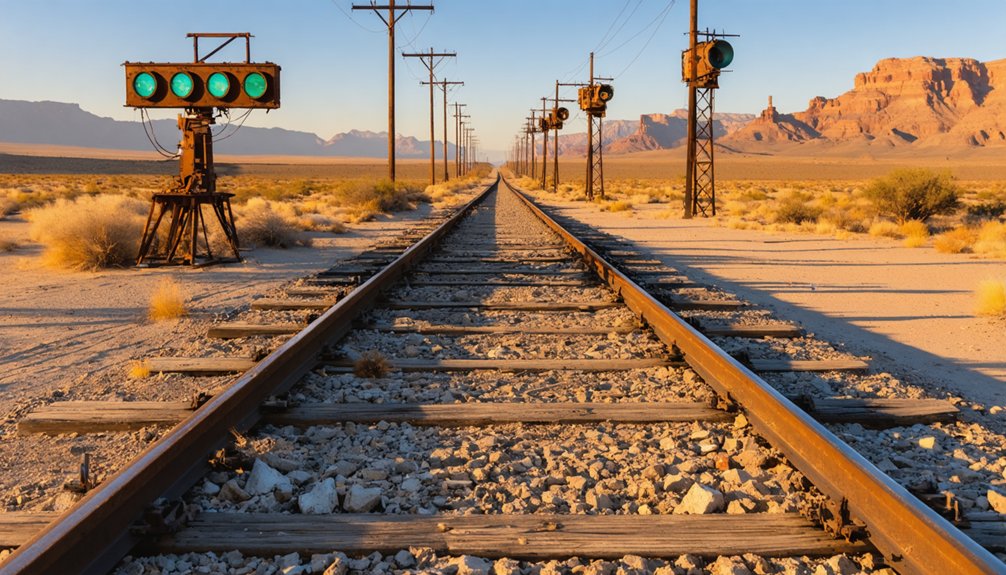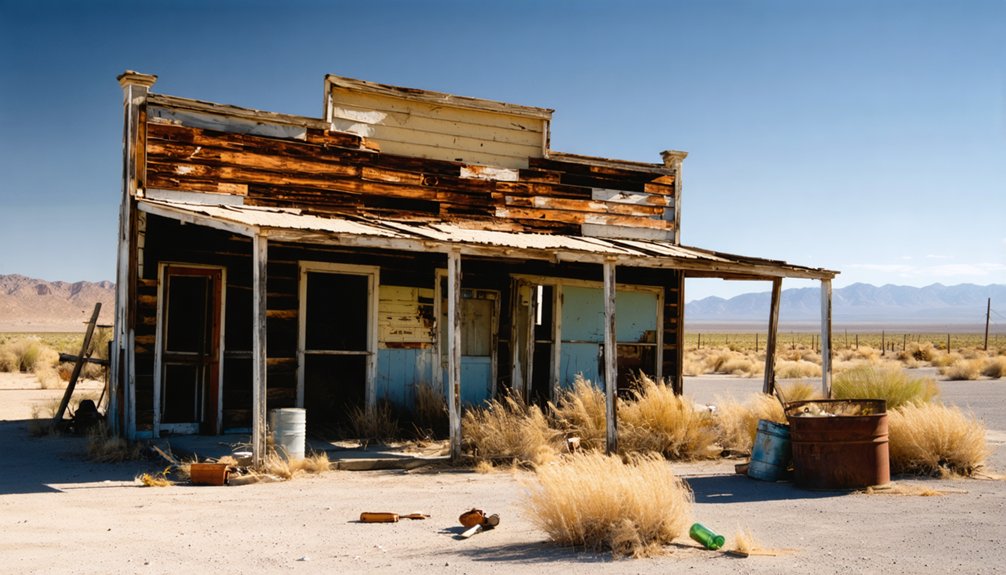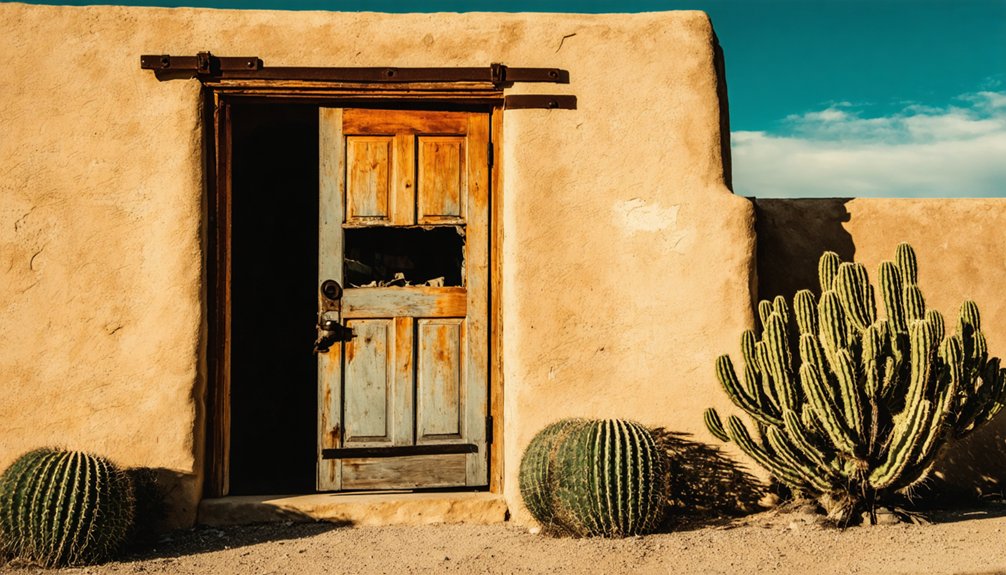
You’ll find winter months (December-February) offer the most comfortable conditions for exploring Arizona’s ghost towns, with daytime temperatures averaging 65-70°F and clear skies perfect for photography. Spring brings vibrant festival programming with historical reenactments, while fall features atmospheric evening light shows and seasonal celebrations. Though summer requires strategic timing, early morning walks (6-9 AM) and indoor museum visits can make exploration enjoyable. Each season presents unique opportunities to uncover Arizona’s rich mining heritage.
Key Takeaways
- Winter offers ideal exploration conditions with cool temperatures and clear skies, attracting 400,000 annual visitors to Arizona’s ghost towns.
- Spring features vibrant festival programming, historical reenactments, and comfortable temperatures for exploring restored buildings and museums.
- Early morning hours (6-9 AM) in summer provide comfortable conditions before temperatures rise, especially for ghost walks and photography.
- Fall brings special events like haunted light displays, Thanksgiving celebrations, and evening shows that enhance historic mining towns’ charm.
- Avoid midday summer visits when temperatures exceed 100°F, instead focusing on indoor museum exploration or guided evening tours.
When Winter Offers the Most Memorable Ghost Town Experiences
While Arizona’s ghost towns captivate visitors year-round, the winter months provide ideal conditions for exploring these historic remnants of the American West.
You’ll find the cool air perfect for extensive walks through preserved streets, where winter scenery transforms adobe walls, wooden storefronts, and mining remnants into striking ghost town photography subjects.
The season’s clear skies and low-angle light dramatically illuminate historical structures, from Jerome’s hillside buildings to Goldfield’s weathered boardwalks beneath the Superstition Mountains. Live demonstrations and guided tours keep visitors engaged while learning about mining history at Goldfield Ghost Town.
Winter’s mild temperatures allow you to comfortably explore landmarks like Ruby’s mercantile, Chloride’s boulder murals, and Fairbank’s schoolhouse museum without summer’s intense heat.
The stripped vegetation and crisp atmosphere enhance the authentic feel of these self-contained communities, letting you fully immerse yourself in Arizona’s mining heritage. With 400,000 annual visitors to destinations like Tombstone, winter tourism helps preserve these historic sites for future generations.
Top Ghost Towns Worth Visiting During Spring Festival Season
When spring arrives in Arizona, ghost towns come alive with vibrant festival programming and historical reenactments that transport visitors back to the Old West.
You’ll find the most engaging spring festivals in Tombstone, where the legendary O.K. Corral gunfight comes to life, and in Wickenburg, where the Marshals perform comedy gunfights twice monthly.
Goldfield Ghost Town activities include the renowned Goldfield Gunfighters shows, while Chloride features the world’s only all-female gunfighting troupe. Visitors can enjoy these performances daily from 10am to 5pm year-round.
Experience the Wild West spirit through Goldfield’s famous gunfight shows and Chloride’s unique all-female gunslinger performances.
These destinations offer more than just performances – you can explore preserved mining structures, visit museums, and experience authentic frontier architecture. The Jerome Grand Hotel, a former hospital turned lodging, offers haunted history tours.
With comfortable spring temperatures from March through May, you’ll enjoy ideal conditions for discovering Vulture City’s 12 restored buildings or hiking to Fort Bowie’s historic ruins.
How to Beat the Summer Heat While Ghost Town Exploring
You’ll find ideal comfort during summer ghost town visits by planning early morning walks before temperatures peak, typically between 6-9 AM when shadows are longest and temperatures remain moderate.
Making strategic use of indoor museum facilities throughout the day provides essential relief from intense heat while allowing continued historical exploration through artifacts and exhibits. Historic sites like the Birdcage Theatre in Tombstone offer fascinating indoor exhibits while escaping the midday sun. Popular attractions like Apache Trail Tours showcase rugged terrain while providing air-conditioned transportation.
Your exploration routes should prioritize shaded pathways and rest areas, particularly in exposed locations like Swansea where natural or constructed shelter can reduce heat exposure by up to 15 degrees Fahrenheit.
Early Morning Ghost Walks
As summer temperatures soar past 100°F in Arizona’s ghost towns, early morning exploration offers a strategic advantage for beating the intense desert heat.
You’ll find temperatures dropping to a manageable 70-80°F during dawn hours, making your ghostly encounters more comfortable and less strenuous.
At Vulture City, you can explore 16 original 1800s buildings from October through May before the day heats up.
Jerome’s historic Haskins House and old hospital grounds are less crowded during morning hours, while Bisbee’s steep stairways and narrow alleys become considerably more manageable.
The Weatherford Hotel and Hotel Monte Vista in Flagstaff offer preservation walks without the evening paranormal crowds.
Since most guided ghost tours operate in the evenings, you’ll have these atmospheric locations largely to yourself during morning visits.
Most tours include EMF readers and other ghost-hunting equipment for those interested in paranormal investigation.
Wearing appropriate footwear is essential when navigating the uneven terrain and historic pathways during your morning explorations.
Indoor Museum Exploration Tips
During the scorching Arizona summers, indoor museum exploration provides a revitalizing escape from temperatures that regularly exceed 100°F.
You’ll discover over 50 preserved buildings housing authentic period artifacts, with Goldfield Museum showcasing treasures from the 1890s mining era. The Hull Mine Tour takes you 500 feet underground through constructed tunnels, offering natural cooling while you explore mining history.
To maximize your indoor exhibits experience, plan visits between 10 a.m. and 5 p.m., focusing on climate-controlled spaces like the Goldfield Museum and shop-lined Main Street. Castle Dome City’s vintage clothes and trinkets offer an authentic glimpse into Western life while staying cool indoors. The site’s weather-beaten buildings provide fascinating historical displays from the 1800s.
Audio tours guide you through artifact preservation areas, explaining the historical significance of each item.
While summer operations are limited, you can still arrange private tours by appointment, ensuring comfortable access to these remarkable collections year-round.
Shaded Trail Planning Strategies
While Arizona’s ghost towns offer fascinating historical experiences, strategic trail planning becomes essential for beating the intense desert heat.
You’ll find ideal conditions by starting your explorations before 8 AM, when temperatures approach 90°F by mid-morning. Target shaded picnic spots near historical structures like the Fairbank schoolhouse for strategic rest breaks, and utilize natural coverage from desert scrub and mountain ridges for heat relief strategies.
- Follow the 34-mile Ghost Town Trail during dawn hours to maximize cloud cover and natural shade
- Position yourself near the Superstition Mountains for early morning ridge shadows
- Utilize tree-covered areas along the San Pedro River paths for cooling breaks
- Plan your visits during September or winter months when temperatures remain consistently lower
Must-See Historic Mining Towns Across Arizona
The historic mining towns of Arizona stand as compelling monuments to the state’s rich mineral heritage, with several well-preserved sites offering visitors authentic glimpses into the Old West.
For exceptional historic preservation, you’ll want to explore Tombstone, where silver discoveries in 1878 launched Arizona’s most famous mining settlement, and Jerome, which has transformed its mining legacy into an engaging tourist destination.
Bisbee’s copper mining history remains evident throughout its well-maintained streets and museums.
You can’t miss Ruby in Santa Cruz County, recognized as the region’s most preserved ghost town, or Vulture City, where 12 restored buildings across 12 acres showcase 1860s mining life.
Each destination provides unique opportunities to experience Arizona’s mining history firsthand through remaining structures, museums, and historic sites.
Fall Events and Celebrations in Arizona’s Ghost Towns
When you venture into Arizona’s ghost towns during autumn, you’ll discover a rich array of seasonal celebrations featuring haunted mountain light displays that illuminate the desert’s historic structures against the night sky.
Jerome’s annual Thanksgiving traditions bring together locals and visitors for community feasts and historical reenactments that honor the town’s mining heritage.
Throughout the fall season, scheduled gunfight performances blend Old West entertainment with historical accuracy, offering you an authentic glimpse into frontier life while showcasing the dramatic stories of these preserved mining communities.
Haunted Mountain Light Shows
Fall celebrations transform Arizona’s ghost towns into enchanting destinations for paranormal enthusiasts and history buffs alike.
You’ll discover haunted lightshows illuminating the mountain ghost tales at locations like Desert Botanical Garden, where luminaria-lit paths guide you through spectacular desert vistas. World of Illumination’s Cosmic Sleighride and Rockin’ Christmas deliver synchronized light displays that breathe new life into historic landscapes.
- Desert Fall Festival’s excavator experience and Pumpkin Hunt merge adventure with eerie nighttime exploration
- Winter Wonderland Igloo offers intimate fireside gatherings beneath starlit desert skies
- Evening light shows transform historic mining towns into glittering spectacles
- Desert Farm Lights create immersive experiences with synchronized displays from $24.95
These illuminated attractions run from late September through December, offering you perfect opportunities to experience Arizona’s haunted history in a new light.
Jerome’s Thanksgiving Traditions
Nestled in Arizona’s historic copper mining region, Jerome transforms into a festive destination during the Thanksgiving season with an array of unique celebrations and dining experiences.
You’ll discover 13 restaurants offering special Thanksgiving menus, including the renowned SaltRock Southwest Kitchen and The Clinkscale. For a traditional Jerome experience, try Asylum’s preset four-course Thanksgiving feast. These dining establishments uphold Jerome traditions while adding their own contemporary flair.
The Jerome State Historic Park maintains special Thanksgiving hours from 10:00 a.m. to 2:00 p.m., allowing you to explore the Douglas Mansion museum’s rich mining heritage.
While experiencing these Thanksgiving festivities, you can explore local history through artifacts, videos, and a fascinating 3-D mine model, making your holiday visit both culturally enriching and memorable.
Fall Gunfight Entertainment
Three premier ghost towns in Arizona transform into immersive entertainment destinations during the fall season, featuring authentic Wild West gunfights alongside haunted attractions.
You’ll find gunfight reenactments and Old West humor seamlessly blended with supernatural elements at these historic locations.
- Vulture City’s Wickenburg Marshals deliver comedy-infused shootouts during their October Awakening events.
- Tombstone’s Allen Street comes alive with staged gunfights before shifting into ghost tours at Big Nose Kate’s Saloon.
- Old Tucson combines classic Western showdowns with their Nightfall haunted experience.
- Costumed performers engage visitors through historically-accurate gunfight demonstrations while maintaining an entertaining atmosphere.
These fall performances showcase Arizona’s authentic frontier heritage while providing a unique blend of action, history, and seasonal entertainment that you won’t find during other times of the year.
Photography Tips for Capturing Ghost Town Architecture
Capturing the architectural essence of Arizona’s ghost towns requires mastering four fundamental elements: composition, lighting, exposure techniques, and subject styling.
Your composition techniques should prioritize tripod usage to maintain level horizons and prevent distorted vertical lines when photographing buildings. Wide-angle shots establish context while layered depth elements create visual interest through doorways and windows.
For ideal lighting strategies, arrive at dawn or dusk when directional light reveals architectural details through dimensional shadows. You’ll want to bracket multiple exposures for HDR processing to capture both bright exteriors and shadowed interiors.
Consider both color and black-and-white to convey the weathered textures of abandoned structures. Remember to document key buildings like jails, saloons, and churches while emphasizing unique architectural features through deliberate framing and perspective choices.
Year-Round Accessible Ghost Towns for Family Visits
While Arizona’s scorching summer temperatures can limit ghost town exploration, several well-preserved sites offer year-round accessibility and family-friendly attractions.
You’ll find that Castle Dome Mining District and Goldfield Ghost Town provide immersive historical experiences with safe, walkable paths and engaging exhibits that showcase the region’s mining heritage.
- Experience authentic Western history through Goldfield’s live gunfight re-enactments and narrow-gauge train rides
- Explore Castle Dome’s restored buildings with carefully preserved interiors that detail miners’ daily lives
- Discover hands-on learning opportunities at Vulture City, complete with desert wildlife education
- Witness the historical significance of Ruby Ghost Town’s 50+ restored buildings and the legendary Montana Mine
These destinations combine educational value with family friendly activities, making Arizona’s mining history accessible throughout the seasons.
Planning Your Ghost Town Road Trip Through Arizona
Planning an extensive ghost town road trip across Arizona requires strategic route selection through the state’s diverse terrain and historical corridors.
You’ll find multiple clusters of abandoned settlements perfect for ghost town photography, from the 34-mile Ghost Town Trail near Tombstone to Route 66’s Hackberry settlement northeast of Kingman.
For mining heritage exploration, you can trace the evolution of communities like Gleeson, which transformed from a Native American turquoise site to a copper mining center, or Jerome, which once housed 15,000 residents.
Your journey can include preserved locations like Kentucky Camp, offering camping facilities, and Swansea, showcasing intact mining-era architecture.
Consider basing your explorations from nearby cities like Camp Verde, Sedona, or Phoenix, which provide convenient accommodation options while you traverse Arizona’s historic mining corridors.
Hidden Gems: Lesser-Known Ghost Towns to Explore
While Arizona’s popular ghost towns draw steady tourist traffic, you’ll find remarkable historic sites tucked away in the state’s remote corners, including mining camps like Kentucky Camp and Swansea.
You can explore well-preserved structures at these lesser-visited locations, where original mining equipment and nineteenth-century architecture remain largely intact.
These hidden destinations offer you intimate glimpses into Arizona’s mining heritage without the crowds typically found at more commercialized ghost towns.
Remote Mining Camp Treasures
Beyond Arizona’s famous ghost towns lie several remote mining camps that offer adventurous explorers a more authentic glimpse into the state’s mining heritage.
You’ll discover hidden treasures like Ruby, the best-preserved ghost town in the southwest, with its 25 original buildings and private lakes for fishing.
Kentucky Camp’s 500-year-old adobe headquarters stands as a monument to early mining ventures, while Harshaw’s remaining structures mark the site of a once-thriving silver operation.
- Ruby’s pristine condition lets you step back in time, complete with its original jail, school, and playground.
- Kentucky Camp’s preservation along the Arizona Trail offers both historical significance and outdoor recreation.
- Courtland’s concrete jail and stone ruins provide raw authenticity of mining life.
- Harshaw’s adobe remnants and Finley’s brick residence tell the story of silver discovery in the Patagonia hills.
Beyond The Tourist Trail
Several remarkable ghost towns await discovery off Arizona’s beaten path, offering authentic experiences far from the typical tourist destinations.
You’ll find exceptional ghost town photography opportunities at Kentucky Camp, where historic buildings provide a glimpse into 1870s mining life.
For historical preservation enthusiasts, Swansea’s well-maintained structures and cemetery offer compelling exploration near the California border.
Agua Caliente stands unique as a non-mining settlement, centered around natural hot springs that served American Indians and stagecoach travelers.
The paired sites of Millville and Charleston present contrasting experiences – Millville’s marked trail guides you through informative displays, while Charleston’s untamed ruins remain hidden in vegetation.
These lesser-known locations reward adventurous spirits seeking authentic connections to Arizona’s past.
Seasonal Activities and Tours in Popular Ghost Towns
During Arizona’s winter months, ghost town enthusiasts can experience prime touring conditions across the state’s most famous abandoned settlements.
The crisp air and enhanced visibility create perfect conditions for seasonal photography, while organized activities bring ghost town folklore to life through guided experiences.
- Vulture City and Goldfield showcase Old West culture through scheduled gunfight reenactments from October through May.
- Jerome’s haunted tours explore the town’s mysterious past, with special holiday events like Light Up the Mountain during Thanksgiving.
- Ruby’s preserved structures and winter vistas offer photographers clear shots of adobe walls against desert landscapes.
- Gold King Mine in Jerome combines historical exploration with hands-on activities like gold panning and equipment demonstrations.
These winter activities leverage cooler temperatures and ideal lighting conditions, allowing you to fully immerse yourself in Arizona’s mining heritage.
Frequently Asked Questions
Are Pets Allowed in Arizona Ghost Towns?
You’ll find varying pet regulations across Arizona’s ghost towns. While Goldfield welcomes leashed dogs and Montezuma Castle allows pets on trails, Castle Dome prohibits them entirely, and Oatman’s burro presence complicates ghost town experiences.
What’s the Closest Hospital to These Remote Ghost Town Locations?
With emergency response times averaging 45+ minutes in remote areas, you’ll find the nearest hospital accessibility in Tombstone Medical Center for Gleeson, Willcox Regional for Dos Cabezas, and Verde Valley Medical for Jerome.
Is Camping Permitted Near or Within Ghost Town Boundaries?
You’ll find varied camping regulations near ghost towns, from Goldfield’s structured $30-50 campground with amenities to free dispersed camping at Fairbank Historic Townsite, but always follow site-specific rules and permits.
Do Any Ghost Towns Offer Accessible Facilities for Visitors With Disabilities?
Like stepping into the past with modern comfort, you’ll find wheelchair access at Goldfield Ghost Town, though it’s limited. Kartchner Caverns offers better visitor amenities and fully accessible indoor facilities.
Are Metal Detectors Allowed in Arizona Ghost Town Sites?
You can’t legally use metal detectors at Arizona ghost town sites due to strict metal detecting regulations and ghost town preservation laws, unless you’re on specific BLM lands with proper permissions.
References
- https://myfamilytravels.com/arizona-ghost-towns-that-are-even-better-to-explore-in-winter/
- https://justsimplywander.com/ghost-towns-in-arizona/
- https://www.travelbackland.com/post/jerome-arizona-spend-a-day-in-america-s-largest-ghost-town
- https://goldfieldghosttown.com
- https://www.travelawaits.com/2738708/best-things-to-do-arizona-desert-during-spring/
- https://www.visitarizona.com/like-a-local/4-arizona-ghost-towns-you-may-have-never-heard-of
- https://www.tripadvisor.com/Attractions-g28924-Activities-c47-t14-Arizona.html
- https://www.youtube.com/watch?v=Q18D1sHH2Cc
- https://www.authentikusa.com/us-en/blog/english-top-5-villes-fantomes-aux-usa-maj
- https://www.mywanderlustylife.com/scottsdale-in-the-winter/