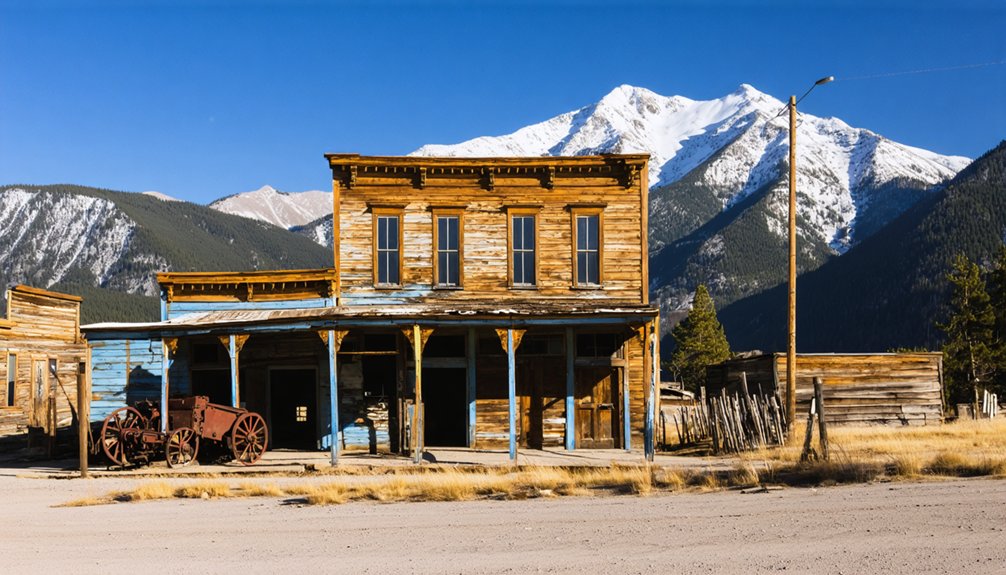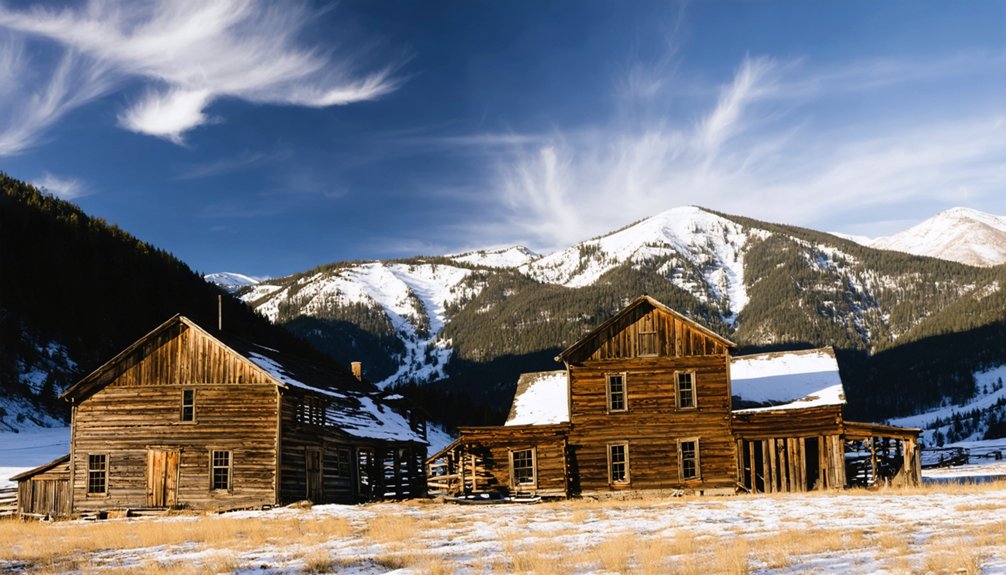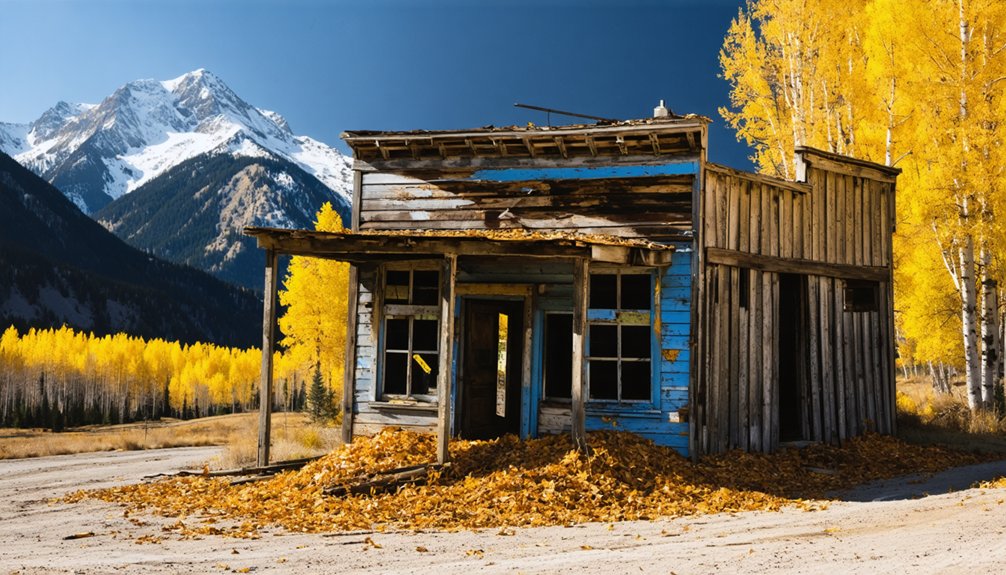
You’ll find Colorado’s ghost towns most enchanting during October and November when autumn fog and golden aspen leaves create a haunting backdrop for historic ruins. These months offer reduced crowds and cooler temperatures that enhance the eerie atmosphere of abandoned mining settlements. Summer provides access to high-altitude locations after snowmelt, though you’ll encounter more tourists. For the most atmospheric experience, plan your visit during fall’s mystical transformation of these forgotten mountain towns.
Key Takeaways
- October and November offer prime ghost town viewing with atmospheric fog, golden aspens, and fewer crowds for peaceful exploration.
- Summer months (June-August) provide optimal access to high-altitude ghost towns after snowmelt, though crowds are heaviest.
- Lower elevation ghost towns become accessible by early May, while high-altitude sites above 11,000 feet open later.
- Late spring to early fall provides the best balance of weather conditions and accessibility for most ghost town locations.
- Weather can change rapidly at high elevations, so morning visits are recommended to avoid afternoon thunderstorms.
October and November: The Prime Season for Ghost Town Adventures
Three key elements converge to make October and November Colorado’s prime ghost town season: atmospheric conditions, reduced crowds, and enhanced historical ambiance.
You’ll find haunting fog drifting through mountain valleys, wrapping abandoned structures in a mystical shroud perfect for ghostly encounters. Golden aspen leaves create striking contrasts against weathered storefronts, while the departure of summer tourists leaves these historic sites peacefully isolated. Many visitors seek out iconic locations like Gothic, which once housed a thousand residents during its silver mining heyday.
Misty tendrils weave through deserted mining towns, where golden leaves dance against weathered wood and silence rules the empty streets.
Faded signs and saloons tell fascinating stories of the 19th-century mining era, inviting visitors to imagine life during the gold rush period. The cooler temperatures and shorter days intensify the eerie appeal, making every creaking floorboard and dimly lit window more pronounced in the silence. During these months, you can explore at your own pace, experiencing autumn aesthetics at their peak while roads remain accessible.
Just remember to check weather conditions before venturing to higher-altitude locations, as mountain weather can change rapidly.
Summer Weather Access and High-Altitude Exploration
You’ll find Colorado’s ghost towns most accessible during the summer months when melting snow opens up high-altitude passes and roads that are typically closed the rest of the year.
For exploring sites like Ashcroft at sunrise or Animas Forks at 11,000 feet, you’ll need to prepare for significant temperature swings and bring a high-clearance vehicle or ATV to navigate the rugged terrain. The area around Ashcroft sits at 9,521 feet elevation, making it crucial to acclimate before extensive exploration. A visit to St. Elmo offers access to the still-operating General Store for supplies and souvenirs.
While Pearl Pass remains snow-covered until July, most ghost town locations become readily explorable by June, though you should plan weekday visits to avoid peak summer crowds at popular sites like Maroon Bells.
Peak Season Access Windows
While Colorado’s ghost towns stand as year-round symbols to the state’s mining heritage, accessing these high-altitude sites requires careful timing during the warm-weather months.
Independence, situated at 11,000 feet elevation, offers guided summer tours through the Aspen Historical Society.
You’ll find ideal ghost town history exploration and seasonal photography from late spring through early fall when the Alpine Loop and other high-elevation roads become passable.
Most sites above 10,000 feet, including Animas Forks and Carson, are accessible only during summer’s peak window.
You’ll need a four-wheel-drive vehicle to reach remote locations like Governor Basin and Mountain Top Mine.
Visitors should exercise extreme caution around any unprotected mine shafts or portals during exploration.
St. Elmo, at 10,000 feet, offers easier access with a regular car.
For the most flexibility, plan your visit between late spring and early fall, before winter snows isolate these historic mountain settlements.
October provides a final chance to explore before consistent snowfall begins.
High Elevation Safety Tips
Exploring Colorado’s ghost towns demands careful attention to high-altitude safety, especially since many sites sit above 10,000 feet where altitude sickness can strike quickly.
Your altitude acclimation strategy should start before you arrive, focusing on hydration and avoiding alcohol or caffeine. Watch for symptoms like headaches and dizziness if you’re not properly acclimated. Weather preparedness is vital, as summer afternoons bring rapid thunderstorms and lightning risks between June and August. UV exposure is intensified at higher elevations, requiring sun protection measures throughout your visit.
- Start your ghost town visits early, planning to be off high peaks by noon when storms typically form.
- Pack essential gear including rain jacket, warm layers, and plenty of water (32 oz every two hours).
- Follow the 7,000-foot rule: spend your first day below this elevation, then gradually explore higher sites.
Vehicle Requirements By Month
Throughout Colorado’s ghost town seasons, vehicle requirements shift dramatically from impassable winter conditions to preferable summer access.
From January through March, you’ll need specialized winter vehicles with chains, as deep snow blocks most high-altitude sites above 11,000 feet. Spring conditions demand high-clearance 4WD vehicles due to mud and lingering snow, particularly around Lake City and Silverton.
Summer brings ideal accessibility, with July and August offering the widest range of vehicle options. You can reach Alta and Gold Hill in a 2WD vehicle, while remote destinations like Carson and Engineer Pass still require 4WD capabilities. The Alpine Loop near Animas provides one of the most scenic driving routes to explore multiple ghost towns. Many historic sites are accessible by regular cars during peak summer months, making exploration convenient for most visitors.
The seasonal challenges ease considerably during these peak months, though you’ll always want high clearance for backcountry exploration. Remember that vehicle types matter most during shoulder seasons when conditions can change rapidly.
Winter Limitations and Safety Considerations
Severe winter conditions transform Colorado’s ghost towns into challenging destinations that demand careful planning and specialized transportation.
For safe winter exploration, you’ll need to adapt your travel methods since many access roads become impassable or restricted. Deep snow often requires snowshoes, and sudden storms can leave you stranded without proper preparation.
- Most high-elevation sites like Independence and Carson become inaccessible to standard vehicles, requiring snowmobiles, skis, or 4x4s with chains.
- Remote locations like Whitepine and Ashcroft enforce seasonal closures, limiting access to hiking, snowshoeing, or specialized vehicles.
- Safety measures must include checking road conditions, preparing for extreme temperatures, and carrying emergency supplies, especially above 10,000 feet where weather changes rapidly.
Spring and Early Summer Activity Options
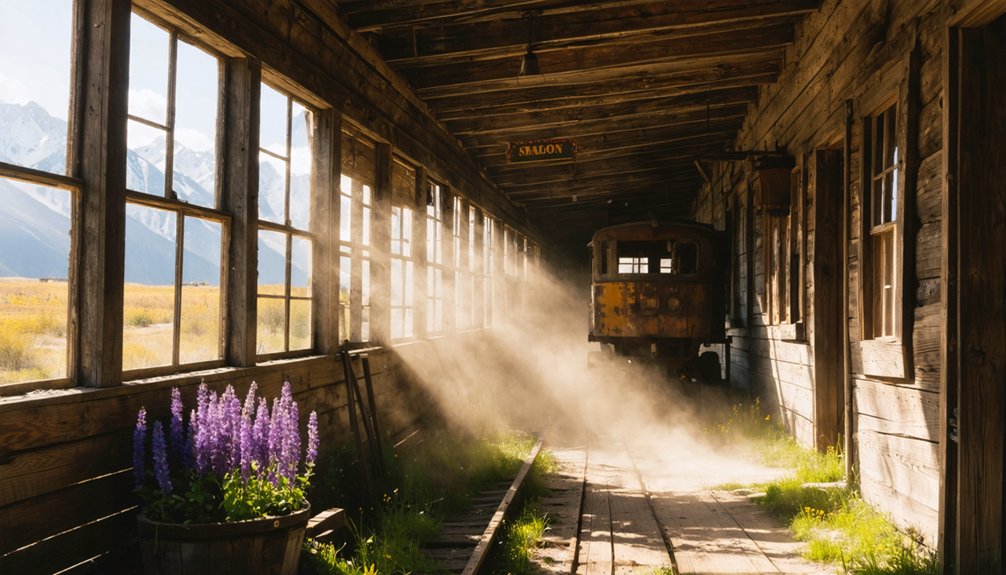
As spring thaws open mountain passes and dirt roads, you’ll find ideal conditions for mountain biking through historic mining districts along the Alpine Loop.
You can check road status updates through local ranger stations to time your visit when high-clearance routes to sites like Animas Forks become passable.
Mountain biking peaks in late spring when trails are drying but wildflowers haven’t yet reached their summer crescendo, giving you clear views of weathered cabins and mill ruins against snow-capped backdrops.
Mountain Biking Peak Season
When mountain biking conditions reach their prime in Colorado’s ghost towns during spring, you’ll find the sweet spot between March and May at lower elevations like Fruita, where temperatures hover between the upper 50s and 70s.
The mountain biking trails offer ideal riding conditions, though you’ll need to be mindful of seasonal closures for wildlife conservation until mid-May. As temperatures warm through late May and June, higher-elevation destinations become accessible, creating diverse riding opportunities.
- Early-season riders should stick to dry trails to prevent deterioration and damage
- Peak season hits in July with wildflower blooms creating spectacular riding experiences
- Late September brings golden aspen displays and comfortable temperatures in the 60s-70s
The shoulder seasons of spring and fall provide the most reliable conditions, with October offering more predictable weather patterns than May.
Spring Road Access Updates
Spring road access to Colorado’s ghost towns follows a predictable thaw pattern, with lower-elevation sites becoming accessible by early May while higher mountain passes require additional weeks to clear.
You’ll find ideal conditions for spring photography and historical exploration once County Road 2 opens to Eureka and Animas Forks, typically by late May.
The Alpine Loop Scenic Byway, crossing 12,000-foot passes like Cinnamon Pass, becomes fully traversable by June.
If you’re planning to explore remote sites above 11,000 feet, you’ll want to schedule your visit between late spring and early fall.
While standard SUVs can handle primary routes, you’ll need a 4×4 vehicle for more challenging locations.
Consider joining guided tours during this peak season, as they’ll navigate the steep mountain roads while sharing detailed historical context.
Understanding Peak and Off-Peak Visitation Patterns
Timing your visit to Colorado’s ghost towns requires understanding the distinct seasonal patterns that shape accessibility and crowd levels throughout the year.
Peak visitation occurs during summer months when warmer temperatures and dry conditions make high-elevation sites most accessible. You’ll find the heaviest crowds from June through August, particularly at popular destinations like St. Elmo and Animas Forks.
- Summer draws up to 65,000 visitors annually for ATV tours, hiking, and preserved structure viewing at elevations above 10,000 feet.
- Off-peak exploration in spring and fall offers balanced access with fewer crowds and manageable road conditions.
- Winter severely limits access due to snow and avalanche risks, though some lower-elevation towns remain accessible year-round.
Consider planning your visit during shoulder seasons when you’ll enjoy both decent weather and more solitary exploration of these historic mining communities.
Structural Preservation and Site Conditions Throughout the Year
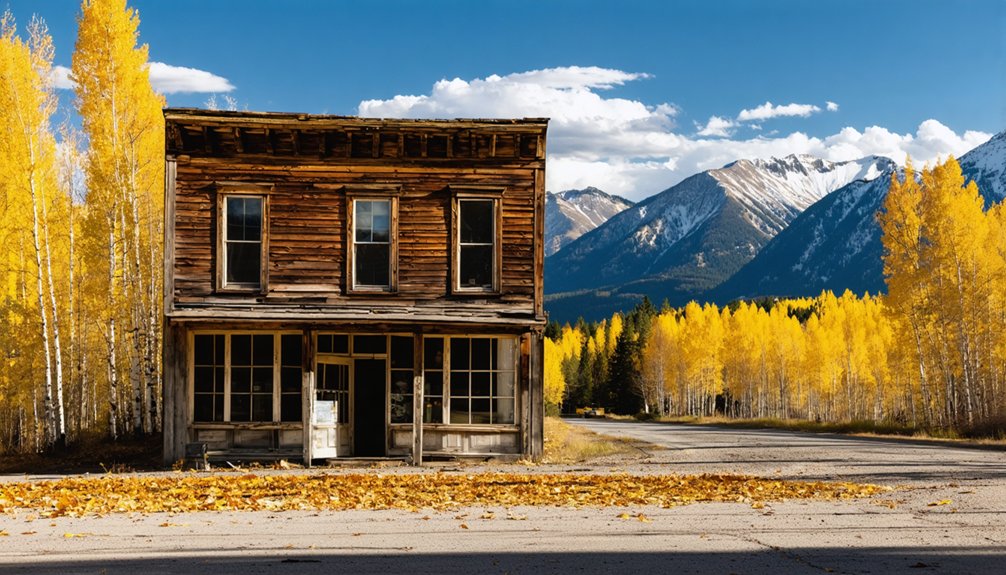
Throughout Colorado’s ghost towns, structural preservation varies dramatically based on seasonal weather patterns and elevation-specific challenges.
You’ll find that freeze-thaw cycles accelerate site deterioration, particularly in abandoned buildings lacking maintenance. However, some locations benefit from natural preservation techniques – Ironton’s dry climate helps maintain its painted facades and wallpaper, while Aspen groves shield Ashcroft’s historic hotel from harsh elements.
Year-round residents and historical societies play vital roles in maintaining structural integrity. St. Elmo stays well-preserved through active seasonal business operations, while Vicksburg’s cabins endure thanks to descendants of original settlers.
The Ghost Town Club of Colorado and other preservation groups have worked since 1958 to protect these historic treasures. Still, many buildings remain unstable and unsafe to enter, especially after winter storms.
Frequently Asked Questions
Are There Guided Ghost Town Tours Available During the Off-Season Months?
You’ll find guided tours aren’t typically available during off-season visits since most operators run June through September due to mountain passes, weather conditions, and limited accessibility in winter months.
What Wildlife Encounters Should Visitors Be Prepared for Near Ghost Towns?
You’ll likely encounter bold chipmunks at St. Elmo demanding food, plus marmots whistling near Tomboy’s ruins. Keep your distance and secure your belongings, as wildlife sightings and curious animal behavior are common.
Can You Camp Overnight in or Near Colorado Ghost Towns?
You can camp near 90% of Colorado ghost towns on BLM or National Forest lands, following camping regulations like 14-day limits. Choose established sites and prioritize overnight safety through proper permits.
Which Ghost Towns Are Considered the Most Haunted in Colorado?
You’ll find the most haunted ghost stories at St. Elmo, where haunted legends tell of spirits in the old General Store, and Ashcroft’s View Hotel, where shadowy figures and unsettling energy persist.
Do Any Ghost Towns Require Permits or Entrance Fees to Visit?
You’ll find varied entrance fees across Colorado’s ghost towns: Ashcroft charges $5, Ghost Town Museum costs $8.50, and Independence requires $25 for guided tours. Russell Gulch remains freely accessible year-round.
References
- https://www.denvergazette.com/2025/10/07/6-mountain-towns-to-visit-during-spooky-season-in-colorado/
- https://www.visitouray.com/ghost-towns
- https://www.tripadvisor.com/Attractions-g28927-Activities-c47-t14-Colorado.html
- https://www.colorado.com/articles/colorado-ghost-towns
- https://aspenchamber.org/blog/ghost-towns-and-cemeteries-visit-aspen-october
- https://twinpeakslodging.com/visit-these-ghost-towns-this-halloween-season/
- https://www.atlasobscura.com/articles/haunted-stays-and-autumn-days-in-colorado
- https://kekbfm.com/colorado-ghost-town-gothic/
- https://myfamilytravels.com/why-colorados-mountain-towns-become-extra-creepy-when-fall-hits/
- https://www.longmontleader.com/colorado/explore/20-must-visit-ghost-towns-in-colorado-for-an-eerie-adventure-10192944