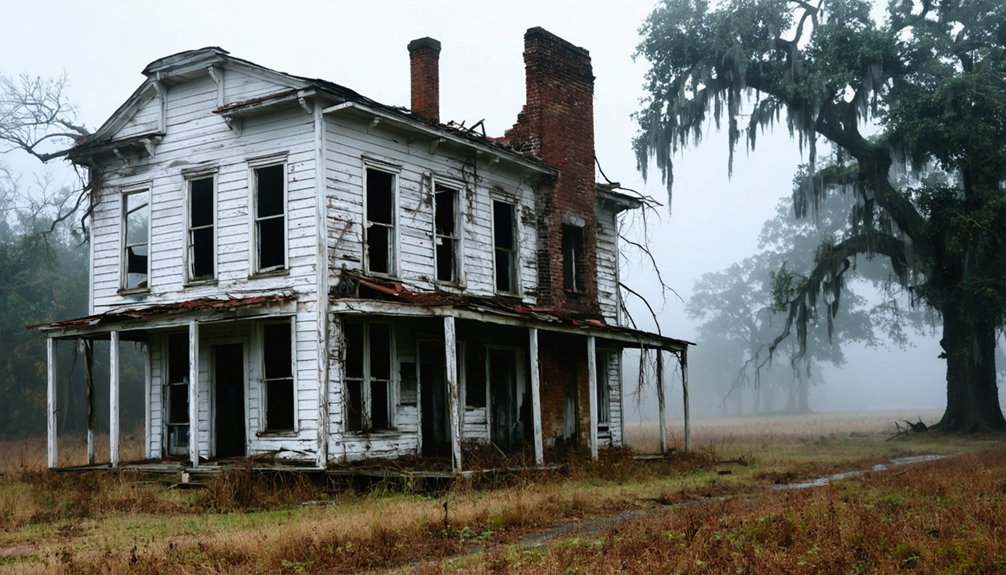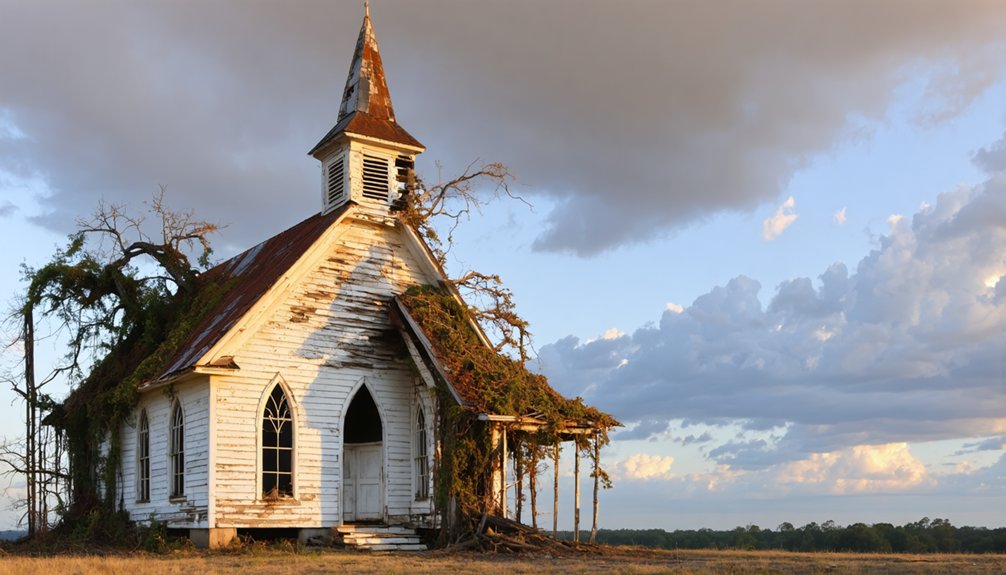
You’ll find ideal ghost town exploration in Georgia during late October to early November, when autumn colors enhance abandoned structures and temperatures remain mild. This peak season offers 15+ miles of accessible trails at locations like Red Top Mountain State Park, with clear visibility and minimal precipitation. Historical sites like Scull Shoals and Lake Chatuge become particularly atmospheric during fall’s golden hours. Understanding Georgia’s seasonal patterns will help you uncover these forgotten places at their most evocative.
Key Takeaways
- October to early November offers peak fall colors, moderate temperatures, and optimal trail conditions for ghost town exploration.
- Morning fog at Lake Chatuge during spring creates an ethereal atmosphere while showcasing partially submerged historic structures.
- Summer provides extended daylight hours until 10 PM, with mountain locations offering temperatures 10-15 degrees cooler than lowlands.
- Late October combines dry trails, comfortable temperatures, and vibrant foliage with seasonal ghost tours and mystery festivals.
- August through September should be avoided due to excessive heat and rainfall, which can make trails challenging to navigate.
Peak Fall Season: The Ultimate Ghost Town Experience
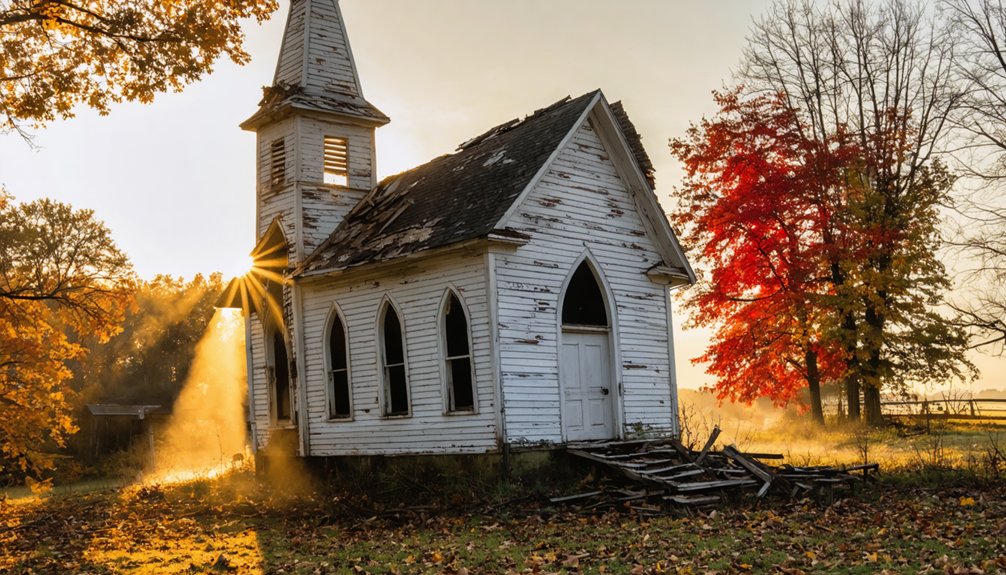
Fall’s dramatic transformation of Georgia’s landscape creates the perfect backdrop for ghost town exploration. You’ll discover the most atmospheric conditions from late October through early November, when autumn colors paint abandoned structures in rich crimsons and amber hues. The timing perfectly aligns with the state’s haunted history tours and seasonal festivities.
Start your journey in North Georgia’s mountains, where higher elevations like Brasstown Bald showcase early color changes by mid-October. Explorers can enjoy 15 miles of trails at Red Top Mountain State Park while searching for remnants of early settlements. The Russell Scenic Byway offers a 40-mile route through historic settlements nestled in the Chattahoochee National Forest. As you venture through historic sites, you’ll experience peak foliage progressively moving southward.
The Georgia State Parks Leaf Watch helps you track ideal viewing times, while ghost tours in places like Dahlonega coincide with Mystery Weekend celebrations. The combination of fall festivals, haunted attractions, and vibrant scenery creates an immersive experience through Georgia’s forgotten communities.
Spring’s Hidden Treasures and Moderate Crowds
Three key advantages make spring an ideal season for exploring Georgia’s ghost towns: moderate temperatures, enhanced visibility, and manageable crowd levels.
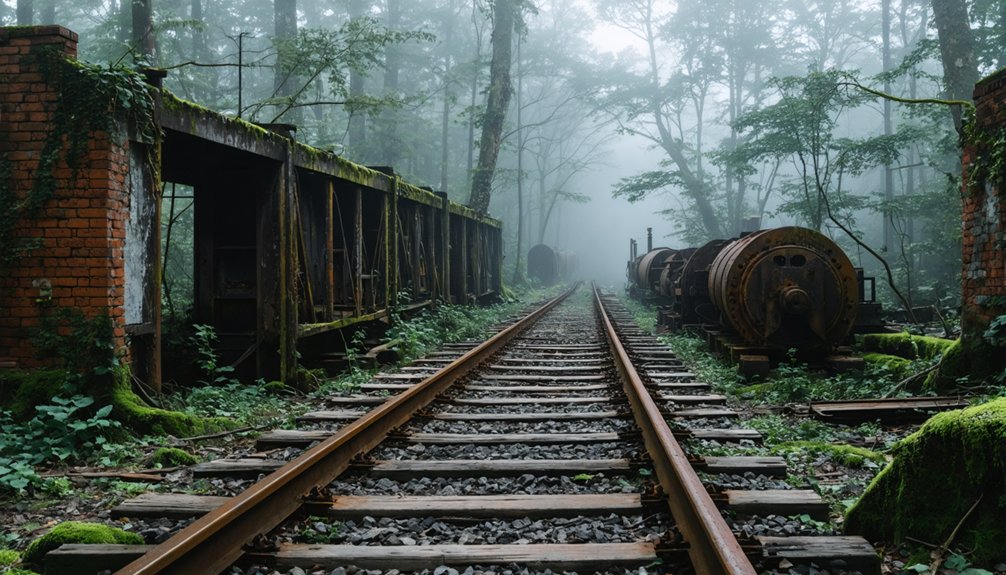
Your spring exploration benefits from natural cooling effects, particularly at High Falls State Park’s waterfall corridors and Oconee National Forest’s river-fed environments. These hidden gems reveal their secrets through spring’s balanced lighting and minimal foliage. The historic 135-foot cascades of the Towalaga River create a stunning backdrop for photographers and history enthusiasts alike. The scattered bricks outline the former textile town’s layout against the misty morning backdrop.
Spring’s cooling waters and pristine lighting unveil Georgia’s forgotten places, from thundering High Falls to the tranquil depths of Oconee Forest.
- Experience the ethereal morning fog at Lake Chatuge while examining submerged structures
- Navigate Scull Shoals’ brick foundations as spring moss and leaf litter frame historical remnants
- Witness High Falls’ textile ruins emerge clearly before summer vegetation takes hold
- Explore Barnett Shoals’ mill remains while dragonflies patrol the quieter spring marshlands
- Discover Banning Mills’ stone raceways highlighted by early wildflower growth and moderate lighting
Summer Mountain Access and Extended Daylight
While summer’s sweltering heat blankets Georgia’s lowlands, the Blue Ridge Mountains offer ghost town explorers a rejuvenating escape with temperatures 10-15 degrees cooler than the plains.
You’ll find extended daylight hours perfect for mountain exploration at sites like High Falls State Park, open until 10 p.m., where you can examine the remnants of a historic grist mill and powerhouse.
Summer activities extend to Lake Burton, where low water levels reveal the submerged ruins of old Whitewater Bridge and Attakulla Lodge. Many visitors seek out the relocated grave sites that line the shoreline during these periods.
The Fort Mountain trails lead you to spectacular sunset views over the Cohutta Mountains, while Banning Mills’ historic paths guide you through Snake Creek Gorge to preserved paper mill ruins.
You’ll encounter minimal crowds on these trails, allowing peaceful discovery of Georgia’s abandoned mountain settlements. The area’s clean mountain air creates ideal conditions for exploring remote historic sites.
Winter Challenges and Limited Operations
Despite Georgia’s typically mild winters, ghost town explorers face significant challenges when temperatures drop to the 30s and 40s Fahrenheit in northern sites like Auraria.
Winter exploration requires careful planning as seasonal conditions affect site accessibility and safety. You’ll encounter reduced operational hours and limited guided tours, while some locations enforce temporary closures for maintenance.
The Oconee River floods regularly threaten access to historic ruins, making winter visits particularly unpredictable.
- Frost and ice create hazardous conditions on remote trails, particularly around Scull Shoals.
- Shorter daylight hours restrict exploration time, requiring efficient schedule planning.
- National forest areas may close gates, extending hiking distances to reach sites.
- Safety precautions become critical due to limited cell service and increased slip risks.
- Winter dampness accelerates structural decay, demanding caution around ruins.
Like the abandoned towns of harsh climate regions, Georgia’s ghost towns showcase how nature gradually reclaims human settlements when left to the elements.
Weather Patterns and Seasonal Trail Conditions
Understanding Georgia’s seasonal weather patterns shapes the quality of ghost town explorations throughout the year.
You’ll encounter significant temperature variations, from September’s lingering 90-degree days to December’s mild 64-degree highs. Mountain elevations create one to two-hour differences in heat exposure between northern and southern locations.
Precipitation patterns directly impact your exploration potential. While August brings heavy rainfall with 12.8 rainy days and 6.56 inches, December offers more favorable conditions with just 8.2 rainy days. Long daylight hours in June provide extended exploration time with sunsets occurring between 8:30 and 9 p.m.
October stands out with dry trails and ideal hiking conditions, free from summer’s muddy terrain. Early morning fog near Lake Chatuge creates an atmosphere where ghostly lights are frequently reported. You’ll want to avoid September’s peak hurricane season, when Category 5 storms can force evacuations.
For the best combination of weather conditions and trail accessibility, target the post-September period when meteorological hazards diminish.
Frequently Asked Questions
Are There Any Age Restrictions for Ghost Town Tours in Georgia?
You’ll find tour age limits vary by company: adult-only tours require 16+, family-friendly tours welcome children 11+, trolley tours need 10+, and escape rooms suggest 13+. Parental discretion applies throughout.
What Photography Equipment Is Allowed Inside Historic Ghost Town Buildings?
Like exploring Scull Shoals’ ruins, you’ll need to check each site’s specific tripod regulations and camera restrictions. Most historic buildings allow handheld cameras but limit flash photography and professional equipment.
Can Visitors Take Artifacts or Souvenirs From Ghost Town Sites?
You can’t legally remove artifacts or souvenirs from ghost town sites. Artifact preservation laws protect these locations, and souvenir legality is strict – removing items constitutes theft under Georgia state regulations.
Are There Emergency Services Available Near Remote Ghost Town Locations?
Like a safety net stretched across the wilderness, you’ll find emergency services through rural EMS networks. Keep emergency contacts handy and take safety precautions, as response times can vary in remote locations.
Do Ghost Towns Have Restroom Facilities or Food Vendors Nearby?
You’ll find limited restroom availability and food options near ghost towns. Most bathhouses and facilities are non-functional, though some neighboring towns offer basic services within driving distance of exploration sites.
References
- https://fernwehrahee.com/fall-in-georgia/
- https://northgeorgialiving.com/fall-adventures-ghostly-getaways-in-southeast-vacation-towns/
- https://www.responsiblevacation.com/vacations/georgia/travel-guide/best-time-to-visit-georgia
- https://wander-lush.org/best-time-to-visit-georgia-country/
- https://www.narcity.com/road-trips-in-georgia-that-are-great-for-getting-you-in-the-spooky-season-spirit-this-fall
- https://www.freakyfoottours.com/us/georgia/
- https://www.tripadvisor.com/ShowTopic-g28931-i103-k2685246-Best_time_to_visit-Georgia.html
- https://paigemindsthegap.com/fall-destinations-georgia/
- https://www.visittownscounty.com/the-best-places-to-see-fall-foliage-in-towns-county-georgia/
- https://www.dahlonega.org/articles/post/the-essential-guide-to-fall-in-dahlonega/