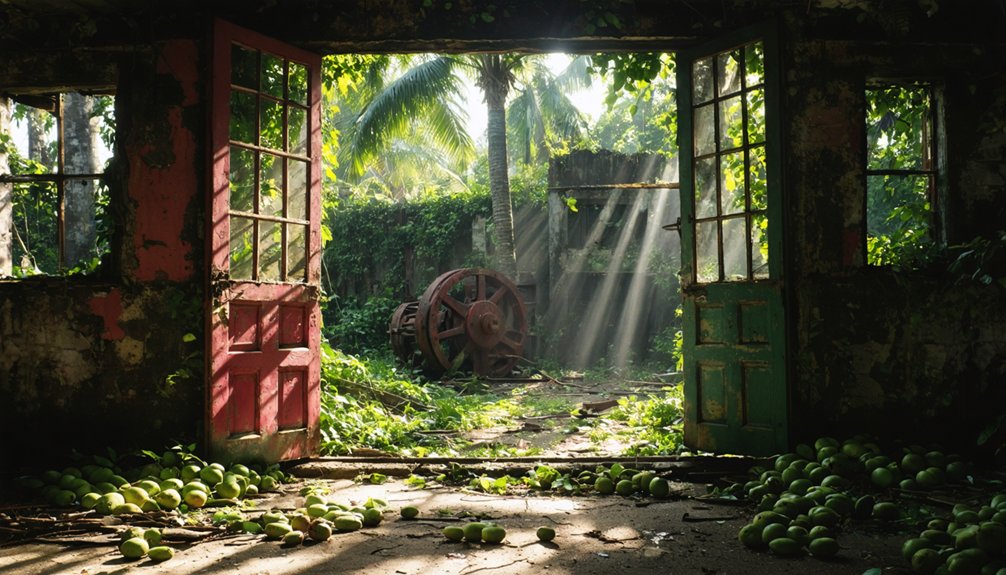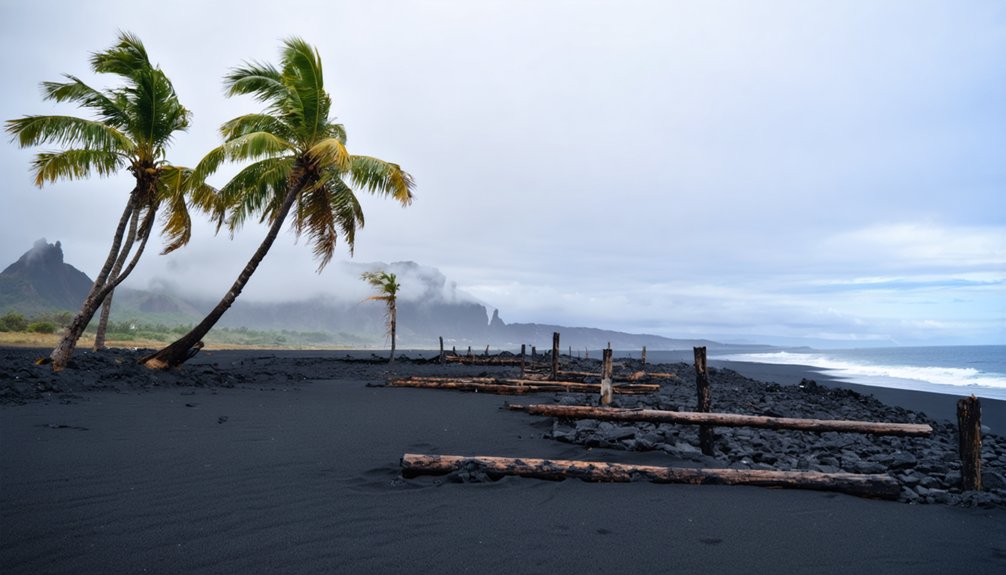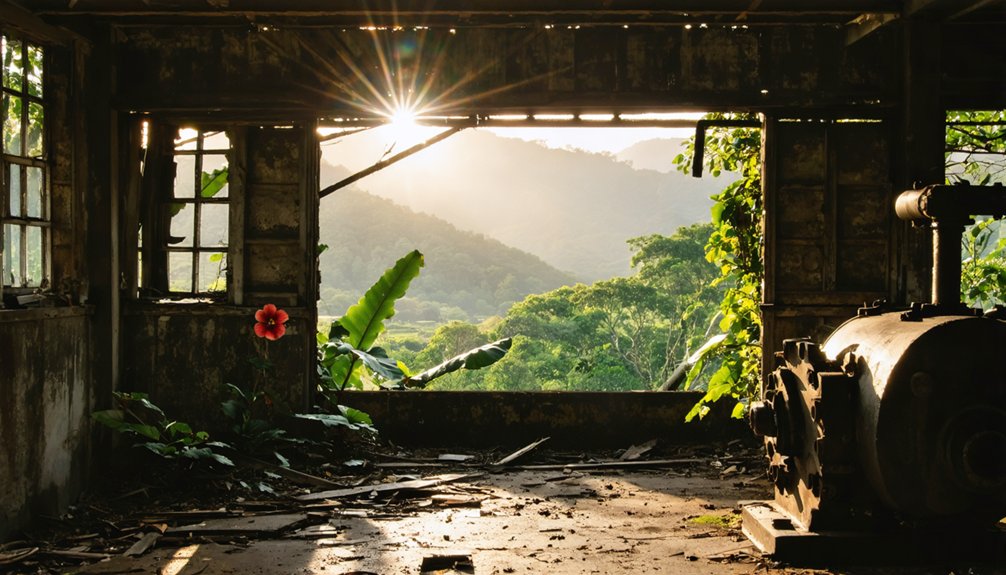
You’ll find ideal conditions for exploring Hawaii’s ghost towns during the dry season from April through October, when stable weather and extended daylight hours create perfect exploration opportunities. With temperatures ranging from 79-89°F and minimal rainfall, particularly in July, you’ll enjoy clear visibility and safe access to historic sites. Be sure to visit during morning to early afternoon hours, when sacred cultural protocols are observed. Understanding local weather patterns and cultural considerations will enhance your ghost town adventures.
Key Takeaways
- The dry season (May-October) offers optimal conditions with consistent trade winds and predictable weather for exploring ghost towns safely.
- July and August provide extended daylight hours and stable temperatures between 79-89°F, perfect for photography and exploration.
- Leeward regions experience drier conditions year-round, making ghost towns in these areas more accessible throughout the year.
- Avoid the wet season (November-April) when heavy rains can make access difficult and potentially dangerous for historic site visits.
- Visit during morning hours (7:00-9:00 AM) when cultural sites open and temperatures are cooler for comfortable exploration.
Seasonal Weather Patterns Affecting Ghost Town Visits
While Hawaii’s weather remains relatively consistent year-round, distinct seasonal patterns greatly impact ghost town visits across the islands.
You’ll need to plan around the winter wet season from November through April, when Kona storms bring heavy rains exceeding 30 inches in some locations. During summer months, consistent trade winds provide more predictable conditions, though hurricane season peaks in July and August. The unusually wet period of 2006 saw over 500 weather alerts issued in just six weeks.
Plan Hawaii ghost town visits around summer trade winds, avoiding winter’s heavy Kona storms and peak hurricane months of July-August.
Ancient Hawaiian sites like Kaloko-Honokohau Park showcase traditional fishponds that are best explored in dry conditions. If you’re exploring abandoned sites on the windward side, like those near Hilo, you’ll encounter frequent rainfall regardless of season.
Consider that historic tsunamis and hurricane impacts have shaped many ghost towns, particularly on Molokai after the 1946 and 1957 events.
The leeward regions offer drier conditions year-round, making these areas more accessible for exploring abandoned locations, though seasonal rainfall can still affect your visit unexpectedly.
Summer Advantages for Exploring Abandoned Sites
Because Hawaii’s summer months offer ideal exploration conditions, July and August present distinct advantages for investigating abandoned sites across the islands.
You’ll benefit from extended daylight hours, with consistent temperatures between 79-89°F making summer exploration comfortable and predictable. Trade winds averaging 12.1 mph help maintain bearable conditions while you document these historical locations.
July’s minimal rainfall creates excellent conditions for ghost town photography, particularly on the Big Island’s western side where abandoned settlements like Wai Opae remain accessible. With only 0.39 inches of rain during July in Maui, clear visibility for photography is almost guaranteed.
You won’t encounter the seasonal flooding or mudslides common during winter months. The stable weather patterns and low hurricane risk in July also guarantee reliable access to remote sites.
With comfortable water temperatures and extended twilight hours, you can maximize your time investigating these fascinating remnants of Hawaii’s past.
Ancient Hawaiian Cultural Sites and Visiting Hours
When planning your visit to Hawaii’s sacred cultural sites, you’ll find most locations maintain regular daytime hours, with sites like Pu’uhonua o Hōnaunau open from early morning until sunset and the Lāna’i Culture & Heritage Center operating on weekday schedules.
The Heritage Center welcomes visitors Monday through Friday from 11 AM to 3 PM, offering guided exploration of the island’s rich cultural legacy.
You’ll need to respect specific protocols at these ancient places, including proper attire and behavioral guidelines that honor Hawaiian cultural practices. Remember that flash photography is strictly prohibited at these culturally significant sites.
Before arriving at any historical site, it’s crucial to verify current operating hours and access requirements, as some locations like ‘Iolani Palace offer specialized tours that require advance booking while others, such as Lapakahi State Historical Park, have strict gate closure times.
Sacred Sites Access Hours
As you plan visits to Hawaii’s sacred historical sites, understanding their varied operating hours is essential for respectful and meaningful exploration.
You’ll find most sacred site hours align with daylight, typically opening between 7:00-9:00 AM.
Puʻuhonua o Hōnaunau welcomes visitors from 8:15 AM until sunset, while Puʻu O Mahuka Heiau operates from 9:00 AM to 5:30 PM.
Cultural site accessibility varies, with Iolani Palace offering both self-led and docent-led tours Wednesday through Friday, 9:00 AM to 4:00 PM.
Puʻukoholā Heiau’s visitor center remains open daily until 4:45 PM, though you’ll need to exit by 5:00 PM.
The Byodo-In Temple maintains daily operating hours from 8:30 AM to 4:30 PM with last entry at 4:15 PM.
At Ulupō Heiau, you can access the site Monday through Friday from 7:00 AM to 7:00 PM, with limited Saturday hours and Sunday closures.
Visitors to Pu’u O Mahuka can pick up a free park brochure to learn about this historically significant heiau site.
Cultural Protocol Guidelines
Honoring ancient Hawaiian cultural protocols requires careful attention to sacred site etiquette and spiritual awareness.
When visiting ghost towns with sacred sites, you’ll need to follow specific sacred site practices that demonstrate respect for Hawaiian spirituality. Before entering any sacred area, take a moment to silently request permission and introduce yourself to the spirits. You’ll want to maintain quiet, reverent behavior throughout your visit, speaking in low voices when necessary.
Remember that everything around you – both visible and invisible – possesses mana, or spiritual life energy. Treat these locations with the same reverence you’d show in a church or temple. Just as you would remove your shoes when entering a Hawaiian home, be mindful of cultural customs at these sacred places. The traditional kapu system established strict rules to preserve the sanctity of these spiritual spaces.
Dress modestly, avoid disruptive behavior, and never climb on or remove objects from heiau (ancient temples). If you’re unsure about an action’s appropriateness, it’s best to refrain.
Safety Tips for Coastal Ghost Town Exploration
Before you explore Hawaii’s coastal ghost towns, you’ll need to carefully monitor tide tables and ocean conditions, especially at sites like Māhā’ulepū where high tides can quickly flood beach areas and historic ruins.
Your emergency gear should include a reliable flashlight, first aid supplies, and extra water, as many abandoned sites lack facilities and cell service can be unreliable near cliffs and in remote areas.
When investigating historic structures like the raised platforms at Wai Opae or the sugar mill ruins at Halstead, always maintain a safe distance from unstable features and be prepared for sudden weather changes that are common in Hawaii’s coastal zones.
Monitor Ocean Conditions Daily
When exploring Hawaii’s coastal ghost towns, staying informed about ocean conditions is essential for your safety.
You’ll find extensive daily monitoring tools through NOAA’s National Data Buoy Center and the PacIOOS platform, which provide real-time wave heights, surface currents, and tidal predictions up to 125 miles offshore.
Before heading out, check the National Weather Service’s coastal waters forecasts, which cover areas within 40 nautical miles of shore.
You’ll want to monitor the HF Radar maps that display hourly averaged current speeds and directions.
For maximum safety, review the Clean Water Branch’s water quality reports and any active beach advisories.
Remember that wave conditions can change rapidly, so it’s vital to check these resources immediately before your ghost town expedition and remain aware of potential hazards throughout your visit.
Pack Emergency Gear First
Since Hawaii’s coastal ghost towns present unique challenges for emergency preparedness, you’ll need to pack essential survival gear before exploring these remote locations.
Pack a 14-day supply of non-perishable food and water, allocating one gallon per person daily for drinking and sanitation. Your disaster preparedness kit should include a battery-operated radio for emergency broadcasts, flashlights with extra batteries, and a thorough first aid kit.
Given the isolated nature of Hawaii’s ghost towns, you’ll want to carry communication tools like a portable radio to monitor emergency alerts and weather conditions.
Don’t forget to sign up for county text notifications before your trip. Consider potential hazards like flash floods, tsunamis, and wildfires when assembling your emergency gear, and always inform others of your exploration plans.
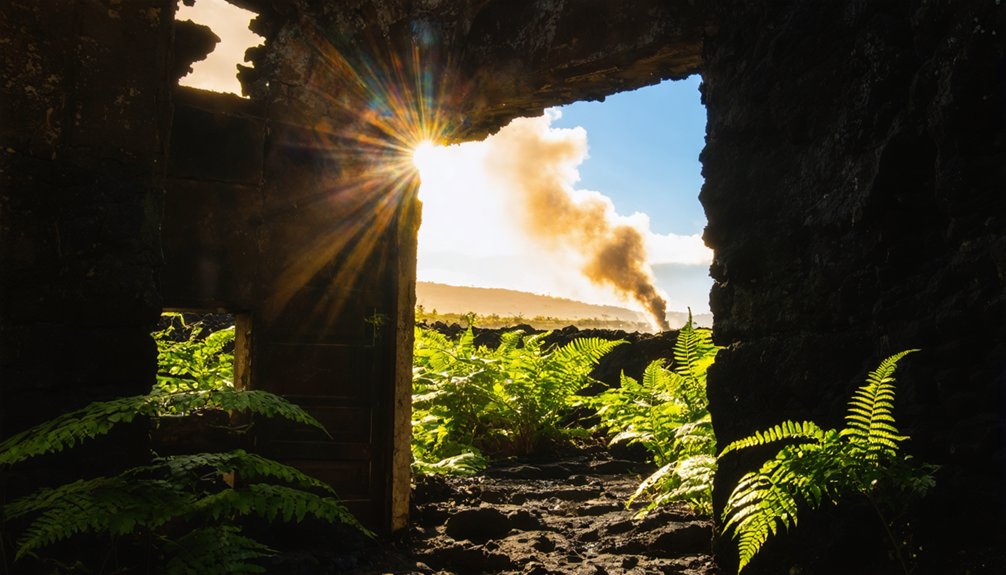
Although Hawaii’s lava field ghost towns present unique navigation challenges throughout the year, several areas remain accessible to visitors seeking to explore these haunting volcanic landscapes.
You’ll find the most dramatic lava flow transformations at Kalapana, where remnants of roads and foundations peek through hardened volcanic rock. While Highway 130 provides year-round access to key viewing points, you’ll need to navigate carefully around Pele’s hair, dangerous gas vents, and earthquake-damaged roads.
For the safest ghost town experience, head to Pu’uhonua o Honaunau National Historic Park or follow the maintained path to new Kaimu Beach.
The Pahoa Lava Zone Museum offers protected viewing of 2018 eruption artifacts, while Kalapana’s road end features local vendors and the House of Fire gallery amid the volcanic landscape.
Traditional Beliefs and Optimal Visiting Times
When exploring Hawaii’s ghost towns, you’ll need to respect traditional protocols around Night Marchers by avoiding new moon periods and sunset hours, particularly along the Wai’anae Coast where warrior spirits frequently travel their ancient paths.
You should exercise additional caution near banyan trees, which serve as spiritual portals, especially during twilight and nighttime hours when ancestral activity increases.
To guarantee a culturally appropriate visit, you must follow sacred ground protocols by refraining from disturbing stones or artifacts at heiau sites, maintaining quiet reverence, and departing before darkness falls.
Night Marcher Avoidance Periods
Based on centuries of Hawaiian cultural wisdom, the ideal time to visit ghost town locations involves carefully planning around Night Marcher activity periods.
You’ll want to avoid visiting during the last four Hawaiian moon phases before the new moon, when night marcher protocols are most relevant. Winter months see increased activity, particularly at sacred sites like Nuuanu Pali Lookout.
For best safety and sacred site reverence, plan your visits during daylight hours, as no documented Night Marcher sightings occur after dawn.
If you’re exploring locations like Waipio Valley or Ka’ena Point, schedule your departure well before sunset.
Watch for warning signs like conch shell sounds or distant drumming, which signal it’s time to leave.
Banyan Spirit Portal Times
Sacred banyan trees in Hawaii serve as spiritual portals according to traditional beliefs, with specific times considered more auspicious for visits.
You’ll find these spiritual connections are strongest during the Makahiki season, when Lono’s peaceful influence aligns with the banyan tree symbolism of enlightenment and wisdom.
For ideal spiritual experiences, visit during daylight hours to honor the kiʻi connection between heaven and earth.
You’ll want to avoid known Night Marcher paths, particularly near the Manoa Falls banyan.
The trees’ role in Hawaiian healing practices suggests timing your visit during periods of personal reflection or when seeking restoration.
Since the 2023 Lahaina fires, the regenerating banyan has become a powerful symbol of renewal, making sunrise visits particularly meaningful for witnessing nature’s resilience.
Sacred Ground Protocol Tips
To honor the profound spiritual energy of Hawaii’s sacred sites, you’ll need to follow essential protocols rooted in centuries of cultural tradition. Before entering, offer a silent prayer stating your identity and purpose, then express gratitude for the privilege of entry.
Maintain reverent silence throughout your visit, treating these spaces with church-like respect. Stay on marked pathways and avoid disturbing any structures or remains. Rather than leaving physical sacred offerings, share non-tangible gifts like chants or prayers.
Photography and recordings aren’t permitted without explicit permission from site guardians. Remember that traditional kapu violations once carried severe consequences. When in doubt, seek guidance from local cultural practitioners and always prioritize their rules over general guidelines.
Your mindful approach helps preserve these powerful spiritual places for future generations.
Transportation Access During Different Seasons
While Hawaii’s climate remains relatively stable year-round, seasonal weather patterns greatly impact transportation access to the islands’ ghost towns.
Despite Hawaii’s consistent climate, the changing seasons create varying levels of accessibility to explore the islands’ abandoned settlements.
You’ll find ideal road conditions during the dry season (April-October), with minimal transportation challenges affecting mountain routes and valley access. Rental vehicles are readily available, and public transit runs smoothly on predictable schedules.
The wet season (November-March) presents more complex navigation, especially for elevated ghost town sites.
You’ll need four-wheel drive vehicles to safely traverse steep mountain roads, particularly during heavy rainfall periods. Seasonal rentals reflect this demand, with increased availability of four-wheel drive options.
Keep in mind that tropical storms during summer months can temporarily restrict access to isolated locations, so planning your ghost town visits during the dry season offers the most reliable transportation conditions.
Historic Sugar Mill Towns: When to Visit
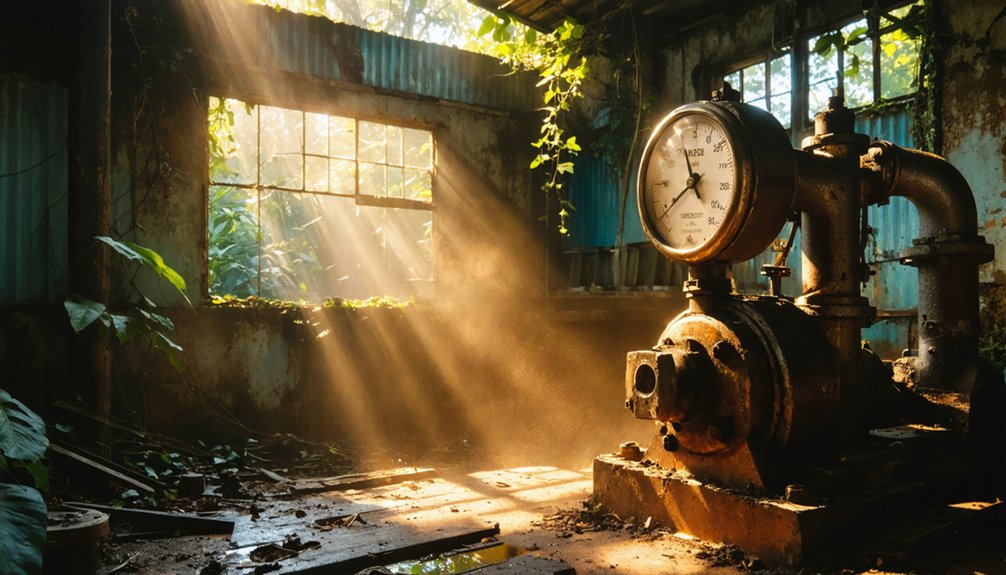
Hawaii’s historic sugar mill towns offer prime visiting opportunities during July, when the annual Kōloa Plantation Days Festival brings the islands’ rich agricultural heritage to life.
You’ll find ideal visitor access as you explore landmarks like the Old Sugar Mill of Kōloa, a National Historic Landmark that pioneered commercial sugar production in 1835.
Year-round access lets you discover these preserved sites at your own pace, with most locations open daily from 9:00 AM to 9:00 PM.
The historic significance of places like Kōloa, just 14 miles from Līhuʻe Airport, comes alive through surviving infrastructure including stone smokestacks and railroad remnants.
You’ll encounter authentic early 1900s structures and learn about the diverse immigrant communities that shaped Hawaii’s multicultural landscape through the sugar plantation era.
Valley Ghost Towns and Weather Considerations
When planning visits to valley ghost towns like Waipi’o, you’ll need to take into account the region’s distinctive weather patterns and accessibility challenges.
Exploring Hawaii’s valley ghost towns requires careful attention to weather and access limitations for a safe, memorable experience.
The Hāmākua region experiences heavy rainfall year-round, particularly during the wet season from November to April, which can greatly impact valley accessibility and safety.
For the best experience, schedule your visit during the dry season between May and October. You’ll find more favorable conditions for exploring these historic sites, including the former “Valley of the Kings” where ancient Hawaiian chiefs once ruled over a thriving community of thousands.
Be aware that even during drier months, the steep terrain and coastal location require careful planning. Always check weather forecasts and coastal alerts, as this area’s history of tsunamis and heavy rains continues to shape its accessibility.
Planning Around Natural Hazards and Preservation
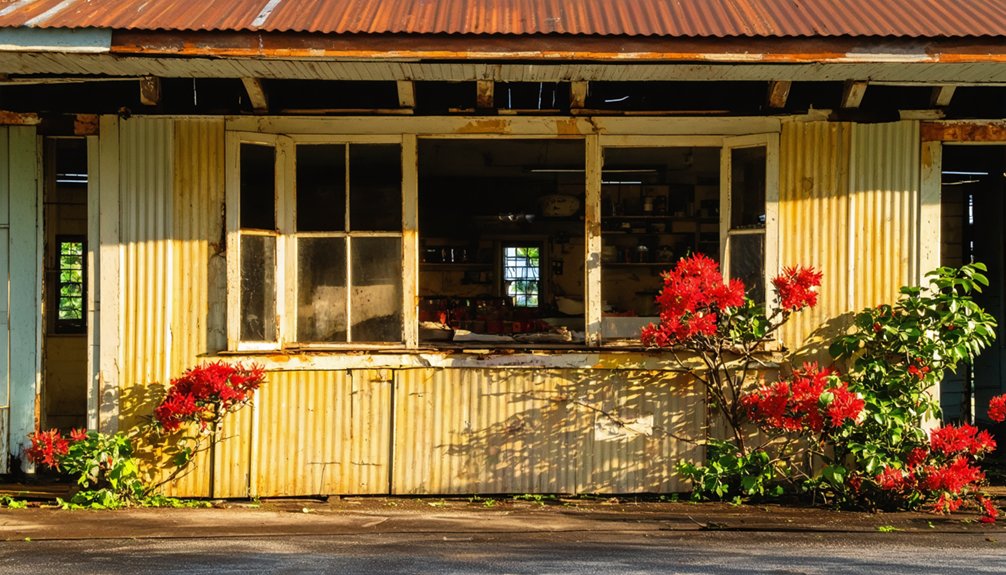
Understanding natural hazards proves essential for safely exploring Hawaii’s ghost towns, as these historic sites face ongoing threats from tsunamis, earthquakes, and coastal erosion.
You’ll need to monitor weather conditions carefully, especially during hurricane season, and respect preservation measures that protect these fragile locations.
Natural hazard awareness becomes particularly important at coastal ghost towns, where salt air deterioration and wave action constantly threaten historic structures.
Before visiting, check with the State Historic Preservation Division about current site conditions and access restrictions.
You’ll find that some locations, like Kalaupapa, maintain strict visitation protocols to balance preservation with public access.
When exploring areas near Jaucus sand deposits, remember that these zones often contain protected burial sites requiring additional sensitivity and careful navigation of marked pathways.
Frequently Asked Questions
Are Photography Permits Required When Visiting Hawaiian Ghost Towns?
You’ll need photography permits if you’re taking commercial photos in Hawaiian ghost towns. Review permit applications and photography rules through DLNR for personal or business use requirements.
Can Visitors Collect Artifacts or Stones From Abandoned Hawaiian Settlements?
You can’t legally collect artifacts or stones from Hawaiian settlements. These items hold deep cultural significance and are protected by federal law. Artifact preservation guarantees future generations can study Hawaii’s heritage.
Are There Guided Ghost Town Tours That Include Traditional Hawaiian Ceremonies?
You won’t find guided tours specifically combining ghost towns and traditional ceremonies, as many Hawaiian cultural practices remain sacred and aren’t typically incorporated into commercial tourism experiences.
Which Ghost Towns Allow Overnight Camping Near the Historic Sites?
You’ll need to verify camping safety at ghost town locations, as most Hawaiian ghost towns don’t offer designated camping facilities. While Kīholo’s historic area permits weekend camping, standard ghost town amenities are limited.
Do Any Ghost Towns Have Wheelchair-Accessible Pathways or Viewing Areas?
Like fading footprints in shifting sands, Hawaii’s ghost towns aren’t currently equipped with wheelchair-accessible pathways or viewing areas. You’ll find historical preservation hasn’t yet extended to making these remote sites universally accessible.
References
- https://nvtami.com/2023/04/26/big-island-hawaii-ghost-towns/
- https://www.americanghostwalks.com/7-creepiest-urban-legends-and-ghost-stories-from-hawaii
- https://activityauthority.com/ghost-stories-hawaii/
- https://www.mysteries-of-hawaii.com/blog/mahaulepu
- https://www.honolulumagazine.com/our-favorite-ghost-stories-about-haunted-places-on-oahu/
- https://freepages.rootsweb.com/~gtusa/history/usa/hi.htm
- https://en.wikipedia.org/wiki/List_of_ghost_towns_in_Hawaii
- https://kids.kiddle.co/List_of_ghost_towns_in_Hawaii
- https://www.atlasobscura.com/things-to-do/hawaii/abandoned
- https://www.weather.gov/hfo/weeksrain