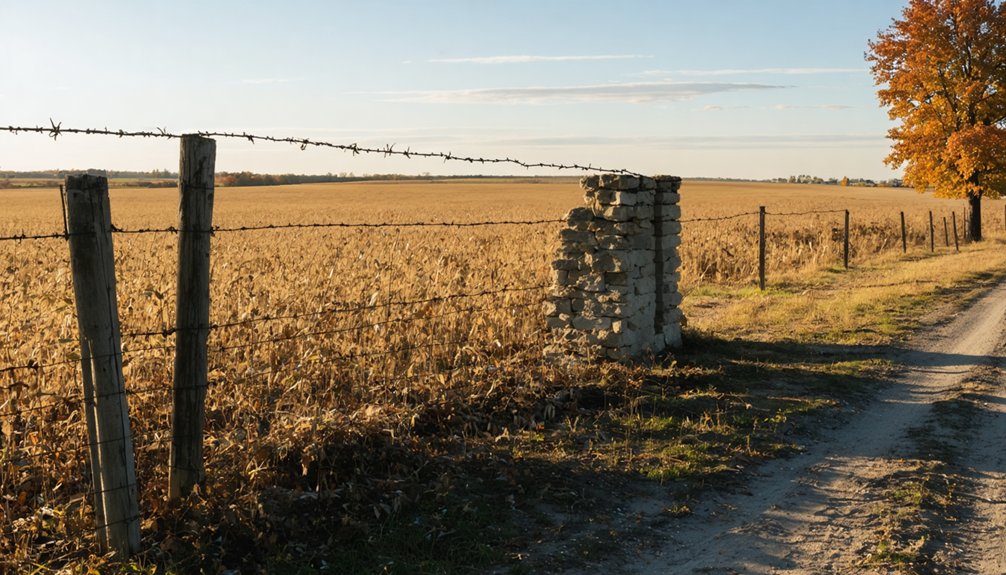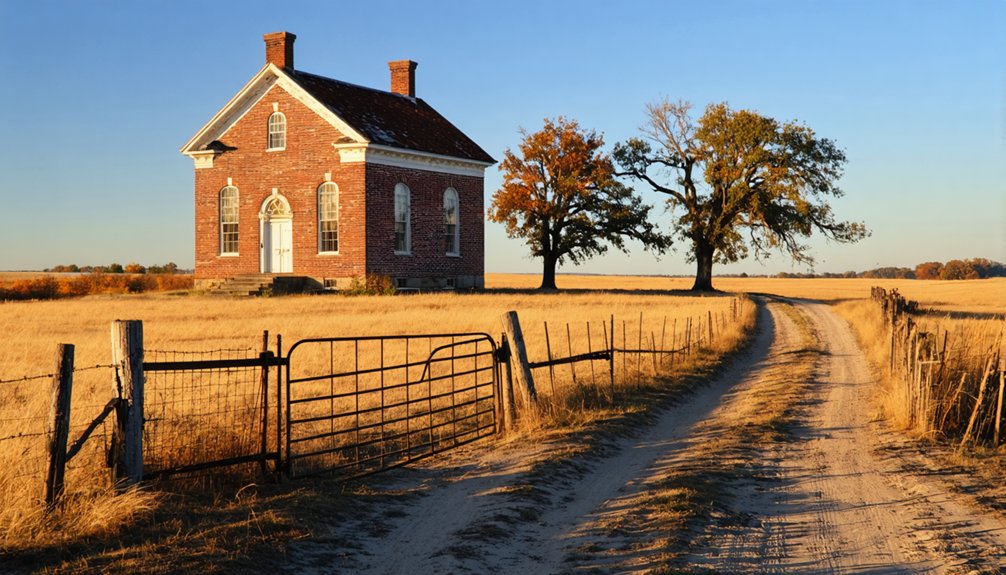
You’ll find the best conditions for exploring Illinois ghost towns during fall, particularly September and October. The moderate temperatures and reduced rainfall make site access easier, while the autumn colors create stunning photography opportunities. Many locations like Funks Grove and Vishnu Springs are less crowded during this season, offering peaceful exploration opportunities. Keep in mind that some sites experience heavy fall rains, so checking weather forecasts and road conditions will help you make the most of your ghostly adventures.
Key Takeaways
- Fall (September-October) offers ideal exploration conditions with moderate temperatures, reduced rainfall, and enhanced visibility through wooded areas.
- Summer attracts larger crowds but provides reliable road access and extended daylight hours for exploring remote locations.
- Spring conditions are challenging due to heavy rains and muddy terrain, making it less suitable for ghost town visits.
- Winter provides excellent structure visibility but requires extra caution due to hazardous road conditions and limited accessibility.
- October is particularly popular for ghost town tourism, combining fall colors, paranormal activities, and organized historical walking tours.
Seasonal Weather Patterns for Ghost Town Exploration
While Illinois ghost towns can be explored year-round, understanding the state’s seasonal weather patterns will help you plan the safest and most rewarding visits.
Fall emerges as an ideal season, with first freezes now occurring later around October 15, giving you extended comfortable exploration time. You’ll find favorable conditions for seasonal photography, with moderate temperatures and reduced rainfall making site access easier. The catastrophic impact of major flooding in towns like Valmeyer serves as a reminder to avoid exploration during heavy fall rains.
Spring brings challenging conditions with heavy rains and muddy terrain that can limit ghost town history documentation.
Summers are becoming increasingly hot and dry, raising concerns about wildfires near wooden structures. During extreme heat waves, consider exploring warming centers like the Oak Lawn Pavilion that preserve local history.
Winters, though warmer than historically recorded, still pose risks with polar vortex events capable of plunging temperatures to -31°F. Additionally, shorter winter days considerably reduce your exploration time at these historic sites.
Peak vs. Off-Peak Visitation Windows
To maximize your ghost town experience in Illinois, understanding peak and off-peak visitation patterns proves essential for planning.
Summer draws crowds to photogenic locations like Funks Grove, where historic buildings and tree-lined paths offer prime ghost town photography opportunities. Fertile land and timber attracted settlers to establish Funks Grove in 1824, creating a rich historical backdrop for visitors. During haunted season, Alton becomes a hub for seasonal ghost hunting enthusiasts, featuring popular trolley tours and paranormal investigations at locations like McPike Mansion. The mansion’s underground railroad activities have contributed to its reputation as one of the most haunted places in the region.
Funks Grove’s historic charm and Alton’s haunted mansions draw summer crowds seeking the perfect paranormal photo opportunity.
For a more solitary experience, consider visiting during off-peak periods. You’ll find peaceful exploration at lesser-known sites like Rauchfuss Hill State Recreation Area, where historic steps and Ohio River overlooks await.
Remote locations such as Vishnu Springs and Progress offer ideal conditions for undisturbed visits. Year-round accessibility exists in partially inhabited ghost towns like Cairo, Buda, and Old Shawneetown.
Road Conditions and Site Accessibility
Since Illinois ghost towns sprawl across diverse terrain and weather zones, you’ll need to carefully monitor road conditions throughout the year for safe access.
Road accessibility varies considerably with seasonal changes, particularly during winter months when heavy snow can impact northern and central regions. In winter storms, deteriorating conditions often begin at night and can severely limit ghost town accessibility. The IDOT website receives one to two million visits during winter weather events from travelers checking conditions.
- Track real-time site conditions through gettingaroundillinois.com’s interactive map, which uses simple red, yellow, and green indicators to show road status across 45,000 lane miles.
- Plan winter visits cautiously, as snowfall can reach 15 inches in northwestern areas and 12 inches in central regions.
- Spring and summer offer ideal road accessibility, with most rural routes clear and well-maintained.
- Use IDOT’s year-round construction maps and district updates to navigate to remote locations, especially when traveling on county roads to lesser-known ghost town sites.
Natural Hazards and Safety Considerations
When exploring Illinois ghost towns, you’ll need to monitor weather conditions carefully, as many abandoned sites lie in flood-prone areas with unstable structures that become especially dangerous during storms.
You should check local forecasts and river levels before visiting, maintain emergency communications access, and keep basic supplies like flashlights and first aid kits handy in case of sudden weather changes. This is particularly important for sites like Shawneetown on Ohio which faces recurring flooding issues.
It’s essential to watch for wildlife that may have taken residence in abandoned buildings, including snakes and feral animals, while staying alert to potential structural hazards like unstable floors or collapsing walls. Vishnu Springs visitors should exercise extra caution since the site’s three-story hotel remains are particularly precarious.
Wildlife Encounter Prevention Tips
Although ghost towns offer fascinating glimpses into Illinois’ past, visitors must take precautions to prevent unwanted wildlife encounters during their explorations. Understanding basic wildlife safety and animal behavior is critical for a successful visit.
You’ll want to minimize attracting animals to your exploration area while maintaining a respectful distance. During evening hours, be especially alert since white-tailed deer are most active at dusk. When exploring abandoned buildings, look out for field mice seeking shelter, particularly in colder months.
- Never feed wildlife, as it’s illegal under Illinois Administrative Code and leads to dangerous habituation.
- Secure all food and trash in sealed containers, and never leave pet food outside.
- Use binoculars for safe wildlife observation, and document encounters with a zoom lens only.
- If you spot large predators like cougars, wolves, or bears, report the sighting to Wildlife Illinois resources immediately.
Keep your distance and observe quietly to guarantee both your safety and the wellbeing of local wildlife.
Weather-Related Hazard Awareness
Beyond wildlife encounters, Illinois ghost towns present serious weather-related risks that can turn an exploration dangerous or even deadly.
You’ll need to carefully monitor tornado hazards during spring months, when devastating storms like the 1917 Mattoon-Charleston F4 tornado and 1925 Tri-State Tornado historically struck with catastrophic force.
Major flooding risks also threaten abandoned sites, particularly along the Mississippi and Ohio Rivers where towns like Valmeyer and Old Shawneetown were destroyed by rising waters.
Plan your visits during late summer or early fall when weather patterns are typically more stable. Check forecasts for potential thunderstorms, and avoid exploring during severe weather warnings.
Remember that many of these sites were abandoned precisely because of their vulnerability to extreme weather events.
Emergency Access Considerations
Exploring Illinois ghost towns requires careful consideration of emergency access and response capabilities. When venturing to these remote locations, you’ll need to plan ahead for visitor safety and understand local emergency protocols, as services may be limited or distant.
- Research and document the nearest emergency medical facilities and estimated response times before visiting any ghost town sites.
- Notify local authorities or property owners of your planned exploration, as some locations may require permits or have specific access restrictions.
- Check road conditions and seasonal accessibility, since weather can impact emergency vehicle access to remote areas.
- Carry emergency supplies and maintain reliable communication methods, as cell service can be unreliable in abandoned town locations.
Remember that ghost town exploration comes with inherent risks, and being prepared for emergencies is essential for a safe adventure.
Historical Structure Preservation Status
You’ll find Illinois ghost towns‘ historic structures facing significant weathering challenges, with many buildings showing extensive deterioration from decades of exposure to the elements.
The remaining features typically include partial walls, foundations, and in some cases intact but endangered structures like the Mirac Caverns barns found across several counties.
While preservation efforts through organizations like Landmarks Illinois have successfully saved over 26,000 historic places in recent years, many ghost town structures continue to need immediate preservation attention as identified in the 2025 Most Endangered Historic Places list.
Weathering Impact on Buildings
Illinois ghost towns face mounting preservation challenges from severe weather patterns that threaten their historical structures.
The weathering effects from climate change create significant risks to the structural integrity of these remnants of the past.
You’ll notice these major impacts on ghost town buildings:
- Frequent flooding and intense rainfall erode foundations and riverbanks, with 25% of historic districts experiencing floods every five years.
- Drought cycles followed by heavy rains accelerate structural degradation and soil erosion.
- Agricultural practices near ghost towns leave historical sites more vulnerable to erosion damage.
- Climate projections show these preservation challenges will intensify, with 5-15% of cultural heritage already lost.
When you’re exploring these sites, you’ll see firsthand how weather patterns are reshaping these historic structures, making preservation increasingly difficult.
Remaining Structural Features
Historical remnants scattered across abandoned Illinois settlements tell compelling stories through their surviving structures.
You’ll find architectural significance in places like the Benjaminville Friends Meeting House, which stands as a symbol of 19th-century Quaker settlements, and the Capital Hotel, reflecting turn-of-the-century resort development.
The lime kiln at Griggsville Landing preserves the historical context of river commerce, while New Philadelphia’s archaeological remains reveal significant town planning patterns.
Each site offers unique insights into Illinois’ past.
The Benjaminville Meeting House and its burial ground remain on the National Register of Historic Places, while the transformation at Old Valmire shows how mid-20th-century development reshaped rural communities.
These preserved structures serve as crucial links to understanding settlement patterns and economic development throughout the state’s history.
Preservation Efforts Today
While many ghost towns face the risk of permanent loss, dedicated preservation organizations across Illinois have launched significant initiatives to protect these historical treasures.
You’ll find preservation challenges being met head-on through community engagement and strategic partnerships.
- The National Register of Historic Places now protects numerous ghost town structures, offering tax incentives and preventing destruction during state-funded projects.
- Recent preservation wins include saving historic barns along Route 66, with special focus on the upcoming 2026 centennial celebrations.
- Organizations like Landmarks Illinois identify endangered sites annually, successfully preventing demolitions through advocacy.
- You can participate in walking tours and podcasts that highlight restored sites, contributing to increased public awareness and support for preservation efforts.
Photography and Documentation Opportunities
As ghost towns across Illinois face ongoing deterioration, photographers flock to these abandoned sites to capture their haunting beauty and historical significance.
You’ll find ideal shooting conditions during overcast days in September and October, when soft, diffused light reveals intricate architectural details without harsh shadows.
Photography techniques that work particularly well include using wide-angle lenses for extensive townscapes and black-and-white format to emphasize structural decay.
Wide-angle lenses and monochrome photography reveal the stark reality of abandoned places, capturing their deteriorating grandeur in compelling detail.
While practicing documentation ethics, you can explore iconic locations like Cairo’s Gem theater, with its intact marquee, or Vishnu Springs’ historic health resort.
The Hello Peoria Building offers unique compositions with its giant murals and window sculptures.
Remember that your images serve as vital historical records, preserving these vanishing structures for future generations before demolition or natural decay claims them forever.
Local Events and Historical Tours Schedule
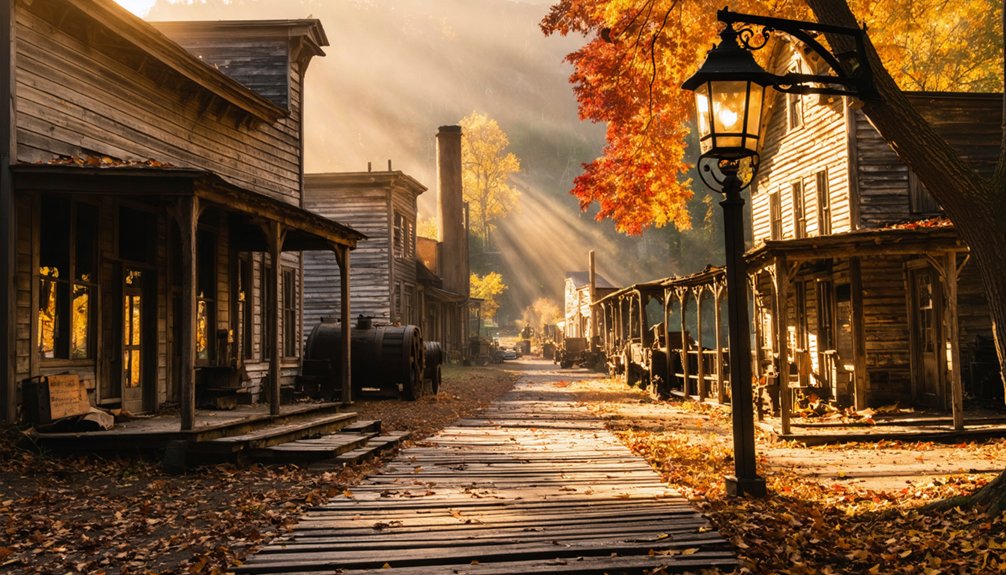
You’ll find the busiest ghost tour season runs from spring through fall, with October bringing peak attendance and special Halloween events across Illinois’s most haunted locations.
During summer months, you can join evening walking tours in Galena, Alton, and Chicago that combine paranormal investigations with local history and architecture.
Winter offers unique opportunities for indoor historical programs at locations like the DeSoto House Hotel and Old Joliet Prison, where smaller crowds allow for more intimate exploration of these historic sites.
Peak Tour Season Activities
When planning your visit to Illinois’ ghost towns during peak season, you’ll find a rich calendar of historical tours and local events that bring these haunted destinations to life.
From bustling antique shopping in Galena to paranormal investigations in Alton, each destination offers unique experiences that peak during specific times.
- Experience nightly ghost tour highlights in Alton, where you’ll use EMF detectors while exploring Underground Railroad sites and Civil War history.
- Navigate through Galena’s 125+ antique shops along brick-lined streets, though be prepared for challenging parking.
- Join costumed interpreters in Nauvoo for authentic 19th-century pioneer reenactments and wagon rides.
- Trek through Starved Rock’s 18 canyons, but book your lodge stays months ahead for weekend visits during fall color season.
Offseason History Events
Despite limited seasonal operations during winter months, dedicated history enthusiasts can still explore Illinois’ ghost towns through specialized offseason programming.
You’ll need to carefully research and plan ahead, as many historical tours operate on reduced schedules during the quieter months. While thorough offseason event calendars aren’t widely available, you can contact local historical societies directly to inquire about special winter programs and guided visits.
The Haunted Galena Tour Company exemplifies the seasonal nature of ghost town tourism, with their scheduling information released periodically for upcoming seasons.
To maximize your offseason experience, it’s recommended to reach out to specific sites and tour operators in advance. Though programming may be limited compared to peak season, winter visits often provide unique opportunities for more intimate historical exploration with smaller crowds.
Wildlife Encounters and Environmental Factors
Exploring Illinois ghost towns requires careful consideration of the diverse wildlife and environmental conditions you’ll encounter throughout the year.
Wildlife diversity ranges from deer and foxes to birds of prey, while seasonal changes dramatically affect visibility and accessibility.
Illinois wilderness teems with diverse creatures, from elusive foxes to soaring raptors, each season revealing new glimpses of untamed life.
- You’ll find ideal wildlife viewing during autumn when falling leaves reveal more animal activity, though the foliage can create navigation challenges.
- Dense tree canopies create perpetual dusk conditions, especially in old-growth forest sections where ghost towns are hidden.
- Spring and summer bring active bee populations and increased insect activity near water sources and blooming flora.
- Winter’s bare trees offer the best visibility through wooded areas, though you’ll need to watch for hazardous ground conditions and unstable structures beneath the leaf litter.
Recommended Geographic Routes by Season
The strategic planning of ghost town routes across Illinois enhances your chances of successful exploration throughout the year.
You’ll find spring’s mild weather perfect for exploring Williamson County’s ghost town legends along the Southern Illinois Route, while summer opens up opportunities in Old Westville and Makanda with their mining heritage.
Fall’s crisp temperatures and falling leaves reveal hidden foundations along the Eastern Illinois Drive through Horace and Lemmon.
For winter exploration tips, focus on the Protected Valley Stops like Kedron Valley, where southern locations see minimal snow.
Each season offers distinct advantages: spring’s clear visibility, summer’s extended daylight, fall’s revealing foliage, and winter’s firm ground access.
Plan your route according to these seasonal patterns to maximize your ghost town discoveries.
Site-Specific Seasonal Highlights
While each ghost town in Illinois holds unique appeal, seasonal conditions dramatically affect your visiting experience at specific sites. Understanding the seasonal highlights will help you maximize your ghost town photography opportunities and witness stunning seasonal flora displays.
- Cardiff’s coal mining remnants are best captured in fall when foliage frames the ruins, while spring delivers stunning wildflower blooms around abandoned structures.
- Benjaminville’s Quaker settlement remains stand out against winter snow, revealing hidden foundation patterns typically obscured in warmer months.
- You’ll find ideal conditions at Vishnu Springs during summer, when stable weather allows safe exploration of the spring-fed hotel ruins.
- Old Valmeyer’s flood-ravaged foundations emerge during summer’s low water levels, while Sangamo Town’s prairie remnants shine brightest in spring, highlighting the last surviving structures.
Frequently Asked Questions
Are Overnight Stays Permitted in Any of Illinois’ Ghost Towns?
Like moth-eaten memories, Illinois’ ghost towns don’t permit overnight camping, as they’re protected historical preservation sites. You’ll need to stay at nearby hotels or campgrounds while exploring these abandoned places.
What Photography Equipment Is Allowed Inside Protected Ghost Town Structures?
You can bring basic cameras and tripods with owner permission, but you’ll need to keep equipment minimal. Don’t exceed fifteen digital photos per structure when documenting National Register sites.
Do Any Ghost Towns Require Entrance Fees or Special Permits?
Like a refreshing change, you’ll find most Illinois ghost towns are free to explore. Lincoln Home requires no entrance fee, just free tour tickets, while other sites don’t have special permit requirements.
Are Metal Detectors Allowed at Illinois Ghost Town Sites?
You can’t use metal detectors at most Illinois ghost towns due to historic preservation laws. You’ll need landowner permission for private sites and permits are prohibited at protected locations.
Which Ghost Towns Have Guided Tours Versus Self-Guided Exploration Only?
You’ll find guided tours in Galena and Alton’s ghost towns, while most abandoned Illinois townships offer only self-guided exploration. Major sites like Graceland Cemetery let you choose between both options.
References
- https://www.ghosttowns.com/states/il/il.html
- https://www.youtube.com/watch?v=93k0qtvzkn4&vl=en-US
- https://www.onlyinyourstate.com/experiences/illinois/creepy-ghost-towns-il
- https://freepages.rootsweb.com/~gtusa/history/usa/il.htm
- https://www.geotab.com/ghost-towns/
- https://www.atlasobscura.com/things-to-do/illinois/abandoned
- https://drloihjournal.blogspot.com/p/lost-towns-of-illinois-series.html
- https://www.freakyfoottours.com/us/illinois/
- https://www.abandonedspaces.com/towns/natural-disaster-ghost-towns.html
- https://patch.com/illinois/oaklawn/polar-vortex-freezes-chicagoland-ghost-town-1-year-later