You’ll find autumn the prime season to explore Maryland’s ghost towns, with temperatures averaging 60-70°F and thinning foliage that reveals hidden structures. Fall’s dry conditions improve trail accessibility, particularly in Allegany and Garrett counties, while offering enhanced photography opportunities during “golden hour” lighting. You’ll encounter fewer crowds than summer months, and many locations coordinate with seasonal ghost tours and cultural events. The crisp weather and historical ambiance create ideal conditions for uncovering Maryland’s abandoned treasures.
Key Takeaways
- Fall offers optimal ghost town exploration with thinning foliage, comfortable temperatures, and enhanced visibility of hidden structures and pathways.
- Winter provides unique photography opportunities with less crowding and safer access to coastal ghost town sites.
- Spring should be avoided due to heavy precipitation, muddy trails, and increased risks of flooding in both coastal and mountainous regions.
- Summer mornings before 10 AM are ideal for exploring Central Maryland ghost towns to avoid dangerous heat conditions above 95°F.
- October combines peak fall foliage with popular haunted history tours across multiple ghost town locations throughout Maryland.
Peak Season Vs Off-Season Travel Benefits
While Maryland’s ghost towns offer year-round intrigue, the stark contrast between peak and off-season visits can greatly impact your experience.
During peak season, you’ll face significant challenges as coastal towns swell with tourists – Ocean City alone jumps from 7,000 to over 300,000 visitors on summer weekends. Popular destinations like Chesapeake Beach see their marinas overflow with boats and require restaurant reservations days in advance. You’ll encounter parking scarcity, shoulder-to-shoulder crowds, and clogged traffic in historic areas. Halloween season brings additional crowds to haunted locations for legend tripping activities.
Off-season tranquility presents a different story. Winter transforms bustling destinations into peaceful havens, where you can explore without fighting crowds or searching endlessly for parking.
You’ll find ghost town sites like Fort Ritchie more accessible, and legend-tripping locations such as Point Lookout less crowded. The shoulder seasons also offer ideal conditions for exploring abandoned places while avoiding both peak tourism challenges and harsh winter weather.
Weather Patterns & Trail Accessibility
Because Maryland’s diverse topography creates distinct weather patterns across its regions, you’ll need to plan ghost town visits according to local conditions.
Western Maryland’s ghost towns offer the most reliable winter exploration opportunities, while Eastern Shore locations face coastal flooding challenges. Due to recent weeks of winter weather conditions, many trails are currently covered in snow and ice.
You’ll find spring brings heavy precipitation and muddy trail conditions statewide, particularly in Allegany and Garrett counties where flash floods can occur.
Summer heat poses significant risks in central Maryland, where temperatures frequently exceed 95°F, making early morning visits essential. Cities like Baltimore regularly experience dangerous urban heat island effects, making summer exploration particularly challenging in metropolitan areas.
Fall presents varying windows for ideal visibility, with western highland ghost towns showing color changes first, while Eastern Shore locations peak later.
Consider these seasonal patterns when planning your visits, as trail conditions can dramatically impact site accessibility throughout the year.
Photography & Documentation Opportunities
Maryland’s ghost town photographers will find rich opportunities along the 2.7-mile Alberton Road trail, where architectural ruins tell stories of abandonment through their weathered facades.
You’ll discover multiple photographic techniques can capture the gothic-style remnants of Saint Stanislaus Kostka Catholic Church and the deteriorating Pentecostal Holiness Church. The site was originally known as Elysville before undergoing several name changes throughout its history.
Documentation strategies should include gravestone recordings in the adjacent cemetery, while structural photography can focus on the 1810 textile mill ruins and scattered building foundations.
Historical legacies endure in weathered headstones and crumbling mill walls, telling stories of lives and industry long past.
You’ll find compelling compositions where nature meets decay – the Patapsco River provides reflective backdrops, while seasonal foliage frames abandoned 1950s vehicles and architectural remnants.
Dawn and dusk lighting conditions particularly enhance the mysterious atmosphere of these historic structures, which have stood silent since Hurricane Agnes forced their abandonment in 1972.
Most visitors spend approximately two hours exploring the ghost town’s photographic possibilities.
Cultural Events & Ghost Town Tours
As darkness falls across abandoned settlements, you’ll discover a rich array of guided experiences through Maryland’s haunted history. The state offers year-round cultural experiences that blend historical fact with paranormal investigation, from the Eastern Shore to Frederick’s Historic District. DC Ghosts Tour leads visitors through the nation’s capital to uncover its eerie past.
- Eastern Shore tours operate most weekends through Chesapeake Ghost Tours, covering 11 towns with tales of watermen, pirates, and local legends ($20 adults, $18 children).
- Historic Ellicott City and Savage Mill present 90-minute haunted history walks featuring documented encounters with child spirits and the famous Rebecca ghost.
- Frederick’s Historic District, home to Maryland’s oldest ghost tour, reveals nearly 300 years of documented paranormal activity through war stories, executions, and revenge tales.
These curated experiences peak during fall months, culminating in Halloween events across Hagerstown, Baltimore, and Solomons Island. Visitors can explore haunted locations on Friday and Saturday nights through guided Chesapeake Ghost Tours, diving deep into the mysteries of Chesapeake Country.
Seasonal Safety Considerations
When planning your ghost town visits in Maryland, you’ll need to account for significant seasonal hazards like flash flooding in western counties during spring and extreme heat waves across Baltimore and the Eastern Shore in summer.
You’ll face the greatest weather-related risks during spring months in Allegany and Garrett counties, where sudden 5-inch rainfall events can create dangerous conditions in remote areas.
Sea levels have risen at 1.4 inches per decade, making coastal ghost towns increasingly vulnerable to flooding and erosion.
For safer exploration, consider winter visits to coastal ghost towns and abandoned sites along the Eastern Shore, where paved trails and maintained waterfront access remain accessible despite colder temperatures. Visitors can enjoy the added benefit of unique winter seafood offerings while exploring these historic locations.
Weather-Related Travel Hazards
Seasonal weather patterns create distinct hazards for ghost town explorers throughout Maryland, with each period presenting unique safety challenges.
Weather-related hazards range from winter’s freezing temperatures to summer’s extreme heat, while seasonal climate impacts affect site accessibility and structural stability year-round.
- Winter brings temperatures below 32°F, creating treacherous ice formations on Patapsco River paths and limited visibility around abandoned structures due to shorter daylight hours.
- Spring and fall storms produce flash flooding, with sites like Daniels and Ellicott City particularly vulnerable to sudden water surges and mudslides.
- Summer heat waves push heat indices above 100°F, while coastal areas face additional risks from saltwater intrusion and shoreline erosion, especially at sites like Holland Island and Eastern Shore ghost forests.
Seasonal Wildlife Encounters
Beyond weather-related concerns, ghost town explorers must remain vigilant about wildlife encounters that vary throughout Maryland’s changing seasons.
Fall brings increased deer activity, particularly in Dorchester County’s ghost towns where Sika deer congregate during hunting season. You’ll need extra caution during spring and fall migratory periods when the nearby Blackwater National Wildlife Refuge attracts diverse waterfowl and marsh species.
Evening visits require heightened awareness as nocturnal wildlife behavior peaks after dusk. Summer’s dense forest canopy may limit visibility of active wildlife, while winter sees reduced animal activity due to hibernation and harsh conditions.
Understanding these seasonal migrations and wildlife behavior patterns will help you navigate ghost town exploration safely while respecting the natural inhabitants of these historic sites.
Remote Area Access Tips
Safe navigation of Maryland’s ghost towns requires careful attention to seasonal access conditions and proper route planning. As fall foliage thins, hidden pathways and abandoned structures become more visible, making it the prime season for exploration.
Trail access points often involve specific routes and parking restrictions that you’ll need to carefully note.
- Navigate to Daniels Ghost Town via Old Frederick Road to Johnnycake Road, following Hollofield Road to the designated parking area past the river crossing.
- Bring water and emergency supplies, as facilities are limited on remote trails.
- Use precise addresses and navigation tips to avoid getting lost, particularly when accessing sites like Four Locks or Fort Carroll, which require specific entry points.
Remember that many sites are in various states of disrepair, so maintain heightened awareness of your surroundings while exploring.
Historical Structure Preservation Status

Maryland’s historic preservation landscape reflects a complex mix of successes and losses across its ghost towns. While some sites like the Silver Spring B&O Station have achieved protected status through National Register listings and easements, others like Daniels Ruins have succumbed to both human decisions and natural disasters.
You’ll find that historic site preservation varies greatly across the state’s 13 certified heritage areas.
Montgomery County’s preservation efforts since the 1970s have helped safeguard nearly 1,000 historic resources, though many structures of architectural significance remain at risk.
The state’s 23 certified local governments actively manage preservation programs, but sites like Daniels demonstrate how quickly heritage can be lost.
While some church records and artifacts survive in archives, many physical remnants of Maryland’s ghost towns exist only in fragmentary form today.
Regional Crowd Patterns & Visitation Tips
You’ll need to carefully plan your ghost town visits in Maryland to avoid the busiest tourist seasons, which typically align with major holidays and summer weekends.
While historical sites tend to draw more visitors during temperate spring and fall months, winter can offer unique opportunities for photography and solitary exploration when buildings are more visible through bare tree coverage.
Consider scheduling your visits during weekday mornings or late afternoons to experience these abandoned places with minimal disruption from other tourists.
Peak vs. Off-Season Traffic
While ghost towns across Maryland welcome visitors throughout the year, distinct seasonal patterns shape the ideal times for exploration.
You’ll encounter the heaviest seasonal traffic during fall foliage season from September through November, when leaf-peepers flock to Appalachian locations like Daniels.
Summer months bring increased day-trippers from Baltimore and D.C., while Halloween draws crowds to supposedly haunted sites like Fort Ritchie.
For quieter ghost town exploration, consider:
- Winter months (December-February), offering uncrowded access to Garrett County sites
- Early spring (March-April), before Baltimore County locations experience tourism surges
- Weekday visits during peak seasons, reducing crowds by up to 50% at places like Harmony Grove
These off-peak times provide enhanced solitude and unrestricted access to Maryland’s abandoned historic sites.
Avoiding Tourist Rush Hours
Understanding daily and seasonal crowd patterns helps visitors maximize their ghost town experiences across Maryland’s historic sites. For ideal tourist timing, plan your explorations during weekday mornings at locations like Daniels Ghost Town, when fewer visitors are present.
You’ll find Civil War sites near Burkittsville less crowded during early hours, while avoiding the Halloween-season rush of paranormal enthusiasts.
For effective crowd management, consider visiting Point Lookout’s lighthouse during daylight hours rather than evenings when ghost hunters gather.
Autumn brings increased traffic to many locations, but you can dodge peak crowds by exploring mid-week. At Patapsco Valley State Park, schedule your visits during non-weekend periods to enjoy a more serene experience.
Historical sites like Fort McHenry are best explored during early morning hours before tour groups arrive.
Transportation & Road Conditions by Season
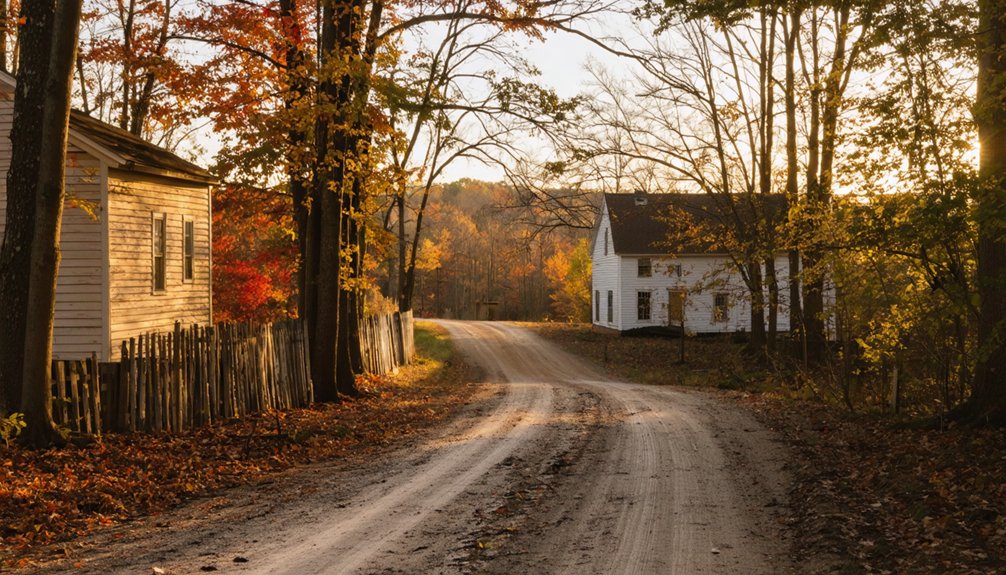
As autumn descends upon Maryland’s ghost towns, late October emerges as the prime time for traversing abandoned roads and pathways.
You’ll find excellent visibility as the foliage thins, revealing hidden structures and road remnants that summer growth typically conceals. Road maintenance challenges become less severe during fall’s drier conditions, though you’ll need to carefully assess structural integrity, especially at historic bridge crossings.
Fall’s thinning foliage exposes Maryland’s forgotten pathways, while drier conditions make navigation safer, though historic bridges demand extra caution.
- Avoid spring visits when snowmelt and heavy rains create dangerous flooding conditions, particularly at submerged sites like Old Liberty Road.
- Skip summer explorations when dense vegetation and heat-buckled pavement pose accessibility challenges.
- Plan winter excursions carefully – while dormant vegetation improves visibility, ice and snow make deteriorating surfaces treacherous.
Frequently Asked Questions
Are Camping Facilities Available Near Maryland’s Ghost Towns?
You’ll find campgrounds at Susquehanna State Park near Lapidum’s ghost town, Point Lookout State Park, and Hagerstown KOA. Camping regulations vary, but each offers unique access to nearby attractions and haunted sites.
What Photography Permits Are Required for Abandoned Buildings in Maryland?
You’ll need private property owner permission and may require MPS permits for commercial photography. Urban exploration photography regulations vary – low-impact shoots need no permit, but high-impact commercial work requires approval.
Do Any Ghost Towns Offer Guided Night Tours?
Like forgotten whispers in time, you won’t find guided night tours in Maryland’s ghost towns. Instead, you’ll discover ghost tours and evening excursions through active historic districts and haunted neighborhoods.
Which Ghost Towns Allow Metal Detecting or Artifact Collection?
You’ll find Harmony Grove allows metal detecting under specific regulations. Remember to follow artifact collection ethics and obtain permits where required. Always report century-old finds to archaeological authorities.
Are There Wheelchair-Accessible Ghost Town Sites in Maryland?
With over 20 documented ghost towns in Maryland, you’ll find no fully wheelchair-accessible sites. Limited mobility access plagues historic locations like Daniels and Forest Haven due to uneven terrain and lack of accessibility infrastructure.
References
- https://kids.kiddle.co/List_of_ghost_towns_in_Maryland
- https://www.youtube.com/watch?v=Obb_sDHYm9A
- https://www.atlasobscura.com/things-to-do/maryland/abandoned
- https://www.geotab.com/ghost-towns/
- https://midatlanticdaytrips.com/2016/03/where-you-should-go-to-see-ruins-in-the-mid-atlantic/
- https://baltimorefishbowl.com/stories/marylands-spookiest-ghost-towns/
- https://chesapeake-inspired.com/top-haunted-towns-in-maryland/
- https://decorhint.com/marylands-coastal-towns-where-locals-notice-the-tourist-takeover/
- https://marylandroadtrips.com/legend-tripping-destinations-in-maryland/
- https://myfamilytravels.com/maryland-bay-towns-tourists-made-impossible-to-enjoy/