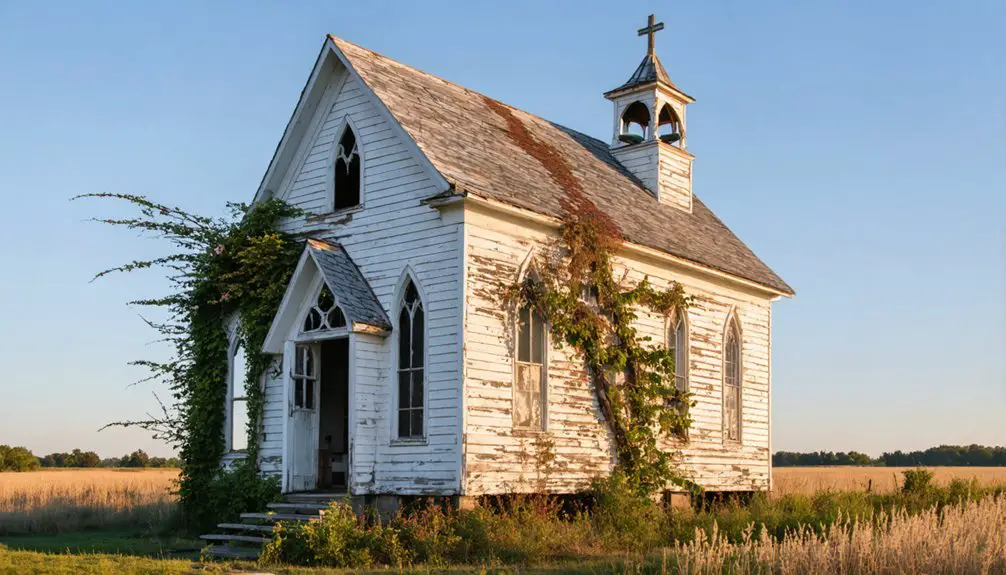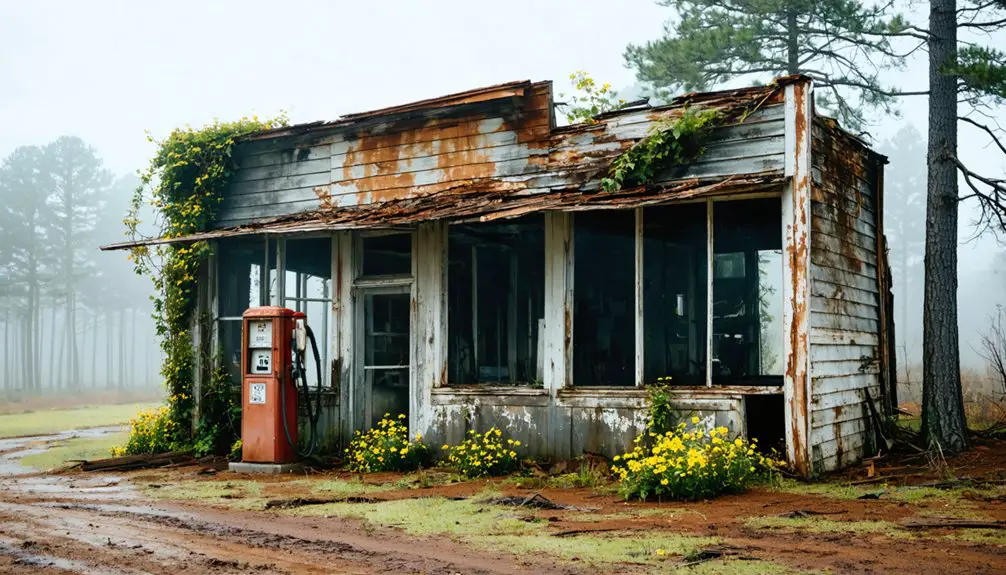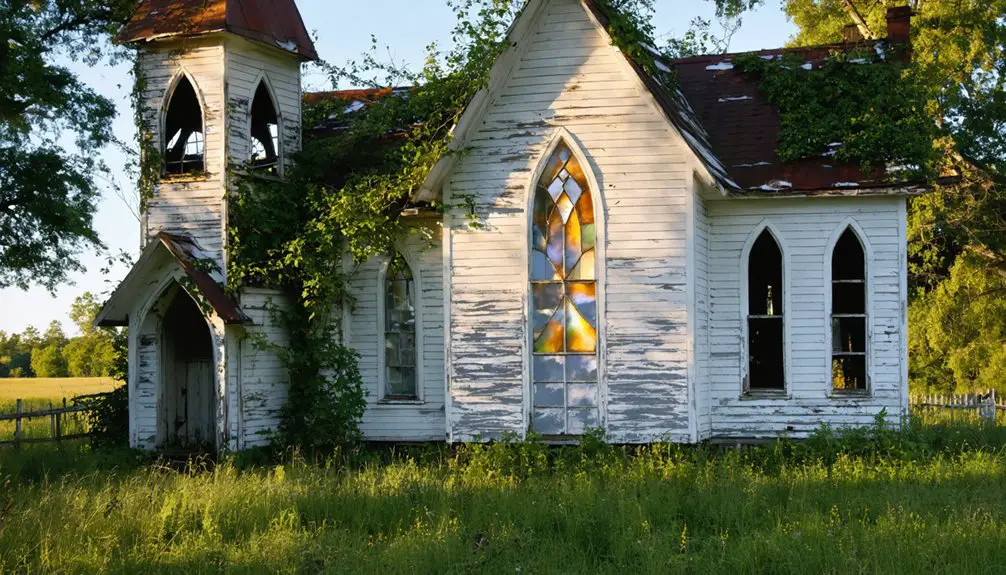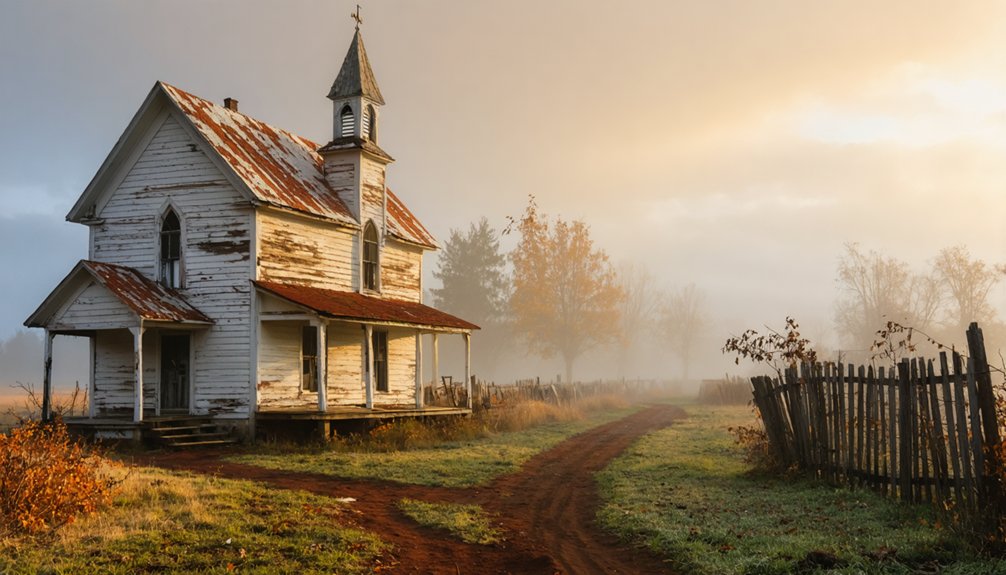
You’ll find winter (December through February) offers the safest and most rewarding conditions for exploring Mississippi’s ghost towns. With temperatures averaging 45-60°F, dormant vegetation reveals hidden architectural details, while reduced snake activity makes navigation safer. Clear winter skies provide excellent photography opportunities, especially after ice storms. The season’s improved visibility lets you examine flood lines and structural features typically obscured by summer foliage. Careful timing around winter storms will facilitate access to even more historical treasures.
Key Takeaways
- Winter months offer the safest exploration conditions with reduced snake activity, clear views through dormant vegetation, and comfortable temperatures.
- Schedule visits between December and February when architectural details are most visible due to minimal foliage coverage.
- Early morning hours before 10 AM are ideal during any season to avoid extreme heat and dangerous weather conditions.
- Plan explorations after storm systems have cleared for stable conditions and optimal photography opportunities.
- Avoid summer months when heat indexes can reach dangerous levels and seasonal storms create hazardous muddy conditions.
Spring Weather Conditions for Ghost Town Exploration
While spring offers milder temperatures for exploring Mississippi’s ghost towns, the season presents unique challenges that require careful preparation and timing.
You’ll encounter muddy roads with persistent potholes, making SUVs or trucks essential for safe navigation. The twelve-mile journey to Rodney requires vehicles capable of handling mixed blacktop and dirt.
Spring snake precautions are critical, as venomous copperheads and cottonheads become highly active, particularly near cemeteries and river bluffs. These adapted snakes often don’t rattle, increasing the risk. The Presbyterian Church, as a lone original structure, offers one of the few safe resting spots during exploration.
Beware of silent copperheads and cottonheads in spring, lurking near cemetery grounds and river edges without warning rattles.
Flooding awareness is paramount during spring visits. The Mississippi River’s seasonal rise can submerge buildings up to their windows, with historic floods documented since 1912.
You’ll need to monitor weather patterns carefully, as spring shifts create unstable ground conditions.
Cell service remains limited, so bring necessary supplies and plan alternate routes before commencing on your ghost town expedition.
Fall Season Photography Opportunities
As autumn’s golden light bathes Mississippi’s abandoned settlements, Rodney’s historic ruins offer photographers exceptional opportunities to capture the essence of a once-thriving river port.
The town’s rich history as a major economic port between New Orleans and Memphis adds historical depth to every photograph.
Fall color enhances the ghost town‘s weathered structures, while cooler temperatures make exploring more comfortable than summer’s intense heat.
For best photography results at Rodney, consider these essential strategies:
- Visit during golden hour (early morning or late afternoon) to maximize dramatic shadows
- Use wide-angle lenses for capturing expansive views of hollow buildings
- Explore the hillside cemetery after brief rain showers for moody atmospheric shots
The Presbyterian Church, with its Civil War cannonball damage, provides compelling compositions against autumn skies.
The town’s Federal and Greek Gothic Revival architecture creates striking subjects for historical documentation.
Nearby Windsor Ruins and Cane Ridge Cemetery extend your photographic journey through Mississippi’s haunting past.
Summer Safety and Accessibility Tips
You’ll need to carefully monitor the heat index during Mississippi’s intense summer months, as temperatures combined with high humidity can create dangerous conditions while exploring remote ghost town locations.
The summer storm season brings additional challenges, with heavy rains transforming dirt roads into muddy hazards and increasing the risk of flash flooding around historic structures.
When planning your visit, check weather forecasts several days in advance and pack essential supplies like water, snake-proof boots, and a reliable offline GPS, since cell service remains unreliable in these isolated areas.
Winter visits offer the safest experience since fewer snakes are active during the colder months.
This is particularly important at sites like the Rodney Baptist Church, where frequent flooding has led to increased snake activity inside the building.
Heat Index Precautions
Because Mississippi’s ghost towns present unique challenges during peak summer months, understanding the heat index precautions is essential for safe exploration.
You’ll encounter “feels like” temperatures reaching 112°F, which can trigger severe heat fatigue and humidity effects. When these conditions combine with uneven terrain, your body’s cooling mechanisms become compromised. Vulnerable populations should avoid ghost town visits during extreme heat events.
To protect yourself during ghost town visits, follow these critical guidelines:
- Schedule explorations before 10 AM when heat indices remain below threshold
- Carry a minimum of 2 liters of water plus electrolyte supplements
- Rest in shaded areas every 20 minutes when heat index exceeds 106°F
Your body needs time to acclimate to Mississippi’s intense summer conditions.
Monitor local heat forecasts and consider postponing visits when consecutive days of extreme heat are predicted.
Access During Storm Season
While Mississippi’s ghost towns offer fascinating glimpses into the past, storm season creates significant access challenges from June through September.
You’ll need to carefully plan your visit during these months, as flooding can make Rodney’s historic sites inaccessible. The Baptist Church regularly fills with water up to its windows, and surrounding roads become treacherous mud pits. The route to Port Gibson columns presents similar challenges.
For storm season safety, you’ll want to drive an SUV or truck, as standard vehicles can’t handle the deteriorating road conditions.
Don’t rely on cell service for navigation or emergency contact – download offline maps before your trip. Watch for snakes seeking higher ground during floods, and stay on designated paths.
Remember that all structures are private property, and water damage makes them particularly unstable during the rainy season.
Winter Visitation Advantages
You’ll find the clearest views of Rodney Ghost Town‘s historic structures during winter months when dense foliage recedes and visibility improves across the site.
Similar to how over 200 ghost towns can be found throughout Oklahoma, Mississippi’s abandoned settlements offer unique historical perspectives during the winter season.
As with the area’s mound builders, these early settlements required significant community effort to establish and maintain their structures.
Winter’s cooler temperatures create ideal conditions for exploring the red brick Presbyterian church and accessing the steep path to the 200-grave cemetery dating to 1828.
Your winter visit also aligns with preservation events, like the February 2019 cleanup that drew 65 participants to maintain these historic grounds.
Clear Weather Access
The clear winter skies of Mississippi offer distinct advantages for exploring the state’s abandoned settlements and ghost towns.
You’ll find excellent photography conditions during periods between ice storms, when visibility reaches its peak and daylight hours start lengthening. Clear weather strategies involve monitoring weather patterns to identify stable windows for exploration.
For the best clear weather access, focus on these critical timing elements:
- Plan visits during dry intervals between winter precipitation events
- Schedule explorations after storm systems have cleared, bringing stable atmospheric conditions
- Target late winter months when daylight hours extend longer
You’ll discover that post-storm clearing typically creates prime conditions for capturing architectural details and historical landmarks, while maintaining safe road conditions for reaching these remote locations.
Preserved Site Visibility
Winter’s dormant vegetation reveals Mississippi’s ghost towns in ways summer visitors rarely experience.
You’ll spot architectural details normally hidden by dense foliage, like the distinctive brickwork of old trolley lines and preserved signage from bygone businesses. The seasonal preservation advantages become clear at sites like Mt. Holly, where the massive Gingko tree’s winter leaf drop exposes the antebellum structure’s two-story details.
These visibility advantages let you examine vital structural conditions, from flood damage at Rodney Presbyterian Church to the deteriorating common-bound bricks of historic buildings.
You can identify eight-inch asbestos tiles and study how freeze-thaw cycles affect 19th-century masonry. Winter’s reduced vegetation also helps preservation teams document flood lines and assess damage, making this season ideal for both casual explorers and serious historians.
Historical Events and Anniversary Dates
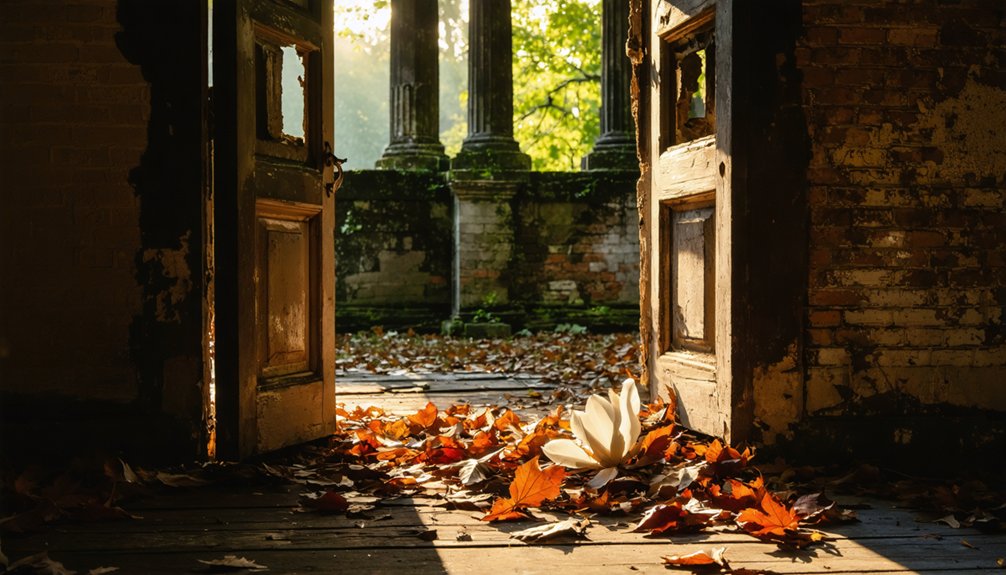
Marking significant dates in Mississippi’s ghost town history, Rodney’s timeline spans from its 1828 incorporation through pivotal moments like the 1863 Civil War church raid and its 1930 disincorporation by Governor Bilbo.
Once a thriving Mississippi river town, Rodney’s story echoes from its hopeful birth to its quiet fade into history.
You’ll discover the town’s most dramatic events centered around these key dates:
- September 12, 1863: Experience the Civil War drama at the Presbyterian Church, where Confederate forces captured Union sailors during Sunday service.
- 1852: Witness the devastation of the great fire that began in a hotel kitchen, destroying most of Rodney’s buildings.
- 1870: Observe the year when nature altered Rodney’s destiny as the Mississippi River shifted westward.
These dates offer you deeper insights into Rodney’s history, with preserved sites still bearing witness to these transformative events through visible cannonball marks and architectural remains.
Seasonal Road Conditions and Travel Planning
Planning your visit to Rodney’s ghost town requires careful consideration of seasonal conditions, since weather patterns dramatically impact accessibility throughout the year.
Winter offers the safest exploration window, with reduced snake activity and clear visibility through leafless trees to the Mississippi River from the cemetery.
You’ll navigate 12 miles of varying road surfaces from Highway 61, shifting between blacktop, gravel, and dirt paths. Your vehicle choice matters – while most cars can manage in dry conditions, you’ll want an SUV or truck after rainfall when mud and potholes become treacherous.
Before departing, check your cell carrier’s coverage and pack accordingly. The roads become particularly hazardous during heavy rains, so plan your visit during drier periods and stick to main thoroughfares to avoid getting stranded.
Peak Tourist Season vs. Off-Peak Benefits
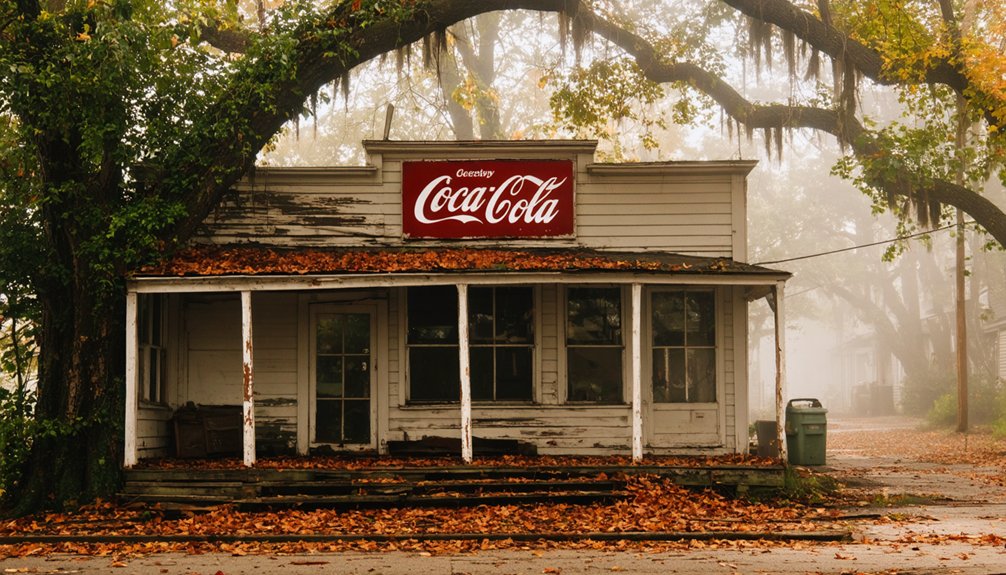
Though Mississippi ghost towns captivate visitors year-round, the stark contrast between peak and off-peak seasons greatly impacts your exploration experience.
Peak season crowds surge during summer months, with tourism reaching 43.7 million visitors statewide. You’ll encounter bustling heritage festivals and guided tours, but face intense competition for access to popular sites.
For the most authentic ghost town experience, consider these off-peak advantages:
- Winter visits offer genuine solitude among Rodney’s haunting ruins.
- Vacant buildings and lifeless streets become yours to explore without interruption.
- Remote Jefferson County locations become easily accessible without tourist traffic.
The off-peak solitude enhances the eerie atmosphere of these forgotten places, allowing you to step back in time and experience Mississippi’s abandoned towns as they truly exist – silent and undisturbed.
Weather Impact on Historic Structures
Weather conditions pose considerable challenges to Mississippi’s historic ghost towns, shaping both their preservation and your ability to explore them safely.
You’ll find evidence of weather’s destructive force at sites like Windsor Ruins, where tropical storms have necessitated extensive stabilization efforts to preserve its iconic columns. The weather resilience of these structures varies greatly – while Rodney Presbyterian Church’s hilltop location has helped it survive, recurring floods have devastated many lower-lying buildings in the area.
Weather ravages Mississippi’s ghost towns differently – hilltop structures endure while flooding claims those in valleys below.
Hurricane damage, particularly from Katrina in 2005, has reshaped many historic sites along the Gulf Coast, though flood restoration efforts have helped rebuild stronger structures.
When planning your visit, consider that seasonal threats like heavy rains can make access difficult, while summer brings additional challenges from wildlife, including timber rattlers in historic cemeteries.
Monthly Rainfall Patterns and Site Access
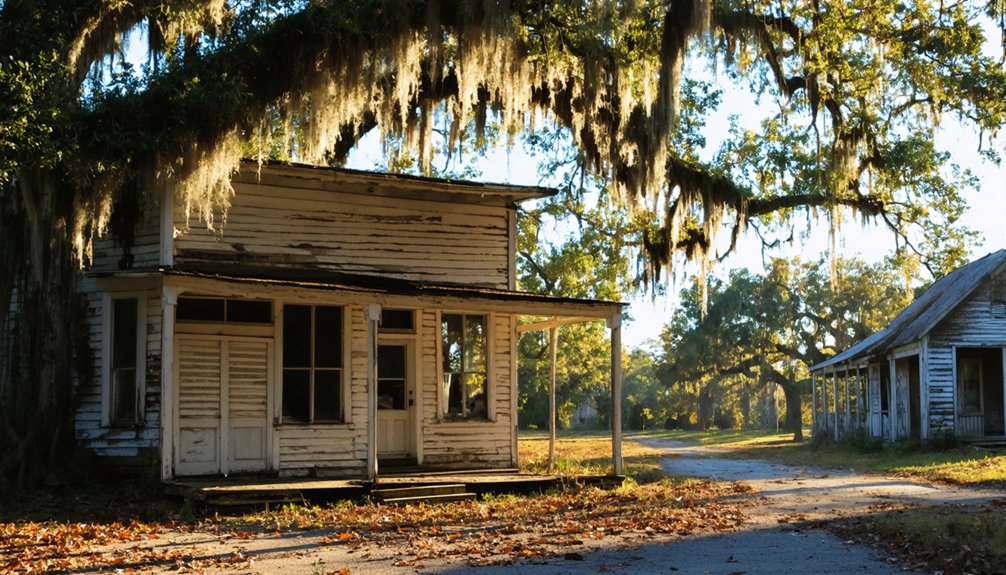
Understanding Mississippi’s monthly rainfall patterns is vital for exploring the state’s ghost towns, as precipitation levels directly affect site accessibility and preservation conditions.
Biloxi’s annual rainfall of 66.80 inches and Jackson’s 57.35 inches create specific windows for ideal ghost town visits.
For the best access to historic sites like Rodney Ghost Town, plan your visits during these lower rainfall periods:
- October – averaging 3.68-3.92 inches statewide
- September – inland areas receive only 3.03-3.48 inches
- May – relatively moderate with 4.23-5.49 inches
You’ll want to avoid July and June, when Biloxi receives over 7 inches of rain and flood risks increase near river-proximate ghost towns.
Recent precipitation trends showing a 0.62-inch increase per decade make timing your visit even more important.
Preservation Activities Calendar
Since preservation efforts in Mississippi’s ghost towns operate on varying schedules, you’ll need to coordinate your visits with local historical societies and preservation groups directly.
To access the most current preservation activities, contact the Mississippi Department of Archives & History, which oversees many restoration projects throughout the state’s abandoned settlements.
While no centralized calendar exists for ghost towns specifically, you’ll find valuable scheduling information through the Mississippi Preservation Alliance and regional historical societies.
These organizations frequently conduct archaeological surveys, structural stabilization work, and documentation projects at various sites.
Your best approach is to reach out to preservation groups in your target region at least a month before your planned visit. They can inform you about ongoing restoration work, scheduled archaeological digs, and any temporary access restrictions at specific ghost towns.
Frequently Asked Questions
Are There Any Guided Ghost Tours Available at These Abandoned Towns?
You’ll find guided ghost tour options at McRaven House and through Vicksburg Ghosts, but most abandoned towns like Rodney offer self-guided exploration rather than local tour guides leading scheduled visits.
What Paranormal Investigation Equipment Is Allowed at Mississippi Ghost Town Sites?
You’ll need explicit permission for paranormal tools like EMF meters, EVP recorders, and cameras at most sites. McRaven House and Rodney Church welcome investigation safety-compliant equipment during supervised visits.
Can Metal Detecting Be Done Legally in These Ghost Towns?
You can’t legally metal detect in Mississippi’s protected ghost towns due to historical artifact preservation regulations. You’ll need explicit permission for private ghost town sites and must follow strict metal detecting regulations.
Are Camping or Overnight Stays Permitted Near Any Ghost Towns?
You can camp overnight at Rocky Springs Ghost Town’s 22-site campground, which offers basic amenities like picnic tables and restrooms. You’ll need to follow camping regulations but won’t need advance reservations.
Which Ghost Towns Are Wheelchair Accessible With Maintained Pathways?
While you might hope for wheelchair ramps and accessible trails, Mississippi’s ghost towns, including Rodney, aren’t wheelchair accessible. The terrain, overgrown paths, and deteriorating structures make exploration impossible for wheelchair users.
References
- https://en.wikipedia.org/wiki/List_of_ghost_towns_in_Mississippi
- https://kids.kiddle.co/List_of_ghost_towns_in_Mississippi
- https://freepages.rootsweb.com/~gtusa/history/usa/ms.htm
- https://www.onlyinyourstate.com/experiences/mississippi/ms-ghost-towns
- https://mississippifolklife.org/articles/haunted-by-a-ghost-town-the-lure-of-rodney-mississippi
- https://www.geotab.com/ghost-towns/
- https://www.tripadvisor.com/Attraction_Review-g28945-d10045204-Reviews-Rodney_Ghost_Town-Mississippi.html
- https://www.youtube.com/watch?v=5LLwzfqC1xw
- https://theforgottensouth.com/rodney-mississippi-ghost-town-history-tour/
- https://theforgottensouth.com/rodney-presbyterian-church-history/