You’ll find spring offers the best conditions for exploring New Mexico’s ghost towns, with temperatures between 60-75°F and clear skies that enhance visibility of historic structures and artifacts. The mild weather lets you comfortably hike through mining ruins while desert wildflowers bloom across the landscape. Fall comes in as a close second choice, featuring stunning foliage and comfortable temperatures. Each season brings its own unique perspective on these fascinating remnants of the American frontier.
Key Takeaways
- Spring (March-May) offers ideal 60-75°F temperatures and blooming landscapes, making it the prime season for ghost town exploration.
- Fall provides comfortable temperatures and stunning foliage backdrops, particularly from late September through October.
- Summer visits should be limited to early mornings before 9 AM to avoid dangerous desert heat exceeding 90°F.
- Winter requires extensive preparation and should be avoided in high-elevation ghost towns due to hazardous snow conditions.
- Year-round accessible sites include Chloride and Lake Valley, though autumn and spring provide the most consistently comfortable visiting conditions.
Why New Mexico’s Ghost Towns Are Worth Exploring
While many abandoned settlements dot the American West, New Mexico’s ghost towns offer uniquely rich glimpses into the state’s wild frontier past.
You’ll discover the cultural heritage of mining boomtowns like Lake Valley and Chloride, where thousands flocked to strike it rich in silver mines. These sites tell tales of legendary outlaws – from Butch Cassidy’s Mogollon headquarters to Judge Roy Bean’s early days in Pinos Altos. White Oak’s No Scum Allowed Saloon remains a testament to the town’s colorful past as New Mexico’s second-liveliest settlement.
Step back in time at Lake Valley and Chloride, where silver dreams and outlaw legends shaped New Mexico’s wild frontier.
The historical significance runs deep, with preserved structures bearing witness to Apache conflicts, including the 1861 Battle of Pinos Altos led by Cochise. The boom-and-bust cycles of mining operations led to the eventual abandonment of these once-thriving communities.
You can explore authentic adobe buildings with gun holes, visit 1800s cemeteries, and step inside historic saloons. Each ghost town reveals a chapter of the American frontier, from silver rushes and outlaws to Native American raids and eventual abandonment.
Spring: The Prime Season for Ghost Town Adventures
You’ll find spring’s mild temperatures and extended daylight hours create perfect conditions for exploring New Mexico’s historic ghost towns without the harsh summer heat.
The season’s moderate climate helps preserve fragile adobe structures while providing clear visibility of petroglyphs and mining artifacts against blooming desert landscapes. Popular destinations like Shakespeare Ghost Town offer guided weekend tours during this comfortable season.
Spring thaw opens high-elevation access roads to remote sites like Mogollon, while pre-monsoon conditions keep dirt trails passable for reaching preserved structures in places like Chloride and Pinos Altos. Historical sites like Magdalena showcase the region’s rich mining and ranching heritage from the 1880s through the 1920s.
Pleasant Weather Benefits
Spring emerges as the perfect season for ghost town exploration in New Mexico, when temperatures settle into an ideal range of 60-75°F during daytime hours. You’ll find these conditions ideal for springtime exploration, allowing comfortable hiking through historical sites without summer’s intense heat or winter’s harsh cold. Like the scenic Ghost Ranch landscape, these abandoned settlements offer stunning views amid colorful rock formations. With over 400 ghost towns scattered across the state, you’ll have plenty of fascinating sites to discover.
Nighttime lows of 30-45°F make for invigorating evenings at camp.
Your outdoor adventures benefit from clear spring skies and minimal rainfall, typically just 1-2 inches monthly. You’ll encounter fewer weather disruptions when accessing remote locations like Loma Parda, and the dry conditions help preserve the adobe structures you’ve come to explore.
The moderate climate means you’ll need only basic gear – comfortable hiking shoes and layered clothing to adapt to daily temperature swings of 20-30°F.
Ghost Town Access Tips
Before venturing out to explore New Mexico’s fascinating ghost towns, thorough access planning proves essential for a rewarding spring expedition.
You’ll need to research private property boundaries carefully, as sites like Hagan, Coyote, and La Bajada sit on private land and require permission to visit.
Take essential safety precautions for these remote locations – pack plenty of water, food, and a first-aid kit. Your vehicle should be in top condition, as you won’t find gas stations or cell service in many areas.
Access varies by location: Lake Valley welcomes visitors Thursday through Monday, while Shakespeare offers guided tours on select weekends.
When exploring sites like Cuervo or Dripping Springs, wear sturdy shoes and bring sun protection. Remember to download offline maps, as cell service can be unreliable in these historic areas. For Dripping Springs specifically, visitors can access the site via University Avenue which connects directly to Interstate 25.
Consider visiting Lake Valley’s famous Bridal Chamber mine, which yielded an incredible 2.5 million ounces of silver during its peak years from 1881-1883.
Summer Tips for Desert Ghost Town Visits
During the scorching New Mexico summer months, exploring desert ghost towns requires careful preparation and strategic timing to guarantee both safety and enjoyment.
Plan your visits before 9 AM to beat the intense desert heat that often exceeds 90°F. You’ll need robust hydration strategies, including plenty of water and electrolyte supplements, since most ghost towns are far from services.
For desert survival in these harsh conditions, wear lightweight, long-sleeved clothing and a wide-brimmed hat. Don’t forget high-SPF sunscreen for exposed skin. Always inspect old structures carefully before entering, as abandoned buildings can be extremely hazardous.
Your exploration gear should include offline maps, as cell service is unreliable in these remote areas. Sturdy hiking boots are essential for traversing the rocky, uneven terrain. The Bureau of Land Management maintains several ghost town sites, including the restored Lake Valley schoolhouse.
If you’re visiting high-elevation towns like Mogollon, allow time to acclimatize to prevent altitude-related discomfort.
Fall Colors and Comfortable Ghost Town Excursions
You’ll discover New Mexico’s ghost towns at their most photogenic during autumn when aspen and cottonwood trees paint the mountain backdrops in brilliant golds and crimsons from late September through October.
The post-monsoon weather brings crystal-clear cobalt skies and comfortable temperatures that make exploring abandoned mining settlements like Mogollon and Chloride especially rewarding.
Whether you’re following the Enchanted Circle Scenic Byway or hiking to preserved ruins near Gila Cliff Dwellings, fall’s mild conditions and vibrant forests create perfect conditions for immersing yourself in the state’s fascinating mining history.
Autumn’s Vibrant Mountain Backdrop
As autumn’s golden light bathes New Mexico’s high country, the state’s historic ghost towns take on an otherworldly beauty against a backdrop of blazing fall foliage.
You’ll discover these abandoned mining outposts along scenic drives where aspens turn brilliant gold and maples burst into crimson from September through mid-October. The progression starts near the Colorado border and sweeps south through the Sangre de Cristo Mountains.
- Madrid’s mining ruins along the Turquoise Trail come alive with hillside colors during September’s studio tours
- Chloride ghost town in the Black Range glows with surrounding Gila National Forest aspens
- The old mining outpost on the Enchanted Circle Scenic Byway offers dramatic canyon vistas painted in autumn hues
- U.S. Highway 64’s ghost town near Tierra Amarilla sits framed by high-altitude color above 7,500 feet
Mild Weather Enhanced Explorations
The mild autumn temperatures make ghost town explorations particularly rewarding, combining golden foliage with ideal hiking conditions.
You’ll find perfect weather for extended explorations of Chloride’s historic main street, lined with preserved false fronts and adobe structures. The high desert’s comfortable daytime climate lets you freely wander through Mogollon at 7,000 feet, where quirky drives reveal preserved mining remnants.
Take advantage of fall’s pleasant conditions to explore the Salinas Pueblo Missions, where cottonwoods create brief but spectacular golden displays mid-October.
You can comfortably investigate Dripping Springs’ ruins and cliffs while avoiding summer’s intense heat. For the best experience, time your visit when temperatures hover around 60 degrees, ideal for exploring preserved structures and enjoying local museums housed in original buildings.
Winter Considerations and Precautions

Winter exploration of New Mexico’s ghost towns demands thorough preparation and awareness of extreme conditions that can rapidly shift from mild to treacherous.
You’ll need to carefully monitor weather forecasts and pack essential winter gear, as mountain conditions can isolate these remote locations within hours.
Historical winter hazards have proven deadly, from record-breaking snowfall to frozen ground that once required dynamite for grave-digging. Cold preparation isn’t optional – it’s vital for your safety.
New Mexico’s ghost towns hold deadly winter secrets – where even burying the dead once meant battling ground frozen solid as stone.
- Snow-packed mountain passes can trap you in deteriorating conditions
- Darkness descends early at high elevations, limiting exploration time
- Emergency services may face significant delays reaching remote locations
- Historic structures offer minimal shelter from brutal winter storms
Most Accessible Ghost Towns Year-Round
For visitors seeking year-round ghost town adventures without extreme preparation, several well-maintained sites offer reliable access and enriching historical experiences.
You’ll find Chloride’s history preserved in its converted general store museum, just minutes off Route 52, while Mogollon museum showcases mining artifacts at 7,000 feet elevation amidst restored saloons and hotels.
Lake Valley’s self-guided walking tours let you explore the 1876 silver mining site at your own pace Monday through Thursday.
Cerrillos, just 25 miles from Santa Fe, blends modern amenities with thousand-year-old turquoise mining heritage.
In White Oaks, you can step into Victorian-era buildings and grab a drink at the No Scum Allowed Saloon, all while tracing the town’s gold mining past near Carrizozo Peak.
Planning Your Ghost Town Road Trip by Season
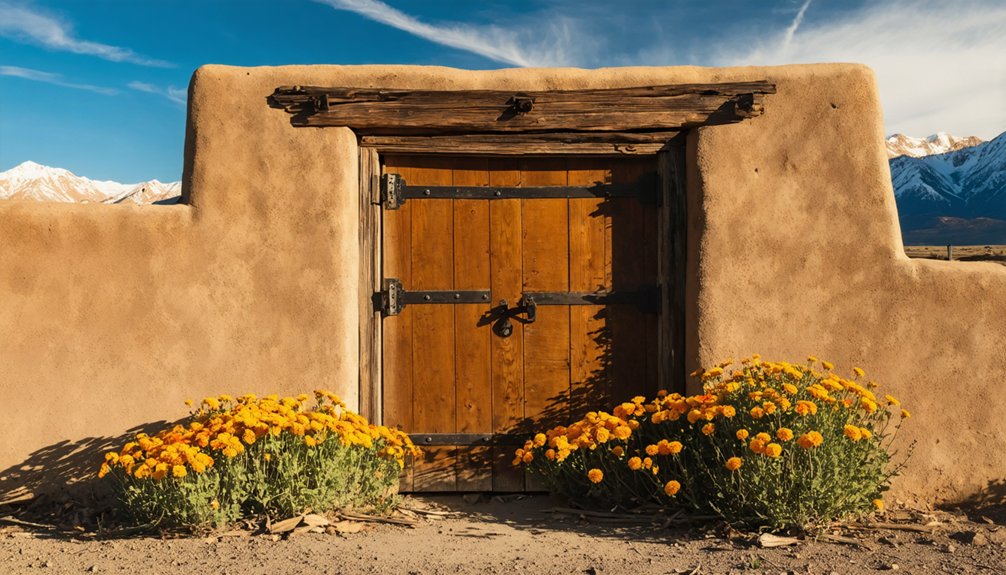
Planning an enriching ghost town expedition requires careful consideration of New Mexico’s distinct seasonal patterns. Your road trip planning should align with seasonal activities that maximize both comfort and unique experiences.
Spring and autumn offer ideal exploration conditions with mild temperatures and cultural events, while summer’s extended daylight enables thorough investigation of remote locations. Winter provides solitude but requires flexibility with limited services.
- Spring wildflowers paint abandoned mining towns in vibrant colors while market seasons bring local flavors to nearby communities.
- Summer’s high-elevation ghost towns offer refuge from desert heat, with bat flights and guided tours enhancing your journey.
- Autumn’s chile harvests and balloon festivals create perfect pairing opportunities with ghost town exploration.
- Winter’s occasional snowfall transforms historic ruins into hauntingly beautiful photography subjects.
Frequently Asked Questions
Are Ghost Towns Safe for Solo Travelers to Explore Alone?
You’ll need to follow key solo travel tips and ghost town safety protocols – avoid entering unstable structures, bring emergency supplies, notify others of plans, and stick to daylight exploration.
What Photography Equipment Works Best for Capturing Ghost Town Architecture?
You’ll need a wide-angle lens (16-35mm) for structures, manual camera settings for low light, sturdy tripod for long exposures, and remote shutter release to capture ghost towns’ architectural details effectively.
Are There Guided Night Tours Available at Any Ghost Towns?
While most ghost towns don’t offer night access, you’ll find guided ghost tours in Old Town Albuquerque, where professional guides lead lantern-lit explorations through historic haunted locations until 9:45 PM.
Which Ghost Towns Allow Metal Detecting or Artifact Collecting?
You can’t legally metal detect or collect artifacts in New Mexico’s ghost towns on public lands due to strict metal detecting regulations and artifact preservation practices. Private property requires owner permission.
Do Any Ghost Towns Offer Overnight Stays in Historic Buildings?
You’ll find unique lodging at Mogollón Silver Creek Inn, where you can stay in historic accommodations from 1885. While other ghost towns offer nearby ranches, they don’t allow overnight stays in original structures.
References
- https://compaslife.com/blogs/journal/abandoned-enchantment-ghost-towns-of-new-mexico-1
- https://newmexicotravelguy.com/new-mexico-ghost-towns/
- https://geronimoranch.com/blog/ghost-towns-in-nm/
- https://www.newmexico.org/places-to-visit/ghost-towns/
- https://www.tripadvisor.com/Attractions-g28952-Activities-c47-t14-New_Mexico.html
- https://www.youtube.com/watch?v=pGPjU65CHeE
- https://www.newmexicomagazine.org/blog/post/abandoned-ghost-towns-new-mexico/
- https://santafe.com/new-mexico-road-trip-ghost-towns/
- https://newmexiconomad.com/lake-valley-new-mexico/
- https://prerealinvestments.com/monticello-an-intimate-exploration-of-a-new-mexico-ghost-town/