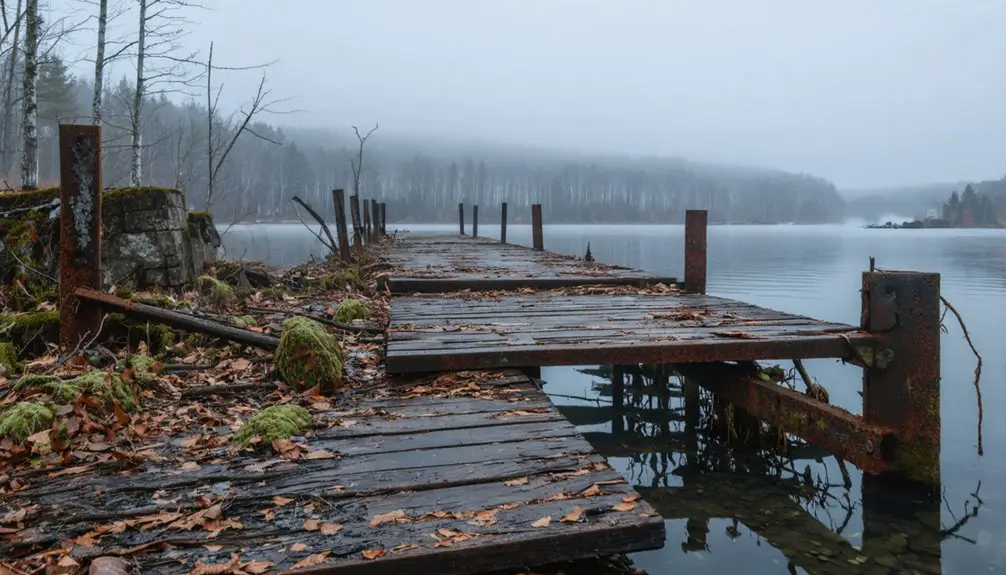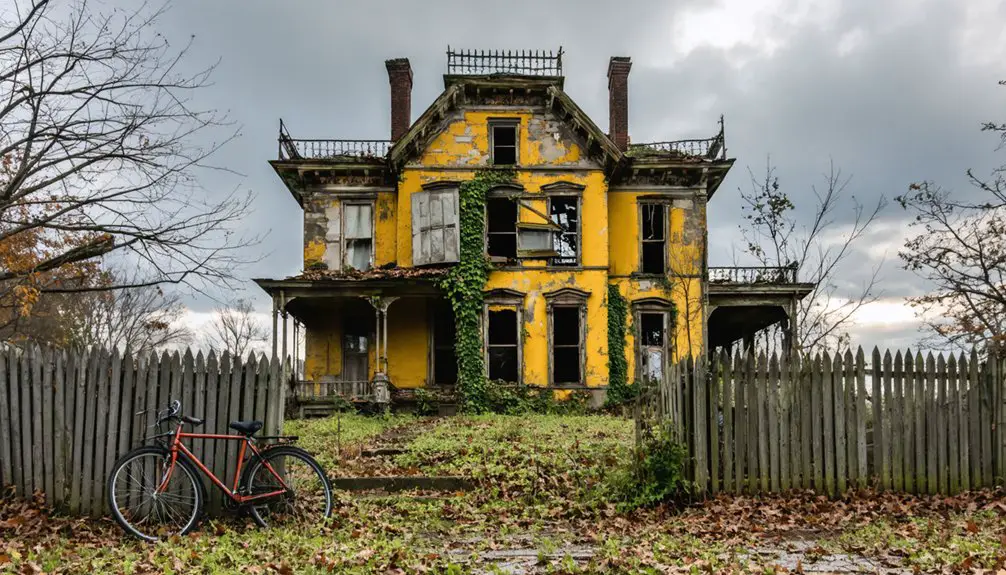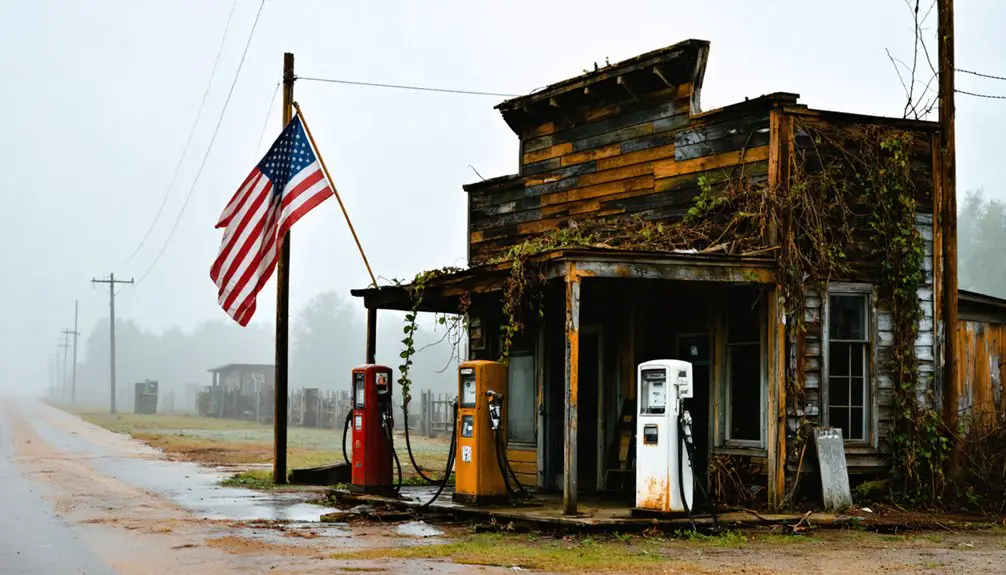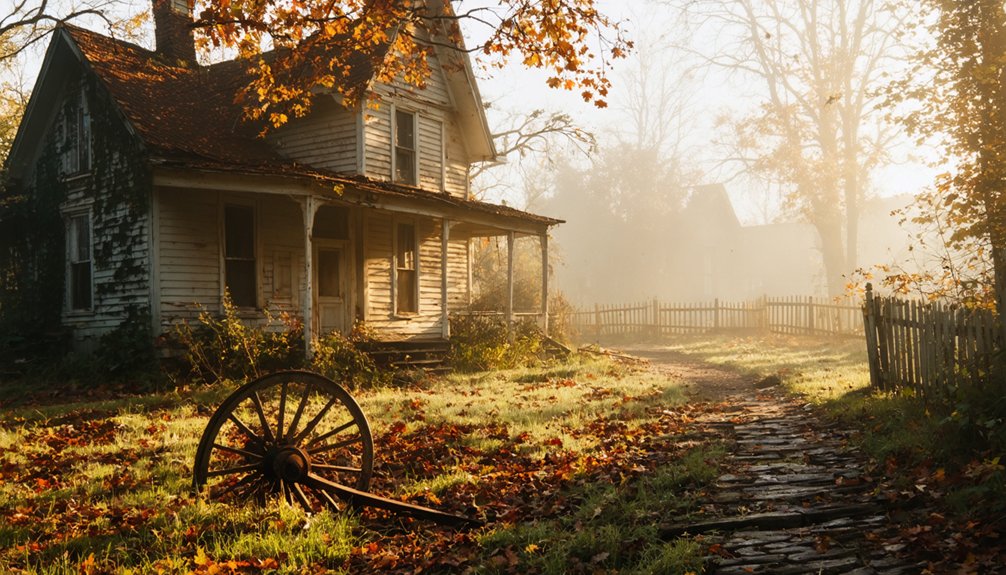
You’ll find ideal conditions for exploring New York’s ghost towns during the fall months, particularly from mid-September through October. The temperate weather, reduced rainfall, and stunning autumn foliage create perfect visibility for examining architectural ruins and historic foundations. Morning fog adds an ethereal atmosphere while supporting prime wildlife viewing opportunities at dawn and dusk. With fewer tourists than summer months, you’ll discover well-preserved sites like Tahawus and Doodletown in their most photogenic state, though each abandoned settlement holds unique seasonal secrets.
Key Takeaways
- Fall (September-November) offers ideal exploration conditions with temperate weather, reduced rainfall, and stunning autumn foliage enhancing abandoned sites.
- Summer months bring heavy tourist crowds and high humidity, making it challenging to explore and photograph historic locations peacefully.
- Winter provides unique photo opportunities with snow-covered ruins, but extreme weather can make many ghost towns inaccessible.
- Spring’s muddy conditions and dense vegetation growth can complicate exploration, though wildlife viewing opportunities are excellent.
- Early morning visits during fall provide optimal conditions for photography and wildlife viewing, with morning fog creating ethereal atmospheres.
Seasonal Weather Patterns Across New York’s Abandoned Sites
While New York’s abandoned settlements hold intrigue year-round, the region’s distinct seasonal patterns greatly impact your ghost town exploration experience.
You’ll encounter significant atmospheric changes throughout the year, from spring’s muddy terrain and dense vegetation to winter’s treacherous ice and limited daylight hours.
Spring and summer present seasonal challenges with high humidity accelerating structural decay and peak insect activity disrupting site visits. Recent studies show these abandoned locations can create reverse temperature effects in surrounding areas.
Warm months bring unwelcome challenges, as humid air speeds decay while swarms of insects make ghost town visits increasingly difficult.
Winter’s extreme cold and heavy snowfall can make remote locations completely inaccessible, particularly in mountainous areas like the Adirondacks.
However, fall emerges as nature’s sweet spot, offering temperate conditions and reduced rainfall. The 1854 blast furnace at Tahawus stands as a striking landmark against the autumn landscape.
You’ll find the weather patterns from late September through October provide ideal exploration conditions, enhanced by morning fog and the dramatic interplay of autumn foliage against abandoned structures.
Top Ghost Towns Worth Discovering
Among New York’s most haunting abandoned settlements, five ghost towns stand as compelling indications to the state’s complex industrial, medical, and social history.
You’ll discover Doodletown history through marked foundations and stone remnants along hiking paths, while Love Canal’s legacy warns of environmental devastation through its restricted, chemically scarred landscape. Chemical waste burials of over 20,000 tons permanently scarred the community and its residents. Many local hikers can explore the 70 home foundations that remain visible today.
North Brother exploration reveals decaying hospital structures where nature reclaims the former quarantine island.
In the Adirondacks, Tahawus mining heritage beckons with abandoned mines and recreational trails opened to the public since 2003.
Perhaps most chilling is Pottersville’s tragedy, where a devastating 1927 flood and horrific family murders left an indelible mark on this once-thriving community.
Each site offers unique glimpses into New York’s forgotten chapters, preserved in crumbling foundations and overgrown paths.
Peak vs. Off-Peak Visitation Periods
While summer crowds often overwhelm popular ghost town sites, you’ll find the exploration experience compromised by dense vegetation, peak insect activity, and challenging humidity levels during June through August.
Winter visits offer a more serene atmosphere with pristine snow-covered ruins, though you’ll need specialized equipment like snowshoes and must contend with limited daylight hours. The Lake Placid Club offers winter sports opportunities that align perfectly with the snowy season.
The trade-off between peak and off-peak seasons centers on accessibility versus solitude, as summer’s easier access comes with larger crowds, while winter’s peaceful isolation requires more extensive preparation and navigational skills. Former mining sites like Benson Mines showcase dramatic landscapes year-round with their lunar-like terrain and rusted machinery.
Peak Summer Rush Issues
Understanding when to explore New York’s ghost towns can make or break your experience, particularly during the state’s unprecedented tourism surge that reached 306.3 million visitors in 2023.
Your ghost town experiences during peak summer months now face increasing challenges, as record-breaking tourism spending of $88 billion drives crowds to every corner of the state.
You’ll encounter the heaviest congestion in popular regions like the Finger Lakes and Greater Niagara, where visitor spending has jumped over 10%.
With domestic tourism recovering to 93% of pre-pandemic levels and an expected 64.5 million visitors in 2024, proper visitor management becomes essential.
The concentration of tourists at seasonal attractions and fairs during summer peaks can greatly impact your ability to explore and photograph these historic sites in solitude.
This influx of visitors generates over $6 billion in tax revenue, funding improvements to infrastructure and preservation of historic sites across the state.
Fall offers a prime opportunity to visit ghost towns, especially when I LOVE NY begins providing weekly foliage reports starting September 12.
Winter’s Peaceful Ghost Towns
Winter transforms New York’s ghost towns into serene time capsules, offering a stark contrast to the bustling summer months. While specific visitor data isn’t available, winter exploration of these abandoned settlements presents unique opportunities for those seeking solitude and unobstructed views of historic architecture. The dramatic decline in tourism, with 93% fewer visitors in 2020, offers a rare glimpse into a quieter New York rarely seen in modern times.
- Winter hikes through ghost towns often reveal structural details typically hidden by summer foliage, though accessibility may vary depending on snow conditions.
- The absence of peak-season crowds allows for more intimate exploration of ghost town history, but research about seasonal operating hours is essential.
- Photography opportunities may be enhanced by snow-covered landscapes and stark winter lighting, creating dramatic scenes of abandoned buildings.
With New York’s recent 17% drop in international tourism, ghost towns provide an authentic glimpse into the city’s past without the usual tourist congestion.
Remember that many ghost town sites lack winter maintenance, so you’ll need to verify access and safety conditions before planning your visit.
Wildlife Encounters and Natural Surroundings
New York’s ghost towns offer prime wildlife viewing opportunities, with peak activity during spring and fall migrations when you’ll spot red-tailed hawks soaring above abandoned structures and warblers following historic Hudson River routes.
You’ll find ideal wildlife encounters during dawn and dusk hours, particularly in cooler temperatures when mammals emerge from their shelters in deteriorating buildings and overgrown foundations.
Nature’s gradual reclamation of these sites has created unique ecosystems where salt marshes, wetlands, and forested areas now support diverse species, from white-tailed deer quietly roaming Staten Island to river otters surfacing along the Bronx River’s forgotten settlements.
Seasonal Wildlife Viewing Opportunities
As abandoned settlements blend into New York’s wilderness, ghost towns offer unique seasonal opportunities for observing wildlife in their natural habitats.
You’ll find prime wildlife photography conditions during the crisp autumn months, particularly at historic sites like Tahawus and Camp Santanoni, where seasonal migrations intersect with preserved structures.
For ideal wildlife viewing experiences, consider these prime locations:
- Tahawus Road to Upper Works trail – Peak birding during fall foliage season
- Bear Mountain State Park’s Doodletown – Diverse mammal activity in foundation ruins
- Frontier Town’s recovering landscape – Natural succession attracting regional species
The early morning fog that blankets these sites creates ethereal conditions, while the profound quiet allows you to detect subtle movements and calls of the resident wildlife throughout the restored ecosystems.
Peak Migration Watch Periods
During the crucial spring migration period, you’ll find exceptional wildlife viewing opportunities at New York’s ghost towns when temperatures climb above 40°F and evening rains saturate the landscape.
These conditions trigger mass amphibian movements, known as “Big Nights,” where hundreds of salamanders and wood frogs emerge from their winter hibernation.
The migration timing coincides perfectly with ghost town exploration, as these historic sites often intersect with important amphibian habitats.
You’ll witness spotted salamanders and wood frogs traversing ancient roadways and forgotten paths that once served bustling communities.
The Catskill Mountains’ abandoned settlements are particularly significant, as they provide essential migration corridors for species adapting to climate change.
For the best wildlife encounters, plan your visit during rainy spring evenings when these remarkable creatures make their ancestral journey to woodland breeding pools.
Nature’s Reclamation Impact
While nature steadily reclaims New York’s ghost towns, visitors can witness an extraordinary transformation across five notable sites in the Adirondacks and Hudson Valley.
Nature’s revival has created unique ecosystems where abandoned structures merge with the wilderness, establishing a new ecological balance.
You’ll discover three distinct patterns of reclamation:
- At Tahawus and Doodletown, foundations peek through dense forest growth, offering glimpses of past settlements.
- Frontier Town’s former amusement rides stand as sculptural elements amid encroaching vegetation.
- Camp Santanoni and Atlas missile silos demonstrate wildlife adaptation, with native species thriving among the ruins.
These sites are most accessible when foliage thins, revealing architectural details typically hidden by summer growth.
The interplay between human artifacts and natural succession creates an ever-changing landscape that rewards repeat visits throughout the seasons.
Preservation Status and Safety Considerations
The preservation status of New York’s ghost towns varies considerably across different regions and management authorities.
You’ll find Tahawus’s remnants carefully maintained within Adirondack Park, while preservation efforts at Doodletown focus on protecting visible home foundations amid forest regrowth.
Safety measures have shaped these sites’ current conditions, with Tahawus undergoing strategic demolition of hazardous structures.
Before visiting, you’ll need to secure necessary permits for specific activities like hunting or fishing at locations such as the Ashokan Reservoir area.
While exploring these historic sites, watch for rusted relics and unstable ruins, particularly in misty conditions.
The state’s management approach balances public access with protection – you’re free to explore places like Camp Santanoni, but you’ll notice strict oversight ensuring both historical preservation and visitor safety.
Transportation and Trail Accessibility
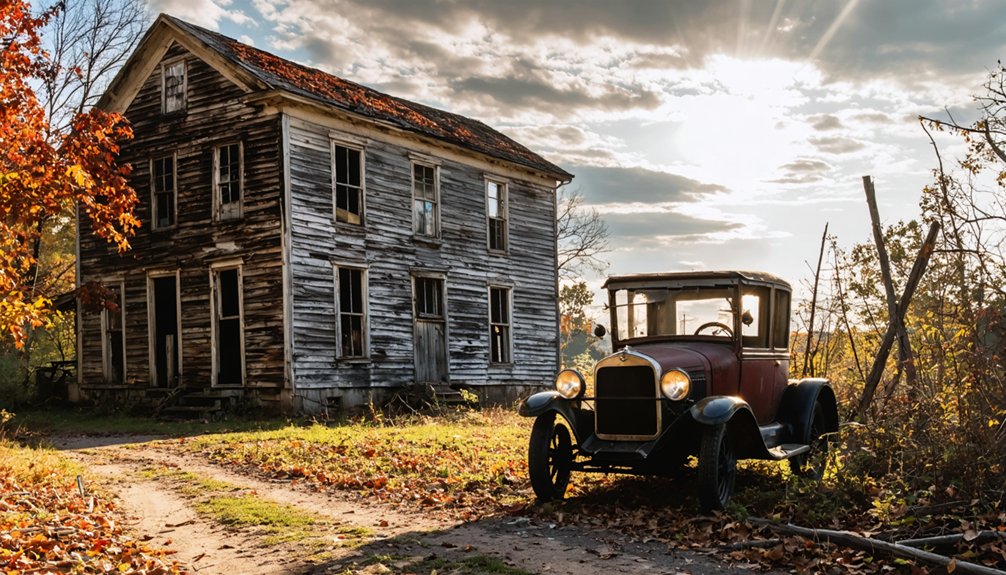
Access to New York’s ghost towns varies dramatically through a network of well-maintained trails and remote wilderness roads.
You’ll find diverse trail access options, from Ashokan Rail Trail’s ADA-compliant crushed stone surface to Doodletown’s unpaved paths within Bear Mountain State Park.
For ideal exploration, consider these key transportation factors:
- Parking availability at designated trailheads, including Woodstock Dike Trailhead at 1285 NY-28 for Ashokan Rail Trail
- Trail surface conditions, which range from 12-foot-wide compacted stone to challenging muddy terrain at Blauvelt State Park
- Seasonal accessibility, noting that while trailheads may be plowed in winter, main trails often remain unplowed and require appropriate gear
Remember to check current trail conditions before departing, as weather can greatly impact accessibility, particularly during winter months.
Photography and Exploration Conditions
Capturing New York’s ghost towns through a lens demands careful timing and technique, whether you’re drawn to dramatic night photography or detailed daylight documentation.
You’ll find unique opportunities for light painting in derelict buildings during pre-dawn hours, where long exposures transform empty windows and doorways into ethereal displays of red and blue illumination.
For daytime exploration techniques, summer road trips through upstate New York offer clear views of abandoned structures and foundations, particularly in places like Doodletown where over 30 marked ruins await your discovery.
Consider shooting during the cooler months when threatening dark clouds create apocalyptic atmospheres, or experiment with early morning arrivals around 5 a.m. to capture the sun’s gradual transformation of interior spaces.
Dawn’s early light pierces abandoned rooms while winter storms brew overhead, painting stories of desertion in dramatic natural contrasts.
Stone walls and patterned glass windows provide compelling subjects for creative composition year-round.
Guided Tours and Special Events Schedule
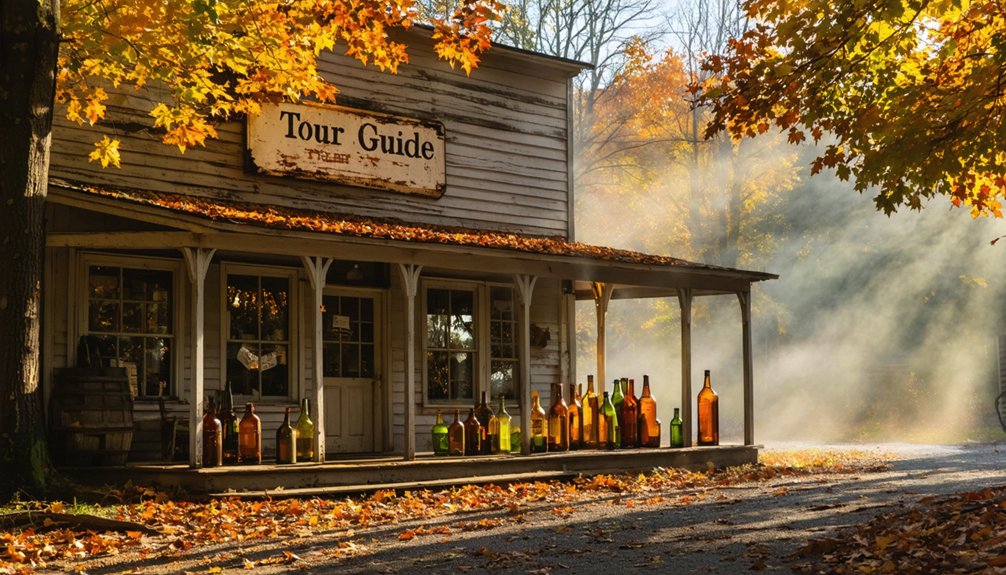
Whether you’re drawn to spectral tales or historical mysteries, New York’s ghost town tours operate throughout the year with consistent scheduling and varied options.
The guided tour benefits include expert narration of authenticated ghost stories and access to infamous locations like Murder House and the Church of the Ascension in Greenwich Village.
Special event highlights throughout the seasons enhance your exploration opportunities:
- Evening tours starting at 6:00 PM and 7:30 PM provide ideal atmospheric conditions for ghost hunting.
- Year-round walking tours cover 1-1.5 miles of historic streets, featuring stories of Mark Twain and Aaron Burr.
- Seasonal specialty programs complement standard offerings, with private tours available for personalized experiences.
Tours accommodate various preferences, from traditional guided walks to interactive puzzle-based adventures, with prices ranging from $30 to $195 per person.
Frequently Asked Questions
Are Metal Detectors Allowed at New York’s Abandoned Ghost Towns?
You’ll need specific permits for metal detecting in ghost towns like Doodletown, as they’re protected by ARPA and metal detecting regulations. Ghost town preservation laws restrict access to most abandoned sites.
Can I Legally Remove Artifacts Found at These Historic Sites?
You can’t legally remove artifacts from ghost towns – it’s a criminal offense. Focus on artifact preservation instead, as disturbing historical sites carries severe legal repercussions and destroys irreplaceable cultural heritage.
Which Ghost Towns Have Paranormal Investigation Permits Available?
Like spirits drifting through time, you’ll need Section 233 permits for any ghost hunting in NY ghost towns. Contact the State Museum first – they coordinate paranormal tours on state-owned historic properties.
Are Camping or Overnight Stays Permitted Near Any Ghost Towns?
You’ll need to check local camping regulations and overnight accommodations for each specific ghost town, as permissions vary widely across New York State’s public and private historic properties.
Do Any Ghost Towns Still Have Living Residents Nearby?
You’ll find living residents in communities near Roseton, Little Falls, and Tahawus. These areas offer nearby attractions like Terror Field in Clyde and fishing spots along Altmar’s Salmon River.
References
- https://www.ghosttowns.com/states/ny/ny.html
- https://www.onlyinyourstate.com/experiences/new-york/ghost-towns-ny
- https://943litefm.com/abandoned-ghost-towns-new-york/
- https://hudsonvalleycountry.com/6-mysterious-hudson-valley-ghost-towns/
- https://www.geotab.com/ghost-towns/
- https://visitadirondacks.com/fall/abandoned-places-ghost-towns
- https://www.atlasobscura.com/things-to-do/new-york-state/ghost-towns
- https://hauntedhistorytrail.com
- https://secretnyc.co/tahawus-ny-forgotton-ghost-town-halloween-season/
- https://bldgblog.com/2012/04/ghost-town-climatology/