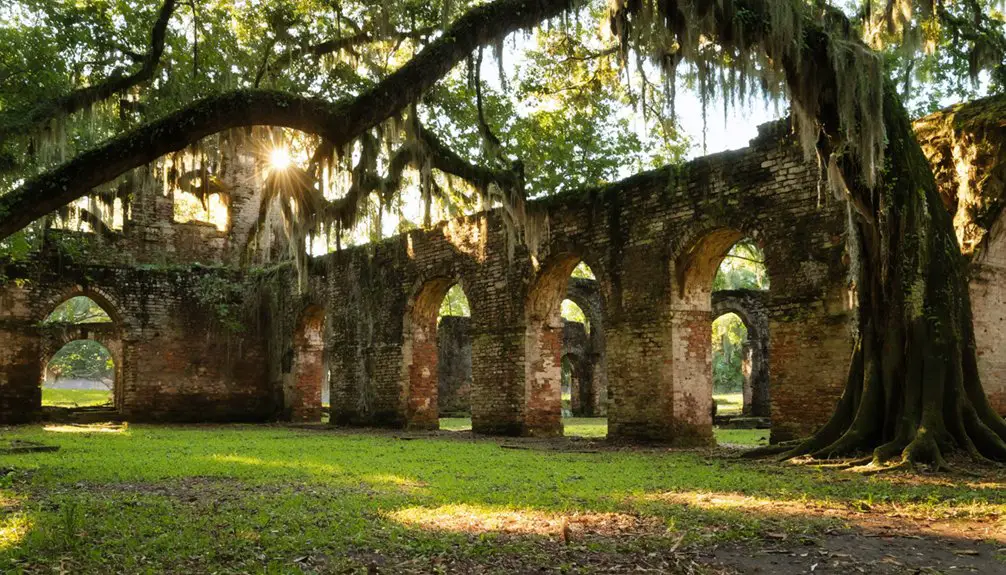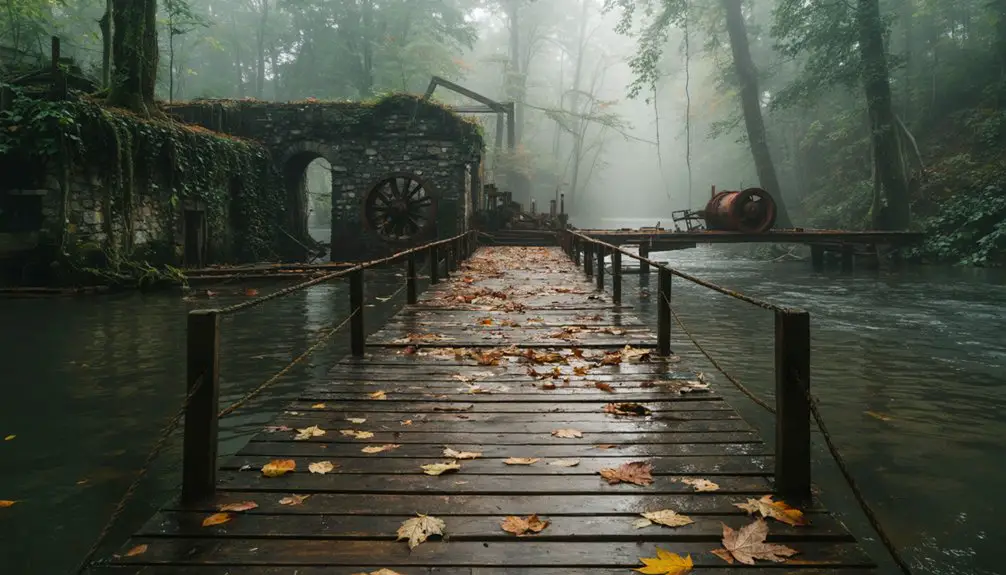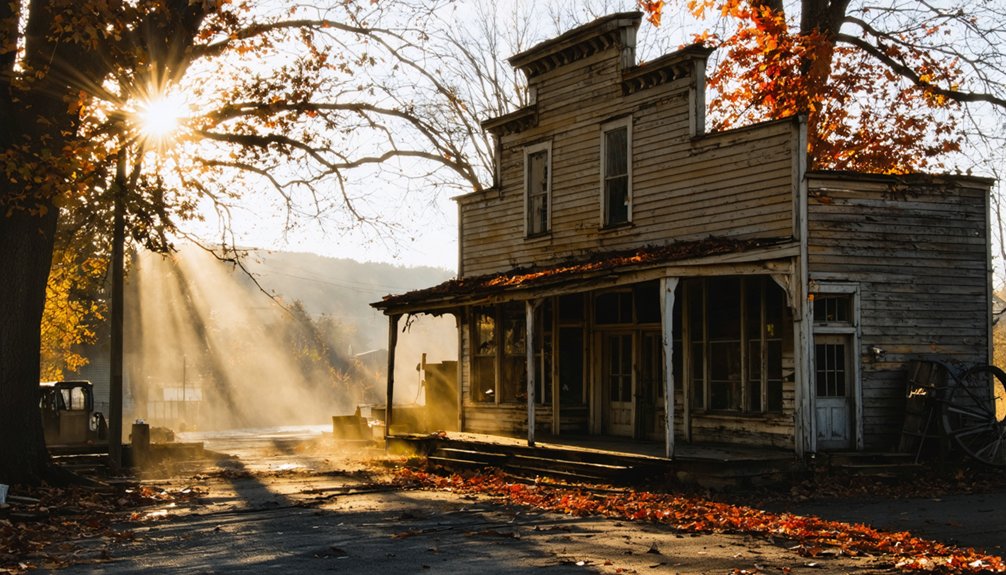
You’ll find North Carolina’s ghost towns most accessible during fall (September-November), when mild temperatures and vibrant foliage create perfect exploration conditions. Spring offers a quieter alternative, with moderate weather and emerging wildflowers enhancing abandoned landscapes. Avoid summer’s intense heat and winter’s treacherous conditions, particularly in mountain locations like Lost Cove. Local historical societies can provide seasonal access details and fascinating stories behind these time-capsule communities.
Key Takeaways
- Fall (September-November) offers ideal conditions with mild temperatures, vibrant foliage, and special historical events at most ghost town locations.
- Spring (March-May) provides moderate temperatures and reduced foliage, making structures more visible and trails easier to navigate.
- Coastal ghost towns are best visited in spring or fall to avoid hurricane season and summer tourist crowds.
- Winter severely limits access to mountain ghost towns due to snow, ice, and seasonal closures of major sites.
- Summer presents significant challenges with intense heat, dense vegetation, increased wildlife encounters, and overcrowding at popular locations.
Seasonal Weather Patterns Affecting Ghost Town Access
While North Carolina’s ghost towns beckon year-round, the state’s diverse weather patterns greatly impact when you’ll have the safest and most rewarding visits.
Weather preparedness becomes essential as coastal sites like Portsmouth Island face sudden changes and hurricane threats, particularly during the September peak season. You’ll find the most reliable access from April through October when volunteer presence aids navigation. The 250 acres preserved showcase the island’s rich maritime history.
Mountain ghost towns like Lost Cove present different access limitations, with winter bringing treacherous conditions to the already challenging Nolichucky Gorge terrain. The area’s rugged gorge location makes accessing historical sites particularly demanding.
High elevations in Pisgah National Forest mean increased frost risks and hazardous hiking conditions. Even eastern coastal locations experience significant cold snaps, with winter mornings dropping to 33°F, limiting comfortable exploration time.
Plan your visits accounting for these seasonal challenges, as weather patterns can quickly transform accessible paths into impassable terrain.
Spring Adventures: March Through May
Spring months offer a distinct advantage for ghost town exploration in North Carolina, as the moderate temperatures and reduced foliage create ideal conditions for spotting historic structures.
However, since specific data about spring visits to North Carolina ghost towns isn’t currently available, you’ll need to research current trail conditions and accessibility before planning your adventure.
Plan ahead and research access details, as visitor data for North Carolina’s ghost towns in spring remains limited.
Before setting out to explore these historic sites during spring months, it’s important to contact local ranger stations or historical societies for up-to-date information about trail conditions and spring wildlife activity.
You’ll also want to verify road access, particularly in mountainous areas where weather can impact travel.
Some ghost towns like Proctor were submerged when Fontana Dam was built in the 1940s.
Preserving these sites is crucial for maintaining North Carolina’s cultural heritage sites for future generations.
Consider reaching out to preservation groups who maintain these sites, as they can provide the most current guidance about seasonal challenges and opportunities for exploring North Carolina’s abandoned communities.
Summer Challenges and What to Avoid
Despite the allure of summer exploration, North Carolina’s ghost towns present considerable challenges during the hottest months of the year.
You’ll face intense heat amplified by mountain elevations, particularly at sites like Ghost Town in the Sky, where temperatures combine with 4,600-foot elevations to create dangerous heat exhaustion risks.
Summer also brings peak wildlife encounters, with venomous snakes hiding in overgrown ruins and swarms of insects infesting abandoned structures. Portsmouth Island visitors must arrange boat transportation in advance, adding logistical complexity to summer visits.
The season’s dense vegetation can obscure trails, especially at remote locations like Lost Cove, while summer storms roll through mountain peaks with little warning.
The Blue Ridge Parkway location adds to accessibility difficulties during peak tourist season when traffic becomes congested.
Fog regularly reduces visibility on chairlift rides and mountaintop attractions.
Add overwhelming crowds of 400,000+ seasonal visitors, and you’ll find summer exploration considerably compromised at popular sites like Maggie Valley.
Fall Exploration: Peak Visiting Season
As autumn’s crisp air settles across North Carolina, ghost town exploration reaches its prime with spectacular fall foliage enhancing abandoned settlements from the coast to the mountains.
You’ll discover vibrant reds and yellows transforming sites like Banner Elk and Maggie Valley into photographer’s dreams, while haunted attractions like Kersey Valley Spookywoods amplify the seasonal atmosphere. The haunted attraction since 1985 features fifteen carefully crafted scenes that heighten the ghostly ambiance. The Grove Park Inn, with its legendary Pink Lady spirit, adds a supernatural dimension to any fall visit.
The mild weather creates perfect conditions for wandering through historic ruins, from the mysterious Devil’s Tramping Ground to the eerie Henry River Mill Village.
Take advantage of seasonal events that complement your ghost town visits – hop aboard Bryson City’s scenic train routes or explore Roanoke Island Festival Park’s settler activities.
With improved accessibility and comfortable temperatures, fall offers your best opportunity to experience North Carolina’s forgotten places.
Winter Considerations and Limited Sites
Winter brings significant challenges for ghost town explorers in North Carolina, particularly in mountainous regions where many abandoned settlements lie.
You’ll find most sites like Ghost Town Village at elevations above 4,000 feet face seasonal closures due to snow, ice, and dangerous road conditions. The historic Buck Mountain location, built by R.B. Coburn in 1961, stands at over 3,300 feet elevation. Winter maintenance becomes nearly impossible at remote locations, and visitor safety concerns prompt widespread shutdowns. The site’s iconic chairlift system stretches 3,370 feet to reach the main park area.
If you’re determined to explore during winter months, you’ll need to carefully plan around limited daylight hours and restricted access.
Major sites like Lost Cove and Henry River Mill Village become practically inaccessible when winter weather hits. The harsh conditions also accelerate the deterioration of historic structures, which is why preservation efforts typically pause during this season.
Consider postponing your ghost town adventures until warmer months when sites reopen for safe exploration.
Coastal Ghost Towns: Weather-Based Planning
You’ll need to carefully plan your coastal ghost town visits around hurricane season, which poses significant risks to Portsmouth Island and Brunswick Town access from June through November.
Spring offers your best opportunity to explore these preserved sites, with ideal temperatures of 65-75°F and calmer waters that make ferry crossings more reliable.
Fall visits can also reward you with comfortable conditions, but you should monitor weather forecasts closely and schedule your trip before peak storm activity intensifies in late September.
Hurricanes and Coastal Access
Planning your ghost town visits around hurricane season is essential for safe exploration of North Carolina’s abandoned settlements.
You’ll want to avoid the peak hurricane months of September and October, when coastal erosion and flooding can make sites like Portsmouth Island completely inaccessible. The Atlantic hurricane season runs June through November, so plan your coastal ghost town adventures between December and May.
Hurricane preparedness is vital, as storms have repeatedly battered these historic sites.
Princeville’s devastating floods from Hurricane Floyd and Matthew demonstrate the risks, even 124 miles inland. Recent hurricanes like Helene continue disrupting access to both coastal and mountain ghost towns.
Before heading out, check ferry schedules for barrier island sites and road conditions for inland locations, particularly along the Blue Ridge Parkway.
Spring and Fall Advantages
Spring and fall emerge as prime seasons for exploring North Carolina’s coastal ghost towns, with comfortable temperatures ranging from 60-80°F and minimal crowds at historic sites like Portsmouth Island.
You’ll enjoy clearer visibility of abandoned structures while spring blooms enhance the landscape, and fall colors create striking backdrops, especially near Brunswick’s ruins.
During these shoulder seasons, you’ll find knowledgeable volunteers ready to share historical insights from April through October, enriching your exploration of places like Cape Lookout Village.
The mild weather and reduced humidity make walking sandy paths more manageable, while fewer insects and tourists allow for unhurried discovery.
You’ll particularly appreciate the crisp autumn air and golden hour lighting that perfectly illuminate these forgotten coastal settlements.
Mountain Ghost Towns: Best Months
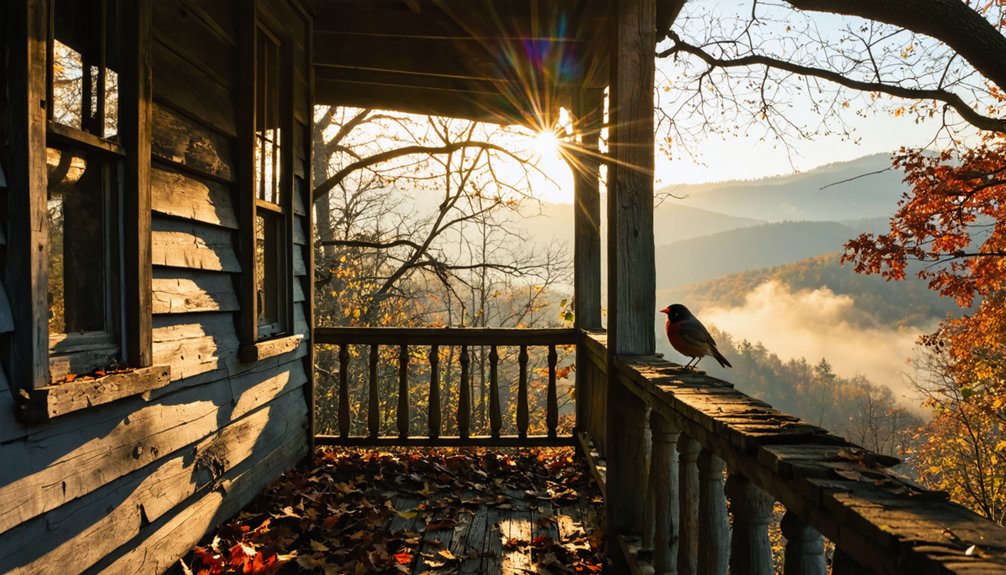
The mountain ghost towns of North Carolina reveal their secrets best during three prime seasons: spring, summer, and fall. For history buffs and ghost town legends enthusiasts, these periods offer ideal conditions for exploring abandoned settlements while supporting historical preservation efforts.
- April delivers perfect weather for photographing weathered structures against blooming dogwoods and azaleas.
- August’s shaded mountain trails provide comfortable access to remote ghost town sites, with temperatures 20 degrees cooler than coastal areas.
- September and October offer spectacular fall backdrops for exploring, with clear skies after rain creating mystical atmospheres perfect for capturing the Brown Mountain Lights.
You’ll find events like Ghost Town in the Sky history tours running June through October, when mountain roads are most accessible and seasonal festivities enhance your exploration of these forgotten places.
Transportation and Access by Season
You’ll find North Carolina’s ghost town access varies greatly by season, with sites like Brunswick Town relying on warm-weather ferry service while mountain locations may face winter road closures.
The Road to Nowhere near Bryson City offers year-round hiking access to its unfinished tunnel, providing a reliable option regardless of weather conditions.
Historic transportation features, like Ghost Town Village’s record-breaking chairlift and Tweetsie’s steam engine, add unique dimensions to your visit when operational, though you’ll need to verify current accessibility due to private property restrictions and seasonal schedules.
Seasonal Road Conditions
When exploring North Carolina’s ghost towns, road conditions present distinct seasonal challenges that can make or break your visit. Each season brings its own unique road safety concerns, from black ice and snow in winter to flooding and overgrowth in warmer months.
Consider these critical seasonal hazards before your journey:
- Winter and fall bring treacherous conditions on mountain passes, with black ice forming in shaded areas and early snowfall limiting access to higher elevations.
- Spring thaws create muddy paths and flooding risks on coastal routes, while dense vegetation can block access to historic structures.
- Summer’s high humidity and heat cause pavement issues on remote roads, while strong coastal winds threaten Highway 12 with washouts.
Year-round challenges include unreliable cell service and GPS disruptions, so always plan alternate routes and emergency contacts.
Boat and Trail Access
Despite North Carolina’s extensive road network, many of its most intriguing ghost towns require boat transport or specialized trail access to reach their remote locations.
You’ll need to plan around ferry schedules when visiting Portsmouth Island or Proctor Ghost Town, as water routes provide the only viable access. Boating safety becomes essential at Buffalo City, where alligators inhabit the waterways of Alligator River National Wildlife Refuge.
For submerged sites like Lake Glenville and Santeetlah Lake, you’ll want to rent pontoons or kayaks to explore ghost town remnants beneath the water’s surface.
Summer offers ideal conditions for water transport, while spring and fall provide spectacular shoreline views. Winter typically brings reduced ferry schedules and ice-edged waters, making early planning vital for these hidden historical treasures.
Special Events and Guided Tour Timing

North Carolina’s ghost town events reach their peak during the atmospheric fall months of September through November, when crisp autumn weather and early sunsets create the perfect backdrop for exploring abandoned places.
You’ll find guided tour highlights concentrated around Halloween, but savvy explorers know that special event dates span the entire season.
- Start your journey with September’s Founders Day in Gold Hill, followed by the haunting Tweetsie Railroad Ghost Train experiences.
- October brings the richest offerings, from Gold Hill’s Ghost Tours to Wilmington’s Port City Pirates & Ghosts adventures.
- Extend your explorations into November with Wilkesboro’s candlelight investigations and Hillsborough’s Historic Ghost Tour.
These carefully curated events provide unique access to historically significant sites while preserving their authentic character and mysterious allure.
Frequently Asked Questions
Are Pets Allowed During Ghost Town Tours and Visits?
Like pioneers exploring new frontiers, you’ll find ghost towns welcome your leashed pets. Most sites follow pet policies requiring 6-foot leashes, while tour guidelines guarantee both preservation and your furry friend’s safety.
What Photography Equipment Restrictions Exist at These Abandoned Sites?
You’ll need photography permits at protected ghost town sites. Don’t place equipment on historic structures, keep tripods on stable ground, and maintain distance from fragile ruins per standard equipment guidelines.
Can Metal Detecting Be Used at North Carolina Ghost Towns?
You’ll need landowner permission for metal detecting at private ghost towns, but it’s prohibited at state-protected sites. Remember that historical artifacts over 100 years old are protected by strict regulations.
Are Overnight Camping Permits Required Near Ghost Town Locations?
You’d think abandoned towns mean freedom to camp, but you’ll need proper permits. Check camping regulations with local rangers – most ghost towns sit on protected land requiring permit applications.
Do Any Ghost Towns Offer Wheelchair-Accessible Paths or Viewing Areas?
You’ll find limited accessible tours at these ghost towns. None currently offer dedicated wheelchair-friendly paths or viewing areas. Henry River Mill Village’s roadside location provides the most manageable ghost town amenities.
References
- https://www.uncorkedasheville.com/abandoned-places-in-north-carolina/
- https://www.youtube.com/watch?v=iWhjTfCyUpY
- https://kids.kiddle.co/List_of_ghost_towns_in_North_Carolina
- https://www.visitnc.com/list/ncs-mysterious-disappearances-and-abandoned-places
- https://www.atlasobscura.com/things-to-do/north-carolina/ghost-towns
- http://www.onlyinyourstate.com/experiences/north-carolina/nc-ghost-towns
- https://www.islands.com/1841384/north-carolina-once-bustling-island-village-ghost-town-pristine-beach-coastal-beauty-portsmouth/
- https://appalachian.org/lost-cove-ghost-town-in-the-national-forest/
- https://www.youtube.com/watch?v=JacdR_kDwvs
- https://www.accuweather.com/en/travel/inside-portsmouth-island-abandoned-ghost-village/931491