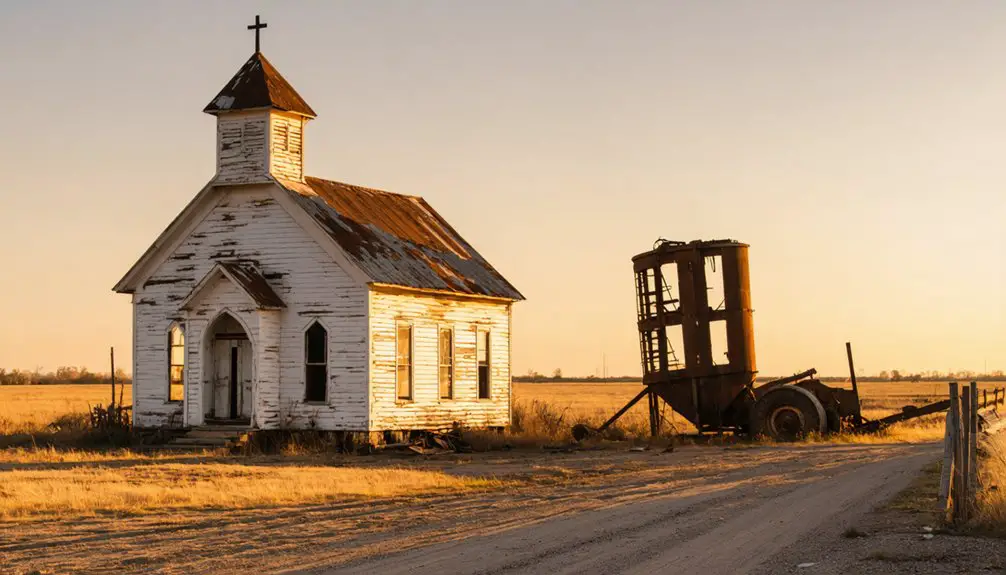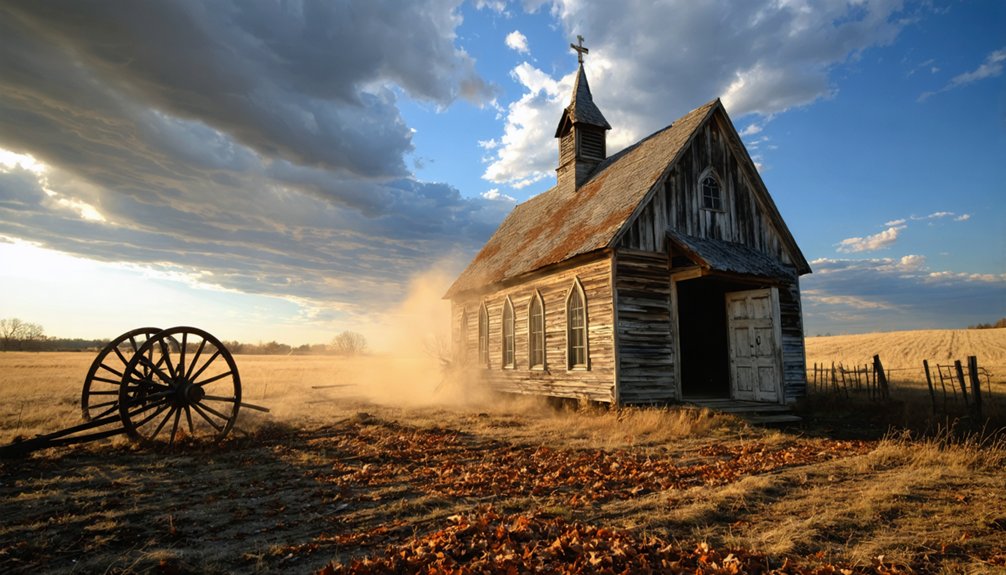
You’ll find fall is the prime season to explore Oklahoma’s ghost towns, with daytime temperatures of 60-75°F and reduced humidity providing ideal conditions. The autumn months offer fewer tourists at the state’s 2,000 abandoned settlements, while golden foliage creates stunning photographic backdrops. Clear skies enhance visibility of architectural details, and you’ll encounter increased wildlife activity. Understanding seasonal patterns reveals additional advantages for your ghost town expedition.
Key Takeaways
- Fall offers optimal exploration conditions with 60-75°F temperatures, clear skies, and fewer tourists at Oklahoma’s ghost towns.
- Spring provides mild 50-70°F temperatures and stable ground conditions, though visitor numbers are higher than fall.
- Early mornings and weekdays generally offer the most peaceful exploration experiences with minimal crowd interference.
- Avoid winter due to harsh weather and summer due to extreme heat and storm risks in Oklahoma.
- Fall and spring provide the best photography opportunities with ideal lighting and clear visibility of architectural details.
Why Fall Reigns Supreme for Ghost Town Exploration
While Oklahoma’s ghost towns beckon visitors year-round, autumn emerges as the prime season for exploring these abandoned settlements.
You’ll discover ideal conditions with temperatures ranging from 60-75°F during the day and cooling to 40-50°F at night, creating perfect conditions for extended site visits. The season’s clear skies and reduced humidity enhance visibility of architectural details and hidden foundations.
Fall foliage transforms these forgotten places, as golden leaves frame weathered buildings and create stunning backdrops for photography. Numerous remains of buildings serve as poignant reminders of these once-thriving communities. The pale mountains of Picher’s mine tailings create an especially haunting scene against autumn’s colorful backdrop.
You’ll encounter fewer tourists at popular sites like Texola and Picher, allowing unhurried exploration of the estimated 2,000 ghost towns.
Wildlife sightings increase as migratory birds pass through and deer become more active around sites like Boggy Depot, adding another dimension to your ghost town adventure.
Spring’s Perfect Balance of Weather and Access
You’ll find Oklahoma’s ghost towns most accessible during spring’s mild days when temperatures hover between 50-70°F and precipitation remains minimal.
Clear roads and stable ground conditions in March and April provide reliable access to remote locations like Picher and Kaw City, without the obstacles of winter ice or summer storms.
The combination of extended daylight hours and fewer visitors during this season allows you to thoroughly explore abandoned structures while maintaining ideal safety and comfort levels.
The toxic chat piles that once defined Picher’s landscape still require visitors to exercise caution during their explorations.
With an estimated two thousand ghost towns scattered throughout Oklahoma, spring offers the perfect opportunity to visit multiple sites within the same region.
Mild Days, Minimal Rain
Spring presents the ideal climate conditions for exploring Oklahoma’s ghost towns, with average temperatures hovering in the mid-60s Fahrenheit and particularly calm winds.
You’ll find these mild spring temperatures perfect for extended exploration of historic sites like Cloud Chief, where you can photograph architectural remnants without battling midday heat exhaustion. Experienced photographers recommend utilizing the golden hour lighting to capture the most compelling shots of abandoned structures. The old schoolhouse still stands as one of the most photographed landmarks in the area.
The season’s minimal rainfall patterns work to your advantage, helping you avoid the dangers of water-pooled depressions and unstable ground conditions common in places like Picher.
You won’t encounter the peak tornado threats or flooding that historically devastated towns like Eddy and Frazer.
The spring’s characteristically dry conditions let you safely traverse debris-scattered areas while maintaining clear visibility of weathered foundations, faded signage, and forgotten gravesites.
Clear Roads, Limited Crowds
These ideal weather conditions align perfectly with another advantage: exceptionally clear road access and minimal tourist traffic.
You’ll find spring exploration particularly rewarding as temperatures hover in the mid-60s with unusually calm winds, making remote ghost towns like Cloud Chief easily accessible. The absence of winter ice and pre-summer heat guarantees stable road conditions, while spring’s limited flooding risks keep historical sites navigable.
During this season, you’ll encounter fewer tourists at these abandoned settlements, which have experienced 80% population declines. Ghost town accessibility peaks as clear horizons and peak visibility help you spot historical markers and foundations.
The stable spring soil prevents hazardous depressions, while guided visits help you safely navigate around scattered debris. You’ll appreciate the balanced daylight hours for extended exploration without night risks. Visitors can better observe the crumbling buildings and signs that characterize these historic sites.
Safety Considerations Throughout the Seasons
Exploring Oklahoma’s ghost towns requires careful attention to seasonal safety risks, even though many hazards remain constant throughout the year.
You’ll need to navigate environmental threats like toxic chat piles and unstable ground conditions regardless of the season, while adapting to weather-specific challenges.
Year-round hazards include unreliable cell coverage, extended emergency response times, and structural instability from abandoned mines.
Essential safety fact: Exploring Oklahoma ghost towns means dealing with poor phone signals, slow emergency aid, and dangers from old mine structures.
Wildlife encounters pose increased risks during periods when animals seek shelter in deteriorating buildings.
You’ll want to monitor weather forecasts carefully, as Oklahoma’s rapid-forming storms can affect visibility and ground stability.
Over 14,000 mine shafts remain hidden beneath the surface, creating dangerous conditions for visitors.
Remember that wind conditions can disperse toxic dust, making protective masks essential.
When exploring these sites, you’ll need offline maps and a communication plan with outside contacts, regardless of the season you choose to visit.
The town of Picher exemplifies these dangers, where elevated lead levels affected one-third of local children before evacuation.
Peak vs. Off-Peak Visitation Periods
While Oklahoma’s ghost towns experience their heaviest visitor traffic during spring and summer months with up to 18 million tourists statewide, you’ll find markedly reduced crowds during the fall and winter off-season periods when visitation drops by 50-70%.
Your exploration of abandoned structures benefits from spring’s mild 60-70°F temperatures and summer’s peak accessibility, though you’ll need to navigate larger crowds and $11.8 billion in annual tourism activity during these seasons.
Oklahoma’s five ghost towns spread across the state offer uniquely desolate exploration opportunities year-round.
If you’re seeking a more solitary experience, you can take advantage of winter’s 30-50°F weather and minimal tourist presence, or fall’s moderate climate and spectacular foliage for photography opportunities.
Seasonal Crowd Distribution Patterns
Seasonal visitation patterns across Oklahoma’s ghost towns reveal distinct peak periods during spring and fall months, when moderate temperatures and prime visibility create ideal exploration conditions.
You’ll notice crowd behavior concentrates during daylight hours, particularly at hazardous sites like Picher’s chat piles and subsidence zones. Spring draws visitors seeking comfortable temperatures before summer heat arrives, while fall’s moderate climate attracts history enthusiasts exploring abandoned structures.
Visitation motives vary by location, with Route 66 alignments like Texola maintaining steady year-round traffic.
Meanwhile, environmental restrictions and safety concerns at former mining towns naturally limit peak crowds. Heritage tourists consistently visit preserved cemeteries and churches, though seasonal fluctuations occur based on weather conditions and special events.
Urban explorers tend to prefer off-peak periods for photography and undisturbed documentation.
Popular vs. Quiet Months
Although extensive visitor data remains limited for Oklahoma’s ghost towns, observable patterns indicate peak tourism occurs from March through May and September through November.
Due to insufficient ghost town demographics and tourism marketing research in Oklahoma, it’s challenging to definitively identify true peak versus quiet periods across the state’s estimated 2,000 abandoned settlements.
While we can’t provide specific crowd level predictions, you’ll likely encounter other explorers during spring wildflower blooms and fall foliage seasons when weather conditions are mild.
The lack of formal visitor tracking at these remote locations means you’re free to explore many sites without established operating hours or entrance fees.
Consider planning your ghost town visits based on seasonal weather patterns and your comfort with potentially encountering other history enthusiasts.
Managing Weekend Rush Times
Since formal visitor tracking systems aren’t maintained at most Oklahoma ghost towns, determining precise weekend rush patterns remains largely anecdotal.
While Halloween season sees increased activity for ghost tours in historic locations like Guthrie, extensive data on weekend visitor flows throughout the year is currently unavailable.
Without established visitor management frameworks, you’ll need to rely on flexible weekend strategies when exploring these abandoned settlements.
Consider visiting during early morning or late afternoon hours to potentially avoid peak times. You might also explore these sites during weekdays rather than weekends when seeking a more solitary experience.
Until formal research emerges on visitor patterns at Oklahoma ghost towns, the best approach is to remain adaptable and prepare for varying crowd levels during your visit.
Historical Events and Local Celebrations
Oklahoma’s ghost towns tell dramatic stories through their historical events, from devastating mining disasters to wild west shootouts.
You’ll find historical festivals and local reenactments that bring these dramatic moments back to life, particularly during peak tourism seasons. Many communities honor their heritage through commemorative events that mark significant moments in their town’s history.
Key historical events you can explore include:
- The Battle of Ingalls reenactments, showcasing the 1893 shootout between marshals and the Dalton gang
- McCurtain’s mining disaster memorials, held annually to remember the 73 miners lost in 1912
- Empire City’s oil boom celebrations, highlighting the area’s transformation during the 1910s petroleum rush
These events offer unique glimpses into Oklahoma’s past while preserving the stories of these once-thriving communities.
Transportation and Road Conditions by Season
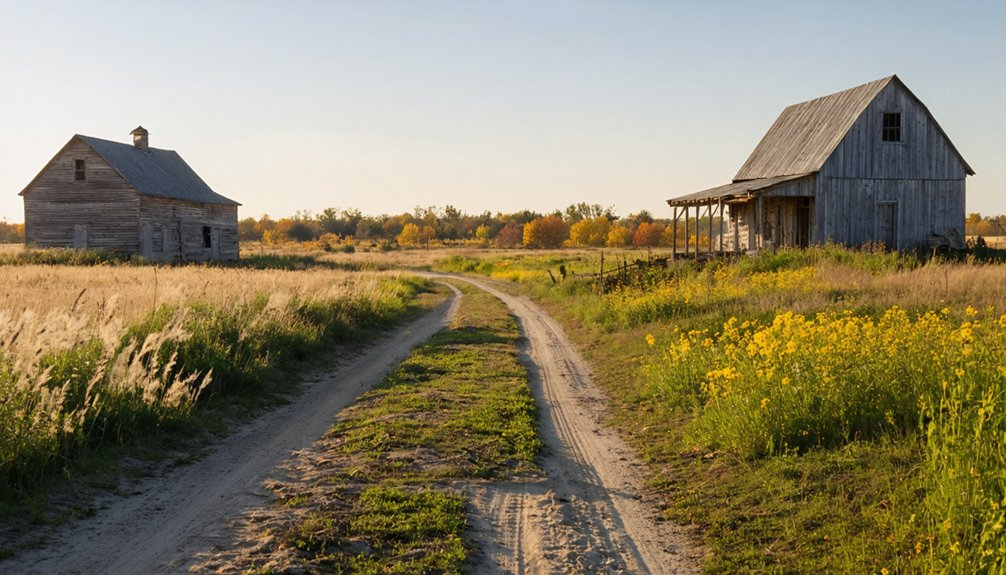
When planning visits to ghost towns across Oklahoma, understanding seasonal road conditions becomes critical for safe exploration. Given the limited research available about specific road maintenance patterns and seasonal accessibility to ghost town sites, you’ll need to contact local county officials before your journey. They can provide current information about rural road conditions, bridge stability, and vehicle requirements for accessing remote locations.
Before starting on your adventure, research the weather forecast and contact the county transportation department where your target ghost town is located. They’ll have the most up-to-date information about road closures, seasonal flooding risks, and recommended vehicle capabilities.
Remember that many ghost towns are situated in remote areas where road conditions can change rapidly, especially during Oklahoma’s unpredictable storm seasons.
Photographic Opportunities Across Seasons
Capturing the essence of Oklahoma’s ghost towns requires careful consideration of seasonal variations that dramatically affect lighting, atmospheric conditions, and structural appearances throughout the year.
While thorough seasonal data is limited, photographers should focus on adapting their photographic techniques to daily timing patterns that enhance image quality and minimize modern intrusions.
- Early morning shoots (around 5 AM) allow you to capture changing light patterns and shadows as sunlight gradually illuminates abandoned structures.
- Late afternoon or weekend visits reduce the likelihood of vehicle traffic appearing in your frames.
- Less populated ghost towns offer greater flexibility in shooting times, though seasonal lighting conditions will still impact exposure settings.
Consider consulting local photographers and weather resources to determine ideal seasonal timing for specific locations, as accessibility and atmospheric conditions can vary greatly throughout Oklahoma’s diverse ghost town sites.
Natural Hazards and Weather Challenges
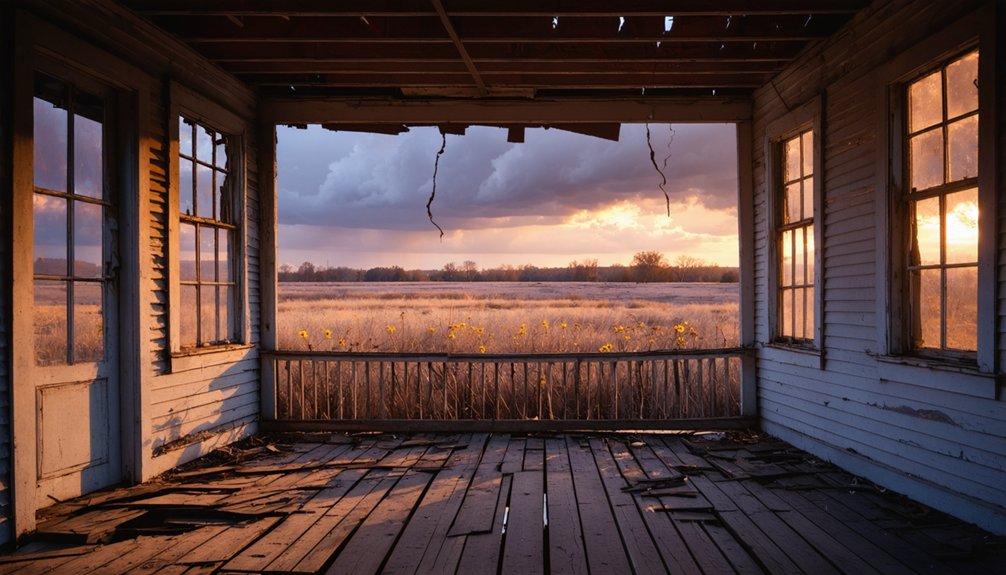
Visitors to Oklahoma’s ghost towns must contend with severe environmental and geological hazards that pose significant risks to personal safety.
You’ll need to navigate around toxic chat piles reaching 200 feet high, which contain dangerous levels of lead and zinc that wind can disperse as hazardous dust.
Underground collapse zones present an ever-present threat, as the honeycomb of abandoned mine tunnels can suddenly give way, creating sinkholes that swallow entire structures.
Weather challenges amplify these natural hazards, with Oklahoma’s severe storms and tornadoes posing additional risks. The 2008 EF4 tornado that devastated Picher serves as a stark reminder of nature’s destructive power.
When exploring these sites, you must stay on marked paths, as ground instability and subsidence continue to reshape the landscape, making formerly stable areas treacherous without warning.
Seasonal Impact on Structure Preservation
As Oklahoma’s ghost towns endure the state’s dramatic seasonal changes, each part of the year brings distinct preservation challenges to their historic structures.
You’ll find that spring and fall offer ideal conditions for both visiting and preserving structural integrity, while summer and winter accelerate seasonal decay through extreme temperatures and moisture variations.
The most critical factors affecting preservation include:
- Temperature fluctuations that cause expansion and contraction of building materials
- Moisture levels that influence wood rot and metal oxidation rates
- Seasonal vegetation growth that can either protect or damage remaining structures
When you’re exploring these sites, you’ll notice how summer’s intense heat and humidity accelerate deterioration, while winter’s freeze-thaw cycles can crack foundations.
Without year-round maintenance, these environmental forces continue their relentless impact on the remnants of Oklahoma’s abandoned settlements.
Frequently Asked Questions
Are Any Oklahoma Ghost Towns Legally Restricted From Public Access?
You’ll find restricted access at Tahlonteeskee, Picher, and Treece due to private land ownership, hazardous contamination, and historical preservation concerns. These ghost towns are legally off-limits to public exploration.
Can Metal Detectors Be Used at Oklahoma Ghost Town Sites?
Like a miner panning for gold, you’ll need proper permits and permissions. You can use metal detectors at Oklahoma ghost towns on state land with permits or private property with owner consent.
Which Ghost Towns Have Paranormal Investigation Permits or Guided Tours?
You’ll find guided paranormal tours and ghost hunting permits at Pawnee Bill Ranch, while Sapulpa’s Historical Museum offers sanctioned investigations. Oklahoma City’s official ghost tours cover multiple historic abandoned settlements.
Are Camping or Overnight Stays Allowed in Oklahoma Ghost Towns?
You’ll need to check specific camping regulations, as most ghost towns don’t permit official overnight accommodations. Dispersed camping may be allowed on surrounding public lands within standard 14-day limits.
Do Any Ghost Towns Still Have Active Residents or Businesses?
Where there’s life, there’s hope! You’ll find active communities in places like Omega and Zena, which maintain historical significance despite smaller populations. Several ghost towns still sustain residents and occasional businesses today.
References
- https://en.wikipedia.org/wiki/List_of_ghost_towns_in_Oklahoma
- https://www.beaversbendcreativeescape.com/se-oklahoma-ghost-towns/
- https://www.islands.com/1983558/ingalls-oklahoma-once-thriving-ghost-town-historic-hotspot-wild-west-outlaws/
- https://www.youtube.com/watch?v=CYSGQsnt_FY
- https://www.youtube.com/watch?v=5d-wHDTIbb0
- https://thesocialokie.com/oklahoma-ghost-towns/
- https://abandonedok.com/class/disappearing-town/
- https://www.okhistory.org/publications/enc/entry?entry=GH002
- https://everafterinthewoods.com/oklahoma-ghost-towns-where-time-stands-still-and-beauty-lingers/
- https://echo.snu.edu/the-ghost-towns-of-oklahoma/