You’ll find summer offers the most reliable conditions for exploring Pennsylvania’s ghost towns, with ideal accessibility and extended daylight hours. While peak season crowds gather between June and August, early morning visits can help you avoid the busiest times. Fall presents vibrant foliage backgrounds, and winter provides peaceful solitude with unique photography opportunities. Your choice of season will greatly affect your experience, as each brings distinct advantages and challenges to reflect upon.
Key Takeaways
- Summer offers optimal conditions for ghost town exploration with the best accessibility and longest daylight hours for site visits.
- Fall provides stunning photography opportunities with vibrant foliage backdrops and moderate crowds at historical locations.
- Winter reveals unique sites like submerged ghost towns when reservoir levels drop, though extra safety precautions are necessary.
- Early morning visits during peak seasons help avoid crowds, with 46% of regular visitors preferring weekly exploration trips.
- Spring allows better visibility of structures as vegetation recedes, but weather fluctuations require careful trip planning.
Why Summer Offers Prime Ghost Town Exploration
Although ghost towns in Pennsylvania can be explored year-round, summer provides perfect conditions for investigating these abandoned settlements.
Due to limited research data about seasonal visitation patterns and accessibility to Pennsylvania’s ghost towns, it’s not possible to make definitive claims about why summer is ideal for exploration.
The remnants of Petroleum Center lie within Oil Creek State Park, offering public access to this historic boomtown.
While some ghost towns like Yellow Dog Village and Pithole are documented locations, there isn’t concrete information about their seasonal conditions, operating hours, or best times for ghost town photography.
Visitors to Concrete City can explore the remains of 20 duplex buildings that have stubbornly stood since their failed demolition in 1924.
Without verified sources addressing weather patterns, trail conditions, or visitor traffic at these historical sites, suggesting specific advantages of summer exploration would be speculative.
If you’re planning to visit Pennsylvania’s ghost towns, you’ll need to research current accessibility and conditions regardless of season.
Fall’s Spectacular Backdrop for Abandoned Sites
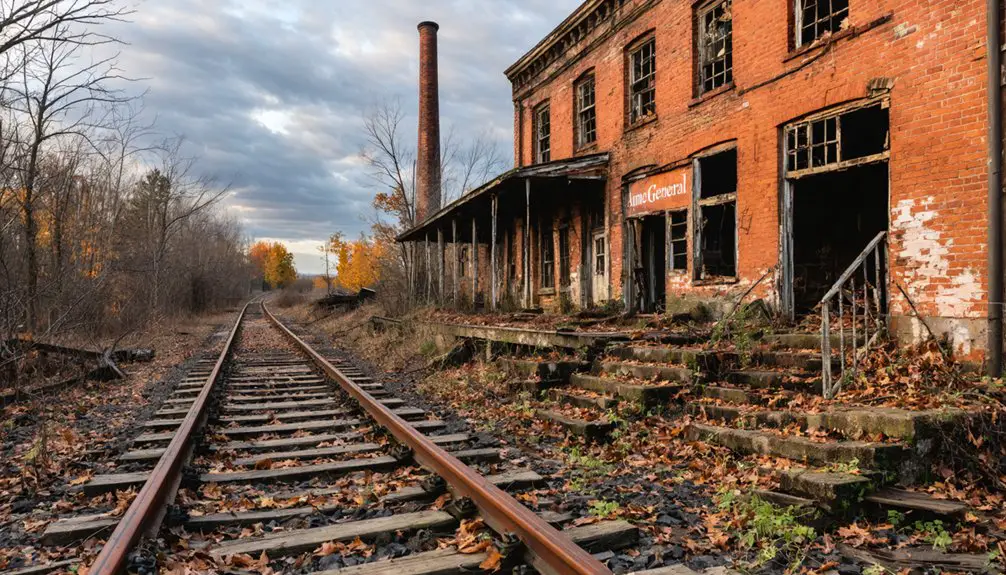
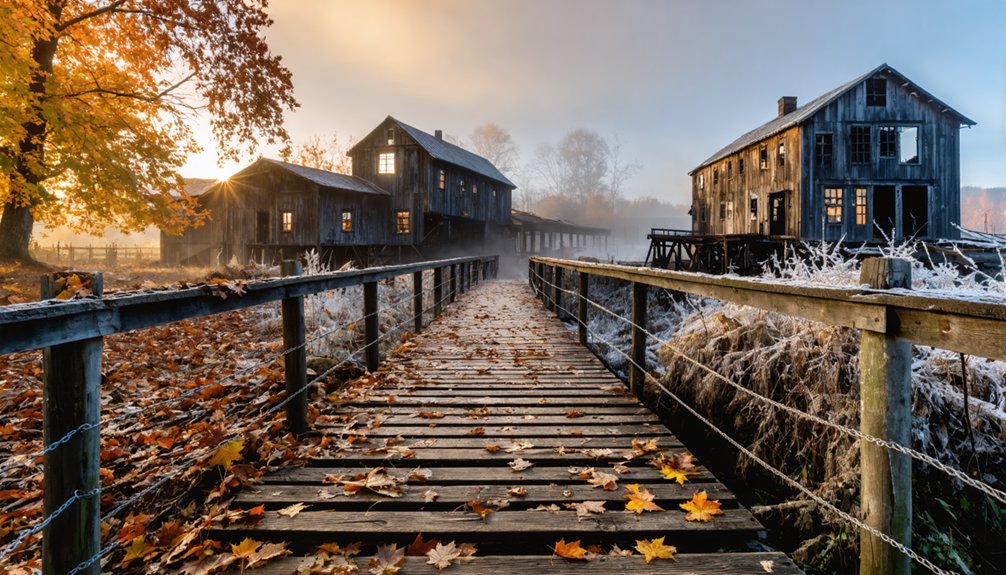
Fall transforms Pennsylvania’s ghost towns into hauntingly beautiful destinations, where abandoned structures stand against a backdrop of vibrant autumn foliage.
You’ll find exceptional ghost town photography opportunities at locations like Wolf Rocks Overlook and Beam Rocks, where autumn colors frame historic ruins against the Laurel Highlands landscape.
At Centralia, you’ll witness the haunting contrast of steam rising from the underground mine fire against red and gold leaves, while the town’s surviving church creates striking visual compositions.
The preserved streets of Pithole City and Yellow Dog Village offer unobstructed views of historic structures amid the seasonal transformation. History enthusiasts can also explore the Civil War battlefield at Gettysburg, where fallen leaves carpet the grounds that once witnessed fierce combat.
For the best fall experience, visit the Pennsylvania Lumber Museum, where October’s reflections in the sawmill pond double the impact of the colorful foliage. The museum’s educational exhibits provide fascinating insights into the state’s rich timber heritage.
Winter presents rare opportunities to explore Pennsylvania’s submerged ghost towns, particularly when reservoir water levels drop to reveal long-hidden historical sites.
You’ll find Corydon’s paved streets and cemetery remnants exposed in Warren County, while Somerfield emerges from the Allegany Reservoir’s receding waters.
However, winter exploration demands careful planning. Historical accidents on Lausanne’s roads and Broad Mountain’s hazardous conditions warrant extra caution. The area once called the “Switzerland of America” showcases dramatic winter landscapes that draw adventurous explorers.
You’ll need to navigate around deliberately buried sections like Centralia’s highway and avoid active steam vents and sinkholes in mining areas.
The Ghost Town Trail offers safer winter accessibility with its well-maintained 49.2-mile route, complete with amenities at Dilltown trailhead and parking near the historic Eliza Furnace in Vintondale. The trail’s scenic autumn colors make fall an especially beautiful time to explore these abandoned mining communities.
Spring Weather Considerations and Access Tips
As spring temperatures fluctuate across Pennsylvania, ghost town exploration requires strategic timing to navigate both the thawing ground and seasonal rains.
Due to limited available data about spring conditions at these historic sites, you’ll need to monitor local weather patterns and road accessibility before planning your visits. While some locations may become more visible as winter vegetation recedes, spring weather can create access challenges when foundations and bridges emerge during varying water levels.
Spring ghost town visits require close monitoring of weather and roads, as changing conditions can reveal or conceal historic ruins.
Your best approach is to contact local historical societies and park services for current conditions at specific ghost towns, as seasonal changes can affect site visibility and road conditions differently across Pennsylvania’s diverse regions. Sites like Yellow Dog Village remain among the most consistently accessible destinations year-round. Several underwater ghost towns created by reservoir construction become partially visible during spring water level changes.
In addition to the visibility of sites like Yellow Dog Village, there are numerous ghost towns to explore in Pennsylvania that offer a glimpse into the state’s rich history. Each location has its own unique story, often accompanied by remnants of buildings and infrastructure that tell tales of a vibrant past. Whether you are drawn to the eerie allure of abandoned streets or the intriguing history behind these locations, Pennsylvania’s ghost towns provide an unforgettable adventure.
Consider that spring vegetation growth may obscure certain ruins, while other locations might become more accessible as winter snow melts.
Peak Season Crowds vs. Solitary Adventures
You’ll encounter substantial crowds at Pennsylvania’s ghost towns during the peak summer months of June through August, when families and tourists flood popular historical sites and surrounding attractions.
Winter offers a stark contrast, providing peaceful, solitary experiences with minimal visitor traffic that allows for unhurried exploration and photography of abandoned structures. The humid continental climate creates an atmospheric backdrop for winter ghost town visits, with temperatures often hovering around 17 degrees Fahrenheit.
Fall strikes a middle ground, as October’s spectacular foliage draws moderate crowds to ghost town locations, though early morning arrivals can still secure relatively quiet viewing opportunities. For the most vibrant natural scenery, plan your visit in mid-May when the rhododendron blooms create stunning photo opportunities.
Summer Brings Larger Groups
During peak summer months, Pennsylvania’s ghost towns experience their heaviest visitor traffic, with usage data showing that nearly half of Ghost Town Trail users make weekly visits.
You’ll encounter larger group dynamics at popular access points like Dilltown, which draws 31% of visitors, and along the bustling Ebensburg segment where 20% of visitor interactions occur.
The summer surge brings a mix of local and out-of-state explorers, with Cambria County residents comprising 38.5% of visitors and Indiana County residents making up 26.8%.
The trail’s proximity to population centers like Johnstown and Altoona contributes to increased visitation, particularly during the statewide tourism peak when Pennsylvania welcomes over 192 million visitors.
This concentration of summer traffic transforms typically quiet ghost town pathways into social gathering spaces.
Winter’s Peaceful Ghost Towns
Winter’s dramatic transformation of Pennsylvania’s ghost towns offers a stark contrast to the bustling summer months.
You’ll find significant advantages to winter solitude, with only 9% of first-time visitors braving the cold season. The Ghost Town Trail, usually dominated by cyclists, transforms into a cross-country skiing haven for 4.6% of users seeking snowy exploration.
Winter drawdowns at Allegany Reservoir grant you rare access to Corydon’s submerged streets and cemetery, while the cold weather naturally deters casual tourists.
You’ll discover peaceful isolation at sites like Centralia, where winter’s quiet replaces summer’s graffiti artists. The season’s conditions create perfect opportunities for extended exploration of foundations and ruins, with 46% of regular visitors maintaining weekly access despite the weather, proving winter’s appeal for authentic ghost town experiences.
Fall’s Moderate Visitor Flow
While Pennsylvania’s fall season draws leaf-peeping tourists through the “It’s Fall-ier” campaign, ghost town visitation maintains a steady moderate flow that balances crowd levels.
Your autumn exploration opportunities benefit from strategic distribution across trail segments and access points, avoiding the intense peaks seen at preserved ghost towns in other states.
For ideal ghostly encounters without overwhelming crowds, consider:
- Trail usage patterns show 46% weekly visitors spread across key segments like Ebensburg (20%) and Vintondale-Nanty Glo (13.4%)
- Regional concentration keeps tourism manageable – 65.3% of visitors come from Cambria and Indiana counties
- Abandoned coal towns like Mt Carmel and Ashland provide isolated experiences perfect for fall visits
- Multiple access points, including Dilltown (31%) and Black Lick (17%), prevent bottlenecks during peak foliage season
Seasonal Safety Measures for Ghost Town Visits
You’ll need appropriate seasonal protective gear when exploring Pennsylvania’s ghost towns, including waterproof boots in spring, sun protection in summer, and insulated layers with emergency supplies in winter.
During your visit, carefully assess site-specific hazards like unstable flooring, contaminated water sources, and deteriorating structures before proceeding with your exploration.
Always carry basic safety equipment such as a first aid kit, flashlight, and weather-appropriate clothing regardless of the season you choose to visit.
Weather-Based Protection Equipment
To explore Pennsylvania’s ghost towns safely throughout the year, you’ll need specific protective gear that accounts for dramatic seasonal changes.
Weather gear requirements vary greatly between summer’s dense vegetation and winter’s increased visibility of structures and underground fires.
- Wear moisture-wicking layers during high-humidity conditions when exploring Centralia’s vents, as cold weather amplifies visible fumes.
- Pack sturdy waterproof boots for traversing Scotia Barrens’ microclimate and accessing Alvira’s bunkers in wet conditions.
- Bring high-visibility clothing for safety near active monitoring equipment, particularly during prescribed burns.
- Carry protective gloves rated for both cold weather and handling weathered structures.
These items create a flexible protective system that adapts to seasonal temperature swings while maintaining your mobility and safety across varying ghost town terrains.
Site-Specific Hazard Precautions
Beyond protective gear requirements, specific seasonal hazards demand careful consideration when visiting Pennsylvania’s ghost towns.
You’ll need heightened environmental awareness when maneuvering through site-specific dangers, particularly in areas like Centralia. Don’t let winter’s reduced steam visibility fool you – toxic gases and carbon monoxide remain lethal year-round.
Stay vigilant for ground stability issues, especially after rainfall when sinkholes up to 150 feet deep can form without warning.
You must carefully assess cracks and fissures before each step, as underground temperatures exceeding 900°F can compromise surface stability. Keep your distance from steam vents and maintain constant awareness of escape routes.
Remember that seemingly solid ground can collapse unpredictably due to burning coal seams beneath your feet.
Photographing Pennsylvania’s Ghost Towns Year-Round
Capturing Pennsylvania’s ghost towns through photography requires careful consideration of seasonal conditions that dramatically affect image quality and access. Understanding seasonal aesthetics and mastering photographic techniques will help you document these historic sites effectively throughout the year.
- Fall provides excellent conditions with stable weather, vibrant colors, and natural lighting that enhances architectural details.
- Winter creates dramatic contrasts and reveals structural elements, though requiring protective gear for your equipment.
- Spring offers renewed vegetation framing deteriorating structures, but watch for rain and muddy conditions.
- Summer presents challenges with hazy atmosphere and tourist crowds, though early morning shoots can yield good results.
For best results, plan your ghost town photography during fall months when maintained trails, predictable weather, and dramatic lighting converge to create ideal shooting conditions.
Frequently Asked Questions
Are Camping Facilities Available Near Any of Pennsylvania’s Ghost Towns?
With 4+ designated camping options near ghost towns, you’ll find diverse accommodations including Yellow Dog Village’s campgrounds, Ghost Town Trail’s facilities, Oil Creek’s hike-in shelters, and Hipcamp’s abandoned schoolhouse site.
Which Ghost Towns Have Accessible Restroom Facilities for Visitors?
You’ll find reliable restroom facilities along Ghost Town Trail, with locations at Dilltown trailhead and Vintondale. Other ghost towns like Yellow Dog Village and Breezewood lack functional visitor amenities and bathroom access.
Do Any Ghost Towns Offer Guided Tours During Specific Seasons?
You’ll find peak guided tour availability during fall (September-October), with operators offering lantern-led walks and paranormal investigations. Summer months also feature regular tours, while spring and winter maintain limited seasonal tour highlights.
What Wildlife Encounters Are Common When Exploring Pennsylvania Ghost Towns?
Ever wonder what creatures call these abandoned places home? You’ll commonly spot deer, foxes, and small mammals like squirrels around ruins. Birds nest in old structures, while amphibians thrive near water sources.
Are Metal Detectors Allowed at Pennsylvania Ghost Town Sites?
You’ll need special permits for ghost towns due to metal detecting regulations and historical preservation concerns. Most sites are protected under ARPA, making artifact removal illegal without proper authorization.
References
- https://en.wikipedia.org/wiki/List_of_ghost_towns_in_Pennsylvania
- https://www.atlasobscura.com/things-to-do/pennsylvania/ghost-towns
- https://uncoveringpa.com/ghost-towns-in-pa
- https://kids.kiddle.co/List_of_ghost_towns_in_Pennsylvania
- https://www.youtube.com/watch?v=yxFuqGq-FJ8
- https://pabucketlist.com/pa-abandoned-places/
- https://www.youtube.com/watch?v=0jxNCcpVW2o
- https://www.geotab.com/ghost-towns/
- http://freepages.rootsweb.com/~gtusa/history/usa/pa.htm
- https://www.youtube.com/watch?v=uMtEti4E_-Q