You’ll find Tennessee’s ghost towns most intriguing during fall and winter months when crowds thin out and visibility improves. Fall offers vibrant foliage and comfortable temperatures for photography, while winter creates an ethereal atmosphere with dramatic lighting and enhanced architectural details. Spring provides early access but muddy conditions, and summer brings challenging heat and peak tourism. Special seasonal events like moonlit tours and haunted walks enhance your exploration, with unique opportunities awaiting in each distinct mountain microclimate.
Key Takeaways
- Fall provides optimal conditions with vibrant foliage, comfortable temperatures, and special ghost-themed festivals like Granville’s Ghost Walk.
- Winter offers ethereal atmospheres and fewer crowds, though mountainous areas face ice conditions and potential trail closures.
- Spring enables comfortable exploration temperatures but muddy trail conditions persist through May due to seasonal thaws.
- Summer allows reliable access to ghost towns but faces challenges with intense heat and peak tourist crowds.
- Early morning or late afternoon visits year-round provide the best lighting for photography and exploration of historic structures.
Peak Seasons for Ghost Town Exploration
While Tennessee’s ghost towns are accessible year-round, each season offers distinct advantages for exploration.
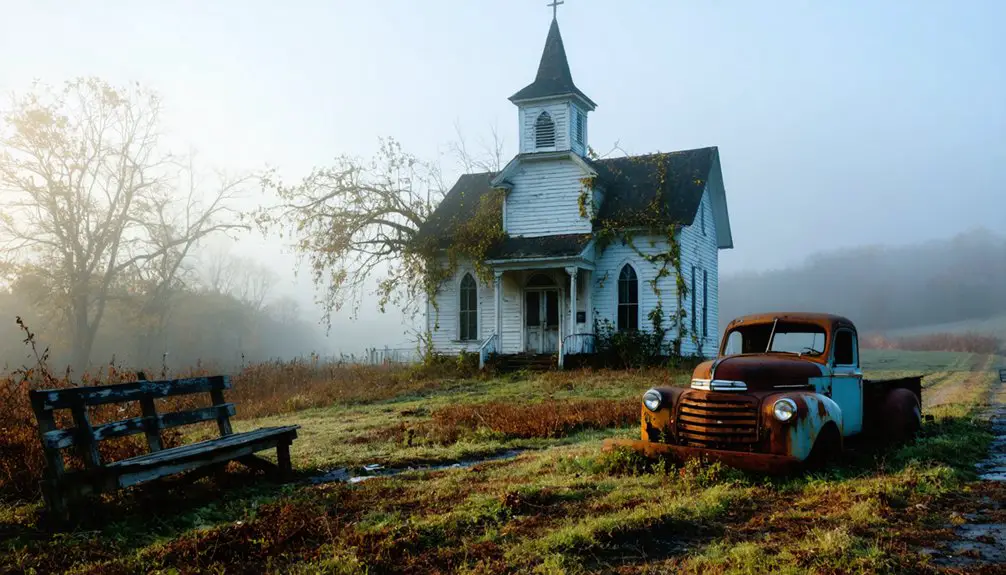
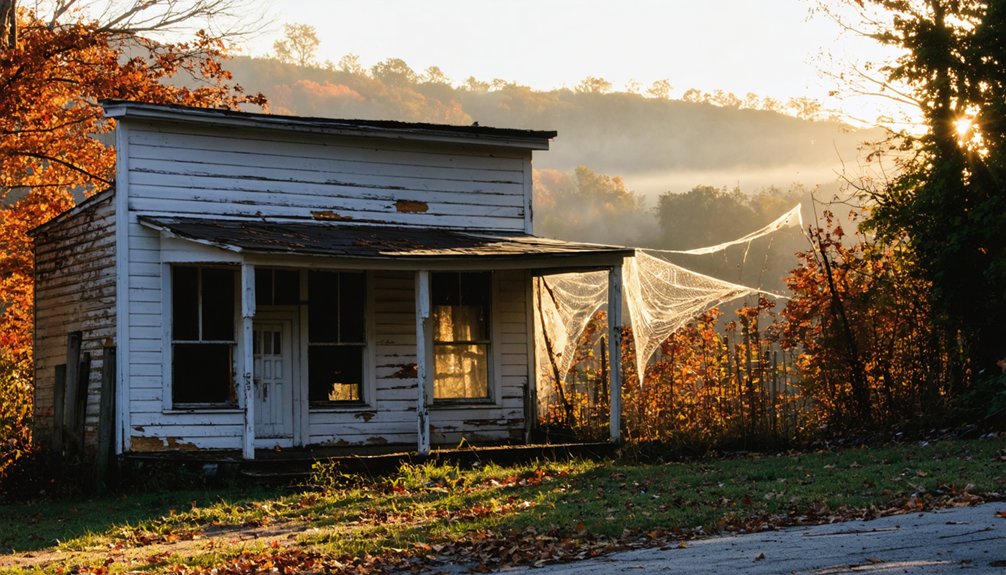
Fall stands out as prime time for seasonal photography, with autumn colors enhancing abandoned structures against a backdrop of magical forest settings. The Little River Railroad once brought wealthy visitors through these same colorful forests to vacation in Elkmont. Appalachian Club members regularly hosted lavish parties during peak seasons.
Winter brings an ethereal atmosphere and reduced crowds, making it ideal for capturing ghost town history in places like Elkmont and Pinnacles.
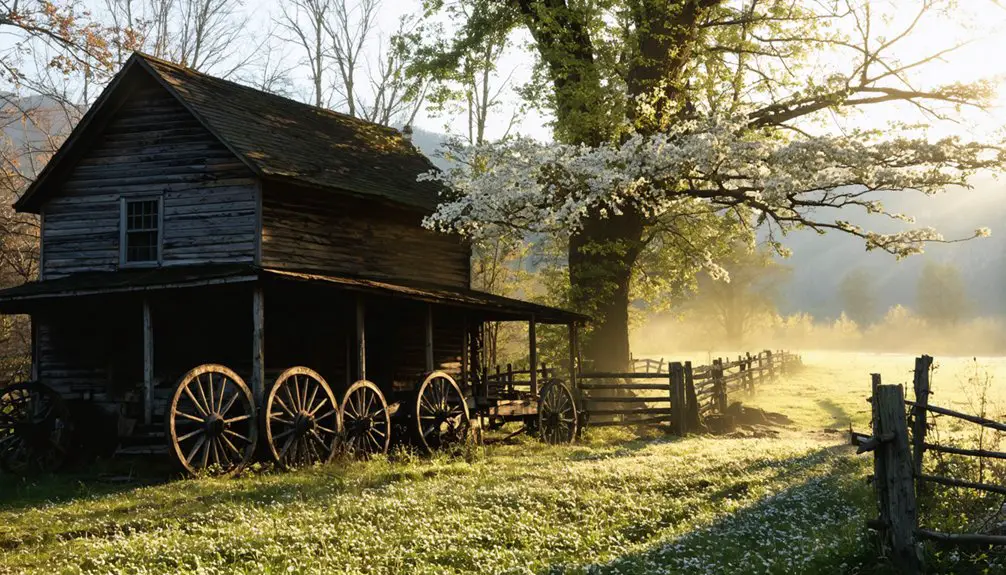
You’ll find spring offers comfortable temperatures and early access before summer crowds arrive, perfect for exploring historic cabins and cemetery grounds.
Summer proves challenging due to intense heat, though it provides context for understanding these locations’ origins as warm-weather resorts.
If you’re seeking the best balance of accessibility and ambiance, plan your visit during fall or winter months when restored structures and historic sites are most atmospheric.
Weather Considerations for Different Locations
Weather patterns greatly shape your ghost town exploration experience across Tennessee’s diverse regions.
From rolling valleys to mountain peaks, Tennessee’s weather shapes every step of your ghost town adventures.
You’ll encounter distinct microclimates in the Appalachian Mountains, where ghost town accessibility varies dramatically with elevation and seasonal changes. The Nolichucky Gorge area, including Lost Cove, presents unique weather impacts due to its rugged terrain and border location. Four streams flowing through Lost Cove impact seasonal navigation conditions.
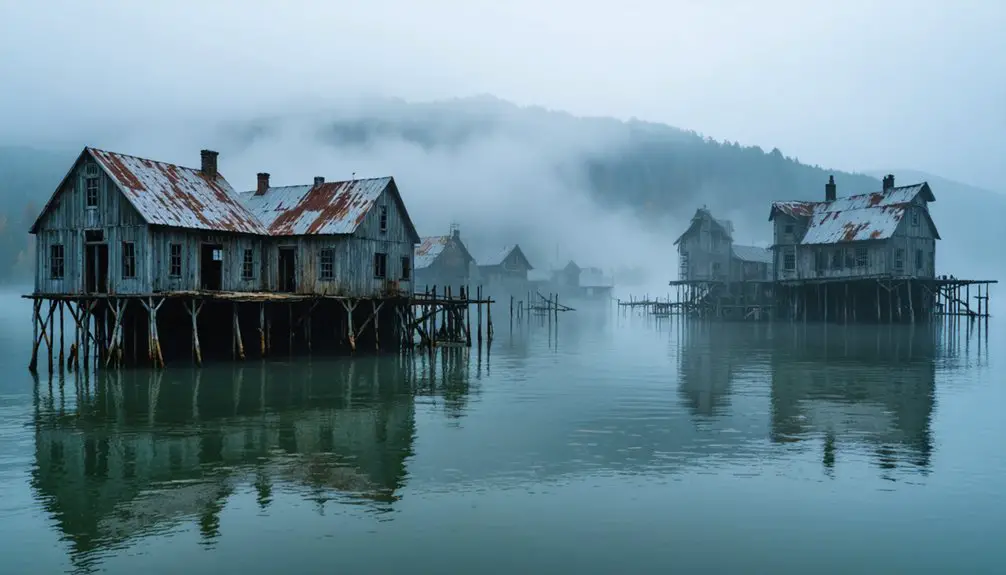
In valley locations, flooding history affects site visibility, as demonstrated at Willow Grove’s submerged ruins and Ashport’s flood-prone remains. The Dale Hollow Reservoir construction in the 1940s permanently altered access to historical sites in this area.
In mountainous areas like Elkmont, where winter brings treacherous ice conditions and summer delivers unpredictable storms. You’ll find spring and early summer typically offer ideal exploration conditions, though mountain elevations maintain cooler temperatures year-round.
Be prepared for rapid weather shifts, particularly in higher elevation ghost towns where forest canopy and gorge topography influence local conditions.
Special Events and Festivals Near Ghost Towns
You’ll find Tennessee’s ghost towns come alive during autumn with unique seasonal festivals and moonlit tours that showcase their haunted histories.
The National Storytelling Festival in historic Jonesborough and Falloween Livingston offer immersive experiences where you can explore abandoned structures while professional storytellers share local legends and paranormal tales. The Hermitage offers lantern-lit tours where guides in period clothing share stories of tragedies and unexplained incidents at Andrew Jackson’s estate. Frightmare Manor adds multi-attraction scream experiences to amplify the haunted atmosphere.
Guided lantern tours, like those at Ruby Falls and Haunting on the Mount, let you experience these forgotten places after dark, when their ethereal qualities are most pronounced.
Seasonal Ghost Town Festivals
Throughout autumn, Tennessee’s historic sites come alive with seasonal festivals and ghost-themed events that blend entertainment with local folklore. You’ll find ghostly encounters at Granville’s annual Ghost Walk, where haunting tales echo through the hills and hollers. Local guides share legendary tales and lore from 6:00-8:30 pm during the two-day October event.
Festival highlights include the Fall-o-ween celebration in Livingston, featuring living history exhibits and spine-tingling downtown tours. Advance tickets are strongly recommended due to limited space at these popular events.
For an immersive experience, visit the Haunting on the Mount at Rocky Mount State Historic Site, where 18th-century stories unfold under moonlit skies.
The Ruby Falls Lantern Tour offers unique cave explorations with chilling Chattanooga legends, while Jonesborough’s National Storytelling Festival presents world-class ghost story concerts in historic settings.
These carefully curated events showcase Tennessee’s rich paranormal heritage through expertly guided tours and authentic historical interpretations.
Trail Moonlight Tours
When darkness falls over Tennessee’s historic ghost towns, moonlight tours offer an enchanting way to explore their haunted heritage.
You’ll discover eerie trails through Elkmont’s preserved ruins, where moonlit hikes reveal crumbling chimneys and stone walls along Jakes Creek and Little River trails. The 19-acre historic district becomes particularly atmospheric after sunset.
For ghostly encounters, you can join guided evening tours in nearby Gatlinburg that investigate tales of haunted hotels and mysterious deaths. Children ages 12 and under can join these spooky adventures for free when accompanied by a paying adult.
These 2-hour explorations, starting at $40, take you through shadowy streets while recounting stories of Radford Gatlin and documented paranormal activity.
Don’t miss the historic cemetery with its quartz headstones, believed to trap spirits, or the preserved structures of Daisy Town that stand as silent witnesses to the past. The area’s rich history began when Colonel Wilson B. Townsend established the Little River Lumber Company in 1901.
Seasonal Trail Access and Road Conditions
You’ll need to carefully plan your Tennessee ghost town visits around seasonal road conditions, as winter closures can make some locations inaccessible from December through February.
Spring thaws typically create muddy trail conditions through May, requiring waterproof footwear and extra caution when exploring historic sites like Elkmont.
Summer offers the most reliable access with all roads open, though you’ll encounter peak crowds during June’s synchronous firefly events and throughout the high tourism season.
Winter Road Closures Alert
During Tennessee’s winter months, significant road closures and access restrictions affect ghost town exploration, particularly in the Cherokee National Forest region from December 20 through March 18, 2025.
You’ll need to plan carefully as winter access becomes limited across seven North Zone counties, including Cocke, Greene, Washington, Unicoi, Carter, Sullivan, and Johnson.
Road advisories indicate that higher elevations face severe ice and snow conditions, while construction adds further complications.
You’ll encounter lane closures on SR 449 in Sevier County between Veterans and Dollywood Lane from 9:00 a.m. to 3:00 p.m. daily through December 23.
If you’re traveling during the holiday period, you’ll benefit from TDOT’s suspension of temporary lane closures from December 23 to January 2, though permanent safety closures remain in effect.
Spring Mud Trail Caution
Spring exploration of Tennessee’s ghost towns requires heightened caution as muddy conditions create treacherous hiking environments throughout the Appalachian region.
You’ll encounter particularly challenging terrain along Devil’s Creek Trail and Lost Cove Trail, where spring rainfall transforms stable paths into slippery hazards.
For ideal trail safety during your spring hiking adventures, you’ll need ankle-supporting boots to navigate root-lined paths and moss-covered ruins.
The region’s variable weather patterns can trigger sudden downpours, creating flash mud flows on steep descents.
You’ll find handrails at creek crossings essential, especially near the Elkmont area where wet conditions intensify.
Early arrival is vital since trailhead parking fills quickly, and you’ll need to check with ranger stations for current conditions before attempting any ghost town explorations.
Summer Access Peak Times
While spring’s muddy conditions pose challenges, summer brings ideal accessibility to Tennessee’s ghost towns, particularly in the Elkmont Historic District.
You’ll find the paved roads from Gatlinburg to Elkmont Campground well-maintained, offering reliable access to the historic sites. The Little River Trail and Jakes Creek Trail provide dry, stable footing for exploring the stone chimneys, walls, and foundations of former resort buildings.
Summer’s peak season showcases ongoing preservation work, with 19 structures slated for restoration by 2025.
You can easily navigate from the campground to various trail networks, including paths to the Wonderland Hotel ruins. The area’s infrastructure supports high visitor numbers, with ample parking at trailheads and clear signage guiding you through the historic district.
Wildlife and Nature Viewing Opportunities
For nature enthusiasts exploring Tennessee’s ghost towns, Elkmont’s rich biodiversity offers exceptional wildlife viewing opportunities throughout the year.
You’ll find black bears, deer, and numerous bird species along the scenic hiking trails that wind through the abandoned structures. The area’s overgrown paths create perfect wildlife corridors for observation and nature photography.
Early June brings a spectacular natural phenomenon when thousands of synchronous fireflies perform their distinctive mating display, making Elkmont one of the few places in the United States to witness this event.
You’ll need to enter a lottery for viewing spots during this peak period. The combination of preserved historical structures and thriving wildlife habitats creates unique opportunities to capture both natural and architectural elements in your photographs.
Photography and Lighting Through the Seasons
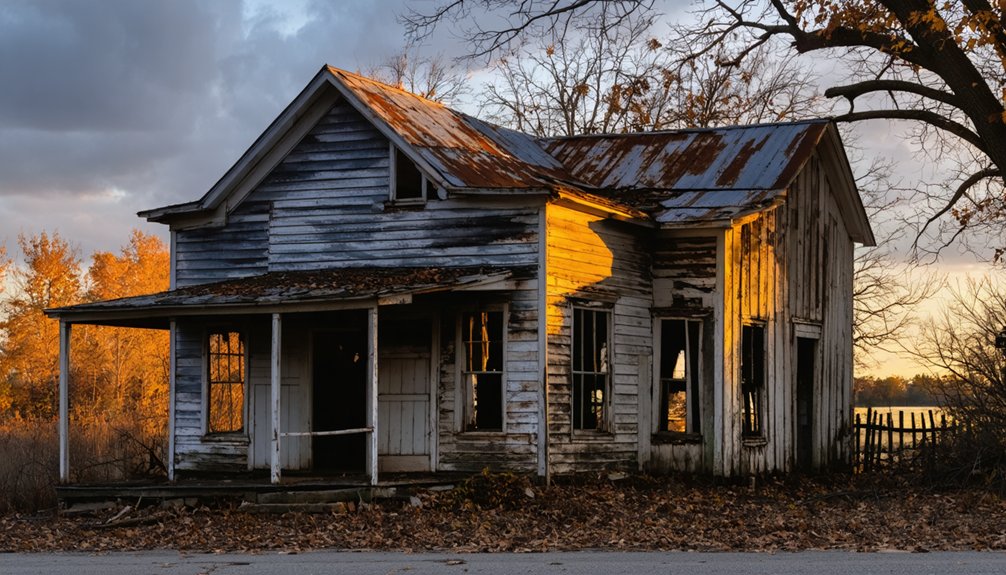
Throughout Tennessee’s ghost towns, seasonal lighting conditions dramatically influence photography opportunities, with each period offering distinct advantages for capturing abandoned structures.
Your mastery of lighting techniques will determine the success of documenting these historic sites across seasonal contrasts.
- Winter’s low-angle sunlight creates dramatic shadows on restored cabins, while bare trees reveal hidden architectural details and stone chimneys.
- Spring’s diffused light and emerging foliage provide soft illumination for early 20th-century facades, especially around Daisy Town cottages.
- Summer offers unique opportunities like the synchronous firefly event, while dense canopy creates dappled light patterns in cabin interiors.
- Fall’s golden light and peak foliage enhance Society Hill cabins and Spindle Top, with side lighting accentuating textures on historic structures.
Aim for early morning or late afternoon shoots year-round to avoid harsh overhead light.
Frequently Asked Questions
Are Camping Facilities Available Near Any of These Ghost Town Locations?
You’ll find extensive camping options at Elkmont Ghost Town, with 220 campsites available. The campground’s facilities include restrooms and walk-in tent sites situated steps from historic ghost town amenities.
What Paranormal Investigation Permits or Permissions Are Required for Overnight Stays?
With 12-person maximum groups permitted, you’ll need site-specific permissions rather than state permits. Book through official operators like Black Wolf Paranormal for Bell Witch Cave ($700-1000) or contact historic properties directly for overnight access.
How Accessible Are These Ghost Towns for Visitors With Mobility Challenges?
You’ll find decent wheelchair accessibility at Elkmont’s main road with historical markers visible from your car, though terrain beyond Daisy Town section isn’t suitable for mobility devices or walkers.
Do Any Ghost Towns Offer Guided Historical Tours or Educational Programs?
You’ll discover incredibly rich historical significance through Appalachian GhostWalks’ guided tours, which blend spine-tingling folklore with mountain heritage education, while Chattanooga Ghost Tours expertly weaves Civil War and Trail of Tears narratives.
Which Ghost Towns Have Restroom Facilities or Visitor Centers Nearby?
You’ll find ghost town amenities including restrooms at Elkmont’s campground, Rugby’s Visitor Centre, Port Royal’s state park facilities, and near Hales Bar Dam at both Willow Grove Campground and Dam Whiskey Corp.
References
- https://en.wikipedia.org/wiki/List_of_ghost_towns_in_Tennessee
- https://www.wanderingsmokymountains.com/smoky-mountain-ghost-towns-in-tennessee/
- https://kids.kiddle.co/List_of_ghost_towns_in_Tennessee
- https://freepages.rootsweb.com/~gtusa/history/usa/tn.htm
- https://www.tnmagazine.org/19-ghost-towns-in-tennessee-that-are-not-underwater/
- http://www.onlyinyourstate.com/experiences/tennessee/tn-ghost-towns
- https://www.youtube.com/watch?v=s9lVc_zwaAU
- https://www.loveproperty.com/gallerylist/91679/tour-the-abandoned-tennessee-ghost-town-where-millionaires-vacationed
- https://wbkr.com/historic-mountain-ghost-town-awaits-your-next-east-tn-visit/
- https://gatlinburghaunts.com/elkmont-tennessees-ghost-town/