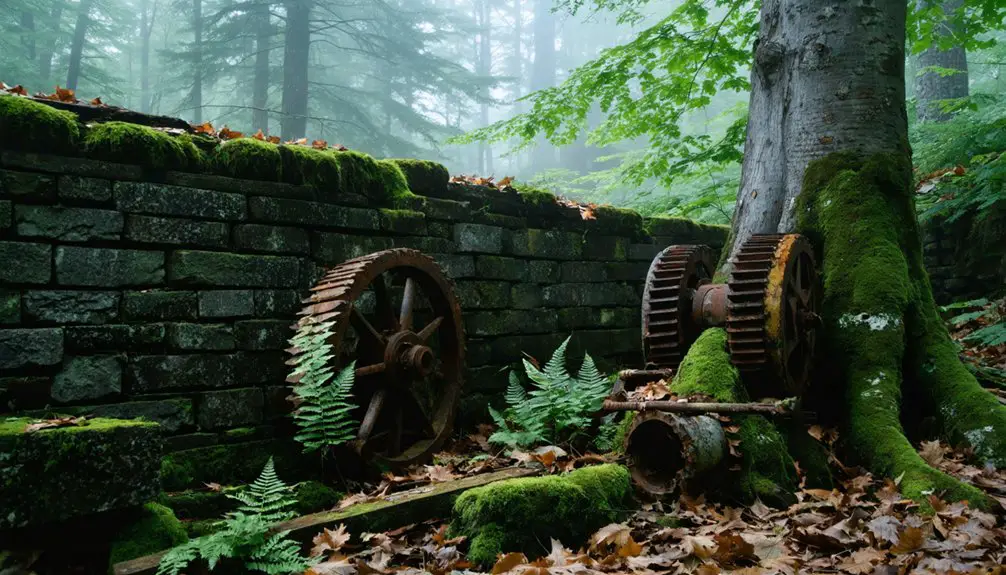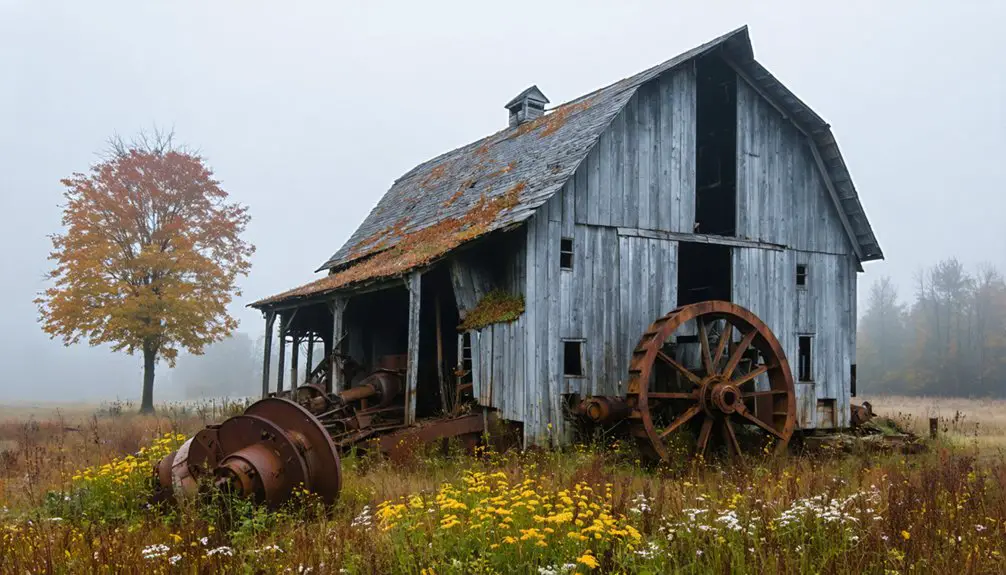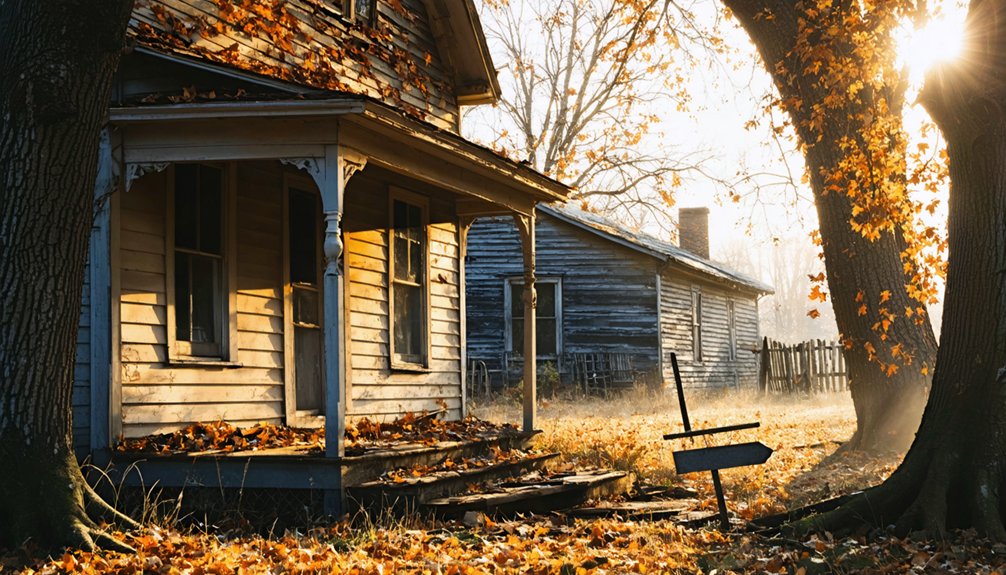
You’ll find Vermont’s ghost towns most accessible during autumn, particularly September through early October, when fall foliage creates dramatic backdrops against historic ruins. The crisp weather and low-angle sunlight enhance photography conditions while revealing architectural details often obscured in summer’s glare. Though summer attracts the highest visitation, autumn offers fewer crowds and comfortable temperatures for exploration. Winter brings challenging conditions, while spring’s mud season complicates access – careful seasonal planning will greatly enhance your ghost town experience.
Key Takeaways
- September offers optimal ghost town exploration with comfortable temperatures, lighter crowds, and perfect lighting conditions for photography.
- Summer attracts the most visitors with extended daylight hours and best accessibility, though mid-week visits help avoid peak crowds.
- Winter severely limits access due to hazardous conditions and trail closures, making it the least suitable season for exploration.
- Spring enables unique research opportunities but requires careful planning due to mud season and variable road conditions.
- Fall provides exceptional photography conditions with clear skies and vibrant foliage, though some roads close during peak foliage season.
Seasonal Weather Patterns Affecting Ghost Town Access
While Vermont’s ghost towns beckon visitors year-round, seasonal weather patterns considerably influence accessibility and exploration conditions.
These seasonal impacts create distinct challenges and opportunities throughout the year. Winter brings hazardous snow and ice conditions, limiting trail access and closing observation towers like the one at Glastenbury Mountain. The Bennington Triangle region experienced several mysterious disappearances during winter months.
Snow and ice transform Vermont’s ghost towns each winter, making trails treacherous and forcing closures of historic observation points.
During summer months, you’ll encounter swampy terrain and increased mosquito activity, particularly around sites like Frontier Town. Many historic structures can be found near scenic covered bridges in areas like Montgomery Center.
Weather variations in fall offer the most favorable conditions, with stable temperatures, reduced precipitation, and improved visibility for photography and documentation.
The autumn season provides clearer atmospheric conditions for tower views, while lower humidity creates safer hiking conditions than summer or winter.
Fall’s moderate climate allows for extended exploration periods, making it ideal for ghost town visits.
Spring Thaw Benefits for Historical Exploration
Spring weather patterns create unique research opportunities at Vermont ghost towns, despite the challenges posed by thawing conditions. Given the limited data available on spring accessibility and historical research during this season, you’ll need to carefully plan your ghost town explorations while considering the variable weather patterns typical of Vermont springs.
The rich folklore surrounding locations like the Northeast Kingdom region adds historical depth to ghost town exploration ventures. Visitors can explore remnants of past industry, like the wool factory ruins still visible at Greenbanks Hollow.
- Contact local historical societies before visiting to understand current site conditions and access restrictions during the spring thaw period.
- Monitor weather forecasts and road conditions, as some ghost town locations may have limited accessibility during mud season.
- Document and share your findings with historical preservation groups to help build knowledge about seasonal access patterns.
Until more thorough research emerges about spring-specific benefits for ghost town exploration in Vermont, focus on working with local experts and following established safety protocols when visiting these historic sites.
Summer Peak Season Experience and Challenges
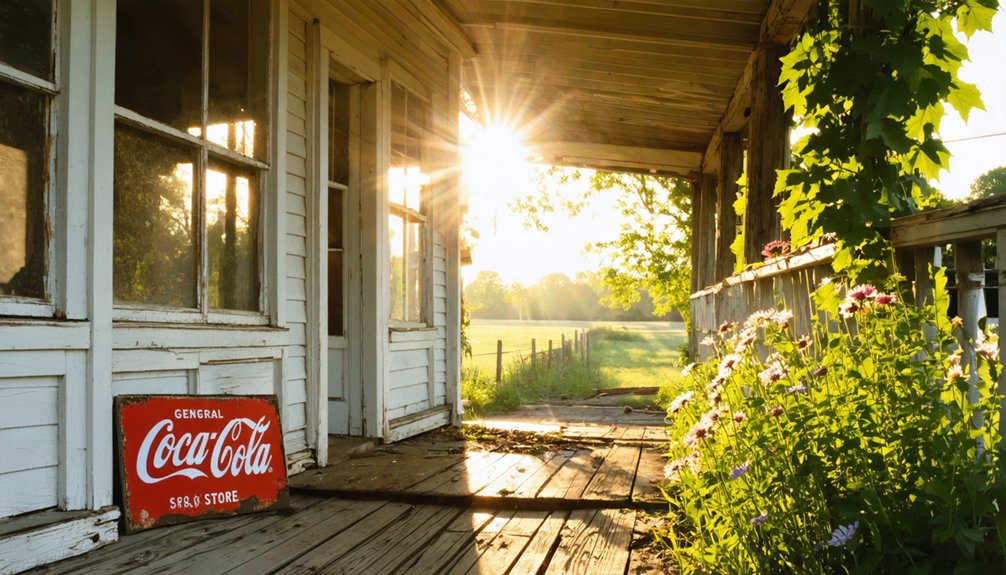
Despite the challenges of managing peak crowds, summer stands as Vermont’s premier season for ghost town exploration, with tourism data showing nearly half of the state’s annual visitors arriving between June and August.
Summer’s peak season brings half of Vermont’s yearly visitors, making it ideal for ghost town adventures despite the crowds.
While the surge in summer tourism creates notable visitor congestion at popular destinations, you’ll find ghost towns more accessible due to improved weather conditions and extended daylight hours.
The historic Old Stagecoach Inn attracts numerous paranormal enthusiasts during the summer months, with visitors hoping to encounter the ghost of Nettie Spencer.
Research shows visitors typically stay 4.4 nights, with 30% extending their stays beyond five nights, giving you ample time to explore remote historical sites.
The concentration of 15.8 million annual visitors during summer months primarily affects mainstream attractions like Lake Champlain and the Upper Green Mountains, meaning you can strategically plan your ghost town visits during mid-week periods when crowds thin out at these lesser-known historical locations.
Many seasonal businesses benefit from implementing automated systems integration to manage the influx of summer visitors while maintaining operational efficiency.
Autumn’s Perfect Photography Conditions
During autumn’s crisp weather, you’ll find ghost town photography at its finest as the season’s low-angle sunlight reveals architectural details often hidden in summer’s harsh glare.
Vermont’s clear fall skies provide ideal conditions for capturing weathered structures against vibrant foliage, while morning fog adds ethereal elements to your compositions. Remember that road closures from September 23 to October 15 may affect access to certain locations. Many photographers and tourists seek out locations like Sleepy Hollow Farm during peak foliage season.
The reduced haze of cooler temperatures sharpens contrasts between abandoned buildings and their surroundings, helping you document historically significant features with remarkable clarity.
Clear Autumn Lighting
When capturing Vermont’s abandoned settlements, autumn’s distinct lighting conditions create extraordinary photographic opportunities. The interplay between golden hour and overcast conditions offers unique advantages for documenting these historical sites.
- Morning’s golden hour, occurring just after sunrise, provides crystal-clear air and soft, directional light that reveals intricate architectural details while casting long shadows across weathered structures. Neutral Density filters help control exposure during these bright morning shoots.
- Overcast conditions deliver even illumination, perfect for capturing the textures of aged wood, rusty metal, and crumbling foundations without harsh contrast interfering with detail preservation. Use a low ISO setting to maintain the highest image quality while photographing these textural elements.
- Post-rain clarity combines with breaking sunlight to create dramatic scenes, as lingering moisture intensifies colors and enhances the atmospheric quality of your ghost town photography while reducing unwanted glare.
Hidden Details Emerge
Autumn’s shifting conditions illuminate previously overlooked details throughout Vermont’s ghost towns. As fall foliage reclaims abandoned structures, you’ll discover hidden treasures beneath layers of golden leaves – from weathered foundation stones to remnants of daily life that urban legends often reference.
The season’s lower sun angle creates dramatic shadows that reveal subtle architectural features, while vines frame forgotten doorways in artistic displays.
You’ll find that overcast skies provide ideal diffused lighting to photograph these forgotten spaces, highlighting textures and details that harsh summer sun typically obscures.
Time your visit carefully, though, as peak foliage windows are brief. The contrast between nature’s vibrant display and decaying structures tells compelling stories of abandonment, but you’ll need to avoid popular spots during high-traffic periods when local authorities restrict access.
Winter Considerations and Safety Measures
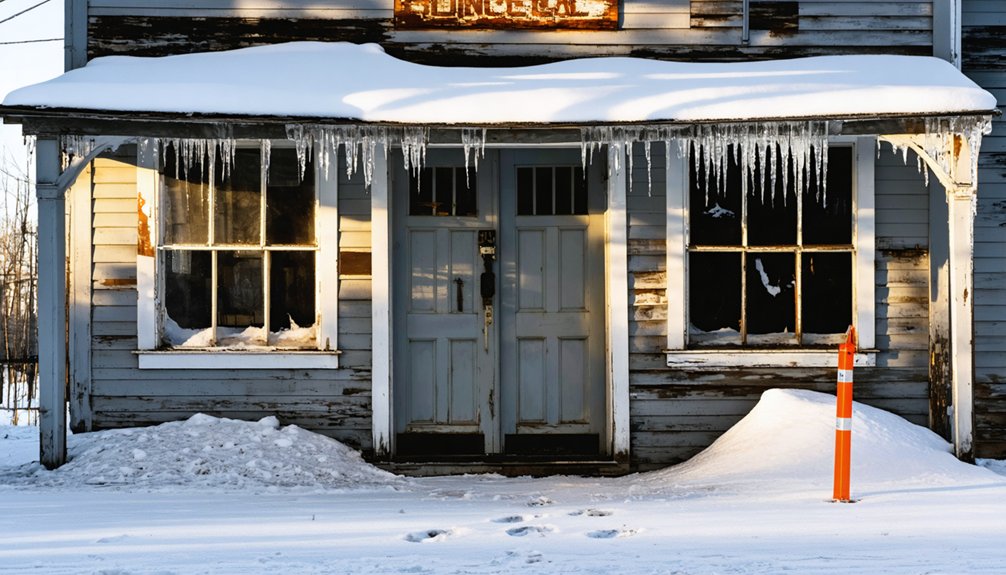
You’ll need thorough cold-weather gear and emergency supplies when exploring Vermont’s ghost towns during winter, as the harsh conditions around Glastenbury Mountain create serious survival risks.
The remote locations, combined with minimal infrastructure and cellular coverage, require careful advance planning and communication of your intended route to others.
Emergency shelter options are extremely limited in these areas, so you must be prepared to navigate back to safety through potentially severe weather while dealing with early sunsets and challenging terrain.
Cold Weather Safety Essentials
Braving Vermont’s ghost towns during winter months demands meticulous preparation and specialized safety measures to protect against harsh conditions. When exploring these historic sites in cold weather, you’ll need thorough safety gear to guarantee your well-being in remote locations.
Essential winter safety protocols include:
- Layer your clothing with wool or synthetic materials, avoiding cotton, and always carry additional layers since ghost towns offer limited shelter options.
- Pack navigation tools including paper maps and compass, as electronic devices can fail in extreme cold and ghost town trails are often poorly marked.
- Equip yourself with proper traction devices and winter boots, plus emergency shelter materials like tarps or bivy sacks, since rescue services may face delays reaching abandoned locations.
Remote Access Challenges
During Vermont’s harsh winter months, accessing ghost towns becomes considerably more challenging as seasonal road closures transform familiar routes into snowbound corridors.
You’ll find Smugglers Notch and mountain passes completely closed, requiring alternative access routes via snowshoe or cross-country skis. Remote navigation to sites like Ricker Basin and East Mountain’s Cold War ruins demands careful planning and map expertise.
The most isolated locations, including Madame Sherri’s Castle ruins and abandoned Hogback Mountain ski area, become particularly treacherous during winter conditions.
You’ll need to rely on warming huts along cross-country trails for safety breaks, while unmarked dirt roads to historical sites are only accessible via snowmobile trails.
Local intelligence gathering at places like Craftsbury General Store becomes essential for understanding current conditions before attempting remote ghost town exploration.
Emergency Shelter Planning
Winter survival in Vermont’s ghost towns demands rigorous emergency shelter planning, particularly as temperatures plummet below freezing.
You’ll need to understand emergency protocols that activate when temperatures drop below 32°F, especially with the region’s severe weather patterns and arctic blasts reaching -10°F.
When exploring these historic sites during winter, consider these critical shelter capacity measures:
- Select elevated locations 100 feet from water sources to avoid flash floods.
- Build snow shelters in 3-foot thick drifts with upward-angled tunnels for ideal warm air retention.
- Insulate your shelter floor with pine boughs and maintain proper ventilation through strategic roof holes.
Optimal Times for Archaeological Documentation
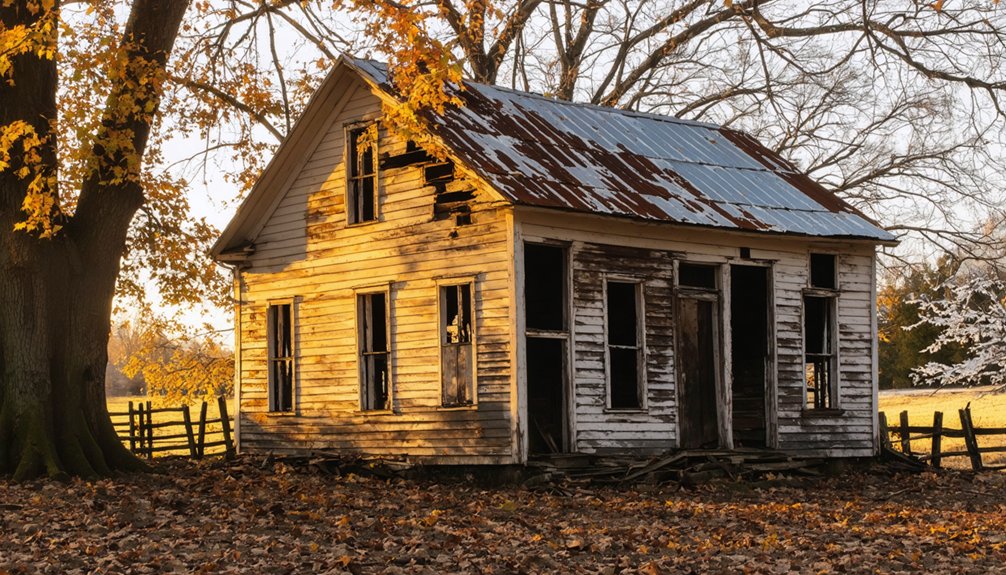
Although archaeological documentation can occur year-round in Vermont’s ghost towns, the seasonal conditions considerably impact the effectiveness of different research methods.
You’ll find summer offers perfect conditions for archaeological surveys, with warm, dry weather enabling thorough site investigations and artifact recovery.
Spring provides excellent opportunities after snowmelt but before vegetation growth obscures surface findings.
The spring window between melting snow and emerging vegetation creates prime conditions for discovering artifacts on Vermont’s ghost town surfaces.
Fall’s leaf drop improves ground visibility, making it ideal for surface collection and final measurements before winter sets in.
Winter severely limits field activities, so you’ll want to focus on desk-based research and planning during these months.
Your seasonal strategies should align with natural conditions – conducting intensive fieldwork in summer, initial surveys in early spring, and documentation work in fall, while reserving winter for analysis and preparation of future investigations.
Essential Planning Tips by Season
With each distinct season presenting unique challenges and opportunities, successful ghost town visits in Vermont require careful seasonal planning and preparation. Understanding historical significance and preservation techniques will enhance your exploration while protecting these irreplaceable sites.
Weather conditions dramatically impact accessibility and safety at locations like Ricker Basin and Glastenbury Mountain.
- Spring offers solitude and wildflower viewing, but prepare for mud season with appropriate gear.
- Summer provides extended daylight and warm temperatures, though insects and humidity require strategic planning.
- Fall delivers peak foliage and haunted tours, while winter demands specialized equipment and shortened exploration windows.
Remember to document your route, respect property boundaries, and follow Leave No Trace principles to preserve these cultural treasures for future generations to study and explore.
Ghost Town Visibility Throughout the Year

Seasonal changes dramatically influence your ability to spot and photograph Vermont’s abandoned settlements throughout the year.
Spring delivers peak waterfall flows for dramatic ghost town exploration shots, though muddy conditions can limit access.
Vermont’s spring waterfalls create stunning backdrops for abandoned settlements, but be prepared to navigate through challenging mud-season terrain.
Early fall offers ideal visibility with minimal crowds before foliage peaks, while October’s vibrant colors enhance ruins but bring tourist congestion.
Winter’s shorter days and snow coverage obscure architectural details, yet November’s “stick season” provides clear sightlines before heavy snowfall.
Summer’s extended daylight maximizes exploration time, but peak crowds can interfere with photography.
You’ll find the sweet spot for ghost town photography in September, when comfortable temperatures, good visibility, and lighter crowds combine to create excellent documentation conditions.
Frequently Asked Questions
Are Camping Permits Required Near Vermont Ghost Towns?
You’ll need to follow standard camping regulations near ghost towns based on the land type – no permits for small groups on state lands, but maintain camping safety by staying 200 feet from structures and water.
Which Ghost Towns Offer Guided Historical Tours?
You’ll find guided tours highlighting historical significance at Plymouth, Tyson, and Glastenbury ghost towns, with knowledgeable docents sharing tales of Vermont’s abandoned mining and mill communities from the 1800s.
Can Metal Detecting Equipment Be Used at Vermont Ghost Town Sites?
Like trying to text message in 1835, you can’t use metal detecting equipment at Vermont ghost towns. Metal detecting regulations protect historical artifacts under ARPA and state laws on public lands.
Are There Any Fully Preserved Buildings in Vermont’s Ghost Towns?
You’ll find very few fully preserved buildings in Vermont’s ghost towns. Most abandoned architecture with historical significance has deteriorated, though the Stronghold House in Middlebury stands as a rare complete structure.
What Wildlife Hazards Should Visitors Watch for at Abandoned Sites?
You’ll need to watch for black bears, bobcats, ticks, and venomous snakes during wildlife encounters. Keep food sealed, make noise while hiking, and maintain safe distances for essential safety precautions.
References
- https://kids.kiddle.co/List_of_ghost_towns_in_Vermont
- https://myfamilytravels.com/supposedly-boring-vermont-towns-hiding-some-truly-strange-landmarks
- http://freepages.rootsweb.com/~gtusa/history/usa/vt.htm
- https://www.youtube.com/watch?v=U5w7BTU0-II
- https://www.vermonter.com/abandoned-places-in-vermont/
- https://www.geotab.com/ghost-towns/
- http://www.onlyinyourstate.com/experiences/vermont/ghost-town-vt
- https://myfamilytravels.com/hidden-winter-mountain-towns-in-vermont-you-didnt-know-about/
- https://happyvermont.com/2014/10/23/glastenbury-ghost-town/
- https://obscurevermont.com/tag/frontier-town/