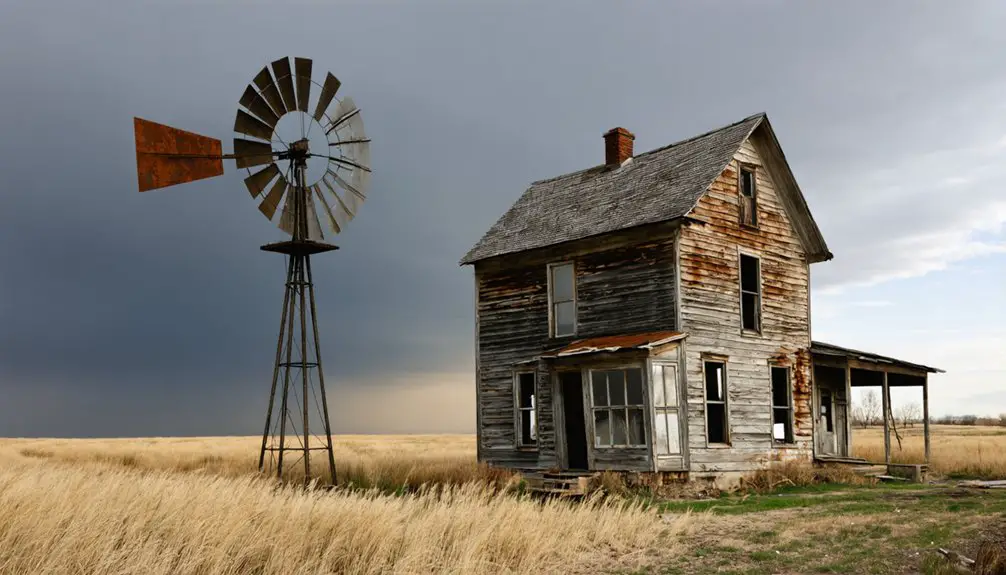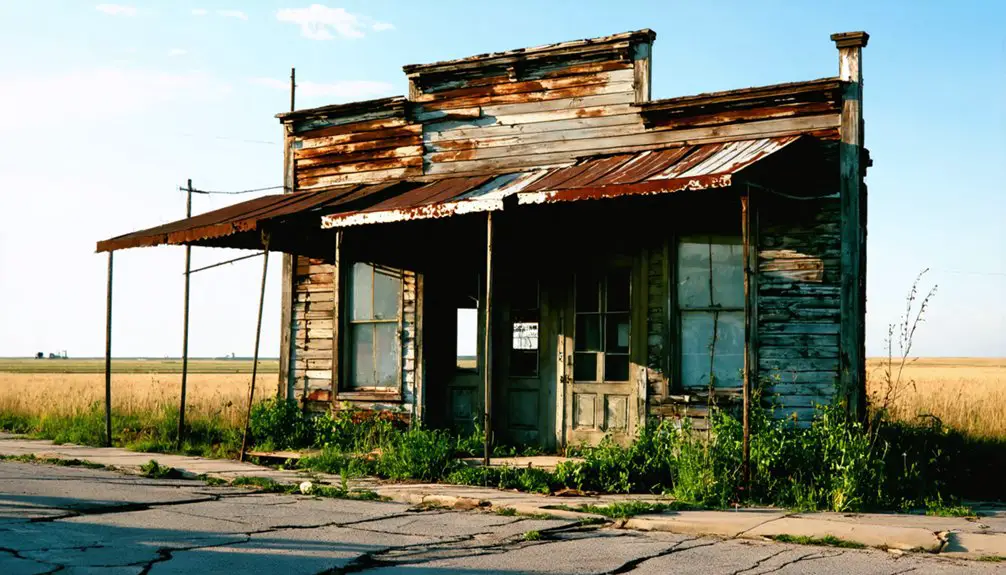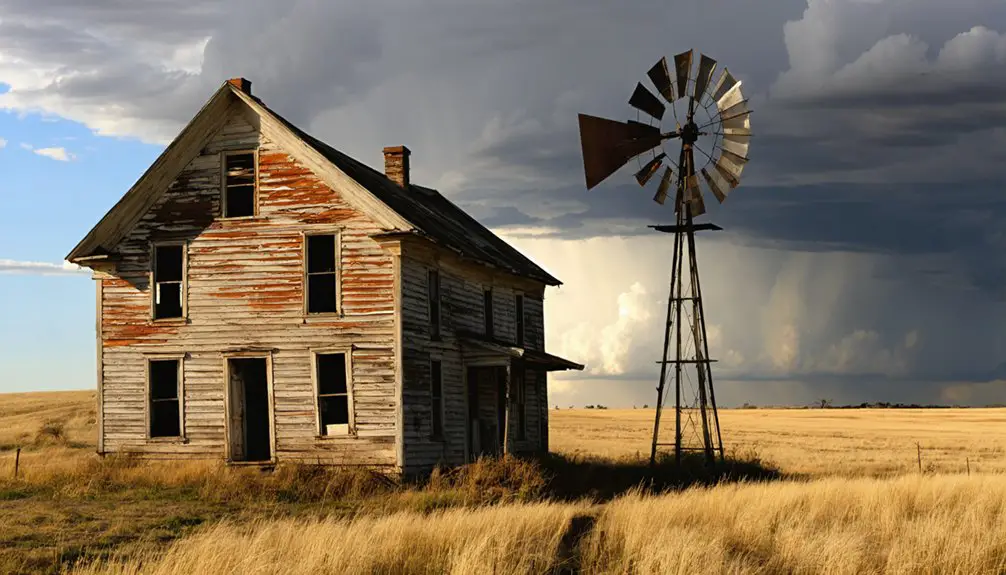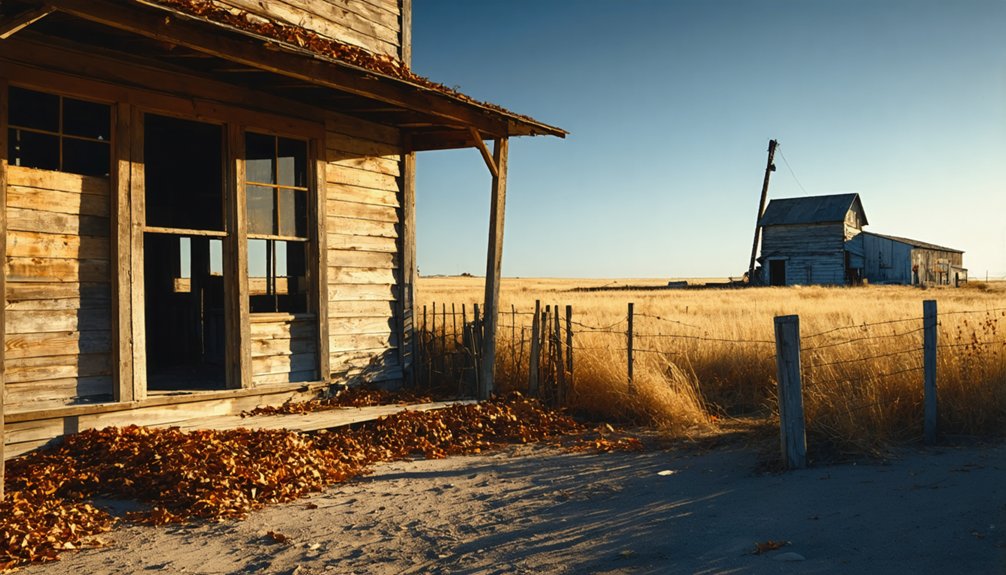
You’ll find ideal ghost town exploration in Nebraska during spring and early summer (April-June), when mild temperatures and clear roads provide excellent access to remote historical sites. The spring season offers exceptional photography conditions with diffused lighting, morning fog effects, and fewer tourist crowds at abandoned settlements. While summer brings warmer temperatures in the 80s°F, spring’s moderate climate and blooming prairie enhance your connection to these preserved railroad-era structures. These seasons’ unique advantages reveal countless hidden historical treasures.
Key Takeaways
- Summer (June-August) offers optimal exploration with 80°F temperatures and dry conditions making rural ghost town roads easily accessible.
- Spring provides excellent photography opportunities with diffused lighting, morning fog, and fewer tourists at historical sites.
- Fall features dramatic lighting and clearer architectural views as foliage drops, revealing hidden structural details in ghost towns.
- Off-season visits allow more intimate experiences with historical sites while supporting preservation and local community authenticity.
- Guided historical programs in Gage County enhance the experience with expert insights about abandoned settlements and their contexts.
Peak Season Weather and Ghost Town Accessibility
While Nebraska’s ghost towns beckon year-round, the summer months from June through August provide perfect conditions for exploration.
Nebraska’s abandoned settlements await discovery, with summer offering the ideal window to uncover their forgotten stories and secrets.
You’ll find temperatures in the 80s°F ideal for discovering sites of historical significance along US Highway 30 and other major routes. The dry weather keeps rural roads passable, giving you access to remote locations like Steele City and Roscoe without the challenges of spring floods or winter snow.
Most ghost towns showcase their old railroad history, as these settlements were established in the 1870s and 1880s due to railway development. Your cultural exploration benefits from peak season’s reliable conditions, as you can safely investigate preserved structures and photograph historic foundations. The remnants of the historic Cowboy Line can still be viewed along various points of the tour.
The White River Valley tour, spanning 40 miles through Glen and Andrews, becomes particularly accessible. While you’ll need to watch for afternoon thunderstorms and practice caution around unstable buildings, summer’s best visibility and stable ground conditions make ghost town visits both rewarding and secure.
Spring Travel Advantages for Heritage Sites
You’ll find spring offers key advantages for exploring Nebraska’s ghost towns and heritage sites with its mild temperatures and reduced chance of weather-related access issues.
Historical maps and resources can help plan optimal routes to discover these elusive sites during your springtime visit.
The season’s returning clear road conditions make reaching remote historical locations easier after winter snows have melted.
With fewer tourist crowds during spring months, you can experience these historic sites in a more intimate way that recalls their original character.
Spring’s softer natural lighting creates ideal conditions for photographing weathered buildings and architectural details, particularly during the “golden hours” near sunrise and sunset.
Mild Weather Benefits Travel
Spring’s moderate temperatures create ideal conditions for exploring Nebraska’s historic ghost towns and heritage sites.
You’ll discover comfortable exploration opportunities as you wander through cemetery hills and historical displays without battling summer’s intense heat. The mild climate allows you to fully immerse yourself in railroad-era structures and Oregon Trail landmarks like Belvidere. During spring, curious visitors can even glimpse remnants of original Lemoyne foundations when lake levels are low.
Prairie roads lead to quiet towns like Ellsworth where neat tidy corrals reflect ranching heritage. The balanced weather patterns enhance your experience of spring wildlife, from prairie-chicken booming displays to sharptail grouse on lek grounds.
You can photograph migrating birds along river corridors and spot pronghorn during their active period. As evening approaches, you’ll witness lightning illuminate the skies while enjoying pleasantly cool temperatures.
These mild conditions perfectly complement visits to unincorporated sites like Pauline, where you can explore without crowds and appreciate the authenticity of these historic locations.
Clear Road Access Returns
Spring marks the ideal time to explore Nebraska’s ghost towns as seasonal road access improves, making it easier to visit historic sites like Spring Ranch and Amboy. Historic attractions such as the coal shafts at Minersville become more accessible during the spring months.
Ideal Photography Lighting Conditions
Nebraska’s spring season presents exceptional photography conditions at ghost town heritage sites, offering photographers a rare combination of soft, diffused lighting and extended golden hours. The natural elements create perfect conditions for capturing these historic structures in their most compelling state.
- Morning spring fog produces an ethereal glow around ruins, while pollen and budding trees act as natural diffusers for midday shots. Experienced photographers often use focus stacking techniques to capture both detailed foregrounds and atmospheric backgrounds in these conditions.
- Extended golden hour periods during spring equinox provide ideal backlighting through empty windows and highlight architectural details. Just as storm chasers tracked twin tornadoes in Mississippi, photographers can capture multiple angles of historic structures during the extended daylight.
- Fresh prairie growth and wildflowers frame weathered structures without overwhelming them, adding depth to compositions.
- Frequent spring showers create high humidity and dramatic cloud breaks, enhancing light saturation and producing dynamic shadow play across ghost town landscapes.
Historical Preservation During Different Seasons
The preservation of Nebraska’s ghost towns faces distinct challenges across all four seasons, requiring carefully coordinated efforts from historians, volunteers, and state preservation offices.
You’ll find preservation techniques varying dramatically as each season presents unique threats to these historic sites.
Winter’s freezing temperatures damage wooden structures, while spring floods erode foundations at former river settlements.
Summer heat causes adobe to crack and wooden elements to deteriorate, particularly in exposed ruins.
Fall offers the most favorable conditions for preservation work, with mild temperatures enabling essential maintenance and restoration projects.
Year-round strategies include using historic maps and aerial photography to track seasonal damage, while the State Historic Preservation Office monitors environmental threats to these irreplaceable pieces of prairie history.
Summer Events and Historical Reenactments
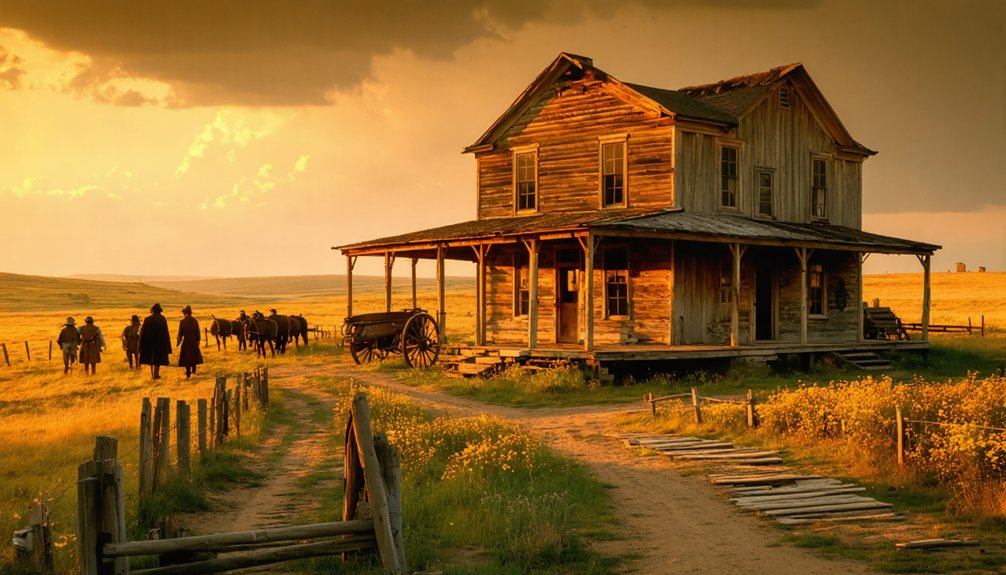
While exploring Nebraska’s ghost towns during summer months, you’ll discover a rich calendar of historical events and reenactments that bring these abandoned settlements back to life.
The region offers diverse cultural experiences through summer festivals and historical programs that connect you with the past.
- Visit Lake McConaughy near Ogallala, where you can combine ghost town exploration with summer recreation and tours of the historic Mansion on the Hill.
- Experience the Open Frontier Summer Fair’s authentic 4-H exhibits and regional heritage displays.
- Immerse yourself in local culture at Greeley’s “Halfway to St. Patrick’s Day” festival, featuring historical reenactments.
- Take advantage of guided historical programs, like those at Gage County’s ghost towns, which provide expert insights into abandoned settlements.
Fall Colors and Structural Visibility
When autumn’s vibrant foliage reaches its peak in mid-to-late October, you’ll experience unmatched visibility of Nebraska’s ghost town structures through newly bare branches.
The low-angled fall sunlight creates ideal conditions for photographing weathered buildings against a backdrop of golden cottonwoods, crimson maples, and rich orange oaks.
You can examine architectural details with exceptional clarity during this season, as the thinning canopy reveals previously obscured features of historic structures along Nebraska’s extensive network of hiking trails.
Clear Views Through Trees
Dramatic fall foliage transforms Nebraska’s ghost town viewing experience, particularly in locations like Indian Cave State Park where autumn leaves create striking backdrops along 22 miles of mountain biking trails.
You’ll discover enhanced leaf visibility as seasonal changes thin out dense summer canopies, revealing hidden structural treasures.
Key advantages of fall ghost town exploration:
- Tree outlines become more defined around Brocksburg homesteads as leaves drop
- St. Deroin’s three-story building and blacksmith shop emerge from their leafy shroud
- Cemetery markers and school foundations stand out clearly against autumn backgrounds
- Missouri River vistas open up along ridge lines previously obscured by thick foliage
The September-October window offers peak viewing conditions when you’ll find ideal clarity through thinned canopies, especially in lowland areas where historic structures nestle among mature trees.
Autumn Photography Lighting Conditions
As autumn sunlight bathes Nebraska’s ghost towns in rich amber hues, mid-to-late October provides photographers with ideal lighting conditions for capturing both structural details and fall foliage.
During golden hour, you’ll find sun rays striking weathered building facades at compelling angles, creating dramatic shadows and highlighting architectural features that might go unnoticed in harsh midday light.
The season’s changing light patterns offer unique opportunities as beams pierce through partially bare trees, illuminating forgotten structures with natural spotlighting.
You’ll want to time your visits when morning mist dissipates, revealing enhanced color vibrancy across prairie landscapes.
While you’ll have shorter shooting days with 5:30 PM sunsets, the warm light reflections and side-lighting effects more than compensate by adding depth and dimension to your ghost town photography.
Preserved Building Details Revealed
The seasonal shedding of leaves in Nebraska’s ghost towns reveals architectural details normally hidden during summer months.
You’ll discover remarkable preserved features across various sites that showcase the region’s architectural heritage and natural reclamation.
- Brocksburg structures stand proudly beneath mature trees, with homestead remnants emerging more clearly as autumn strips away dense foliage.
- Venus decay becomes more apparent in fall, exposing the rubble of its collapsed store and highlighting the haunting beauty of remaining homes.
- Dobytown erosion patterns are easier to study when vegetation thins, revealing the subtle contours of adobe-style earthen mounds.
- Roscoe preservation efforts shine through in fall, with unobstructed views of the intact gas station and graffiti-free Chamberlin building standing as symbols of careful stewardship.
Off-Season Exploration Benefits
Whether you’re seeking solitude or authentic historical experiences, exploring Nebraska’s ghost towns during off-season months provides distinct advantages over peak-season visits.
You’ll discover pristine landscapes and historic sites without the disruption of peak tourism crowds, allowing for genuine off-season solitude and deeper connections to these preserved places.
During quieter months, you’ll gain unrestricted access to significant locations like Indian Creek Pond and Boyer Chute trails, where authentic experiences await without the strain of overcrowding.
Local communities maintain their close-knit atmosphere, and you’ll encounter the true essence of these historic settlements.
The reduced visitor numbers protect infrastructure while supporting cultural preservation, ensuring you can fully immerse yourself in the old-world charm that makes Nebraska’s ghost towns uniquely enchanting.
Photography and Documentation Conditions
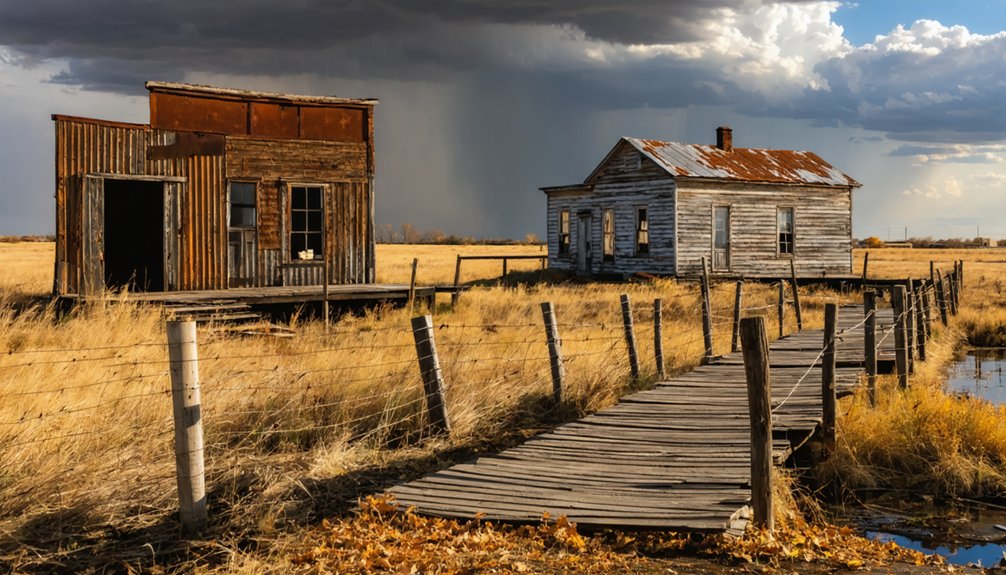
Capturing Nebraska’s ghost towns through photography demands careful consideration of the region’s distinctive natural lighting and atmospheric conditions. For ideal abandoned photography results, you’ll find the region’s natural elements working in your favor throughout different seasons.
- Clear western skies provide excellent visibility for documenting abandoned structures, while morning mist creates ethereal effects around vacant buildings.
- Dawn’s golden hour illuminates black windows and weathered walls, with low-traffic roads allowing uninterrupted ghost town documentation sessions.
- Spring storms followed by drought periods dramatically alter landscapes, creating unique documentation opportunities among towering grain elevators.
- Ancient gravel roads catch morning light while leading to prime shooting locations, where birds provide natural motion elements against static backdrops of decay.
Seasonal Safety Considerations
While documenting Nebraska’s ghost towns offers compelling photographic opportunities, visitors must carefully plan around significant seasonal hazards that affect safety and accessibility.
Winter brings dangerous sub-zero temperatures and treacherous ice on unstable surfaces, while summer’s extreme heat and humidity create ideal conditions for heat exhaustion. You’ll need to watch for rattlesnakes from April through October, particularly near deteriorating structures.
Spring’s severe thunderstorms can trigger sudden structural collapses, and fall’s early frosts make footing precarious. Wildlife encounters pose varying risks throughout the year – from summer tick infestations to winter coyote activity.
To maximize safety, plan your visits during moderate spring or fall days, avoiding peak mosquito season and the most extreme temperature conditions. Always check weather forecasts and bring appropriate protective gear.
Trail and Road Conditions by Season
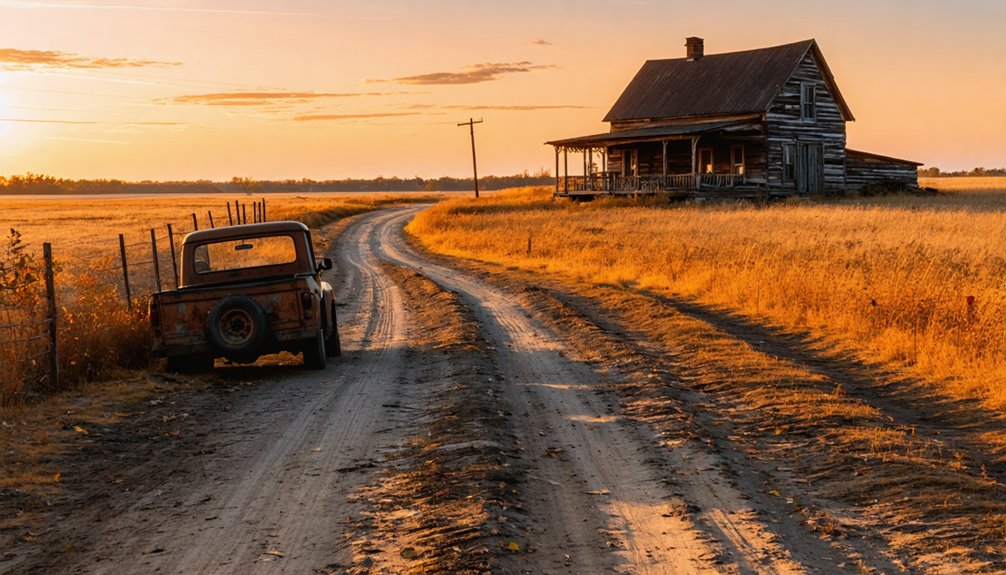
Although Nebraska’s ghost towns remain accessible year-round via major highways like NE 12 and SH 2, seasonal variations dramatically affect road conditions and trail navigability.
You’ll need to plan your exploration carefully around seasonal accessibility patterns that shape your ghost town adventures.
- Spring thaw creates muddy conditions on dirt roads, particularly near the Keya Paha River and along the Outlaw Trail Scenic Byway where washouts can occur.
- Summer offers prime conditions with dry backroads and clear access to abandoned structures like those near Antioch.
- Fall maintains stable conditions on rolling hills and gravel paths, perfect for visiting railroad-era ghost towns.
- Winter demands serious preparation, requiring tire chains and snowblowers for northern sites, while some backroads become impassable due to heavy snow accumulation.
Frequently Asked Questions
Are Camping Facilities Available Near Major Ghost Town Sites?
You’ll find diverse camping options near Nebraska’s ghost towns, from Indian Cave State Park’s full-hookup sites to Bayard’s free campground, offering you flexibility while exploring nearby historical attractions.
Which Ghost Towns Have Wheelchair-Accessible Viewing Areas?
You’ll find limited wheelchair accessibility at St. Deroin’s exterior areas, though specific ghost town features aren’t fully documented. Contact Indian Cave State Park directly for current accommodations and accessible viewing points.
Do Any Ghost Towns Require Permits or Advance Reservations?
You won’t need special permits or advance reservations to visit Nebraska’s ghost towns. Standard state park entry permits apply only if the ghost town is located within a state park’s boundaries.
Are Guided Tours Available in Languages Other Than English?
You’ll find guided tour languages primarily in English, though Tripadvisor offers select German, French, and Spanish options. Private tours in Czech may be arranged when exploring Nebraska’s Bohemian Alps region.
What Photography Equipment Restrictions Exist at Protected Ghost Town Sites?
At sites like Drago, you’ll encounter photography guidelines limiting tripod placement and flash usage. Equipment limitations typically restrict large setups, while handheld cameras and small accessories remain acceptable for documentation.
References
- https://www.ghosttowns.com/states/ne/ne.html
- https://history.nebraska.gov/wp-content/uploads/2017/12/doc_publications_NH1937GhostTowns.pdf
- https://www.youtube.com/watch?v=l3s2qhSxis8
- https://kids.kiddle.co/List_of_ghost_towns_in_Nebraska
- https://www.onlyinyourstate.com/trip-ideas/nebraska/ne-ghost-towns-road-trip
- https://freepages.rootsweb.com/~gtusa/history/usa/ne.htm
- https://visitnebraska.com/trip-idea/explore-7-authentic-ghost-towns-nebraska
- https://history.nebraska.gov/finding-nebraskas-ghost-towns/
- https://discovernwnebraska.com/white-river-valley-road-trip/
- https://www.islands.com/2004885/abandoned-ghost-village-border-south-dakota-nebraska-ardmore/