You’ll find the best ghost town exploration in West Virginia during spring and fall when temperatures are mild and crowds are thinner. Spring offers vibrant blooms contrasting with historic ruins, while fall delivers stunning foliage backdrops at sites like Thurmond and Nuttallburg. Summer brings extended daylight but larger crowds, and winter creates dramatic snow-draped photography opportunities. Each season presents unique perspectives of these abandoned places, with specific gear requirements and safety considerations shaping your adventure’s success.
Key Takeaways
- Fall offers peak conditions with stunning foliage backdrops, comfortable temperatures, and enhanced photographic opportunities at sites like Thurmond and Nuttallburg.
- Spring provides mild temperatures and fewer crowds, while blooming vegetation creates striking contrasts against historic ruins.
- Winter creates unique photo opportunities with snow-covered landscapes, though access may be limited by severe weather conditions.
- Summer allows extended exploration hours but brings larger crowds and challenging humidity levels in gorge areas.
- Late September through early November combines ideal weather, fall colors, and special seasonal events like ghost tours.
Why Ghost Towns Are a Year-Round Adventure
While many tourist destinations have limited seasonal appeal, West Virginia’s ghost towns offer compelling year-round experiences that blend historical exploration with paranormal intrigue.
You’ll find unrestricted year-round accessibility at sites like Thurmond, where the National Park Service maintains preserved buildings and an active Amtrak station that doubles as a visitor center.
Whether you’re seeking haunted experiences in the depths of winter or height of summer, these historic locations deliver consistent opportunities for paranormal investigation. With a handy digital passport system, you can track your visits and earn rewards while exploring these haunting destinations.
The weather won’t hold you back – even during inclement conditions, you can explore indoor alternatives like Sanctuary Ghost Stories or venture through Thurmond’s well-preserved structures.
From phantom trains echoing through the New River Gorge to nightly ghost tours in Harpers Ferry, you’ll discover that these spectral destinations never truly sleep. Visitors can explore nearby abandoned coal mines in Kaymoor and Nuttallburg for an expanded historic experience.
Spring’s Natural Revival Among Historic Ruins
As spring awakens the New River Gorge, nature gradually reclaims over 60 ghost towns scattered along its 12-mile stretch, creating a striking contrast between historic ruins and fresh vegetation.
You’ll discover spring blooms surrounding abandoned coke ovens at Sewell and foundations at Nuttallburg, while the roar of seasonal rapids echoes below.
The National Park Service’s historic preservation efforts have stabilized over 20 buildings in Thurmond since 2003, making it ideal for self-guided exploration. Similar to the expert storytellers who guide visitors through Berkeley Springs’ haunted history, the active church at Winona stands amid deteriorating structures, enhanced by the revival of tributary creeks. Like Harpers Ferry’s historic church remains, these sacred spaces tell stories of both conflict and healing.
The mild temperatures and reduced crowds let you intimately explore sites like Kaymoor, where forest regrowth envelops mining equipment, and migratory birds provide a soundtrack to your journey through these time-worn settlements.
Summer Peak Season Benefits and Drawbacks
Despite the allure of extended daylight hours and warm weather, summer brings a complex mix of advantages and challenges for ghost town exploration in West Virginia.
While you’ll benefit from marked trails and accessible ruins at sites like Nuttallburg, you’ll contend with larger crowds and increased humidity in the gorge areas. At Kaymoor, visitors must navigate the challenging 821 stairs that descend into the gorge.
Summer exploration at Nuttallburg reveals a delicate balance – well-maintained paths offer accessibility, while peak season crowds diminish the site’s remote charm.
Summer exploration offers prime conditions for hiking steep hillsides to mine complexes, but the tourist impact becomes evident at popular destinations like Thurmond, where river rafters converge with history seekers.
Thomas Jefferson’s historic endorsement of Harpers Ferry’s beauty makes it an especially popular summer destination.
The season’s heritage tourism peaks with events like the Mothman Festival drawing 20,000+ visitors, and the West Virginia Paranormal Trail encourages digital check-ins at various sites.
Though preservation efforts have made ghost towns more accessible, the trade-off often means sacrificing the solitary experience of discovering forgotten places.
Fall Colors and Paranormal Activities
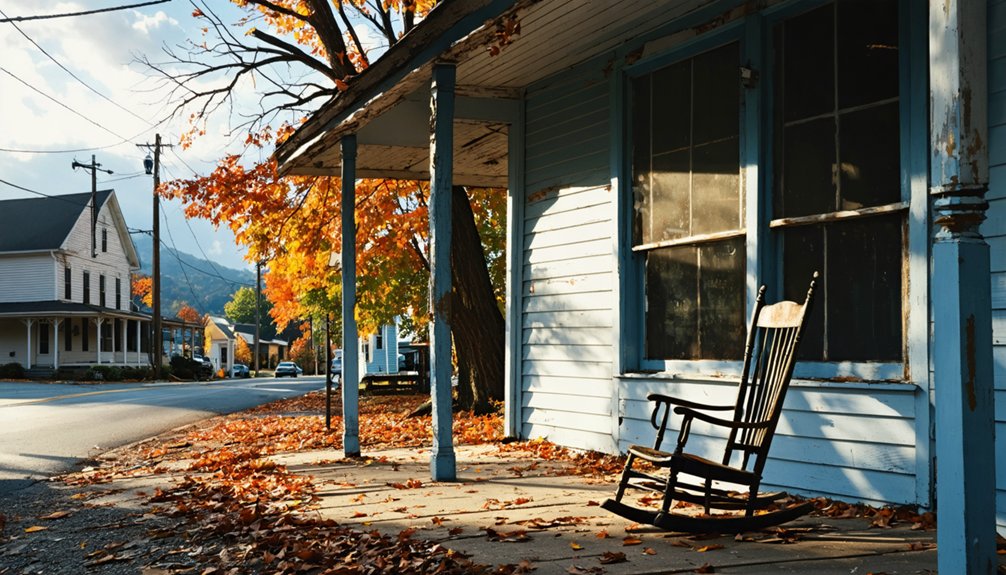
When late September arrives in West Virginia, ghost towns transform into spectacular viewing destinations amid peak foliage that lasts through late October.
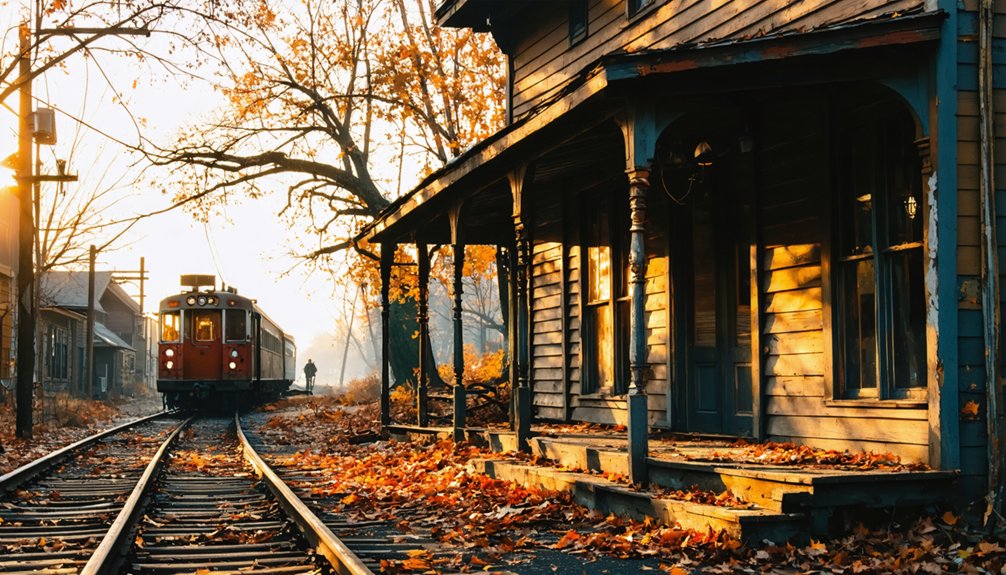
You’ll discover the haunting beauty of Thurmond’s rusted bridge against autumn-colored hillsides, while Nuttallburg’s abandoned coal processing sites offer a compelling historical backdrop. The stunning vistas reach their peak colors earliest at the higher elevations.
As you explore these ethereal locations, ghostly legends intertwine with nature’s vibrant display. The Blackwater Falls State Park offers an additional 20 miles of haunted hiking trails.
- Harpers Ferry Ghost Tour reveals supernatural tales while you’re surrounded by deep reds and bright oranges
- Thurmond’s Charles Well House, built in 1900, stands as a haunted reminder of the past among crimson and gold leaves
- Dun Glen’s cemetery becomes particularly atmospheric when framed by fall’s burgundy and mustard hues
You can access these mystical locations via the New River Gorge National Park’s interconnected trail system.
Winter’s Unique Photography Opportunities
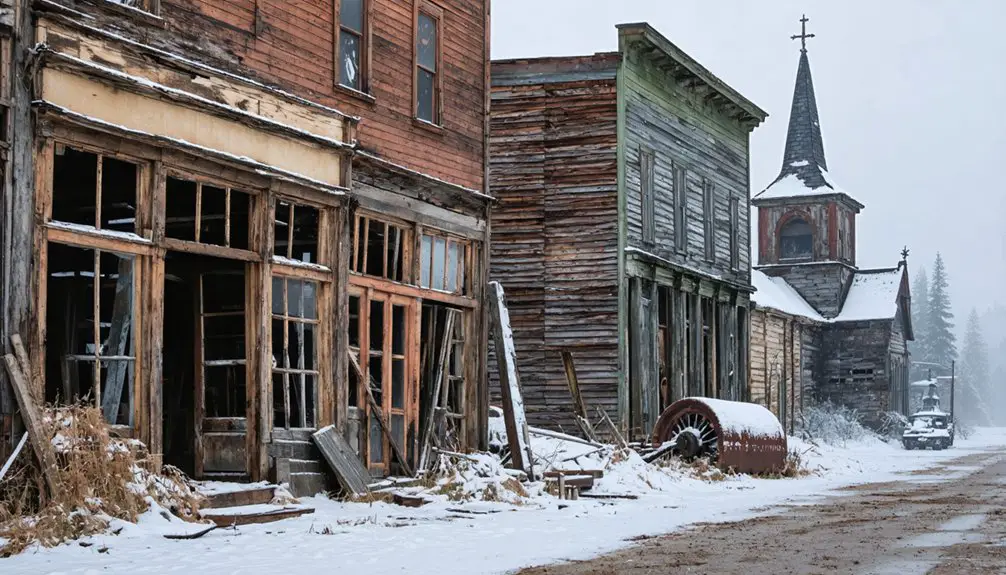
You’ll discover extraordinary photographic opportunities during winter at West Virginia’s ghost towns, where snow-draped mining equipment and frost-covered historic buildings create striking compositions.
To capture the best winter scenes, plan to visit just after snowfall when pristine white blankets create untouched landscapes.
The cold temperatures transform abandoned mining equipment at Kaymoor and Thurmond into crystalline sculptures, while deteriorating structures gain an ethereal quality under blankets of pristine snow.
The five remaining residents of Thurmond guarantee minimal disruption as you capture the haunting beauty of frozen coal scoops, ice-encrusted trusses, and hoarfrost-covered facades that define these preservation-worthy industrial remnants.
The historic Commercial Row buildings, constructed between 1900-1920, offer compelling subjects for winter photography enthusiasts.
Frozen Mining Equipment Views
Winter’s stark beauty transforms West Virginia’s ghost town mining equipment into extraordinary photographic subjects. The frozen landscapes highlight industrial relics in ways impossible during warmer months, particularly at sites like Thurmond’s rail depots and Kaymoor’s processing facilities.
You’ll find ice-encased hoists, coal scoops, and supporting trusses creating dramatic silhouettes against snow-covered backdrops.
- Thurmond’s engine shops showcase frozen mechanisms inside coal scoops and reserves, revealing internal workings normally hidden from view.
- Kaymoor’s intact mine tipple and coke ovens capture unique hoarfrost patterns during sub-freezing conditions.
- The 1925 coaling tower, abandoned by CSX in 1960, stands as a stark monument when outlined by winter’s white canvas.
For ideal viewing, visit between December and February when freezing temperatures consistently preserve these historic structures.
Snow-Covered Historic Buildings
Through a blanket of pristine snow, West Virginia’s historic ghost town buildings reveal their architectural splendor with striking clarity.
You’ll find the snowy aesthetics transform deteriorating structures into dramatic subjects, as frost and ice crystals enhance the visibility of intricate architectural details on wooden facades and stonework.
Winter’s bare trees eliminate visual obstacles, allowing you to capture complete views of building exteriors and their surrounding context.
The low winter sun creates bold shadows across weathered surfaces, while snow accumulation provides stark contrast against aged materials.
You’ll discover that archaeological features, like foundation remains and carved markers, become more pronounced against the monochromatic winter backdrop.
During these quieter months, you’ll encounter fewer visitors at these sites, giving you ample time to document these historic structures in their most dramatic seasonal state.
Weather Considerations for Each Ghost Town
Before exploring West Virginia’s ghost towns, understanding the region’s distinct weather patterns throughout the year becomes essential for planning a safe and rewarding visit. Given the diverse climate variations across the state, you’ll need to adapt your seasonal planning based on elevation, terrain, and local conditions.
While specific weather data isn’t available for individual ghost towns, the mountainous terrain of West Virginia creates unique microclimates that can affect your exploration.
- Mountain locations experience more severe weather changes, requiring flexible scheduling and backup plans.
- Spring and fall typically offer the most stable conditions for accessing remote ghost town sites.
- Weather patterns can shift dramatically between valleys and higher elevations, so pack appropriate gear regardless of season.
When timing your visit, consider researching regional weather trends and consulting local authorities for current conditions near your intended destinations.
Essential Seasonal Safety Tips
You’ll need to adapt your gear carefully across West Virginia’s distinct seasons, from lightweight rain protection in summer to insulated waterproof boots in winter’s hazardous conditions.
When planning your ghost town visits during hunting seasons, you must wear high-visibility orange clothing and stay within designated safe zones to avoid trespassing onto active hunting areas.
Your exploration timing should account for sudden weather changes that can make abandoned structures particularly dangerous, so pack appropriate protective gear and follow all posted warning signs regarding structural hazards.
Weather Gear By Season
When exploring West Virginia’s ghost towns, your choice of weather gear can make the difference between a memorable adventure and a miserable outing.
For spring gear, you’ll need waterproof jackets and layered clothing to handle temperature fluctuations between foggy mornings and sunny afternoons. Your fall apparel should include thermal layers and water-resistant outerwear for protection against autumn precipitation and cooling evening temperatures.
- Summer visits require breathable clothing, wide-brimmed hats, and high-SPF sunscreen for extended exploration in remote locations.
- Winter demands heavy-duty insulated coats, thermal gloves, and waterproof boots with reliable traction.
Year-round essentials include first aid supplies, offline navigation tools, and emergency communication devices.
Pack according to the season, but always prepare for West Virginia’s variable mountain weather and limited services in ghost town areas.
Safe exploration of West Virginia’s ghost towns during hunting season requires strict adherence to established safety protocols and seasonal awareness.
During peak hunting periods, you’ll need to wear at least 400 square inches of blaze orange covering your torso’s front and back, particularly during deer firearms season from November 24 to December 7, 2025.
Proper hunter awareness means staying on designated trails and consulting county-specific regulations before your visit.
Practice essential trail etiquette by making verbal noise while moving, especially near blind corners or dense brush. Keep your dogs leashed, and yield to hunters transporting equipment or game.
Download the 2025-2026 Hunting and Trapping Regulations Summary to verify local restrictions, season dates, and baiting rules.
Always respect “No Trespassing” signs and use WVDNR maps to navigate public hunting areas near ghost towns.
Frequently Asked Questions
Are Pets Allowed on Ghost Town Trails Within New River Gorge?
You’ll find that pets are welcome on ghost town trails at New River Gorge, following standard pet regulations. You must keep your dog on a 6-foot leash for trail accessibility.
Can Visitors Collect Artifacts or Souvenirs From Ghost Town Sites?
You can’t remove artifacts from ghost town sites due to federal preservation laws. The historical significance of these locations requires strict protection, so consider taking photos or purchasing approved souvenirs instead.
What Camping Options Exist Near the Ghost Town Locations?
You’ll find established campgrounds at Baker’s Run and Abram’s Creek requiring permits, while White River National Forest offers dispersed camping. These locations provide direct access to nearby ghost town attractions.
Do Any Ghost Towns Offer Guided Tours With Historical Interpreters?
As dark as midnight, you’ll find guided history tours and interactive ghost experiences in Shepherdstown and Charles Town, where costumed interpreters bring haunted tales to life through historically-accurate storytelling.
Are Metal Detectors Permitted at Any of the Ghost Town Sites?
You’ll need explicit permission from private property owners before metal detecting at ghost towns, due to historical preservation concerns and strict regulations protecting cultural artifacts and archaeological resources.
References
- https://wvexplorer.com/2025/10/19/ghost-towns-in-southern-west-virginia/
- https://matadornetwork.com/read/west-virginia-paranormal-trail/
- https://wvtourism.com/5-wv-ghost-towns/
- https://minskysabandoned.com/2015/07/30/west-virginia-ghost-towns-part-1-nuttallburg/
- https://www.youtube.com/watch?v=yBKOIRxeNX0
- https://www.tripadvisor.com/Attraction_Review-g59586-d2708213-Reviews-Thurmond_Depot-Thurmond_West_Virginia.html
- https://www.nps.gov/neri/learn/historyculture/thurmond.htm
- https://wvtourism.com/west-virginia-paranormal-trail/
- https://newrivergorgecvb.com/thurmond-west-virginia-a-ghost-town/
- https://www.airial.travel/attractions/united-states/thurmond/thurmond-ghost-town-west-virginia-xCTzfxfy