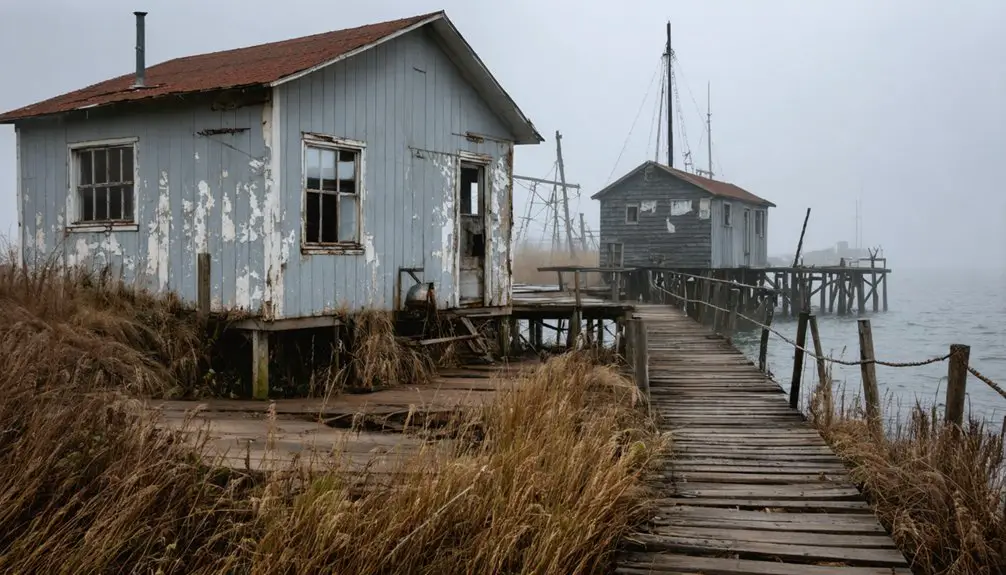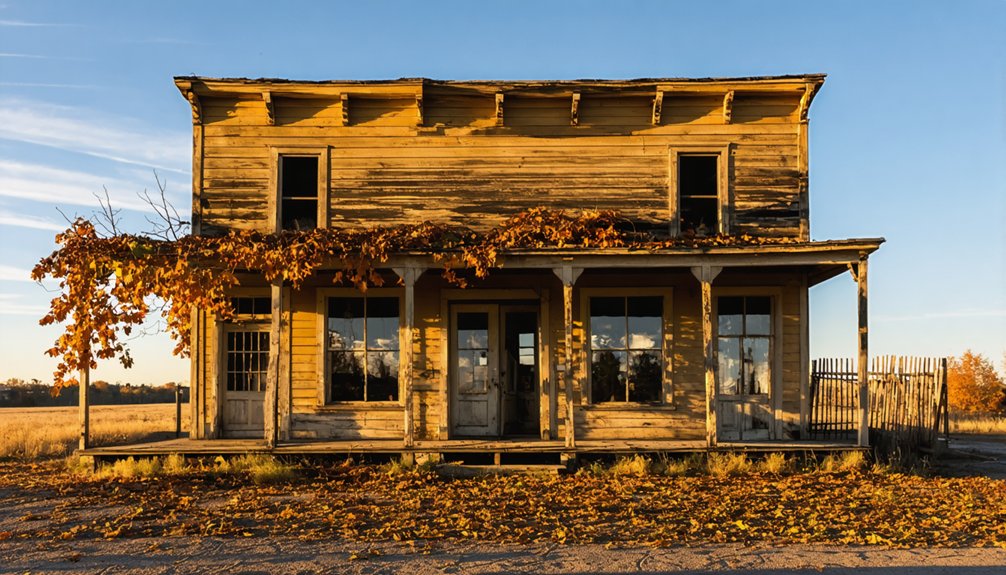
You’ll find Wisconsin’s ghost towns most rewarding to visit during fall, particularly from late September through mid-October, when vibrant autumn foliage creates dramatic backdrops for photography. Summer offers excellent accessibility and guided historical tours, while spring provides solitary exploration opportunities as sites emerge from winter. Winter’s snow-covered landscapes transform abandoned structures into hauntingly beautiful scenes, though access becomes limited. Each season presents unique opportunities to uncover these fascinating remnants of Wisconsin’s past.
Key Takeaways
- Fall (September-October) offers optimal conditions with comfortable temperatures and stunning foliage backdrops for ghost town photography and exploration.
- Summer provides the most accessibility to sites with guided tours available, clear trails, and extended daylight hours for exploration.
- Spring brings mild weather and newly accessible trails, while fewer visitors create peaceful opportunities for ghost town exploration.
- Winter offers unique photo opportunities with snow-covered landscapes, though site accessibility may be limited due to weather conditions.
- Avoid visiting during severe weather seasons, particularly during spring floods or late fall storms that can make sites hazardous.
Winter Ghost Town Photography: Stark Beauty and Solitude
While Wisconsin’s ghost towns hold intrigue year-round, winter transforms these abandoned sites into stunning photographic subjects through a convergence of natural and historical elements.
Winter’s transformative power turns Wisconsin’s deserted settlements into hauntingly beautiful compositions where nature reclaims abandoned history.
You’ll find particularly evocative winter landscapes at Veazie, where telegraph poles frame the historical logging bowl against snow-covered fields. Photographers are encouraged to explore during quaint snow-kissed mornings when visibility is best. During winter storms, the swirling snow creates unique photographic opportunities much like those found at Canadian Hill Farm. The eerie silence of Gratiot’s Grove, Wisconsin’s second-oldest settlement, intensifies under winter’s blanket, offering unmatched black and white photography opportunities among its weathered markers and structures.
For the most atmospheric shots, explore the remnants along the old lumberjack tote roads at Veazie or venture to Caryville’s Sand Hill Cemetery.
The stark beauty of these locations peaks during winter months when limited accessibility creates naturally isolated conditions, allowing you to capture these historical sites in their most contemplative state.
As winter’s grip loosens across Wisconsin, ghost town enthusiasts gain unique opportunities to explore previously inaccessible historical sites.
You’ll find thawed trails revealing remnants of the past, from Paradise Springs’ abandoned spring house to the exposed pilings along Door County’s shoreline. The spring melt transforms these forgotten places, making them prime for exploration with fewer visitors. The historic 47-degree spring water flows continuously throughout the seasons, providing a constant natural feature amid the changing landscape. The area’s stunning geological formations, including three towering landmarks, stand as ancient sentinels over the ghost town sites.
Wildlife activity adds another dimension to your ghost town adventures.
You’ll encounter frog choruses in wetlands near Quincy Bluff, while sandhill cranes and eagles soar overhead. The warming temperatures create ideal conditions for discovering historic sites like Veazie Dam’s remnants or following the paths where passenger pigeons once gathered.
These early spring excursions offer both solitude and accessibility, letting you experience Wisconsin’s abandoned places as they emerge from winter’s hibernation.
Summer Historical Tours and Guided Walks
Summer brings a wealth of guided historical experiences across Wisconsin’s ghost towns and haunted locations.
Experience Wisconsin’s haunted history through expert-led summer tours revealing fascinating tales of abandoned settlements and supernatural lore.
You’ll find expertly curated summer ghost tours spanning from Milwaukee’s Historic Third Ward to Door County’s haunted peninsula. These guided history walks combine scholarly research with spine-tingling tales of the supernatural, offering authentic glimpses into Wisconsin’s past.
1. Join Milwaukee’s 90-minute walking tours through the Yankee Hill neighborhood or explore the Historic Third Ward with Brew City Ghosts for historically accurate accounts.
The Dead Guy Ale and extensive drink selection at Bodega Brew Pub adds authenticity to the haunted atmosphere of this historic La Crosse establishment.
2. Experience Point Basse’s authentic 1850s settlement through lantern-lit spirit walks, where period-dressed actors bring history to life.
3. Venture to Bayfield’s lakeside haunts or traverse Madison’s Capitol Square for thoroughly researched architectural and paranormal narratives that reveal lesser-known aspects of Wisconsin’s heritage.
For an intimate evening experience, take the ghost walks along Lake Superior in Bayfield, offered nightly at 7:30 PM.
Fall Colors and Cemetery Documentation
During Wisconsin’s dramatic autumn change, ghost town enthusiasts can combine cemetery documentation with the state’s stunning fall foliage displays.
You’ll find best conditions from late September through mid-October, when the landscape shifts from north to south in vibrant reds, oranges, and golds. The Fall Color Report, tracking 100+ local observers across 72 counties, helps you time your cemetery photography precisely.
Cloudy days enhance the visibility of inscriptions and architectural details while photographing historical cemetery markers and monuments.
For the most compelling documentation, visit historical sites like Clifton’s limestone ruins in High Cliff State Park, where autumn’s warm light enhances visibility of weathered monuments.
Devil’s Lake and Door County’s state parks offer elevated vantage points ideal for contextual cemetery photography. The Eagle Tower at Peninsula State Park provides sweeping views of autumn colors stretching to Green Bay. Consider early morning or late afternoon visits when the sun’s position creates dramatic shadows across memorial stones and surrounding fall foliage.
Seasonal Weather Impact on Site Preservation
Wisconsin’s ghost towns face significant preservation challenges throughout the year, with each season bringing distinct weather-related threats to historical structures and artifacts.
Climate challenges intensify as preservation efforts battle against increasingly extreme conditions. You’ll find that each season presents unique risks to these historical sites, from winter’s harsh destruction to summer’s intense heat waves. Old sawmills deteriorate rapidly when exposed to severe weather conditions, affecting important historical landmarks tied to the region’s logging heritage. Research initiatives aim to provide data-driven solutions for protecting historic rural sites.
- Winter storms and freezing temperatures cause severe structural damage, forcing preservationists to implement protective measures against ice and snow.
- Spring and summer months bring flooding risks and heat-related deterioration, particularly affecting wooden structures that require specialized conservation.
- Fall’s intense storms and tornadoes pose serious threats to unprotected buildings, as evidenced by recent destruction in Vilas County.
Understanding these seasonal impacts helps you plan your visits while supporting ongoing preservation efforts to protect these irreplaceable historical sites.
Frequently Asked Questions
Are Any Ghost Towns Accessible by Kayak or Canoe During High Water?
Like whispers from the past, you’ll find kayak routes and canoe access to historical sites along the Crawfish River near Aztalan’s abandoned settlement, especially when spring’s high waters reveal hidden waterways.
Which Ghost Towns Have the Most Paranormal Activity Reports From Visitors?
You’ll encounter the most haunted histories at Old Hospital North in Wausau, where spectral sightings abound, followed by Banbury Place in Eau Claire and the abandoned Clarke County Rehabilitation Center.
Do Any Sites Require Special Permits or Advanced Permission for Metal Detecting?
You’ll need specific permits for metal detecting on DNR lands, state parks, and ghost town sites. Wisconsin’s preservation laws require advance authorization, with stricter regulations protecting archaeological and historic locations.
Which Ghost Town Locations Are Closest to Modern Camping Facilities?
Like pioneers seeking new frontiers, you’ll find modern camping amenities nearest to Stonefield Ghost Town, where the state park offers full facilities, and Pendarvis Ghost Town, adjacent to Governor Dodge State Park’s campgrounds.
Are There Guided Night Tours Available at Any of the Preserved Sites?
You won’t find guided night tours at Wisconsin’s preserved ghost town sites. While these locations preserve significant historical value, they focus exclusively on daytime educational programs and historical interpretation.
References
- https://www.onlyinyourstate.com/experiences/wisconsin/ghost-towns-wi
- https://en.wiktionary.org/wiki/Category:en:Ghost_towns_in_Wisconsin
- https://www.ghosttowns.com/states/wi/wi.html
- https://pbswisconsin.org/news-item/southern-wisconsins-ghost-towns-leave-behind-vital-stories/
- https://www.geotab.com/ghost-towns/
- http://shunpikingtoheaven.blogspot.com/2016/05/a-wisconsin-ghost-town.html
- https://www.wisconsinhistory.org/Records/Image/IM116137
- https://kids.kiddle.co/List_of_ghost_towns_in_Wisconsin
- https://grantcountyhistory.org/wp-content/uploads/2016/01/GhostTownsGrantCountyTLundeen.pdf
- https://philipschwarzphotography.wordpress.com/2015/01/05/favorite-upper-midwest-winter-photography-locations/