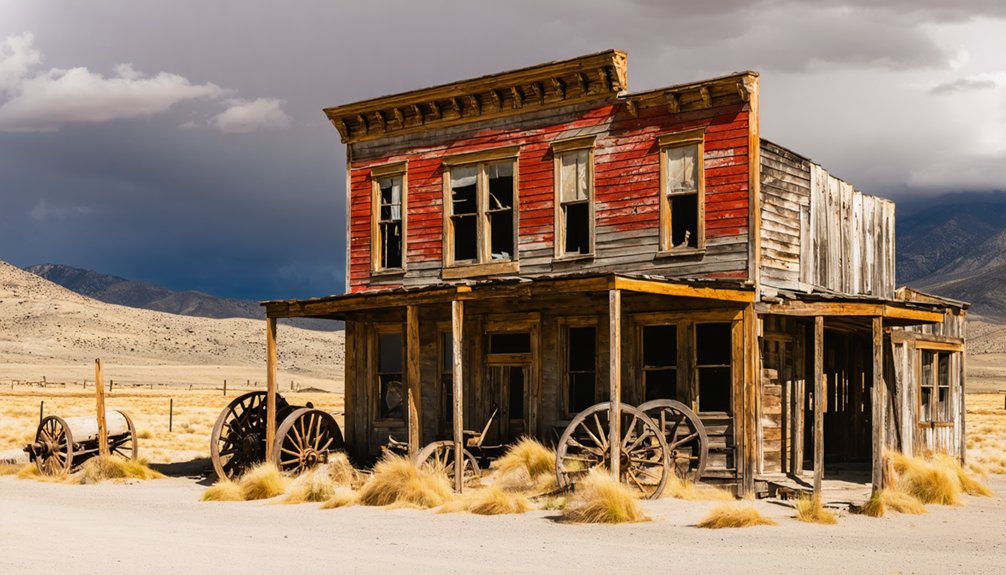
You’ll find America’s largest ghost towns scattered across the western mining regions, where populations once soared into the tens of thousands. Picher, Oklahoma peaked at 20,000 residents during its 1920s lead and zinc mining heyday. Bodie, California housed thousands during the 1870s gold rush, while St. Elmo, Colorado reached 2,000 residents at its height. Today, their weathered structures, abandoned mines, and empty storefronts tell compelling stories of boom-and-bust cycles that shaped the American frontier.
Key Takeaways
- Bodie, California was a major gold-rush town that grew to around 10,000 residents before its abandonment in the early 1900s.
- Picher, Oklahoma reached 20,000 residents during its lead and zinc mining boom before environmental hazards forced evacuation.
- St. Elmo, Colorado, with 2,000 former residents, remains one of America’s best-preserved mining ghost towns.
- Calico, California was a thriving silver mining town of 3,500 people before its decline in the 1890s.
- Garnet, Montana housed over 1,000 residents and multiple businesses during the 1890s gold rush before its abandonment.
The Rise and Fall of Historic Mining Towns
When the discovery of precious metals transformed the American frontier in the late 1800s, mining towns sprouted rapidly across the western landscape.
You’ll find the gold rushes’ impact was dramatic – Bodie, California swelled with thousands during the 1870s boom, while Garnet, Montana flourished with over 1,000 residents and 13 saloons by the 1890s.
These mining town transformations created instant cities, like St. Elmo, Colorado, which reached 2,000 residents pursuing gold and silver riches.
Calico’s 500 silver mines and Castle Dome’s 3,000-strong population showcased the era’s explosive growth.
The town of Picher, Oklahoma exemplifies this boom-and-bust pattern, reaching 20,000 residents at its peak in the 1920s during the lead and zinc mining boom.
But prosperity proved fleeting – when ore quality declined or metal prices dropped, these towns emptied just as quickly.
World wars, mine closures, and environmental hazards sealed their fates, leaving behind preserved structures that now tell stories of America’s mining heritage. Today, most of these historic sites date from the 1880-1940 era, during America’s great westward expansion.
Ghost Towns Across Texas: A State’s Lost Legacy
You’ll encounter Texas’s abandoned settlements as stark reminders of how railroad decisions could instantly transform bustling frontier towns into forgotten places, with Terlingua’s mercury mining operation and Belle Plain’s drought-stricken college town serving as prime examples.
The physical remnants you can explore today range from Glenrio’s preserved mid-century architecture along Route 66 to Medicine Mound’s solitary general store museum, each marking where thriving communities once stood. The once-thriving cattle trading post of Doans Crossing established in 1878 now stands as another testament to the fleeting nature of frontier prosperity. Fort Griffin’s remains include the historic military structures that once protected local farmers and ranchers from lawlessness.
What you’ll often find at these sites are the cemeteries that outlasted their towns, from Terlingua’s 1903 graves to Indianola’s burial grounds that survived the hurricanes that claimed the rest of the coastal port.
Railroad Impact Settlements
The railroad’s arbitrary path through Texas left a scattered trail of abandoned settlements, fundamentally reshaping the state’s municipal landscape during the late 19th century.
You’ll find stark evidence in towns like Helena, where railroad routes bypassed the once-thriving county seat, forcing residents to physically relocate buildings to nearby Karnes City.
Similarly, Preston’s economic decline became inevitable when the Missouri, Kansas & Texas tracks cut east, severing crucial connections to cattle drives and travelers.
While railroad companies created instant boom towns like Denison and Texarkana through their land speculation ventures, these settlements often proved fragile. The town-building subsidiaries operated solely for railroad profits, leaving communities vulnerable to economic instability.
Consider Toyah’s fate – a bustling division point complete with hotels and an opera house until its springs dried up and railroad operations moved elsewhere.
Without diverse economic foundations beyond the rails, these single-industry towns couldn’t sustain themselves once the tracks shifted course.
The imposing brick smokestack of Thurber still stands as a haunting reminder of another railroad town’s rise and fall.
Cemetery-Only Sites Remain
Throughout Texas, numerous ghost towns have left behind only their cemeteries as silent witnesses to once-thriving communities.
You’ll find Bluffton Cemetery‘s haunting remnants exposed by Lake Buchanan’s drought, including Johnny C. Parks’ 1882 tombstone and a 4-foot concrete well cube. Under the direction of Army Corps patrols, these historic sites are protected from artifact looters who seek to disturb these sacred grounds.
At Navarro County, nearly two dozen unmarked graves have emerged from the dried Richland-Chambers Lake, revealing historic coffin lids from a former slave owner’s property.
The cemetery preservation efforts vary dramatically – from Elizabethtown Cemetery’s solitary presence near Texas Motor Speedway to Pleasant Hill’s isolated grounds in Houston County.
These sites hold immense historical significance, as demonstrated by Plemons Cemetery in Hutchinson County, where all other traces of civilization have vanished, leaving only these sacred grounds to tell their stories. The Thurber Cemetery stands as another poignant example, featuring informational signage that chronicles the town’s transformation from a bustling coal mining community to abandonment.
California’s Abandoned Communities Through Time
You’ll discover California’s rich tapestry of ghost towns spanning from coastal Purissima’s weathered foundations to Bodie’s wind-swept desert structures, each telling a distinct story of boom-and-bust cycles.
The state’s abandoned communities showcase the raw ambition of the mining era through Cerro Gordo’s silver smelters and Calico’s 500 mine shafts, while revealing the harsh realities that forced their desertion. The coastal town of Parisa, founded by Henry Dobble’s settlement, exemplifies how early California towns struggled against geographical isolation and limited economic opportunities. The devastating Great Flood of 1862 led to the permanent abandonment of multiple settlements including Agua Mansa and Empire City.
From Death Valley’s Ballarat with its crumbling adobe ruins to the Sierra Nevada’s deserted camps, these silent settlements stand as time capsules of California’s pioneering spirit, preserved in varying states of decay.
Mining Booms and Busts
When James W. Marshall discovered gold at Sutter’s Mill in 1848, he triggered a cascade of mining legacies that would reshape California’s landscape.
You’ll find nearly 300 ghost towns scattered across the state, each telling a story of boom-and-bust cycles that defined the American West’s economic factors.
From Calico’s silver strikes to Beveridge’s gold-laden hills, these settlements flourished and faded like desert blooms.
You can trace the pattern: a rich strike would draw thousands, creating instant cities with elaborate mills and steam-powered arrastras.
But when mines played out or metal prices crashed, towns emptied just as swiftly.
The 1906 San Francisco Earthquake and 1907 Panic dealt additional blows, while technological advances in ore processing came too late for many communities.
Today, these silent settlements stand as monuments to fortune’s fickle nature.
Coastal Ghost Town Legacy
While California’s mining towns left indelible marks on the landscape, the state’s coastal communities faced their own dramatic cycles of rise and fall.
You’ll discover how coastal settlement patterns evolved through places like Purissima, which thrived as an essential ranching hub before succumbing to maritime industry decline and devastating floods.
These abandoned settlements reveal stories through their surviving artifacts:
- Weathered foundations peek through overgrown hillsides near Half Moon Bay, where Purissima’s post office served settlers until 1901
- Falk’s mill town remnants stand as evidence to the boom-and-bust of redwood logging, housing 400 residents at its peak
- Original bridge footings and infrastructure, destroyed in the great flood of 1862, mark lost transportation networks
- Preserved interiors of abandoned structures offer glimpses into daily coastal life before mass exodus to urban centers
Desert Towns Left Behind
Deep within California’s unforgiving desert landscapes lie some of America’s most evocative ghost towns, each telling a distinct story of boom-and-bust cycles that shaped the American West.
You’ll find Calico’s weathered silver mines and restored wooden boardwalks standing as evidence of 1880s prosperity, while Desert Center’s abandoned infrastructure tells a quieter tale of roadside enterprise gone silent.
Among desert wildlife and wind-swept ruins, Panamint City’s crumbling foundations whisper stories of lawless silver strikes, while California City’s vast grid of empty streets stretches endlessly into the Mojave.
In Ballarat, you can still trace the footsteps of prospectors through adobe ruins and worn saloon floors.
These settlements, once vibrant with dreams of wealth and progress, now stand frozen in time, preserving California’s pioneering spirit in their sun-bleached remains.
Modern Cities Facing Population Exodus
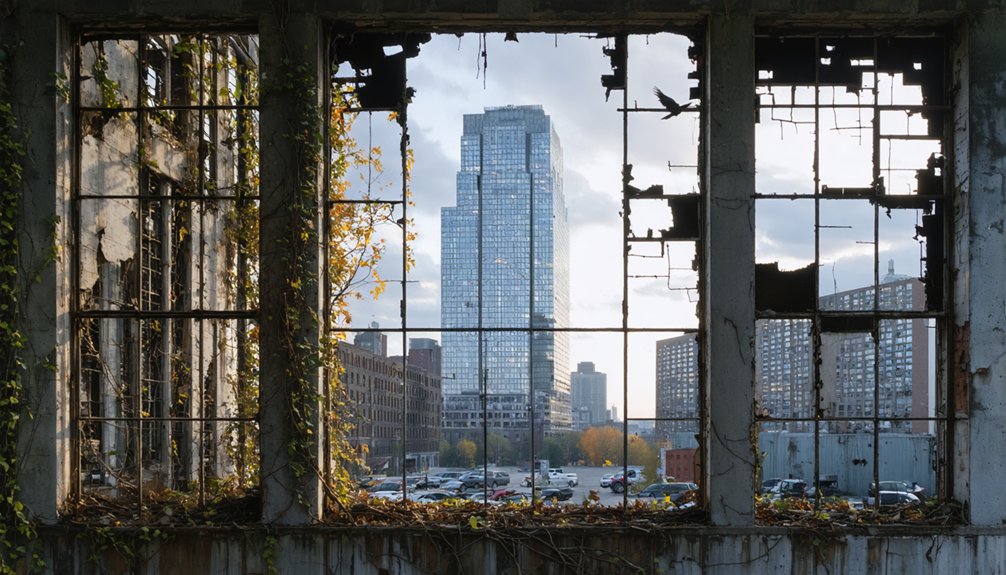
As America’s urban landscape evolves in the 2020s, several major cities face unprecedented population losses that mirror historic ghost town patterns.
You’ll find stark examples of urban decay in cities that once symbolized American prosperity, from New York’s staggering loss of 468,000 residents to Detroit’s continued struggle with industrial decline.
- Spring Valley’s dramatic 10% population drop in just one year shows how quickly a modern city can hollow out.
- San Francisco’s tech exodus has left entire office districts empty, with remote work reshaping its urban core.
- St. Louis exemplifies suburban migration as families flee for better schools and green spaces.
- New York City’s 5.3% population plunge signals a fundamental shift in how Americans choose to live and work.
Modern cities aren’t immune to the forces that created yesterday’s ghost towns – they’re just transforming differently.
Notable Ghost Towns of the American West
The American West’s most haunting ghost towns stand as weathered monuments to the boom-and-bust cycle of 19th-century mining.
You’ll discover mining legacies in Bodie’s 100-plus original structures, preserved in “arrested decay” amid California’s high desert.
At Montana’s Bannack, ghostly legends surround Sheriff Plummer’s reign of terror across 60 surviving buildings.
Rhyolite beckons photographers with its stark Nevada ruins, including a unique bottle house and crumbling bank.
In Colorado’s Sawatch Range, St. Elmo’s wooden storefronts emerge from pine forests, while South Pass City guards its Wild West character along Wyoming’s Continental Divide.
Each town tells a distinct story of fortune-seekers who carved settlements into untamed landscapes, only to vanish when gold reserves ran dry, leaving behind architectural treasures frozen in time.
Why Towns Become Abandoned: Key Factors
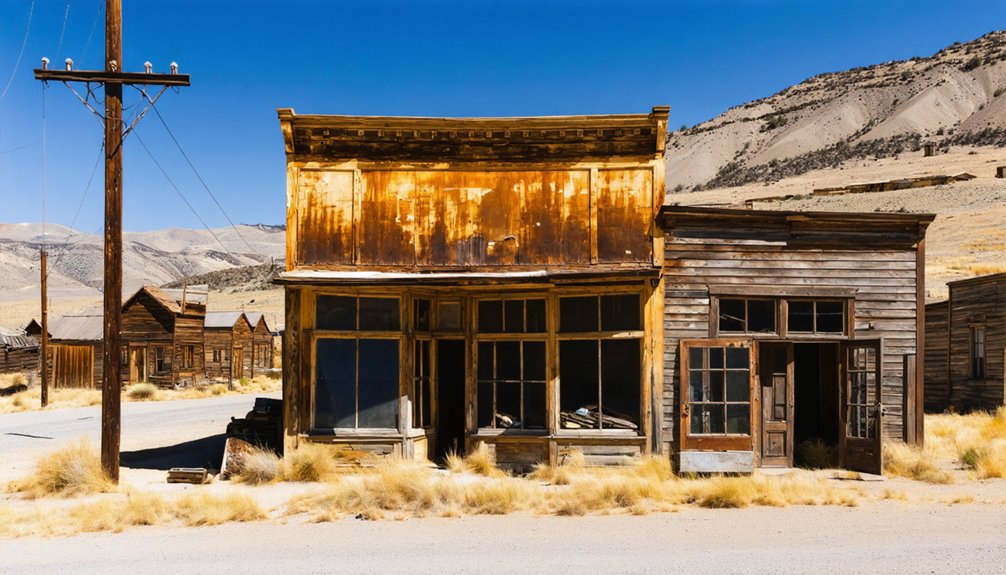
From industrial powerhouses to frontier settlements, American towns face abandonment through five interrelated forces that hollow out once-vibrant communities.
When you examine the skeletal remains of these places, you’ll find economic factors and social dynamics that triggered their decline:
- Resource depletion strikes suddenly – from oil fields running dry to gold veins emptying, leaving behind empty streets and shuttered storefronts.
- Economic downturns devastate local markets through foreclosures, factory closures, and failing tax bases.
- High taxes and regulations drive businesses and residents to flee, creating a death spiral of rising costs and shrinking services.
- Population shifts accelerate as younger families seek opportunities elsewhere, leaving aging infrastructure and empty homes.
- Crime rates climb while infrastructure crumbles, making recovery increasingly difficult as property values plummet and investment vanishes.
Preserving America’s Ghost Town Heritage
While ghost towns face inevitable decay, dedicated preservation groups work tirelessly to protect these irreplaceable pieces of American history.
You’ll find organizations like the Ghost Town Club of Colorado maintaining preservation funds and conducting volunteer cleanups, while groups like Cornerstones Community Partnerships focus on heritage conservation through youth apprenticeships.
Ghost town preservation requires methodical planning, from thorough title searches to environmental assessments for contaminants.
You’re looking at significant challenges – water damage, infrastructure restoration, and costly repairs often reaching millions.
But the payoff is substantial: State Historic Parks like Bodie attract 200,000 visitors annually, while Eastern State Penitentiary draws 220,000.
Local governments support these efforts through permit waivers and density bonuses, ensuring these historic sites continue telling America’s story for generations to come.
Most Common Names Among Abandoned Towns
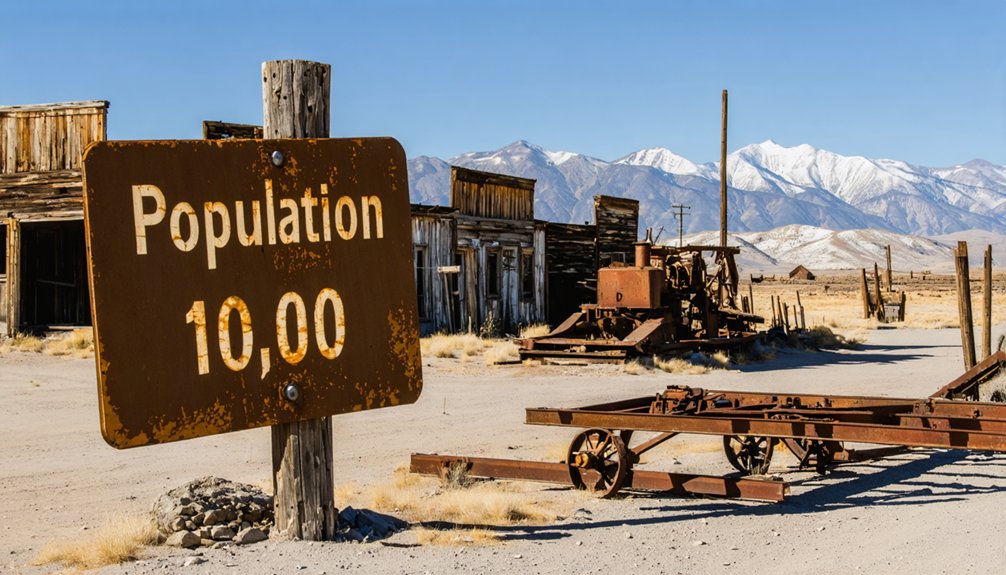
Names etched across abandoned settlements reveal distinct patterns shaped by America’s westward expansion and industrial development. Among common ghost town names, you’ll find telling clues about their origins and ultimate fate.
Mining communities, in particular, followed distinct naming trends that echo through the forgotten landscapes of the American West.
- Silver-themed names like Silver City reflect the precious metal that drew settlers westward.
- Presidential and patriotic names like Liberty and Washington marked territorial ambitions.
- Geographic identifiers like South Pass City and Ruby highlighted natural landmarks.
- Biblical references like Bethlehem and Paradise symbolized settlers’ hopes for prosperity.
These abandoned place trends paint a portrait of America’s pioneering spirit, with each name carrying the weight of dreams that rose and fell with the mining booms.
Population Decline in Major Urban Centers
Throughout the 2020s, America’s urban landscape has undergone a dramatic reshaping as major cities face unprecedented population losses.
You’ll find stark examples of urban decay in once-thriving metropolises, with New York City losing over 550,000 residents since 2020 and San Francisco dropping 7% below its 2019 peak.
Demographic shifts have hit harder in industrial centers, where Cleveland’s steady decline reflects a broader Rust Belt pattern.
The most severe changes aren’t limited to older cities.
Paradise, Nevada lost nearly 27% of its population in just five years, while Spring Valley, Nevada experienced a shocking 10% drop in a single year.
You’re witnessing a transformation driven by remote work, soaring housing costs, and the pull of more affordable regions, particularly in the Sun Belt.
Frequently Asked Questions
Are Ghost Towns Legally Protected From Vandalism and Artifact Removal?
You’d think abandoned places are fair game, but ghost town preservation laws strictly protect their historical significance through federal acts, state regulations, and local ordinances against vandalism and unauthorized artifact removal.
Can People Legally Live in or Purchase Property in Ghost Towns?
You can legally purchase and live in ghost towns if they’re privately owned, but you’ll need to navigate complex legal regulations regarding property rights, zoning laws, and historic preservation requirements.
What Dangerous Wildlife Commonly Inhabits Abandoned Ghost Town Structures?
You’ll discover uninvited residents like rattlesnakes, black widows, mountain lions, and bears seeking shelter in deteriorating structures. While urban legends abound, these wildlife encounters pose genuine risks to ghost town explorers.
Do Ghost Towns Generate Tourism Revenue for Nearby Modern Communities?
You’ll find ghost towns provide substantial tourism impact and economic benefits to nearby communities, pumping millions into local economies through guided tours, lodging, restaurants, and preservation-focused attractions.
How Many Ghost Towns Have Been Completely Destroyed by Natural Disasters?
Like dominoes falling, you’ll find hundreds of ghost towns wiped from existence by natural disasters. Paradise, Galveston, Hinckley, and Greensburg showcase complete town destruction through fire, hurricanes, and tornadoes.
References
- https://themortgagepoint.com/2024/10/25/americas-new-ghost-towns/
- https://www.loveexploring.com/gallerylist/188219/the-us-state-with-the-most-ghost-towns-revealed
- https://blog.batchgeo.com/ghost-towns/
- https://www.youtube.com/watch?v=BCEJSNF6nW8
- https://stephentravels.com/top5/ghost-towns/
- https://www.geotab.com/ghost-towns/
- https://www.texasstandard.org/stories/texas-population-boom-ghost-towns-rural-urban-suburban-shift/
- https://joybird.com/blog/top-ghost-towns-in-america/
- https://en.wikipedia.org/wiki/Lists_of_ghost_towns_in_the_United_States
- https://www.youtube.com/watch?v=xg8SpCG-wDg