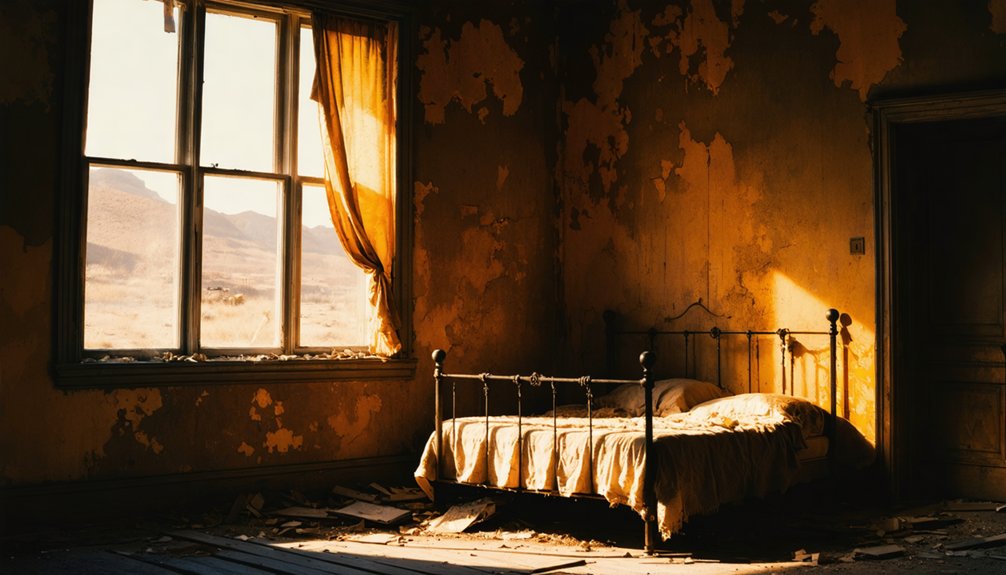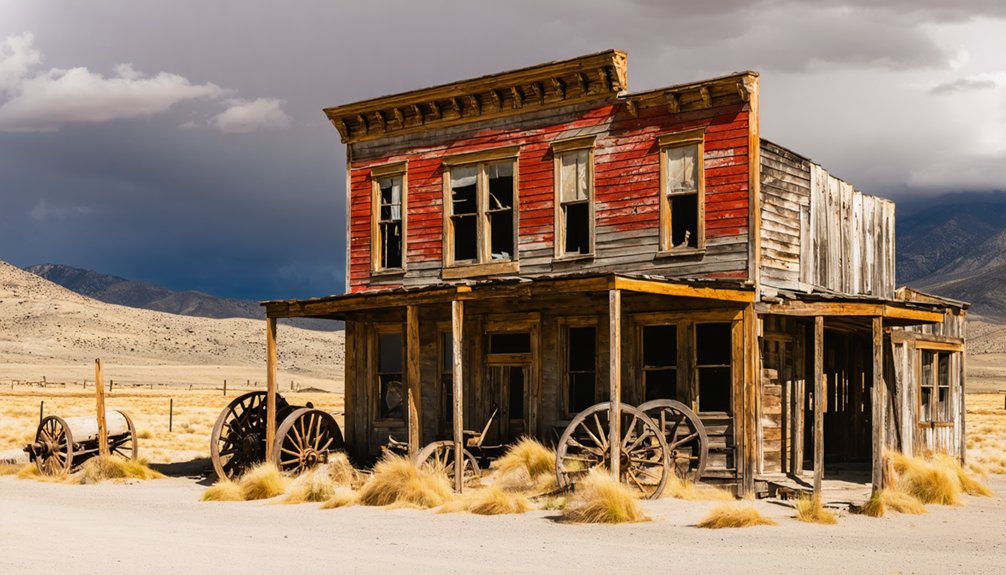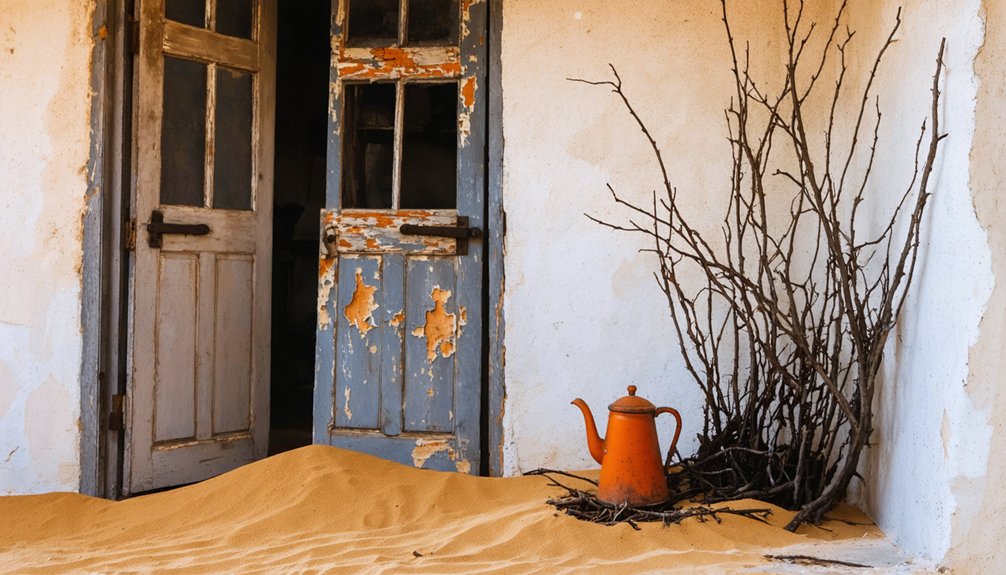
You’ll discover haunting remnants of Botswana’s past in Old Palapye, where red mudbrick ruins of the 1890s London Missionary Society Church stand at the foot of Tswapong Hills. Explore Lobatse’s abandoned colonial buildings and the sophisticated stone architecture of Domboshaba’s trading hub. Don’t miss Kobokwe’s Cave, where ancient witch legends meet Christian pilgrimage traditions. These mystical destinations hold centuries of fascinating stories waiting to be uncovered.
Key Takeaways
- Old Palapye features historic red mudbrick ruins from the 1890s London Missionary Society Church and once housed 300,000 inhabitants.
- Lobatse, Botswana’s original administrative capital, contains abandoned colonial buildings and the historic Seoke stone wall settlement.
- The Cumberland Hotel and old train station in Lobatse showcase the town’s colonial past and architectural heritage.
- Old Palapye’s ghost town atmosphere is enhanced by its wild inhabitants, including baboons, vervet monkeys, and Cape Vulture colonies.
- Lobatse’s abandoned BMC complex and vacant police houses offer visitors a glimpse into Botswana’s colonial-era infrastructure.
Exploring the Mystical Ruins of Old Palapye
Nestled at the foot of the majestic Tswapong Hills, Old Palapye stands as a tribute to Botswana’s rich colonial and tribal heritage.
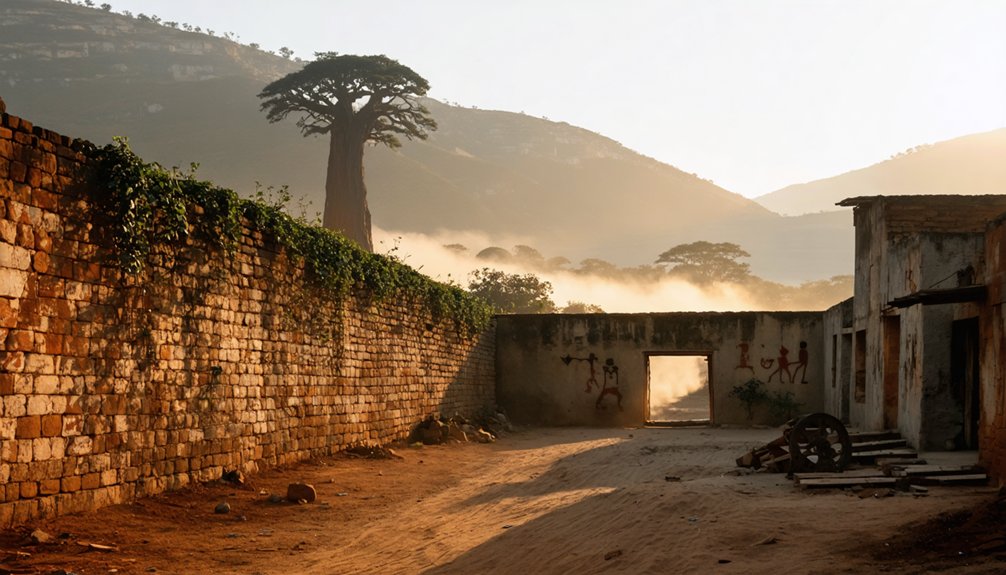
You’ll discover the haunting red mudbrick ruins of the London Missionary Society Church, built in the 1890s, alongside mysterious engravings and ancient rock paintings that tell tales of earlier civilizations.
At its peak, the settlement maintained a thriving population of up to 300,000 inhabitants.
As you explore this 19th-century capital of the Bangwato people, you’ll encounter colonial remnants including stone walls, prison ruins, and historic graves.
The settlement served as the proud capital under Kgosi Khama III until the move to Serowe in 1902.
The site’s wild residents – baboons, vervet monkeys, and even elusive leopards – add to its untamed allure.
Don’t miss the spectacular Cape Vulture colonies soaring above Gootau.
Remember to approach the village headman first and bring a local guide who’ll share fascinating oral histories while steering you through this historic ghost town’s rocky terrain.
Discovering Ancient Settlements at Domboshaba
Standing as a proof to Botswana’s sophisticated pre-colonial civilization, the ancient ruins of Domboshaba transport you back to a thriving 15th-century trading hub.
You’ll discover two distinct complexes featuring impressive stone architecture, with elite residences marked by rounded entrances and intricate check designs in their upper walls.
The carefully constructed platforms and terraces, designed for leaders, reveal the site’s state hierarchy through its architecture.
As you explore the hilltop complex, you’ll find yourself walking through what was once the chief’s residence, while the lower section housed wives and family members.
The site’s name, meaning “hill market” in both Shona and iKalanga languages, hints at its bustling past. Evidence of ancient trade surrounds you – from Chinese porcelain to Indian artifacts, revealing Domboshaba’s far-reaching commercial connections. Visitors can view excavated treasures including gold and copper artifacts in the National Museum in Gaborone.
Visit between 8am and 5pm to experience panoramic views and witness this remarkable piece of African heritage.
The Sacred Legacy of Vukwe Ruins
When you venture south of Domboshaba, you’ll encounter the enigmatic Vukwe ruins, a powerful symbol of the 15th-17th century Butua kingdom’s reach into northeastern Botswana.
You’ll discover an elite complex built upon impressive walled platforms, where ancient rulers once commanded their domain alongside the flowing Vukwe River.
As you explore the site, you’ll find evidence of a sophisticated society through bronze jewelry and iron tools left behind by the ruling class.
The Vukwe architecture mirrors the grandeur of Khami, featuring free-standing walls that have endured centuries.
These ancient walls, like their counterparts at Khami, stand defiantly against time, testament to remarkable architectural mastery.
A dramatic tale unfolds here – the site was suddenly abandoned during an Ndebele campaign, as recorded in 1870 accounts.
Today, these ruins stand as a monument to the region’s pre-colonial stone towns and the complex political networks that once dominated this landscape.
Like the sacred leaders of Mapungubwe, the rulers of Vukwe lived in isolation atop their elevated platforms.
The Botswana Society continues to support research and documentation of these significant archaeological sites through their annual publications.
Lobatse: A Historical Pioneer’s Tale
You’ll discover Botswana’s pioneering spirit in Lobatse, where early European settlers first arrived by train from Cape Town in 1955, establishing what would become the nation’s original administrative capital.
Walking through its valley-nestled streets today reveals abandoned colonial buildings that once housed the country’s first High Court of Justice and bustling railway commerce.
The town’s timeworn architecture and quiet boulevards tell a poignant story of change from a crucial economic hub to a hauntingly beautiful ghost town, just 70 kilometers south of modern-day Gaborone.
Exploring abandoned locations near Las Vegas reveals a fascinating glimpse into the past, where vibrant casinos and bustling streets once thrived. Each deserted site carries its own unique history, offering adventurers and photographers a chance to capture the remnants of a bygone era. As the desert sun sets, these locations take on an eerie beauty, beckoning those curious enough to uncover their stories.
The fertile valley’s indigenous wild pumpkins inspired the city’s name, reflecting its agricultural heritage and natural abundance.
Local cattle farms and the Botswana Meat Commission form the backbone of the region’s remaining economic activity, preserving a fragment of its former vitality.
Early Settlement Development
Deep in the heart of Botswana, Lobatse’s rich history stretches back to its earliest inhabitants, the Bakgwaketse people, who first carved out settlements in this strategic location.
As you explore this historical town, you’ll discover the remarkable Seoke stone wall settlement, built by the Bangwaketse around 1770, showcasing their advanced construction techniques.
Venture just outside town along the Mafikeng road, where ancient rock paintings of wildebeest, created by Khoe herders between 1000 and 1700 AD, tell silent stories of the past.
The indigenous settlements gradually gave way to colonial infrastructure when Cecil Rhodes’ railway arrived in 1896, transforming Lobatse into a crucial commercial hub.
These layers of history – from stone walls to railway tracks – paint a fascinating picture of human ingenuity and cultural transformation.
Today, the town serves as a vital cattle trade hub, with the Botswana Meat Commission exporting high-quality beef to international markets.
The town’s enduring significance in Botswana’s development is exemplified by the construction of the nation’s first tarmac road in 1958.
Abandoned Colonial Architecture
Standing as a haunting memorial to Botswana’s colonial past, Lobatse’s abandoned architecture tells the story of a once-thriving pioneer settlement that nearly became the nation’s capital.
You’ll discover colonial remnants scattered throughout the town, from the historic train station with its distinctive colonial roofing to the Cumberland Hotel that once hosted ambitious dreams of capitalhood.
Along Ramatlabama Road, you’ll find old-fashioned shops with residential quarters above, frozen in time. The architectural decay is particularly evident in the abandoned BMC complex, once Africa’s largest abattoir, and the vacant police houses in the town center.
The ghost town’s eerie charm lies in its mix of colonial-style government buildings and deteriorating structures, where unknown ownership has left many historic sites to slowly crumble under the African sun.
Spiritual Encounters at Kobokwe’s Cave
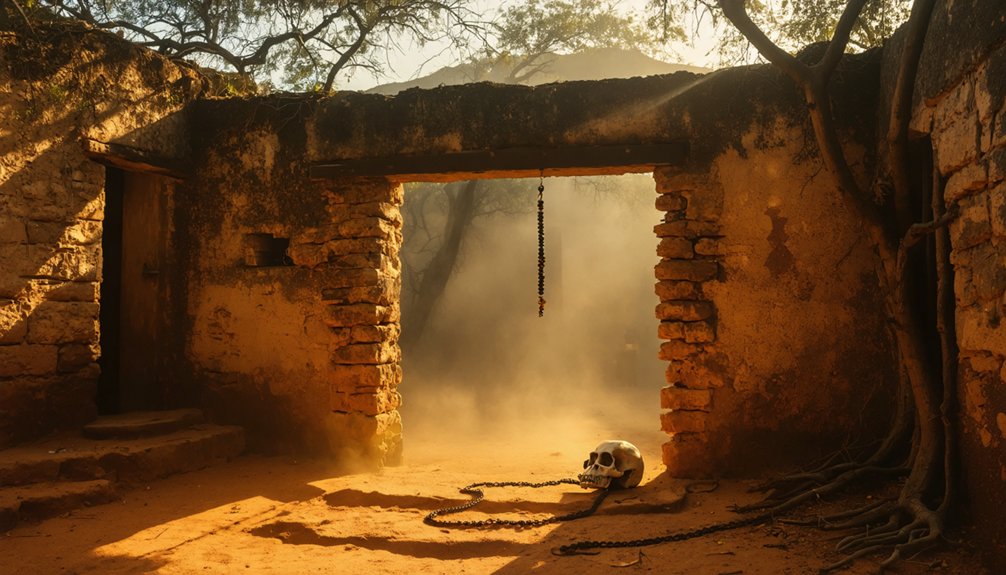
You’ll find yourself drawn to Kobokwe’s Cave, where ancient witch legends and midnight prayer rituals now intermingle in this mystical hillside sanctuary.
Dr. David Livingstone’s brave night spent here with Chief Sechele I transformed the cave from a feared site of black magic into a revered Christian pilgrimage destination.
As you explore this sacred spot just outside Molepolole, you’ll sense how the cave’s spiritual legacy continues through regular prayer meetings and visits from those seeking wisdom and divine connection.
Night Prayer Rituals
As midnight descends over Kobokwe’s Cave, the sacred chamber transforms into a vibrant hub of spiritual devotion where Christian pilgrims gather for powerful prayer meetings.
You’ll find remnants of candles lighting your path as you join these midnight rituals, where the cool breeze from deep chambers adds to the mystical atmosphere.
What was once feared as a den of evil spirits and witchcraft has become a beacon of faith since David Livingstone’s legendary night stay in 1847.
The spiritual gatherings here blend historical significance with modern worship, as you’ll experience the same sacred space where Kgosi Sechele I’s conversion marked a turning point for Christianity among the Bakwena people.
Today, the cave continues to draw believers seeking divine connection through prayer vigils.
Ancient Witch Legends
Behind the modern prayer gatherings lies a darker history of Kobokwe’s Cave, rooted in tales of witchcraft and ancient executions. This haunting site earned its name from a legendary witch who survived being thrown from execution rock through a powerful spell, defying the Bakwena king’s death sentence.
The cave’s rich witch folklore and spiritual significance emerge through these chilling elements:
- Dark spirits manifest as giant serpents called Bokgala potsane, said to take human form and prey on unsuspecting visitors.
- Traditional beliefs hold that spirits of executed witches still haunt the chambers, making it a forbidden zone for all but spiritual leaders.
- The execution rock, overlooking Molepolole village, served as a deadly platform where accused sorcerers met their fate under royal decree.
Livingstone’s Sacred Legacy
While dark legends once shrouded Kobokwe’s Cave in fear, Dr. David Livingstone transformed its legacy with one bold night in 1847.
You’ll discover how this brave missionary and Kgosi Sechele I challenged local superstitions by spending the night in the cave, emerging unscathed at dawn. Their survival marked a turning point in Botswana’s spiritual history.
Kobokwe’s significance shifted dramatically after this event, evolving from a feared site of witchcraft to a sacred Christian sanctuary. Livingstone’s influence sparked a wave of conversions among the Batswana, with Sechele I becoming his first convert.
Today, you can follow the marked trail to this historic cave, where midnight prayer meetings have replaced ancient fears. Candle remnants line your path to this powerful symbol of spiritual transformation, where both Christian pilgrims and tribal chiefs still seek divine connection.
The Supernatural Aura of Tsodilo Hills
Rising mysteriously from Botswana’s Kalahari plains, the sacred Tsodilo Hills have captivated visitors with their supernatural presence for over 70,000 years. Known as the “Mountains of the Gods,” these ancient formations hold deep spiritual significance through their connection to the cosmos and ancestral spirits.
You’ll discover the mystical heart of Tsodilo in three remarkable features:
- The serpent cave’s carved python head, where shamans performed secretive rituals
- The sacred quartet of hills, each embodying human characteristics and housing powerful spirits
- Ancient rock paintings that tell stories of mankind’s descent from the python deity
Don’t miss the legendary Leaning Rock, where offerings are still made today.
But remember – these hills demand respect. You’ll need to follow strict cleansing routines and observe local customs to avoid misfortune.
Preserving Botswana’s Abandoned Heritage Sites
Throughout Botswana’s vast landscape, ancient stone ruins and abandoned settlements tell fascinating stories of bygone civilizations.
You’ll discover impressive sites like Domboshaba, where free-standing walls rise two meters high, featuring elegant rounded entrances and distinctive check designs. At Sampowane, you can explore decorated platforms with intricate herringbone patterns that echo the artistic legacy of the Butua period.
Today, heritage conservation efforts bring together local communities and government initiatives to protect these treasures.
You’ll find active community engagement through cultural organizations and youth clubs working to preserve these sites. While visiting, you might encounter volunteers participating in conservation programs or local descendants sharing their connection to these ancient places.
Despite management challenges, these abandoned settlements remain powerful testimonials to Botswana’s rich cultural heritage.
Frequently Asked Questions
What Safety Precautions Should Visitors Take When Exploring These Ghost Towns?
With 85% of wildlife encounters occurring near abandoned sites, you’ll need proper safety gear, a guide, travel companions, and constant wildlife awareness when exploring. Never venture alone after dark.
Are There Guided Tours Available at All These Historical Sites?
You’ll need to arrange private guides, as formal tours aren’t officially available. Contact local heritage authorities to explore these historically significant sites – they may connect you with knowledgeable community guides.
What Is the Best Time of Year to Visit These Locations?
You’ll find ideal exploration during the dry season from May to October, when weather patterns align perfectly. Local seasonal festivals enrich your experience, while clear skies and mild temperatures make ruins easily accessible.
Do You Need Special Permits to Photograph These Ancient Ruins?
You’ll need permits for photography due to the historical significance of these sites. At Kolmanskop, choose between an N$85 general permit or N$230 photo permit. Botswana’s ruins require specific photography regulations.
How Accessible Are These Sites for Visitors With Limited Mobility?
You’ll find incredibly challenging terrain, but specialized safari vehicles with wheelchair accessibility and mobility aids can get you there. Many lodges now offer adapted transport and modified accommodations for limited-mobility exploration.
References
- https://www.ancient-origins.net/ancient-places-africa/kebokwes-cave-botswana-0011464
- https://sacredsites.com/africa/botswana/sacred_sites_of_botswana.html
- https://www.africanhistoryextra.com/p/the-forgotten-ruins-of-botswana-stone
- https://jenmansafaris.com/mysterious-gods-hills/
- https://encircleafrica.org/blog/coolest-ghost-towns-in-africa/
- https://www.youtube.com/watch?v=CbmTfWCbuvA
- https://en.wikipedia.org/wiki/Tsodilo
- https://boredreading.com/blog/recent/401/read/64203079/
- https://www.botswanatourism.co.bw/explore/old-palapye
- https://feed.nircle.com/post/old-palapye-the-forgotten-capital-whispering-botswanas-past/8ym4iizVUvHrRV6E