You’ll discover Bumble Bee Ghost Town nestled in Arizona’s rugged landscape, where it first emerged as Snyder’s Station in the 1860s. This essential stagecoach stop between Prescott and Phoenix thrived during the mining boom, with its strategic position along Bumble Bee Creek serving both travelers and U.S. Cavalry. Today, you can explore the original black lava rock mercantile, trading post, and former schoolhouse. The town’s rich history holds tales of hidden gold and frontier adventures waiting to be uncovered.
Key Takeaways
- Bumble Bee is an Arizona ghost town established in the 1860s as Snyder’s Station along Bumble Bee Creek.
- Originally a stagecoach stop between Prescott and Phoenix, the town featured an adobe building to serve travelers.
- The town’s economy was supported by nearby mining operations in the Bradshaw Mountains and gold found in Bumble Bee Creek.
- Only the black lava rock mercantile, trading post, former schoolhouse, and Bumble Bee Ranch structures remain today.
- Designated as a ghost town in 1974, Bumble Bee now attracts tourists seeking Western artifacts and historic atmosphere.
The Birth of a Stagecoach Stop
As the Arizona Territory began to take shape in the 1860s, an essential stagecoach stop emerged in the rugged Bradshaw Mountains.
You’ll find the origins of this historic settlement with W.W. Snyder, who established what was first known as Snyder’s Station along Bumble Bee Creek. This significant waypoint served travelers on the bustling Prescott-Phoenix stage line, later extending to Flagstaff.
The stagecoach history of this remote outpost runs deep, as it quickly became a strategic location for both stage travelers and the U.S. Cavalry. An adobe building was constructed to accommodate the steady flow of stagecoach traffic between major settlements. The area faced constant threats as it was situated in territory infested with hostile natives.
Positioned on Bumble Bee Flat east of today’s bridge, the station marked one of the earliest settlements in the region. The crude road leading to the Bradshaw Mountain mines made this stop critical for prospectors and passengers alike, connecting the growing communities of territorial Arizona.
From Snyder’s Station to Bumble Bee
The shift from Snyder’s Station to Bumble Bee unfolded amid the challenging conditions of frontier Arizona. When W.W. Snyder established his settlement in 1863, you’d have found yourself in the heart of Indian hostilities, where U.S. Cavalry protected the brave souls who ventured into this untamed territory.
The lush pastures along Bumble Bee Creek drew both ranchers and their livestock, while prospectors discovered the honey-filled bee nest that gave the creek its name. Similar to the American Ranch stage stop, Snyder’s settlement became an important rest point for travelers on their journeys. Today, the town spans just 200 yards long, with a single main street running through it.
Honeybees thrived among the rich meadows of Bumble Bee Creek, leaving their sweet legacy in both name and nature.
The area’s transformation accelerated when Snyder built a hostelry and stable for weary travelers. By February 1879, you’d find a proper post office serving the growing community, with Snyder himself taking charge in June 1880.
The station flourished under various owners, including Poulson & Besler, who developed it into a first-class stop along the Prescott-Phoenix stage line.
Mining Ventures and Economic Growth
Mining prosperity around Bumble Bee centered not on the settlement itself but on the rich deposits found throughout the adjacent Bradshaw Mountains.
You’ll find that while Bumble Bee Creek yielded modest amounts of gold, the settlement’s true worth lay in its strategic position along the Prescott-Phoenix stage line, serving neighboring boomtowns like Turkey Creek and Golden Turkey.
The Peek mine stood out among local operations, with its first 10 tons of ore fetching an impressive $10,000 from Prescott merchants. Like their namesake insects that can reach ground speeds of 54km/h, supply wagons moved swiftly between mining operations.
As gold mining in the region flourished through World War II, Bumble Bee thrived as a crucial supply hub and passage point. Some prospectors established blanket-sized claims that produced significant daily yields.
Even when economic decline led surrounding camps to become ghost towns, the area saw a brief revival during the Great Depression as prospectors returned to work abandoned claims.
The Railroad’s Impact and Town Decline
From 1898 to 1904, Frank Murphy’s ambitious railroad project transformed the Bradshaw Mountains transportation landscape, though it ultimately sealed Bumble Bee’s fate.
Known as “Murphy’s Impossible Railroad,” the line faced numerous challenges traversing the region’s treacherous terrain while connecting mines to smelters.
Murphy’s daring railroad project defied the odds, conquering rugged mountain passages to link vital mining operations across the Bradshaws.
The railroad’s impact brought significant economic shifts:
- Workers constantly abandoned their posts to prospect during nearby gold strikes
- The line transported over $1.1 million in precious metals through Turkey Creek Station
- High wages were required just to maintain a steady workforce
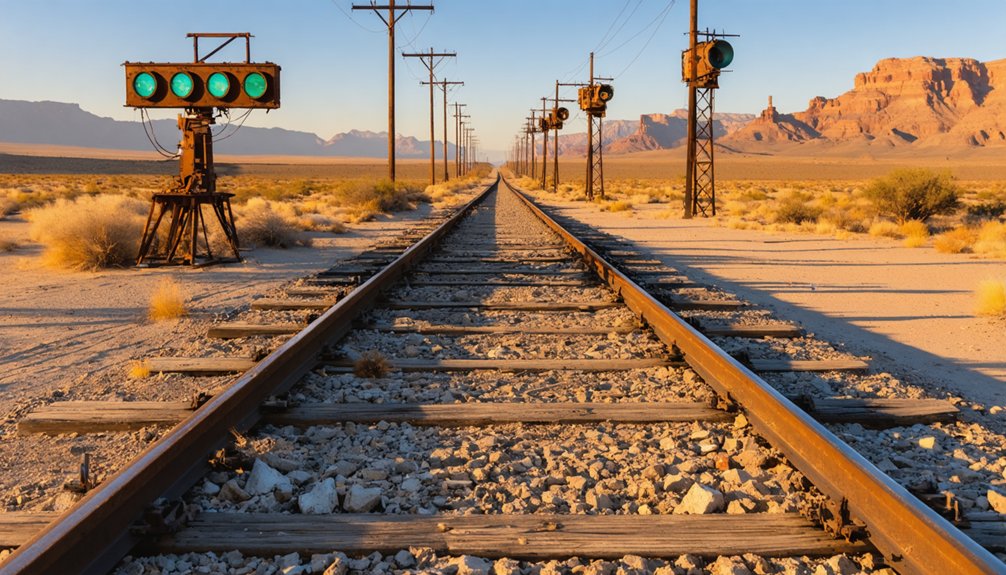
The route now serves as a scenic gravel road from Interstate 17 to Crown King.
You can still trace the railroad’s legacy along Crown King Road, which follows the original grade.
Mining operations in the rich Bradshaw Mountains supported the local economy until World War II.
As mines depleted and tracks were removed, Bumble Bee’s prominence faded from a bustling stage stop to a quiet ghost town, bypassed by modern transportation routes like Interstate 17.
Modern Remains and Tourist Legacy
Today’s visitors to Bumble Bee encounter a blend of authentic history and staged nostalgia amid the stark Bradshaw Mountain desert.
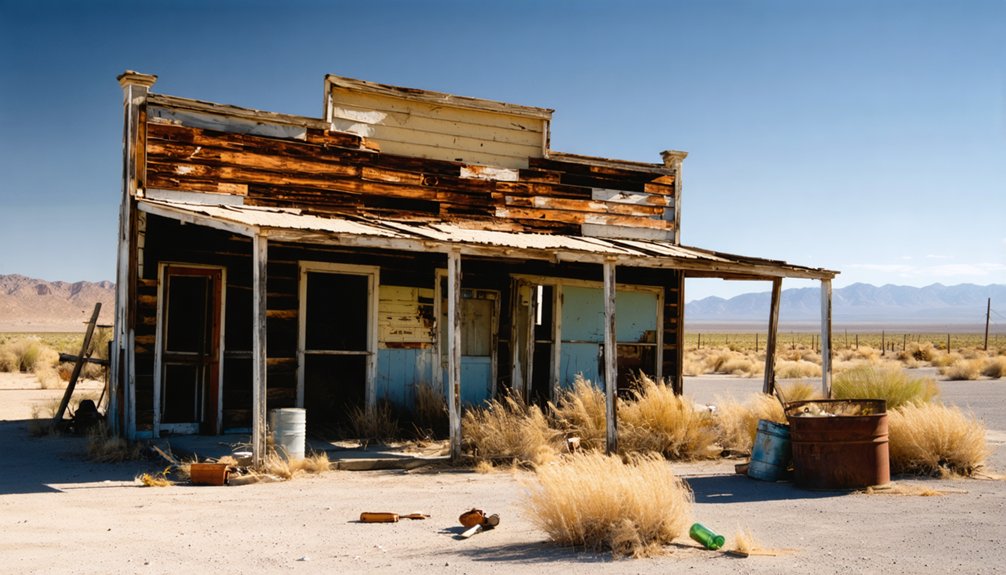
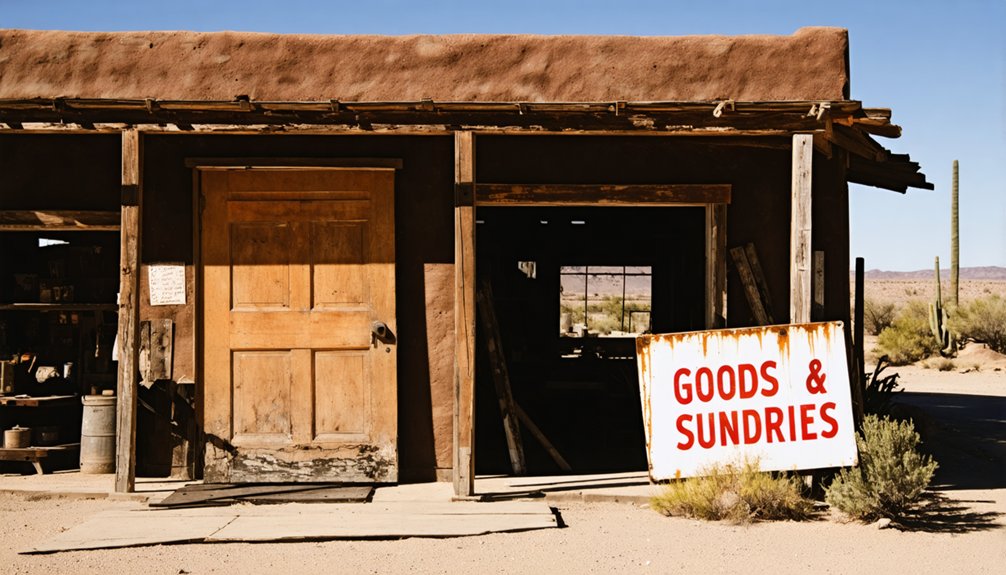
You’ll find the original black lava rock mercantile standing proudly alongside 1970s-era board-and-batten structures that were built to enhance modern tourism. The trading post, once the town’s schoolhouse, and Bumble Bee Ranch remain the area’s only commercial ventures. The site reflects the pattern of semi-populated areas common among Arizona’s ghost towns.
These remnants of the past offer a unique glimpse into the lives of early settlers and the challenges they faced. Exploring ghost towns in Arizona history reveals stories of resilience and the impact of economic shifts on these once-thriving communities. Visitors can wander through abandoned buildings, gaining insight into the state’s rich heritage and the allure of its forgotten landscapes.
At 2,500 feet elevation, you’ll enjoy temperatures five degrees cooler than Phoenix as you explore the historic site. Treasure hunters still search for the legendary $80,000 in gold reportedly hidden in nearby Bronco Canyon.
While historical preservation efforts maintain the authentic ruins, including four original houses, the mock gallows and weathered facades create compelling photo opportunities.
Since receiving official ghost town status in 1974, Bumble Bee has drawn visitors seeking both genuine artifacts and staged Western atmosphere.
Frequently Asked Questions
Are There Any Reported Ghost Sightings or Paranormal Activities in Bumble Bee?
You won’t find documented ghost encounters or paranormal investigations in Bumble Bee, though local legends whisper of mysterious lights and sounds near the old stagecoach stop and abandoned mine shafts.
The history of Webb, Arizona ghost town is steeped in tales of lost riches and forgotten lives, much like Bumble Bee. As explorers sift through the remnants of these once-thriving communities, they uncover stories that blur the line between history and myth. These echoes of the past continue to draw the curious, eager to witness the spectral remnants of a bygone era.
exploring weaver’s ghost town history reveals forgotten tales of pioneer life and the struggles faced in the high desert. Visitors can walk through the remains of dilapidated structures and imagine the vibrant community that once thrived there, and the stories often feature whispers of the past that seem to linger in the air. As the sun sets over the skeletal remains of the town, an eerie yet captivating atmosphere invites adventurers to seek out the secrets buried within.
What Was the Highest Recorded Population of Bumble Bee During Its Peak?
You’ll find Bumble Bee’s highest recorded population peaked at 25 residents in 1920, marking its historical significance as a small but essential stage stop before declining to 20 by 1940.
Did Any Famous Outlaws or Notable Figures Visit Bumble Bee?
While there’s no clear record of famous outlaws, you’ll find Henry Wickenburg, the renowned prospector and town founder, was the most notable historical visitor to frequent Bumble Bee’s stagecoach station.
What Native American Tribes Originally Inhabited the Bumble Bee Area?
In 1875, over 1,500 Indigenous people were forcibly displaced from this land. You’ll find that Yavapai and Dilzhe’e Apache peoples originally inhabited here, managing the desert’s resources through seasonal movements.
Does Bumble Bee Experience Extreme Weather Conditions That Affected Its Development?
You’ll find stark weather patterns impacted development, with scorching 90°F summers, freezing 25°F winters, and extreme shifts between wet July monsoons and June’s bone-dry climate creating challenging living conditions.
References
- https://azoffroad.net/bumble-bee
- https://www.legendsofamerica.com/az-bumblebee/
- https://www.bumblebeeranch.com/history-of-bumble-bee
- https://en.wikipedia.org/wiki/Bumble_Bee
- http://www.ghosttownaz.info/bumble-bee.php
- https://janmackellcollins.wordpress.com/2021/04/19/the-ups-and-downs-of-bumblebee-arizona/
- http://www.ghosttowngallery.com/htme/bumble.htm
- https://www.deseret.com/2002/2/10/19636534/don-t-blink-or-you-ll-miss-arizona-ghost-town/
- https://azgw.org/yavapai/ghosttowns.html
- https://www.ghosttowns.com/states/az/bumblebee.html