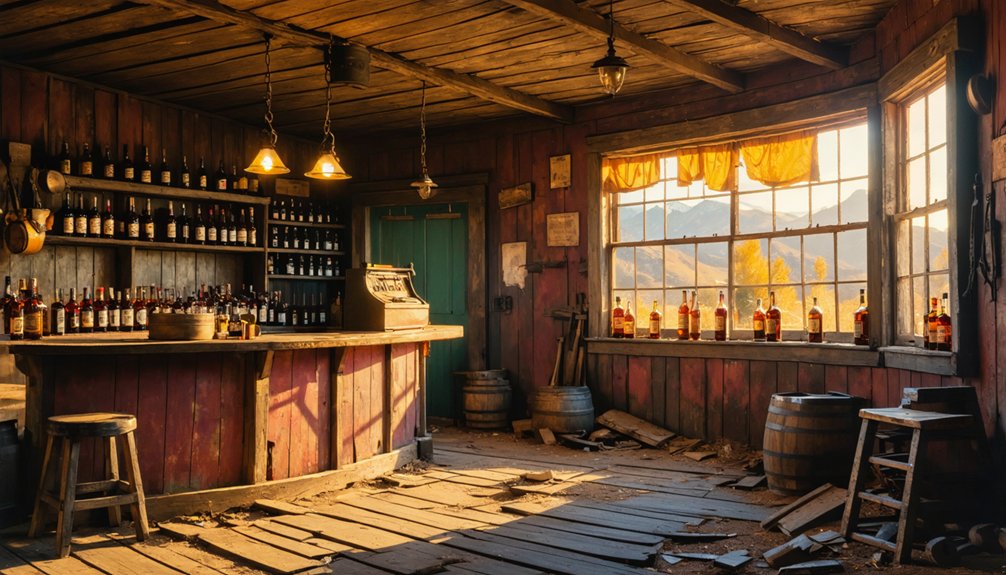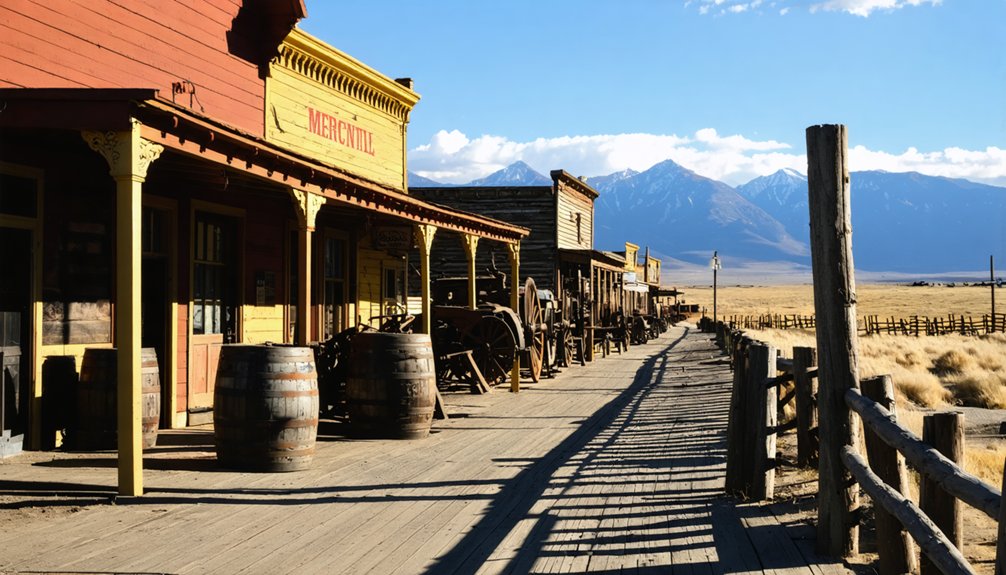
You’ll discover nearly 300 ghost towns scattered across California, each offering a unique window into the state’s pioneering past. From Bodie’s 170 weathered structures preserved in “arrested decay” to Calico’s meticulously restored 1880s facades, these abandoned settlements tell stories of gold fever, silver strikes, and boom-to-bust dreams. Fall and spring provide ideal conditions to explore these historic treasures, with comfortable temperatures and fewer crowds. The mysteries and legends of these forsaken places await your discovery.
Key Takeaways
- Bodie State Historic Park offers 170 preserved structures in “arrested decay” and is considered California’s best-preserved ghost town.
- Calico Ghost Town features restored 1880s silver rush buildings with paved roads and multiple attractions for easy family exploration.
- Empire Mine State Historic Park showcases mining history with a 367-mile underground maze and well-preserved structures.
- Randsburg and Ballarat are easily accessible ghost towns along Highway 395, perfect for day trips and photography.
- Fall and spring are ideal times to visit ghost towns, with comfortable temperatures and fewer crowds.
What Makes California Ghost Towns Unique
While ghost towns dot landscapes across the American West, California’s abandoned settlements stand apart through their remarkable diversity and preservation.
You’ll discover ghost town origins ranging from bustling Gold Rush boomtowns to early socialist communes and even WWII internment camps. The state’s nearly 300 abandoned sites tell compelling stories of both triumph and tragedy.
What makes these places truly special is their extraordinary preservation. In Bodie, you’ll find 170 structures frozen in time, with newspapers still stuffed in walls for insulation. Visitors can explore the town’s rich history which once included 65 saloons during its peak.
At Calico, you can explore meticulously restored 1880s facades, while Randsburg offers authentic buildings in various states of decay. For a unique experience, visitors can explore the 367-mile underground maze at Empire Mine State Historic Park.
Whether you’re drawn to Bodie’s bleak isolation, Calico’s tourist-friendly attractions, or the cultural significance of sites like Manzanar, California’s ghost towns offer unparalleled windows into the past.
Best Times to Explore These Historic Sites
Although California’s ghost towns beckon year-round, timing your visit can dramatically enhance your experience.
Fall and spring offer perfect conditions, with comfortable temperatures and fewer crowds at iconic sites like Calico and Bodie. You’ll find peak seasons bring extended hours, with most locations opening at 9 AM for prime morning exploration. Guided tours are available at select locations for deeper historical insights.
Experience ghost towns at their finest during spring and fall, when mild weather and smaller crowds create an ideal atmosphere for exploration.
Avoid the scorching summer months, particularly in Death Valley areas where temperatures soar above 110°F. Instead, embrace winter’s mild 70°F days at Calico, or explore the High Sierra’s sun-drenched landscapes. Plan to arrive when the entrance fee is $8 to maximize your adventure budget.
For the adventurous spirit, October’s Calico Ghost Haunt delivers spine-tingling entertainment. The seasonal weather patterns create distinct opportunities – from crisp morning tours at Empire Mine to afternoon wanderings through Silver City’s year-round exhibits.
Planning Your Ghost Town Adventure
Before starting your California ghost town expedition, you’ll need to prepare thoroughly for these rugged yet rewarding destinations. Pack sturdy boots for traversing uneven terrain, and don’t forget your camera to capture the haunting beauty of over 100 weathered structures. While visiting, you can experience mining history firsthand at the fully preserved Bodie Historic State Park.
When exploring ghost town history, respect exploration etiquette by staying on marked paths and joining guided tours for restricted areas like stamp mills. Philip Varney’s guide highlights Southern California destinations in remarkable detail.
Your adventure requires practical planning too. Bring plenty of water and sun protection, especially for Mojave Desert locations. Consider your vehicle’s clearance for unpaved roads, and check site hours and fees in advance.
For an enhanced experience, book specialty tours like Bodie’s evening Ghost Walks or Calico’s mine tours. Many sites offer nearby amenities, with Calico featuring camping, dining, and entertainment options for extended stays.
Most Accessible Ghost Towns for Day Trips
Looking for a ghost town adventure that won’t test your wilderness skills? California’s most accessible ghost towns offer fascinating glimpses into the past without requiring extensive travel preparations.
Calico Ghost Town leads the pack for day trip itineraries, featuring paved roads right to its doorstep and multiple attractions you can explore from 9 AM to 5 PM. Visitors can explore the authentic silver mine at Maggie Mine to experience the region’s rich mining history.
You’ll find similar ghost town accessibility at Bodie State Historic Park, where 2,000 preserved structures await your discovery. This remarkable site produced over $35 million in gold during its peak in the 1870s and 80s.
For an easy mountain excursion, Glen Alpine Springs near South Lake Tahoe combines historic charm with a gentle hiking trail.
If you’re feeling more adventurous, follow the Highway 395 corridor to visit Randsburg and Ballarat, two well-connected stops on California’s ghost town circuit that you can reach by car year-round.
Photography Tips for Capturing Desert Ruins
Ready to capture the haunting beauty of California’s desert ruins? You’ll want to pack a travel zoom lens (24-70mm) for most shots and a telephoto (70-200mm) for those dramatic landscapes where you’ll compress foreground and background elements.
Consider researching historical context first to understand the significance and stories behind the locations you’ll be photographing.
Timing is everything – shoot during golden hour when the warm light accentuates textures and creates deep shadows. For stunning night photos at places like Ryan Ranch, try using a Coast HP5R flashlight to paint the adobe ruins with warm light.
Master composition techniques by seeking natural patterns and simplifying your frame. You’ll find the most striking shots when you position yourself perpendicular to the sun, avoiding lens flare while capturing those compelling sidelit textures.
For ideal lighting conditions, shoot at base ISO during sunset, and use a graduated ND filter to balance bright skies with darker ruins.
Remember to protect your gear from sand with clear filters and avoid changing lenses in windy conditions.
Historic Mining Operations and Their Legacy
While you’re capturing those haunting images of California’s ghost towns, you’ll find that each crumbling structure tells a story of America’s mineral wealth obsession.
From Calico’s spectacular $20 million silver strike to Leadfield’s copper dreams, these sites showcase diverse mining techniques that shaped the West. You’ll discover how geological formations, like those in Bodie, created rich deposits that drew thousands of fortune seekers.
California’s ghost town heritage spans roughly 300 sites, each marking where prospectors once sought their fortunes.
Places like Ward Mining Camp, with its innovative water-powered mill, demonstrate the ingenuity of early miners. Yet when precious metals lost value or deposits ran dry, these boom towns went bust.
Today, these preserved landmarks let you explore the raw ambition and determination that drove California’s mining era.
Preserved Architecture Through the Ages
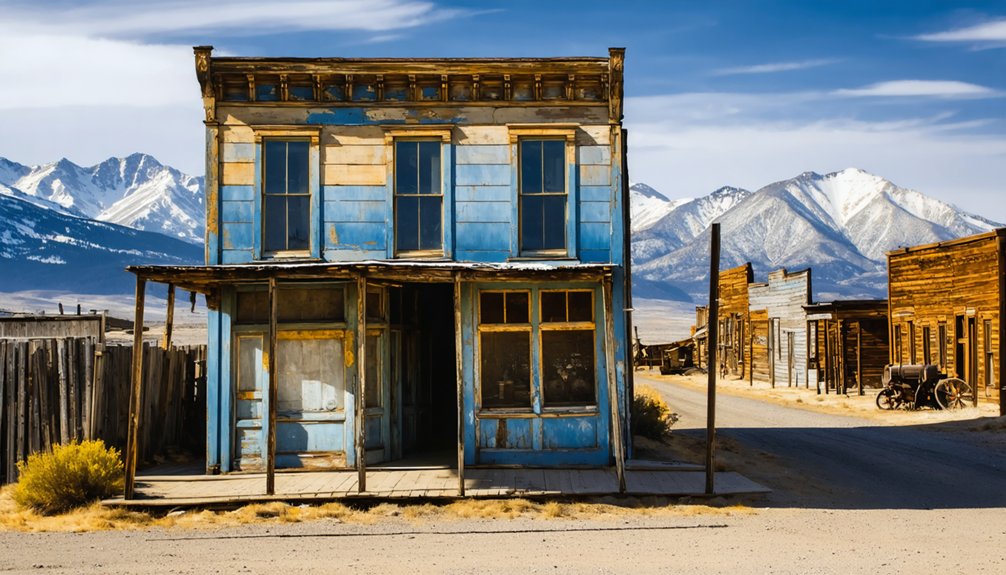
As you explore California’s ghost towns, you’ll discover a remarkable variety of preserved architecture spanning from simple wooden structures to impressive brick commercial buildings of the 1850s.
The architectural legacy includes everything from Bodie’s weathered wooden buildings frozen in “arrested decay” to Shasta’s sturdy row of brick storefronts and Cerro Gordo’s restored American Hotel perched high in the Inyo Mountains.
These preserved structures tell the story of California’s mining era through their diverse building materials, construction methods, and architectural styles – from utilitarian mining operations to ambitious civic buildings that reflected the towns’ prosperity and aspirations.
Mining Era Building Design
Throughout California’s ghost towns, the preserved architecture tells a compelling story of the state’s mining heritage, from Calico’s restored 1880s silver rush buildings to Bodie’s weathered wood-frame structures frozen in arrested decay.
You’ll discover diverse building styles across these historic sites – Eagle Mountain’s mid-century single-story houses contrast sharply with Calico Architecture’s authentic frontier facades set against mountain backdrops.
Bodie Preservation showcases classic false-front buildings and stamp mills, while Malakoff Features display restored saloons and shops amid dramatic hydraulic mining scars.
In Ballarat Ruins, you’ll find adobe structures and weathered wooden shacks that once housed 500 residents during the gold rush, alongside Empire Mine’s extensive network of tunnels and industrial remnants.
Historic Preservation Techniques Today
Modern preservation techniques have revolutionized how you’ll experience California’s ghost town heritage sites today. You’ll find historic preservation efforts using cutting-edge 3D scanning technology to create precise digital blueprints of these abandoned towns, allowing experts to monitor structural changes and plan restorations with unprecedented accuracy.
When you explore these sites, you’ll notice the careful balance of old and new – traditional lime-based mortars protecting original masonry while advanced composites reinforce weakened structures without compromising their authentic appearance.
Some ghost towns have embraced adaptive reuse, transforming historic buildings into museums or cultural spaces while maintaining their historic character. Through these innovative techniques, you’re able to step back in time while knowing these precious remnants of California’s past will endure for future generations.
Architectural Styles Through Time
The diverse architectural heritage of California’s ghost towns tells a fascinating story of boom-and-bust cycles that shaped the American West.
You’ll find an architectural evolution spanning from Hornitos’ granite-walled Mexican-era structures to Old Shasta’s impressive brick row, once the largest north of San Francisco.
Each town’s structural significance reflects its unique purpose. In Bodie, you’ll discover wooden buildings like the Standard Stamp Mill and Miner’s Union Hall that supported a thriving gold economy.
Up at 8,500 feet, Cerro Gordo’s hardy designs showcase silver rush ingenuity through the restored American Hotel and Bunkhouse.
Darwin’s dramatic decline from 45,000 residents to a single original building demonstrates the fragile nature of boom town architecture, while preserved landmarks like Roy’s Motel in Amboy capture the spirit of each era.
Local Legends and Ghost Stories

When darkness settles over California’s abandoned mining towns, ghostly legends come alive through tales of restless spirits and unexplained phenomena.
You’ll hear whispers of spectral miners eternally toiling in forgotten shafts, their shadowy forms glimpsed at dusk. The Eagle House inn harbors its own supernatural residents – a pipe-smoking “Captain” whose tar-like scent lingers in empty rooms, and a playful boy spirit who rolls his red ball through silent corridors.
In abandoned mines and dusty halls, ghostly figures roam – from hard-laboring miners to a Captain’s pipe smoke and a child’s rolling ball.
These ghostly encounters echo the land’s turbulent past, from displaced Native American villages to the violent days of the Gold Rush.
As you explore these haunted places, you might feel an inexplicable pull drawing you deeper into their mysteries. Each weathered building holds untold stories of triumph, tragedy, and the souls who’ve left their eternal mark on these forgotten towns.
Essential Items for Ghost Town Exploration
Planning your ghost town adventure requires careful consideration of essential gear to guarantee both safety and enrichment during your journey through California’s abandoned settlements.
You’ll need secure equipment storage solutions for your cameras, camping gear, and historical documentation materials while exploring these remote desert locations.
- Professional photography equipment and backup devices to capture weathered structures, vintage vehicles, and period artifacts in their authentic state
- Navigation tools, emergency supplies, and first aid kits for safety precautions when venturing into high-desert terrain accessible only by unpaved roads
- Climate-appropriate camping gear, including sleeping systems and cooking supplies, ensuring comfort during extended stays where modern amenities don’t exist
Pack smart and you’ll be ready to document your journey through time while staying protected in these fascinating yet challenging environments.
Responsible Tourism in Historic Sites
Responsible exploration of California’s ghost towns demands a delicate balance between historical preservation and tourism. When you visit these historic sites, you’ll need to embrace cultural respect by following established trails, never removing artifacts, and adhering to local guidelines.
Your presence shouldn’t disrupt local community members who may still consider these places spiritually or culturally significant. Support indigenous-owned businesses and tour companies when possible, as they often provide the most authentic and respectful interpretations of these historic places.
Remember that community engagement is vital – these aren’t just abandoned relics, but places with deep connections to living communities. By choosing responsible operators and following preservation protocols, you’ll help guarantee these fascinating remnants of California’s past survive for future generations to discover.
Frequently Asked Questions
Are Pets Allowed in California Ghost Towns?
You’ll find pet friendly policies at most ghost town attractions, with leashed dogs welcome at spots like Calico and Bodie. Just check specific rules, as some areas restrict pet access.
The history of Dog Town, California showcases a vibrant past where pets were not just companions but integral to daily life. Many local attractions offer a glimpse into this unique heritage, highlighting events that celebrate the bond between humans and their furry friends. Visitors can explore trails that echo stories of both people and pets, making it a memorable destination for dog lovers.
What Is the Closest Airport to These Ghost Town Locations?
You’ll find closest airports vary by ghost town location. Check Mammoth Yosemite for Bodie, Ontario International for Calico, and Redding Municipal for Shasta. Plan ahead for these remote adventures.
Do Any Ghost Towns Offer Guided Night Tours?
In a million moonlit adventures, you’ll find guided nighttime tours at Bodie’s summer twilight walks, Calico’s Saturday evening excursions, and San Diego’s Old Town haunts, each offering spine-tingling historical storytelling.
Can Visitors Take Home Artifacts Found in Ghost Towns?
You can’t legally remove artifacts from ghost towns – it’s strictly forbidden. Federal and state regulations protect these historic sites, with hefty fines or jail time for violating artifact preservation laws.
Are There Any Wheelchair-Accessible Ghost Town Trails or Buildings?
You’ll discover pioneers of historical preservation at Bodie and Malakoff Diggins, where wheelchair accessibility meets the Wild West. Bodie offers special terrain chairs, while Malakoff’s Independence Trail spans 3.5 miles of accessible paths.
References
- https://whimsysoul.com/must-see-california-ghost-towns-explore-forgotten-histories/
- https://www.visitcalifornia.com/road-trips/ghost-towns/
- https://www.camp-california.com/california-ghost-towns/
- https://www.tripadvisor.com/Attractions-g28926-Activities-c47-t14-California.html
- https://californiahighsierra.com/trips/explore-ghost-towns-of-the-high-sierra/
- https://tisqui.github.io
- https://www.geotab.com/ghost-towns/
- https://www.authentikusa.com/us-en/blog/english-top-5-villes-fantomes-aux-usa-maj
- https://www.californist.com/articles/interesting-california-ghost-towns
- https://dornsife.usc.edu/magazine/echoes-in-the-dust/