Warren, California began as a gold mining settlement in 1862 when James Warren discovered rich deposits. Unlike rowdy neighboring camps, it developed into a structured community with a population of 1,500 within two years. You’ll find it evolved through distinct mining phases—from simple placer operations to advanced extraction techniques—before economic hardships and depleting ore led to its abandonment. The ghost town‘s weathered structures and foundation stones now tell tales of California’s pioneering spirit.
Key Takeaways
- Warren, California began as a gold mining settlement in 1862, growing to 1,500 residents within two years after James Warren discovered rich deposits.
- At its peak, Warren’s mining district yielded approximately $15 million in placer gold between the 1860s and early 1900s.
- The town experienced typical boom-and-bust mining cycles, with population declining from 8,500 in 1879 to 1,500 by 1886.
- Warren was completely abandoned by 1942 when wartime orders halted non-essential gold mining operations.
- Now a ghost town, Warren is designated as an official California Historical Landmark with ongoing preservation efforts.
The Founding of Warren, California
When James Warren stumbled upon rich gold deposits in 1862, he couldn’t have anticipated that his discovery would give rise to one of Idaho’s most notable mining settlements.
Initially known as Warren’s Diggings, the site quickly attracted miners who implemented strategic settlement strategies to establish an orderly community.
Unlike the lawless atmosphere of nearby Florence, Warren’s community leadership deliberately created a civilized environment where miners could work and live safely.
Within months, about 400 miners were extracting $15-$20 daily, with the first year yielding an estimated two million dollars in gold.
The population swelled to 1,500 within two years as word spread of both the rich placers and the town’s peaceful character.
You’ll find it remarkable that many founders specifically migrated from Florence, seeking not just gold but a more structured mining community.
Similar to how the Ward Mining Camp processed local ore through its four-stamp mill, Warren’s miners utilized efficient extraction methods to maximize their yields.
The town sits at a considerable elevation of 5,909 feet in Idaho County, which contributed to its isolation and challenging supply logistics.
Mining Operations and Economic Development
You’ll find the earliest mining activity in Warren beginning in 1862 when gold-bearing quartz veins attracted fortune seekers who initially used simple arrastas to process ore.
By the peak production era, miners had upgraded to ten-stamp mills, greatly increasing efficiency and output while employing Cornish pumps to tackle water challenges in the deeper shafts. Similar to the mines in Keyesville during the Kern River gold rush, these operations required sophisticated equipment to maximize extraction from increasingly difficult-to-access deposits. The Frazier brothers made a significant gold discovery in 1870 that further intensified mining activities in the region.
These technological improvements transformed Warren’s mining district into a significant economic contributor that sustained regional development and attracted diverse immigrant populations through the late 19th century.
Gold Rush Beginnings
Following the California Gold Rush of 1848, gold prospectors gradually spread eastward in search of new riches, eventually discovering gold near Warren, Idaho in the summer of 1862.
This discovery marked an important extension of the gold rush movement beyond California’s borders, establishing Warren among emerging camps like Orogrande, Dixie, and Newsome.
The area’s early mining development followed three distinct phases:
- Initial placer mining with simple panning and “coyoteing” techniques
- Shift to hard-rock mining of quartz-bearing fissure veins
- Introduction of more advanced extraction methods using mercury amalgamation
Warren’s gold rush contributed notably to Idaho Territory’s formation, bringing waves of prospectors who established essential infrastructure. Like the 300,000 people who migrated to California during the original gold rush, these fortune-seekers transformed previously quiet territories into bustling communities.
Accessing historical information about these mining operations often requires enabling JavaScript capabilities on websites dedicated to preserving this rich cultural heritage.
You’ll find evidence of these ambitious miners in the remaining structures that once supported a thriving community built entirely on golden dreams.
Peak Production Era
The golden era of Warren’s mining district stretched from the 1860s through the early 1900s, yielding approximately $15 million in placer gold by 1935.
What began as simple creek-bed placer mining evolved when lode mining commenced around 1866, targeting harder-to-reach gold veins.
You would have witnessed remarkable economic fluctuations throughout this period. After 1870, Chinese miners efficiently reworked abandoned claims, extracting gold others deemed unprofitable. Similar to the Alder Gulch district in Montana, Warren’s richest placer deposits produced substantial yields within the first few years of discovery.
The introduction of mechanized dredging and powerful hoisting equipment in the late 1890s revolutionized operations, making deeper deposits accessible and fueling peak annual outputs.
Major contributors like the Governor mine ($1.5 million) and Red Rover ($550,000) sustained the local economy despite challenges from fires, floods, and labor disputes.
The region saw similar mining patterns to the San Gabriel Mountains, where early miners used dry panning techniques before advancing to more sophisticated methods.
Gold mining created a boom-and-bust cycle that shaped Warren’s destiny until declining ore content eventually triggered its downfall.
Equipment and Technology
As Warren’s gold rush intensified, mining technology evolved from primitive tools to sophisticated machinery, fundamentally transforming the extraction landscape.
Initially, you’d find prospectors using basic placer mining equipment—pans and rockers—to separate gold from stream sediment. These individual operations gradually gave way to more capital-intensive methods.
The technological progression followed three distinct phases:
- Basic hand tools – Pans, shovels, and rockers required minimal investment
- Intermediate systems – Sluice boxes and long toms increased processing capacity
- Advanced extraction – Hydraulic technology with powerful monitors blasting away hillsides
Miners commonly used mercury techniques to amalgamate with gold particles, allowing for more efficient separation from black sand and other heavy materials.
By the 1880s, more efficient gold extraction methods emerged with the introduction of the revolutionary cyanide process that dramatically improved recovery rates.
Daily Life in Warren’s Heyday
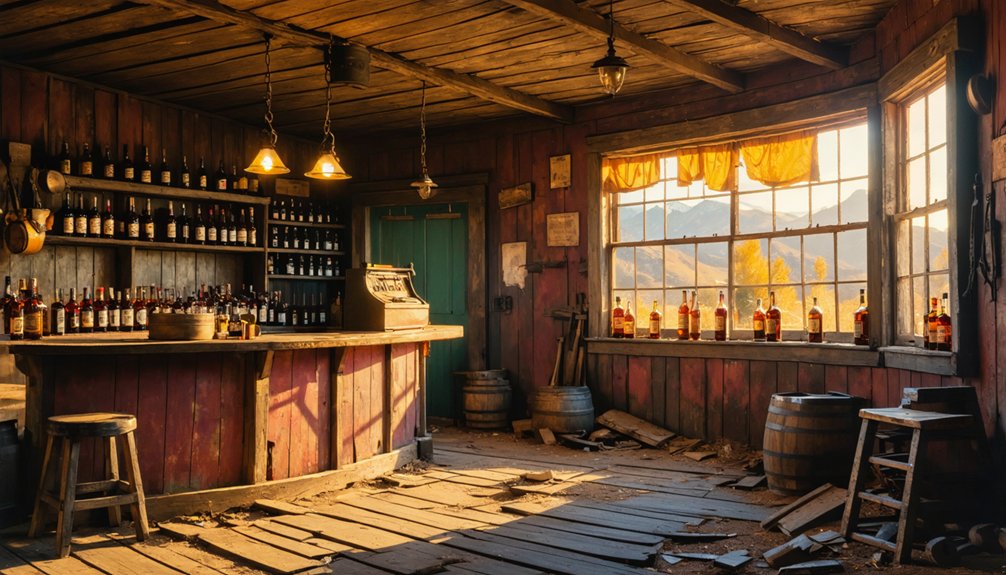
After a grueling day in the gold mines, you’d find Warren’s workers gravitating toward the town’s saloons and social halls, where card games, music, and flowing drinks offered brief respite from the harsh realities of mining life.
You might witness Chinese immigrants organizing their own cultural celebrations or glimpse the seasonal rhythm of community events that fostered camaraderie among the diverse population of nearly 5,000 residents at the town’s peak.
Despite the rustic living conditions and isolation from outside resources, Warren’s nightlife created a vibrant social fabric that sustained the community through the boom-and-bust cycles of the mining economy.
Working Class Rhythms
Daily rhythms in Warren, California during its gold rush heyday revolved around the unforgiving demands of mining labor, creating a lifestyle markedly different from today’s standardized workday.
Miners’ schedules followed the sun rather than the clock, with work beginning at dawn and often continuing until dusk—sometimes longer by lantern light for those desperate to strike it rich.
Your ancestors in Warren endured harsh realities across several domains:
- Housing conditions ranged from canvas tents to crude log cabins, offering minimal protection from California’s seasonal extremes.
- Food practices centered on simple, preservable staples, with community meals often becoming important social anchors.
- Labor struggles emerged as independent prospectors gradually gave way to company employment, transforming the social dynamics of this frontier community.
The working class rhythm maintained a delicate balance between brutal toil and fierce independence.
Entertainment After Dark
When darkness fell over Warren, the mining town transformed from a site of backbreaking labor to a vibrant social landscape where gold seekers sought respite from their grueling days.
You’d find yourself drawn to local saloons, the heart of nighttime revelry, where cards slapped on poker tables and faro banks attracted crowds hoping to multiply their day’s earnings. Live music from fiddles and pianos filled these establishments, while impromptu sing-alongs created bonds among strangers and friends alike.
Community gatherings provided alternatives to saloon life—church socials, talent shows, and holiday celebrations brought families together under starlit skies.
During special occasions, you might join a dance at the community hall or witness traveling performers who brought outside culture to this isolated outpost. These evening diversions weren’t mere entertainment but essential threads in Warren’s social fabric.
Notable Buildings and Landmarks
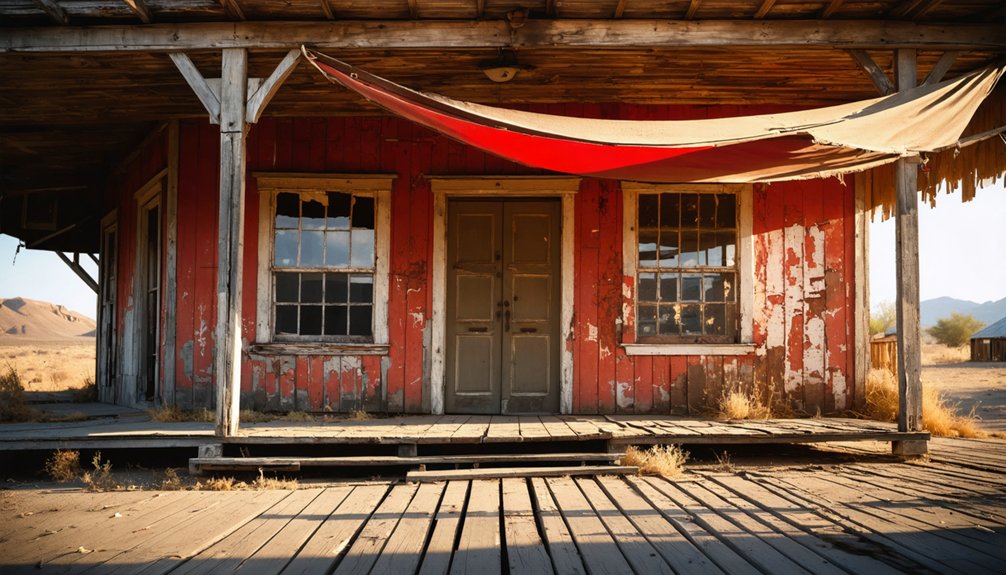
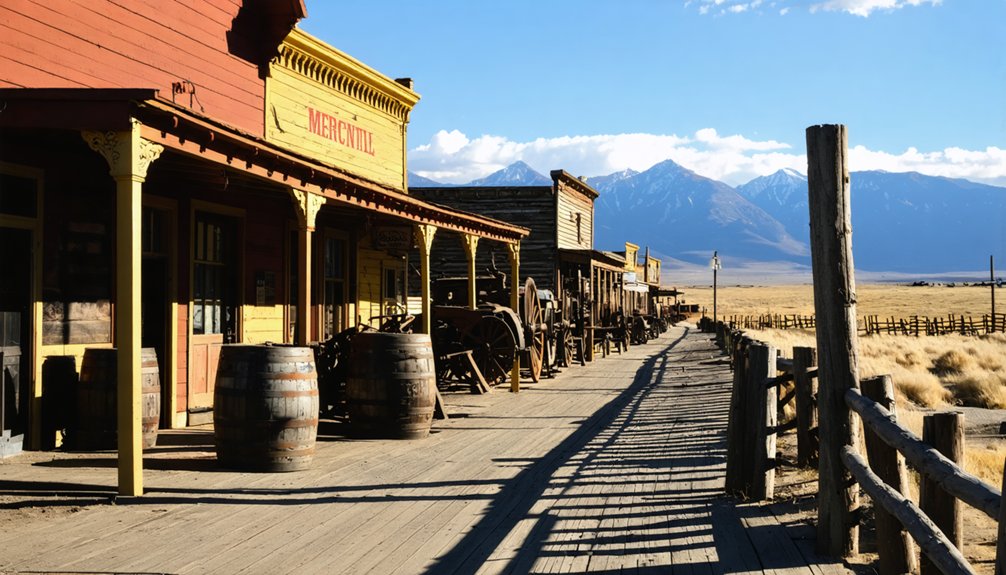
Shadows of the past linger among the few remaining structures of Warren, California, providing visitors with a glimpse into the town’s former prominence.
While official records about Warren’s historical significance remain elusive, your exploration of this ghost town invites personal discovery of its hidden stories.
As you wander through the remnants of this forgotten settlement, you might encounter:
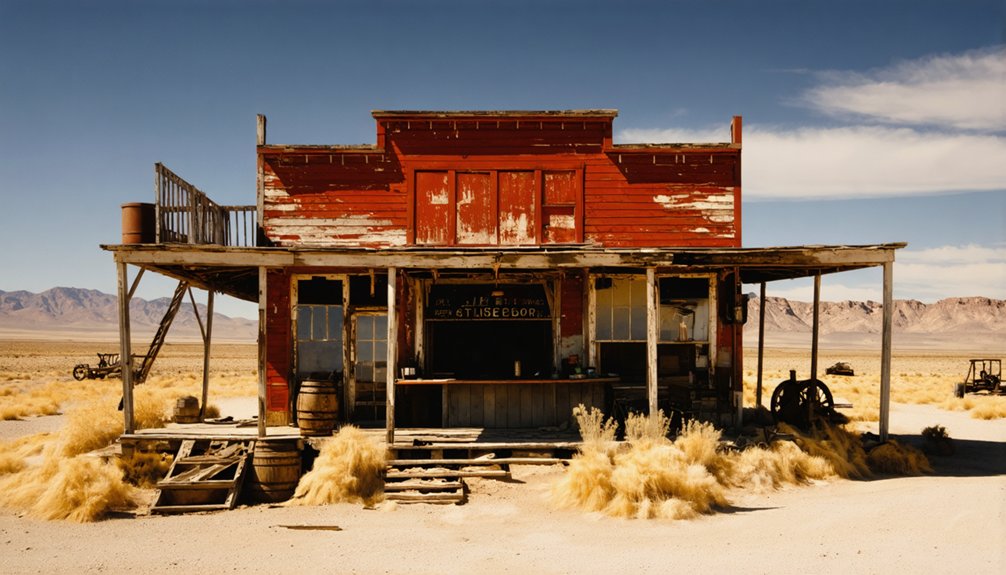
- Weathered wooden structures with unique architectural features that have withstood decades of California’s harsh elements
- Foundation stones marking where prominent buildings once stood against the backdrop of the Sierra Nevada
- Scattered artifacts that whisper tales of daily life during Warren’s heyday
The absence of documented history makes your journey through Warren more intimate—each crumbling wall and rusted hinge becomes your own personal connection to California’s pioneering past.
The Decline and Abandonment
The golden era of Warren proved fleeting as the town’s fortunes followed the classic boom-and-bust cycle that characterized many California mining settlements. By 1881, the once-abundant ore began depleting rapidly, causing many mining operations to declare bankruptcy.
You’d have witnessed dramatic population decline as the town shrank from 8,500 residents in 1879 to merely 1,500 by 1886. Economic hardships intensified during the Great Depression, while devastating fires in 1932 destroyed 90% of buildings, eliminating crucial infrastructure.
Harsh winter conditions with snowfalls reaching 6 feet made living increasingly difficult. The final blow came in 1942 when wartime orders halted non-essential gold mining. Services had already disappeared—the newspaper closed in 1912 and the railway was abandoned by 1918—leaving the last residents to depart in the 1940s.
What Remains Today: A Walking Tour
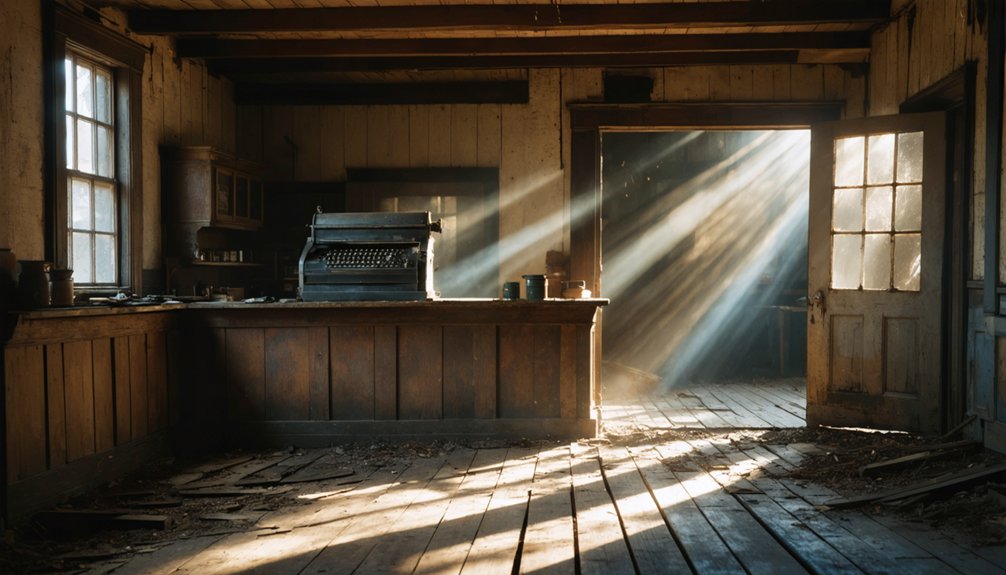
Today’s visitors to Warren encounter a haunting tableau of decay and resilience where the ghost town’s remnants tell their silent stories.
Following established walking paths, you’ll discover foundation stones, partial walls, and scattered artifacts that reveal the mining community’s layout and daily life.
Throughout your exploration, you’ll find:
- Historical markers explaining significant ruins and providing context for the weathered structures you encounter
- Panoramic views of the surrounding mining district, showcasing Warren’s isolated location
- Artifacts like broken bottles and rusty machinery fragments that serve as tangible connections to the past
As you navigate the site, notice how nature has reclaimed what humans abandoned—sagebrush pushing through collapsed wooden beams while distant Warren Lakes contrast with the desolation of this once-bustling settlement.
How to Visit Warren: Directions and Tips
Visiting Warren demands preparation and careful planning due to its remote location in California’s rugged backcountry. While specific coordinates aren’t widely published, your best approach is to connect with local resources before attempting your ghost town exploration.
Many visitors also take the opportunity to explore other historic sites in California, rich in stories of the past. From well-preserved missions to abandoned mining towns, each location offers a glimpse into the state’s diverse history. Make sure to allocate enough time to fully appreciate the cultural significance of these landmarks during your trip.
Contact the Inyo County visitor bureau or Lone Pine’s historical society for current access information and conditions. They’ll provide important details that online searches often miss. California’s historic preservation office can offer additional context about Warren’s significance and protection status.
For the most rewarding visitor experiences, consult specialized ghost town forums where enthusiasts share GPS coordinates and recent trip reports.
Always carry topographic maps, plenty of water, and emergency supplies. A high-clearance 4WD vehicle is typically necessary, as remaining routes to Warren often traverse rough terrain that changes seasonally with weather conditions.
Preservation Efforts and Historical Status
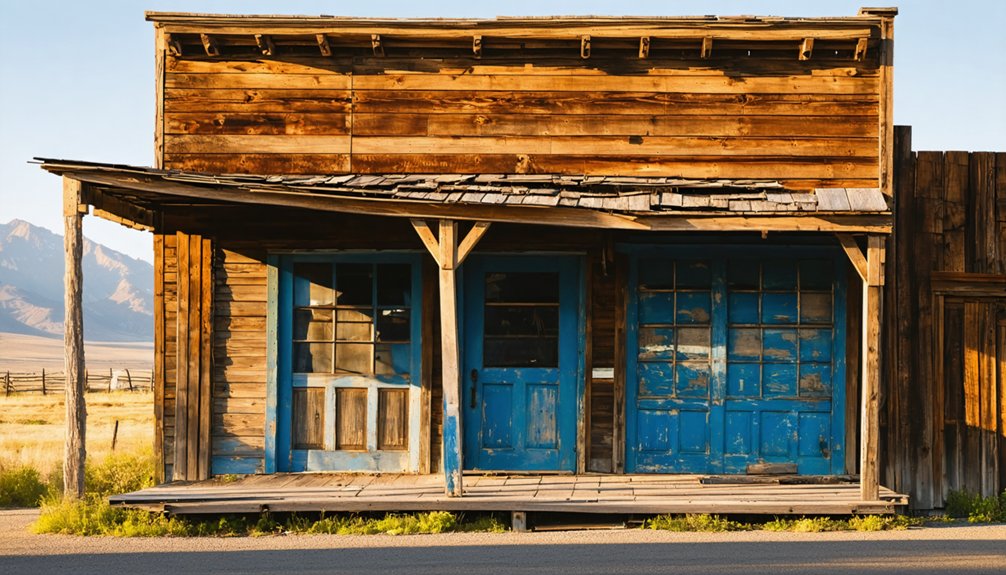
Designated as an official California Historical Landmark, Warren stands as a protected tribute to the state’s vibrant mining heritage and Gold Rush legacy.
Local historical organizations and volunteer groups work diligently to maintain this piece of California’s past despite numerous preservation challenges, including limited funding and environmental threats.
When you visit, you’ll see evidence of ongoing preservation efforts:
- Stabilization work on remaining stone foundations and mining equipment
- Documentation projects cataloging historical structures and artifacts
- Regular clean-up initiatives preventing vegetation overgrowth and vandalism
The historical significance of Warren extends beyond its physical remnants—it represents an important chapter in regional development.
While access remains relatively unrestricted, you’re encouraged to respect this fragile site during your exploration, helping guarantee it survives for future generations to experience.
Frequently Asked Questions
Who Was Warren Named After?
You’ll find in Warren’s history that the town’s naming originated from James Warren, a gold prospector described as a “shiftless gambler” whose significant gold discovery created this California settlement.
Were There Any Famous Residents in Warren’s History?
You’ll find Warren housed incredibly notable figures like William S. Bodey, Warren Loose, and Rosa May. The town’s famous residents included mining entrepreneurs and outlaws who defined this freedom-loving frontier community.
What Natural Disasters Affected Warren?
You’d face significant flood risks in Warren, as shown by the Great Flood of 1862 that devastated nearby towns. Earthquake damage also threatened the area throughout California’s seismically active history.
Did Warren Have Conflicts With Indigenous Peoples?
Where there’s smoke, there’s fire. You’ll find Warren was embroiled in significant indigenous relations tensions, including historical conflicts during the Owens Valley Indian War when settlers clashed with Mono, Paiute and Shoshone peoples.
What Legends or Ghost Stories Surround Warren?
You’ll encounter tales of haunted history throughout Warren’s mine shafts where miners’ spirits linger. Spectral sightings, unexplained noises, and temperature drops plague the abandoned tunnels, especially after dark.
References
- https://westernmininghistory.com/towns/idaho/warren/
- https://nvtami.com/2022/01/21/ward-mining-camp-california-ghost-town/
- https://journeywithmurphy.com/2017/07/the-gold-mining-ghost-town-of-bodie-ca/
- https://en.wikipedia.org/wiki/Bodie
- https://www.geotab.com/ghost-towns/
- https://www.youtube.com/watch?v=Q_yjBgICWl8
- https://www.parks.ca.gov/?page_id=30226
- http://www.bodiehistory.com/myths.htm
- https://ncph.org/history-at-work/858-2/
- https://ladailypost.com/posts-from-the-road-rhyolite-ghost-town-in-nevada/