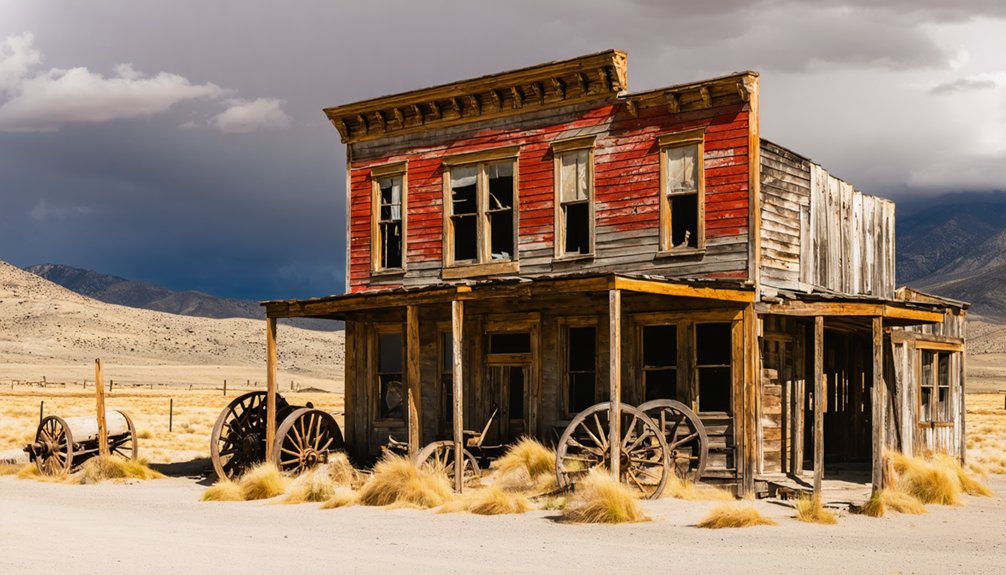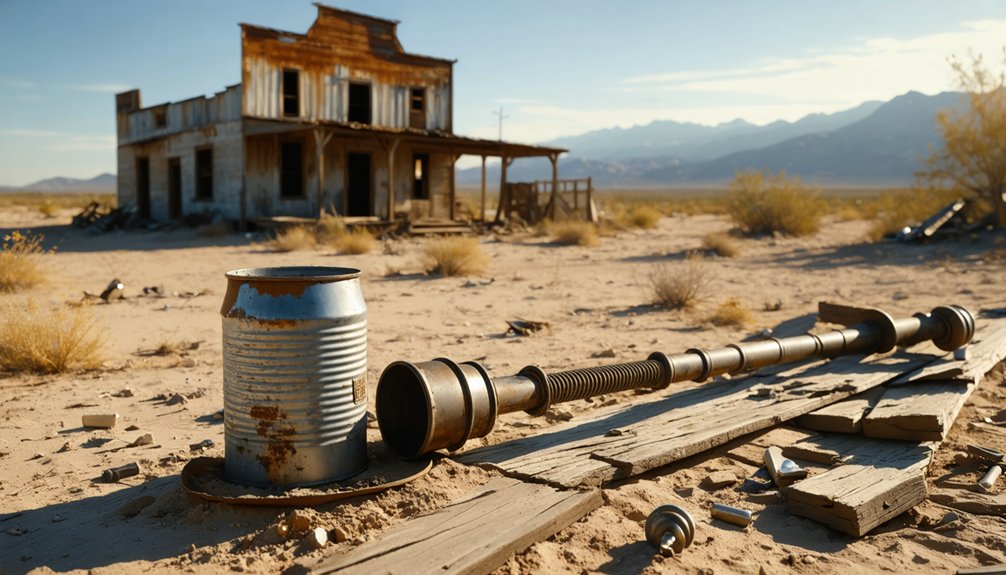
You can metal detect in ghost towns, but you’ll need to navigate complex legal requirements first. Metal detecting is prohibited in ghost towns on federal lands, including national parks and monuments. For ghost towns on private property, you must obtain explicit written permission from landowners. State regulations vary considerably, with many requiring special permits. Understanding the intricate web of laws, safety protocols, and best practices will help you pursue this fascinating historical pursuit legally and responsibly.
Key Takeaways
- Metal detecting in ghost towns is legal only with proper permissions and permits, depending on land ownership status.
- Ghost towns on federal lands, including national parks and monuments, strictly prohibit metal detecting activities.
- Written permission from private property owners is mandatory for metal detecting in privately-owned ghost town sites.
- State regulations vary widely, with many requiring special permits and documentation for ghost town metal detecting.
- Some states allow surface detecting but prohibit digging or artifact removal from archaeological ghost town sites.
Understanding Federal Laws and Protection Acts
Before commencing on metal detecting adventures in ghost towns, you must thoroughly understand the federal laws and protection acts that govern these activities.
The American Antiquities Act of 1906 and Archaeological Resources Protection Act (ARPA) establish strict federal protections over historical sites and artifacts. You’ll find that these laws prohibit unauthorized artifact recovery from prehistoric locations and archaeological sites on federal lands.
Under ARPA, any object over 100 years old with archaeological significance is protected, and violations can result in equipment confiscation, fines, and imprisonment.
You’re restricted from metal detecting in national parks, monuments, battlefields, and Native American lands. The Code of Federal Regulations specifically forbids disturbing these protected areas, while permits for recreational detecting on federal lands are typically not issued. Civil and criminal penalties may be imposed for unauthorized metal detecting activities.
It is vital to contact your local State Parks & Recreation Department to understand specific regulations and permit requirements before exploring any ghost town site.
Understanding these regulations is essential to avoid legal consequences.
State Regulations for Ghost Town Detecting
While federal laws establish baseline protections for historical sites, individual states maintain their own specific regulations for metal detecting in ghost towns and historical areas.
You’ll need to carefully research and follow your state’s rules before exploring these historical treasures, as requirements vary greatly across jurisdictions. Thorough advance research is essential for a successful metal detecting experience.
- Many ghost towns sit on state trust lands where detecting is prohibited and could result in fines or arrest.
- You’ll need explicit permission to detect on private ghost town property, even if it appears abandoned.
- Surface detecting may be allowed in some locations, but archaeological sites ban any digging or artifact removal.
- State regulations often restrict tool use – small probes may be permitted while larger digging implements are prohibited. States like Colorado require obtaining land management permits before any detecting activities can begin.
Your compliance with state regulations helps preserve these important historical sites for future generations.
Before you begin metal detecting in ghost towns, you’ll need to secure written permission from the private property owners through formal documentation like emails or signed consent forms.
You should thoroughly research property records through county offices, local libraries, and historical societies to identify the current landowners of potential ghost town sites.
In addition to examining property records, consider the impact of children’s experiences in abandoned towns, as these narratives can illuminate the history and past significance of these locations. Engaging with local communities may uncover stories that highlight both the joys and fears encountered by younger generations in these eerie settings. Understanding these perspectives can enrich your research and provide a deeper context for the evolution of ghost towns.
Making early contact with these landowners allows time to establish rapport and work out detailed agreements about permitted search areas, artifact ownership, and site preservation requirements.
Popular ghost towns like Centralia offer unique opportunities for finding mining-era artifacts and relics.
These ghost town sites require extra diligence since exploring them without written permission could result in trespassing charges.
Obtaining Written Land Permission
Securing proper written permission stands as the cornerstone of legal metal detecting on private property in ghost towns.
When pursuing landowner communication, you’ll need to establish clear documentation that protects both parties’ interests. Written agreements should outline specific detecting boundaries, artifact handling procedures, and liability terms while respecting any archaeological restrictions that may apply. Similar to state park regulations in Minnesota, discovered artifacts may need to be reported to proper authorities. Historical sites require extra caution and research before detecting activities begin.
- Contact property owners directly through phone, email, or letter to initiate permission requests.
- Document all terms in writing, including specific areas where you’re allowed to detect.
- Address how discovered items will be shared between you and the landowner.
- Specify your commitment to properly filling holes and removing trash.
Research Property Records First
Three essential steps in ghost town metal detecting involve thorough property records research, precise boundary verification, and ownership confirmation before seeking permission.
Begin by examining courthouse plat maps to determine current property ownership and historical significance of abandoned structures. Cross-reference these records with mapping apps like OnXMaps Hunt to identify precise boundary lines between private and public lands. Lidar maps are invaluable tools for identifying tent cities and possible detection sites.
You’ll need to verify the land’s status through multiple sources, as ghost towns often span different jurisdictions. Compare historical maps with modern satellite imagery to pinpoint exact locations of old buildings and streets. Using tools like Historic Map Works, which contains over 1.6 million historical maps, can provide crucial insights into the original layout of ghost towns.
Check county records to confirm whether properties have reverted to private ownership, even if they appear abandoned. This meticulous research prevents legal issues and guarantees you’re approaching the correct landowners for permission.
Contact Local Landowners Early
Once property records reveal ownership details, you’ll need to initiate contact with landowners well in advance of any metal detecting activities.
Effective landowner outreach requires a strategic approach to secure permission while demonstrating respect for private property rights. Your permission strategies should focus on clear communication and building trust with property owners.
- Contact owners via phone, written letter, or in-person visits, clearly stating your metal detecting intentions and experience.
- Present a written agreement specifying detection areas, schedules, and procedures for handling finds.
- Offer to share significant discoveries and remove trash from the property as a goodwill gesture.
- Document all permissions in writing to protect yourself from potential trespassing claims and maintain positive relationships.
Where Metal Detecting Is Strictly Forbidden
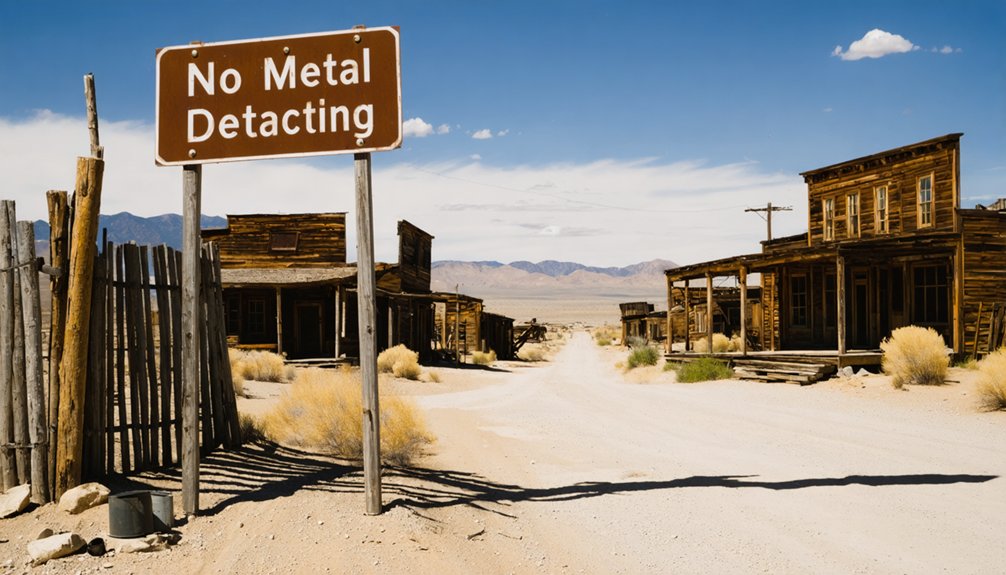
While metal detecting can be an exciting hobby for history enthusiasts, several locations strictly prohibit this activity due to preservation laws and cultural significance.
You’ll find metal detecting limitations across all National Parks, monuments, and battlefields, where detection is considered a serious offense – even a felony near iconic sites like the Washington Monument.
Native American lands, protected under the Antiquities Act and Archaeological Resources Protection Act, are completely off-limits without special permits.
Ghost towns on public lands, particularly in Arizona and Nevada, impose strict regulations with hefty fines for violations.
State parks, beaches, and historic sites managed by the Bureau of Land Management are also prohibited locations.
Remember that detecting for artifacts over 100 years old on public grounds violates federal law, resulting in equipment confiscation and possible jail time.
Required Permits and Documentation
Before commencing on any metal detecting expedition in ghost towns, you’ll need to navigate a complex web of permits and documentation requirements spanning federal, state, and local jurisdictions. Understanding the permitting processes is essential for legal compliance and avoiding severe penalties.
- Federal permits are mandatory for sites protected under the American Antiquities Act and Archaeological Resources Protection Act, particularly for locations over 100 years old.
- Written permission from private property owners must specify detectable areas, access times, and handling procedures for discovered items.
- State-specific documentation requirements vary widely, necessitating verification through local metal detecting clubs or government officials.
- BLM prospecting activities require proper documentation to distinguish between allowable mineral hunting and restricted archaeological sites.
Always maintain copies of your permits and landowner permissions during your detecting activities to demonstrate legal compliance if questioned.
Safety Considerations in Abandoned Towns
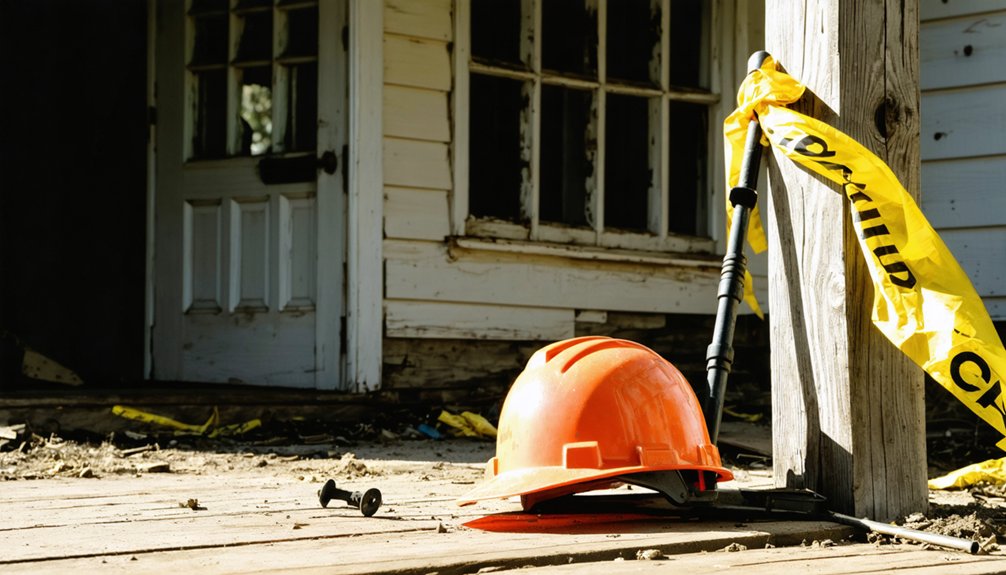
When exploring abandoned towns for metal detecting, you’ll need to exercise extreme caution around deteriorating structures with unstable walls, rotting support beams, and hazardous lead-based paint that can crumble without warning.
You must remain vigilant for wildlife threats including venomous snakes, aggressive stray dogs, and territorial animals that often inhabit these remote locations.
Your safety depends on thoroughly inspecting each step you take, as hidden mine shafts, open wells, and debris-covered sinkholes pose serious risks in these historical sites.
Physical Structure Hazards
Although ghost towns offer fascinating opportunities for metal detecting enthusiasts, their deteriorating structures present serious safety risks that demand careful consideration. When exploring these historical sites, you’ll encounter significant building stability challenges and debris hazards that require vigilant awareness and proper safety protocols.
- Assess structures before approaching – deteriorated buildings lack maintenance and can collapse without warning, especially walls and floors weakened by decades of exposure.
- Watch for sharp hazards – broken glass, rusted metal, and exposed nails commonly litter these sites.
- Navigate cautiously around foundations – unstable ground may conceal dangerous wells, shafts, or sinkholes.
- Stay alert to overhead risks – crumbling roofs, loose beams, and unstable upper floors pose falling hazards that can prove fatal.
Wildlife and Natural Threats
Since the departure of human inhabitants, ghost towns have become thriving habitats for diverse wildlife species, creating new safety considerations for metal detecting enthusiasts.
You’ll need to stay alert for white-tailed deer, river otters, and various mammals that now populate these abandoned areas. Natural hazards extend beyond mammalian wildlife encounters – you might encounter bald eagles defending their nests or prairie skinks in ground cover.
Be particularly cautious around wetlands and river bottoms where wood ducks and amphibians thrive. These water features, while rich in historical artifacts, often attract diverse wildlife that may perceive you as a threat.
Consider carrying protective gear and remaining aware of your surroundings, as fenced ruins and guard dog presence in some locations indicate ongoing wildlife management challenges.
Best Practices for Ghost Town Hunting
Before starting a ghost town metal detecting adventure, successful hunters must employ a strategic combination of research tools and detection techniques.
Your historical research should begin with old maps, aerial imagery, and lidar data to pinpoint promising locations for ghost town relics. Courthouse records and boundary apps guarantee you’re detecting on legal ground.
- Deploy multi-frequency detectors like the XP Deus II or Minelab Equinox 800, which excel at separating valuable targets from iron-rich soils.
- Maintain flat coil positioning and use systematic sweep patterns, including multi-directional coverage.
- Operate in all-metal mode with “Fast 40” settings to maximize target identification in trashy areas.
- Dig all targets and clear iron methodically, as valuable finds often hide beneath layers of ferrous metals.
Legal Research and Preparation Tips
When planning a ghost town metal detecting expedition, you’ll need to navigate a complex web of legal requirements spanning federal, state, and local jurisdictions. Understanding the legal ramifications before you venture out can save you from costly fines and potential arrest.
Start your research by consulting BLM maps to determine land ownership status. Check federal regulations like the American Antiquities Act and ARPA for sites over 100 years old.
Access state-specific research resources through Parks & Recreation departments to verify permitted areas and restrictions. Don’t forget to investigate local ordinances, which may override state allowances.
For private ghost towns, secure written permission from landowners to avoid trespassing charges. If you’re exploring mining claims on public lands, you’ll need the claim holder’s consent for anything beyond basic coin hunting.
Frequently Asked Questions
What’s the Best Time of Year to Metal Detect in Ghost Towns?
You’ll find ideal seasonal conditions during spring and fall, when weather impacts are minimal. Spring offers mild temperatures and exposed artifacts, while fall provides dry, accessible terrain for extended detecting sessions.
How Deep Should You Dig When Metal Detecting in Ghost Towns?
Playing it by ear, your digging techniques should focus on the first 10 inches for coins and up to 5 feet for larger relics, matching your detector’s hole depth capabilities.
Which Metal Detector Settings Work Best for Ghost Town Artifacts?
You’ll want high discrimination settings to filter trash while maintaining sensitivity adjustments for deep targets. Use iron discrimination at 40, target the 40-45 range, and employ Fast 40 for ideal artifact detection.
Can You Keep Gold Nuggets Found in Abandoned Ghost Town Mines?
You can’t legally keep gold nuggets from abandoned mines on public lands without proper claims. On private ghost town property, you’ll need explicit permission from the current landowner.
Are Ghost Towns More Profitable for Detecting Than Regular Town Sites?
You’ll find greater profitability in ghost towns due to their historical significance and untapped potential. These sites often yield valuable artifacts, relics, and precious metals versus regularly hunted modern locations.
References
- https://www.treasurenet.com/threads/ghost-towns-legality.26133/
- https://seriousdetecting.com/pages/metal-detecting-laws-and-code-of-ethics
- https://metaldetectingforum.com/index.php?threads/ghost-towns.91331/
- https://panckydetectors.com/blogs/pancky-insights/where-can-i-metal-detect-in-the-us
- https://kellycodetectors.com/blog/metal-detecting-ghost-towns/
- https://detectorhero.com/blogs/news/metal-detecting-laws-by-state-complete-50-state-guide
- https://www.metaldetectingshop.com/pages/metal-detecting-code-of-ethics
- https://focusspeed.com/metal-detecting-ghost-towns-interview-phil-massie/
- https://www.jbsa.mil/News/News/Article/1123754/treasure-hunters-cant-use-metal-detectors-on-jbsa-or-any-federal-property/
- https://www.silverrecyclers.com/blog/metal-detecting-in-texas.aspx