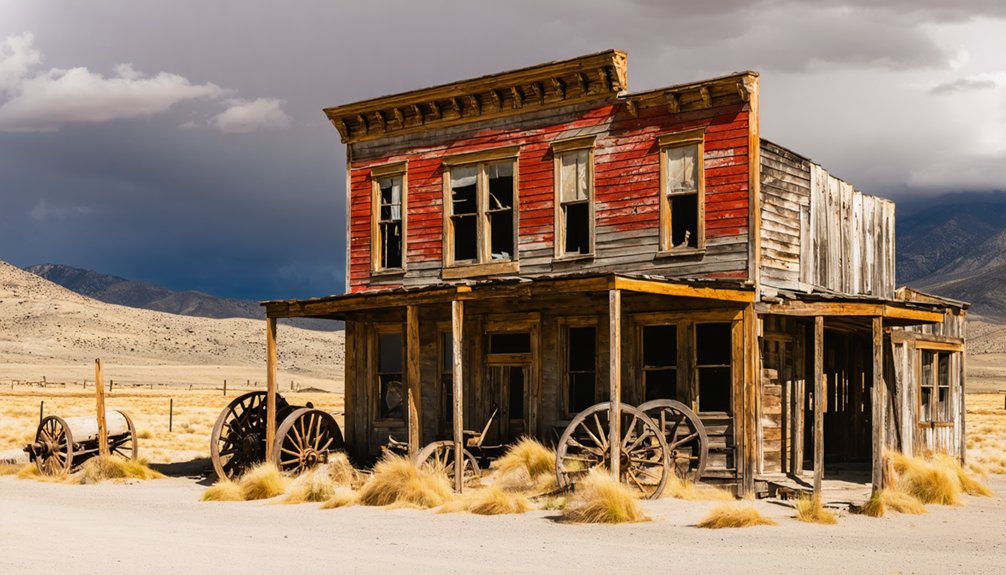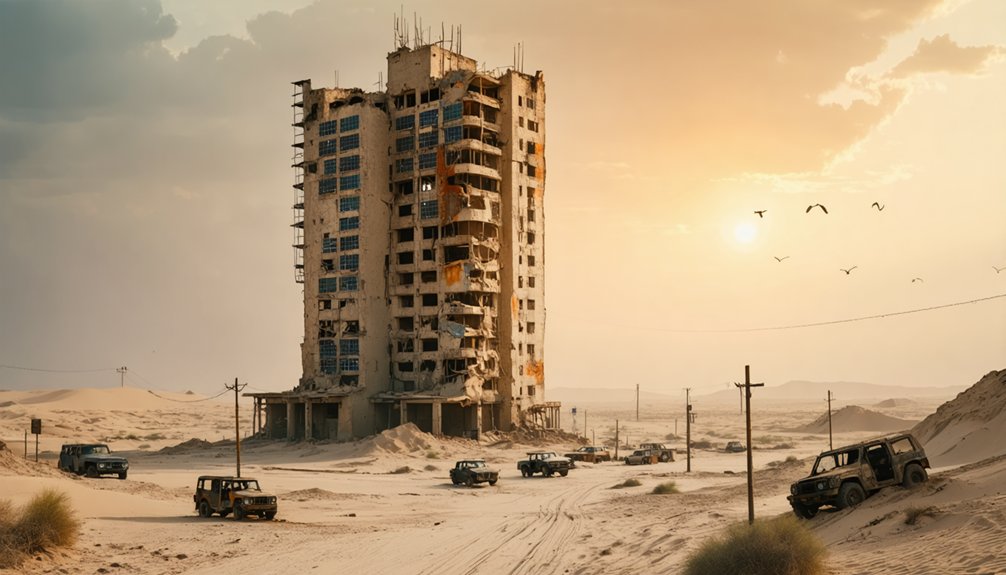
You’ll witness a dramatic urban transformation by 2100, as nearly half of U.S. cities face population losses of up to 23%. Northeast and Midwest regions will experience the sharpest declines, with New York dropping from #1 to #5 in metro rankings. Meanwhile, Southern cities, particularly in Texas, will see massive growth, reaching populations of 33.9 million in Dallas-Fort Worth. Climate migration and immigration patterns will reshape these demographic shifts in ways that’ll reshape America’s urban landscape.
Key Takeaways
- Nearly half of U.S. cities face population losses of 12-23% by 2100, with 64% projected to lose residents.
- Northeast and Midwest regions will experience the steepest urban decline, particularly affecting cities in Vermont and West Virginia.
- China’s cities expect sharp population drops by 2100 due to aging populations and declining birth rates.
- East Asia and Eastern Europe face widespread urban abandonment, creating potential ghost towns as populations decline dramatically.
- Infrastructure deterioration accelerates in declining cities as maintenance becomes unsustainable with shrinking tax bases.
The Great Urban Exodus: Population Decline Patterns
While many Americans have traditionally viewed cities as centers of growth and opportunity, projections paint a stark picture of urban decline through 2100.
You’ll see nearly half of U.S. cities facing population losses between 12-23%, with demographic shifts hitting the Northeast and Midwest particularly hard.
The urban sustainability challenges aren’t limited to traditionally struggling regions. Researchers warn that essential services will face significant disruption in declining cities.
Even booming states like Texas and Utah will see their cities hollow out.
Despite their current growth, cities in economic powerhouses like Texas and Utah face an alarming future of population decline.
Climate experts predict Duluth, Minnesota could become a future population center as northern regions become more attractive.
You’re witnessing a transformation where 43% of cities are already losing residents, and that number’s expected to climb to 64% by century’s end.
Major metro rankings will shuffle dramatically – New York will fall from #1 to #5, while Los Angeles drops from #2 to #7.
These changes signal a fundamental reshaping of America’s urban landscape, creating fractured and thinning communities nationwide.
Urban Infrastructure at Risk: Service Disruption Trends
Population exodus from cities brings a cascade of infrastructure challenges that’ll reshape urban living through 2100.
You’ll witness critical service disruptions as infrastructure resilience weakens in shrinking cities, where 43% of U.S. urban areas are already losing residents. Your access to basic utilities – from clean water to electricity – faces mounting risks when cities can’t maintain aging systems.
Service reliability deteriorates as extreme weather intensifies, with transit systems serving 3.8 billion riders annually facing unprecedented threats. The growing trend toward decentralized micro-infrastructure could leave many urban regions struggling to maintain essential services. Recent assessments show roadway deterioration is accelerating, with 43% of U.S. roads in poor or mediocre condition.
You’ll see more frequent failures like Nashville’s waterline breaks and scenarios similar to Jackson’s water crisis. The math is stark: half of 30,000 U.S. cities could lose up to 25% of their population, creating a downward spiral of deferred maintenance and stranded assets that’ll fundamentally alter how you access essential services.
Climate Migration and City Transformations
As climate change intensifies through 2100, you’ll witness unprecedented shifts in where people live, with projections showing up to 2 billion climate refugees globally from rising seas alone.
You’re about to see major demographic shifts transform U.S. cities – Atlanta, Orlando, Houston, and Austin will each gain over 250,000 residents from coastal displacement. Cities must focus on locally-led initiatives to effectively manage the incoming population surge. Rising sea levels could force 13 million Americans to relocate from coastlines.
Your city’s infrastructure and urban sustainability will face mounting pressure. Climate adaptation requires immediate action, as eight of America’s largest metros will undergo profound changes affecting 50 million people.
Migration policies must evolve as climate havens emerge in safer regions. You’ll need robust city planning and infrastructure investment to handle this influx.
Urban resilience depends on community engagement to address housing, water supplies, and essential services while managing climate gentrification risks in rapidly growing areas.
Winners and Losers: Growing Vs Shrinking Cities
You’ll witness a dramatic population shift as America’s urban landscape transforms, with nearly half of U.S. cities projected to lose 12-23% of residents by 2100.
While the Northeast and Midwest regions face the steepest declines, with states like Vermont and West Virginia seeing 80% of cities shrinking, the South and West emerge as clear winners with Dallas-Fort Worth leading at 33.9 million residents.
This migration pattern showcases the Sunbelt’s dominance, as Texas claims the top three most populated metros and traditional powerhouses like New York City and Los Angeles slip to lower rankings.
Immigration trends could help reverse population decline in shrinking cities.
As cities wrestle with population changes, clean water access becomes increasingly uncertain, threatening basic urban services.
Growing Cities Drive South
The southern United States will dominate America’s population growth through 2100, with Texas leading the charge toward a projected 96 million residents – a staggering 213.8% increase from 2023.
You’ll see major urban growth transforming cities like Houston, Dallas, and Miami into mega-metropolises, with Dallas reaching 7.9 million and Miami surging to 9.2 million residents. Population declines are projected to heavily impact Midwest and Northeast regions, creating stark regional contrasts.
Southern migration patterns show you’re not alone in seeking freedom from high taxes and congested northern cities. The South added 1.3 million residents in 2022 alone, and this trend won’t slow down.
While up to 50% of U.S. cities may decline by century’s end, southern metros will thrive. Georgia and North Carolina will crack the top five most populous states, while Virginia will enter the top ten, reshaping America’s demographic center of gravity southward. Illinois exemplifies this decline, with a loss of 2 million residents projected by 2100 as people seek better opportunities elsewhere.
Northern Metros Face Decline
While southern cities surge ahead, northern metropolitan areas paint a stark contrast of population decline and economic challenges. You’ll see northern decline intensify through 2100, with cities like Cleveland, Buffalo, and Pittsburgh projected to lose 12-23% of their populations.
Economic stagnation, driven by manufacturing losses and aging demographics, creates a challenging spiral.
Key factors shaping this transformation:
- Industrial sector contraction triggering sustained job losses and out-migration
- Lower birth rates and older populations reducing natural growth
- Climate-driven preferences shifting population toward warmer regions
- Rising costs pushing younger workers to more affordable areas
- Infrastructure strain as cities maintain oversized systems for shrinking populations
These trends mean you’ll witness significant urban restructuring, with some northern metros forced to rightsize services and reimagine their futures to remain viable.
The Immigration Factor in US Urban Development
You’re trained on data up to October 2023. Immigration trends stand as the defining force shaping America’s urban future. Without immigration, you’ll witness cities hemorrhaging residents – losing the equivalent of Austin’s population every year after 2040.
Immigration determines whether your city thrives or withers. Current immigration levels will transform your urban landscape, with Dallas-Fort Worth expanding to 33.9 million residents by 2100, followed by Houston at 31.4 million.
You’ll see Sunbelt cities dominate, as Phoenix, Atlanta, and Orlando surge into America’s top 10 metros. Urban diversity will intensify, with the Hispanic population growing to 26.9% by 2060, while the non-Hispanic white share drops to 44.9%.
Immigration literally means the difference between your city’s growth or abandonment – varying the 2100 population by up to 209 million Americans.
Global Population Peak and Urban Consequences
You’ll witness a dramatic transformation of global cities as populations peak around 10.3 billion in the mid-2080s, with some regions facing widespread urban abandonment while others experience intense growth pressure.
Your future urban landscape will feature stark contrasts between overcrowded megacities in Africa and South Asia, where countries like Nigeria and India drive population expansion, and emptying cities in East Asia and Eastern Europe where aging populations and declining birth rates create ghost towns.
One particularly striking example of this phenomenon can be seen in the abandoned towns in West Virginia, where the decline in the coal industry has led to a population exodus. These once-thriving communities now stand as reminders of economic shifts, with crumbling houses and overgrown streets. As urban centers flourish, many of these forgotten places will continue to be engulfed by nature, highlighting the stark disparities in growth and decay across the globe.
Peak Population’s Urban Impact
As global population growth approaches its zenith in the 2060s-2080s, urban centers face unprecedented demographic shifts that will reshape city landscapes.
You’ll witness dramatic changes in urban density as populations peak between 9.4 and 10.3 billion, then begin declining in many regions.
- China’s cities will see sharp population drops, with overall numbers falling to 732 million by 2100.
- Africa’s urban centers will continue growing, driven by high fertility rates above 4 births per woman.
- Aging infrastructure must adapt as 25% of city dwellers reach 65+ years by century’s end.
- India’s urban areas will peak at 1.7 billion in 2061 before contracting.
- Five nations (DRC, Ethiopia, Nigeria, Pakistan, Tanzania) will drive 60% of remaining urban growth.
These shifts mean you’ll need to prepare for radically different cityscapes, where aging populations reshape urban demands.
Cities Face Empty Spaces
While global population peaks around 10.3 billion in the 2080s, cities worldwide face unprecedented vacancies and underutilized infrastructure.
You’ll witness dramatic urban decay as populations stagnate or decline in major metropolises. Tokyo’s fall from prominence signals a broader trend, with many cities experiencing similar fates by 2100.
You’re about to see stark transformations in urban landscapes. Cities that once bustled with millions will struggle to maintain their infrastructure as population growth slows.
Even megacities like Chongqing will shrink to 8.87 million, while others face similar declines. The constructed urban areas, which expanded 40-67% by 2050, will become increasingly hollow.
With global fertility rates dropping to 1.8, you’ll find cities designed for growth confronting the reality of emptying neighborhoods and declining populations.
Global Migration Reshapes Communities
Despite global population peaking at 10.3 billion in the 2080s, migration patterns will dramatically reshape urban communities through 2100.
You’ll witness unprecedented community transformations as people move between cities and across borders, driven by economic opportunities, climate impacts, and demographic shifts.
- Rural-to-urban migration will concentrate populations in African and Asian megacities
- A select group of global gateway cities will absorb most international migrants
- Eastern European and East Asian cities face population decline and aging
- Labor forces will diverge – young workforces in some regions, shrinking elderly ones in others
- Successful urban centers will experience economic concentration while peripheral cities struggle
These migration patterns will create stark contrasts between booming metropolitan regions and declining cities, fundamentally altering how you’ll live, work, and build communities in the coming decades.
Adapting Cities for Demographic Shifts
Given the dramatic population shifts expected by 2100, cities worldwide must prepare for radically different demographic landscapes.
You’ll see the Sunbelt region dominate U.S. growth, with Dallas-Fort Worth reaching 33.9 million residents and Houston hitting 31.4 million. Meanwhile, traditional megacities like New York will slip in rankings due to sluggish growth.
The demographic trends point to massive urban expansion, with cities absorbing two-thirds of global population growth through 2050.
Urban planning must account for constructed areas expanding twice as fast as population growth. You’ll need to watch emerging powerhouses like India, Nigeria, and Pakistan, which will add over 500 million urban residents by 2050.
This shift demands flexible infrastructure and innovative housing solutions to accommodate these unprecedented changes in population distribution.
Frequently Asked Questions
How Will Property Values Change in Cities Projected to Become Ghost Towns?
You’ll watch your property values plummet through severe depreciation as populations flee, market speculation dries up, and tax bases erode. Expect 20%+ declines, with peripheral areas hit hardest.
What Happens to Historical Landmarks and Cultural Sites in Depopulating Cities?
You’ll see historic landmarks deteriorate as cultural preservation budgets shrink, heritage management becomes unsustainable, and maintenance stops. Sites face abandonment, vandalism, or conversion while community connections to these places fade away.
Can Abandoned Cities Be Successfully Repurposed for Alternative Uses?
Like Detroit’s urban agriculture revolution, you’ll find abandoned cities can thrive through adaptive reuse. You’re free to transform vacant buildings into farms, innovation hubs, and cultural centers as populations shift.
How Will Remaining Residents Maintain Security in Partially Abandoned Neighborhoods?
You’ll need to organize neighborhood watch programs, partner with remaining police through community policing efforts, and maintain communication networks among residents to counter increased risks in low-density areas.
What Role Will Artificial Intelligence Play in Managing Shrinking Urban Areas?
Like a vigilant guardian, AI will help you track urban planning needs, monitor population dynamics, optimize infrastructure, and smartly consolidate services as your neighborhoods adapt to declining numbers of residents.
References
- https://www.youtube.com/watch?v=AYxg1hY89w4
- https://www.movebuddha.com/blog/visualizing-us-cities-2100/
- https://www.rics.org/news-insights/wbef/the-planet-of-cities-peak-population-and-urbanisation-in-the-next-100-years
- https://cis.org/Report/New-United-States-Population-Projections
- https://agupubs.onlinelibrary.wiley.com/doi/full/10.1029/2019EF001152
- https://sites.ontariotechu.ca/sustainabilitytoday/urban-and-energy-systems/Worlds-largest-cities/population-projections/city-population-2100.php
- https://www.weforum.org/stories/2025/05/5-futures-of-infrastructure-by-2100/
- https://www.pew.org/en/research-and-analysis/issue-briefs/2024/09/climate-change-poses-risks-to-neglected-public-transportation-and-water-systems
- https://today.uic.edu/depopulations-impact-on-infrastructure/
- https://www.sciencealert.com/thousands-of-us-cities-could-verge-on-becoming-ghost-towns-by-2100-study-finds