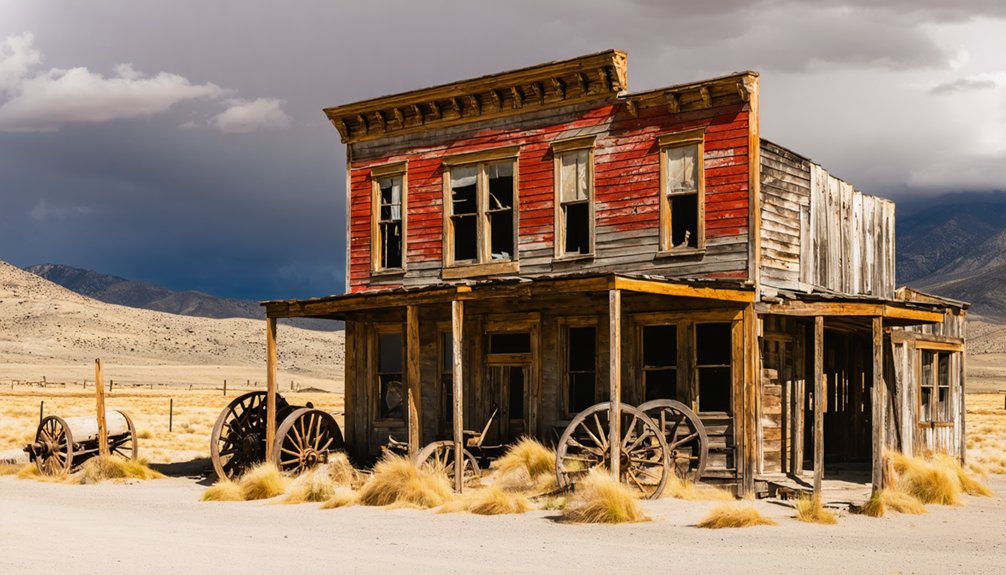
You’ll find countless dog-friendly ghost towns scattered across the Great Plains, from Kansas prairie settlements like Prairie City and Silkville with their weathered stone foundations to Dakota mining camps such as Galena and Rochford where hiking trails wind through historic gulches. These abandoned sites offer well-maintained dirt paths perfect for exploration with your pet, though you’ll need to pack protective gear and verify leash policies beforehand. Understanding proper safety protocols will guarantee your adventure becomes truly memorable.
Key Takeaways
- Most Great Plains ghost towns offer free admission for pets with well-maintained trails and dog-friendly amenities like water stations.
- Kansas sites like Prairie City and Ellis County ghost towns provide safe exploration with packed dirt surfaces and clear leash policies.
- Dakota mining towns including Galena and Rochford offer hiking opportunities along the historic 200-mile Fort Pierre-Deadwood Trail.
- Always verify pet policies before visiting and pack protective gear including paw boots, first-aid supplies, and waste disposal bags.
- Monitor seasonal hazards like prairie dog burrows, extreme weather, wildlife encounters, and maintain respectful distance from fragile historic structures.
What Makes a Ghost Town Dog-Friendly in the Great Plains
When you’re planning a ghost town adventure with your four-legged companion across the Great Plains, several key factors determine whether you’ll have a safe, enjoyable experience or find yourself dealing with unexpected challenges.
Well-maintained trails with packed dirt surfaces let you explore freely without worrying about your dog’s paws getting torn up by loose rocks. Dog friendly amenities like water stations and waste disposal areas make extended visits possible in the harsh prairie climate.
Well-maintained trails and dog-friendly amenities transform ghost town exploration from hazardous terrain navigation into comfortable adventures for you and your companion.
Clear pet safety guidelines protect both you and your companion from hidden mining shafts and unstable structures that lurk beneath weathered facades.
Look for sites with explicit leash policies, nearby parking, and shade structures. Many destinations offer reasonable admission fees that welcome pets at no additional cost, making budget-friendly exploration possible for the whole family. Some locations even feature specialized establishments like pet treat shops with water troughs, ensuring your companion stays hydrated and happy throughout your visit. These features transform potentially hazardous explorations into memorable adventures where you can roam historic streets without constant worry about your dog’s wellbeing.
Kansas Prairie Settlements and Historic Ruins
Kansas stretches endlessly across the Great Plains, hiding dozens of forgotten prairie settlements where weathered stone foundations and crumbling cemetery headstones tell stories of ambitious homesteaders who once called these windswept places home.
You’ll discover abandoned structures scattered across Douglas County, where Prairie City’s stone house ruins and old church remnants create perfect backdrops for prairie exploration with your four-legged companion.
Franklin County’s Silkville offers fascinating commune ruins, while Appanoose features forgotten rail lines threading through tall grass. Many of these settlements were abandoned when major highways diverted traffic away from local businesses, causing economic decline and population loss.
Ellis County’s ghost towns like Chetolah and Rome cluster near the Smoky Hill River, providing water access for thirsty dogs.
Lincoln County alone harbors twenty-plus abandoned settlements, each offering unique glimpses into Kansas’s pioneering past through weathered foundations and cellar holes. Some settlements still maintain a small population despite losing their original purpose for existence.
Nebraska Homestead Remnants and Railroad Sites
Nebraska’s vast plains conceal countless homestead remnants and abandoned railroad sites where your dog can explore alongside you through layers of pioneer history.
Your homestead exploration reveals cellar holes, stone foundations, and weathered fence lines scattered across abandoned settlements. These traces mark where determined families carved out lives between 1870-1890 before agricultural collapse drove them away. Many towns were originally surveyed and platted by land development companies seeking to capitalize on railroad expansion.
Weathered stone foundations and forgotten fence lines tell silent stories of pioneer families who briefly called these plains home.
- Search for grain elevator foundations and isolated structures marking former depot locations
- Follow abandoned rail grades visible on historic maps leading to ghost town sites like Whitney
- Discover cemetery locations that anchor vanished communities with datable settlement chronology
- Locate one-room schoolhouse foundations and brick chimneys in remote prairie settings
- Use aerial imagery to spot homestead depressions and foundation remnants before visiting
Knox County offers particularly rich exploration opportunities where general stores once served both settlers and local Native American communities. Your railroad heritage adventures connect you with Nebraska’s transportation legacy while your companion enjoys boundless freedom across these historically rich landscapes.
Dakotas Mining Towns and Prairie Cemeteries
You’ll find the Black Hills’ abandoned mining camps like Galena and Rochford offer excellent hiking opportunities with your dog, but traversing these sites requires respect for both the dangerous mining remnants and the historic cemeteries that dot the prairie landscape.
Before you explore shaft houses and stamp mill ruins, you’ll need to understand proper cemetery etiquette—keeping your dog leashed near burial grounds and maintaining quiet reverence at places like Rochford Cemetery where miners’ graves tell stories of claim disputes and accidents.
The prairie’s seasonal challenges, from winter ice that makes tailings piles treacherous to spring runoff that exposes contaminated mining debris, demand careful timing and preparation for safe exploration with your canine companion. Early geological surveys and historical maps can help you identify safer routes through these former mining districts while avoiding the most hazardous areas.
Towns like Mystic and Spokane showcase the mining heritage that once defined these communities, with remnants of reduction mills and ore processing facilities still visible among the weathered foundations.
Historic Mining Trail Access
While modern highways now crisscross the Dakotas, you and your dog can still trace the historic routes that once carried fortune-seekers and freight wagons across the windswept prairie to legendary mining camps.
The Fort Pierre-Deadwood Trail offers exceptional historic trail access through 200 miles of authentic mining heritage. You’ll follow the same buffalo paths that guided prospectors toward Black Hills gold from 1876 to 1906.
- Navigate restored trail markers researched from 1800s surveyor maps
- Explore panoramic gulch views where Concord stagecoaches once rumbled
- Discover way stations spaced every 15 miles for weary travelers
- Walk through Deadwood’s National Historic Landmark core with interpretive panels
- Experience charming wooded neighborhoods where wildlife still roams
These trails connect you directly to the era when three daily stages carried nine passengers inside and seven more clinging to rooftops. The trail witnessed remarkable freight activity with daily departures of 50-75 freight wagons, each carrying approximately 8000 pounds of supplies to the mining camps. The Norman family’s dedication to preservation in the 1970s created handmade signs that continue to guide modern trail explorers through this historically significant corridor.
Cemetery Etiquette Guidelines
Before exploring, confirm ownership and check local leash policies—some counties prohibit dogs entirely.
Cemetery rules typically require keeping your dog on a short leash, cleaning up waste immediately, and preventing urination on monuments.
Respectful conduct means walking between graves rather than on burial plots, maintaining quiet voices, and avoiding touching fragile headstones.
Pack out all trash and stay clear during any services or when mourners are present.
Seasonal Prairie Hazards
When exploring abandoned mining settlements across North Dakota’s windswept plains, you’ll face some of the continent’s most unpredictable weather patterns that can shift from mild to life-threatening within hours.
These seasonal weather extremes demand constant vigilance as you and your dog navigate crumbling cemetery markers and mine tailings under ever-changing prairie conditions.
- Winter storms bring whiteout blizzards that can strand you near remote ghost towns for days
- Rapid temperature swings exceeding 50°F create treacherous ice-thaw cycles on access roads
- Summer wildfires spread rapidly through dried grasslands, threatening wooden structures and escape routes
- Flash flooding inundates low-lying cemetery plots and mining camp roadways after heavy rains
- High prairie winds topple decayed grave markers and scatter debris around old mine sites
Oklahoma Oil Boom Towns and Route 66 Remnants
As your dog’s paws touch the weathered asphalt where Route 66 once carried desperate Dust Bowl families toward California dreams, you’re walking through the heart of Oklahoma’s greatest transformation.
These oil town history remnants tell stories of overnight fortunes and abandoned dreams. In Bartlesville, you’ll explore where Nellie Johnstone Number One struck black gold in 1897, initiating Oklahoma’s petroleum empire.
Your canine companion can roam Seminole County’s ghost fields, where fifty pools once gushed 250 million barrels. Along Route 66 heritage corridors, abandoned tourist courts and gas stations stand as monuments to America’s mobile revolution.
From Quapaw’s zinc mines to Tulsa’s Art Deco skyline, these weathered towns offer liberated adventures through capitalism’s wild frontier days.
Safety Considerations for Dogs in Prairie Ghost Towns
When you explore abandoned prairie towns with your dog, you’ll encounter unique dangers that don’t exist in typical urban ruins.
Feral dog packs roam these remote areas and can attack your pet, while prairie dog burrows create hidden traps that’ll send you both tumbling.
The open landscape exposes you to extreme weather conditions and wildlife threats that can turn a peaceful adventure into a dangerous situation.
Wildlife and Livestock Hazards
While prairie ghost towns offer fascinating glimpses into the past, they’re typically surrounded by active ecosystems where wildlife and livestock create genuine hazards for visiting dogs.
abandoned towns to explore in kansas can also present unique opportunities for photography and historical research. Each site tells a story of the boom and bust of the region, with remnants of architecture standing as silent witnesses to a bygone era. Exploring these forgotten places can deepen one’s appreciation for the state’s rich heritage and the resilience of its communities.
These environments demand constant vigilance as your canine companion navigates complex terrain filled with unexpected dangers.
Wildlife interactions and livestock encounters require strategic awareness:
- Prairie dog burrow networks create hidden holes and unstable ground that can cause serious injuries or trap your dog’s legs.
- Rattlesnakes, badgers, and burrowing owls inhabit abandoned tunnels, presenting bite and strike risks to curious canines.
- Coyotes, foxes, and raptors concentrate near prairie dog colonies, potentially threatening smaller dogs or startling larger ones.
- Grazing cattle can kick, trample, or defensively charge at approaching dogs.
- Fleas and ticks carry dangerous pathogens including plague, creating significant health risks.
Extreme Weather Risks
Beyond the immediate dangers lurking in burrows and tall grass, prairie ghost towns expose visiting dogs to some of nature’s most volatile weather systems.
You’ll need solid tornado preparedness since these abandoned settlements sit squarely in Tornado Alley, where towns like Manchester, South Dakota vanished completely after F4 devastation. Your dog faces serious risks from 60+ mph winds and flying debris that can turn deadly within minutes.
Dust storm safety becomes critical when temperatures plummet 30 degrees and visibility drops to zero.
These storms trigger respiratory distress and hypothermia in dogs while pelting them with wind-driven particles. The same relentless conditions that destroyed prairie communities—drought, extreme temperature swings, and devastating winds—continue threatening today’s ghost town explorers seeking adventure off the beaten path.
Structural and Terrain Dangers
Though weathering nature’s fury presents serious challenges, the crumbling infrastructure beneath your feet poses even deadlier threats to exploring dogs.
These abandoned settlements harbor structural hazards that’ll turn a peaceful adventure into a nightmare. Your four-legged companion can’t assess danger like you can, making vigilance essential.
- Collapsing mine shafts create sudden sinkholes that’ll swallow an unsuspecting dog instantly
- Deteriorating false-front buildings shed heavy debris without warning, crushing anything below
- Unstable mining terrain triggers frequent cave-ins from decades of underground excavation
- Contaminated sinkholes filled with toxic water cause chemical burns mistaken for simple irritation
- Uneven railroad grades and rerouted passages create treacherous footing for paws
Terrain instability makes every step potentially your dog’s last.
Leash Laws and Property Access Guidelines
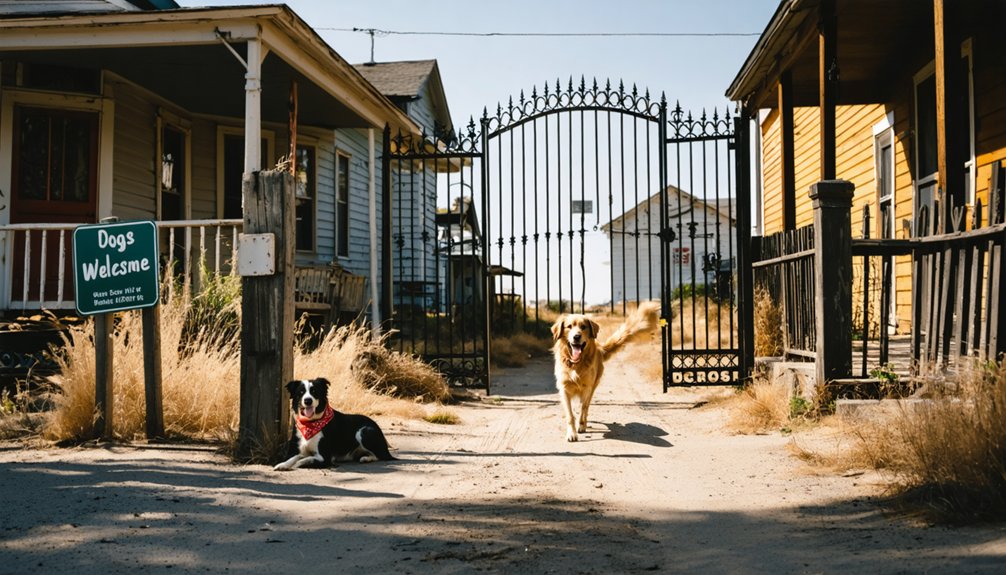
Before you load your dog into the car for that ghost town adventure, you’ll need to navigate a patchwork of leash laws that varies dramatically across the Great Plains states.
Nebraska lets municipalities decide their own rules, while Nevada strictly prohibits released dogs in state-owned wildlife areas and requires leashes in all state parks.
Jefferson County takes the strictest approach, mandating leashes everywhere except your own property, with citizens empowered to detain violating dogs.
Property access becomes tricky when fines start at $50 per released dog in Douglas County.
Your best strategy? Research local ordinances before exploring, because leash compliance isn’t just about avoiding citations—it’s your gateway to accessing these historic sites legally and safely.
Best Practices for Visiting Historic Sites With Pets
When you step into a ghost town with your canine companion, you’re entering a delicate balance between adventure and preservation. Your pet preparation and site etiquette directly impact these historic treasures for future explorers.
Smart preparation guarantees memorable experiences while protecting irreplaceable cultural resources:
- Verify pet policies before arrival—call ahead to confirm access restrictions and seasonal limitations at specific sites.
- Pack protective gear including paw boots, first-aid supplies, and waste bags for immediate cleanup.
- Maintain controlled distance from fragile structures, grave markers, and archaeological deposits using short leads.
- Monitor environmental hazards like unstable buildings, wildlife encounters, and extreme temperatures that threaten safety.
- Follow designated pathways to minimize erosion and trampling around sensitive historic landscapes.
Respect these vanishing places—they’re windows into our past that deserve careful stewardship.
Frequently Asked Questions
What Time of Year Is Best for Visiting Ghost Towns With Dogs?
You’ll find October offers ideal conditions, June provides comfortable exploration, September delivers perfect temperatures. Best seasons prioritize weather considerations: mild 70s prevent paw burns, reduce heat stress, and guarantee snow-free trails for your adventurous companion’s ghost town discoveries.
Are There Nearby Veterinary Services When Exploring Remote Prairie Ghost Towns?
Veterinary clinics become scarce as you venture deeper into remote prairie regions, with emergency services often hours away. You’ll need to plan ahead and carry first-aid supplies for your dog’s safety.
Can Dogs Enter Historic Buildings or Just Outdoor Areas at Ghost Towns?
When one door closes, another opens—but dog policies typically restrict building access at ghost towns. You’ll find your furry companion welcome in outdoor areas only, while historic structures remain off-limits for preservation.
What Should I Pack for My Dog During Ghost Town Visits?
Your dog gear essentials include collapsible water bowls, protective booties, first-aid supplies, and GPS tracking. This thorough packing checklist guarantees you’re prepared for dusty trails, extreme temperatures, and unexpected adventures in remote locations.
Are Ghost Town Ruins Safe for Dogs to Explore or Investigate?
Ghost town ruins aren’t safe for unrestricted dog exploration. You’ll face serious hazards including unstable structures, hidden mine shafts, toxic contamination, and sharp debris that threaten your dog’s safety during ghost town exploration adventures.
References
- https://www.thetravelpockets.com/new-blog/dog-friendly-apache-trail-in-arizona
- https://www.bringfido.com/attraction/22689
- https://www.gopetfriendly.com/blog/explore-pet-friendly-ghost-towns-with-your-furry-travel-buddy/
- https://www.uncovercolorado.com/ghost-towns/
- https://pupperscouts.com/13-dog-friendly-spooky-season-hikes/
- https://www.thetravelpockets.com/new-blog/dog-friendly-calico-ghost-town
- https://www.adventureswithdog.com/2016/08/calico-ghost-town/
- https://parks.sbcounty.gov/park/calico-ghost-town-regional-park/
- https://www.tripadvisor.com/Attraction_Review-g47102-d8446559-Reviews-Ghost_Town_of_Kelly-Magdalena_New_Mexico.html
- https://en.wikipedia.org/wiki/List_of_ghost_towns_in_Kansas