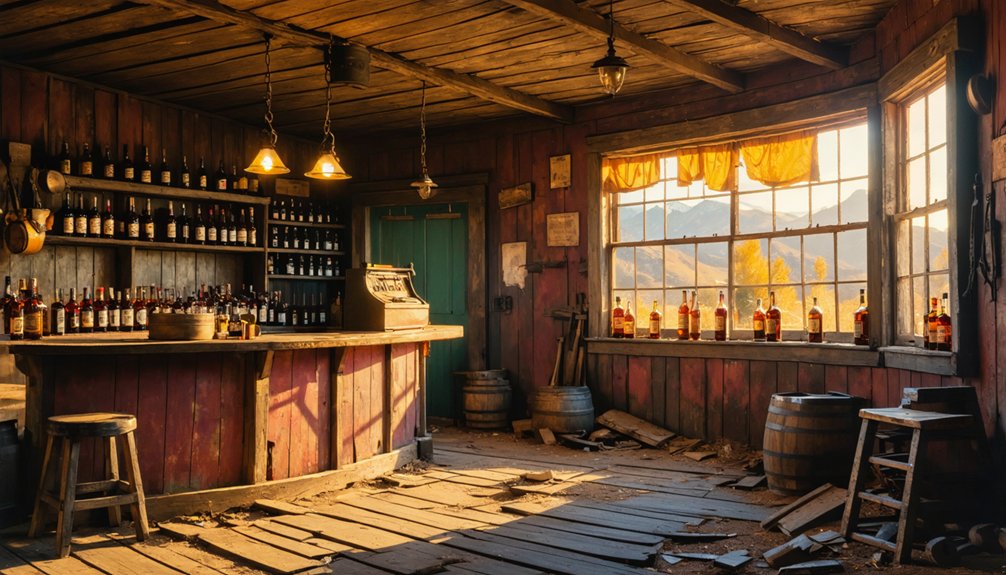
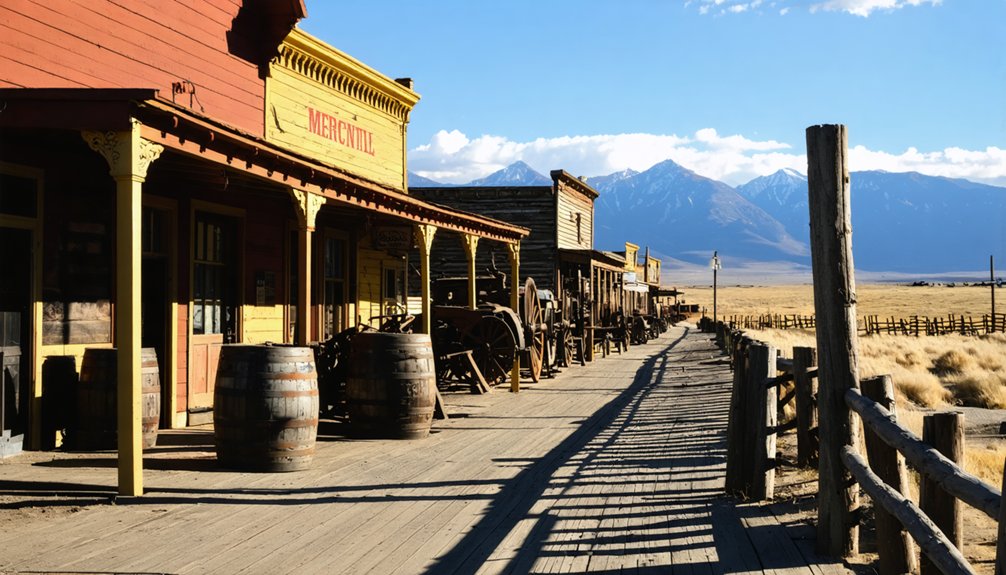
You can explore California’s fascinating ghost towns with your furry companion at several dog-friendly locations. Calico Ghost Town in the Mojave Desert welcomes leashed dogs throughout its restored 1880s mining camp, while Bodie State Historic Park allows pets on all roads and parking areas among 100+ original buildings. Columbia State Historic Park offers an authentic Gold Rush experience where dogs can walk the brick-lined streets of this living 1850s town, and Ballarat provides desert adventures in Death Valley’s remote mining remnants. Discover everything you need to plan the perfect ghost town adventure with your four-legged explorer.
Key Takeaways
- Calico Ghost Town in the Mojave Desert welcomes leashed dogs throughout the restored 1880s silver mining camp daily.
- Bodie State Historic Park allows leashed dogs on roads and parking areas but prohibits entry into buildings and museums.
- Ballarat Ghost Town in Death Valley permits dog exploration of adobe foundations from the 1897-1905 gold rush era.
- Columbia State Historic Park allows leashed dogs in outdoor Gold Rush district areas with authentic 1850s streetscapes and stagecoach rides.
- All California ghost towns require maximum 6-foot leashes and restrict building access to protect historical artifacts and integrity.
Calico Ghost Town: A Family and Pet Paradise
Nestled in the rugged Calico Mountains of California’s Mojave Desert, Calico Ghost Town stands as one of the West’s most authentic and accessible silver rush destinations where you and your four-legged companion can explore together.
This remarkable destination welcomes leashed dogs throughout its restored mining camp, where ghost town history comes alive through preserved buildings like Lil’s Saloon and the Lane House Museum.
You’ll discover fascinating tales of the 1880s silver boom that produced over $20 million in ore from 500 mines. The town’s prosperity was so significant that by 1884, San Bernardino County accounted for 70% of California’s silver production.
The park operates as a pet-friendly regional destination offering family activities from trail exploration to educational displays. Visitors can also explore unique attractions like the Bottle House, constructed entirely from glass bottles and serving as a fascinating example of frontier ingenuity.
Open daily from 9 AM to 5 PM, Calico provides the perfect escape for adventurous families seeking authentic Western heritage with their canine companions.
Bodie State Historic Park: Leashed Adventures in Authentic History
You’ll find Bodie State Historic Park’s leash requirements straightforward—your dog must stay leashed on all park roads and parking areas while exploring this remarkably preserved mining town.
The park’s “arrested decay” policy means you’re walking through authentic 1800s structures where approximately 100-170 original buildings still stand with their interiors intact, though your furry companion can’t venture inside these historic treasures.
At over 8,200 feet elevation in the eastern Sierra Nevada, you’ll experience one of California’s most genuine ghost towns where leashed exploration keeps both your pet safe and the fragile historical environment protected. The town’s mining operations produced an estimated $70 million in gold from 1876 to 1941, making this one of the most profitable historic sites you can visit with your dog. This wild frontier town once housed nearly 10,000 residents at its peak during the height of the Gold Rush boom.
Leash Rules and Restrictions
The windswept ghost town of Bodie State Historic Park requires all dogs to remain on a maximum 6-foot leash throughout your entire visit, ensuring both your pet’s safety and the preservation of this authentic 1800s gold mining settlement.
You’ll maintain physical control while exploring deserted streets and dirt trails that wind through the historic zone. Proper leash etiquette becomes essential as you navigate weathered boardwalks and crumbling foundations where unrestrained dogs could face serious hazards. Be aware that vertical mine shafts up to 1,200 feet deep pose extreme dangers in closed sections of the park.
Your four-legged companion can’t enter any buildings, including the museum and stamp mill, though service animals receive exemptions.
Dog safety depends on your vigilance—vicious, unusually loud, or unattended dogs face immediate ejection. You’re free to wander paved paths and open areas, but violations result in citations that’ll cut your ghostly adventure short. Remember that cleaning up after your dog is mandatory throughout the park to maintain the site’s historical integrity and respect for other visitors.
Preserved Mining Town Structures
Walking through Bodie’s dusty streets with your leashed companion, you’ll encounter nearly 200 weathered wooden buildings frozen in “arrested decay”—a preservation philosophy that maintains structures exactly as miners and families abandoned them decades ago.
These preserved buildings showcase the town’s boom-to-bust cycle from 1876 to 1942, when mining operations finally ceased.
Your dog can accompany you past remarkable structures that demonstrate the settlement’s historical significance:
- Methodist Church (1882) – Standing representation of frontier faith
- Boone Store and Warehouse – Shelves still lined with century-old goods
- Miner’s Union Hall – Now serves as the town’s museum
- Bodie Bank vault – Survived the devastating 1932 fire
You’ll peer through dusty windows into barbershops, saloons, and schoolhouses where relics remain untouched. During your exploration, remember that collecting or removing any artifacts from these historic structures is strictly prohibited and illegal.
The town’s multiple meanings as both a place name and surname reflect its significance in California history, connecting it to various other locations and people who share the Bodie designation.
Ballarat Ghost Town: Death Valley’s Hidden Desert Gem
Hidden among Death Valley’s vast desert expanse, Ballarat Ghost Town stands as a weathered tribute to California’s gold rush ambitions and the harsh realities of desert mining life.
You’ll discover adobe foundations, scattered ruins, and Frank “Shorty” Harris’s cabin remnants that tell stories of a once-thriving community supporting 400-500 residents from 1897-1905.
The Ballarat history reveals seven saloons, three hotels, and a Wells Fargo station serving Panamint Range miners. The nearby Radcliffe Mine operated from 1898 to 1903, producing an impressive 15,000 tons of gold ore before operations ceased.
Your ghost town exploration leads through desert-weathered graves, crumbling store foundations, and Post Office Springs a quarter-mile south.
As you wander deeper into the remnants of the past, consider the intriguing history of Dutch, California ghost town and the stories that linger in the windswept silence. Once a bustling hub during its prime, it now serves as a haunting reminder of dreams long faded. Exploring the landscape, you may stumble upon artifacts that reveal glimpses of the town’s vibrant yet ephemeral life.
You’ll need high-clearance vehicles for unpaved access roads, and remember this sits on private land with potential restrictions. Visitors should expect wait times as park rangers verify permits and vehicle capabilities before granting access to certain restricted areas.
Your four-legged companion can accompany you through this authentic piece of untamed California mining heritage.
Death Valley National Park Ghost Town Region
Beyond Ballarat’s weathered ruins, Death Valley National Park harbors an entire constellation of ghost towns that’ll transport you and your canine companion through California’s most dramatic mining history.
Step into California’s haunting past where abandoned mining towns and desert winds whisper tales of fortune and failure.
You’ll discover four remarkable destinations where your dog can explore alongside you:
- Rhyolite – Once boasting impressive infrastructure including 50 saloons and telephone lines, this accessible site offers car-friendly exploration of bottle houses and bank ruins.
- Chloride City – Established in 1871, this remote silver mining site requires high-clearance vehicles but rewards with authentic Funeral Mountains history.
- Panamint City – Adventure awaits with a 5-7 mile hike to witness the intact smelter chimney from the 1870s boom.
- Skidoo – Gold camp remnants include the historic mill, perfect for leashed exploration.
Each location offers unique glimpses into Death Valley’s mining legacy while providing memorable adventures for freedom-seeking explorers.
Columbia State Historic Park: Gold Rush Era With Your Canine Companion
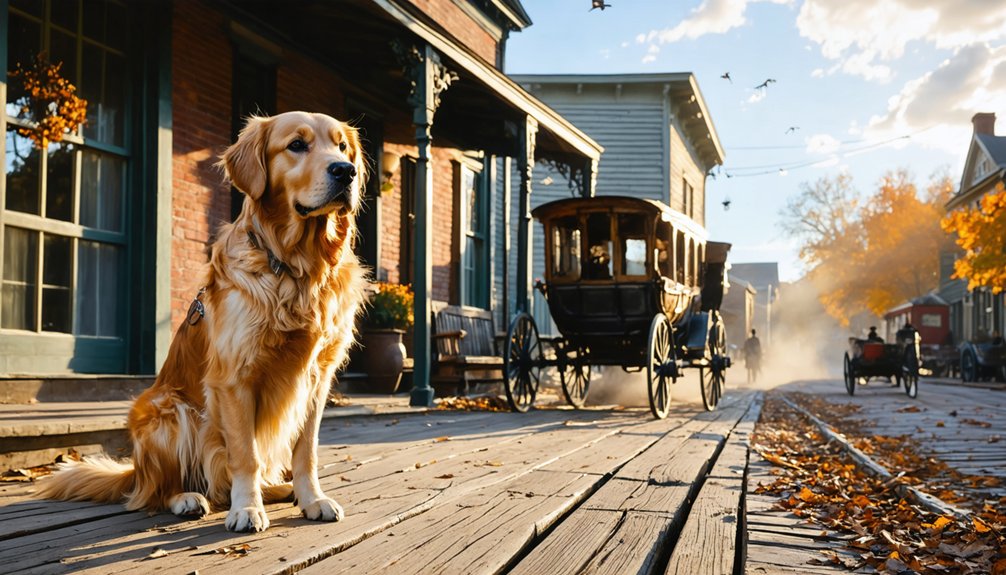
You’ll step back into California’s 1850s Gold Rush era at Columbia State Historic Park, where your leashed dog can explore authentic brick-lined streets alongside costumed interpreters demonstrating period trades like blacksmithing and candy making.
Your canine companion’s welcome in the outdoor historic district areas, though they can’t enter museum interiors or most interpretive buildings where artifacts and exhibits are housed.
The park’s stagecoach rides and hands-on gold panning activities create an immersive Old West experience you’ll both enjoy, making this one of the most atmospheric ghost town destinations for dog owners.
Historic Town Dog Policies
While Columbia State Historic Park welcomes four-legged visitors to explore its Gold Rush-era streets, specific policies govern where your canine companion can roam within this living piece of California history.
Your dog can freely wander the outdoor grounds on a maximum 6-foot leash, but historic preservation requirements restrict access to buildings, museums, and retail shops.
Pet etiquette demands you maintain physical control while respecting these boundaries:
- Building restrictions – Historic structures, museums, and indoor attractions remain off-limits to pets
- Leash requirements – Six-foot maximum length with constant owner supervision required
- Behavioral standards – Vicious or excessively noisy dogs face immediate park removal
- Wildlife protection – Trail access and undeveloped areas remain prohibited to prevent ecosystem disruption
Rangers actively enforce these rules, ensuring both visitor safety and artifact protection throughout your Gold Rush adventure.
Gold Rush Atmosphere
As you and your leashed companion stroll down Columbia’s wooden sidewalks, the clip of your dog’s nails mingles with the authentic sounds of a blacksmith’s hammer and period musicians performing on street corners.
This Gold Rush atmosphere comes alive through careful historic preservation—thirty buildings from the 1850s line Main Street, creating an authentic mid-19th-century streetscape where modern vehicles can’t intrude.
Your dog can experience this living history alongside you, watching costumed docents work traditional trades while soaking up the genuine frontier ambiance.
The town’s designation as a state historic park guarantees these Gold Rush resources remain protected.
You’ll both enjoy the pedestrian-focused environment where period performances and demonstrations transport you back to California’s mining boom era.
Stagecoach Rides Available
What better way to immerse yourself and your four-legged friend in authentic Gold Rush history than aboard a horse-drawn stagecoach rumbling down Columbia’s dusty streets?
These seasonal rides welcome leashed dogs, offering an unforgettable adventure through California’s living ghost town.
Understanding stagecoach logistics helps guarantee smooth boarding:
- Reservations recommended – Fares run around $17 per seat with walk-up availability
- Short but sweet – Rides typically last 10 minutes from the main street departure point
- Seasonal operation – Weather-dependent schedules favor weekends and holidays
- Size considerations – Operators may restrict where dogs sit based on size
Pet safety requires preparation.
Assess your dog’s temperament around horses and crowds.
Bring water for warm Gold Country days, maintain leash control near equines, and notify operators when booking to secure appropriate seating arrangements.
Essential Dog Policies and Guidelines for Ghost Town Visits
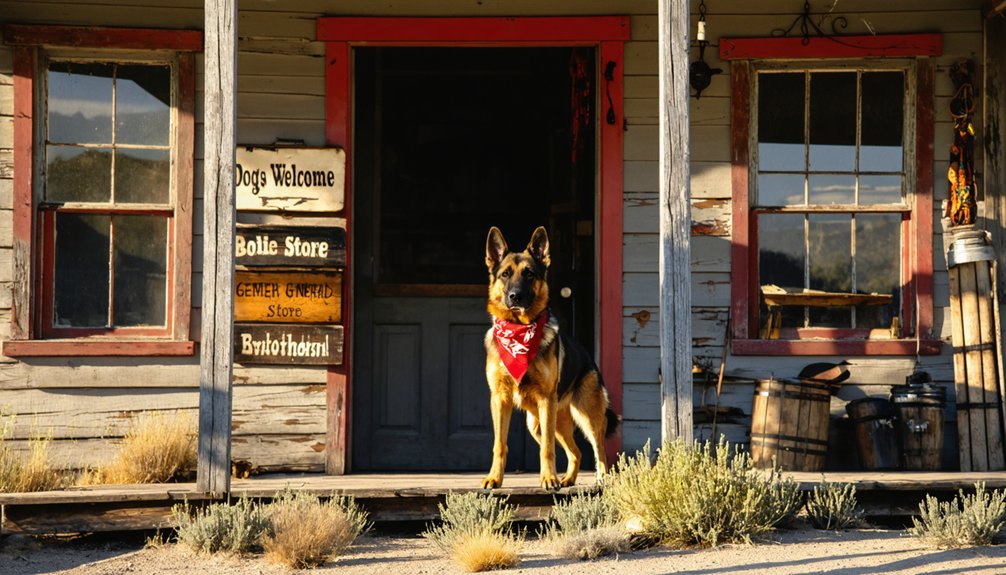
Before you pack your leash and hit the road with your canine companion, understanding the specific policies governing dogs at ghost town sites will save you from disappointment and potential legal issues.
State historic parks typically allow leashed dogs but ban them from museums and guided tours. You’ll need current licensing and vaccination records, as California counties require dogs over four months to display tags.
Most state historic parks welcome leashed dogs but restrict access to indoor exhibits and organized tours.
Proper dog etiquette means keeping your pet on sturdy leashes near fragile structures and using harnesses on narrow boardwalks.
Pet safety requires bringing adequate water, first-aid supplies, and tick prevention for remote locations. Always pack out waste and prevent your dog from disturbing artifacts or entering prohibited areas.
Private ghost town attractions set their own rules, so verify policies beforehand.
Planning Your Multi-Stop Ghost Town Road Trip With Dogs
Now that you’re equipped with the necessary policies and guidelines, mapping out your ghost town adventure requires strategic planning to maximize both historical exploration and canine comfort.
Road trip logistics become vital when traveling with four-legged companions across California’s desert terrain.
Consider these essential planning elements:
- Route timing – Calico’s 10-minute drive from Barstow Station makes it an ideal Las Vegas-to-Los Angeles midpoint stop.
- Weather considerations – Summer temperatures hit mid-90s, so plan morning visits and carry extra water.
- Dog friendly accommodations – Calico offers pet-welcome camping, bunkhouses, and cabin rentals for extended stays.
- Multi-stop combinations – Pair desert locations like Calico with High Sierra destinations such as Columbia State Historic Park.
Factor parking limitations from tour buses and families when scheduling arrival times.
Frequently Asked Questions
Are There Veterinary Clinics Near These Ghost Towns for Pet Emergencies?
You’ll find limited veterinary resources near remote ghost towns like Bodie and Calico, requiring 20-90 minute drives to reach emergency contacts in Barstow, Bishop, or Mammoth Lakes for urgent pet care.
What Time of Year Offers the Best Weather for Dogs at Desert Locations?
When scorching summers become less hospitable, you’ll find spring weather and fall temperatures create perfect conditions for your four-legged explorer. These seasons offer comfortable 60-75°F days, protecting paws from desert extremes.
Do Any Ghost Towns Offer Dog-Sitting Services for Building Tours?
No California ghost town tours currently offer formal dog-sitting services. You’ll need to arrange private pet care or seek pet friendly accommodations nearby, then take turns exploring buildings while someone stays with your dog.
Are There Dog Waste Stations Provided at These Historic Sites?
Unfortunately, you won’t find dedicated dog waste stations at these historic sites. The preservation focus means minimal modern amenities, so you’ll need to pack cleanup bags and dispose of dog waste responsibly yourself.
Which Ghost Towns Have the Shortest Walking Distances for Senior Dogs?
Calico Ghost Town offers the shortest senior dog friendly trails with its compact 33-building layout. You’ll find excellent ghost town accessibility via stagecoach rides at Columbia, minimizing walking while maximizing adventure.
References
- https://www.thetravelpockets.com/new-blog/dog-friendly-calico-ghost-town
- https://www.tripadvisor.com/ShowUserReviews-g33295-d126686-r333160182-Calico_Ghost_Town-Yermo_California.html
- https://happypeoplehike.com/dog-friendly-death-valley-national-park/
- https://dogtrekker.com/directories/calico-ghost-town/
- https://californiahighsierra.com/trips/dog-friendly-trips-high-sierra/
- https://www.parks.ca.gov/bodie
- https://www.bringfido.com/blog/dog-friendly-gold-mines-and-ghost-towns/
- https://main.sbcounty.gov/2025/05/29/san-bernardino-county-history-calico-ghost-town/
- https://californiathroughmylens.com/calico-ghost-town/
- https://en.wikipedia.org/wiki/Calico