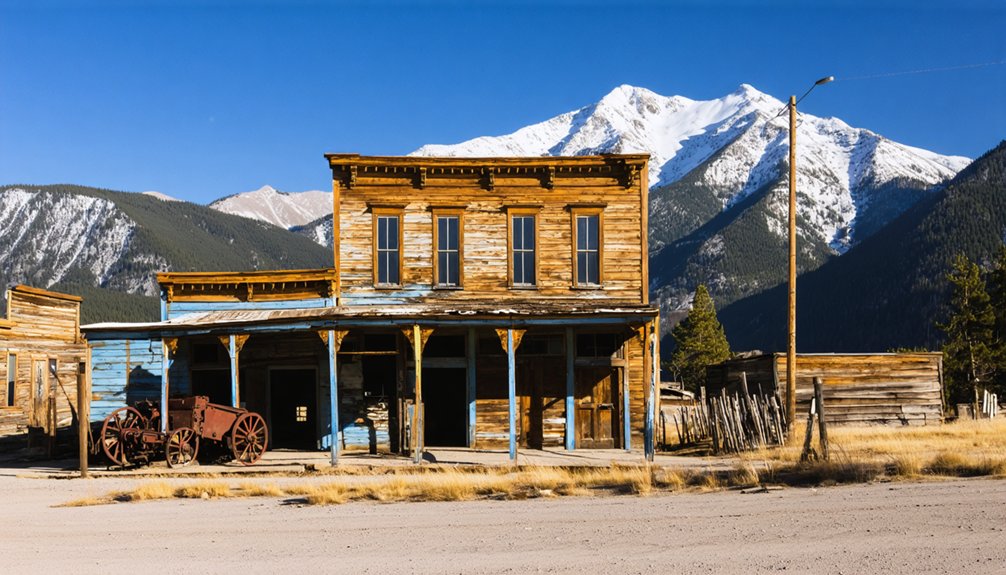
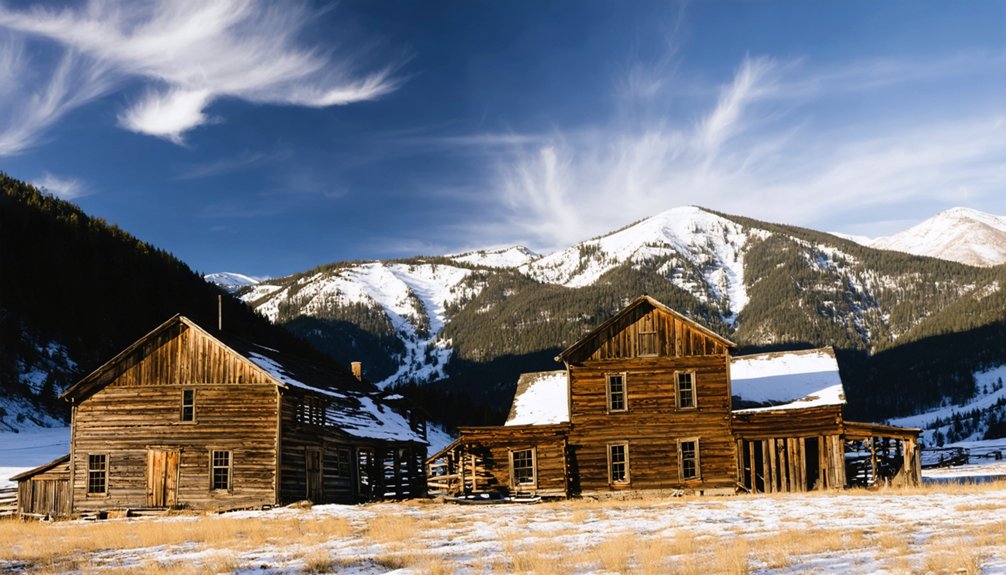
You’ll find incredible dog-friendly ghost town adventures throughout Colorado’s high country, where your pup can explore authentic 1800s mining camps like Saint Elmo’s 43 preserved structures or Ashcroft’s restored silver town buildings. Keep your dog leashed near unstable ruins and pack extra water—especially at high-altitude destinations like Animas Forks at 11,200 feet. These abandoned settlements offer muddy paw prints through history without tourist crowds, and there’s much more to discover about timing your visit perfectly.
Key Takeaways
- Saint Elmo, Animas Forks, and Ashcroft are top dog-friendly ghost towns welcoming leashed pets for exploration.
- Pack extra water for high-altitude locations like Animas Forks at 11,200 feet and bring collapsible bowls.
- Summer and early fall offer the best conditions for ghost town visits with dogs and cooler temperatures.
- Keep dogs leashed near unstable structures, open mine shafts, and wildlife areas for safety during exploration.
- Irvin Homestead and Oil Creek Tunnel Trail provide extensive dog-friendly hiking with well-marked trails and historic sites.
Saint Elmo: A Preserved Mining Camp Adventure
While most ghost towns crumble into forgotten ruins, Saint Elmo stands as Colorado’s best-preserved mining camp, where you and your four-legged companion can walk the same wooden sidewalks that once echoed with the boots of 2,000 miners.
Perched at 9,961 feet in Chalk Creek Canyon, this former railroad hub invites exploration through 43 original structures—from the general store to the old schoolhouse.
Forty-three original structures await discovery at this 9,961-foot elevation former railroad hub nestled in Chalk Creek Canyon’s rugged embrace.
Your dog can roam freely while you discover mining history dating back to 1878’s gold rush. The town’s 150 patented mine claims produced silver, gold, copper, and iron that built this mountain community.
Don’t miss the undertaker’s parlor, where ghostly encounters reportedly include slamming doors and mysterious temperature drops. The Stark family’s decades-long residency preserved this mountain sanctuary.
Pack water for both of you—the high altitude and mountain air will leave you breathless, but exhilarated by this authentic Western adventure. The nearby Alpine Tunnel, once the highest tunnel in North America at 11,523 feet, now serves as a scenic trail perfect for hiking with your canine companion.
Animas Forks: High-Altitude Exploration at 11,200 Feet
At 11,200 feet above sea level, Animas Forks challenges you and your canine companion to explore one of North America’s highest ghost towns, where the thin mountain air makes every breath feel precious and every step an achievement.
This former gold and silver mining camp demands serious altitude acclimatization—both you and your dog need extra water and frequent breaks. The 1884 blizzard that buried buildings under 25 feet of snow serves as a reminder of nature’s power here.
You’ll need a high-clearance 4WD vehicle to navigate the unpaved Alpine Loop roads from Silverton. The mining history comes alive through weathered cabins and mill ruins scattered across the stark landscape. Nine buildings have been carefully stabilized and restored, providing fascinating glimpses into the town’s boom years. During its peak in the summer of 1883, this remote settlement was home to around 450 residents who endured the challenging mountain conditions.
Pack layers for your pup—temperatures drop quickly at this elevation, and the rocky terrain requires careful paw protection.
Independence: Historic Homesteads Near Aspen
Unfortunately, Independence ghost town near Aspen doesn’t welcome your four-legged explorer—dogs aren’t allowed on the historic site.
While you’ll need to leave your pup behind, this well-preserved mining camp rewards visitors with remarkable structures from the 1880s gold boom. You’ll discover log cabins, a general store, and the impressive Farwell Stamp Mill scattered across this 10,900-foot elevation site.
Independence history unfolds through marked building foundations and a small artifact museum. The town’s dramatic story—from 1,500 residents producing $190,000 in gold to complete abandonment after the brutal 1899 blizzard—makes this stop compelling.
Preservation efforts by the Aspen Historical Society maintain this archaeological treasure. Guided interpretive tours are available mid-June through Labor Day with a suggested $5 donation. Access the easy trail from Highway 82’s parking area, just sixteen miles southeast of Aspen. The round trip distance covers just one mile, making this an accessible adventure for most visitors.
Ashcroft: Family and Pet-Friendly Silver Mining Town
Unlike its nearby neighbor Independence, Ashcroft welcomes both you and your leashed companion to explore this remarkably preserved silver mining town nestled at 9,000 feet in Castle Creek Valley.
At 9,000 feet elevation, this preserved Colorado silver mining town offers leashed-dog adventures through authentic 1880s history in Castle Creek Valley.
This former boomtown that housed 2,000 residents in the 1880s offers authentic Ashcroft history through restored buildings like the Kinney Mercantile and Blue Mirror Saloon. The town earned recognition as a Nationally Registered Historic Site in 1974, cementing its importance in Colorado’s mining heritage.
Your adventure includes:
- Easy meadow access – Short pet friendly trails from parking to historic structures
- Seasonal guided tours – Summer docents share mining stories while you explore together
- High-altitude preparation – Bring water bowls and monitor your dog’s breathing at elevation
You’ll discover authentic Western freedom as you wander designated paths past weathered cabins. The area was originally home to Ute people before settler displacement during the mining boom.
Remember: leashes protect both wildlife and livestock in this alpine setting where mountain air carries whispers of Colorado’s silver rush era.
Irvin Homestead: Spooky Trail Hikes Near Estes Park
You’ll find your perfect spooky season adventure at Irvin Homestead, where well-marked Forest Service trails lead you and your four-legged companion through 15 miles of ghost town exploration near Estes Park.
The 2WD-accessible trailhead at Lion Gulch makes it easy to start your journey into this collection of eight historic homesteads, where lichen-covered bathtubs and crumbling sawmill remains create an authentically eerie atmosphere. Built following the Homestead Act of 1862, these abandoned structures tell the story of early settlers who left behind fascinating remnants of frontier life.
Your dog will love sniffing around the two intact cabins and outbuildings while you explore the best-preserved homestead site from the 1880s settlement era. The settlement operated as a collection of ranches where women managed homesteads while men commuted to work in nearby towns throughout the week.
Historic Homestead Trail Access
Seven miles of rugged terrain separate you from one of Colorado’s most haunting wilderness discoveries, where the Irvin Homestead sits frozen in time like a sepia photograph come to life.
Your historic trail access begins at Homestead Meadows Trailhead off CO-36, past Granite Gulch Campground. This ghost town exploration rewards adventurous souls willing to navigate faint trails and unmarked paths.
Three route options reveal this wilderness treasure:
- Homestead Meadows TH: 3.5 miles one-way through aspen forests and switchbacks
- Lion Gulch TH: Direct 3-mile approach with moderate elevation gain
- Road 120/120A shortcut: Break off at the sharp U-bend for a 0.75-mile bushwhack
You’ll traverse grassy plains beneath the Mummy Range’s imposing peaks, where multiple homestead ruins dot the landscape.
Bring your leashed companion and plenty of water—shade’s scarce on these exposed meadows.
Dog-Friendly Hiking Guidelines
When your four-legged hiking buddy’s tail starts wagging at the sight of your backpack, it’s time to master the essential guidelines that’ll keep both of you safe on these haunting trails to Irvin Homestead.
Proper leash training becomes vital when maneuvering through these 3.5-4.6 mile routes through alpine meadows where elk and deer roam freely. You’ll want to pack out waste religiously and control dog behavior around crumbling cabin ruins that hide rusty hazards.
Build your pup’s endurance gradually—that 1,200-foot elevation gain hits harder than expected. Carry extra water (one cup per 10 pounds hourly) and collapsible bowls since creek water needs treatment.
Schedule frequent breaks every 30 minutes, especially when exploring those eerie sawmill remnants where your adventure-seeking spirit meets responsible trail stewardship.
Spooky Season Exploration Tips
Why does autumn transform Irvin Homestead’s weathered cabins into something that feels straight out of a gothic novel?
The combination of shorter daylight hours, early frost coating abandoned structures, and increased seasonal wildlife activity creates an atmosphere that’s both beautiful and eerily enchanting.
Your dog will pick up scents from carcass-scavenging predators moving through these haunted trails, making them excellent companions for detecting nearby wildlife.
Essential autumn exploration tips:
- Pack reliable headlamps – October’s reduced daylight can turn afternoon hikes into night returns
- Watch for rutting elk – Fall brings aggressive ungulate behavior around the meadows
- Avoid wet cabin structures – Decaying timbers become unstable and dangerous when moisture-soaked
Navigate carefully around foundation edges and respect these fragile historical remnants while experiencing Colorado’s most atmospheric ghost town adventure.
Oil Creek Tunnel Trail: Haunted Adventures Near Colorado Springs
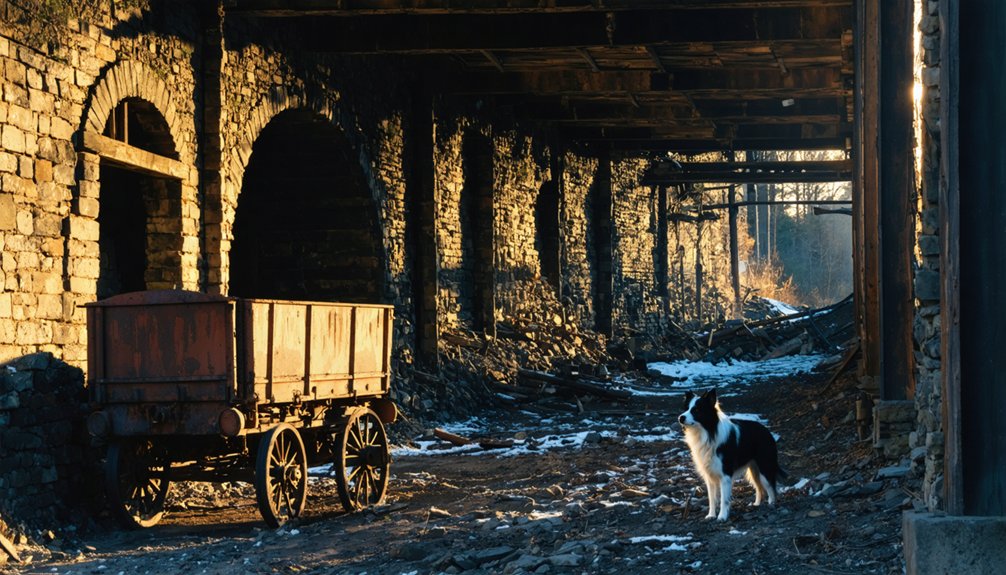
You’ll discover the Oil Creek Tunnel‘s eerie 1,600-foot passage carved through Pikes Peak, where mining-era tragedies still echo through the abandoned chambers. Visiting hikers report sudden temperature drops at the portal.
Your adventure-loving dog can join you on this challenging 5-mile round-trip hike from Elk Park, though the 11,800-foot elevation and scree fields demand extra preparation for both of you.
The trail leads through Ghost Town Hollow‘s remnants, where your four-legged companion might sense the restless spirits that locals say still wander among the scattered mining artifacts.
Tunnel History and Haunts
High above Colorado Springs at nearly 12,000 feet, the abandoned Oil Creek Tunnel cuts through Pikes Peak’s granite heart like a ghostly wound that’s never quite healed.
Your adventure begins where Cincinnati Mine investors’ 1890s dreams died hard, leaving behind 1,600 feet of hand-carved passages and plenty of tunnel lore.
The Cincinnati Mine’s collapse by 1901 birthed decades of ghost encounters that’ll make your dog’s ears perk up.
You’re walking where desperate miners once chased fool’s gold through unforgiving granite.
Three spine-tingling elements await you:
- Abandoned mining equipment scattered like metallic bones
- Three deteriorating log cabins where phantom voices echo
- Ghost Town Hollow’s spectral residents who never left
Your four-legged companion might sense what you can’t—restless spirits still searching for the fortune that eluded them over a century ago.
Trail Access for Dogs
Since your dog’s paws can handle the rocky terrain, the Oil Creek Tunnel Trail welcomes four-legged explorers without restrictions—though you’ll want to keep that leash handy for the initial scramble across the scree field.
This three-quarter-mile approach offers panoramic Colorado Springs views while your pup navigates loose rocks alongside you. The Pikes Peak region’s dog friendly trails don’t require permits or special permissions, making spontaneous ghost town adventures possible.
Once you’ve conquered the scree section, the path mellows toward the tunnel entrance where mining remnants tell their haunted tales.
Your dog can explore these historical markers safely while you absorb the eerie atmosphere. Hiking with pets becomes especially rewarding here—they’ll sense the mountain’s mysterious energy while you uncover Colorado’s supernatural mining legacy together.
Essential Pet Safety Tips for Ghost Town Visits
Four vital safety categories can mean the difference between a memorable adventure and a dangerous emergency when exploring Colorado’s remote ghost towns with your dog.
Pet identification becomes essential when cell towers disappear and your adventurous companion decides those century-old mining tunnels look fascinating. Microchips and visible ID tags with local emergency contacts aren’t just smart—they’re lifesavers when you’re miles from civilization.
Important safety priorities include:
- Restraint systems – Use sturdy 6-10 ft leashes and well-fitted harnesses near unstable structures and cliff edges.
- Health preparedness – Pack pet first-aid kits, extra water, and current medical records for remote vet visits.
- Hazard awareness – Watch for open mine shafts, toxic tailings, and wildlife encounters with coyotes or snakes.
Your freedom to explore depends on smart preparation.
Best Seasons for Exploring Abandoned Colorado Towns
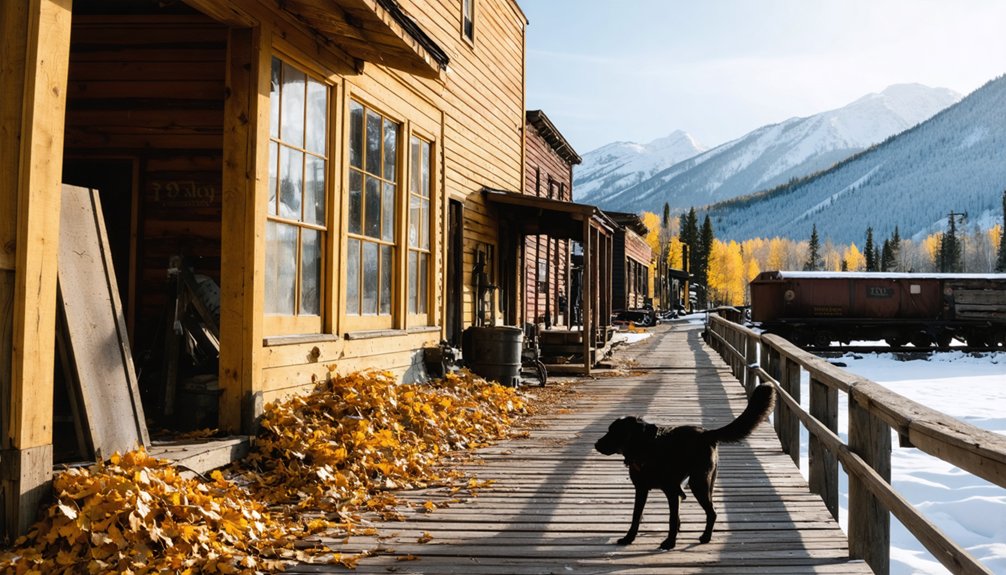
Colorado’s dramatic elevation changes create a seasonal puzzle where your perfect ghost town adventure depends entirely on Mother Nature’s mood and your tolerance for risk.
Summer offers the sweetest freedom—you’ll navigate standard roads easily while your dog enjoys cooler mountain air. However, afternoon thunderstorms demand quick retreats from exposed ridgelines.
Early fall delivers crisp photography conditions and fewer crowds, but seasonal access becomes tricky as first snows close high-elevation routes.
Spring brings muddy washouts and unpredictable wildlife encounters during calving season—your dog’s curiosity could trigger protective elk behavior.
Winter transforms these towns into frozen time capsules accessible only by snowshoe or snowmobile.
Plan weekday visits during shoulder seasons for maximum solitude while maintaining reasonable seasonal access to your favorite haunted destinations.
What to Pack for Your Ghost Town Adventure With Dogs
Your backpack becomes a lifeline when exploring remote ghost towns with your four-legged companion, where the nearest veterinary clinic might be hours away down treacherous mountain roads.
Smart packing transforms potential disasters into manageable adventures, letting you roam freely through Colorado’s forgotten settlements.
Essential dog friendly gear includes a sturdy 4-6 foot leash with secure clasp for traversing fragile ruins, plus a front-clip harness that reduces pulling on steep terrain.
Pack a basic canine first-aid kit with gauze, antiseptic wipes, and tick-removal tools for those inevitable encounters with mountain brush.
Hydration tips demand carrying one liter per dog for every two hours of exploration, plus electrolyte supplements for high-altitude adventures.
- Safety essentials: Double-clip system, reflective vest, emergency contact list
- Health supplies: First-aid kit, tick prevention, vaccination records
- Comfort gear: Insulating jacket, paw protection, cooling bandana
Frequently Asked Questions
Are There Any Ghost Towns in Colorado That Allow Off-Leash Dogs?
No, Colorado’s ghost towns don’t allow off-leash dogs. Historic site regulations require leashes protecting fragile structures and wildlife. You’ll find freedom exploring dog friendly trails nearby, then visiting these atmospheric ruins with your leashed companion adventuring responsibly.
What Ghost Town Entrance Fees Apply When Bringing Multiple Dogs?
Most Colorado ghost towns don’t charge dog park fees or extra pet costs—you’ll pay standard per-person admission regardless of how many dogs you bring, though pet friendly policies vary by site.
Do Any Colorado Ghost Towns Offer Overnight Camping With Pets?
Colorado’s ghost towns don’t offer overnight camping within town limits, but you’ll find excellent pet friendly amenities at nearby campgrounds. Check camping regulations at surrounding state parks for your furry adventure companions.
Which Ghost Towns Have Nearby Veterinary Services in Case of Emergencies?
You’ll find emergency vet locations near St. Elmo with Planned Pethood International in Conifer, plus Castle Rock’s 24/7 Veterinary Specialists. Western Slope ghost towns offer pet friendly accommodations with multiple emergency clinics nearby.
Are There Age Restrictions for Dogs Visiting High-Altitude Ghost Towns?
There aren’t official dog age restrictions for high-altitude ghost towns, but you’ll want to contemplate pet safety considerations carefully. Puppies need completed vaccines, while senior dogs require cardiac clearance before tackling Colorado’s breathtaking elevations.
References
- https://www.uncovercolorado.com/ghost-towns/
- https://www.cruiseamerica.com/trip-inspiration/colorado-ghost-towns-to-see-rv-trip
- https://www.bringfido.com/blog/dog-friendly-gold-mines-and-ghost-towns/
- https://pupperscouts.com/13-dog-friendly-spooky-season-hikes/
- https://sheenashahangian.com/ashcroft-ghost-town-colorado/
- https://www.pikes-peak.com/pet-friendly-attractions-in-colorado-springs/
- https://www.gopetfriendly.com/blog/explore-pet-friendly-ghost-towns-with-your-furry-travel-buddy/
- https://aspenchamber.org/blog/ghost-towns-and-cemeteries-visit-aspen-october
- https://www.tripadvisor.com/ShowTopic-g28927-i252-k9498486-Travel_ghost_towns_in_colorado-Colorado.html
- https://www.legendsofamerica.com/co-stelmo/