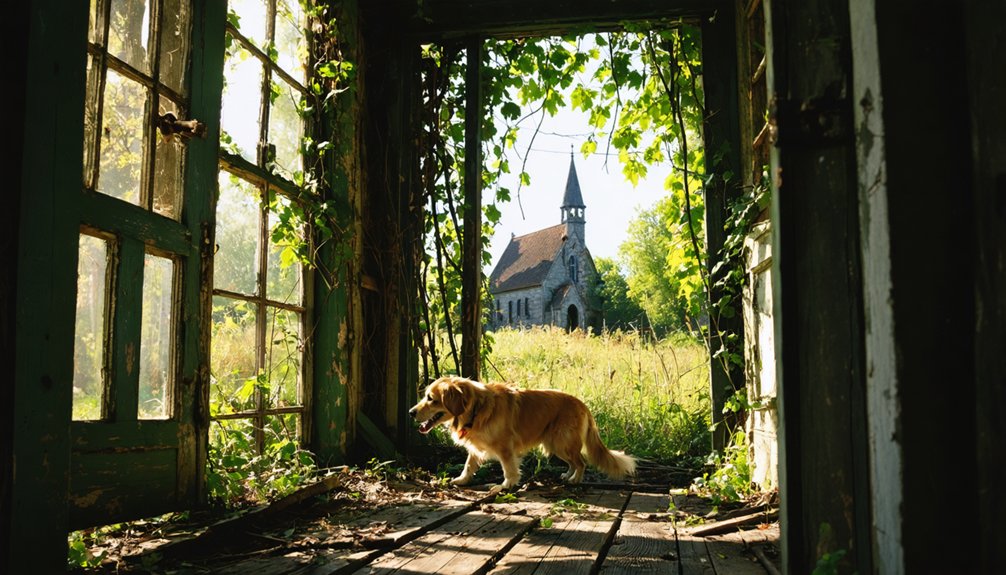
You’ll discover Connecticut’s haunting ghost towns are surprisingly dog-friendly, offering leashed adventures through submerged Valley Forge village at Saugatuck Reservoir and mysterious Pilfershire Trail in McLean Game Refuge. Your pup can explore crumbling foundations, ancient stone cellars, and abandoned mill sites along the Naugatuck Valley’s converted rail-trails. Always pack waste bags, maintain current rabies tags, and respect municipal leash laws while traversing these eerie remnants of forgotten settlements that hold centuries of enthralling stories.
Key Takeaways
- Dogs must remain leashed at all Connecticut ghost town sites with current rabies vaccination tags and proper licensing required.
- Saugatuck Reservoir offers dog-friendly exploration of submerged Valley Forge village remnants when drought reveals foundations and structures.
- Pilfershire Trail in McLean Game Refuge allows leashed dogs to explore stone cellars and crumbling foundations of Connecticut’s enigmatic settlement.
- Naugatuck Valley maintains dog-friendly trails for exploring historic mill sites and abandoned railway hamlet remnants safely.
- Pack waste bags, first aid supplies, and protect dog paws from jagged stone foundations and sharp debris hazards.
Saugatuck Reservoir’s Submerged Communities
When you and your dog explore the trails around Saugatuck Reservoir in Redding, you’re walking above one of Connecticut’s most fascinating submerged ghost towns.
Valley Forge village lies beneath these waters, claimed by eminent domain in the 1940s when Bridgeport Hydraulic Company flooded the valley. Your canine companion might sense the history as you hike past stone walls that once marked farmland boundaries.
Even your dog can feel the ghostly presence of families who once called this drowned valley home.
During drought years, you’ll spot eerie remnants breaking the surface—mill foundations, hitching posts, and building foundations from this 18th-century manufacturing community. The area maintained its pristine condition through decades of water quality inspections that monitored for pollution sources and contamination.
The Saugatuck history runs deep here, where over a thousand residents were displaced. This lost community once thrived as a manufacturing center with significant industrial contributions before its tragic fate. These submerged villages tell stories of Connecticut’s past, making your riverside adventures with your four-legged explorer feel like treasure hunting through liquid time.
Pilfershire and Indian Council Caves Trail Adventures
As you and your dog venture into the McLean Game Refuge near Simsbury, the Pilfershire Trail reveals Connecticut’s most enigmatic ghost settlement.
You’ll discover contested Pilfershire history—some claim it’s a lost village, while historians argue it was scattered colonial farmsteads spanning modern Simsbury, Canton, and Granby.
Trail exploration becomes treasure hunting as you navigate the 1.6-mile path with your canine companion.
Stone cellars, crumbling foundations, and dry-laid walls emerge from forest undergrowth, marking former homes, schools, and businesses.
Your dog will love sniffing around ancient stone wells and collapsed cellars, but keep them close—these deep depressions pose safety risks.
Pack GPS for navigation through dense sections, and visit during fall when leaf-drop reveals hidden foundations.
This overgrown wagon trail offers perfect freedom for both history buffs and adventure-seeking dogs. The settlement’s historical significance connects to the first European settlers who established roots in this Connecticut region. Local researchers like Tom Yanik have documented the stories of early farmers and families who once called these upland ridges home.
Valley Forge and Little Egypt Remnants
While most Connecticut ghost towns crumble above ground, Valley Forge lies submerged beneath Saugatuck Reservoir‘s dark waters—a Welsh settlement that thrived for nearly two centuries before vanishing overnight.
You’ll walk trails where leashed dogs can explore alongside you, watching for moments when water levels drop to reveal paved roads and stone foundations rising like ghosts from the depths.
The Bridgeport Hydraulic Company seized this iron-forging community through eminent domain in the 1930s, burning what they couldn’t relocate before flooding everything in the early 1940s. The town had previously produced the first iron plows in the U.S. and various industrial tools that contributed materials for both the War of 1812 and the Civil War. Residents mounted fierce resistance to flooding plans, fighting desperately to save their community in the late 1930s.
Little Egypt’s remnants may overlap with these submerged ruins, though records remain obscure.
Bring your adventurous pup during dry seasons—you’ll witness an entire civilization preserved one hundred feet below, accessible only when nature permits this haunting glimpse into Connecticut’s buried past.
Historic Mill Sites and Abandoned Rail Hamlets
Connecticut’s industrial ghost towns tell a different story than submerged settlements—here, brick smokestacks pierce overgrown forests where mill wheels once churned alongside rushing streams.
You’ll discover historic mill sites throughout the Naugatuck Valley, where textile and brass factories left behind crumbling foundations and worker housing clusters. Your dog can explore these remnants safely from maintained trails that follow old mill races and stone dam foundations.
Historic mill foundations and worker housing clusters scattered throughout the Naugatuck Valley offer dog-friendly exploration along maintained trails following old mill races.
Abandoned railways offer equally compelling adventures. Former branch lines like the Air Line route created ghost hamlets around forgotten depots and freight sheds. The Central New England Railway operated through rural towns like Copake until its abandonment in 1938, leaving behind weathered depot buildings that once served as vital hubs for agricultural communities.
Near New Haven, the historic Cedar Hill Rail Yard represents one of Connecticut’s most significant abandoned railway complexes, where operational sections coexist with deteriorating structures from its 1890s origins. While many rail corridors have become dog-friendly trails, exercise caution—some sites remain on private property or contain environmental hazards. Scout locations beforehand and stick to converted rail-trails for the safest exploration with your four-legged companion.
Pet Policies and Access Guidelines for Connecticut’s Haunted Sites
Where can you actually take your dog when exploring Connecticut’s ghostly remnants?
You’ll need to navigate municipal leash requirements that demand your dog stays tethered when off your property. These regulations aren’t suggestions—they’re enforced by animal control officers who patrol even abandoned areas.
Your adventure companion must wear current rabies vaccination tags and proper licensing. Pet etiquette becomes essential at these historic sites where you’re already pushing boundaries.
Keep your dog close, respect private property markers, and remember that uncontrolled animals are classified as public safety hazards.
Most ghost towns sit on municipal land where §7-148 prohibits dogs running at large. You’re free to explore, but your four-legged partner stays leashed.
Pack waste bags, maintain control, and embrace the eerie atmosphere responsibly. Animal control officers receive 6 to 20 calls daily from people wanting to abandon pets, so ensure your exploration doesn’t add to their overwhelming workload. If your dog causes any property damage during your exploration, you’ll face strict liability for the costs under Connecticut law.
Safety Precautions for Exploring Ghost Towns With Your Dog
When you’re planning to explore Connecticut’s abandoned settlements with your canine companion, you’ll need to assess potential dangers that range from unstable foundations and sharp debris to encounters with wildlife or aggressive strays.
Before setting foot on any historic site, research the legal access requirements and property ownership status—some ghost towns sit on private land where trespassing could complicate an emergency rescue situation.
One interesting location to explore is the history of Ong’s Hat ghost town, which offers intriguing tales of its past. Visitors can uncover the stories behind its abandoned buildings and learn about the community that once thrived there. As you navigate through the remnants, remember to respect any private property boundaries that may still exist.
Pack essential safety gear including a first-aid kit, emergency restraints, and veterinary contact information, while mapping out clear exit routes and nearby animal hospitals in case your adventure takes an unexpected turn.
Terrain and Wildlife Hazards
Although the allure of Connecticut’s abandoned settlements draws adventurous dog owners into forgotten landscapes, you’ll quickly discover that these ghost towns present treacherous terrain that can turn a leisurely hike into a dangerous ordeal.
The rocky terrain poses constant slip hazards, with serrated rocks near waterfalls and loose trap rock scattered across steep trails. Your dog’s paws face particular danger from jagged stone foundations and lichen-covered walls hidden beneath overgrown brush.
Perhaps more unsettling is the complete wildlife absence that greets you upon entering these forgotten places. The deathly silence—no birds chirping, no squirrels rustling—creates an eerie atmosphere that even animals instinctively avoid, leaving you and your canine companion isolated in these haunted remnants of Connecticut’s past.
Legal Access Requirements
Before you and your four-legged explorer venture into Connecticut’s forgotten settlements, you’ll need to navigate the complex web of property laws that protect these mysterious places.
Trespassing laws require clear proof of unlawful entry onto posted private property—look for signs, fences, or padlocks that mark boundaries. Property ownership verification becomes your first adventure; conduct thorough title searches before setting paw on any parcel.
Written permission from legal owners serves as your golden ticket against charges. Abandoned doesn’t mean accessible—these ghost towns often remain privately owned despite their desolate appearance.
Focus on publicly accessible structures unless you’ve secured explicit permission. Remember, previous bans eliminate any defenses, so respect posted warnings and local authorities’ guidance for safe exploration.
Emergency Preparedness Planning
While Connecticut’s ghost towns whisper tales of forgotten lives, they also harbor silent dangers that can quickly transform your adventure into an emergency.
You’ll need a thorough plan before stepping into these forgotten places with your dog. Create a detailed route plan and share it with an emergency contact, including GPS coordinates and expected return times.
These remote locations often lack cell service, so carry redundant navigation tools—smartphone with offline maps, paper maps, and compass. Pack essential first aid supplies for both you and your canine companion: bandages, antiseptic wipes, tick removal tools, and any prescription medications your dog requires.
Invest in a satellite messenger for areas without cellular coverage, and always establish clear bailout routes to the nearest road access point.
Frequently Asked Questions
Are There Any Ghost Towns in Connecticut That Allow Off-Leash Dogs?
Most Connecticut ghost towns fall under strict leash laws requiring dogs stay tethered. You’ll find rare exceptions on private land with owner permission, but traditional dog parks offer safer off-leash freedom than crumbling ruins.
What’s the Best Time of Year to Visit Submerged Ruins With Pets?
Like autumn’s veil lifting from forgotten secrets, you’ll find the best visiting seasons are September-October when drought exposes ruins. Follow pet safety tips: bring water, watch footing on slippery stones, and keep dogs leashed near unstable foundations.
Do Any Connecticut Ghost Towns Have Overnight Camping Options for Dog Owners?
You’ll find nearby state forest campgrounds and private RV parks offer pet friendly amenities within driving distance, though camping regulations prohibit overnight stays directly at most ghost town sites themselves.
Are There Guided Ghost Town Tours That Welcome Dogs in Connecticut?
Yes, you’ll find dog friendly tours through US Ghost Adventures and Seaside Shadows that welcome leashed pets on outdoor walking routes, letting you explore Connecticut’s historical significance together under starlit skies.
Which Abandoned Sites Have the Most Paranormal Activity Reported by Visitors?
You’ll find absolutely legendary paranormal hotspots at Dudleytown’s shadow-filled woods and Union Cemetery’s White Lady encounters dominating visitor experiences. These sites generate countless reports of EVPs, apparitions, and spine-chilling temperature drops.
References
- https://blog.njm.com/6-dog-friendly-destinations-in-connecticut
- https://www.damnedct.com/dudleytown/
- https://stantonhouseinn.com/dog-friendly-places-in-ct
- https://earlybirdonthetrail.com/haunted-hikes-in-connecticut/
- https://www.bringfido.com/attraction/state/connecticut/
- https://www.youtube.com/watch?v=RODeJvoS7NE
- https://www.tripadvisor.in/Attractions-g28928-Activities-c47-t14-Connecticut.html
- https://eastoncourier.news/2022/04/02/life-in-a-reservoir-town/
- https://westontoday.news/articles/210305-valley-forge-dammed
- https://westonhistoricalsociety.org/sites-reservoir.php?pageid=547