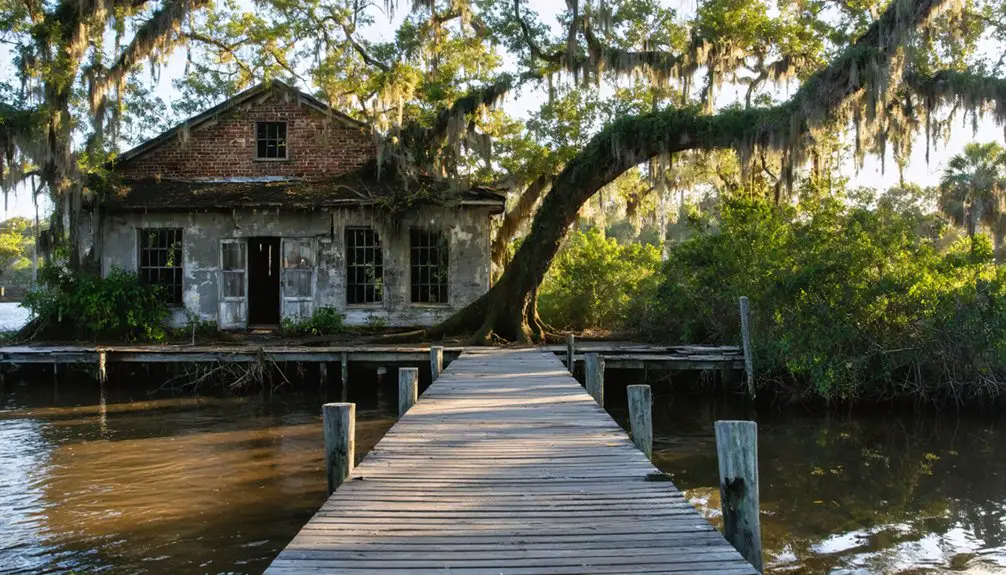
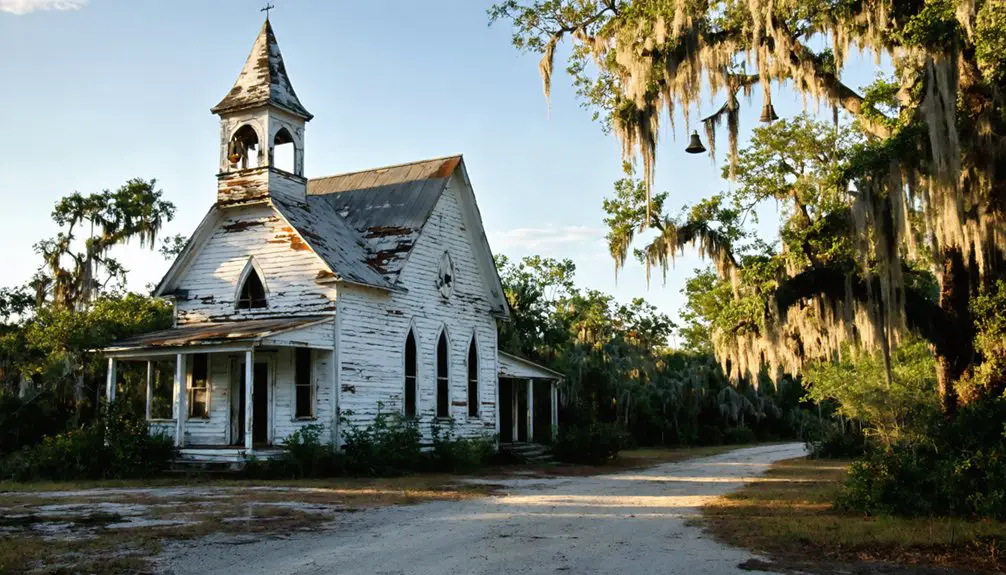
You’ll discover that Florida’s haunted ghost towns offer surprisingly welcoming adventures for you and your four-legged companion, from the crumbling military ruins of Egmont Key where your dog can hunt for shark teeth between exploring Fort Dade’s historic chambers, to St. Augustine’s pet-friendly evening ghost tours that let both of you experience centuries-old paranormal activity together. Pack a sturdy leash, water bowl, and rabies certificate for these eerie expeditions that’ll reveal even more spine-tingling destinations awaiting your exploration.
Key Takeaways
- Egmont Key’s Fort Dade offers dog-friendly three-hour ferry excursions to explore military ruins from the early 1900s.
- Eldora’s abandoned citrus town remnants in Canaveral National Seashore allow dogs to explore nature’s reclamation of historic settlements.
- Alafaya near Orlando provides urban exploration opportunities for dogs and owners to witness Hurricane Ian’s aftermath.
- Coleman’s backwoods cemetery documents African-American heritage since the early 1900s and welcomes leashed dogs for exploration.
- Dogs must remain on six-foot leashes at historic sites, with water and tick checks essential after exploring dusty trails.
Historic Ruins Accessible by Water With Your Canine Companion
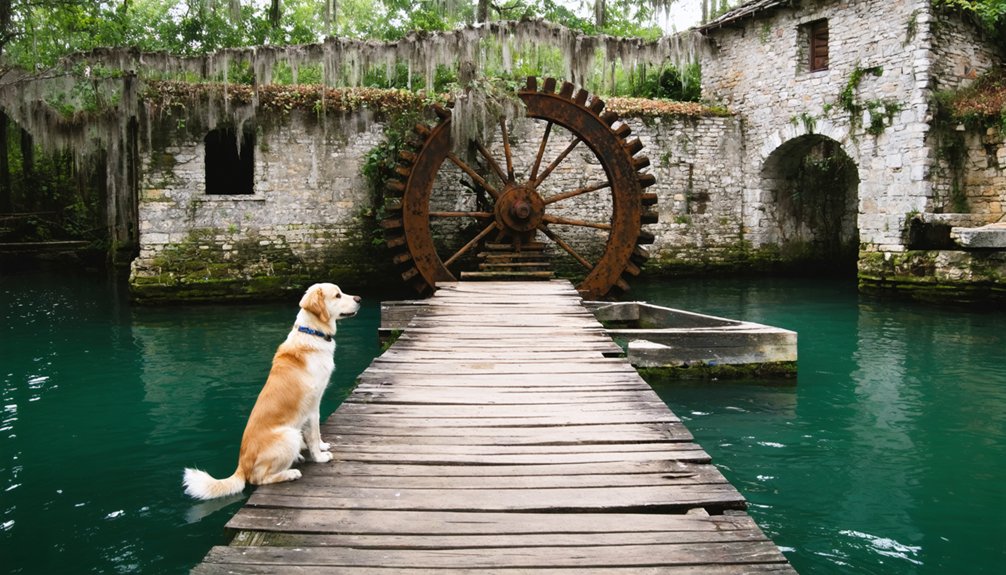
When you’re searching for adventure that combines history with your four-legged explorer, Florida’s water-accessible ghost towns offer an unforgettable experience where crumbling ruins meet coastal beauty.
Egmont Key’s Fort Dade welcomes canine companions on three-hour ferry excursions, where you’ll walk brick roads through Battery McIntosh’s flooded chambers. Your dog can roam freely while you hunt shark teeth along the shoreline. The fort once housed over 600 residents during its military heyday in the early 1900s.
Historic fort ruins and scattered shark teeth create the perfect treasure hunt for adventurous dogs and their history-loving humans.
Stiltsville’s abandoned floating neighborhood in Biscayne Bay provides unique waterway exploration opportunities. These houses on stilts create an otherworldly backdrop for photos with your pup.
On Sugarloaf Key, Perky’s remnants tell stories of failed sponge farming ventures. Near Suwannee River State Park, the ghost town of Ellaville was founded by former state governor George F. Drew as a logging community before declining during the Great Depression. Each location offers freedom from crowded tourist traps, letting you and your canine companion discover Florida’s forgotten maritime history at your own pace.
Roadside Ghost Towns and Abandoned Settlements to Explore
Unlike water-bound ruins that require boats and planning, Florida’s roadside ghost towns let you pull over whenever curiosity strikes, leash up your dog, and step directly into forgotten history.
Exploring ghost towns in Florida history offers a glimpse into the past, showcasing towns that once thrived during the citrus boom or as railroad hubs. Some of these places are now mere shadows of their former selves, leaving behind intriguing remnants for adventurous visitors to discover. Each stop reveals stories of resilience and change, making them perfect destinations for history enthusiasts and curious travelers alike.
Place at Alafaya offers accessible urban exploration near Orlando, where you and your pup can wander through Hurricane Ian’s aftermath among crumbling townhomes and mold-stained walls. The abandoned architecture tells stories of student dreams destroyed by flooding. Once a thriving apartment complex built in the 1970s that housed students, families, and professionals for decades, it now stands as a testament to nature’s devastating power.
For a different experience, seek out Eldora’s citrus-town remnants in Canaveral National Seashore, where nature’s reclaimed the 1895 freeze victims’ foundations. Your dog will love sniffing around Coleman’s backwoods cemetery, documenting African-American heritage since the early 1900s. These abandoned settlements remind us of the impermanence of human communities throughout Florida’s history.
These roadside discoveries offer spontaneous adventures without advance planning.
Pet-Friendly Guided Ghost Tours Across Florida
While roadside exploration offers freedom, guided ghost tours let you and your four-legged companion discover Florida’s haunted history through expert storytelling and lantern-lit adventures.
St. Augustine leads Florida’s pet-friendly ghost scene with multiple options welcoming well-behaved, leashed dogs. You’ll find walking tours through haunted back alleys, trolley rides past historic sites, and even electric vehicle tours avoiding lengthy walks in Florida’s heat.
St. Augustine offers the most pet-friendly ghost tours in Florida, with walking, trolley, and electric vehicle options for every dog.
Ghost City Tours offers 90-minute adventures starting at $29.99, while Seaside Adventures provides comfortable driving tours perfect for mobility concerns.
Pet etiquette remains essential—tours require non-disruptive behavior and proper leashing. Most operators run nightly tours rain or shine, with several departing at 8PM from central locations like Plaza de la Constitución.
These guided experiences blend haunted history with practical comfort, letting you explore Florida’s supernatural side alongside your adventurous pup. Some tours receive mixed reviews from pet owners, with experiences ranging from disappointing pub walks to engaging storytelling adventures. Haunting Hour St. Augustine features experienced paranormal investigators as guides who share personal ghost stories and visit unique locations not typically included in other tours.
Essential Safety Considerations for Dogs at Historic Sites
Exploring Florida’s historic ghost towns with your dog requires more than just booking a tour—you’ll need to navigate specific safety protocols that protect both your pet and these precious cultural sites.
Your dog’s behavior matters considerably in these environments where wildlife and cultural artifacts coexist. Keep your leash six feet or shorter, and master proper leash etiquette before arriving. You’ll need voice control skills even in designated areas, as excessive barking disrupts other visitors’ experiences.
Pack water for your furry companion since historic sites don’t provide dog water sources. Check for ticks and fleas after exploring dusty trails and old structures. Many sensitive historic sites prohibit dogs entirely to preserve the integrity of cultural artifacts and structures. Remember that service animals are typically exempt from standard pet restrictions at historic properties.
Getting There: Transportation and Access Routes
Since Florida’s ghost towns scatter across islands, coastal highways, and historic districts, you’ll need different transportation strategies for each adventure with your four-legged explorer.
Transportation options vary dramatically by destination. Egmont Key requires ferry service from Fort De Soto beach through Hubbard’s Marina—a 3-hour excursion perfect for boat-loving dogs. Your own vessel provides direct access routes if you’re comfortable maneuvering Tampa Bay waters.
Indian Key demands kayak skills, with Robbies Marina in Islamorada offering the launch point for an easy paddle to this 11-acre island paradise.
St. Augustine’s ghost sites welcome walking tours and carriage rides, while Otter Creek offers simple roadside access off US Highway 19. Many establishments in St. Augustine offer pet-friendly ghost tours that allow your dog to join the spooky adventure through America’s oldest city. Tours typically cover historical haunted happenings with guides sharing spine-tingling stories of supernatural encounters at cemetery sites and colonial buildings.
Each location rewards your planning with unique haunted experiences you’ll both treasure.
Preparing Your Dog for Ghost Town Adventures
Before you set foot in Florida’s forgotten settlements, your four-legged explorer needs proper preparation to handle crumbling foundations and sweltering heat.
Pack a thorough first-aid kit with tick tweezers and antiseptic, plus booties to protect those precious paws from rusted metal and broken glass scattered throughout abandoned buildings.
You’ll also want current vaccination records and health certificates in your backpack—some ghost towns sit near state parks that require documentation, and emergency vets won’t hesitate to ask for proof of rabies protection.
Essential Safety Gear
Anyone who’s watched their dog bolt toward a crumbling building or mysterious sound knows that ghost towns present unique safety challenges.
Vital safety gear keeps your four-legged explorer secure while preserving that spirit of adventure you both crave.
Start with a sturdy 46-inch leash and well-fitted harness—skip retractable options in these unpredictable environments. Reflective trim on your dog accessories becomes essential when exploring shadowy ruins or venturing out during golden hour photography sessions.
Protective booties shield paws from broken glass, hot surfaces, and rough terrain that’s common in abandoned settlements.
Pack a portable first aid kit and collapsible water bowl for longer expeditions. High-visibility vests guarantee your companion stays visible against weathered backdrops, letting you both roam freely with confidence.
Health Documentation Requirements
While most ghost towns won’t check your dog’s paperwork at rusted gates, proper health documentation protects both your furry explorer and the communities you’ll pass through on your journey.
Keep your dog’s current rabies vaccination certificate handy—it’s your golden ticket for crossing state lines and accessing remote areas. I’ve learned the hard way that Florida’s travel regulations can surprise you when passing through small towns en route to abandoned settlements.
Pack a recent Certificate of Veterinary Inspection issued within ten days of travel. Your vet should include proof of parasite prevention treatments, especially for tick and flea control—ghost towns harbor plenty of both.
Store documents in waterproof sleeves; crumbling structures don’t offer shelter from sudden downpours that could destroy essential paperwork.
Legal Requirements and Property Access Guidelines
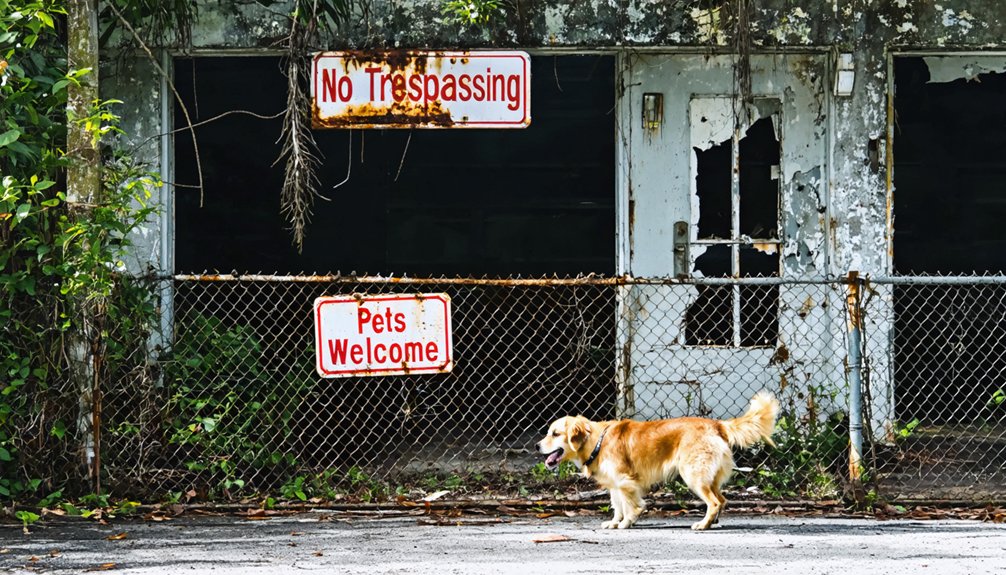
You’ll need to respect private property boundaries around ghost towns, as trespassing laws apply even when structures appear abandoned.
If you’re traveling with a service animal, understand that they’re granted broader access rights than emotional support animals or pets under the Americans with Disabilities Act.
Many ghost towns sit on archaeologically sensitive land where dogs must stay on designated trails to protect fragile historical artifacts buried beneath your feet.
Private Property Boundaries
Before you leash up your four-legged explorer for that ghost town adventure, understanding Florida’s property boundary laws can save you from turning your peaceful outing into a costly legal nightmare.
Those weathered fence lines marking old homesteads aren’t just rustic charm—they’re legal boundaries protected by statute. Florida requires professional surveyors to establish permanent markers like iron pins and concrete monuments, making trespassing violations crystal clear. What looks like abandoned land often belongs to someone who’ll defend it vigorously.
Smart explorers research property ownership before venturing off public trails. Local zoning boards maintain boundary records that’ll show you exactly where you can roam freely.
Service Animal Distinctions
When your canine companion sports a bright service dog vest at that dusty ghost town entrance, the legal landscape shifts dramatically in your favor. Unlike emotional support animals, your service animal carries federal protection through task training that addresses your specific disability.
You’ll find doors opening at Florida’s historic sites operating as public accommodations—restaurants, museums, gift shops—where staff can only ask two questions: whether your animal’s required for a disability and what tasks it performs.
Don’t carry documentation; it’s not required. Your well-trained companion‘s behavior speaks volumes. Keep them under control and housebroken to maintain access rights.
Archaeological Site Restrictions
Although that crumbling foundation might whisper stories of Florida’s forgotten past, your metal detector and shovel can land you in serious legal trouble at archaeological sites.
Florida’s site protection laws carry hefty penalties—excavating without archaeological permits constitutes a third-degree felony, while non-excavation disturbances bring first-degree misdemeanor charges. You’ll face up to $500 daily fines for unauthorized exploration on state lands.
Before exploring those weathered ruins with your canine companion, verify the property’s status.
State-owned historical sites require professional permits exclusively issued to qualified archaeologists. Even accidentally uncovering human remains triggers strict protocols requiring immediate work stoppage.
Your adventure freedom depends on respecting these boundaries—stick to designated public areas where you and your dog can safely explore Florida’s ghost towns without risking criminal charges.
Best Times to Visit Florida’s Haunted Places With Pets
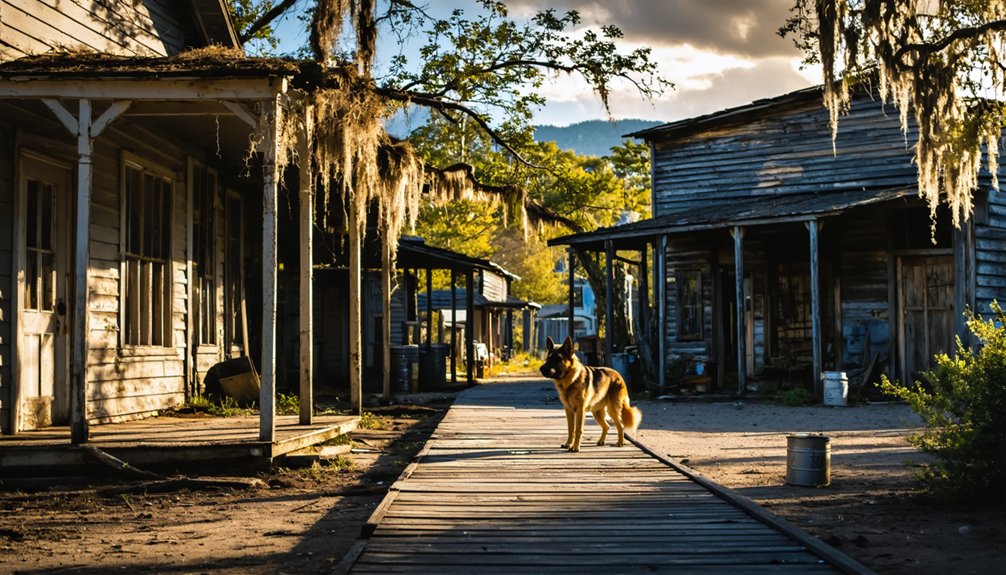
Since Florida’s ghost towns and haunted destinations welcome four-legged companions year-round, you’ll find perfect visiting windows that keep both you and your pet comfortable while exploring supernatural sites.
Preferred touring times focus on evening schedules when temperatures drop, making Tampa’s candlelight walks and St. Augustine’s 9pm ghost tours perfect for leashed exploration.
Evening ghost tours offer ideal temperatures for comfortable pet exploration when Florida’s daytime heat finally subsides.
Pet friendly seasons extend throughout the year, though cooler months enhance Franklin County beach visits and Egmont Key ferry excursions.
You’ll discover fewer crowds mid-week at St. Petersburg tours and Key West’s haunted walks, allowing your well-behaved companion to wander Fort Dade ruins leisurely.
Plan around weather considerations—warm Key West evenings might send chills through haunted sites, while St. Augustine’s outdoor adventures provide heat relief for adventurous pets.
Frequently Asked Questions
Can I Bring My Dog’s Favorite Toys to Ghost Town Sites?
You can bring dog toys to ghost town sites, but choose durable, tethered options that won’t disturb ruins or wildlife. Pack light, supervise constantly, and respect site-specific restrictions in historic structures.
Are There Veterinary Clinics Near Popular Florida Ghost Town Locations?
Yes, you’ll find veterinary services scattered throughout central Florida near ghost town areas. Colony Plaza in The Villages and Village Veterinarian in Lady Lake guarantee pet safety during your adventurous explorations of historic sites.
Do Ghost Tours Offer Group Discounts for Families With Multiple Dogs?
You’ll rarely find explicit dog tour discounts advertised, but don’t let that stop you! Call operators directly—many’ll craft custom family pet policies or suggest private tours that’ll save you money.
Can Dogs Sense Paranormal Activity at Historic Haunted Sites?
Dogs can’t definitively sense paranormal activity, but their superior senses detect subtle environmental changes you’d miss. Watch for unusual dog behavior like staring, growling, or following invisible presences – their paranormal sensitivity remains scientifically unproven yet mysteriously compelling.
Are There Pet-Friendly Accommodations Near Florida’s Most Famous Ghost Towns?
Like scattered treasures along forgotten trails, you’ll discover pet-friendly hotels near Florida’s ghost towns offer convenient bases for exploration, though actual ghost town amenities remain limited—plan mainland lodging for comfortable adventures.
References
- https://www.gopetfriendly.com/blog/pet-friendly-ghost-tours-howl-o-ween/
- https://floridahikes.com/indian-key-an-unusual-ghost-town/
- https://www.bringfido.com/attraction/11010
- https://www.youtube.com/watch?v=CBFrK-n4HmA
- https://jetsetpets.com/dog-friendly-places-activities/tampa-terrors-tampa-fl/
- https://www.trolleytours.com/st-augustine/ghost-town-trolley
- https://www.tripadvisor.ie/ShowTopic-g34599-i346-k2163215-Dog_Friendly_Attractions-St_Augustine_Florida.html
- https://oldcity.com/pet-tours/
- https://www.clickorlando.com/features/2024/09/25/floridas-creepiest-ghost-town-is-stashed-on-an-island-heres-the-lowdown/
- https://www.islands.com/1801514/florida-forgotten-springs-beautiful-gem-quiet-historic-ghost-town-suwannacoochee-ellaville/