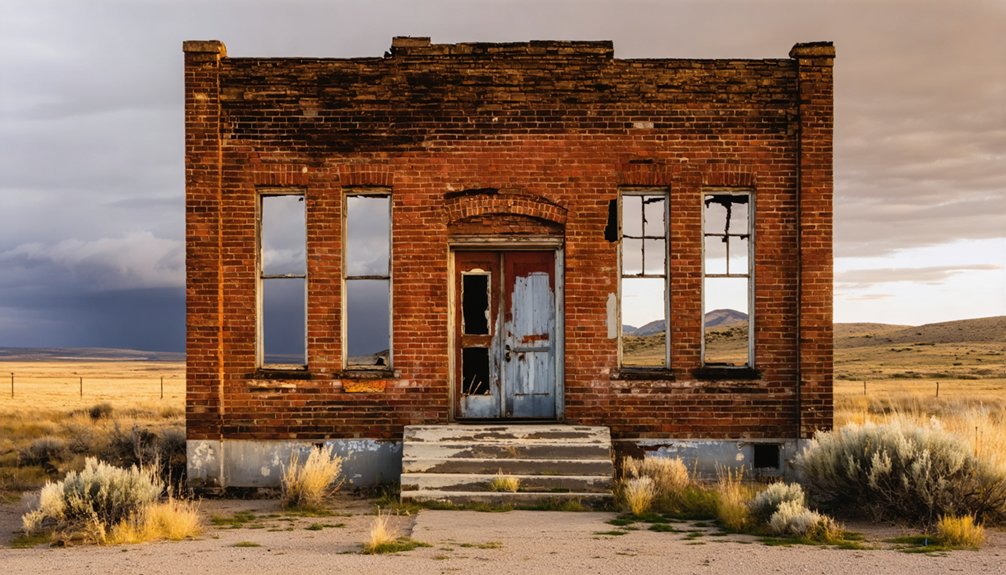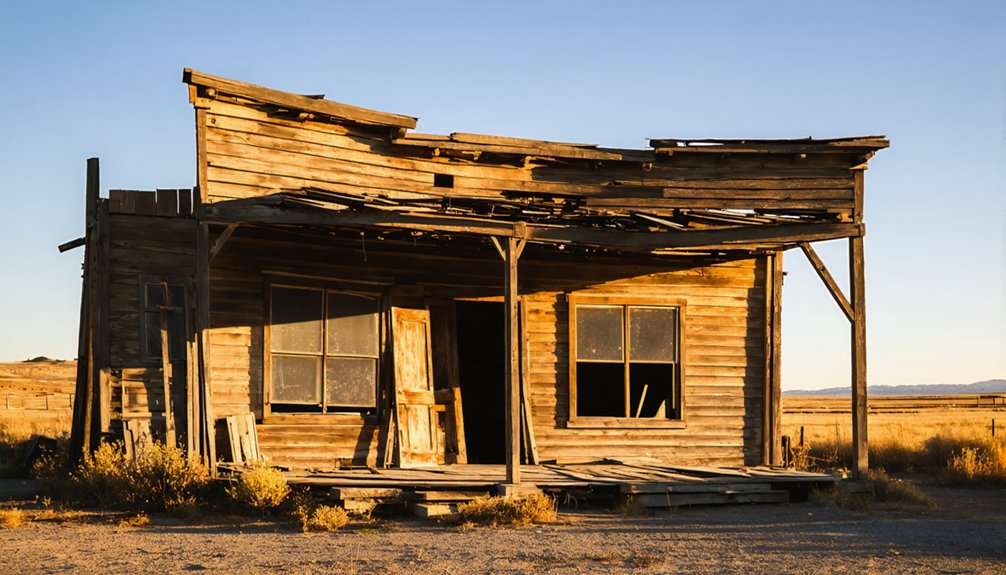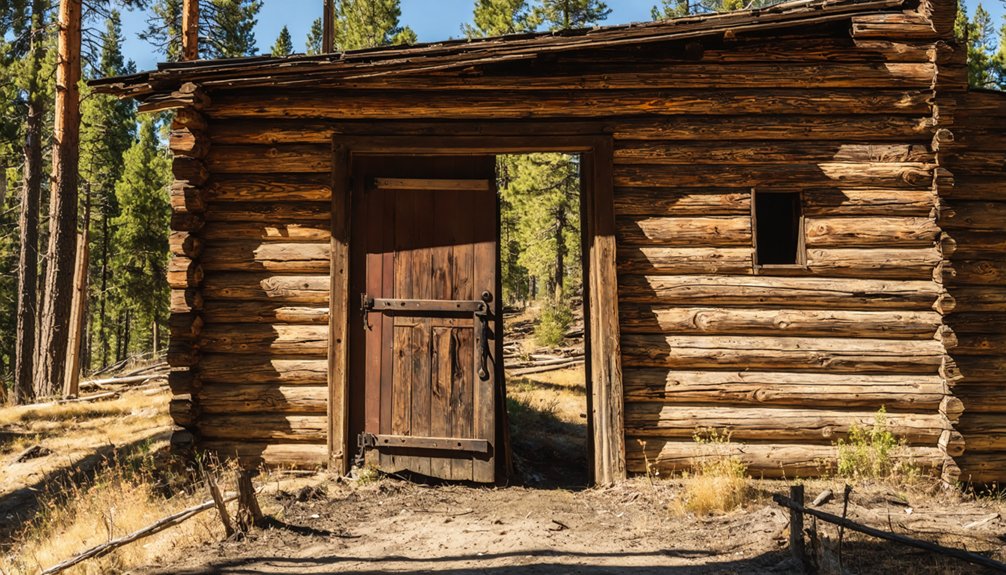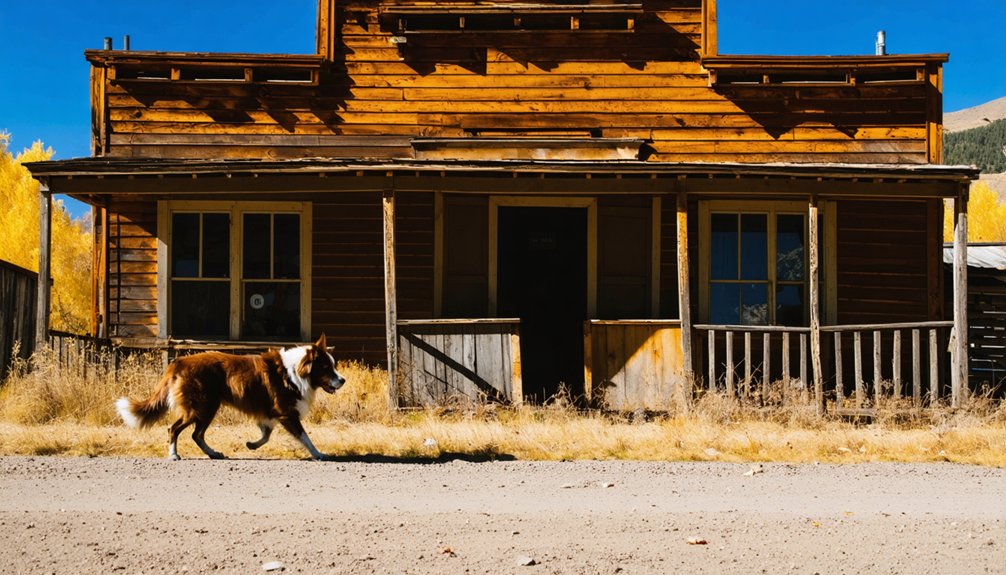
You’ll find Idaho’s ghost towns perfect for exploring with your canine companion, from Silver City’s compact dirt walkways connecting 75 weathered buildings to Bayhorse’s professionally maintained interpretive trails with vault bathrooms and paved parking. Chesterfield and Florence offer easy access via well-maintained roads, while Burke and Custer provide adventurous exploration through remote canyon ruins. Pack extra water, keep dogs leashed around unstable structures, and plan visits between May and October for ideal conditions and discoveries.
Key Takeaways
- Silver City features 75 weathered buildings connected by compact dirt walkways perfect for exploring with dogs during summer months.
- Bayhorse offers professionally maintained interpretive trails, vault bathrooms, and paved parking accessible via a 4-mile dirt road from State Route 93.
- Chesterfield provides paved access, essential visitor amenities including restrooms and seasonal campgrounds, plus a volunteer-operated general store.
- Florence features well-maintained gravel roads and serves as a comfortable base camp for regional ghost town exploration with pets.
- Burke showcases unique canyon architecture from 1887, though visitors need sturdy boots and caution around decaying mining structures.
Silver City: Historic Walkways and Seasonal Access
When you wind your way up the gravel Forest Service roads into Idaho’s Owyhee Mountains, Silver City emerges like a frozen moment from the 1860s gold rush era—seventy-five weathered buildings clustered along steep dirt streets where your dog can explore alongside you through one of the West’s most authentic ghost towns.
Your four-legged companion will love sniffing around the compacted dirt walkways connecting old hotels, mining ruins, and weathered storefronts. The historic access routes follow the same paths miners once traveled, creating an immersive experience you’ll both remember. At its peak in 1869, this remote outpost housed around 4,000 residents who worked the silver mines that made fortunes and sparked violent conflicts over mining claims.
However, plan carefully around seasonal challenges—roads typically close from November through April due to snow. Summer and early fall offer the best conditions for you and your dog to safely navigate these uneven, sloped streets together. Silver City stands at an impressive elevation of 6,000 feet, so be prepared for thinner air and cooler temperatures even during summer visits.
Bayhorse Ghost Town: State-Managed Trails and Amenities
Unlike many remote ghost towns that require rugged backcountry navigation, Bayhorse Ghost Town offers you and your dog a professionally maintained experience through Idaho’s Department of Parks and Recreation—complete with interpretive trails, clean facilities, and well-preserved 1880s mining structures scattered across the Salmon River Mountains.
You’ll reach this hidden gem via a 4-mile dirt road from State Route 93, crossing an old truss bridge over the Salmon River.
The Bayhorse trails wind through charcoal kilns and mining machinery, perfect for leashed exploration with interpretive signs detailing frontier mining practices.
Bayhorse amenities include vault bathrooms, paved parking, and site maps, though you’ll want to pack water and snacks. The site maintains clean facilities with bathrooms cleaned three times daily for visitor comfort.
The self-guided walking paths accommodate all ages and fitness levels, creating an ideal adventure for freedom-seeking families and their four-legged companions. At its peak, Bayhorse reached a bustling population of approximately 400 residents during the height of the silver mining boom.
Land of the Yankee Fork: Interpretive Routes Near Challis
You’ll find the Land of the Yankee Fork Interpretive Center at the Highway 75/93 intersection near Challis, where rangers provide maps for the 98-mile driving loop through ghost towns like Bonanza and Custer.
The center’s gold-panning station and outdoor mining displays give you and your dog a taste of what awaits on the gravel roads ahead, though you’ll need high-clearance vehicles for many remote townsite access routes. Inside the center, you can explore interactive displays featuring artifacts and educational exhibits that bring Idaho’s mining heritage to life. The grounds also feature a ¼ mile trail that highlights an archaeological buffalo kill site.
Challis serves as your supply hub with full services before tackling the 46 miles of unpaved backcountry roads that connect historic mining sites and preserved structures.
Historic Trails and Structures
Nestled in the rugged Salmon River Mountains near Challis, the Land of the Yankee Fork preserves Idaho’s gold-rush legacy through an extensive network of interpretive routes that wind past three authentic ghost towns and remnants of ambitious mining operations.
You’ll discover historic mining structures scattered across Bonanza, Custer, and Bayhorse, where weathered foundations and mine shafts tell stories of 1870s prospectors who chased fortune through these remote valleys.
The 98-mile driving loop follows the original Custer Motorway, a toll road completed in 1879 that once carried stage traffic and freight.
Ghost town architecture ranges from Custer’s preserved homes and blacksmith shop to Bonanza’s mine ruins near the massive 988-ton Yankee Fork Gold Dredge—a monument to industrial-scale extraction that forever changed this wilderness landscape. At Custer’s peak in the 1880s, this booming mining town supported a population of 600 residents before the inevitable decline that transformed it into today’s well-preserved ghost town. Visitors can explore these historical sites along with opportunities for gold panning in designated areas throughout the park.
Challis Area Services
Before exploring the ghost towns themselves, you’ll want to stop at the Land of the Yankee Fork Interpretive Center, positioned strategically one mile south of Challis at the intersection of Highways 75 and 93.
This essential hub offers extensive Challis amenities and visitor resources that’ll enhance your adventure with your canine companion.
The center’s exhibits showcase mining history, indigenous cultures, and pioneer life through interactive displays and a working stamp mill model.
You’ll find everything needed for your ghost town expedition:
- Maps and brochures for self-guided exploration
- Gold panning station for hands-on historical experience
- Staging area for OHV access to remote locations
- Restrooms and picnic tables for comfortable breaks
Open Wednesday through Sunday, the center charges just $2 per person, making it an affordable launching point for your freedom-seeking journey.
Burke and Custer: Remote Ruins for Adventurous Explorers
When silver and lead deposits sparked Burke’s establishment in 1887, miners carved out one of America’s most unusual mining towns in a canyon so narrow that trains literally passed through hotel lobbies.
You’ll discover Burke history written in weathered timber and twisted rails, where the famous Tiger Hotel once straddled railroad tracks while feeding 1,200 people daily. The iconic architecture defied convention—buildings clung to canyon walls, and residents carved cave-like dwellings into hillsides.
Today, you’ll find decaying structures and abandoned mining equipment scattered throughout this remote canyon. An unmarked cemetery with mostly destroyed headstones lies hidden among the ruins, adding to the town’s haunting atmosphere. The town’s turbulent past includes labor disputes at the Frisco Mill that involved gun fights, explosions, and military intervention.
Access requires driving seven miles north from Wallace on Highway 4. Bring sturdy shoes for uneven terrain and download offline maps since cell service proves unreliable in this rugged landscape.
Chesterfield and Florence: Preserved Towns With Easy Access
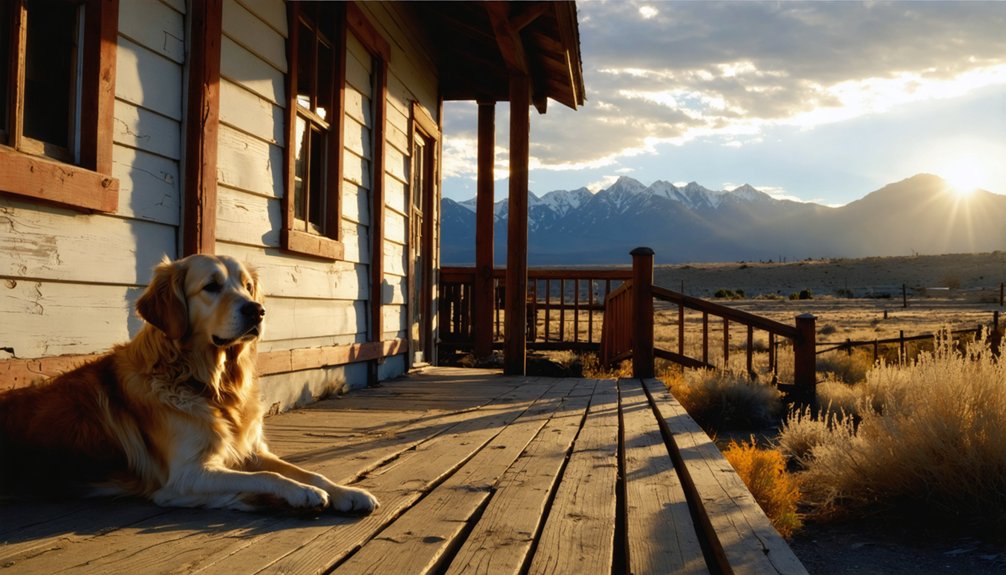
You’ll find these well-preserved ghost towns offer the perfect combination of accessible roads and nearby amenities that make exploring with your four-legged companion a breeze.
Unlike remote ruins that require grueling hikes, Chesterfield sits just eleven miles from Bancroft on manageable dirt roads, while community services in surrounding towns like Lava Hot Springs and Soda Springs provide everything you need for a comfortable day trip.
Your dog can stretch their legs on open valley terrain while you wander among 27 original brick structures that tell stories of Mormon pioneers who once aided weary Oregon Trail travelers.
Easy Road Access
While many ghost towns require challenging off-road adventures, Chesterfield and Florence offer well-preserved historical experiences that you can reach without testing your vehicle’s limits.
You’ll find Chesterfield’s road conditions exceptionally accommodating, with paved access via Pioneer Historic Byway leading directly to the restored settlement.
Florence requires some preparation for gravel terrain, but the trail accessibility remains manageable for most vehicles with proper planning.
Here’s what makes these destinations particularly accessible:
- Chesterfield’s paved route eliminates concerns about ground clearance or four-wheel drive requirements
- Clear GPS coordinates (42.863527936292, -111.90105425302) guarantee straightforward navigation to Chesterfield
- Florence’s gravel roads are well-maintained within Boise National Forest boundaries
- Strategic positioning allows both towns to serve as comfortable base camps for regional exploration
Nearby Community Services
Beyond the historic charm of these preserved towns, you’ll discover robust support networks that make extended visits comfortable and worry-free.
Chesterfield’s foundation maintains essential visitor amenities including restrooms, parking areas, and seasonal campground facilities where you and your dog can settle in for the night. The nearby towns of Bancroft and Soda Springs provide fuel, supplies, and lodging when you need modern conveniences.
You’ll find community events like Chesterfield’s annual Memorial Day celebration create welcoming atmospheres for visitors exploring with pets.
The volunteer-operated general store stocks local crafts and preserves, while the visitor center offers guidance for your adventure. Emergency services operate through Caribou County, ensuring help’s available if needed during your ghost town exploration.
Essential Safety Tips and Preparation for Ghost Town Visits
Before you load your excited pup into the car for a ghost town adventure, understanding the unique challenges these remote destinations present will keep both you and your four-legged companion safe.
These weathered mining settlements hide unmarked hazards like old mine shafts and unstable structures that demand constant vigilance.
Your packing essentials should include:
- Safety gear: Detailed maps, sturdy hiking boots, extra water, and first-aid supplies for remote terrain navigation
- Vehicle preparation: 4-wheel drive capability for dirt roads and seasonal weather checks from May to October
- Dog supplies: Leash, waste bags, and extra water since these sites require leashed pets at all times
- Emergency items: Camera, snacks, and $5 entry fees for state-managed locations like Bayhorse
Respect posted boundaries around active mining claims.
Frequently Asked Questions
Are There Veterinary Clinics Near These Ghost Towns in Case of Emergencies?
You’re in luck! Several veterinary services operate near Idaho’s ghost towns, including Sandpoint’s acclaimed Pend Oreille facility and Hayden’s urgent care centers. Keep emergency contacts handy when exploring remote areas with your adventure companion.
Can I Bring My Dog Inside Any of the Historic Buildings?
Most historic buildings won’t welcome your furry explorer inside due to preservation rules and safety concerns. Practice proper dog etiquette by respecting building access restrictions, but you’ll find plenty of outdoor adventures waiting.
What Should I Do if My Dog Gets Injured on Rocky Terrain?
Stop bleeding with direct pressure, flush wounds with clean water, and bandage from paw upward. Pack first aid supplies beforehand for injury prevention—these remote ghost towns demand self-reliance when adventure calls.
Are There Specific Dog Breeds That Handle High Altitude Ghost Towns Better?
Working breeds with high altitude adaptability excel – think Siberian Huskies and mountain dogs. Their breed energy levels and respiratory efficiency help you explore Idaho’s elevated ghost towns while your companion thrives in thin air.
Do Any Ghost Towns Have Designated Off-Leash Areas for Dogs?
No designated off-leash areas exist at Idaho’s ghost towns. You’ll find strict leash requirements protecting fragile historic structures and wildlife. Dog park policies prioritize safety around unstable buildings and open mine shafts throughout these atmospheric destinations.
References
- https://thesmartrver.com/visit-silver-city-idaho/
- https://www.tripadvisor.com/Attraction_Review-g35409-d7334275-Reviews-Bayhorse_Ghost_Town_and_Trails_System-Challis_Idaho.html
- https://www.bringfido.com/blog/dog-friendly-gold-mines-and-ghost-towns/
- https://mix106radio.com/idahos-creepiest-ghost-towns/
- https://www.daytripnorthwest.com/post/silver-city-idaho
- https://www.bringfido.com/attraction/16935
- https://westernmininghistory.com/towns/idaho/silver-city/
- https://www.youtube.com/watch?v=rTSZSlxTmbs
- https://www.youtube.com/watch?v=W347SjpcWF0
- https://www.historicsilvercityidaho.com