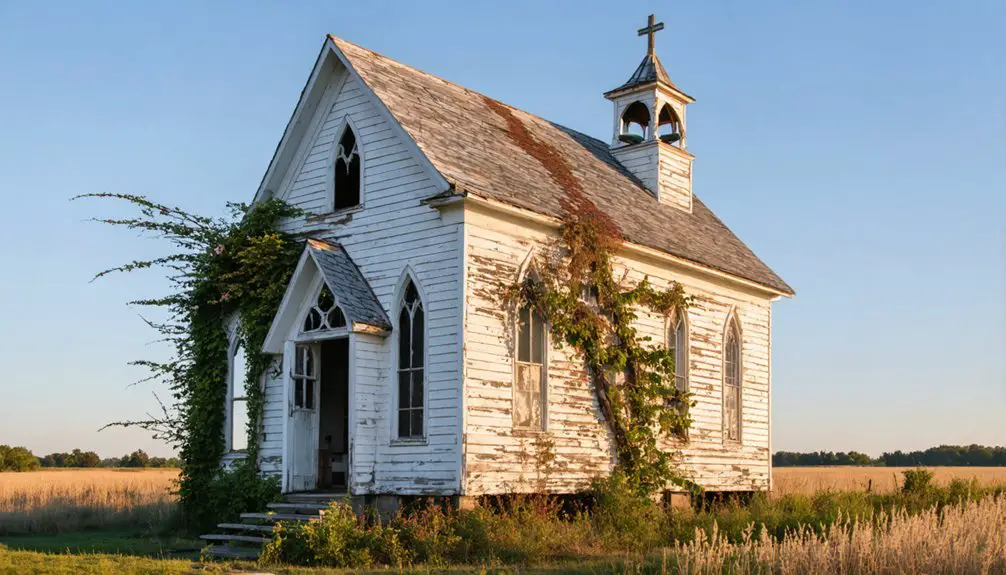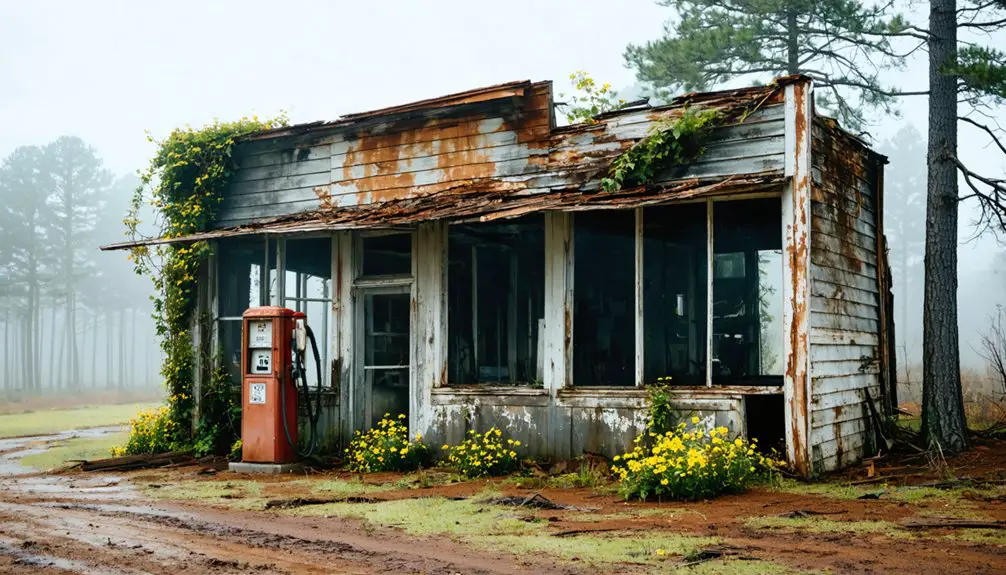
You’ll discover Mississippi’s most haunting ghost towns are surprisingly dog-friendly when you keep your companion leashed. Explore Rodney’s bluff-top ruins where Greek-Gothic churches hold Civil War secrets, or wander Rocky Springs’ interpretive trails at Milepost 54.8 along the Natchez Trace. Windsor’s towering Corinthian columns create dramatic photo opportunities while your dog safely explores the ADA-accessible paths. Pack extra water and tick prevention—these humid, overgrown sites demand preparation for both you and your four-legged explorer seeking Mississippi’s forgotten past.
Key Takeaways
- Rodney Ghost Town features bluff-top ruins and historic churches, but requires short leashes due to unstable floors and drop-offs.
- Rocky Springs at Milepost 54.8 offers three access points with interpretive trails through 19th-century settlement remains, leashed dogs welcome.
- Windsor Ruins provides accessible trails around 23 Corinthian columns where dogs can explore while visitors photograph the antebellum mansion remains.
- Hidden Delta settlements like Vaughan, Arcola, and Nitta Yuma allow exterior exploration and photography with leashed dogs from public roads.
- December through February offers safest exploration conditions, avoiding summer heat, snake activity, and tick populations that threaten dog health.
Exploring Rodney: Bluff-Top Ruins and Safety Considerations
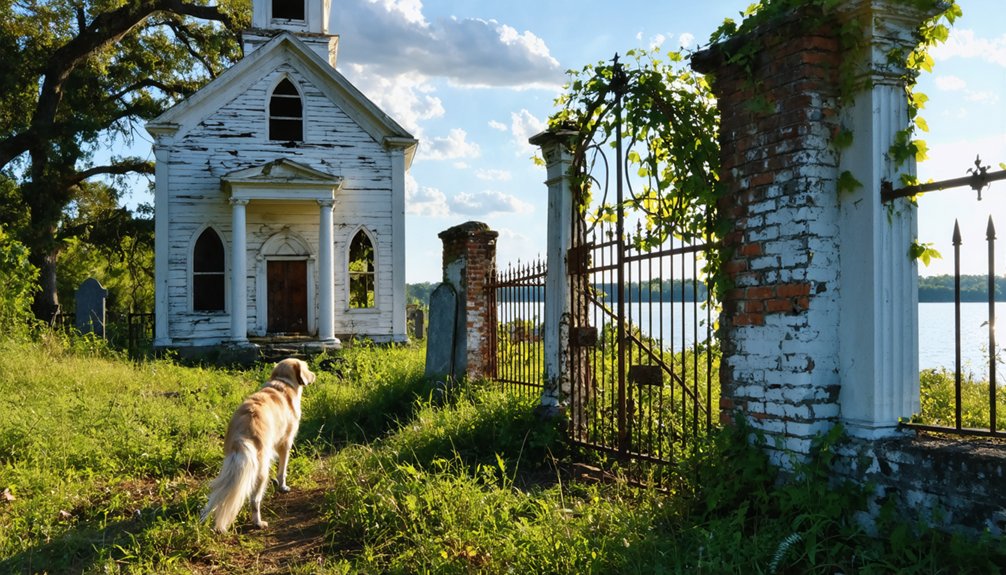
When the Mississippi River abandoned Rodney in 1870, it left behind a haunting collection of ruins perched dramatically on the bluffs of what’s now Jefferson County, Mississippi.
You’ll discover the skeletal remains of a Greek-Gothic Baptist church with its silver dome gleaming against weathered brick, while the two-story Presbyterian Church stands as a representation of Federal-style architecture. A cannonball remains lodged in the Presbyterian Church from when the USS Rattler shelled it during the Civil War.
The overgrown cemetery spreads across three acres of hillside, where 200 graves dating to 1828 tell stories of frontier life.
Weathered headstones and crumbling monuments across three hillside acres preserve two centuries of Mississippi frontier memories.
However, exploring these Rodney ruins requires serious caution with your dog.
Bluff erosion constantly threatens the cemetery’s edge, where grave markers tumble into the void below.
Keep your pup on a short leash—unstable floors, collapsed roofs, and hidden drop-offs make these atmospheric ruins genuinely dangerous for curious canines and freedom-seeking explorers alike. The Rodney History and Preservation Society works to maintain what structures remain safe for visitors to experience this haunting remnant of Mississippi’s past.
Rocky Springs Ghost Town Along the Natchez Trace
You’ll find Rocky Springs at Milepost 54.8 on the Natchez Trace Parkway, where a short loop trail leads you and your dog through the haunting remnants of this once-thriving 19th-century community.
The easy walking path winds past weathered cemetery headstones, rusted post office safes, and abandoned cisterns hidden among the trees—perfect for curious pups who love sniffing around historical mysteries. This ghost town was once home to over 2,500 residents before yellow fever outbreaks and economic decline led to its abandonment. The community’s economy was built on cotton production, supported by over 2,000 slaves working the surrounding plantations until the boll weevil devastated crops in the early 1900s.
Keep your dog leashed as you explore the 1837 Methodist church and crumbling building foundations, since the site’s preservation depends on respectful visitors following park regulations.
Trail Access and Rules
Three distinct access points welcome you and your four-legged explorer to Rocky Springs Ghost Town, each offering a different perspective on this haunting slice of Mississippi history.
The main trailhead at Milepost 54.8 provides immediate access to interpretive trails winding through crumbling foundations and weathered gravestones. Once a thriving town in 1860, Rocky Springs now stands as a testament to how quickly fortunes can change.
Trail access options include:
- Campground entry – 22 primitive sites offer closest parking for extended exploration
- Self-guiding walking trail – Short loop through the actual town site and cemetery
- Rocky Springs Trail – 7-mile segment connecting to the Natchez Trace National Scenic Trail
Dog requirements are straightforward: leash mandatory, waste cleanup essential, and no building access.
Pack extra water since none’s available on-site. Check northern trail closures before venturing beyond the ghost town’s eerie remnants.
Historic Ruins Exploration
As you step onto the self-guiding trail with your leashed companion, the weathered bones of Rocky Springs reveal themselves through a canopy of reclaiming forest.
You’ll discover crumbling foundations where blacksmith shops once rang with hammer strikes, while rusting safes emerge from undergrowth like forgotten treasure chests. The 1837 Methodist Church stands as the sole surviving witness to this town’s historic significance, its vernacular Federal architectural features weathered but defiant against time’s assault.
Your dog can safely explore alongside you as you examine abandoned cisterns and cotton gin foundations scattered throughout twenty-five square miles of haunting beauty. This location served as a crucial central crossroad for General Grant’s Civil War movements, where his forces split into defensive and offensive wings during his historic campaign.
The original spring that gave this settlement life has fallen silent, but deep erosion gullies tell stories of agricultural hubris that ultimately sealed Rocky Springs’ fate. This once-thriving community reached a peak population of 2,600 residents before devastating yellow fever outbreaks and failing cotton crops led to its gradual abandonment.
Windsor Ruins and Port Gibson Area Historic Sites
The magnificent columns of Windsor Ruins rise like ancient sentinels from the Mississippi countryside, creating one of the most hauntingly beautiful destinations you can explore with your canine companion.
These 23 towering Corinthian columns showcase stunning Windsor architecture that once supported Mississippi’s largest antebellum mansion. Your dog can roam the newly accessible trails while you photograph these dramatic remnants of Southern grandeur. The mansion served as both a Civil War hospital and observation post, witnessing the conflict that shaped the region.
The original estate was built by Smith Coffee Daniell, II as part of a 2,600-acre plantation overlooking the Mississippi River, reflecting the immense scale of antebellum wealth and agriculture.
Essential Visit Tips:
- Access the site via the gravel lane off Mississippi Highway 552, twelve miles southwest of Port Gibson
- Bring your camera to capture the 45-foot columns against the sky – following in Eudora Welty’s footsteps
- Explore responsibly on the ADA-accessible walking trail completed in 2023’s stabilization project
The serene atmosphere invites quiet reflection on this crossroads of American history.
Grand Gulf Military Park and Riverside Ghost Town Remnants
You’ll find Grand Gulf Military Park‘s 400 acres perfect for exploring Civil War earthworks with your canine companion, though you’ll want to keep them leashed near the crumbling fort remnants and steep riverbank areas.
The hiking trails wind through this authentic ghost town where Confederate batteries once thundered, but watch for uneven terrain around the excavated ammunition magazine and weathered cemetery headstones. The park also features the historic Spanish House built in the late 1790s, which survived both the town’s bustling cotton port days and its eventual abandonment.
Your dog will love sniffing around the picnic areas and campground, but stay alert during flood seasons when the unpredictable Mississippi River can turn walkable paths into muddy hazards.
Civil War Ruins
When you arrive at Grand Gulf Military Park, you’ll step into one of Mississippi’s most haunting Civil War battlefields where Confederate earthworks still scar the landscape like ancient wounds.
Your dog can roam freely while you explore Fort Cobun and Fort Wade’s remarkably preserved rifle pits, where Confederate defenders repelled Grant’s ironclads during the fierce April 1863 bombardment.
Historic preservation efforts have maintained these battle-scarred fortifications exactly as Union forces encountered them.
You’ll discover:
- Fort Cobun’s upper batteries – Silent cannons that withstood Porter’s fleet bombardment
- Fort Wade’s excavated ammunition magazine – Unearthed Civil War ordnance storage
- Spanish House ruins – Late 1790s cypress structure predating the battle
The observation tower offers sweeping views where you can visualize ironclads approaching within 100 yards of these defiant Confederate positions.
Dog Safety Considerations
Although Grand Gulf’s historic battlefields offer incredible exploration opportunities for you and your canine companion, Mississippi’s humid climate and remote terrain demand careful preparation to keep your dog safe.
Pack extra water for proper dog hydration—temperatures exceeding 90°F combined with limited shade can quickly lead to heatstroke. Effective leash management becomes essential near the Bouie River’s slippery banks and unstable remnant structures where sharp debris lurks.
I’ve learned that tick checks after every adventure are non-negotiable in this dense vegetation. Carry waste bags since facilities are scarce, and consider a doggy life vest during flood season.
Watch for fire ant mounds in grassy areas, and keep vaccination records current. Your freedom to explore these haunting ruins depends on smart preparation and constant vigilance.
Hidden Delta Settlements: Legal Access and Private Lands
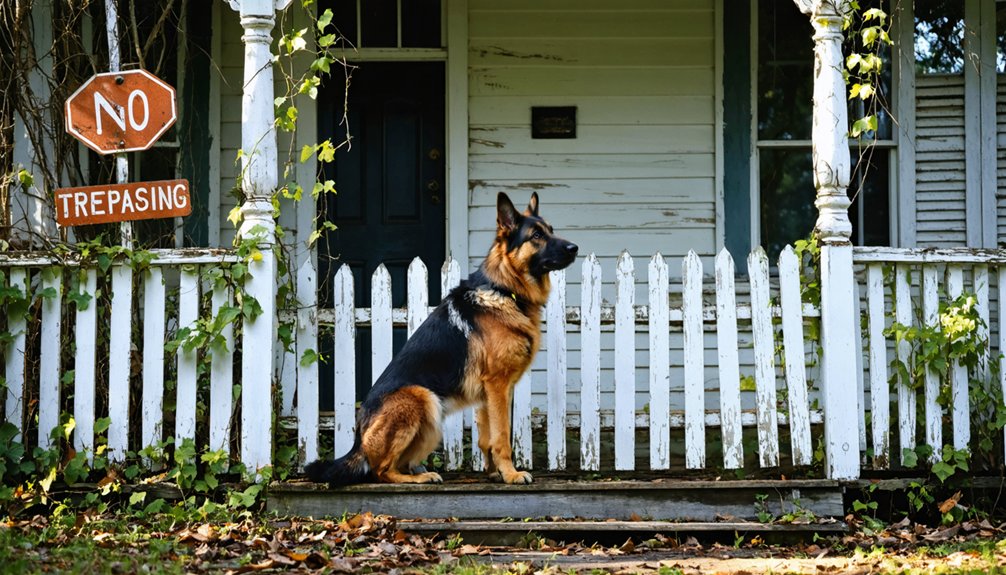
Beyond the well-traveled tourist circuits, Mississippi’s Delta region conceals dozens of forgotten settlements where your four-legged companion can explore alongside you through publicly accessible ruins and abandoned main streets.
These hidden access points lead to remarkable discoveries without trespassing concerns, though you’ll need to navigate around private properties carefully.
Navigate carefully around private boundaries while discovering Delta treasures through legitimate public access points that offer rich historical exploration without legal concerns.
Your Delta exploration can include:
- Vaughan’s railroad remnants – Just off I-55, where Casey Jones met his fate in 1900, depot foundations remain visible from public roads.
- Arcola’s abandoned streetscape – South of Leland, featuring crumbling buildings and an operational gas station for water breaks.
- Nitta Yuma’s preserved structures – Tourist-friendly ghost town with renovated church, antique gas station, and Roosevelt’s teddy bear history.
Most sites allow photography and exterior exploration without permits or fees.
Seasonal Planning for Snake and Weather Safety
Since Mississippi’s venomous snakes enter brumation during winter months, you’ll find December through February offers your safest window for exploring abandoned settlements with your dog.
Cold weather dramatically reduces cottonmouth and copperhead activity, giving you freedom to roam crumbling foundations and overgrown cemeteries with minimal risk.
Summer presents dual challenges—peak snake activity coincides with dangerous heat that can quickly overwhelm your four-legged explorer.
When warm-weather adventures call, stick to dawn or dusk hours and avoid tall grass where snakes concentrate. Your seasonal snake safety strategy should include protective gaiters and keeping your dog leashed near debris piles.
Weather preparedness means monitoring tornado watches during storm season and packing cooling gear for summer expeditions.
After heavy rains, postpone visits to avoid unstable bluffs and increased snake movement.
Essential Supplies and Emergency Preparedness
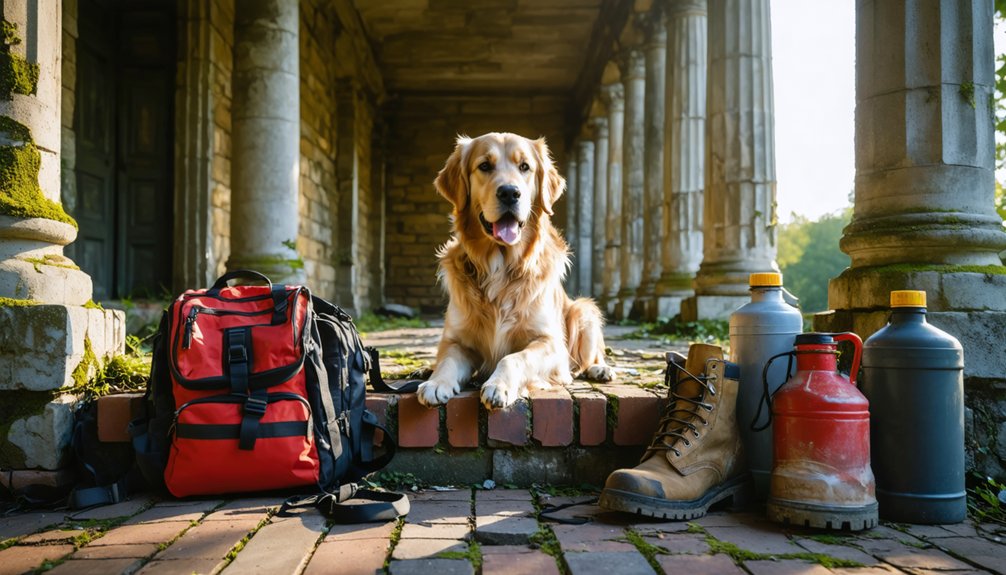
Proper planning transforms a potentially disastrous ghost town expedition into a safe adventure for you and your canine companion.
Mississippi’s abandoned settlements offer incredible freedom to explore, but they’re often miles from veterinary care or supply stores. Your emergency readiness starts with assembling thorough pet friendly supplies before hitting the dusty trails.
Pack these essential categories for complete preparedness:
- 72-hour food and water supply – Include dry food, collapsible bowls, and fresh drinking water in waterproof containers.
- First aid kit with medications – Gauze, antimicrobial spray, flashlight, and two weeks of prescribed medications.
- Documentation and transport gear – Vaccination records, recent photos, sturdy carrier, and reflective leash for visibility.
Don’t forget sanitation items like waste bags and cleaning supplies.
These ghost towns won’t have modern conveniences.
Understanding Pet Regulations at Historic Sites
When you’re planning to explore Mississippi’s historic ghost towns with your dog, understanding the complex web of regulations can mean the difference between a memorable adventure and an expensive citation.
Pet regulations at historic sites vary dramatically—while some welcome leashed companions, others ban dogs entirely from preserved areas.
You’ll need that rabies vaccination certificate and should check local leash laws before arriving. Many sites require six-foot leashes, though voice-command control sometimes suffices in remote locations.
Gulf Islands National Seashore prohibits pets on beaches and inside fort structures, while private historic sites often enforce stricter policies than public parks.
Smart explorers contact site management beforehand, especially during seasonal closures when nesting birds expand restricted zones unexpectedly.
Wildlife Hazards and Health Protection for Dogs
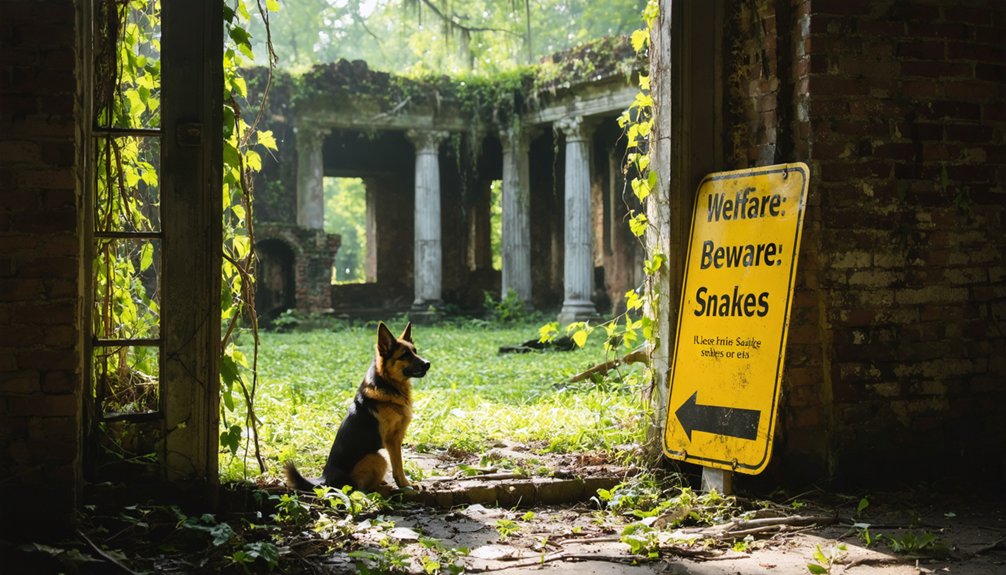
When you’re exploring abandoned settlements with your dog, you’ll need to watch for timber rattlers coiled in shaded ruins and copperheads hiding beneath weathered porches.
I learned this lesson the hard way when my Lab nearly stepped on a cottonmouth while investigating an old well house in rural Mississippi.
Before heading out, apply a veterinarian-recommended tick preventative and pack fine-tip tweezers—these crumbling structures harbor ticks that can transmit ehrlichiosis and anaplasmosis to your canine companion.
Venomous Snake Encounters
How quickly can a peaceful exploration of Mississippi’s forgotten settlements turn dangerous for your four-legged companion? Six venomous species lurk in these abandoned places, with copperheads, timber rattlesnakes, and pygmy rattlesnakes thriving in overgrown ghost town debris.
Understanding snake behavior helps protect your dog—these reptiles strike defensively when startled, reaching speeds of 3 meters per second.
Essential bite prevention strategies:
- Keep dogs leashed in wooded areas and near fallen logs, sheet metal, or rock piles where copperheads shelter.
- Avoid exploring during dawn/dusk when timber rattlesnakes are most active in forest bottoms.
- Watch for warning signs like rattling sounds or your dog’s sudden alertness to hidden dangers.
Even “dry bites” cause painful puncture wounds, while coral snake venom triggers paralysis. Swift action saves lives.
Tick Prevention Strategies
While venomous snakes pose immediate danger, ticks present a more insidious threat to dogs exploring Mississippi’s abandoned settlements—these tiny parasites carry Rocky Mountain spotted fever, ehrlichiosis, and Lyme disease that can devastate your companion’s health weeks after a peaceful ghost town adventure.
Effective tick prevention starts before you leave home. Apply topical solutions or fit collars that’ll protect your dog for months of wandering. Mississippi’s humid climate breeds year-round tick populations, so don’t skip winter applications.
During exploration, keep your dog centered on trails, away from overgrown cemetery plots and crumbling foundations where ticks lurk.
After each ghost town visit, conduct thorough tick checks using a fine-tooth comb. Part your dog’s fur systematically, checking ears, neck folds, and between toes where these bloodsuckers hide.
Smart pet safety means combining preventive products with vigilant daily inspections.
Photography Opportunities and Site Preservation Ethics
Because Rodney Ghost Town offers such striking photographic subjects—from the Greek Gothic Baptist Church with its silver dome to the red-brick Presbyterian Church containing an authentic Civil War cannonball—you’ll find yourself torn between capturing the perfect shot and respecting this fragile piece of history.
Photography ethics demand careful consideration when documenting these abandoned structures that volunteers work tirelessly to preserve.
Site accessibility changes between visits as overgrowth reclaims pathways, making each expedition unique. The muddy Commerce Street remnants and overgrown cemetery paths offer compelling compositions while testing your commitment to preservation.
- Respect ongoing restoration efforts by the Rodney History and Preservation Society
- Document responsibly without disturbing fragile structures or grave markers
- Consider seasonal conditions that affect both access and your dog’s safety
Your photographs become historical records of this vanishing Mississippi treasure.
Frequently Asked Questions
Are There Any Dog-Friendly Accommodations Near Mississippi Ghost Towns?
You’ll discover countless pet-friendly hotels near Mississippi’s ghost towns, from historic Natchez inns with welcome treats to Gulf Coast resorts. State parks offer dog-friendly cabins, while Airbnb listings provide rural retreats with fenced yards for ultimate freedom.
What Veterinary Clinics Are Closest to Remote Ghost Town Locations?
You’ll find veterinary services 25-50 miles from ghost towns like Rodney or Plymouth. Natchez Animal Clinic serves Rodney areas, while Brookhaven covers Plymouth. Pack first-aid supplies—emergency care requires lengthy drives through winding backroads.
Exploring ghost towns in North Dakota can be an adventure filled with history and unique landscapes. However, visitors should be prepared for the isolation and plan their journeys accordingly. It’s advisable to carry extra fuel and water, as amenities are scarce in these remote areas.
Can I Bring Multiple Dogs to These Historic Sites?
You’ll find dog friendly policies accommodate multiple pet regulations at these abandoned sites. Pack extra water for your pack, keep them leashed near crumbling foundations, and watch for wildlife in overgrown cemetery paths.
Are There Age or Size Restrictions for Dogs at Parks?
Yes, dog park regulations typically restrict puppies under four months and require handlers over eight years old. Most parks don’t impose pet size guidelines, but you’ll face limits on multiple dogs per person.
What Dog Breeds Handle Mississippi Heat and Terrain Best?
Ironically, you’ll want breeds that embrace Mississippi’s sweltering heat. Dog breed recommendations include Chihuahuas and Basenjis with short coats. Heat tolerance tips: choose light-colored, athletic breeds for exploring rugged ghost town terrain.
References
- https://hikewithyourdog.com/mississippi
- https://theforgottensouth.com/rodney-mississippi-ghost-town-history-tour/
- https://www.tripadvisor.com/Attraction_Review-g28945-d10045204-Reviews-Rodney_Ghost_Town-Mississippi.html
- https://nohomejustroam.com/10-days-in-central-mississippi-heres-what-we-got-up-to/
- https://backroadplanet.com/haunting-rodney-mississippi/
- https://www.southernthing.com/this-ghost-town-is-now-a-national-park-with-stunning-scenery-hiking-and-abandoned-buildings-2639855049.html
- https://www.bringfido.com/blog/best-of-mississippi/
- https://www.onlyinyourstate.com/experiences/mississippi/abandoned-town-ms
- https://buddhadrinksfanta.com/finding-the-ghost-town-of-rodney-mississippi/
- https://mississippifolklife.org/articles/haunted-by-a-ghost-town-the-lure-of-rodney-mississippi