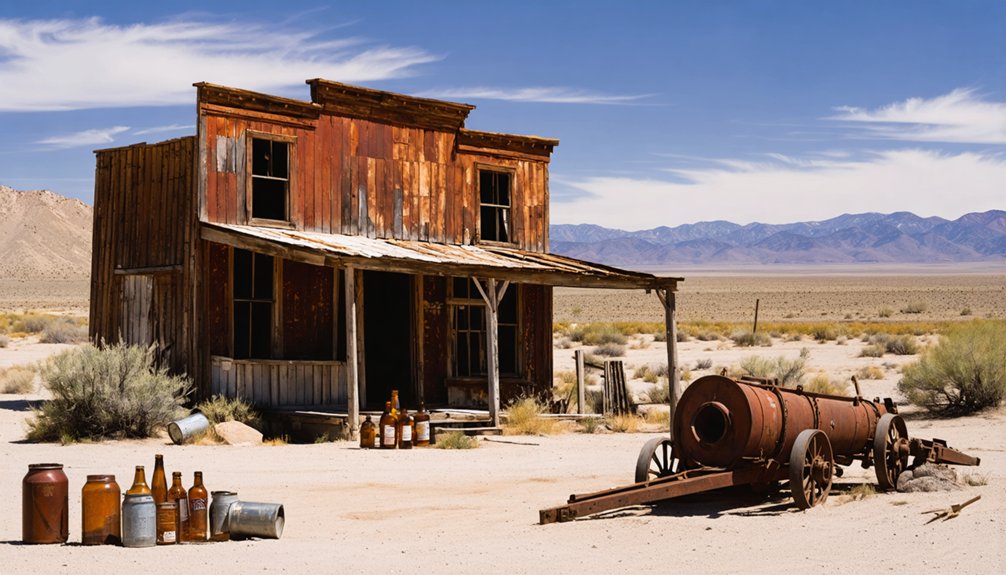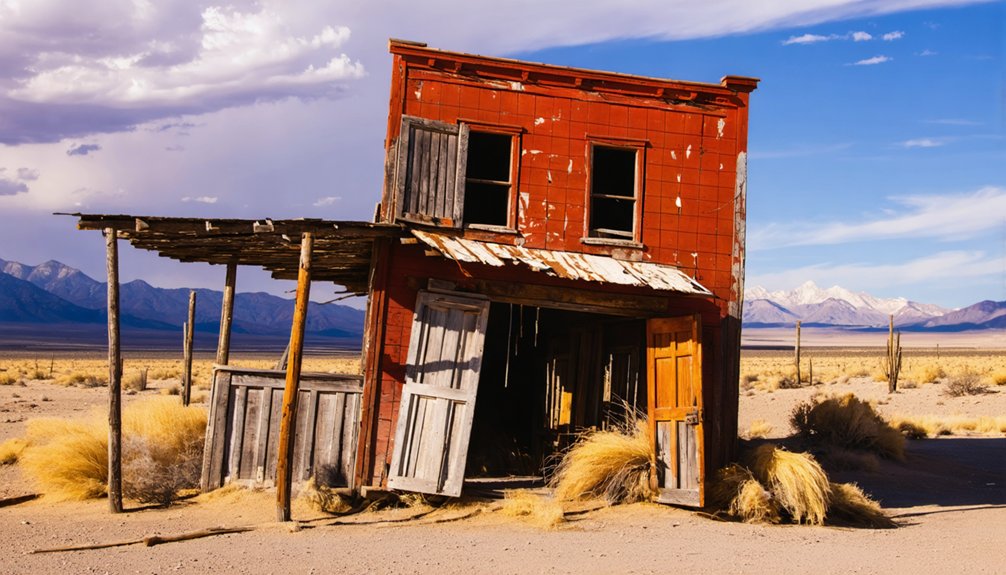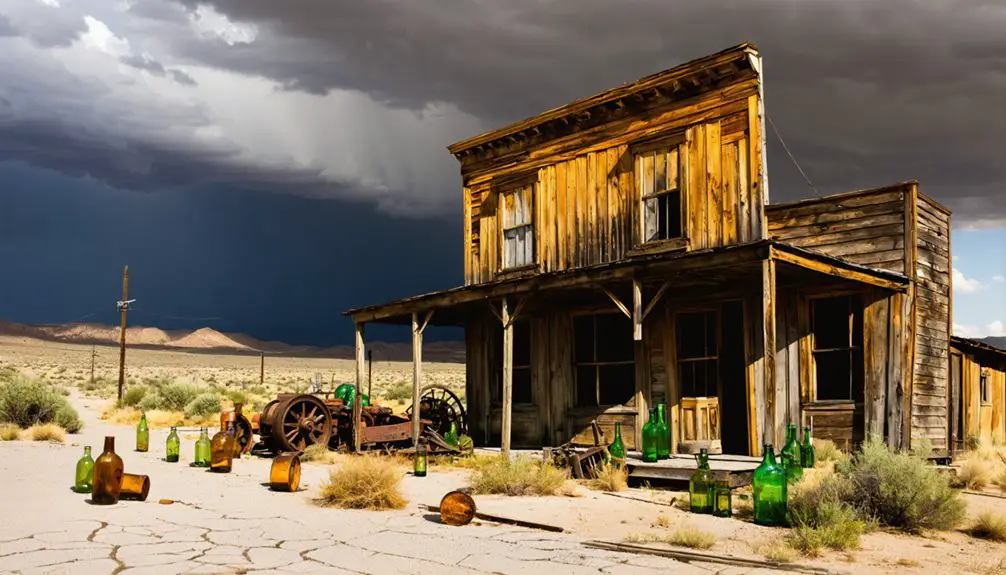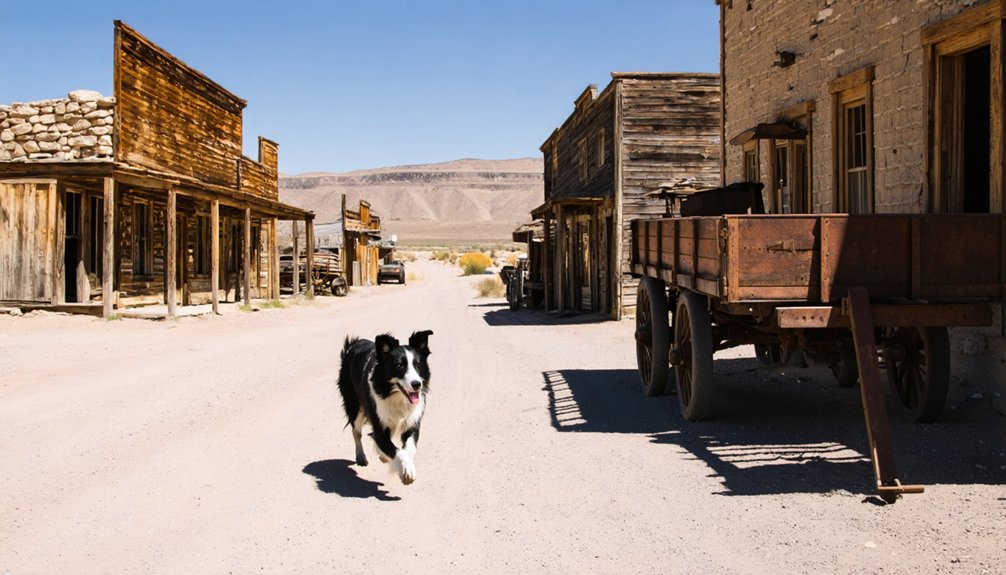
You’ll discover incredible dog-friendly adventures at Nevada’s historic ghost towns like Rhyolite near Death Valley, featuring stunning ruins and art installations, or Galena Ghost Town with its graded roads perfect for easy walking. Tonopah’s Historic Mining District offers extensive trails, while Pine Grove provides accessible day-trip exploration. Most sites welcome leashed dogs and sit within 1-3 hours of major cities. Spring and fall offer ideal temperatures for comfortable exploration. Our complete guide reveals essential safety tips and packing strategies for unforgettable ghost town adventures.
Key Takeaways
- Nevada’s ghost towns like Rhyolite, Galena, and Tonopah allow leashed dogs to explore historic mining ruins and scenic landscapes.
- Most dog-friendly ghost towns are within 1-3 hours from Las Vegas and Reno, making them accessible day-trip destinations.
- Spring and fall offer ideal temperatures (50-80°F) for comfortable exploration with dogs in these historic sites.
- Essential supplies include water (1 liter per dog every 2 hours), paw boots, and first-aid kits for safe adventures.
- Keep dogs leashed near crumbling structures and watch for wildlife like rattlesnakes in these remote desert locations.
Why Nevada’s Ghost Towns Are Perfect for Dog Adventures
When you’re searching for the perfect adventure destination that welcomes both you and your four-legged companion, Nevada’s ghost town history offers an unbeatable combination of accessibility, intrigue, and dog-friendly exploration opportunities.
Most well-known sites sit within 1–3 hours’ drive from major cities like Las Vegas and Reno, making day trips completely feasible. You’ll find managed locations such as Rhyolite and Berlin-Ichthyosaur provide safer parking and clearer access routes for your canine companionship adventures. Places like Calico Ghost Town charge only an admission fee for adults while dogs enter completely free.
These historic settlements allow leashed dogs on outdoor trails and offer designated picnic areas where you can rest together. Nelson Ghost Town has earned 4.5 stars from hundreds of TripAdvisor guests who appreciate its accessible layout.
Remote options like Vya provide ultimate seclusion, while pet-friendly accommodations such as Old Yella Dog Ranch feature specialized dog facilities, enabling multi-day escapes from civilization’s constraints.
Nelson Ghost Town: Your Closest Vegas Escape With Your Pup
Just 45 minutes from the Vegas Strip, Nelson Ghost Town offers you and your furry companion the perfect escape into Nevada’s mining history without venturing far from civilization.
You’ll find this abandoned gold mining settlement welcomes dogs as you explore restored houses, vintage car sculptures, and weathered wooden shacks that create an Instagram-worthy backdrop for adventure photos. You might even spot crashed planes from the movie “3000 Miles to Graceland” among the eclectic mix of artifacts scattered throughout the site.
The town’s compact layout and well-defined boundaries make it easy to keep your pup close while you both discover authentic Western artifacts and soak up the desert atmosphere. Be sure to keep your dog leashed and supervised, as the area is home to rattlesnakes and cacti that pose potential dangers to curious pets.
Vegas Proximity Advantage
Since Las Vegas visitors often struggle to find dog-friendly adventures that don’t require marathon road trips, Nelson Ghost Town emerges as the perfect solution—sitting just 45 miles southeast of the Strip and reachable in about 45 minutes of driving.
You’ll take US-93/US-95 southbound, then turn onto NV-165 for a scenic approach through Eldorado Canyon. The route treats you to sharp red cliffs and desert landscapes that make the journey as memorable as the destination itself.
This proximity advantage means:
- Reduced travel stress for your pup with minimal car time
- Flexible scheduling for early morning or late afternoon visits
- Easy emergency access back to Vegas veterinary services
The short distance lets you focus on ghost town etiquette while exploring dog friendly amenities. Once you arrive at this destination located at 16880 State Highway 165, you’ll discover why this historic location has become such a popular escape from the bustling Vegas scene.
You’ll have more energy for on-site adventures rather than exhausting highway marathons, making this your ideal Vegas escape.
Pet-Friendly Exploration Features
While most ghost towns demand careful navigation around fragile structures with pets in tow, Nelson’s thoughtful layout makes canine exploration remarkably straightforward.
You’ll discover dog friendly trails winding through mining remnants and restored buildings, perfect for leashed adventures across this historic landscape. The property’s open-ground design eliminates restrictive barriers that typically complicate pet visits elsewhere.
Your furry companion can join you wandering among vintage cars, exploring the eclectic outdoor displays, and investigating the authentic mining equipment scattered throughout the site.
The general store serves as your starting point, where you’ll sign waivers and grab refreshments before heading out. This location has gained recognition as a filming location featured in numerous music videos, films, and video games.
With pet friendly amenities like accessible trails to Nelson’s Landing and the Colorado River lookout, you’re free to explore this cinematic ghost town together until sunset. Keep in mind that the desert environment typically runs about 5C hotter than Las Vegas, so plan accordingly for your pet’s comfort during your visit.
Rhyolite Ghost Town: Photography Paradise Near Death Valley
You’ll discover some of Nevada’s most photographed ghost town ruins at Rhyolite, where the iconic Cook Bank Building and unique Bottle House create stunning compositions against the dramatic Bullfrog Hills backdrop.
This perfectly preserved historic site sits just four miles from Beatty on Highway 374, making it an ideal addition to your Death Valley road trip with your leashed pup.
The extensive ruins, vintage train depot, and sweeping desert vistas offer endless opportunities for golden-hour photography while your dog explores the desert landscape alongside you. The famous Bottle House was constructed from 50,000 bottles, making it the oldest and largest bottle house in the United States. During its boom years, this former Queen City of Death Valley housed up to 10,000 residents before being abandoned when the gold ran out.
Intact Historic Ruins Photography
Rising from the Mojave Desert like a photographer’s dream, Rhyolite Ghost Town offers one of the most compelling collections of intact ruins in the American West.
You’ll discover the three-story Cook Bank walls creating dramatic foregrounds against endless desert vistas, while the famous Bottle House showcases incredible architectural detail constructed from 50,000 beer bottles.
Master these essential photography techniques for capturing Rhyolite’s essence:
- Use the bank ruins as natural frames for panoramic desert landscapes beyond
- Focus on texture contrasts between weathered masonry and smooth bottle surfaces
- Employ leading lines from railroad remnants to guide viewers through compositions
Stay on established paths to protect these fragile structures while you document their haunting beauty.
Your camera will capture stories of boom-and-bust dreams frozen in time.
Death Valley Road Trip
Perfect positioning makes Rhyolite Ghost Town an irresistible addition to your Death Valley road trip itinerary.
Located just 20-25 miles from Furnace Creek, this abandoned mining town offers convenient access without major detours from your desert adventure.
You’ll discover fascinating Rhyolite history through the famous Bottle House, built from 50,000 beer bottles, and remnants of what was once a thriving 5,000-person community.
The 1904-1905 gold boom created banks, hotels, and even an opera house before economic collapse struck by 1910.
Dog friendly amenities include open-air exploration of ruins and foundations, since you’re outside Death Valley National Park’s restrictive pet policies.
Keep your dog leashed while wandering through Porter Store remnants and admiring Albert Szukalski’s ghost art installations scattered throughout this photographer’s paradise.
Galena Ghost Town: Battle Mountain’s Hidden Gem for Dog Owners
Just eleven miles southwest of Battle Mountain, Galena Ghost Town offers you and your four-legged companion an accessible adventure into Nevada’s silver mining past.
This hidden gem sits in scenic Galena Canyon, where you’ll discover authentic mining heritage dating back to 1869 when silver discoveries transformed this remote location into a bustling community.
Your dog will love exploring the graded gravel roads suitable for any vehicle, while you investigate scattered house ruins and mill remnants.
The Galena history unfolds through extensive mining ruins from operations that produced $5 million in silver and lead.
- Historic cemetery: Perfect for contemplative walks with your pet
- Rare old city park: Unique feature among Nevada’s mining towns
- Multiple exploration routes: Safe wandering opportunities throughout the canyon
Tonopah Historic Mining District: Gold Rush History With Your Canine
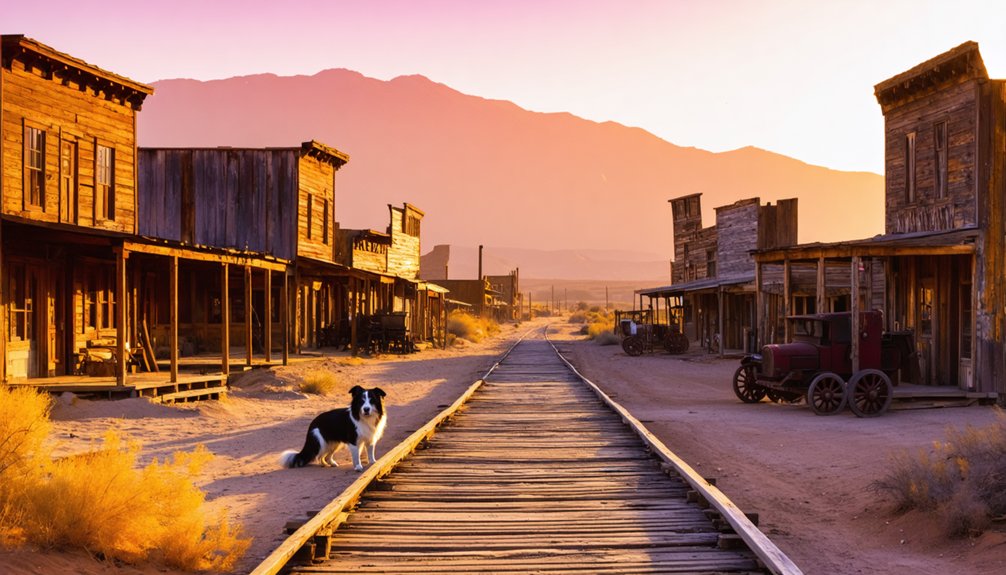
Moving northeast from Battle Mountain’s quiet canyon setting, you’ll discover Tonopah Historic Mining District where Nevada’s most legendary silver boom created a sprawling industrial landscape perfect for adventurous dog owners.
This 100-acre mining park preserves massive headframes, mill foundations, and underground workings that once produced over $114 million in silver between 1900-1920.
You’ll explore 46 miles of lateral workings and interpretive trails showcasing original mining techniques alongside your leashed companion.
The desert terrain offers excellent off-road hiking, though you’ll need sturdy footwear and plenty of water for both you and your dog.
Historic stamp mills and cyanide processing facilities provide fascinating glimpses into Tonopah history while graded pathways accommodate dogs comfortable with rocky surfaces and extreme temperatures.
Northern Nevada’s Dog-Friendly Historic Sites Worth the Drive
Beyond Tonopah’s silver legacy, northern Nevada’s remote corners harbor ghost towns that reward dedicated dog owners willing to venture off beaten paths.
These nostalgic landmarks offer authentic Old West experiences where your canine companion can explore freely alongside crumbling ruins and weathered foundations.
Step back in time with your four-legged explorer as history comes alive through weathered doorways and forgotten trails.
Galena Ghost Town near Battle Mountain provides excellent roadside access, perfect for families seeking 1+ hour explorations through cemetery grounds and mill ruins.
Your dog will love investigating the scenic trails winding through sagebrush hills, though watch for rattlesnakes during warmer months.
For extended adventures, consider these northern destinations:
- Pine Grove: Day-trip accessible from Carson City with multiple standing structures
- Humboldt City: Remote northwest location featuring extensive stone house ruins
- Vya: Pet-friendly accommodations at Old Yella Dog Ranch with full amenities
Essential Safety Tips for Exploring Ghost Towns With Dogs
You’ll face unique challenges when exploring ghost towns with your canine companion, from unpredictable weather shifts to wildlife encounters that could put both of you at risk.
Crumbling buildings and hidden hazards require extra vigilance since you’re now responsible for your dog’s safety alongside your own.
Smart preparation and understanding these specific dangers will help you create memorable adventures while keeping your four-legged explorer safe from harm.
Weather and Wildlife Hazards
While ghost towns offer fascinating glimpses into the past, Nevada’s harsh desert environment presents serious hazards that can quickly turn your adventure into a life-threatening emergency for both you and your dog.
exploring ghost towns near Mesquite Nevada can be a thrilling experience, but it’s essential to plan ahead and stay hydrated. Ensure you pack enough supplies and inform someone of your itinerary, as the remoteness can leave you isolated. Keep an eye out for wildlife and be prepared for sudden weather changes, which can add to the challenge and excitement of your journey.
Nevada’s weather precautions become critical as temperatures can plummet from 98°F to snow overnight in mountainous areas. Wildlife encounters pose equally serious threats, with rattlesnakes prevalent in ghost town ruins and wild burros roaming highways near abandoned settlements.
Essential survival preparations include:
- Temperature monitoring – Hot springs often exceed 150°F and can scald within seconds, while desert heat reaches dangerous levels by 9 AM.
- Wildlife awareness – Keep dogs leashed until areas are assessed for venomous reptiles and aggressive male burros.
- Emergency supplies – Pack three days’ water, food, and shelter since cell service is unreliable in remote locations.
Structural Safety Precautions
Nevada’s crumbling ghost towns hide deadly structural traps that can injure or kill both you and your dog in seconds.
You can’t rely on visual assessments to determine structural integrity—rotting timbers and weakened foundations collapse without warning. Over fifty people and pets have suffered injuries or death from abandoned mine structures and buildings in recent decades.
Before exploring, conduct basic safety inspections by keeping your distance from any structure.
Don’t let your dog run freely near buildings, mine shafts, or covered openings. Unstable ground can give way beneath you, creating sinkholes like the Mound House incident.
Stay at least 100 feet from any abandoned structure, and never use historic buildings or mining equipment as anchor points.
Your freedom to explore depends on respecting these deadly hazards.
Best Seasons and Weather Considerations for Your Ghost Town Adventures
Timing your ghost town adventure can mean the difference between a memorable exploration and a miserable experience for both you and your four-legged companion.
Nevada’s desert climate demands weather awareness for successful seasonal adventures.
Spring and fall offer the sweetest spots for exploration, with comfortable temperatures ranging from 50-80°F during spring wildflower displays and stable autumn conditions.
Summer’s brutal heat exceeding 110°F poses serious risks of heatstroke and paw burns, while winter brings potential road closures and freezing nights that’ll challenge unprepared adventurers.
- Spring/Fall: Ideal comfort zones with mild temperatures and accessible roads
- Summer: Early morning or late evening excursions only, with extra water supplies
- Winter: Low-elevation sites remain viable, but pack cold-weather gear for your dog
Plan accordingly, and you’ll reveal Nevada’s abandoned treasures safely.
Planning Your Multi-Town Road Trip Across Nevada’s Mining Heritage
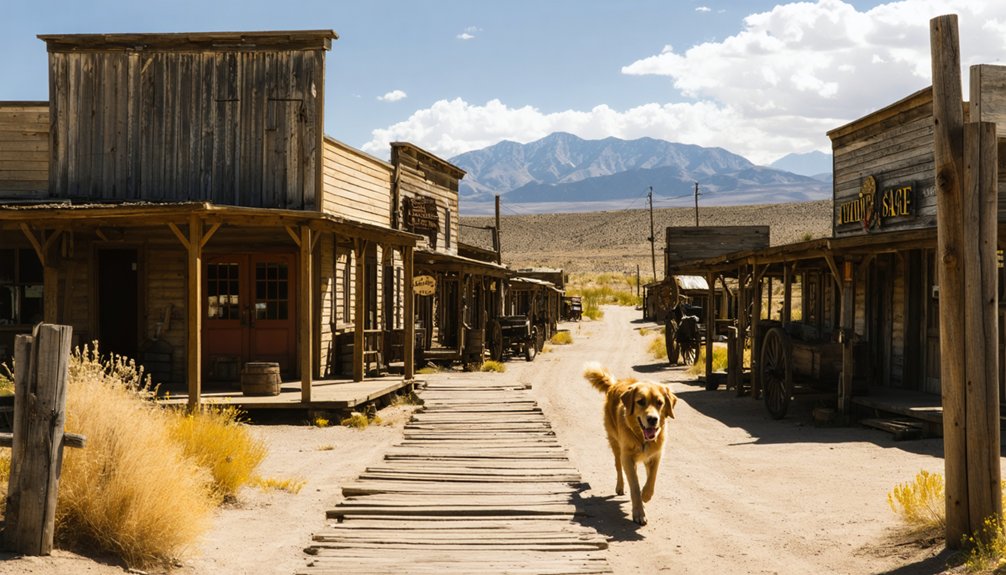
Before you load your pup into the vehicle for an epic Nevada mining heritage adventure, you’ll need to craft a strategic route that balances historical significance with practical considerations for traveling with four-legged explorers.
These essential road trip tips will maximize your journey: choose corridors like Carson City to Virginia City for concentrated Comstock sites, or Tonopah to Goldfield for high-density mining stops.
Plan 100-250 mile daily loops, matching routes to your vehicle’s clearance capabilities. Eastern Nevada’s Ely-Hamilton-Pioche circuit offers paved access, while northern clusters provide remote solitude.
Master ghost town etiquette by respecting artifact protection laws and maintaining leash control near unstable structures.
Carry extra fuel for remote stretches exceeding 100 miles between services. File your itinerary and pack emergency supplies—cell coverage disappears in mining districts.
What to Pack for Safe and Comfortable Ghost Town Exploration With Pets
When exploring Nevada’s ghost towns with your canine companion, proper preparation transforms potentially dangerous outings into memorable adventures. Your packing essentials must address the harsh desert environment and abandoned mining sites’ unique hazards.
Start with sturdy paw boots to protect against rocky terrain and sharp debris, while bringing at least one liter of water per dog for every two hours to meet their hydration needs.
Essential gear includes:
- Protection kit: UV-blocking vest, cooling towel, and portable shade shelter for intense desert sun
- Safety supplies: Pet first-aid kit with saline flush, tweezers for cactus spines, and tick remover
- Navigation tools: Offline GPS maps, charged phone with power bank, and emergency veterinary contacts
Pack high-calorie snacks, collapsible water bowls, and wildlife-resistant storage containers to guarantee your adventurous spirit stays safely satisfied.
Frequently Asked Questions
Are There Entrance Fees for Dogs at Nevada Ghost Towns?
Most Nevada ghost towns don’t charge separate dog entrance fees. You’ll encounter standard vehicle or day-use fees that cover your pets. Check each site’s specific dog regulations and pet policies before visiting, as restrictions vary.
Can Dogs Go Off-Leash While Exploring Ghost Town Ruins?
You’ll find “unleashed freedom” isn’t typically permitted while exploring ruins. Dog leash rules prioritize safety around hazards like cacti and abandoned mines. Following proper ghost town etiquette protects your companion from desert dangers lurking throughout these historic sites.
Are There Veterinary Services Near Remote Nevada Ghost Towns?
You’ll find limited veterinary services near remote ghost towns, but Las Vegas and Reno offer extensive emergency pet care within driving distance. Consider pet friendly accommodations in these cities for safer exploration bases.
Do Ghost Towns Have Water Sources Available for Dogs?
Water availability varies drastically at ghost towns—you can’t rely on finding safe sources. Pack plenty for your dog’s needs and follow essential hydration tips like carrying backup supplies.
Are Ghost Town Buildings Safe for Dogs to Enter?
Definitely don’t enter ghost town architecture with your dog. Crumbling structures, contaminated materials, and concealed hazards create serious risks. Essential dog safety precautions include staying outside buildings and exploring only stable, open areas.
References
- https://www.thetravelpockets.com/new-blog/dog-friendly-calico-ghost-town
- https://www.bringfido.com/blog/dog-friendly-gold-mines-and-ghost-towns/
- https://www.roadtripryan.com/go/t/nevada/northern-nevada/galena-ghost-town
- https://nvtami.com/nevada-ghost-towns-map/
- https://www.bringfido.com/attraction/tours/state/nevada/
- https://travelnevada.com/ghost-town/
- https://www.tripadvisor.com/ShowTopic-g28949-i9-k8106397-Ghost_towns-Nevada.html
- https://californiahighsierra.com/trips/dog-friendly-trips-high-sierra/
- https://www.bringfido.com/attraction/28690
- https://travelnevada.com/hotels/unique-stays/old-yella-dog-ranch-and-cattle-company/