You’ll discover some of New England’s most haunting abandoned settlements welcome both you and your canine companion, from Massachusetts’ legendary Dogtown where Revolutionary War widows once carved out lives among the granite boulders, to the crumbling mill villages scattered along Rhode Island’s Blackstone River where your dog can safely explore centuries-old stone foundations and overgrown pathways that tell stories of America’s industrial past, while Maine’s coastal ghost sites offer windswept adventures through maritime history’s forgotten chapters where proper preparation reveals even more hidden treasures.
Key Takeaways
- Dogtown in Massachusetts features abandoned Revolutionary War-era structures and inspirational boulders, perfect for exploring with dogs on leash.
- Watershed Sanctuary provides 40% public shoreline access where dogs can roam oligotrophic waters near century-old cottages under pines.
- Abandoned mill villages along Blackstone, Farmington, and Pawtuxet rivers showcase early 1800s manufacturing remnants ideal for canine exploration.
- Maine’s coastal ghost sites include Malaga Island and Swan Island’s Perkins Township, offering maritime history adventures for dogs.
- Pack protective booties, collapsible bowls, first aid supplies, and one gallon water per ten pounds of dog weight daily.
Dogtown: Massachusetts’ Most Famous Abandoned Settlement
Today, you can explore miles of trails weaving between abandoned structures where Revolutionary War widows once lived in poverty.
The settlement’s decline began after the War of 1812, leaving only feral dogs roaming empty streets—hence the name “Dogtown.” This Massachusetts location shares its name with various other places and references, leading to frequent confusion among visitors and researchers.
You’ll find cellar holes mapped by Roger Babson, each marking a family’s forgotten dreams in this hauntingly beautiful wilderness. The area now features inspirational boulders with motivational messages that Babson commissioned during the Great Depression.
Essential Safety Gear for You and Your Four-Legged Explorer
When you’re exploring crumbling foundations and weathered structures with your canine companion, reliable wayfinding tools become your lifeline back to civilization should you lose the trail among overgrown ruins.
Your dog’s paws, nose, and sensitive skin face unique hazards in these forgotten places—from rusty metal fragments to intense sun exposure on exposed ridge walks between settlements. A properly fitted harness ensures your dog won’t slip out of their gear when navigating through tight spaces or around dangerous obstacles.
Pack targeted first aid supplies for both species, because the nearest veterinarian might be hours away when your adventure partner steps on broken glass or you twist an ankle maneuvering unstable terrain. Essential items should include a tick remover for addressing these common parasites found in overgrown ghost town areas.
Several critical navigation and communication tools can mean the difference between a memorable adventure and a dangerous situation when you’re exploring remote ghost towns with your canine companion.
GPS Navigation becomes essential when cell towers can’t reach these forgotten places—handheld units with pre-downloaded maps won’t leave you stranded when your phone dies. Pack analog compasses and waterproof topographic maps as backup; they’ll never fail you in dense New England forests or crumbling structures.
Communication Devices like satellite messengers guarantee you can call for help anywhere, while two-way radios keep your group connected in signal-dead zones. A portable charger ensures your mobile phone remains operational throughout extended explorations in remote locations. Quality lighting equipment helps you spot structural hazards and provides emergency signaling capability if rescue becomes necessary.
Don’t forget simple tools—whistles cut through building interiors, and biodegradable ribbon marks your path without damaging these historic sites.
Canine Health Protection Essentials
Where twisted metal edges and rotting floorboards threaten every step, your dog’s safety depends on gear that transforms potential hazards into manageable risks.
Protective booties shield paws from jagged debris and splintered wood that litter abandoned structures. You’ll want adjustable sizes that breathe during extended exploration yet grip crumbling surfaces.
Pack collapsible bowls for trail hydration since ghost towns rarely offer clean water sources. Your dog’s energy demands increase traversing unstable terrain, making portable canine nutrition essential.
Reflective gear becomes critical when exploring dimly lit interiors or approaching dusk departure times.
A harness with top handle lets you quickly lift your companion over dangerous gaps or debris piles. A harness provides better control and safety than a collar when navigating treacherous ghost town terrain.
Consider GPS tracking collars—cell service often disappears in remote locations where these forgotten settlements rest. Always carry plastic bags attached to your pack with a carabiner for waste removal, as these historic sites require strict Leave No Trace adherence.
Emergency First Aid Supplies
Beyond the protective gear that keeps your dog safe during exploration, every ghost town adventure demands a thorough first aid kit tailored for both human and canine emergencies.
Pack sterile gauze pads, vet wrap, and triple antibiotic ointment for wound care basics. Include alcohol prep pads, saline solution, and hydrogen peroxide for cleaning cuts from rusty metal or broken glass you’ll encounter in abandoned buildings.
Essential tools like blunt scissors, tweezers, and a tick remover handle common trail mishaps.
Don’t forget a digital thermometer, styptic powder for bleeding paws, and an instant cold pack for sprains. Consider including hemostatic gauze for managing larger wounds and controlling heavy bleeding when serious injuries occur in remote locations. Include emergency booties to protect injured paws and provide secure bandaging when sharp debris damages your dog’s feet.
Store everything in a waterproof pouch weighing under thirteen ounces. This compact kit guarantees you’re prepared when civilization feels miles away and your dog’s safety depends entirely on your preparedness.
Babson Boulders: Inspirational Messages Among the Ruins
While wandering through Dogtown’s overgrown paths with your four-legged companion, you’ll encounter one of New England’s most peculiar outdoor galleries—the Babson Boulders.
These 23-36 carved glacial erratics showcase Depression-era stonework featuring motivational messages like “Stay Out of Debt” and “Never Try Never Win.” Roger Babson commissioned unemployed craftsmen to chisel these Babson Boulder Inscriptions during the 1930s, transforming forgotten colonial cellar holes into waypoints of wisdom.
Your dog can freely explore while you decode weathered phrases sourced from Babson’s personal “Good Cheer Library.”
The 6.5-mile Babson Boulder Trail weaves past these philosophical monuments, where Cultural Interpretations range from viewing them as New Deal public works to eccentric expressions of one man’s self-help obsession carved permanently into this ghost town’s landscape.
Chocorua Lake Area: Hidden Homesteads in New Hampshire’s Woods

Nestled in Tamworth’s pristine wilderness, the Chocorua Lake Basin Historic District conceals remnants of New Hampshire’s golden age of summer retreats, where your canine explorer can sniff out traces of over 300 buildings dating from 1874 to 1955.
You’ll discover Chocorua Homesteads like Fox Run, spanning 11.5 acres along Chocorua Mountain Highway, where weathered structures whisper tales of forgotten summers.
Though the original Mathews Chocorua House succumbed to flames in 2002, its barn and shed endure as ghostly sentinels.
Historic Preservation efforts by the Chocorua Lake Conservancy protect this watershed sanctuary, maintaining 40 percent public shoreline access without taxpayer burden.
Your dog can freely roam oligotrophic waters while you explore century-old cottages tucked beneath towering pines, each homestead a tribute to simpler times.
Abandoned Mill Villages Along Rhode Island and Connecticut Rivers
Threading through the valleys where the Blackstone, Farmington, and Pawtuxet rivers carved New England’s industrial backbone, you’ll discover haunting brick sentinels that once thundered with textile looms and water wheels.
These forgotten mill villages tell stories of America’s manufacturing glory days, when river industries powered entire communities from the early 1800s through the mid-20th century.
Echoes of America’s industrial heartbeat linger in these riverside ruins where entire communities once thrived on waterpower and determination.
Your dog can explore alongside crumbling stone foundations at sites like Brown’s Mill along Connecticut’s Salmon River corridor, where mill history whispers through abandoned millrace channels.
The Ponemah complex in Taftville offers riverside walks past towering brick facades, while Dayville’s remaining structures showcase classic New England mill architecture.
Exercise caution around unstable floors and respect private property boundaries, but these atmospheric ruins provide unmatched glimpses into industrial New England’s rise and decline.
Coastal Ghost Sites: Maine’s Forgotten Fishing Communities
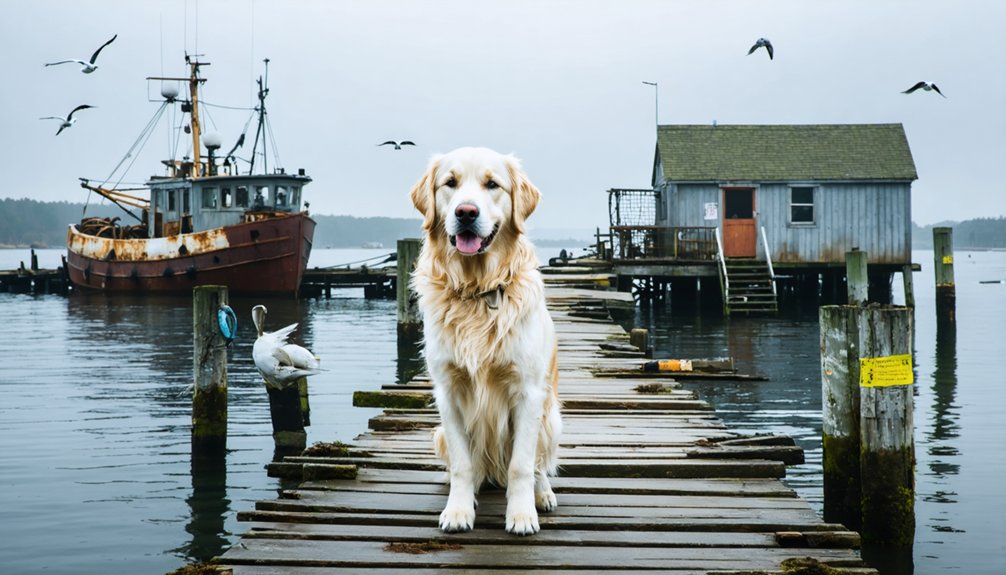
Beyond New England’s riverside mill ruins, Maine’s rocky coastline harbors equally compelling stories of abandonment where the sea claimed entire fishing communities.
You’ll discover Malaga Island’s tragic history, where 42 residents lived as a typical coastal village until state-sponsored eugenics policies forced their 1912 eviction. Their homes were burned, the community scattered, yet the cemetery remains as evidence of their Maine communities’ resilience.
Perkins Township on Swan Island tells another tale—once incorporated, now completely uninhabited since the 1940s. Your dog can explore these windswept sites where cod drying flakes once bustled with activity.
The broader fishing heritage collapse mirrors Gloucester’s decline, as factory trawling replaced traditional schooners. These coastal ghost sites offer freedom to wander through maritime history’s forgotten chapters.
When you’re traversing Maine’s abandoned coastal settlements with your four-legged companion, the terrain demands respect and preparation.
Loose granite slabs turn treacherous when wet, while hidden root mats and leaf-covered hollows create sudden footing failures that’ll test both your balance and your dog’s agility.
Trail hazards multiply near old quarries where narrow ledges demand single-file passage—keep your pup on a short lead here.
Dense multiflora rose obscures trail edges, making navigation aids essential. Download offline GPS maps and mark waypoints every quarter-mile before you lose the path entirely.
Trekking poles become lifesavers on scree fields, while microspikes grip wet bedrock that’ll otherwise send you sliding toward those abandoned foundations.
Check your dog’s paws regularly—these forgotten places hide sharp surprises beneath their overgrown beauty.
Leash Laws and Pet Policies at Historic Sites
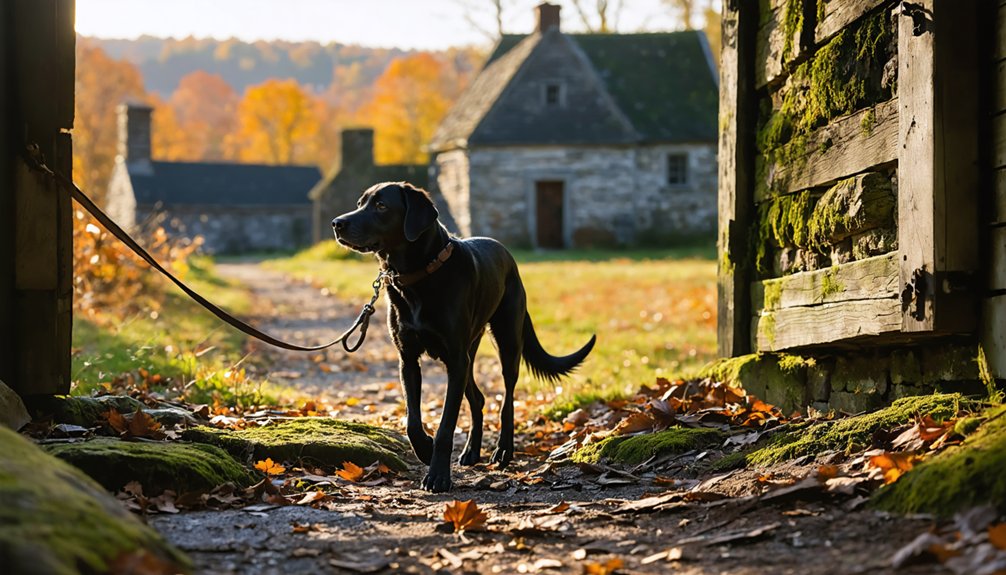
Historic cemeteries and ghost tour sites scatter across New England like weathered headstones, each carrying its own set of rules that’ll either welcome your canine companion or turn you away at the gate.
National cemeteries in Massachusetts strictly ban pets, while state veterans sites like New Hampshire’s Boscawen cemetery allow leashed dogs on pavement only. Municipal cemeteries vary wildly—Portland’s Western Cemetery prohibits all pets, but Evergreen Cemetery permits 25-foot leash requirements.
Cemetery pet policies shift like New England weather—from outright bans at national sites to strict leash rules at municipal grounds.
Ghost tours offer more freedom. Salem’s Witch City Walking Tours welcome well-behaved dogs at the group’s rear, though you can’t enter buildings.
Massachusetts enforces fines for straying from paved paths, so proper pet etiquette means respecting sacred spaces while exploring these haunting locations with your four-legged adventure partner.
Seasonal Considerations: Ticks, Mud Season, and Nesting Restrictions
As you plan your ghost town adventures with your dog, New England’s shifting seasons bring distinct challenges that can make or break your exploration.
Spring’s mud season transforms forest tracks into impassable quagmires, trapping vehicles and damaging fragile trails—time your visits for late spring after soils dry.
Summer demands serious tick awareness since tiny nymphal ticks lurk in the stone walls and brush piles you’ll encounter, making EPA-registered repellents and daily tick checks essential.
Nesting protection restrictions often close portions of historic sites during April through August, when ground-nesting birds claim abandoned foundations as home.
Your best windows? Late fall after breeding season ends, or winter’s low-risk months when ticks hibernate and trails freeze solid.
Planning Your Ghost Town Adventure: Lodging and Logistics
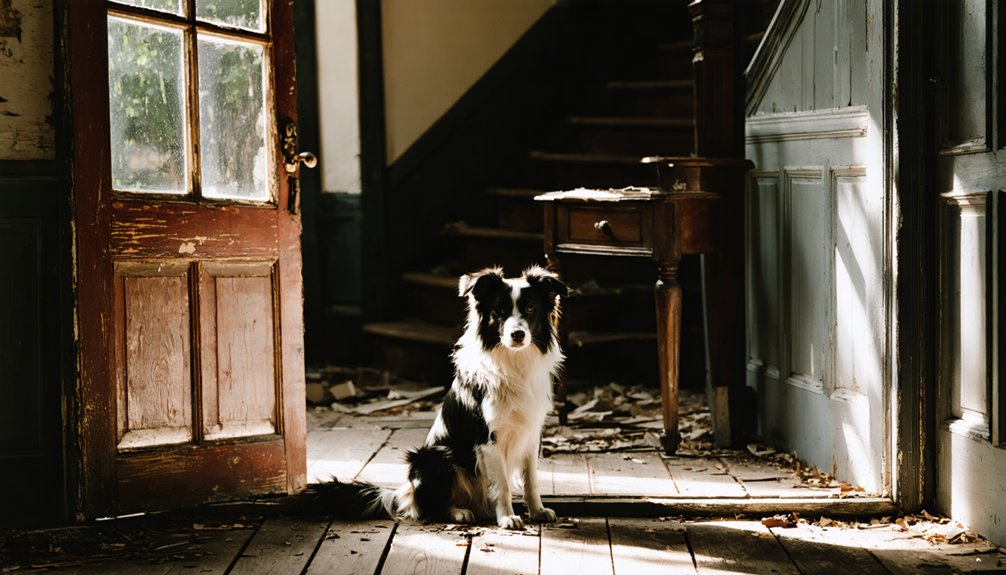
You’ll want to secure pet-friendly lodging well before your ghost town expedition, as historic inns and vacation rentals near these remote sites fill quickly during peak seasons.
Your adventure’s success hinges on choosing the right vehicle for potentially rough access roads and confirming parking availability at your target locations.
Pack a thorough emergency kit tailored for both you and your dog, since these abandoned places often lack cell service and immediate access to veterinary care.
Pet-Friendly Accommodation Options
When you’re planning overnight stays near New England’s forgotten settlements, finding the right pet-friendly lodging can make or break your ghost town adventure.
Historic inns and B&Bs welcome small-to-medium dogs with complete pet kits, while vacation rentals offer privacy and higher weight limits for $25-$75 nightly fees.
Dog-centric Vermont and Maine resorts provide off-leash play areas and specialized menus that’ll spoil your furry explorer.
Pet policies typically allow 1-2 dogs with weight limits ranging 25-70 pounds. Expect $10-$75 per night plus potential cleaning deposits up to $200.
Smart choices include properties near veterinary clinics and those offering secure outdoor storage for leashes when exploring restricted historic sites.
Dog amenities like waste stations and walking paths transform your ghost town expedition into a tail-wagging adventure.
Transportation and Parking
Getting to New England’s ghost towns requires strategic planning, especially since most abandoned settlements lie beyond conventional road networks. Your transportation options vary dramatically depending on your destination.
Thornton Gore offers the most accessible route via Tripoli Road, though it closes in November, forcing winter visitors onto hiking trails. Your parking availability becomes vital—the Tripoli Road Camping Area charges $25 nightly for vehicle storage, while Woodstock village provides free alternatives just three miles away.
Essential transportation considerations for ghost town exploration:
- Seasonal road closures limit winter access to remote settlements
- Hiking gear becomes mandatory beyond roadway endpoints
- Roadside parking often serves as your only option in forest locations
- Supply provisions must accompany longer expeditions due to isolation
Plan your route carefully, pack essentials, and embrace the adventure of reaching these forgotten places.
Emergency Preparedness Essentials
Remote ghost towns present unique challenges that demand meticulous emergency planning, particularly when your four-legged explorer depends entirely on your preparation.
Venturing into abandoned places in California can reveal hidden histories and unexpected adventures. However, it’s crucial to ensure your route is safe and accessible, as many of these locations are off the beaten path. Preparing for the unknown will ensure both you and your pet can explore freely while remaining mindful of potential hazards.
Your emergency supplies checklist must include a seven-day food supply, one gallon of water per ten pounds of dog weight daily, and a fourteen-day medication reserve in original bottles.
Pack pet-specific first-aid supplies including bandages, antiseptic wipes, and digital thermometer for unexpected injuries from rusted metal or broken glass.
Essential pet safety guidelines require updated ID tags, confirmed microchip registration, and laminated emergency contact cards.
Don’t forget headlamps, reflective gear, and offline maps—cell service vanishes quickly in these forgotten places, leaving you truly self-reliant.
Frequently Asked Questions
Are There Any Ghost Towns Accessible by Public Transportation With Dogs?
You’ll find dog friendly transit reaches Dogtown via MBTA rail to Gloucester, then taxi to trailheads. Salem’s ghost town accessibility shines with direct commuter rail, where you’ll discover pet-friendly haunted walking tours awaiting your adventures.
Which Abandoned Sites Offer the Best Photography Opportunities for Pet Portraits?
You’ll discover absolutely mind-blowing abandoned buildings at North Grosvenordale Mill’s dramatic brick facades and Dogtown’s boulder-studded ruins—both locations offer unparalleled geometric frames and textural contrasts that’ll make your pet photography genuinely extraordinary.
Can I Camp Overnight Near Ghost Towns With My Dog?
You’ll face strict camping regulations near most ghost towns, but dispersed BLM sites and nearby pet friendly campsites offer legal alternatives. Always secure landowner permission for private property and carry vaccination records.
Are There Guided Ghost Tours That Welcome Dogs in New England?
Yes, you’ll find several dog friendly tours across New England’s haunted locations. Red Cloak Tours welcomes friendly dogs in multiple Maine towns, while Salem’s Witch City Tours and Boston’s Ghost City Tours both accommodate pets.
What’s the Best Time of Day to Avoid Crowds at Popular Ruins?
Want solitude among forgotten stones? Your best visiting hours are dawn through 9:30 AM on weekdays, when you’ll find 40-60% fewer visitors. Avoiding peak times means skipping midday crowds and tour groups completely.
References
- https://www.islands.com/1989348/abandoned-dogtown-massachusetts-new-england-town-hiking-haven-legendary-boulders/
- https://www.gopetfriendly.com/blog/top-pet-friendly-things-to-do-in-new-england/
- https://www.youtube.com/watch?v=T4yhm_S-dHc
- https://travelnoire.com/abandoned-town-in-northern-massachusetts
- https://www.bringfido.com/blog/best-of-massachusetts/
- https://www.getyourguide.com/en-au/new-england-l97045/pet-friendly-activities-tc2342/
- https://www.tripadvisor.com/ShowTopic-g28942-i47-k3297480-New_England_road_trip_with_a_dog-Massachusetts.html
- https://en.wikipedia.org/wiki/Dogtown
- https://www.bostonhiddengems.com/blog/dogtown-ma
- https://babsonassoc.org/indegeneous-presence-dogtown/