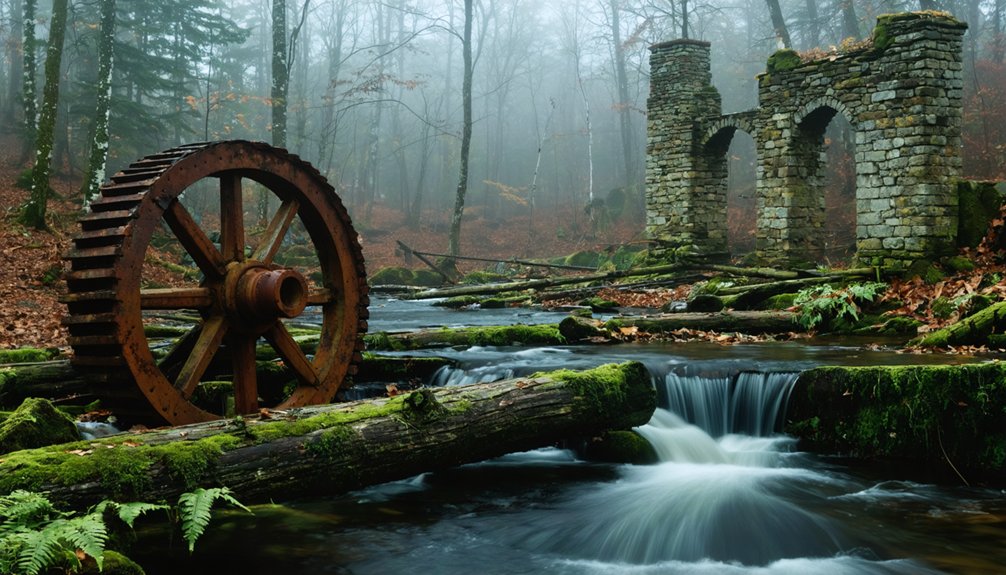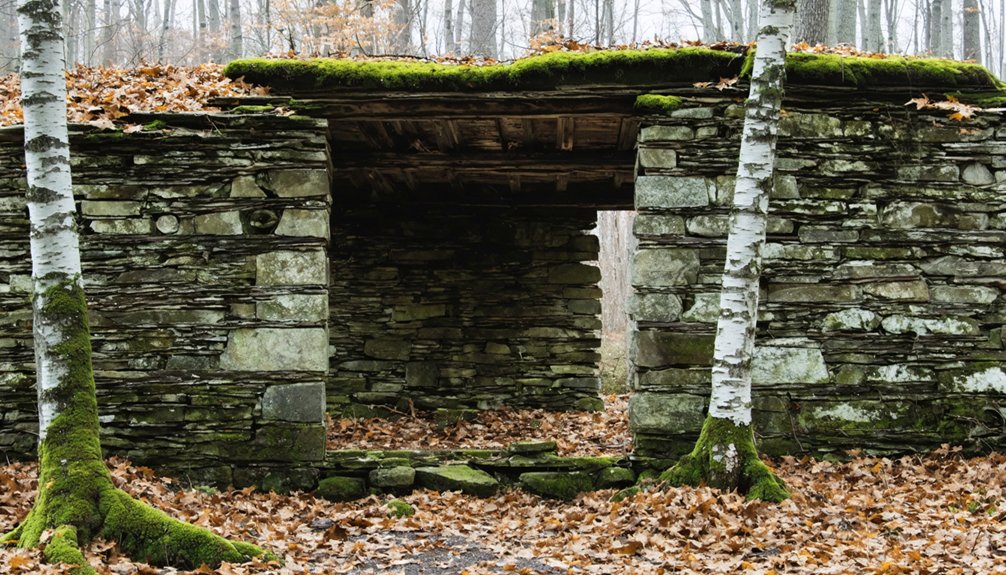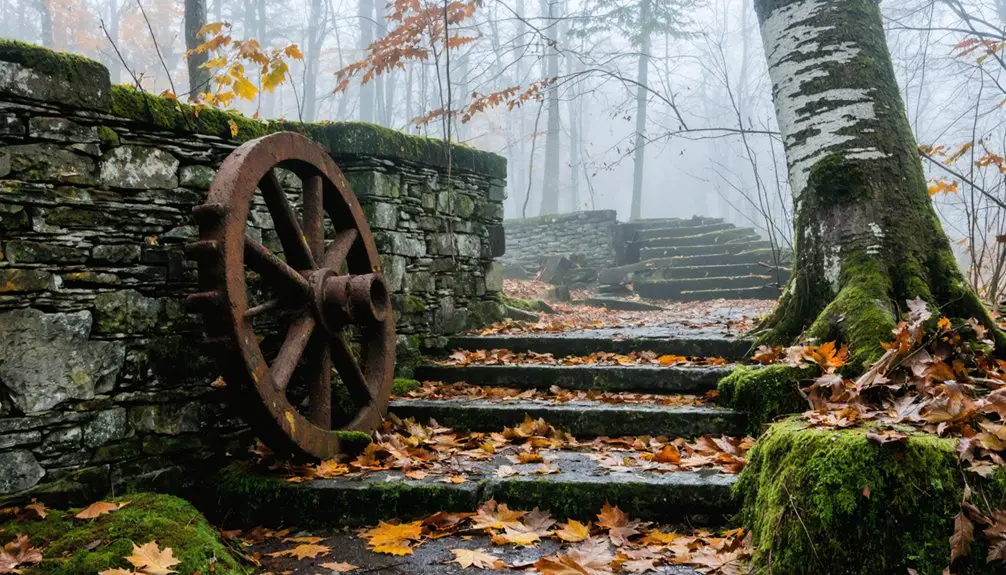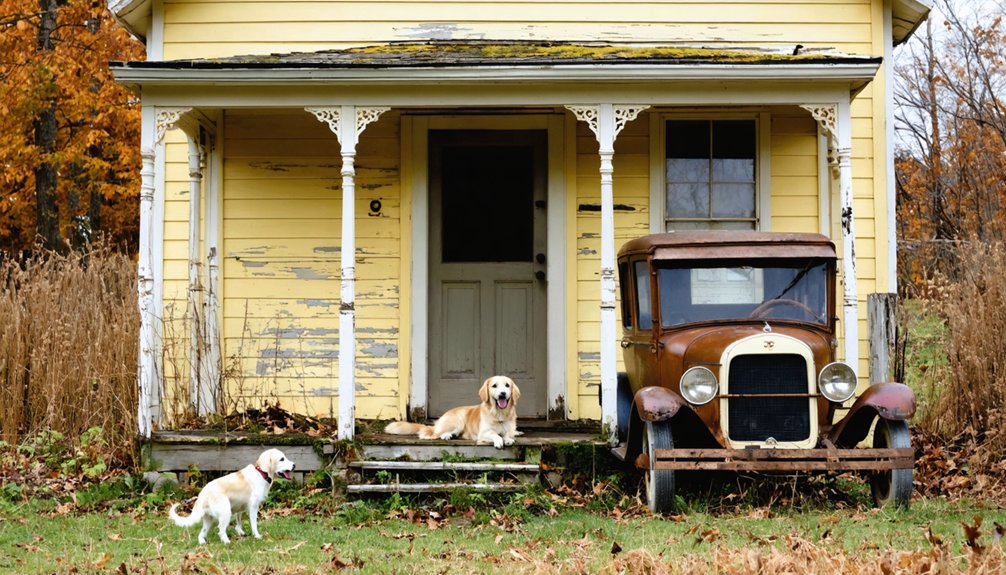
You can explore New Hampshire’s fascinating ghost towns with your dog, from Monson Center’s Colonial Trail System where you’ll walk three miles of easy paths through seven original home sites, to Livermore’s moss-covered foundations along Sawyer River Road. Your furry friend will love sniffing around the Russell-Colbath House ruins and Old Hill Village’s mysterious bridge abutments. Keep dogs leashed and bring water for these haunting adventures through crumbling stone walls and historic cellar holes that reveal centuries-old stories.
Key Takeaways
- Most ghost towns in New Hampshire allow leashed dogs, making them ideal destinations for pet owners seeking historical exploration.
- Monson Center’s Colonial Trail System offers three miles of easy, dog-friendly trails connecting seven original colonial home sites.
- Livermore’s Sawyer River Road features accessible dirt roads with pull-offs, perfect for exploring logging town ruins with dogs.
- Russell-Colbath House on Kancamagus Highway provides pet-friendly outdoor spaces around New Hampshire’s last surviving mountain village homestead.
- Visitors should bring water, maintain leash control, and prepare for uneven terrain when exploring these historic sites with pets.
Monson Center’s Colonial Trail System and Historic Home Sites
When you arrive at the small gravel parking area off Federal Hill Road, your dog will immediately sense something special about this place—perhaps it’s the scent of centuries-old stone foundations or the whisper of wind through fields where colonial families once harvested crops.
This colonial settlement, established in 1737, offers three miles of easy trails connecting seven original home sites where families like the Goulds, Nevins, and Bayleys carved out lives in the Massachusetts wilderness.
Your leashed companion can explore well-preserved cellar holes and stone walls while you read interpretive markers detailing each family’s story.
The archaeological significance here runs deep—leading experts consider this one of New England’s most important sites.
Leading archaeologists recognize this colonial settlement as one of New England’s most historically significant and well-preserved sites.
The restored Gould House anchors the experience, surrounded by fields that maintain their 18th-century patterns. The 280-acre conservation property preserves this remarkable settlement site under the stewardship of the Forest Society. As you wander these paths, you’ll discover an active heron rookery within the beaver wetland, where your dog might catch sight of these majestic birds nesting in the tall trees.
Livermore’s Sawyer River Road Ghost Town Adventure
From the quiet colonial ruins of Monson Center, journey north to the White Mountains where a different kind of ghost story unfolds along Sawyer River Road.
As you explore the remote trails, you may encounter remnants of forgotten settlements, remnants of ghost towns in New Hampshire that once bustled with life. The eerie silence of these abandoned places invites reflection on the lives that once thrived here. Each dilapidated structure tells a story, waiting to be uncovered by the curious traveler.
Your four-legged companion will love exploring Livermore’s abandoned logging town, where forest trails weave between moss-covered foundations and crumbling brick structures.
The well-maintained dirt road splits this former 1870s settlement in half, creating perfect pull-offs for liberated adventures.
You’ll discover the gray stone school foundation, red brick powerhouse ruins, and concrete maze remnants of the old sawmill. This logging industry settlement was established in 1876 and once housed up to 200 residents before floods in the late 1920s led to its eventual abandonment. The town was named after Samuel Livermore, a New Hampshire senator.
Livermore history comes alive as you and your dog investigate scattered artifacts along the riverbank.
Winter closes vehicle access, but that’s when Sawyer River exploration truly shines—snowshoeing through silent ruins with your canine explorer beside you.
Old Hill Village and the Franklin Falls Dam Relocation Story
Unlike Livermore’s gradual abandonment to nature’s reclaim, Old Hill Village met its end through government decree—a complete community erasure that your dog can now help you investigate at Needleshop Brook Recreation Area.
This village history spans devastating flood impact from 1875 through 1941, when rising waters repeatedly drowned livestock and destroyed homes.
The 1937 federal seizure for Franklin Falls Dam forced unprecedented relocation challenges as residents moved their entire community uphill within four years. Only 14 buildings relocated using a railway and horse-powered winch system made the journey to higher ground.
Today’s ghost town exploration reveals:
- Bridge abutment remnants crossing the Pemigewasset River
- Wild plants likely escaped from former home gardens
- Fields where backyards once flourished
You’ll find Old Hill Village Trail accessible for leashed adventures, while the Hill Village Store owner shares authentic stories about this remarkable forced exodus that transformed neighbors into pioneers. The original community was first established as New Chester before receiving its current name decades later.
Crawford Notch Pet Cemetery and Haunted Mountain Legends
Your four-legged companion can experience something far more mysterious than government relocations at Crawford Notch, where ghostly legends and a hidden pet cemetery create an otherworldly atmosphere perfect for dogs who seem to sense things we can’t.
Dogs possess an uncanny ability to detect supernatural presences that remain invisible to human senses at Crawford Notch’s haunted grounds.
The Crawford Cemetery lies hidden near Saco Lake Loop’s northern entrance, accessible via a short spur trail after crossing the stream.
Three graves mark Munchen, Betty, and Puck—pets whose spirits may still roam these Haunted Trails alongside more famous ghosts.
Your dog might pause unexpectedly here, sensing remnants of the 1826 Willey family tragedy or spirits from Crawford Path’s centuries of documented deaths. The Crawford Path itself holds the distinction of being the oldest continuously used hiking trail in America, making it a repository for generations of spectral encounters.
The area was first discovered by Timothy Nash in 1771 while tracking a moose, adding an element of natural wilderness pursuit to the haunted landscape.
Watch your companion’s behavior as you explore—many pet owners report their dogs acting strangely near these supernatural sites, possibly communicating with long-departed four-legged friends.
Russell-Colbath House and Kancamagus Highway Historic Stops
Along New Hampshire’s scenic Kancamagus Highway, the Russell-Colbath House stands as the sole survivor of Passaconaway’s vanished village, where your dog can explore the same grounds that once echoed with the footsteps of Ruth Colbath’s faithful companions.
This 1831 homestead offers freedom-seeking travelers authentic Kancamagus history through costumed interpreters and period artifacts. Your leashed pup can wander the property while you absorb tales of Ruth’s legendary lamp-lighting vigil after her husband’s mysterious disappearance. The property was originally built by Thomas Russell and his son Amzi, who established a successful sawmill that made the family pioneers in the local lumber industry.
The site gained official recognition when it was listed on the National Register of Historic Places for its architectural and cultural significance.
Three must-see features:
- Original timber-frame Russell Colbath architecture showcasing mountain homestead construction
- Interpretive barn with hands-on demonstrations of 19th-century farming practices
- Posted historical signage revealing stories of logging enterprises and rural post offices
Located near Jigger Johnson Campground, this National Forest site provides perfect cultural contrast to outdoor adventures, making history tangible for both you and your four-legged explorer.
Frequently Asked Questions
Are Dogs Allowed Off-Leash at Any New Hampshire Ghost Town Sites?
No explicit off-leash policies exist for New Hampshire’s ghost town sites. You’ll find dog-friendly trails at Monson Center, but general state leash laws apply, so keep your adventurous pup leashed while exploring.
What Should I Bring for My Dog During Ghost Town Visits?
Coincidentally, you’ll need the same dog safety gear for ghost towns as wilderness hikes. Pack essential dog supplies: water, booties, first-aid kit, reflective leash, and treats for your adventurous companion’s freedom-filled exploration.
Are There Entrance Fees for Dogs at Historic Sites?
You won’t pay extra dog fees at New Hampshire’s historic sites. Dog policies focus on leashing requirements, not your wallet. These forgotten places welcome four-legged explorers freely—just pack water and enjoy wandering through history together.
Which Ghost Towns Are Best for Senior Dogs or Puppies?
Monson Center offers senior dog friendly flat trails through open fields, while Saco Lake’s gentle half-mile loop provides puppy friendly trails. Both feature stable footing, minimal elevation, and peaceful settings for comfortable exploration.
Can Dogs Stay Overnight at Pet-Friendly Haunted Accommodations Nearby?
Perfectly positioned pet friendly hotels near haunted sites welcome your wandering companion, though genuine haunted cabins rarely exist. You’ll find cozy inns in North Conway, Jackson, and Lincoln offering mountain magic with advance booking required.
References
- https://www.bringfido.com/blog/spookiest-dog-friendly-Airbnb-in-every-state/
- https://vitabrevis.americanancestors.org/2016/11/new-hampshire-ghost-town
- https://outdoorodyssey.net/2022/11/05/a-haunted-road-trip-around-crawford-notch-new-hampshire/
- https://thefrogandpenguinn.blogspot.com/2021/07/a-nh-ghost-town.html
- https://www.visitwhitemountains.com/blog/post/spooky-stories-ghost-towns-and-historic-haunted-spots/
- https://www.forestsociety.org/property/monson-center
- https://wokq.com/fall-in-love-with-the-breathtaking-natural-waterfall-dianas-baths-in-nh/
- http://www.nhfamilyhikes.com/hikes.php?hike=Monson+Center&from=HBN-M
- https://www.nrcm.org/blog/busy-successful-season-monson-appalachian-trail-visitor-center/
- https://theparkexplorer.wordpress.com/2013/03/02/lost-town-found-monson-center/